
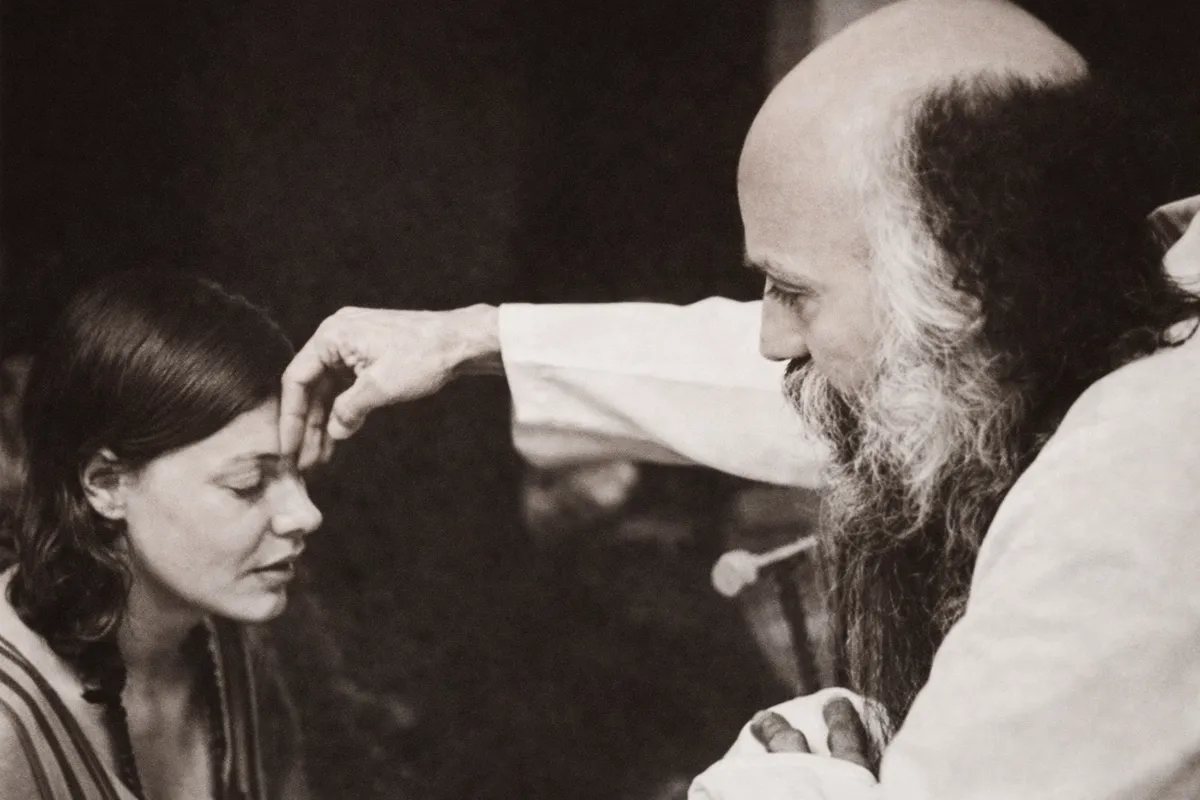
According to Osho, yes—it’s possible. Jealousy isn’t the root; possessiveness and fear of tomorrow are. Before enlightenment, you can drop jealousy by loving totally in the present, refusing to forecast loss, and honoring the other’s freedom and dignity. Celebrate their happiness, allow space and periodic distance, and don’t interfere in each other’s private world. Love and freedom magnetize; jealousy and control destroy.
Stop trying to own someone, enjoy today together, and give them freedom and space—then jealousy fades.
From the Discourses
Passages where Osho speaks to this question — each links to the complete discourse.
Is it possible to live without jealousy unless one is enlightened?
It is possible. If you are enlightened then the question of jealousy does not arise at all; then it is impossible to have jealousy. Before enlightenment it is possible to live without jealousy. You just have to look into the causes of jealousy. What makes you jealous? -- possessiveness. Jealousy itself is not the root. You love a woman, you love a man; you want to possess the man or the woman just out of fear that perhaps tomorrow he may move with somebody else. The fear of tomorrow destroys your today, and it is a vicious circle. If every day is destroyed because of the fear of tomorrow, sooner or later the man is going to look for some other woman because you are just a pain in the neck. And when he starts looking for another woman or starts moving with another woman, you think your jealousy has…
Osho, what is jealousy? Does our jealousy show that we are very far from aloneness?
This was my routine, that I would always go to the examination fifteen minutes late. This I followed my whole career in school, in college, at university; I would go fifteen minutes late. It was well known. The examiner knew that my seat had to be kept empty; I would be coming, but exactly fifteen minutes late. And I would leave the examination hall fifteen minutes before everybody else, before the end. The time allowed was three hours and I could see that the examination could be managed in two and a half hours; there was no need to waste half an hour more there. The teacher, who was there looking after the students to see that they were not copying and not doing some mischief, that somebody was not concealing a book, would say, "There is no hurry; there are fifteen minutes left. Why are you finishing?" I would…
Our beloved Osho,
WHENEVER YOU SPEAK OF OUR FAILINGS, YOU USUALLY MENTION ANGER, SEX AND JEALOUSY. ANGER AND SEX SEEM FAIRLY STRAIGHTFORWARD, BUT THERE'S SOME CONFUSION ABOUT EXACTLY WHAT JEALOUSY IS, AND IT'S HARDER TO GET TO THE CORE. WOULD YOU TELL US ABOUT JEALOUSY? I have heard that once it happened that Winston Churchill was invited to speak in a small club of friends. Everybody knew that Churchill was a drunkard and loved alcohol very much, and the man who introduced him, the president of the club, said, "Sir Winston has drunk so much wine up to now, that if we pour all the wine into this hall the level will come up to my head." It was a big hall, and he was just joking. Winston Churchill stood, looked at the imaginary line, looked at the ceiling -- the ceiling was high -- became very sad, and he said, "So much…
Deva means divine, nirmoh means non-possessiveness -- divine non-possessiveness. And one of the greatest problems for the human mind is how to drop possessiveness, because the human mind feeds on possessiveness. It wants to possess more and more, it wants to possess everything. The more it possesses, the more it feels secure. So it hankers for money, it hankers for prestige, power. Even in relationship it starts possessing people. And to possess a person is to destroy him, because the moment you possess a person, the person is reduced to a thing. One should not even possess things, but people are even possessing persons. That's why in the world you see so many robots: they have all been reduced to machines, things. The day the child is born the parents start possessing him; they cripple, they destroy. Then the church possesses the child; immediately he is to be baptized.
Question: First question: Osho, why is there jealousy in love? If there is jealousy in love, then love is not love at all; something else is operating in love’s name. Jealousy indicates the absence of love. It is like this: the lamp is lit and yet there is darkness. If the lamp is lit, there should be no darkness. The disappearance of darkness is the proof that the lamp is burning. The disappearance of jealousy is the proof of love. Jealousy is like darkness; love is like light. Take this as the touchstone. As long as jealousy remains, understand that love is not yet love. Some other game is going on in the name of love; the ego is on a new trip—the pleasure of possessing the other in love’s name, exploiting the other in love’s name, using another person as a means.