
You might skip ahead in yoga, but you’ll get stuck until you go back and finish every step; the final state needs everything complete.
From the Discourses
Passages where Osho speaks to this question — each links to the complete discourse.
Yesterday morning you referred to the eight stages of yogic achievement and emphasized that you move from number one to number eight, in that order. Is it not possible, in individual cases, that an individual could reach one or the other states first and then move in his or her own order to achieve all eight of them?
It is possible, but when I say possible I mean only rarely, very rarely. Exceptions are always there with every rule, but when Patanjali talks, he talks about the rule, not about the exception. Exceptions need not be talked about. The greater mass of humanity cannot reach from anywhere in any other way. They will have to follow step by step -- from one to two, from two to three. They move in an organic unity. But there are freaks who can go and jump -- but then they too will have to come back and absorb the left-behind part. Their arrangement can be different, that's possible. You can start with pranayam, but then you will have to come to asan, you will have to come to YAM.... You can start by meditation, but then you will have to move to other parts which are left behind. But all the…
On the attainment of the fifth state, the mind of the seeker ceases, like clouds in an autumn sky, and only truth remains.
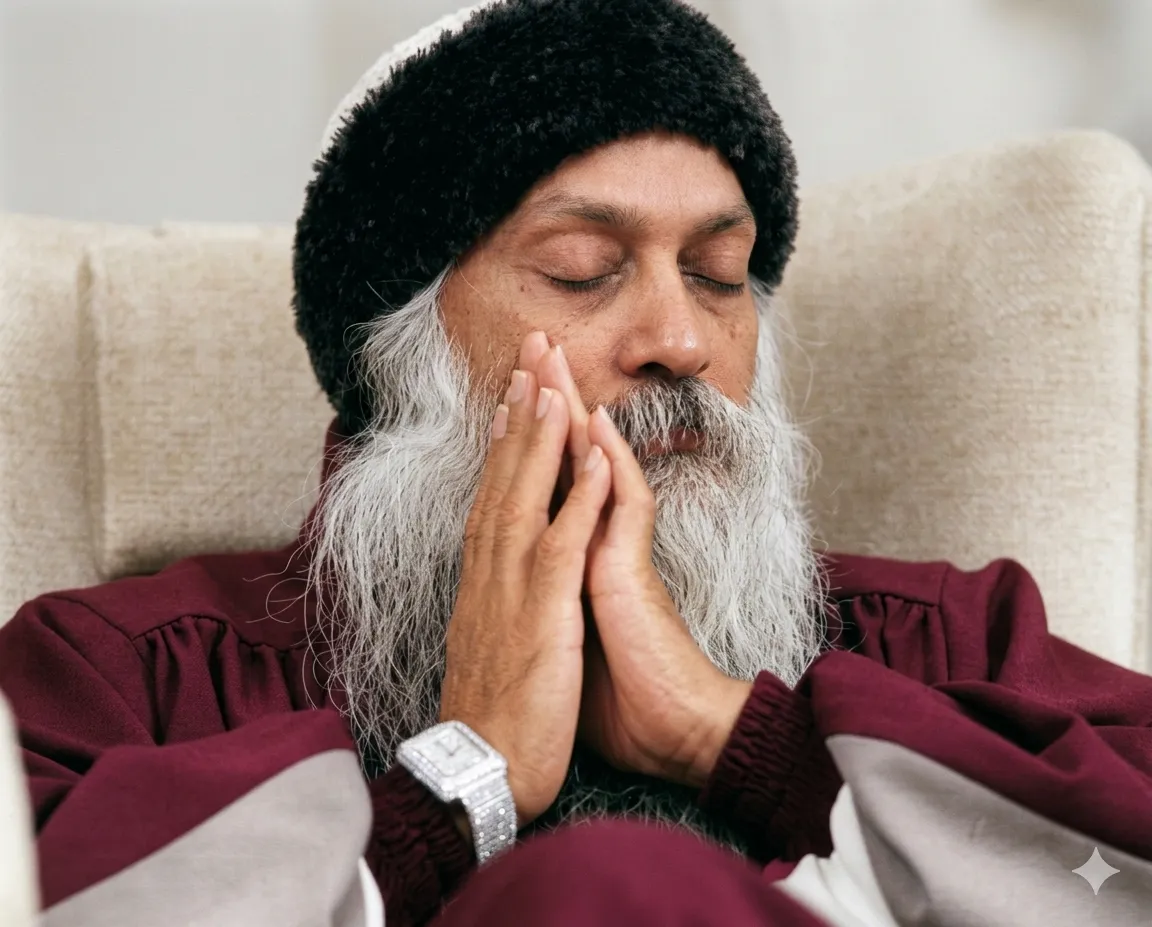
IN THIS STATE, WORLDLY DESIRES DO NOT ARISE AT ALL. DURING THIS STATE ALL THOUGHTS OF DIVISION IN THE SEEKER ARE STILLED AND HE REMAINS ROOTED IN NONDUALITY. ON THE DISAPPEARANCE OF THE FEELING OF DIVISION, THE FIFTH STAGE, KNOWN AS THE SUSHUPTAPAD -- SLEEPING -- DRAWS THE ENLIGHTENED SEEKER INTO ITS NATURE. HE IS PERPETUALLY INTROVERTED AND LOOKS TIRED AND SLEEPY, EVEN THOUGH EXTERNALLY HE CONTINUES HIS EVERYDAY ACTIVITIES. ON THE ACCOMPLISHMENT OF THIS STAGE, THE DESIRE-FREE SEEKER ENTERS THE SIXTH ONE. BOTH TRUTH AND UNTRUTH, BOTH EGOISM AND EGOLESSNESS AND ALL SORTS OF MENTATION CEASE TO EXIST IN THIS STATE, AND ROOTED IN PURE NONDUALITY, THE SEEKER IS FREE FROM FEAR. AS THE ENTANGLEMENTS OF HIS HEART DISSOLVE, SO ALL HIS DOUBTS DROP. THIS IS THE MOMENT WHEN HE IS COMPLETELY EMPTIED OF ALL THOUGHT. WITHOUT ATTAINING NIRVANA, HE IS IN A NIRVANA-LIKE STATE AND BECOMES FREE WHILE…
Osho, in yesterday’s talk you said that a seeker should first be concerned with becoming a vessel, and should not go about begging from place to place. But the very meaning of a seeker is that he has obstacles in practice. He doesn’t know how to become a vessel, how to prepare. So if he does not go asking, what should he do? How difficult it is to meet the right guide!
But searching and begging are two different things. In fact, the one who does not want to search is the one who begs. Searching and begging are not the same; they are opposites. He who wants to avoid searching begs; a seeker never begs. And the processes of searching and begging are entirely different. In begging you have to keep your attention on the other—the one who will give. In searching you have to keep your attention on yourself—the one who is to receive. It is true that there are obstacles on the path of the seeker. But if we understand rightly, saying there are obstacles on the path of the seeker means the obstacles are within the seeker; the path too is within. And to understand one’s obstacles is not very difficult. So we will have to speak a little more extensively on what the obstacles are and how…
प्रश्न: ओशो, कल की चर्चा में आपने कहा कि साधक को पात्र बनने की पहले फिकर करनी चाहिए, जगह-जगह मांगने नहीं जाना चाहिए। लेकिन साधक अर्थात खोजी का अर्थ ही है कि उसे साधना में बाधाएं हैं। उसे पता नहीं है कि कैसे पात्र बने, कैसे तैयारी करे। तो वह मांगने न जाए तो क्या करे? सही मार्गदर्शक से मिलना कितना मुश्किल से हो पाता है!
लेकिन खोजना और मांगना दो अलग बातें हैं। असल में, जो खोजना नहीं चाहता वही मांगता है। खोजना और मांगना एक तो हैं ही नहीं, विपरीत बातें हैं। खोजने से जो बचना चाहता है वह मांगता है, खोजी कभी नहीं मांगता। और खोज और मांगने की प्रक्रिया बिलकुल अलग है। मांगने में दूसरे पर ध्यान रखना पड़ेगा--जिससे मिलेगा। और खोजने में अपने पर ध्यान रखना पड़ेगा--जिसको मिलेगा। यह तो ठीक है कि साधक के मार्ग पर बाधाएं हैं। लेकिन साधक के मार्ग पर बाधाएं हैं, अगर हम ठीक से समझें तो इसका मतलब होता है कि साधक के भीतर बाधाएं हैं; मार्ग भी भीतर है। और अपनी बाधाओं को समझ लेना बहुत कठिन नहीं है। तो इस संबंध में थोड़ी सी विस्तीर्ण बात करनी पड़ेगी कि बाधाएं क्या हैं और साधक उन्हें कैसे दूर कर सकेगा।