
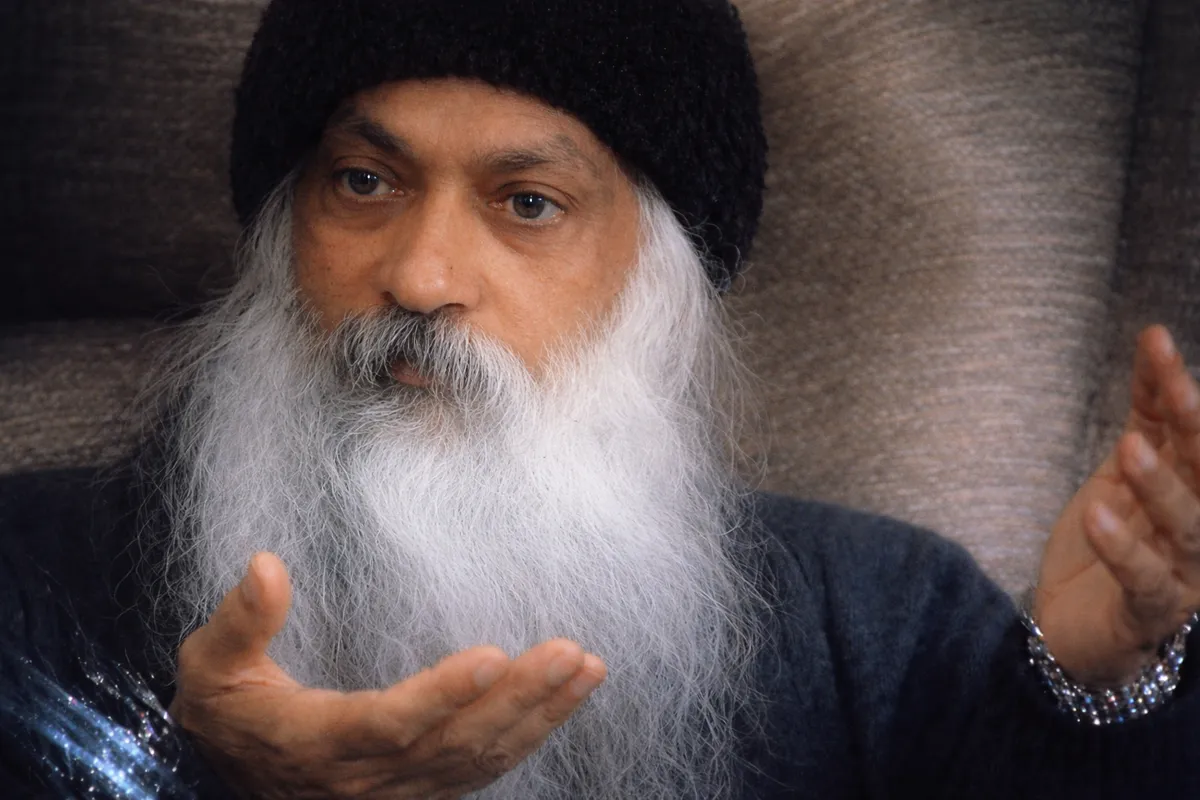
It’s not the jumping but your mindset: if you trust and forget your heart trouble, it’s okay; if you’re scared and thinking of your heart, don’t do it.
From the Discourses
Passages where Osho speaks to this question — each links to the complete discourse.
A friend has asked: Osho, he has suffered from heart disease; will this dancing, this jumping be dangerous for his health?
It’s a little difficult to say, because it depends on many things. If he forgets the body and keeps only the divine in remembrance, then it can never be harmful. But if he does not remember the divine and keeps remembering the heart’s weakness, then it can be very harmful. It depends. Where is your attention? If you have forgotten your body, then no harm can ever befall you. And even if harm does occur, that too is a gain. To begin with, no harm can happen, because there is no reason. One who has surrendered his body wholly to the divine—his heart and its beating are no longer his responsibility; they are in the divine’s hands. And the same divine whose effortless presence keeps such a vast universe moving—there is no reason to think your heartbeat would not move by that very effortless presence. And if, in a moment…
एक मित्र ने पूछा है कि ओशो, वे हृदय रोग से पीड़ित रहे हैं, तो क्या यह नाचना, यह कूदना स्वास्थ्य के लिए खतरनाक तो न हो जाएगा?
यह कहना थोड़ा मुश्किल है, क्योंकि यह बहुत सी बातों पर निर्भर करता है। यदि वे अपने शरीर को भूल कर परमात्मा को ही स्मरण रखें, तो कभी भी नुकसानदायक नहीं हो सकता है। लेकिन परमात्मा को स्मरण ही न रखें, हृदय की दुर्बलता को ही स्मरण रखें, तो बहुत नुकसानदायक हो सकता है। इट डिपेंड्स। आपका ध्यान क्या है? अगर आप अपने शरीर को भूल गए हैं, तो कोई भी नुकसान कभी नहीं हो सकता। और अगर नुकसान भी हो जाए, तो वह भी लाभ है। पहले तो नुकसान नहीं हो सकता, क्योंकि कोई कारण नहीं है। जिसने अपने शरीर को पूरा परमात्मा के लिए छोड़ दिया, उसके हृदय वगैरह को धड़काने का जिम्मा अब उसके ऊपर नहीं रहा, अब वह परमात्मा के ऊपर है। और जिस परमात्मा की सहज मौजूदगी से इतना बड़ा जगत चलता है, उसकी सहज मौजूदगी से आपके हृदय की धड़कन न चलेगी, ऐसा मानने का कोई भी कारण नहीं है। और अगर उसके स्मरण से भरे हुए इस क्षण में यदि धड़कन बंद भी हो जाए, तो अनुगृहीत होना चाहिए। …
Osho, I am not a dancer, but I love to dance. At times I would like to leap and twirl and stay in the air. But, Osho, I worry about enlightenment. Does an enlightened man dance?
You must have come from a Christian family so you don't have any idea that enlightened people have been of all kinds. It is a spectrum, the whole rainbow. There has been Krishna -- the dancer, the flute-player, the singer. There has been Chaitanya -- a mad dancer, he will dance and dance for hours, until he will fall in ecstasy; the joy will be so overflowing, uncontainable. There has been Jalaluddin Rumi who twirled -- he became enlightened while twirling. He whirled for thirty-six hours continuously, non-stop; then he fell, exhausted by the ecstasy, and when he opened his eyes the old man was gone and the new has arrived. It is Jalaluddin Rumi who founded the whirling dervishes and their whole beautiful tradition. There has been Meera in India, who danced to abandon, who danced from one village to another village, almost covering the whole north of India.…
My understanding is that dance, in the beginning, was born out of meditation. And I think all that is significant in life has had its origin in meditation. Meera did not have to go anywhere to learn dancing. People are mistaken if they think that Meera found God through dancing. Meera burst into dancing when she found God. The fact is otherwise: no one finds God through dancing, but one can dance if he finds God. What can a drop do but dance when a whole ocean enters into it? What can a beggar do but dance when he suddenly comes upon a treasure of infinite wealth? But man has been so much crushed and crippled by civilization that he cannot dance.
Osho, in meditation, should I dance, or should my body dance?
As yet, you are not there; for now only the body can dance. When you too arrive, then you can dance as well. Right now you are not; right now there is only the body. Why are you raising matters from a place where you are not? You have heard about the soul, but have you known it? You have read about the soul—have you experienced it? For now you are the body. For now the soul is only a dream. Can you make a dream dance? How will you make that which is not yet, dance? For now, let the body dance. Dance with what you have. Begin with the body. People come to me and say, “We want to take sannyas; but give us the inner—what is the use of the outer sannyas?” I tell them, where is your “inner” yet? I am ready to give you the…
पांचवां प्रश्न: ओशो, ध्यान में मुझे नाचना है या मेरे शरीर को?
अभी तुम तो हो ही नहीं, अभी शरीर ही नाच सकता है। जब तुम भी आ जाओ तो तुम भी नाचना। अभी तुम हो ही नहीं, अभी तो शरीर ही है। अभी तुम कहां की बातें उठा रहे हो? आत्मा तो तुमने सुनी है, अभी जानी कहां? आत्मा के संबंध में पढ़ा है, अनुभव कहां किया? अभी तो तुम शरीर हो। अभी आत्मा तो सिर्फ सपना है। सपने को थोड़े ही नचा सकोगे? जो है ही नहीं, उसको कैसे नचाओगे? अभी तो शरीर को ही नचाओ। जो तुम्हारे पास है, उसको नचाओ। अभी तो शरीर से शुरू करो। मेरे पास लोग आते हैं, वे कहते हैं संन्यास लेना है; लेकिन भीतर का दे दें, बाहर का संन्यास, क्या सार! मैं उनसे कहता हूं, भीतर अभी है कहां? मैं तो तैयार हूं, भीतर का भी दे दूं, मगर भीतर है कहां? अभी तो बाहर ही बाहर है। अभी तुम्हारा भीतर है कहां? मैं तो तुम्हारे भीतर को रंग दूं; मगर भीतर हो न, तभी तो! अभी भीतर नहीं है, इसलिए वस्त्र रंग देता हूं। चलो, प्रतीक तो हुआ, शुरुआत तो हुई। बाहर रंगा, रंगते-रंगते भीतर भी रंग लेंगे। कहीं से तो शुरू करना होगा। …
It has been asked: “Even while living amid home and family, I feel that no one is really mine.”
It feels perfectly right, auspicious, true. But chances are your efforts are running in the opposite direction: you’re trying somehow to get rid of this aloneness; in fact, you want someone to truly be yours. Many will even reassure you, “We are yours,” but that’s only reassurance, consolation; you’re being lulled. Those who are not yours—how could they ever be? And how can anyone truly belong to anyone? However much a son tells his mother, “I am yours,” tomorrow the mother will die—the son won’t go with her. However much a husband says, “I am yours forever,” when the wife dies, the husband will not die with her. Who goes with whom? These are just words—necessary perhaps, because man is very restless. He needs the liquor of consolation; he needs an opium so he can sleep, so he can keep the notion that all are his. “What a full, brimming…
पूछा है: ‘घर-परिवार में होते हुए भी मुझे लगता है कि कोई अपना नहीं है।’
… जो अपने नहीं हैं वे तुम्हारे क्या हो सकेंगे? और कोई किसी का हो कैसे सकता है? कितना ही बेटा कहे मां से कि मैं तुम्हारा हूं, कल मां चल बसेगी, बेटा साथ नहीं जाएगा। कितना ही पति कहे कि सदा-सर्वदा को तुम्हारा हूं, पत्नी मर जाएगी तो पति साथ नहीं मर जाएगा। कौन किसके साथ जाता है! ये सब बातें हैं--जरूरी हैं, क्योंकि आदमी बड़ा बेचैन है। उसे संतोष की शराब चाहिए; उसे अफीम चाहिए, ताकि वह सोया रहे; उसे ऐसा खयाल भर बना रहे कि सब अपने हैं। कितना भरा-पूरा घर है, लोग कहते हैं। सब भरे-पूरे घर पड़े रह जाते हैं, जब विदा का क्षण आता है।