
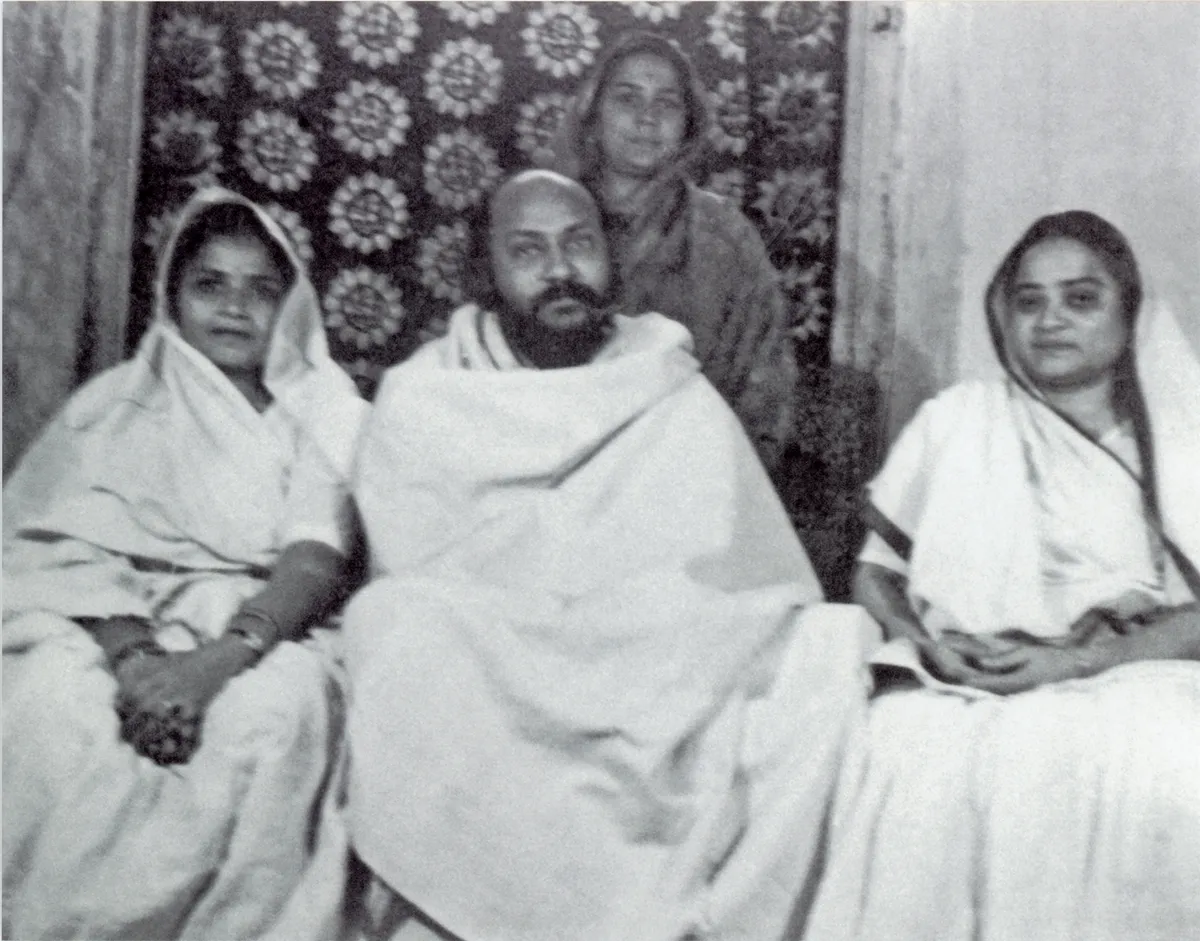
According to Osho, neither flowers nor thorns exist objectively; they are projections of your seeing. Wrong seeing makes thorns appear, right seeing makes flowers appear—vision is creation. In true bliss, your inner state overflows and colors the whole world, so you experience only flowers, only bliss. Transform the seer, and the seen changes; as you are within, so existence appears without.
The world feels thorny or full of flowers depending on your inner mood; when you’re truly happy inside, everything looks like flowers.
From the Discourses
Passages where Osho speaks to this question — each links to the complete discourse.
Osho, in the bitter darkness of my past, tell me—what did you see? Was I entangled in the whirling of time, or did you see me coming out of entanglements? (What did you see in the deep darkness of my past? Was I caught in the wheel of fate or coming out of it?) Dinesh has asked:
Yes, you are still entangled. And a man remains entangled in the wheel of fate until he is fully awake. The very meaning of the wheel of fate is that we keep moving in unconsciousness. Fate belongs only to the unconscious person. One filled with awareness has no fate. About the unconscious person, astrologers can make predictions. About the one who is awake, no astrologer can predict anything. Because what an aware person will do is not decided by the past. What the unconscious will do depends entirely on the past. If your past is known and can be told, then your future can also be announced. You were angry yesterday, you were angry the day before yesterday, and further back you were angry—so you will be angry tomorrow too; there’s no obstacle in that. Because you will do what you have always done. You live by habit, mechanically. Fate…
The seed was stagnant, the plant is a river. Bliss is a flower but you have to become the soil, and the ego has to die in the soil like the seed dies, then you can also know the invisible, then you can also manifest the unmanifested. That's what happens to a Jesus, to a Buddha, to a Lao Tzu: something of the unknown starts surrounding them, becomes their climate, their milieu. And those who are unprejudiced, those who are open, can see in a Buddha God walking on the earth, living in a body. It is only the blind who miss, it is only the deaf who miss, but the greater part of humanity consists of blind and deaf people. Initiation into sannyas means that now you will search for the eyes and the ears. They are there, we just have not used them.
Question: Third question: Osho, how can one be free from suffering? Suffering has not bound you; you are bound to suffering. Suffering is not a chain someone else has put on your hands. Suffering is an ornament you have chosen to wear yourself. Understand this first point clearly. Even dust is wondrous, for from dust we are made, and tomorrow we will dissolve back into dust. Dust is our mother—so welcome even dust. Life exists because of death. If death were not, life could not be. Therefore thank death as well. Just think: you are born once and then remain forever—never able to die. Have you ever considered it? If you had to remain eternally, for an infinite time, do whatever you might and yet never be able to die—would you not panic, grow bored, become tormented, exhausted?
Osho, sometimes you say, “Live from the feeling within,” and sometimes you say, “Live in tathata with whatever life brings, live in total acceptance.” How can the inner rhythm and the outer situation always be one? Kindly guide.
When your inner instrument gets tuned—have you seen a musician tuning his instrument? He taps, tightens the drum, tightens the strings—likewise, when within you tighten your strings, set your instrument, when music is born within you, when you begin to dance inside, to be ecstatic—then suddenly you see the entire world ready to support you. Helping hands come from all around. In this land we gave God a thousand hands—for this very reason. A lovely image. How can a two-handed God support everyone who needs support? We made Him a thousand-handed God. A thousand is symbolic—for infinite, numberless. And more than a thousand are hard to carve in paintings or statues. The meaning is clear: awaken just once, and with a thousand hands the Divine supports you. From every side His hand reaches for you. His hand has always been reaching—you have been running away. You keep defending yourself from…
Question: The first question: Osho! Ah, what joy! Ah, what pain! Vinod Bharati! In the thicket of life where rose blossoms appear, thorns appear too. But when the flowers bloom, even the thorns are endearing, even the pain is sweet. Thorns become painful only when the flowers do not bloom—when nothing remains but thorns. The sorrow is not in the thorns; it is in the absence of flowers. When flowers bloom—and bloom to the brim—the thorns enhance their beauty, they give the flowers a background. A rosebush would be incomplete without thorns. Day would be incomplete without night. But if it were night and only night, it would turn into hell. This is what has happened in most people’s lives: only night remains. Pebbles and stones, nothing but pebbles and stones. Crushed under a load of the futile—no dignity of meaning.