
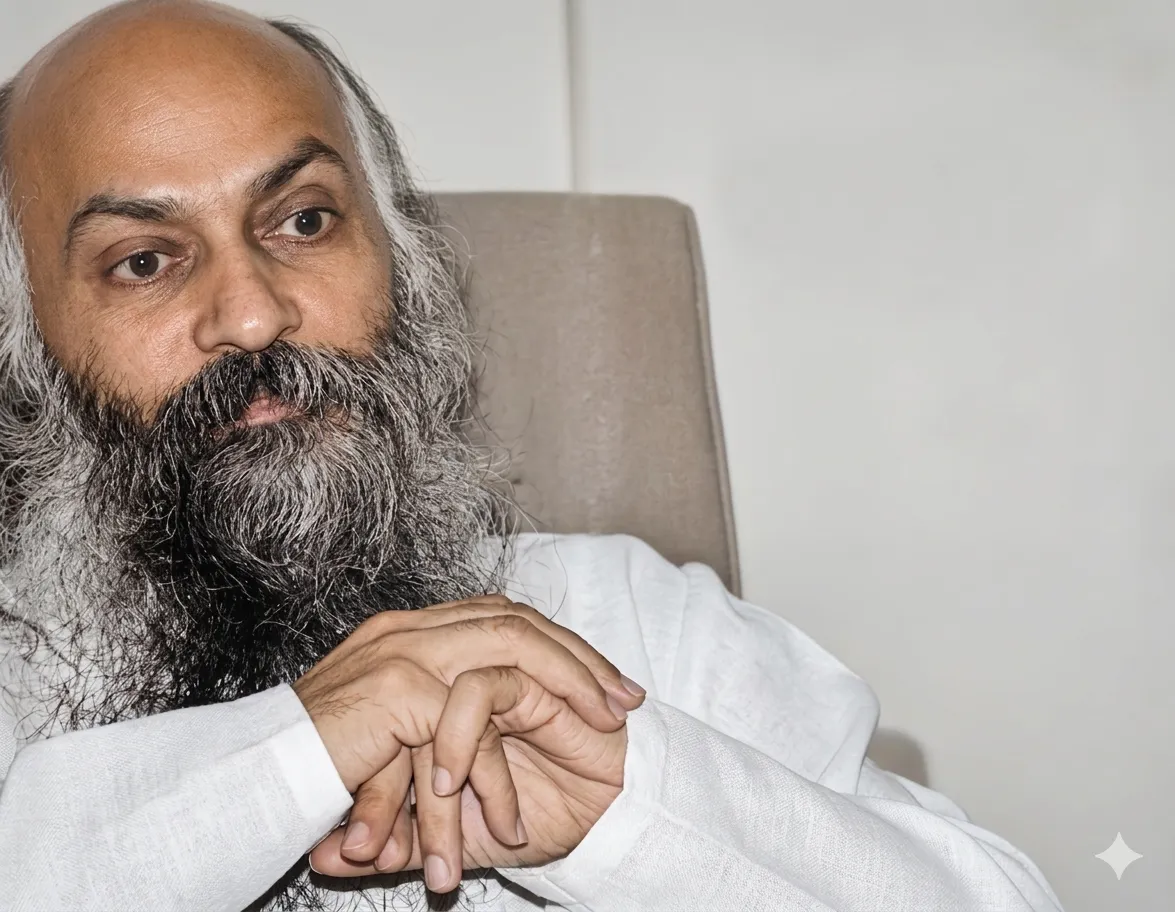
Forget yourself and be fully present in what you’re doing; when the doer disappears, all of you is given.
From the Discourses
Passages where Osho speaks to this question — each links to the complete discourse.
How to he total? How to give everything?
Every evening, people come to ask me: "How to share?" And my problem is that I don't see anything that they are going to share! There is nothing. When you don't have anything, this question arises: "How to share?" This question keeps you happy that you have something to share but you don't know how to share. This keeps you unaware of the fact that you don't have anything to share -- because when you have, it happens spontaneously. You cannot resist it, it has to be given forth. There is no way to avoid, it is inevitable. So first thing, you ask: HOW TO BE TOTAL? Not to be is to be total. Second, you ask: HOW TO GIVE EVERYTHING? Know that you have nothing. And wait... and wait in silence, in patience. Something will start flowing out of your being. It will take you unawares. It will be…
Osho, what is it that I can give to you? And what is it that I can take of you? And who am I?
"What is it that I can give to you? " You can give me nothing. And what is it that you can take of me? You can take nothing. But your nothingness is negative, and my nothingness is positive. "And who am l?" Between these two nothingnesses -- just a momentary wave between these two banks of nothingness. Between the nothingness which is negative and the nothingness which is positive, you ARE. Just a wave. Try to understand this. You cannot give me anything because you have nothing. I can give you everything, because I also have nothing. And between these two is your ego: just a trembling, just a wave, a tension. If you receive me, the ego will disappear. If you are ready to receive me, you would have already surrendered the ego. To move from a nothingness which is negative towards a nothingness which is positive is…
Question: First question: Osho, how can the state of surrender be attained? In life, the most difficult, the most arduous inner state is surrender. The mind is built around the ego. It is easy for the mind to assume, “I am the center of the whole universe,” as if the earth, the sun, the stars all revolve around me, for me; the whole of life is a means, and I am the end. The ego-state means: I am the goal and everything else is a means. Everything exists for me; I exist for no one. I am the target; all that happens is for me. All is an arrangement to serve me. This is the ego-mood. Surrender is exactly the opposite: I am nothing. My being is like a void, and the center lies outside me.
मन अहंकार के आस-पास निर्मित है। मन को मानना आसान है कि मैं ही केंद्र हूं सारे जगत का। जैसे पृथ्वी और सूर्य, तारे, सब मेरे आस-पास घूमते हों, मेरे लिए घूमते हों; पूरा जीवन साधन है और साध्य मैं हूं। अहंकार की भाव-दशा का अर्थ है कि मैं साध्य हूं और सभी कुछ साधन है। सब कुछ मेरे लिए है और मैं किसी के लिए नहीं हूं। मैं ही लक्ष्य हूं; मेरे लिए ही सब घटित हो रहा है। सभी कुछ मेरी सेवा का आयोजन है। यह अहंकार भाव है। शरणागति का भाव ठीक इससे विपरीत है; कि मैं कुछ भी नहीं हूं। मेरा होना शून्यवत है और केंद्र मुझसे बाहर है। …
The whole spring bursts forth within you
It is love that makes one noble -- not birth, but love. Nobody is born noble -- the whole idea of aristocracy is sheer nonsense -- but one can become noble. One has to be very alert, sensitive, creative, only then can one be noble. It is easy to paint a picture, to create a painting, it is easy to sculpt a statue. The hardest thing to create is your own self, your own being. Even to sculpt out of granite is not that difficult. The greatest problem arises when you start cutting chunks of your being which had been there for many many lives. You have believed in them as if they are part of you; they have almost become your second nature. One's real being is lost in many unreal things; for example, the ego is one of the greatest problems. It is unreal, but it is covering…
Osho, we are incomplete. However much we search outside or inside, how will the Whole ever be seen? How will we find the Whole?
It’s true. You are incomplete; all your seeking will remain incomplete. But non-seeking can be complete. Whatever you seek, you will be the seeker; it will be a search of your own hand, it will be like you. Whatever you make will carry your imprint. Whatever you construct, whatever you create, will be incomplete. If the maker is incomplete, how can the creation be complete? Quite right. Whatever you think will be incomplete. Whatever ideas you entertain will be fragmentary. Whatever conclusions you draw can never be whole and total. If you have faith, it will be incomplete; if you doubt, that too will be incomplete. You go into the world—half-and-half; you enter the temple—half-and-half. Because you are incomplete. That’s right. Then is there no way? God is complete and you are incomplete. And whatever you do will be incomplete—prayer incomplete, sadhana incomplete, samadhi incomplete. So how will you find…
तीसरा प्रश्न: ओशो, हम अधूरे हैं। हम बाहर या भीतर कितनी ही खोज करें, हमें पूरा कैसे दिखेगा? पूरा कैसे मिलेगा?
तुम जो भी खोजोगे, तुम्हीं खोजोगे; तुम्हारे हाथ की ही खोज होगी, तुम्हारे जैसी ही रहेगी। तुम जो भी बनाओगे, उसमें तुम्हारी ही छाप होगी। तुम जो भी निर्मित करोगे, सृजन करोगे, वह अधूरा ही होगा। क्योंकि अधूरा बनाने वाला है, तो कृति कैसे पूरी हो सकती है? बिलकुल ठीक बात है। तुम जो भी सोचोगे, वह अधूरा होगा। तुम जो भी विचार करोगे, वह खंडित होगा। तुम जो भी निष्कर्ष लोगे, वह कभी संपूर्ण और समग्र नहीं हो सकता। तुम श्रद्धा करोगे, तो अधूरी; तुम संदेह करोगे, तो अधूरा। तुम संसार में जाओगे, तो आधे-आधे; तुम मंदिर में प्रवेश करोगे, तो आधे-आधे। क्योंकि तुम अधूरे हो। बात ठीक है। तो क्या फिर कोई उपाय नहीं है? क्योंकि परमात्मा तो पूरा है और तुम अधूरे हो। और तुम जो भी करोगे, वह सब अधूरा होगा--प्रार्थना भी अधूरी, साधना भी अधूरी, समाधि भी अधूरी। तो तुम पूरे परमात्मा को कैसे पाओगे?