
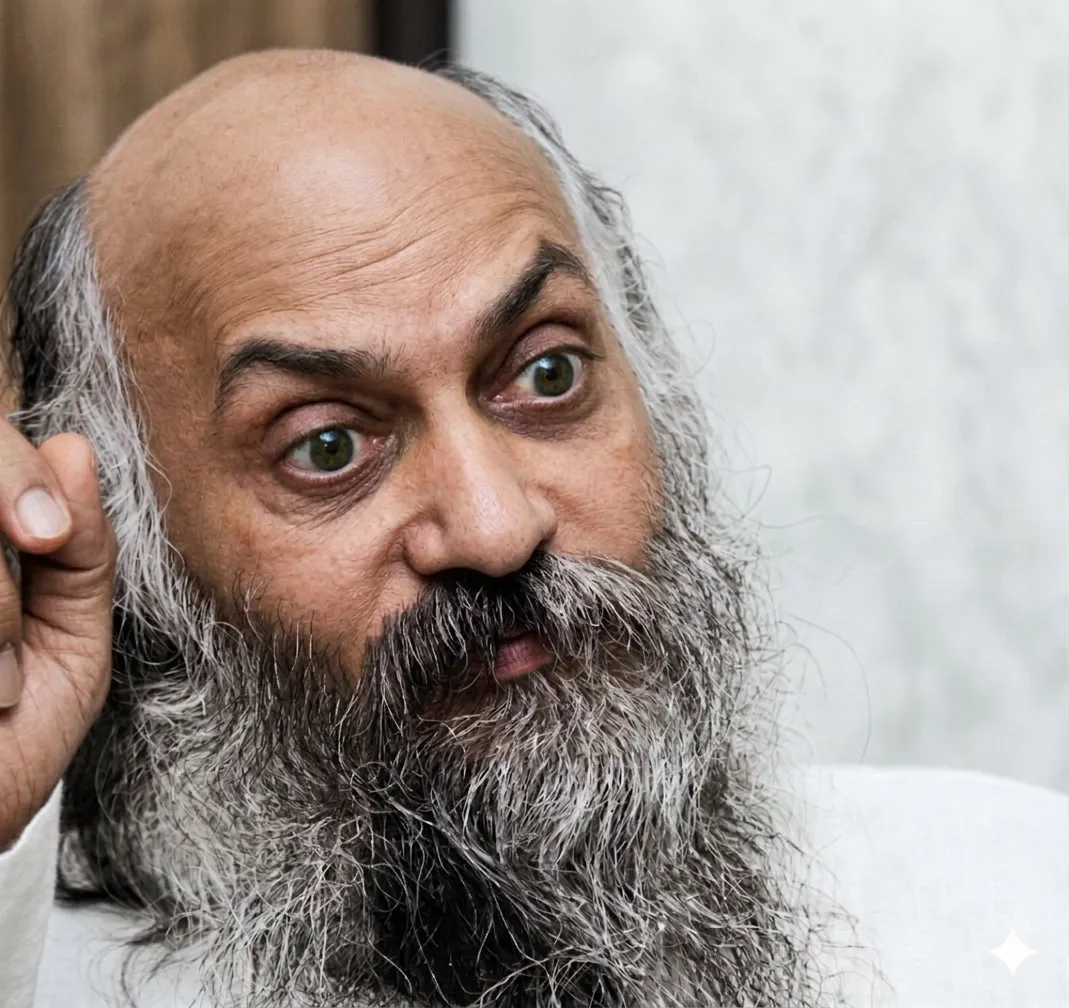
Don’t try to tie a river into a knot; let it flow and adjust as life changes.
From the Discourses
Passages where Osho speaks to this question — each links to the complete discourse.
Osho, you talk of totality. You can’t have a diffused movement at the same time. This diffused movement—how would you try to bind it into a single sutra?
Think about it a little. In fact, what does organization mean? Organization means that people of one idea, people who imagine bringing about a certain kind of society, gather together. They gather and try to place a pattern of ideology upon society. My understanding is that it is dangerous to impose a very fixed pattern on society. Because society moves ahead every day; a fixed pattern is always left behind. It is like putting pajamas on a child. The child keeps growing day by day; the pajamas keep getting smaller day by day. Every day there is a need for the pajamas to be bigger. But those who organized the pajamas say, “This is the pajama we decided on; he must go on wearing this same pajama.” The child grows; the pajama becomes tight. All organizations—the more organized they are—the more fixed and dead they become. What is needed is…
ओशो, यू टाक ऑफ टोटेलिटी। यू कांट हैव डिफ्यूज्ड मूवमेंट एट दि सेम टाइम। यह जो डिफ्यूज्ड मूवमेंट है इसको एक सूत्र में बांधने की कोशिश कैसे करेंगे आप?
इसे थोड़ा सोचें। असल में, आर्गनाइजेशन का मतलब क्या होता है? आर्गनाइजेशन का मतलब यह होता है कि एक विचार के लोग, एक समाज की रचना लाने की कल्पना करने वाले लोग इकट्ठे हो जाएं। ये इकट्ठे होकर एक आइडियालॉजी के पैटर्न को समाज के ऊपर बिठाने की कोशिश करें। मेरा मानना यह है कि समाज के ऊपर कोई बहुत फिक्स्ड पैटर्न बिठालना खतरनाक है। क्योंकि समाज रोज आगे बढ़ जाता है; फिक्स्ड पैटर्न हमेशा पीछे पड़ जाता है। वह ऐसे ही जैसे एक बच्चे को हमने पाजामा पहना दिया। अब बच्चा तो रोज आगे बढ़ता चला जाता है, पाजामा रोज छोटा पड़ता चला जाता है। रोज जरूरत होती है कि पाजामा बड़ा हो। लेकिन वे जो पाजामे के आर्गनाइज करने वाले लोग थे, वे कहते हैं कि यही पाजामा हमने तय किया था, इसी पाजामे को पहनाए रखना है। बच्चा बड़ा होता है, पाजामा छोटा पड़ जाता है। सब आर्गनाइजेशन, जितने ज्यादा आर्गनाइज्ड होंगे, उतने ही ज्यादा फिक्स्ड और डेड हो जाते हैं। एक फ्लूडिटी चाहिए। और फ्लूडिटी का मतलब यह है कि--इसलिए मैं कहता हूं मूवमेंट, आर्गनाइजेशन नहीं। …
Osho, why are these sutras prescribed in samayik? Have these sutras been prescribed since Mahavira’s time?
Sutras are made and imposed by followers; Mahavira has nothing to do with it. In fact, there is always this difficulty: what the followers do—this is a very tricky matter. They do whatever they can. And they put the whole apparatus in place. In that very arrangement, what was essential dies. And the poor followers, out of love, make these arrangements. They say, “Let everything be systematized.” People ask: What should we do? For how long? How should we do it? So, make some arrangement—otherwise how will people understand? How will the ordinary person understand? For the ordinary person they make the arrangement. In that arrangement, truth dies. And then the arrangement goes on, and it has no connection with truth. And, to begin with, people like Mahavira are hard to understand. Because what they are saying has such depth, and where we stand is so shallow—in fact, we stand…
प्रश्न: ओशो, ये सूत्र क्यों बांधे हैं सामायिक में? ये सूत्र महावीर के समय से ही बांधे हुए सूत्र हैं?
सूत्र अनुयायी बनाते हैं और बांधते हैं, महावीर का कोई संबंध नहीं है। असल में सदा यह कठिनाई है कि अनुयायी क्या करता है, यह बड़ा मुश्किल मामला है। वह कुछ भी--जो वह कर सकता है, करता है। और वह सब इंतजाम कर देता है पूरा का पूरा। और उसमें जो महत्वपूर्ण था, वह इंतजाम में ही मर जाता है। और अनुयायी बेचारा प्रेम से इंतजाम करता है। वह कहता है, सब व्यवस्थित कर दो। लोग पूछते हैं, क्या करना चाहिए? कितनी देर करना चाहिए? कैसे करना चाहिए? तो कुछ तो इंतजाम करो, नहीं तो लोग कैसे समझेंगे? सामान्य आदमी कैसे समझेगा? सामान्य आदमी के लिए वह इंतजाम कर देता है। उस इंतजाम में सत्य मर जाता है। और फिर वह इंतजाम चलता है और सत्य का उससे कोई संबंध नहीं रह जाता है।
Osho, Mahavira and Gautam Buddha were contemporaries. From your talks it becomes clear that the two were saying the same thing. Yet their disciples would argue and quarrel among themselves. After they were gone, there was even violence and war among their followers. But if Mahavira and Buddha had said that we are speaking of the same religion and the only difference is in method, then such hostility would not have grown and the harm that befell both religions would not have occurred. Kindly explain. Amrit Bodhidharma has asked:
If someone is enchanted by the design of the mosque, by its minarets, let him go to the mosque. But this has nothing to do with religion; it has to do with architecture, with aesthetic sense. You build your house one way, I build mine another—this creates no quarrel. I build my God’s house one way, you build yours another—why should that create quarrel? I build mine round, you build yours square—there is no quarrel. The purpose of a house is one: that I will live in this round house, you will live in that square one. We build houses to live in. There must be that much freedom—that whoever wishes should build as he likes; in old style or new; ancient design or an invented one; with a high roof or low; with a garden or without; with plants or with sand—a matter of taste! We do not quarrel…
पहला प्रश्न: ओशो, महावीर और गौतम बुद्ध समकालीन थे। आपके प्रवचनों से स्पष्ट हो रहा है कि दोनों बात भी एक ही कहते थे। लेकिन दोनों के शिष्य आपस में विवाद और झगड़े भी करते थे। उनके जाने के बाद उनके अनुयायियों के बीच हिंसा और युद्ध भी हुए। लेकिन यदि महावीर और बुद्ध ने कहा होता कि हम एक ही धर्म की बात करते हैं, भेद सिर्फ पद्धति का है, तो इतनी शत्रुता नहीं बढ़ती और दोनों धर्मों की जो क्षति हुई वह न होती। कृपापूर्वक समझाएं। पूछा है अमृत बोधिधर्म ने।
… और किसी को मस्जिद की बनावट में रुचि है और मस्जिद के मीनार मन को मोहते हैं, तो मस्जिद जाए। लेकिन यह धर्म से इसका कोई संबंध नहीं है, स्थापत्य से संबंध है, सौंदर्य-बोध से संबंध है। तुम अपना मकान एक ढंग से बनाते हो, मैं अपना मकान एक ढंग से बनाता हूं, इससे कोई झगड़ा तो खड़ा नहीं होता। मैं अपने भगवान का मकान एक ढंग से बनाता हूं, तुम अपने भगवान का मकान एक ढंग से बनाते हो, इससे झगड़ा खड़ा क्यों हो? मैं अपना मकान बनाता हूं गोल, तुम चौकोन, इससे कोई झगड़ा खड़ा नहीं होता। झगड़े की जरूरत ही नहीं, तुम्हारी पसंद अलग, मेरी पसंद अलग; हम दोनों जानते हैं कि मकान का प्रयोजन एक कि मैं इस गोल मकान में रहूंगा, तुम उस चौकोन मकान में रहोगे। रहने के लिए मकान बनाते हैं। इतनी स्वतंत्रता तो होनी ही चाहिए कि जिसको जैसी मर्जी हो, वैसा मकान बना ले। …
Osho, the twenty-one-day ritual you have hinted at—was that practice or elemental realization in any way traditional? Because from your mode of expression it continually seems that you surely represent some teacher’s or Tirthankara’s method. Within this I also want to dare to ask: do you want to add a link to some established spiritual lineage, or, like Buddha, are you attempting to cut a new path through the mountains?
Nor is the issue one of tolerance. It is a matter of sky-like spaciousness, not tolerance. Not mere forbearance. Not that a Hindu “puts up with” a Muslim or a Christian “puts up with” a Jain. Forbearance already holds violence within it. I do not say the Quran and the Gita say the same thing. The Quran says something quite different; it has its own individual voice—that is its greatness. If it only repeated what the Gita says, it would be worth two pennies. The Bible says something else again, which neither the Gita nor the Quran says. Each has its own voice. Mahavira does not say what Buddha says; they say very different things. And yet from these differing statements one ultimately arrives at the same place. My emphasis is on the oneness of the destination, not on the oneness of the paths. My emphasis is that in the…
ओशो, जिस इक्कीस दिन के अनुष्ठान की ओर आपने संकेत किया है, क्या वह साधना या तत्वानुभूति किसी परंपरागत थी? क्योंकि आपके अभिव्यक्तिकरण से निरंतर ऐसा भास होता है कि आप भी निश्चित ही किसी टीचर एवं तीर्थंकर की पद्धति का प्रतिनिधित्व करते हैं। इसी के अंतर्गत यह जानने का साहस भी करना चाहता हूं कि आप किसी परंपरा की अध्यात्म-श्र्ृंखला की कड़ी को जोड़ना चाहते हैं, या बुद्ध की भांति किसी पहाड़ में नया मार्ग काटने का प्रयास कर रहे हैं?
इसलिए मैं कहता हूं इक्लेक्टिक! पूरी गीता को राजी हैं, फिर गीता के भी समानांतर कुछ मिलता हो कहीं कुरान में तो उसके लिए राजी हैं। इसमें राजी होने में कोई कठिनाई ही नहीं है। इसको तो कोई भी राजी हो जाएगा। मैं कहता हूं कि नहीं मैं आपसे बिलकुल राजी हूं, उतनी दूर तक, जहां तक कुरान गीता का अरबी रूपांतर है, बस। उससे इंच भर ज्यादा नहीं। वह तो कुरान वाला भी राजी हो जाता है। लेकिन यह बहुत मजेदार प्रयोग होगा कि कुरान वाले से आप गीता में चुनवाएं कि कौन-कौन सी बात का मेल है, तो आप बिलकुल हैरान हो जाएंगे। जो चीजें वह चुनेगा वे गांधी ने कभी नहीं चुनीं। वह बहुत भिन्न चीजें चुनेगा। इसको इक्लेक्टिसिज्म कहता हूं मैं। यह चुनना है। यह पूरे की स्वीकृति नहीं है। स्वीकृति तो हमारी ही है। उससे आप भी मेल खाते हो कहीं, तो आप भी ठीक हो। ठीक तो हम ही हैं अंततः। लेकिन आप भी उतने दूर तक ठीक हो, इतना कहने की हम सहिष्णुता दिखलाते हैं, जितनी दूर तक आप हमसे मेल खाते हैं। यह कोई बहुत सहिष्णुता नहीं है। …
Osho, you say you don’t speak for the crowd, that you won’t speak merely to please them. But people are saying that whenever someone speaks against Gandhi or against the Congress, people like it, and that’s why such large crowds gather.
For all of India—more so for Gujarat, of course, but certainly for the whole of India. There isn’t much distance between us and him yet; the generation that lived close to him is still alive. And for India’s future, decisions will have to be taken in some relation to Gandhi—whether in support or in opposition. Gandhi will remain significant for the next hundred years in India—that’s my understanding—whether for or against is another matter. Therefore Gandhi should be thought about very clearly. That was one reason. Second, it seems to me that not only in India but outside India too, reflection on Gandhi has begun—sometimes it even seems that people outside India are thinking more. In this country, reflection has almost stopped. So Gandhi is just a beginning. I would say we should also try to reawaken reflection on Mahavira and the Buddha. But there is a great distance between…
ओशो, वही बात है जो भीड़ जानती है, आप कहते हैं। वह आप उसके लिए नहीं बोलते। लेकिन लोग आज ऐसा बोल रहे हैं कि गांधी के विरुद्ध, कांग्रेस के विरुद्ध, ऐसी कुछ बात आती है तो लोगों को अच्छी लगती है, इसीलिए इतनी भीड़ हो जाती है।
सारे हिंदुस्तान के लिए ही! गुजरात के लिए और भी ज्यादा। और सारे हिंदुस्तान के लिए निकटतम हैं। फिर अभी भी हमारे और उनके बीच बहुत फासला नहीं हुआ। अभी जो पीढ़ी उनके निकट जीयी थी, वह अभी जिंदा है। और हिंदुस्तान के लिए मेरा मानना है कि भविष्य में जो भी निर्णय लेने हैं, वे निर्णय किसी न किसी रूप में गांधी पर विचार करके ही लेने होंगे--चाहे पक्ष में, चाहे विपक्ष में। गांधी हिंदुस्तान के आने वाले सौ वर्षों में महत्वपूर्ण रहेंगे, ऐसी मेरी समझ है--चाहे पक्ष में, चाहे विपक्ष में, यह दूसरी बात है। और इसलिए गांधी पर बहुत निश्चित रूप से विचार किया जाना चाहिए।