
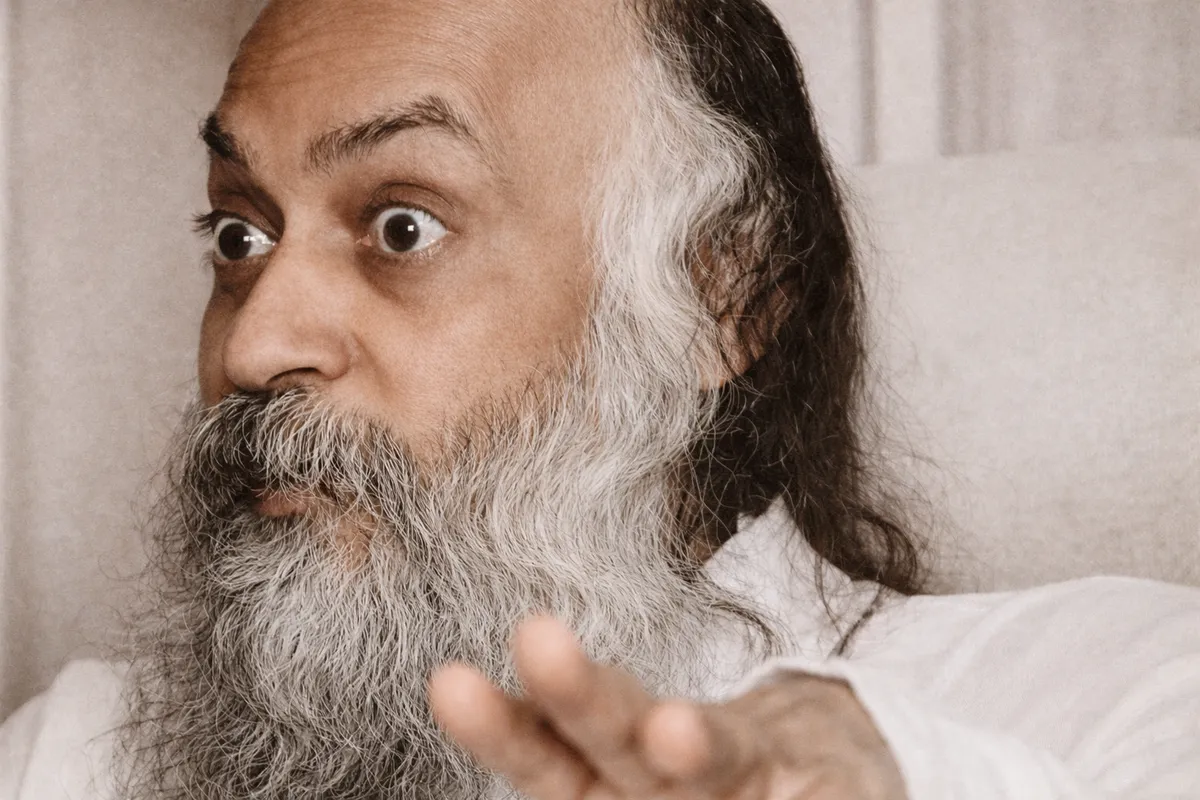
Stop collecting answers and quietly watch inside without judging—real understanding appears on its own.
From the Discourses
Passages where Osho speaks to this question — each links to the complete discourse.
Osho, you say the same thing in countless ways. But when I listen to you, it feels as if I am hearing it for the first time. And I feel so much joy that I don’t feel like going back home. What should I do—what can I do—so that I can just keep listening to you!
You will feel as if you have been made to rise out of season, before time—as if you were not yet to go and yet had to go. And if you go in that way, your home will become even more desolate than before. I do not want to make your home desolate; I want to make your home a temple. I want that when you go home, your home’s new form is revealed. I do not want to tear you away from home, from the world, from family life. That is the newness of my sannyas: I do not want to sever you from the world; I want to join you to the world in such a way that your connection with the world becomes a connection with the Divine. Let the world no longer be a barrier between you and the Divine; let it become a means. If…
पहला प्रश्न: ओशो, आप एक ही बात कहते हैं अनेक-अनेक ढंगों से। पर जब आपको सुनता हूं तो उस समय यही लगता है कि पहली बार सुन रहा हूं। और इतना आनंद मिलता है कि वापस घर लौटकर जाने का जी नहीं करता। क्या करूं, मैं क्या करूं कि आपको सुनता ही रहूं!
… ऐसा लगेगा जैसे अभी जाना न था और जाना पड़ा। और अगर ऐसे तुम गये, तो घर और भी उदास हो जाएगा। जितना पहले था, उससे भी ज्यादा। मैं तुम्हारे घर को उदास नहीं करना चाहता। मैं तुम्हारे घर को मंदिर बनाना चाहता हूं। मैं चाहता हूं कि तुम जब घर जाओ, तो तुम्हारे घर का अभिनवरूप प्रकट हो। मैं तुम्हें घर से, संसार से, गृहस्थी से तोड़ नहीं लेना चाहता। वही मेरे संन्यास का अभिनवपन है कि मैं तुम्हें संसार सेे तोड़ नहीं लेना चाहता। …
Osho, Patanjali and all the enlightened ones have spoken of samadhi. But Krishnamurti speaks of understanding. From samadhi it seems understanding can flower; but how can samadhi flower from understanding? Can the state of buddhahood be attained by understanding alone? Osho, please explain this properly.
Krishnamurti says there is no need to meditate separately. He is right. Those who said “do it separately” also know there is no real need to separate it. But they do not expect that you can be aware for twenty-four hours yet. Krishnamurti trusted you a little too much; Patanjali doesn’t trust you that much. Therefore Patanjali managed to take some of you to samadhi; Krishnamurti perhaps almost no one. He trusted you too much. You were crawling on your knees; Krishnamurti assumed you could run. Krishnamurti said what he had to say from his own standpoint; he did not take care of you. Patanjali speaks with your welfare in view—lifting you one step at a time. Patanjali has placed stairs; Krishnamurti speaks of a leap. You cannot gather the courage even to climb steps—what leap will you take! And it often happens that those who cannot muster the courage…
अंतिम प्रश्न: ओशो, पतंजलि और सारे बुद्धपुरुषों ने कहा है, समाधि। परंतु कृष्णमूर्ति कहते हैं, समझ। समाधि से तो लगता है समझ फलित हो सकती है, परंतु समझ से समाधि कैसे फलित हो सकती है? क्या केवल समझ से बुद्धत्व की स्थिति प्राप्त की जा सकती है? ओशो, इसे ठीक से समझाएं।
कृष्णमूर्ति कहते हैं, अलग से ध्यान करने की कोई जरूरत नहीं। ठीक ही कहते हैं। जिन्होंने अलग से करने को कहा है वे भी जानते हैं कि अलग से करने की कोई जरूरत नहीं। लेकिन अभी तुम चौबीस घंटे कर सकोगे, इतनी अपेक्षा वे नहीं करते। कृष्णमूर्ति ने तुम पर ज्यादा भरोसा कर लिया। पतंजलि उतना भरोसा तुम पर नहीं करते। और इसलिए पतंजलि ने तो तुम में से कुछ को समाधि तक पहुंचा दिया, कृष्णमूर्ति न के बराबर किसी को पहुंचा पाए हों। तुम पर जरा ज्यादा भरोसा कर लिया। तुम घुटने से सरक-सरककर चलते थे। कृष्णमूर्ति ने मान लिया कि तुम दौड़कर चल सकते हो। कृष्णमूर्ति ने जो बात कही है, अपने हिसाब से कह दी, तुम्हारी चिंता नहीं की। पतंजलि ने जो बात कही है उसमें तुम्हारी चिंता है। और एक-एक कदम तुम्हें उठाने की बात है। …
Osho, “understanding” — what kind of phenomenon is it?
On the second day he saw—he is doing it all day; three or four times a day, for an hour each time—he saw that this anger is toward no one; this anger is within me. And today was his third day. He came and said, “I am astonished: the moment it became clear that it is toward no one, that it is within me, it was as if something inside took its leave—everything has become quiet. I am utterly unable now: if someone abuses me at this moment, I will not be able to get angry. At least not at this moment. Because it is as if a great weight inside has been thrown out. Everything is empty.” Understanding means: whatever happens within you happens knowingly, in your awareness, in your wakefulness, in your consciousness. Whatever! And then much will stop happening by itself. And what stops—that is sin. And…
प्रश्न: ओशो, समझ लेना, यह किस घटना का नाम है?
दूसरे दिन उन्हें दिखाई पड़ा--वे दिन भर कर रहे हैं; तीन-चार बार दिन में कर रहे हैं; घंटे-घंटे भर तीन-चार बार--दूसरे दिन उन्हें दिखाई पड़ा कि यह क्रोध किसी पर नहीं है, यह क्रोध मेरे भीतर है। और आज तीसरा दिन था उनका। आज उन्होंने मुझे आकर कहा कि हैरान हूं; जैसे ही यह दिखाई पड़ा कि किसी पर नहीं है, मेरे ही भीतर है, वैसे ही जैसे भीतर कोई चीज विदा हो गई, सब शांत हो गया है। मैं निपट असमर्थ हो गया हूं। अगर मुझे कोई गाली दे इस वक्त, तो मैं क्रोध न कर पाऊंगा। इस वक्त तो नहीं ही कर पाऊंगा। क्योंकि इस वक्त भीतर से जैसे कोई बहुत भार था, वह फिंक गया है। सब खाली हो गया है।
Question: OSHO, WHAT IS UNDERSTANDING AND WHAT IS MISUNDERSTANDING? ... Maulingaputta was offended. He said, "Why are you laughing? Buddha said, "I am laughing because once I had stayed in a village for the rainy season... In the rainy season Buddha used to stay for four months because traveling was impossible. You can think of the roads twenty-five centuries before -- Indian roads! Even now in the rainy season they are not worth traveling, and Buddha was traveling on foot and it was difficult, almost impossible. So he used to stay for four months in one place; eight months he will travel to spread his word. Buddha said, "Once I was staying in a village for four months.
Osho, I know what is right, yet I cannot do it. And you say that with knowledge alone—mere knowledge—behavior changes. This does not make sense to me!
A book cannot be a Guru—even if it contains the words of Gurus. However beautiful the book, it cannot be Guru. A book cannot awaken you; it is asleep itself. A book cannot make you alive; it is dead itself. The book may be filled with priceless sayings; it may cry from within, “Arise, awake!”—but if you are snoring beside it, what will happen? You will keep snoring; the book will keep shouting—but you will not hear. A living person is needed—someone who can shake you, jolt you, splash water on your face, prise open your eyes with his hands and say, “Get up! Wake up!” Someone who can shatter your dreams. A book cannot do this. Through meditation, the inner vision slowly begins to open. And when, with meditation, the Master’s word is heard, you recognize instantly what the diamond is. The fist closes in that very moment. Conduct…
पहला प्रश्न: ओशो, मैं जानता हूं कि क्या ठीक है, फिर भी उसे कर नहीं पाता हूं। और आप कहते हैं कि ज्ञान से ही, ज्ञानमात्र से ही आचरण बदल जाता है। यह बात मेरी समझ में नहीं आती!
किताब गुरु नहीं हो सकती। चाहे किताब में गुरुओं के वचन ही संगृहीत क्यों न हों। किताब कितनी ही प्यारी हो, फिर भी किताब गुरु नहीं हो सकती। किताब तुम्हें जगा नहीं सकती, खुद ही सोयी पड़ी है। किताब तुम्हें जीवंत नहीं कर सकती, खुद ही मुर्दा है। कितने ही बहुमूल्य वचन किताब में भरे हों, किताब में लिखा हो--उठो, जागो और तुम सोए हो और घुर्रा रहे हो और किताब पास में ही रखी है, तो क्या होगा! तुम घुर्राते रहोगे, किताब भीतर चिल्लाती रहेगी--उठो, जागो, मगर तुम्हें सुनायी भी न पड़ेगा। कोई जीवित व्यक्ति चाहिए जो तुम्हें हिला दे, झकझोर दे, कि तुम्हारे मुंह पर पानी फेंक दे, कि तुम्हारी आंखें हाथ से खोल दे और कहे--उठो, जागो! जो तुम्हारे सपने तोड़ दे! यह किताब तो न कर सकेगी। ध्यान से भीतर की दृष्टि धीरे-धीरे खुलनी शुरू होती है। …