
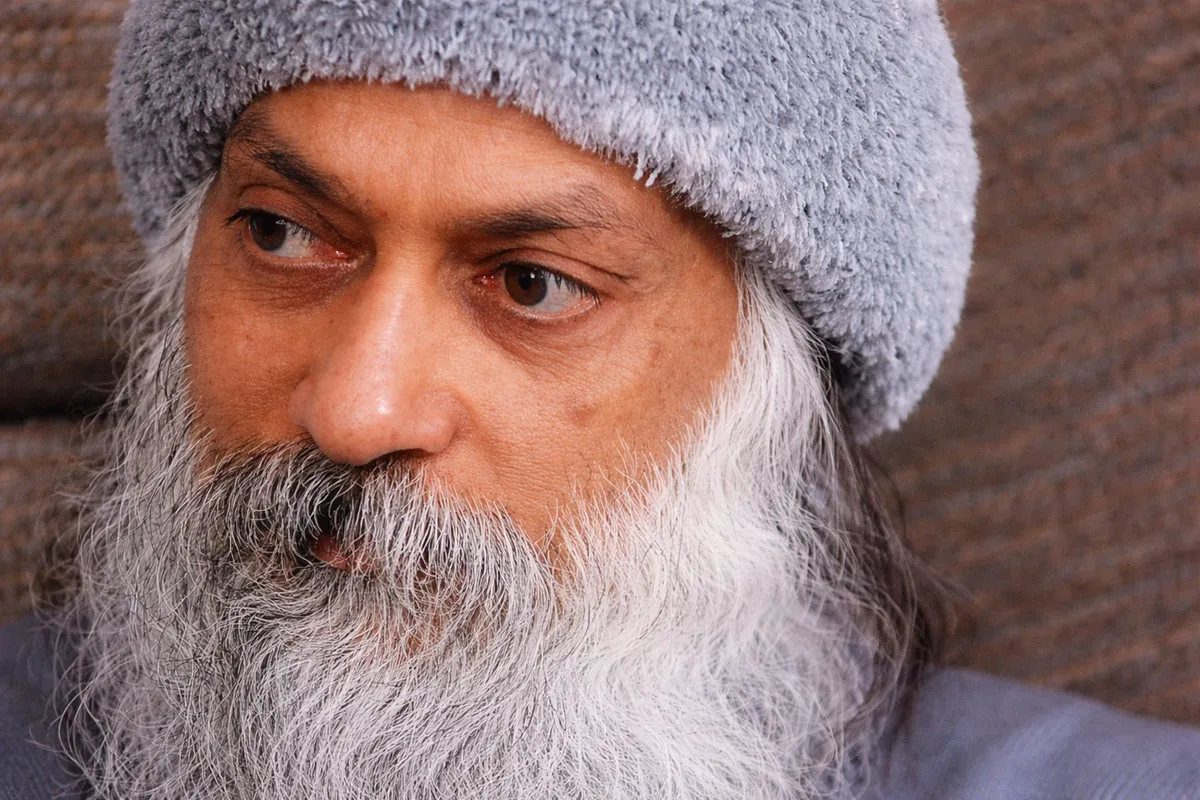
According to Osho, meditation is realized through God’s grace—but not as a license for passivity. Grace is ever-present and impartial, like sunlight; your task is to open the door. Effort cannot force the sun in, yet closed doors keep it out. Enlightened ones, seeing the immensity, call it grace; seekers must still prepare, cleanse, and open so receptivity allows the descent.
Grace is like sunlight for everyone; meditation happens when you open your window by practicing and being receptive.
From the Discourses
Passages where Osho speaks to this question — each links to the complete discourse.
Friend asks: does one attain to meditation through god's grace?
It will be useful to understand this thing, because it has led to lots of misunderstandings and mistakes. A good number of people have thought that if meditation is attained through God's grace then there is no need to do anything, and they did not do a thing. You are grievously mistaken if you mean by God's grace that you don't have to do anything. Another misunderstanding that flows from it is that God's grace is not equally available to everybody, that some persons receive more of it and others less. But in fact, no one is God's chosen one; no one is his favorite. And if even God has his favorites then there is no hope for justice in the world. If you mean by God's grace that God is kind to some and unkind to others then you are wholly mistaken. But the statement that one attains to…
A friend has asked: Osho, is meditation attained by the grace of God?
So the temple was washed and cleaned; flowers were placed, lamps were lit; fragrance was sprinkled, incense and lights; offerings were prepared, meals cooked. By evening the priests were tired. Many times they looked toward the road, but no one appeared. And each time they looked they returned saying, “A dream is a dream—who comes! We went mad needlessly. Good we didn’t tell the village, or people would laugh.” Evening fell. Then they said, “Now let us take the offering ourselves. As always, the offering kept for God came to us; this too we will have to take.” Does anyone ever come! We got caught in a dream and made fools of ourselves—knowingly fools. Others become fools unknowingly; we—we know very well: God never comes. Where is God? This is just the idol in the temple, we are the priests, this is our worship; this is a business. So in…
Osho, you have said that the divine is found not by effort but as grace; Sahajo, in a mood of awed gratitude, sings of the grace of her master Charandas, and Kabir of the grace of his master Ramananda. Upon you, whose grace descended? Did you attain the supreme enlightenment without a master’s grace? Please say something about this.
I have explained two approaches to you: the jnani and the bhakta. The jnani attains through his own worthiness; the bhakta through his prayer. The jnani “acquires” the divine by austerity; it is his achievement. He is a claimant. “If I have found, I have found it by my own labor.” Hence the religion and culture that Mahavira founded is called the Shramana culture. Shramana means: not by grace, but by effort. That is why Mahavira is known as the Shramana Bhagwan—one who attained the ultimate through effort. The jnani says, “Through austerity, renunciation, and merit I attained God—not for free, not by anyone’s grace. I earned it.” That is the jnani’s claim. The bhakta says, “Through prayer, worship, dancing, cajoling—by pleasing you. I had no worthiness of my own. I danced and delighted you. I sang your songs, praised your glory, won you over. In some deep moment of…
Question: First question: Osho, God-realization through grace—how does it happen? Effort is the shadow of man’s ego. Grace is the fragrance that arises in a state of egolessness. By effort you get the small. Man’s fist is very small. You can hold pebbles in your fist; try to hold the Himalayas and you’ll be in trouble. By effort you get the petty—because man’s power is limited. By grace you receive the vast. Effort is a clenched fist; grace is an open hand. “I will get it”—the untruth is already there in this. Because the “I” itself is the untruth. The day you know “I am not,” that day it is found. In truth it was always found—only the stiffness of “I” did not let it be seen. What comes by grace is not that it comes today—it is already here, always here.
Those are the moments of purity, innocence, those are the moments which can be called divine. They are no more human. You have transcended humanity in those moments. Slowly slowly those moments become bigger and bigger, and one day it becomes such a simple process that whenever you want to you can go into that interval, into that thoughtlessness. Fully aware yet thoughtless -- that is meditation. And that is the only thing that can liberate you from all kinds of bondages, that can bring peace to you, and bliss and god and truth. Grace is never human, it is always divine. It is the beyond penetrating the gross planes of existence. It is matter penetrated by spirit. When matter becomes penetrated by the spirit it becomes luminous. That luminosity is grace, that aura is grace. Grace belongs to the beyond, to the eternal.