
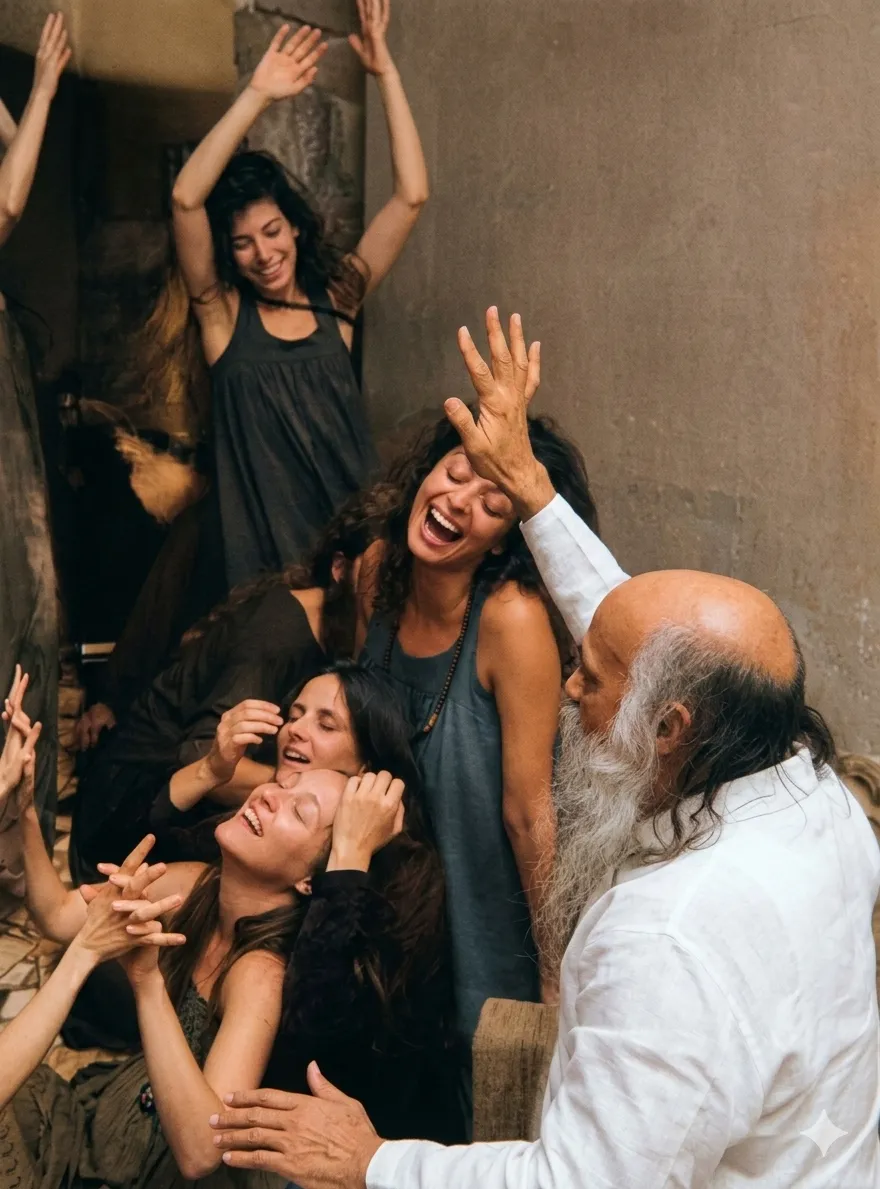
The master can’t just give you truth like a toy—you have to grow, search quietly, and take it yourself so you can keep it.
From the Discourses
Passages where Osho speaks to this question — each links to the complete discourse.
Does a disciple steal something from his master?
Everything! Because the truth cannot be taught, it has to be learned. The Master can only tempt you, make you more and more thirsty for it; but he cannot deliver it to you -- it is not a thing. He cannot simply transfer it in your name -- it is not a heritage. You will have to steal it. You will have to work hard in the dark night of the soul. You will have to find ways how to steal it. The Master only tempts you; he simply provokes you. He shows that something is there, a treasure, and now you have to work hard. In fact, he will create all sorts of obstacles so that you cannot reach to the treasure very easily. Because if you reach to the treasure very easily, you will not have grown; you will lose that treasure again. It will be a treasure…
Beloved Osho, last night I was reading a rubbishy book in bed and suddenly the thought came like a flash of light, "but the master cannot give you the truth, you have to steal it. And not only will he not lose it, he will enjoy your stealing it more than you." and then straightaway I thought that perhaps that is the meaning of the main sutra of the ishavasya upanishad -- that the whole comes out of the whole, and still the whole remains. And I felt a deep silence for a few moments. Osho, please say something more about that sutra.
The ISHAVASYA UPANISHAD sutra is one of the most significant statements ever made: the whole comes out of the whole, yet the whole remains behind. The whole loses itself into the whole, yet the whole remains the same. This is really the quality of wholeness. It cannot be more, it cannot be less. You can either take something out of it or you can put something into it: it remains the same. It is the unchanging, eternal truth. Everything else is changing, and everything else -- if you take something out of it -- will lose something; if you put something into it, it will gain something. Connecting the sutra with the master and the disciple, it becomes even more clear. Thousands of disciples can take the truth from the master, but his wholeness remains the same; it is not that he becomes a beggar because you all have taken…
The last time I was here I saw myself as a beggar; this time a thief. Please comment.
You are growing well! This is the spiritual path. A disciple, when he first comes to the Master, is naturally like a beggar. He is begging, he is tremendously desirous, greedy; he goes on asking this and that. When you have grown a little into the world of discipleship you become a thief. Then you start feeling that truth cannot be given, it can only be stolen. Yes, this is the way in which a disciple grows. Truth has to be stolen from the Master, it cannot be given. You will have to be very, very intelligent, aware, to steal it away. If I could give it to you it would have been simple, but I cannot give. You have to become very, very alert. Do you know that the art of the thief is the art of awareness? When a thief enters into somebody's house in the dark night…
Beloved Osho, you have been critical of most of the masters, but I don't recall hearing your criticism of gurdjieff. Is that significant? He talked about the sly man who stole his enlightenment from the master. I'm puzzled about how to do it. How can I steal your silence, your bliss, your grace?
Gurdjieff was really a remarkable mystic, one of the most remarkable who has ever walked on the earth. But to understand him is more difficult than to understand anybody else. With Gurdjieff it was true -- he was very secretive. If anybody wanted to get anything from him, it was not an easy job. Even if you read his book, you cannot read more than ten pages. It is a one-thousand-page book. ALL AND EVERYTHING is the name of the book, but you cannot go on more than ten pages, for the simple reason that he writes in such a way that to find out what he is saying is difficult. One sentence goes on running over the whole page. By the time you end the sentence you have forgotten the beginning. And what happened in the middle, nobody knows. He was inventing words of his own, so you cannot…
Lao Tzu says, Even the Supreme Truth has to be stolen. Why stolen? Because He is the heart of our heart, yet He has become very far from us. He is our own, but so alien now that to attain Him will be called stealing. You yourself have made Him so alien, so distant. It is your own treasure, but you have placed such a distance that to obtain it you will have to pass through almost the state of a thief. You have completely squandered it, completely lost it. Now when you go to regain it, no claim remains yours; your ownership ended long ago. That is why you wander like a beggar. If this beggar now wishes to become an emperor again, it is almost the condition of theft. Because that empire has not been his for long.
लाओत्से कहता है, उस परम सत्य को भी चुराना है। क्यों चुराना है? क्योंकि है तो वह हमारे हृदय का हृदय, लेकिन हमसे बहुत दूर पड़ गया है। अपना ही है, लेकिन इतना पराया हो गया है कि अब उसे पाने की कोशिश चोरी ही कही जाएगी। तुमने ही उसे इतना पराया कर दिया है, इतना दूर कर दिया है। अपनी ही संपदा है, लेकिन फासला तुमने इतना कर लिया है कि अब उसे भी पाने के लिए तुम्हें करीब-करीब चोर की हालत से गुजरना पड़ेगा। तुम उसे पूरा गंवा चुके हो, तुम उसे पूरा खो चुके हो। अब फिर से पाने जाओगे। तुम्हारा कोई दावा नहीं रह गया है; तुम्हारी मालकियत कभी की समाप्त हो गई है। तभी तो तुम भिखारी की तरह भटक रहे हो। यह भिखारी अब सम्राट फिर बनना चाहे तो करीब-करीब चोरी की हालत है। क्योंकि साम्राज्य तो कभी का उसका नहीं रहा है। न मालूम अतीत के किन क्षणों में, किन जन्मों में, तुम उसे गंवा दिए हो। फिर से पाना है, फिर से दावा करना है। वह दावा चोर जैसा ही दावा है। और चोर जैसा ही प्रयास है। अंधेरे में टटोलना है; रोशनी अभी है नहीं। …