
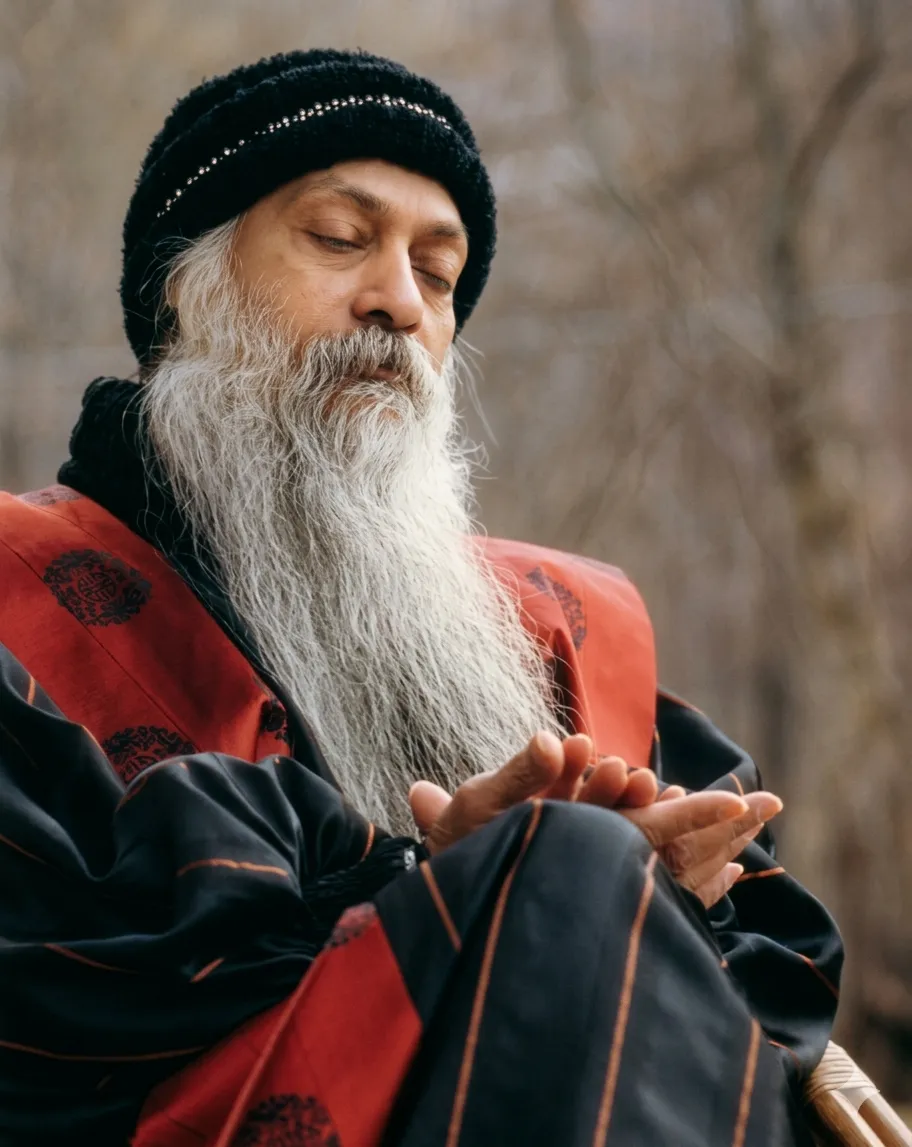
Shankara says what changes isn’t truly real, but Osho says both the moving world and the still center are real and need each other.
From the Discourses
Passages where Osho speaks to this question — each links to the complete discourse.
Osho, could Shankara’s maya mean not falsehood but changeability?
You can assign any meaning you like. But Shankara calls change itself false. What Shankara is saying is precisely this: that which is not the same forever is untrue; that which was one thing yesterday, is something else today, and will be something else tomorrow—this is mithya, the unreal. In Shankara’s definition, change is the very synonym of falsehood, and the unchanging the synonym of truth. For him, truth is that which is eternal—eternity itself—what simply is, as it is, without ever undergoing any change and in which change is not even possible. What does this imply? It means that what was one thing a moment ago and becomes something else a moment later—what does that mean? It means what it was a moment ago, it truly wasn’t; and what it becomes a moment later, that too it isn’t—because in the next moment it will be something else again. That…
ओशो, शंकर की माया का अर्थ झूठ न होकर परिवर्तनशीलता नहीं हो सकता?
अर्थ तो कुछ भी किया जा सकता है। लेकिन शंकर परिवर्तनशीलता को ही झूठ कहते हैं। शंकर कहते ही यह हैं कि वही है असत्य, जो सदा एक सा नहीं है। वही है मिथ्या, जो कल था कुछ और, आज है कुछ और, कल होगा कुछ और। शंकर की मिथ्या और असत्य की परिभाषा ही परिवर्तन है। शंकर कहते हैं, जो शाश्र्वत है, सदा है, वही है; वही है, वैसा ही है। जिसमें कभी कोई परिवर्तन नहीं हुआ, जिसमें परिवर्तन हो ही नहीं सकता, वही है सत्य। सत्य की शंकर की परिभाषा शाश्र्वतता है। इटरनिटी है। और संसार की परिभाषा परिवर्तन है, जो बदल रहा है, जो बदलता जा रहा है, जो एक क्षण भी वही नहीं है जो एक क्षण पहले था। अब इसका मतलब क्या हुआ? इसका मतलब यह होता है कि जो एक क्षण पहले कुछ और था और एक क्षण बाद कुछ और हो गया--इसका मतलब क्या हुआ? इसका मतलब यह हुआ कि जो एक क्षण पहले था, वह भी वह नहीं था; और एक क्षण बाद जो हो गया, वह भी वह नहीं है; क्योंकि एक क्षण बाद वह फिर कुछ और हो जाएगा। जो नहीं है, उसी का नाम असत्य है। …
Questioner. It is said that shankara's mayic world, illusory world, really means a changing world, not a false one. What do you say?
Shankara says that which is observed is maya, false. Buddha says just the opposite, and Buddha's philosophy finds its culmination in Nagarjuna. Nagarjuna says that the one who observes is false, the observer is false. If the world is false in the eyes of Shankara, the soul is false in the eyes of Nagarjuna. This giant among the Buddhist thinkers says that between the observer and the observed the former is much more basic, and this basic element itself is false. All that is false flows from this basic falsehood. When I close my eyes, the world becomes invisible, but then I begin to dream with eyes closed. I am the basic lie; even when the world is absent 1 can create another world by dreaming. The most amusing thing is I can create dreams within dreams. Sometimes you too might have dreamed that you are dreaming. It is really…
You have been told again and again: maya is false. Escape maya. Be free of maya. Maya is sin. Maya is bondage. Maya is birth and death. Every abuse imaginable has been hurled at maya. Listen to what Shandilya says. He says: the power of the Divine is called maya. It is not false. How could it be false? Maya is the name of God’s energy. What issues from God cannot be untrue. In our dictionaries maya has come to mean “false”—that which is not, yet appears to be. We have begun to think of maya as a synonym for illusion. So many times we have been told: maya, maya, maya—it is all false; this world is all maya. Nothing is maya in that sense. Hear Shandilya’s revolutionary proclamation. He says: maya is the energy of the Divine. It is his power.
बार-बार तुमसे कहा गया है: माया असत्य है। माया से छूटो। माया से मुक्त होओ। माया पाप है। माया बंधन है। माया ही आवागमन है। जितनी गालियां दी जा सकती थीं, माया को दी गई हैं। सुनो शांडिल्य क्या कहते हैं? शांडिल्य कहते हैं: भागवत्-शक्ति का नाम ही माया है। वह झूठ नहीं है। वह झूठ कैसे हो सकती है? भगवान की ऊर्जा का नाम माया है। भगवान से जो निष्पन्न हो रही है वह असत्य नहीं हो सकती। हमारे शब्दकोशों में तो माया का अर्थ ही झूठ हो गया है--असत्य, मिथ्या, जो नहीं है और दिखाई पड़ता है। माया को हम सोचने ही लगे--भ्रम का पर्यायवाची। इतनी बार हमें समझाया गया है कि माया, माया, माया, झूठ है; यह संसार सब माया है।
Osho, while refuting Adi Guru Shankaracharya’s aphorism “the world is illusory, Brahman alone is true,” you said the world is true and Brahman is true. But the definition of truth is: that which is not perishable. Since the world is perishable, how can it be true? It must be illusory. Brahman is imperishable, therefore true. I request you to define truth and shed light on this aspect.
Call a rose “rose,” or give it another name—there are thousands of languages, so the rose has thousands of names. Does the rose care? Call it beautiful or ugly—does it change the rose? Fashions change daily. A hundred years ago, who would imagine you would place a cactus in your drawing room, that a cactus would be called beautiful? Tell a villager today that a cactus is beautiful—he will stare: “What nonsense!” He plants cactus as a fence to keep animals and thieves out. He cannot imagine putting it in his house. He’ll say, “Am I mad?” Roses were beautiful—but now to insist “the rose is beautiful” sounds old-fashioned. The modern, cultivated people keep cactus. New poetry sings of cacti; new painters paint them. The rose has become passé. Nobility is out; the cactus is the proletariat. This is the age of socialism. To praise roses—aren’t you ashamed? Kings are…
पहला प्रश्न: ओशो, आदिगुरु शंकराचार्य के ‘जगत मिथ्या, ब्रह्म सत्य’ सूत्र का खंडन करते हुए आपने कहा कि जगत भी सत्य है और ब्रह्म भी सत्य है। लेकिन सत्य की परिभाषा है--वह, जो कि नश्वर नहीं है। इसलिए जगत जो कि नश्वर है, सत्य कैसे होगा? मिथ्या ही होगा। ब्रह्म अनश्वर है, इसलिए सत्य है। आपसे अनुरोध है कि सत्य की परिभाषा करते हुए इस पहलू पर प्रकाश डालें।
तुम गुलाब को गुलाब कहो कि कोई और नाम दे दो. दुनिया में हजारों भाषाएं हैं, तो गुलाब के हजारों नाम हैं। तुम्हारे नामों से गुलाब को कोई चिंता है? तुम सुंदर कहो कि कुरूप कहो, गुलाब को कोई फर्क पड़ता है? फैशनें बदल जाती हैं। रोज बदलती हैं फैशनें। आज से सौ साल पहले कोई कल्पना कर सकता था कि कैक्टस को तुम अपने घर में बैठकखाने में रखोगे, कि कैक्टस कभी सुंदर हो जाएगा? सौ साल पहले कोई सोच सकता था? अभी भी गांव के आदमी को तुम कहोगे कि कैक्टस सुंदर है, तो वह तुम्हारी तरफ आंख फाड़ कर देखेगा कि क्या बक रहे हो, होश-हवास की बातें करो! वह तो कैक्टस को लगाता है अपने खेत की बाड़ी में कि कोई जानवर न घुस जाएं, कि कोई चोर न घुस जाए। वह तो घर में कैक्टस को रख भी नहीं सकता। वह कहेगा, मैं कोई पागल हूं? गुलाब सुंदर होता था; लेकिन अब गुलाब सुंदर है ऐसा कहना थोड़ा पुराणपंथी बात हो जाती है। पुरानी हो गई फैशन। अब जो बिलकुल सुसंस्कृत लोग हैं, जो आधुनिक लोग हैं, वे अपने घर में कैक्टस रखते हैं। …
Before separation, the two are one. After union, they are one again. In the middle are they really other? In the middle they only appear other—an appearance. The name of that appearance is maya. Since beginningless time the two are one. The One alone appears as the two. The One has divided itself—for play, for lila. The scriptures say: He was alone. He grew bored alone. He divided himself, and began to play hide-and-seek with himself. This is exactly what you do nightly in your dreams. What you do in dreams, in a vast sense, is what is happening throughout the world. Consider this world the dream of God. Take it so, and a revolution will occur in your life. Then you will not for even a moment be able to consider yourself separate.
… और संयोग के बाद फिर एक हैं। बीच में क्या भिन्न हैं? बस बीच में भिन्न भासते हैं, आभास होता है। उस आभास का नाम माया है। वे अनादि काल से दोनों एक हैं। एक ही है जो दोनों में प्रकट हो रहा है। एक ने ही अपने को विभाजित कर लिया है--खेल के लिए, लीला के लिए। शास्त्र कहते हैं: वह अकेला था। ऊब गया अकेले-अकेले। उसने अपने को विभाजित किया। फिर अपने से ही छिया-छी, फिर अपने से ही खेल शुरू किया। यही तो तुम रोज सपने में करते हो। जो तुम सपने में करते हो, वही विराट अर्थ में सारे जगत में हो रहा है। इस जगत को परमात्मा का सपना समझो। इस जगत को परमात्मा का सपना समझा, तो तुम्हारे जीवन में क्रांति हो जाएगी। फिर तुम क्षण भर को भी अपने को भिन्न नहीं मान पाओगे। …