
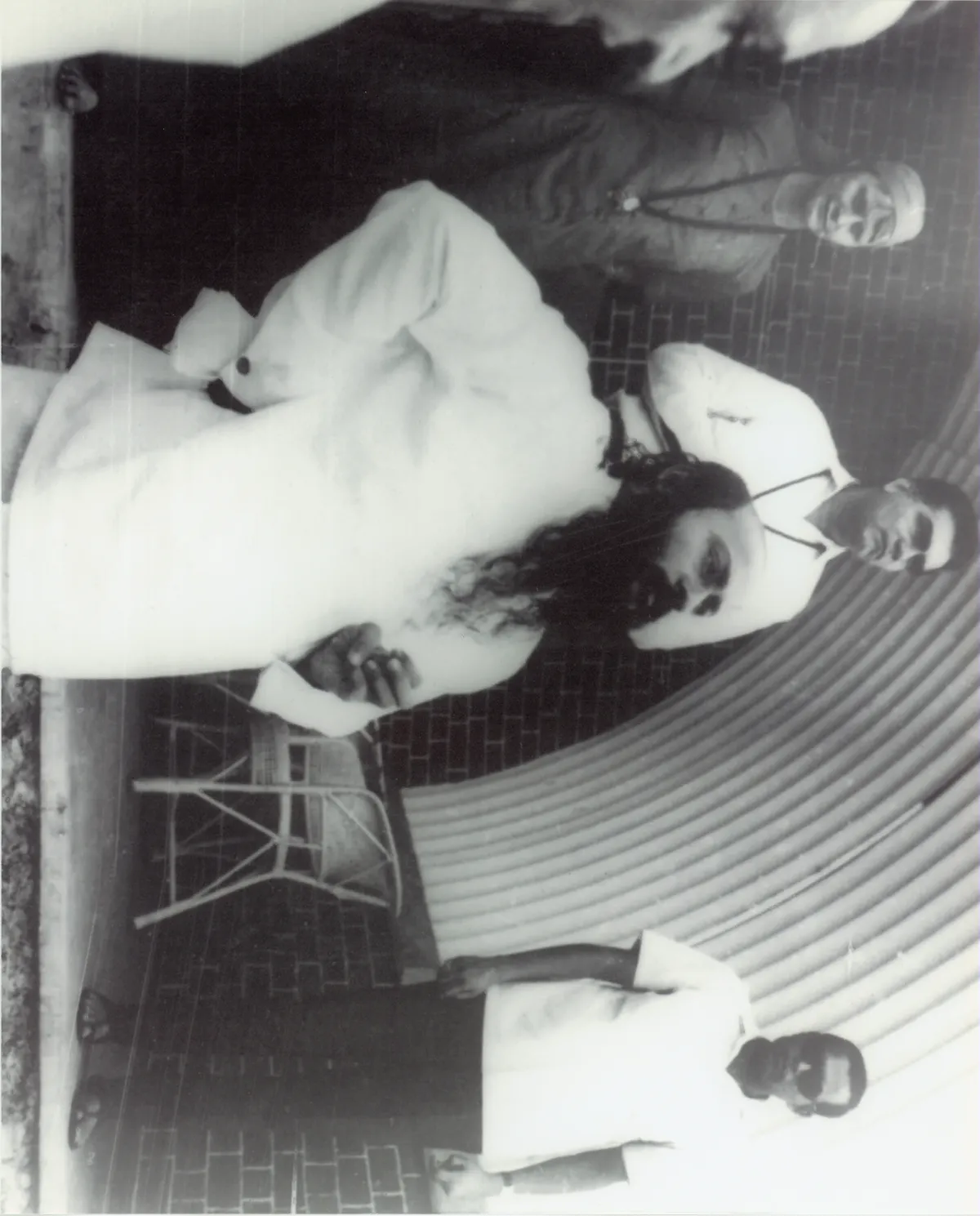
Don’t argue or agree; get quiet inside, really listen, try it yourself, and let your own clear silence show you what’s true.
From the Discourses
Passages where Osho speaks to this question — each links to the complete discourse.
Osho, you say the same thing in countless ways. But when I listen to you, it feels as if I am hearing it for the first time. And I feel so much joy that I don’t feel like going back home. What should I do—what can I do—so that I can just keep listening to you!
You will feel as if you have been made to rise out of season, before time—as if you were not yet to go and yet had to go. And if you go in that way, your home will become even more desolate than before. I do not want to make your home desolate; I want to make your home a temple. I want that when you go home, your home’s new form is revealed. I do not want to tear you away from home, from the world, from family life. That is the newness of my sannyas: I do not want to sever you from the world; I want to join you to the world in such a way that your connection with the world becomes a connection with the Divine. Let the world no longer be a barrier between you and the Divine; let it become a means. If…
पहला प्रश्न: ओशो, आप एक ही बात कहते हैं अनेक-अनेक ढंगों से। पर जब आपको सुनता हूं तो उस समय यही लगता है कि पहली बार सुन रहा हूं। और इतना आनंद मिलता है कि वापस घर लौटकर जाने का जी नहीं करता। क्या करूं, मैं क्या करूं कि आपको सुनता ही रहूं!
… ऐसा लगेगा जैसे अभी जाना न था और जाना पड़ा। और अगर ऐसे तुम गये, तो घर और भी उदास हो जाएगा। जितना पहले था, उससे भी ज्यादा। मैं तुम्हारे घर को उदास नहीं करना चाहता। मैं तुम्हारे घर को मंदिर बनाना चाहता हूं। मैं चाहता हूं कि तुम जब घर जाओ, तो तुम्हारे घर का अभिनवरूप प्रकट हो। मैं तुम्हें घर से, संसार से, गृहस्थी से तोड़ नहीं लेना चाहता। वही मेरे संन्यास का अभिनवपन है कि मैं तुम्हें संसार सेे तोड़ नहीं लेना चाहता। …
Question: Second question: Osho, I don’t understand what you say. What should I do? ... It isn’t even as it was in the Mahabharata, where some of Arjuna’s kin were on one side and some on the other. Things had gone so far that Krishna was on one side and Krishna’s army on the other. That is not only in the epic—it is even more so inside you. At least Krishna was wholly on one side there; it wasn’t as if half of him was here and half there—one hand with the Kauravas and one with the Pandavas. But that is exactly the state within you. A man was run over by a steamroller and died. His wife rushed to the hospital on hearing he had been admitted to Sassoon Hospital. She asked the nurse, “Which ward is my husband in? ... “Name? ... “The one crushed under the steamroller.
ऐसा ही नहीं है जैसा कि महाभारत के युद्ध में था, कि अर्जुन के कुछ सगे-संबंधी इस तरफ थे, कुछ सगे-संबंधी उस तरफ थे। बात यहां तक पहुंच गई थी कि कृष्ण इस तरफ थे और कृष्ण की सेना उस तरफ थी। ऐसा महाभारत में ही नहीं है, ऐसा तुम्हारे भीतर इससे भी ज्यादा है। कम से कम कृष्ण पूरे तो इस तरफ थे; ऐसा तो नहीं था कि आधे उस तरफ, आधे इस तरफ; कि एक हाथ कौरवों के साथ, एक हाथ पांडवों के साथ। मगर तुम्हारे भीतर हालत ऐसी ही है। एक आदमी स्टीम-रोलर के नीचे दब कर मर गया। उसकी पत्नी भागी हुई अस्पताल पहुंची। खबर मिली कि ससून अस्पताल में भरती है। जाकर उसने पूछा कि किस वार्ड में मेरे पति भरती हैं? जिस नर्स से पूछा, उसने कहा, क्या नाम-धाम? तो उसने कहा कि वही जो स्टीम-रोलर के नीचे दब कर मर गए हैं। तो उसने कहा कि हां, वे भरती हैं--चार नंबर, पांच नंबर और छह नंबर के वार्ड में।
Osho, what is the first experience of samadhi like?
You will know only when it happens. It cannot be said; at most a few hints can be given. It is as if, in the dark, a lamp is suddenly lit. Or as if a dying patient, right at the edge of death, suddenly finds a medicine that works; life’s wave, life’s thrill spreads again—so it is. As if a corpse becomes alive—such is the first experience of samadhi. It is the taste of nectar. The experience of the ultimate music. But it will be only when it happens; and only then will you understand. You will not understand by my saying it. It is as with love. How can anyone explain it? To someone who has never loved, never known love, no matter how many explanations you offer—he will hear it all and still ask, “I haven’t understood; please explain a little more.” It is like explaining light to…
तीसरा प्रश्न: ओशो, समाधि का पहला अनुभव कैसा होता है?
होगा तो ही जानोगे। कहा जा सके, ऐसा नहीं है। कुछ-कुछ इशारे किये जा सकते हैं। जैसे अंधेरे में अचानक दीया जल जाये, ऐसा होता है। या जैसे बीमार मरता हो और अचानक कोई दवा लग जाये...मरते-मरते कोई दवा लग जाये; और जीवन की लहर, जीवन की पुलक फिर फैल जाये--ऐसा होता है। जैसे कोई मुर्दा जिंदा हो जाये--ऐसा होता है समाधि का पहला अनुभव। अमृत का अनुभव है। परम संगीत का अनुभव है। पर होगा तो ही होगा। और होगा तो ही तुम समझ पाओगे; मेरे कहने से समझ में न आ सकेगा। प्रेम में जैसा होता है। अब कोई किसी को कैसे समझाये? …
While tokai was a visitor at a certain temple, a fire started under the kitchen floor. A monk rushed into tokai's bedroom, shouting: 'a fire, master, a fire!' 'oh?' said tokai, sitting up. 'where?' 'where?' exclaimed the monk. 'why, under the kitchen floor -- get up at once.' 'the kitchen, eh?' said the master drowsily. 'well, tell you what, when it reaches the passageway, come back and let me know.' tokai was snoring again in no time.
It happened: I was reading Greta Garbo's biography. She was an ordinary girl, working with a barber, just soaping people's faces, and she would have remained the same because she was already twenty-two, and then one American film director accidentally came to that barber's shop -- there were twenty shops in that town -- and when she was soaping his face he smiled, looking at the girl in the mirror, and said, 'How beautiful!' And everything changed. This was the first man to say to Greta Garbo, 'How beautiful!' -- nobody had ever said it before, and she never thought herself beautiful, because how can you think yourself beautiful if nobody says so? The whole night she could not sleep. The next morning she searched out the director, where he was staying, and she asked, 'Do you REALLY think that I am beautiful?' The director may have made the remark…
Beloved Osho, if a disciple does not agree with some of what the master says, is he a disciple?
The disciple is absolutely free to agree or not to agree with what the master says. But what the master does not say -- the disciple cannot disagree about that. About that, there has to be total agreement -- because that is the real thing. What the master says is just a game of words; it does not matter. The master is not a philosopher; he is not teaching a certain system of thought. He is not asking you to agree or disagree. You can disagree with everything the master says, but agree with the master. The question is of agreeing with his being. And I don't think that if you agree with his being then you will bother to disagree with his words.