
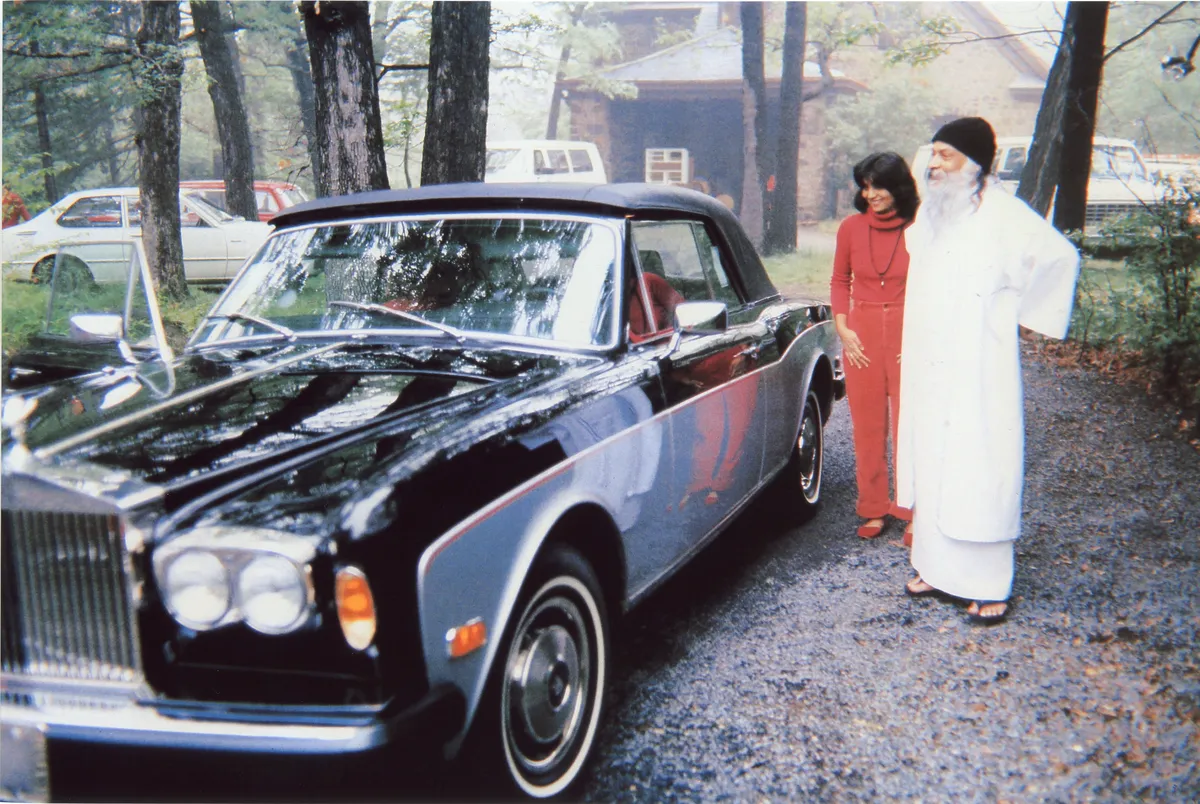
If pictures show up in your mind, don’t follow or shape them—stay quiet and let them drift away.
From the Discourses
Passages where Osho speaks to this question — each links to the complete discourse.
Another friend has asked: Osho, what is the relationship between the method of meditation and jati-smaran (recollection of past lives)?
But the one who becomes skilled in this—who can fully awaken any day’s memory up to the age of five—will find that the memories begin to awaken completely. And you should test it. As today passes, note down some events and lock them up. After two years, try to recall today. Most of it will have been forgotten. Then remember—and after remembering, break the lock and compare whether what you recalled matches what you had written. You will be amazed—astonished—that besides what you wrote, many more details have come back which you did not even note at the time. They will all be there in memory. Buddha called this alaya-vijnana. There is a corner of the human mind he called the storehouse of consciousness. Like a junk room in the house where we keep all the odds and ends, there is a storehouse that collects memories—where everything from birth after…
एक और मित्र ने पूछा है कि ओशो, ध्यान की विधि और जाति-स्मरण में क्या संबंध है?
लेकिन जो व्यक्ति इसमें समर्थ हो जाएगा, पांच वर्ष की उम्र तक की किसी भी दिन की स्मृति को पूरा जगाने लगेगा...और वह पूरी जगने लगती है। और फिर उसको इस तरह जांच कर लेनी चाहिए। जैसे आज का दिन गुजर रहा है, तो आज के दिन की कुछ बातें नोट करके ताले में बंद कर दें। दो साल बाद आज के दिन को याद करें। वह सब खो जाएगा आज का दिन। और तब स्मरण करें, और स्मरण करके फिर ताला तोड़ें, और फिर मेल करें कि वह बात मेल खा गई कि नहीं। और आप हैरान होंगे--आप हैरान होंगे कि जितनी आपने लिखी थीं, उससे बहुत ज्यादा बातें और भी याद आई हैं जो कि आप उस दिन भी नोट नहीं कर पाए थे। वे तो सब बातें याद आ ही जाएंगी। इसको बुद्ध ने नाम दिया है, आलय-विज्ञान। मनुष्य के मन का एक कोना है, जिसको उन्होंने आलय-विज्ञान कहा है। आलय-विज्ञान का मतलब होता है, स्टोर हाउस आफ कांशसनेस। जैसे घर में एक कबाड़खाना होता है, जहां हम सब बेकार हो गई चीजों को डालते चले जाते हैं। …
Osho said that there was no need to try to still the mind, to stop the thoughts. He said that just as the traffic goes by and one remains on the sidewalk, unaffected, just a watcher, so one should simply witness the thoughts as they went by. We are not our thoughts, and recognising that we are the witness is enough. The very acceptance of the thoughts makes one more relaxed. The relaxation helps to create a distance, to separate oneself. To evaluate a thought as good or bad means that you are attached to your thoughts -- so one should not put labels on them.] ... put yourself aside, sit under a tree, and just watch the traffic. Soon, one day, the traffic disappears and the road is empty. Suddenly there is an interval and in that interval is meditation. But that interval cannot be created or cultivated.
Osho, please explain how I can meditate over something without using my mind.
Meditation has nothing to do with mind; meditation simply means a state of no-mind. The functioning of the mind is the only disturbance in meditation. If you are trying to achieve meditation THROUGH mind you are bound to fail, doomed to fail. You are trying to achieve the impossible. A Zen initiate was meditating for years and whenever he would come to his Master, whatsoever experience he would bring to the Master, the Master would simply reject: "It is all nonsense. You go back and meditate again." One day the Master came to the but of the disciple -- he was sitting in a Buddha posture. The Master shook him and told him, "What are you doing here? If we needed stone Buddhas we have many in the temple! Just by sitting like a stone Buddha you will not attain to meditation. Do what I have been telling you to…
Osho, devotees have had visions of God. And if we do not take His name, then how will we have the vision? If we do not visualize His form, then how will the vision happen?
If no vision happens, that is auspicious. Because there is no benefit in falling into any delusion or any imagination. Yes, it may be that the dream is very sweet and feels very good. But still, a dream is a dream. Imagination is imagination, no matter how much happiness it seems to give. And the imagination that gives pleasure is more dangerous than the one that gives pain. Why? Because it is easier to wake up from a painful imagination, whereas a pleasurable imagination makes you want to sleep even more; the desire to wake does not arise. Blessed are those who see painful dreams, because in them the urge will arise to break the dream. And unfortunate are those who see very pleasant dreams, because then the desire to awaken from those dreams does not arise. It becomes a very fatal, very poisonous, very intoxicating state. I am not…
ओशो, भक्तों को भगवान के दर्शन हुए हैं। और अगर हम उनका नाम न लेंगे, तो फिर हमको दर्शन कैसे होगा? उनकी मूर्ति की कल्पना न करेंगे, तो फिर दर्शन कैसे होगा?
नहीं दर्शन होगा यह शुभ है। क्योंकि किसी भ्रम में और किसी कल्पना में पड़ जाने से कोई हित नहीं है। हां, यह हो सकता है कि सपना बहुत मधुर हो और बहुत अच्छा लगे। लेकिन फिर भी सपना सपना है। कल्पना कल्पना है, चाहे कितना ही सुख देती मालूम पड़े। और ऐसी कल्पना जो सुख देती हो उस कल्पना से खतरनाक है जो दुख देती हो। क्यों? क्योंकि दुख देने वाली कल्पना से जागना आसान होता है और सुख देनी वाली कल्पना में तो और सोने का मन होता है, जागने की इच्छा नहीं होती है। धन्य हैं वे लोग जो दुखद सपने देखते हैं, क्योंकि उनको सपने तोड़ने की इच्छा पैदा होगी। और अभागे हैं वे लोग, जो ऐसे सपने देखते हैं जो बहुत सुखद हैं, क्योंकि फिर उन सपनों से जागने की इच्छा नहीं होती है। वह बहुत घातक, बहुत विषाक्त, बहुत नशीली स्थिति हो जाती है।
Question: when I meditate I usually repeat a mantra or a namokar, but the mind remains restless. How can one best occupy one's mind while meditating?
Mind itself means projection, so unless you transcend the mind, whatever you come to experience is projection. Mind is the projecting mechanism. If you experience any visions of light, of bliss, even of the divine, these are all projections. Unless you come to a total stopping of the mind you are not beyond projections; you are projecting. When mind ceases, only then are you beyond the danger. When there is no experience, no visions, nothing objective -- the consciousness remaining as a pure mirror with nothing reflected in it -- only then are you beyond the danger of projections. Projections are of two types. One type of projection will lead you to more and more projection. It is a positive projection; you can never go beyond it. The other type of projection is negative. It is a projection, but it helps you to go beyond projections. In meditation you use…