
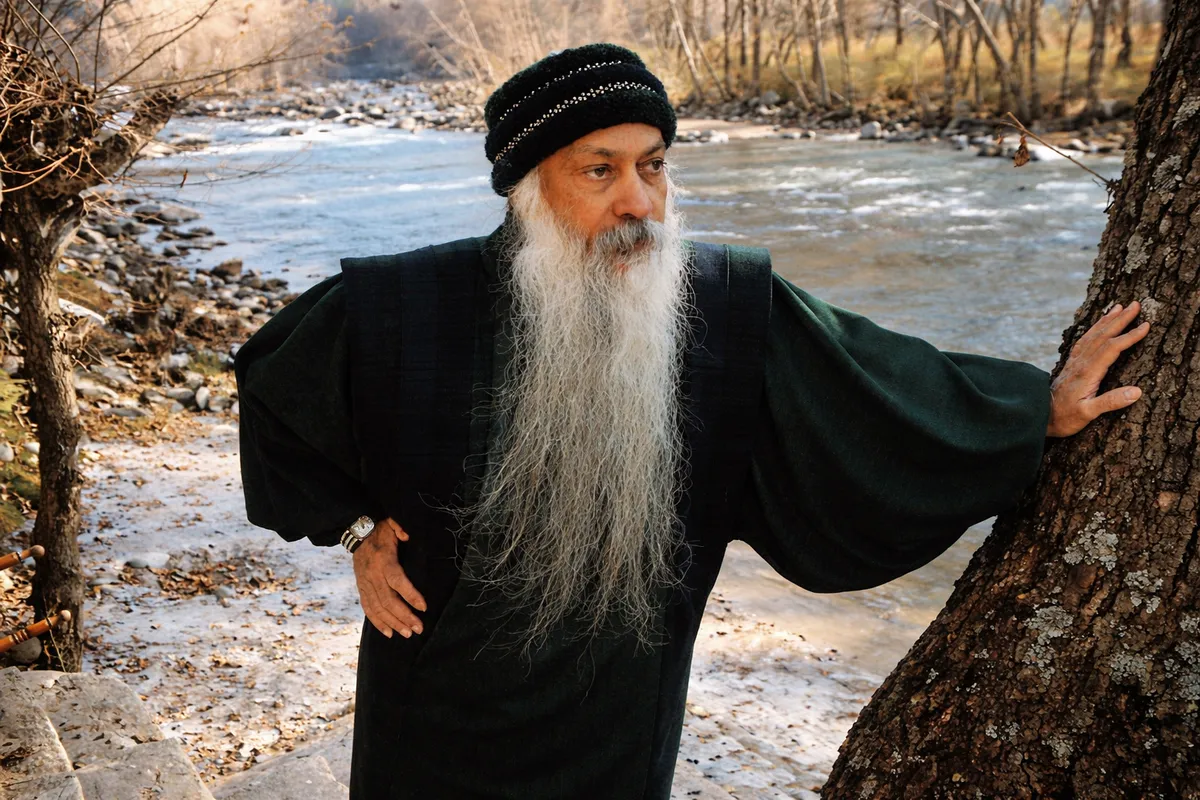
It’s okay to mess up—keep speaking and living playfully, because trying to be perfect stops you from being real and learning.
From the Discourses
Passages where Osho speaks to this question — each links to the complete discourse.
Osho, how can we live so that there are no mistakes in life?
To walk as Mahavira’s shadow is one thing; to be a Mahavira is another. To repeat what Muhammad said, like parrots, is one thing; but to know as Muhammad knew—passing through all those mistakes, all those thorny paths, all those slippery roads, falling many times, skinning your knees, bleeding, losing your way in dark nights, despairing often, again and again losing the thread of dawn in your hand—until you pass through all that again, you will not have Muhammad’s strength, Mahavira’s capacity, Buddha’s depth. No, Haridas—do not ask how to live so that there are no mistakes. I say: live so that as many mistakes as can happen do happen; only do not repeat a mistake. Live fully! Drop the worry about wandering, about fear. Cowards remain stuck; they never rise. Just think: if little children decided, “We will walk only when there is no danger of falling,” then everyone…
तीसरा प्रश्न: ओशो, हम कैसे जीएं कि जीवन में कोई भूल न हो?
महावीर की छाया बन कर चलना एक बात है; महावीर होना बात और है। मोहम्मद ने जो कहा उसको दोहराते रहना तोतों की तरह एक बात है; और मोहम्मद ने जैसे जाना उन सारी भूलों को करके गुजरना--उन सारे कंटकाकीर्ण मार्गों को पार करना, वे सारी फिसलनें रास्तों की, वे गिर जाने के डर, वह बहुत बार गिर जाना, घुटनों का टूट जाना, लहूलुहान हो जाना, वह बहुत बार अंधेरी रातों में भटक जाना, बहुत बार निराश हो जाना, बहुत बार सुबह का धागा हाथ से छूट-छूट जाना--वह सब जब तक न गुजरे, जब तक तुम फिर उससे न गुजरो, तुम्हारे जीवन में मोहम्मद का बल नहीं होगा, महावीर की क्षमता नहीं होगी, बुद्ध की प्रगाढ़ता नहीं होगी। नहीं हरिदास, ऐसा मत पूछो कि हम कैसे जीएं कि जीवन में कोई भूल न हो। मैं तो कहूंगा, ऐसे जीओ कि जीवन में जितनी भूलें हो सकें हों; सिर्फ एक भूल दुबारा न हो, बस। खूब जीओ! फिकर छोड़ो भटकने की, डरने की। डरने वाले कायर अटके ही रह जाते हैं, उठते ही नहीं।
Osho, can you also make mistakes?
Darshan, NOT A FEW BUT MANY...PLENTY! because I don't take anything seriously. So many times my sannyasins write to me, "Osho..." Subhuti wrote just a few days ago; when I said that Napoleon was obsessed with food, he wrote to me, "Is it Napoleon or Nero?" Who cares; Subhuti? Whichever you like! Sometimes I say Nero, sometimes I say Napoleon. I am not a very learned mm, and I am absolutely happy in being utterly unlearned. The other day somebody wrote: "You said that the gospels were written a few centuries after Jesus. This is not correct!" But I have not told you that this is correct! If it is incorrect it makes no difference to me. He has also written -- must be a learned man!...you have fallen in wrong company! -- he has also written: "You said that it was translated into Latin first." To me Latin and…
Osho, I make many mistakes in life—the same mistakes again and again. I want to know why human beings don’t learn from their mistakes.
…I was a guest in Kolkata at the home of a friend, Sohanlal Dugar—one of the most prominent wealthy Jains in India. A courageous man—only then could he host me! Because inviting me home is not free of risk. He said it was fine despite all the Jains’ opposition. I told him at the airport, “You’re putting me up, but you’ll get into trouble.” He said, “You know I’m a gambler. All India knows I’m a bookie; betting is my business. I’ve placed all kinds of bets—this one too! Although I’ve been warned by Jain monks not to host you.” The whole house was air‑conditioned. Not a single fly or mosquito. But no night meal. They don’t even drink water at night. When Mahavira said don’t eat at night, there was no electricity. There weren’t even oil lamps in every home. People ate in the dark, as many villagers still…
तीसरा प्रश्न: ओशो, मैं जीवन में बहुत भूलें करती हूं। वही-वही भूलें बार-बार करती हूं। मैं जानना चाहती हूं कि मनुष्य अपनी भूलों से कुछ सीखता क्यों नहीं?
...मैं कलकत्ते में एक मित्र के घर मेहमान था--सोहनलाल दूगड़। एक बड़े, भारत के प्रतिष्ठित बड़े से बड़े धनी जैनों में से एक थे। बड़े हिम्मतवर आदमी भी थे। तभी मुझे अपना मेहमान बना सके! क्योंकि मुझे अपने घर में निमंत्रण करना खतरे से खाली नहीं है। सारे जैनों के विरोध में भी उन्होंने कहा, कोई फिकर नहीं। मैंने उनसे एअरपोर्ट पर कहा भी कि आप मुझे ठहराते तो हैं, लेकिन आप झंझट में पड़ेंगे। उन्होंने कहा कि आप जानते हैं, मैं जुआरी हूं। सारा हिंदुस्तान जानता है कि मैं सटोरिया हूं। सट्टा मेरा धंधा है। और सब तरह के दांव लगाए, यह भी लगाऊंगा। हालांकि मुझे खबर आई है जैन मुनियों की तरफ से कि उनको घर में मत ठहराओ। पूरा घर एअर कंडिशंड था। उसमें एक मक्खी नहीं, एक मच्छर नहीं। मगर रात्रि भोजन नहीं। रात पानी भी नहीं पीते। महावीर ने जब कहा था कि रात्रि भोजन मत करो, तो बिजली नहीं थी। …
Question: Third question: Beloved Osho, have you ever made any mistake in your life? As long as I was, there was nothing but mistake. Since I am not, there is no possibility for mistake. There is only one mistake: the being of the ‘I’. From that ‘I’ a thousand mistakes arise. As long as I was, all was mistake. How could it be right? Even what appeared right was not right; it was only an appearance, a seeming, an assumption, a contrivance. Then it was mistake upon mistake. Since I am no more, the doer is no more. If the doer is not, how can there be a mistake? Since then everything is simply right—because since then it is only God, only the Divine. So long as you are, there is mistake. You disappear, and the mistake goes too.
जब तक मैं था, तब तक गलती ही गलती थी। जबसे मैं नहीं हूं, तबसे गलती का कोई उपाय न रहा। गलती एक ही है, ‘मैं’ का होना। फिर उस ‘मैं’ से हजार गलतियां पैदा होती हैं। जब तक मैं था, गलती ही गलती थी। ठीक हो कैसे सकता था! जो सही दिखायी पड़ता था, वह भी सही नहीं था। वह भी आभास था। वह भी प्रतीति थी। वह भी मान लेना था, समझा लेना था। तब तो सब गलती ही गलती थी। जबसे मैं न रहा, तबसे गलती करनेवाला ही न रहा। करनेवाला ही न रहा, तो गलती कैसे होगी? तबसे सब ठीक ही ठीक है। क्योंकि तबसे परमात्मा ही परमात्मा है।
Osho, do you ever commit mistakes? And if so, then what is your greatest mistake of life?
I don't commit anything else, I ONLY commit mistakes. I live through them, I survive through them. And I don't like small things; I am simply against the small scale. I only love great things. And you ask me, "WHAT IS YOUR GREATEST MISTAKE OF LIFE?" Giving sannyas to you. Now I have 50,000 alive mistakes moving around the world. I will stand with them and fall with them. Krishnamurti is far safer: he stands on his own. He has not committed a single mistake in giving initiation to anybody. I go on initiating people. Each time I give initiation to a person, now it will depend: if he becomes enlightened, then I was not wrong; if he does not become I was wrong. What will the criterion be of whether I committed a mistake in giving initiation to a person or not? -- only one: if he becomes enlightened…