
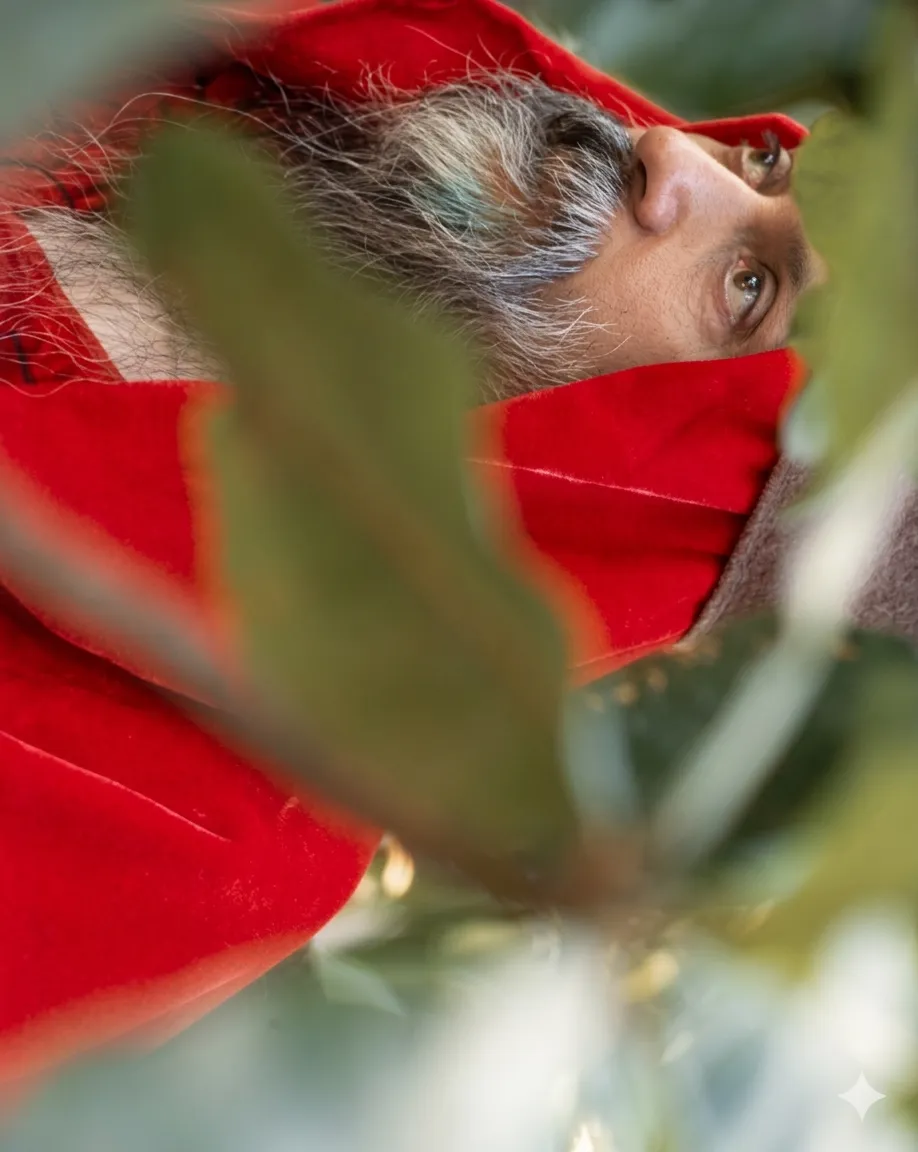
God/Truth is like the ocean or air we already live in; you don’t need to be smart—just truly want to know it.
From the Discourses
Passages where Osho speaks to this question — each links to the complete discourse.
A friend has asked, Osho, can God and Truth be available to everyone? Because people’s intelligence differs. And another person has asked: some people seem to have no intelligence at all—can they also find God? People are ordinary and extraordinary; some are intelligent, some less intelligent. So can everyone find God?
Certainly, God can be available to all. Why? God is not something like poetry, mathematics, painting, or anything of that sort. One man is talented and paints; another is gifted in mathematics; a third in poetry; a fourth in science; a fifth in engineering; others in other directions. These are our particular talents. But God is not a matter of talent—God is our very nature. Just as we all breathe, and no one asks whether everyone can breathe. The intelligent and the unintelligent breathe—how is that possible? The intelligent love, and the unintelligent also love—how is that possible? As love is the tone of everyone’s life-breath, as breathing is part of everyone’s life—these are outer things; God is the very center of everyone’s life. Whether we know it or not, He is. The life within us all is what I call God. So He is available to all—that is the…
Osho, I have heard sufis say that there is no god until you have met him. I find it a dramatic and appealing statement. Is this concept connected with the kind of awareness we are seeking? Will you please enlarge on it?
And this will be far more important than it was when you were really a child, because now you have known the ways of the world and the ways of the mind and you are frustrated. You have seen a thousand and one things and nothing satisfies. You have known many things and yet you don't know a thing. Now going back to your childhood, to the source of wonder, joy, mystery, and awe, you will again be able to look around... and then trees will be more green, and the songs of the birds will be more poetic, and the people around you will have auras -- they have! just you cannot see. You yourself will become radiant in your own vision. God is not a person: it is a vision of life in its utter radiance. God is not a person: it is an experience, a psychedelic experience…
Osho, what is truth? Is it possible to attain it partially? And if not, what can one do to attain it? Because not every person can be a saint. This is the question.
First of all, becoming a saint is a possibility for every human being. That someone does not turn a possibility into actuality is another matter. It is another matter that a seed may not become a tree, but every seed is inwardly destined to be a tree. That is, every seed has this possibility, this potentiality, to become a tree. If it does not, that is quite another matter. If it does not get manure and soil, and water and light, the seed may die—this can happen—but the seed certainly had the possibility. Sainthood is the possibility of every human being. So first, remove from your mind the notion that saintliness is a special privilege of a few. Saintliness is not the right of a select few. And those who have popularized this notion have done so only to nourish their ego. The ego is gratified by declaring that sainthood…
Question: THE MAN THAT BREATHES LIVES ON THE AIR, AND THE OTHER, UNSEEN, RESTS ABOVE REACH. BETWEEN THE TWO MOVES ANOTHER MAN AS A SECRET LINK. WORSHIP KNOWINGLY. IT IS A SPORT AMONGST THE THREE OF THEM. MY SEARCHING HEART, WHOM DO YOU SEEK? BETWEEN THE DOORS OF BIRTH AND DEATH, STANDS YET ANOTHER DOOR, WHOLLY INEXPLICABLE. HE WHO IS ABLE TO BE BORN AT THE DOOR OF DEATH, IS DEVOTED ETERNALLY.... Intelligence goes to the higher and higher and the higher, and the whole effort is to reach to the ultimate, to the pinnacle of existence. Because things can be explained only through the higher, not through the lower. You don't explain through the lower, you explain away. And when the lower becomes too important, all beauty is lost, all truth, all good. Everything that has any significance is lost. Then you start crying, "Where is meaning in life?
Beloved Osho, can the intellect be a door to enlightenment, or is enlightenment only achieved through surrender?
And then there are great insights. A man who wants to be really awake, wants to be really a Buddha, has to live each moment in such intensity -- as you live only rarely, rarely, in some danger. The first meaning is opposite to sleep. And naturally, you can see reality only when you are not asleep. You can face it, you can look into the eyes of truth -- or call it God -- only when you are awake. Do you understand the point of intensity, the point of being on fire? Utterly awake, there is insight. That insight brings freedom, that insight brings truth. The second meaning of budh is to recognize -- as to become aware of, acquainted with, to notice, give heed to. And so a Buddha is one who has recognized the false as the false, and has his eyes opened to the true as…