
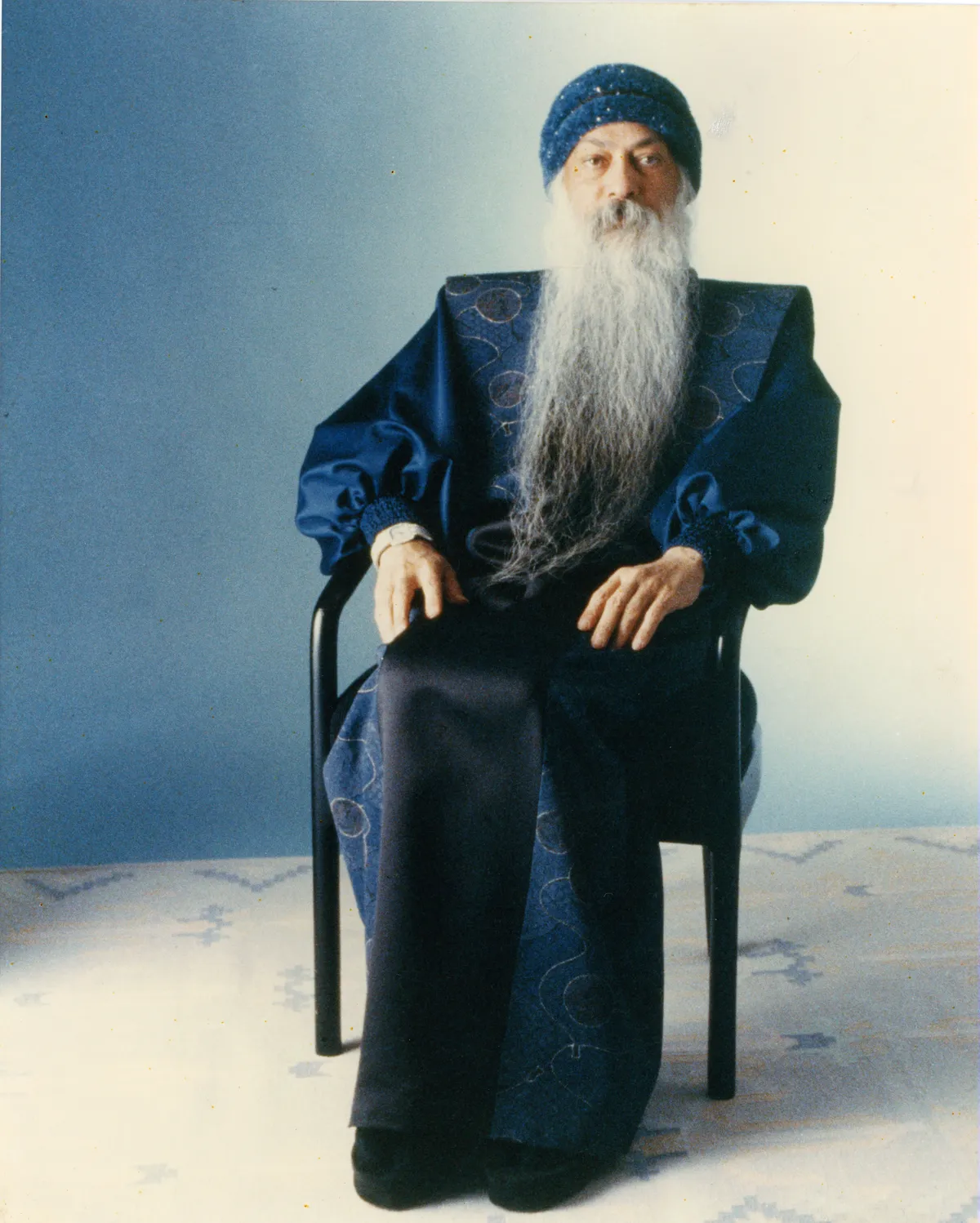
According to Osho, enlightenment is possible even with a sick body, an indulgent mind, and a half-yogi heart—provided you disidentify from the body, cultivate witnessing, and let intelligence end repetitive indulgence (“enough is enough”). A healthy body helps but isn’t essential; illness only demands extra awareness. And the heart must be total, not approximate: shift from half-measures to wholeheartedness, and transcend the body–mind by becoming a witness.
Even if you’re ill and like pleasures, you can wake up by watching everything calmly, stopping what you keep repeating, and giving your whole heart to it.
From the Discourses
Passages where Osho speaks to this question — each links to the complete discourse.
Osho, what is the difference between surrender and blind imitation?
So be careful: the freedom you allow yourself, allow the other too. You have no right to judge another as blindly credulous or as a surrendered being. Drop that concern. You cannot judge anyway—how will you enter another’s heart? How will you know? Think only about yourself. See within whether, up to now, you have lived by blind belief or by surrender. Decide only there; leave worrying about others. Otherwise, all your judgments will be wrong. Jesus said: Judge not; do not set yourself up as a judge in relation to another. To the friend who has asked: if you are asking for yourself, good. Drop worrying about others. Look within and see: whatever I have been clinging to till now—have I ever staked my life to hold it? Have I meditated for it? Have I loved for it? Or am I just clutching what culture, society, civilization handed me?…
Osho, I want to become enlightened. Why don't you help me?
So I cannot predict it because the very prediction will change the whole situation. I cannot say directly, 'Remain here for four to six weeks, something is going to happen.' That is not possible; nothing will happen. Even if I say, 'Be here for four to six weeks; it will be good for you,' a subtle desire may start in her being, a subtle hope. No, I cannot say anything to her directly, I have to be very indirect. So I told her, 'Be here for a few weeks' -- she is a group leader -- 'run two or three groups here.' That had nothing to do with her own growth; I did not say anything directly about her own growth. She agreed, but I was watching and saw that the agreement was only fifty per cent, not more than that. Just... just enough to stay. There was no joy…
All that we do here is to help you to put the mind aside. All the meditations are nothing but devices to put the mind aside. And once you have got even just a glimpse of your inner light, then things become very easy. Then you know that the light is inside. And then to put the mind aside is not difficult because now you know there is no risk -- it is worth putting it aside. Only in the beginning is it difficult because you only know the mind. You have been identified with it, you think you are the mind so to put it aside feels very dangerous. It feels like committing suicide, because it is you! But you are not it. It is just a deep-rooted misconception, a wrong calculation. You are simply making a mathematical mistake. Two plus two are four, and you are putting five.
Beloved master, first, what happens to the body, mind and soul when enlightenment happens? Second, why is one enlightened person different from another enlightened person? Third, what is satori and what is its impact on the body?
And what was Rama's judgment? -- so inhuman that you cannot believe. He ordered that lead should be melted on the fire and poured into both of his ears. That was his punishment! Do you want me to do such things? Even this single instance is enough for me, that Rama has no claim on enlightenment. He is simply in the hands of the priests -- a puppet and nothing else. So one thing: the enlightened people that you think are enlightened, are not necessarily enlightened. It may be just a traditional idea that you have never thought about, you have never bothered about. Or perhaps you are afraid to think about such things because they will shake your faith. Most of your enlightened people are not enlightened. Those who are enlightened are bound to be different, for the simple reason that each enlightened person has a unique quality to…
Beloved Osho, is it possible to become enlightened in a really easy and relaxed way, with not too much effort and lots of naps?
Gayano, you are asking me, a man who has never done anything. Just through relaxation ... without any effort and lots of naps! Mostly I am asleep. I just get up to talk to you in the morning, then I go back to sleep; then I get up again in the evening to talk to you and go back to sleep. My total hours of sleep must be eighteen. Six hours I am awake, two hours with you, one hour for my bath, for my food and the remainder I am in absolute samadhi. And I don't even dream -- so lazy! And you are asking me the question. This is my whole philosophy, that you should not make any effort, that you should relax and enlightenment comes. It comes when it finds you are really relaxed, no tension, no effort and immediately it showers on you like thousands of…