
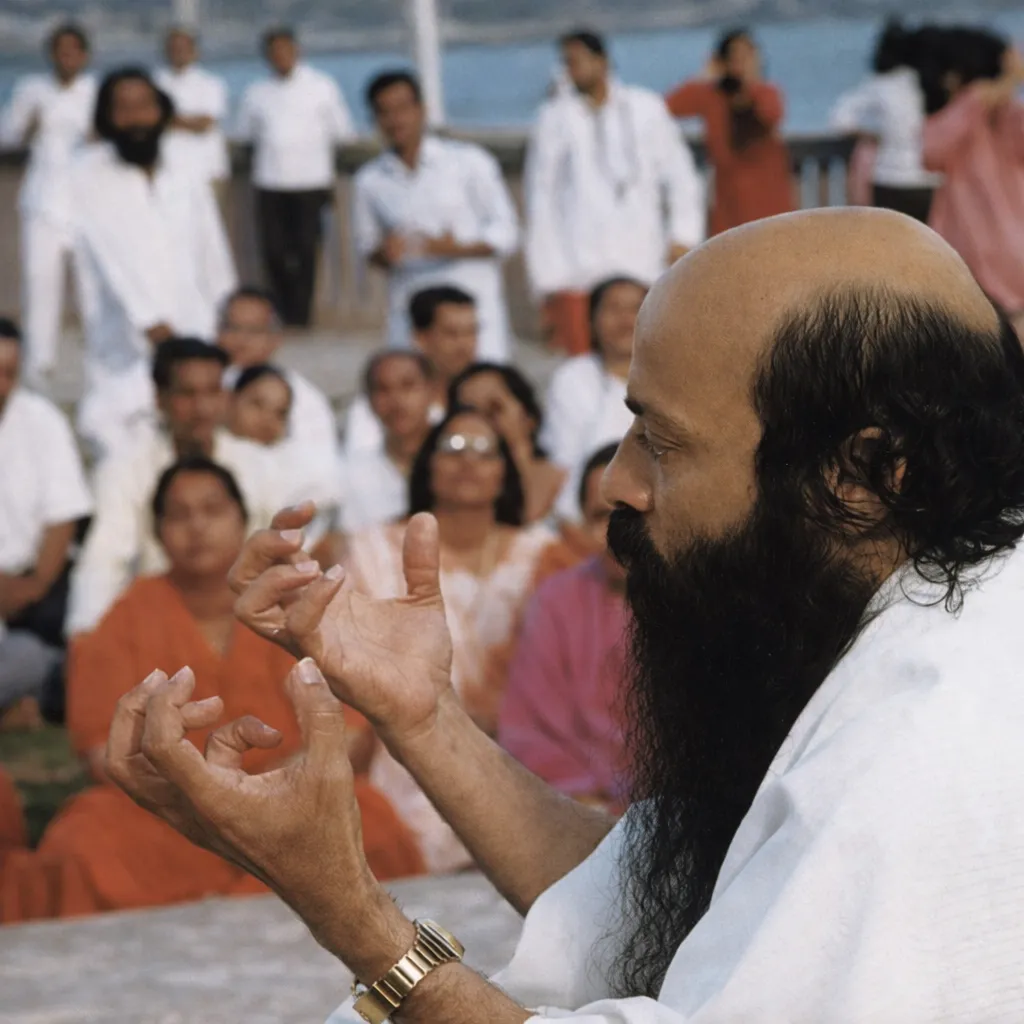
Osho's original Hindi beside Osho Live's English translation, matched passage by passage.
जीवन अंतर-संबंधों का जाल है; लेकिन जीवन सिर्फ अंतर-संबंध ही नहीं है। अंतर-संबंधित होने के लिए भी व्यक्ति चाहिए। अंतर-संबंध भी दो व्यक्तियों के बीच संबंध है। लेकिन दो व्यक्ति भी चाहिए, जिनके बीच संबंध हो सके। तो जीवन, जो हमें बाहर दिखाई पड़ता है वह तो अंतर-संबंध है, लेकिन एक और भी जीवन है भीतर, जो अंतर-संबंधित होता है। वह ‘व्यक्ति’ अगर न हो, तो अंतर-संबंध सब झूठे हो जाते हैं--जुड़ेगा कौन?
Life is a web of inter-relationships; but life is not only inter-relationship. To be interrelated, the person is needed. A relationship is always between two persons. Both are needed for a relationship to happen. So the life we see outside is inter-relationship; but there is another life inside—the one who relates. If that “person” is not there, then all inter-relationships become false—who will relate?
प्रेम एक संबंध है; लेकिन प्रेमी का व्यक्तित्व भी चाहिए। और वह व्यक्तित्व यदि उधार है, तो व्यक्तित्व नहीं है। व्यक्तित्व सदा अपना ही होता है, उधार नहीं। जो उधार है, वह व्यक्तित्व ही नहीं है। वह सिर्फ धोखा है। वह चेहरा है, जो हम दूसरों को दिखाने के लिए ओढ़ लिए हैं। उस चेहरे के भीतर कोई भी नहीं है। प्राणवान, निजता लिए हुए, इंडिविजुअलिटी लिए हुए कोई भी नहीं है। जिसे हम साधारणतया व्यक्ति कहते हैं, वह इंडिविजुअल नहीं है, सिर्फ पर्सनैलिटी है। जिसे हम साधारणतया व्यक्ति कहते हैं, वह निजता नहीं है, बल्कि ओढ़े हुए वस्त्रों का समूह है। जैसे प्याज है। प्याज को कोई, छिलकों को उतारता चला जाए, तो ऐसा लगेगा कि अब इस छिलके के बाद प्याज मिलेगी, अब इस छिलके के बाद प्याज मिलेगी! छिलकों को उतारता चला जाए, छिलके ही मिलते हैं, प्याज कभी मिलती नहीं है। ऐसी ही हम भी एक गठरी हैं, जिसमें सब उधार इकट्ठा होता चला गया है। लेकिन अगर इस उधार व्यक्तित्व के पीछे उतरते चले जाएं, तो पीछे शून्य ही हाथ मिलेगा। पीछे आत्मा, निजता न हो, तो जीवन सारा झूठा हो जाता है।
Love is a relationship; but the lover’s individuality is also needed. And if that individuality is borrowed, it isn’t individuality at all. What is borrowed is never one’s own being; it is only a deception—a mask we put on to show others. Behind that mask there is no one—no one alive, intimate, an individuality. What we ordinarily call a person is not an individual; it is only a personality. What we ordinarily call a person is not innermostness; it is a pile of borrowed garments. Like an onion: you peel off layer after layer thinking the next one will be the onion itself—yet you find only layers; you never find the onion. So are we, a bundle into which everything borrowed has been gathered. But if you go behind this borrowed personality, you will find only emptiness. If behind it there is no soul, no innermostness, then the whole life becomes false.
जीवन की गहरी से गहरी चोरी अनुकरण, नकल, अनुसरण है। जब भी कोई व्यक्ति किसी और जैसा बनने की चेष्टा में रत होता है तभी गहरे में चोर हो जाता है। जब भी कोई व्यक्ति किसी और को अपने ऊपर ओढ़ लेता है, तो नकली हो जाता है, असली नहीं रह जाता। ऑथेंटिक, प्रामाणिक निजता उसकी खो जाती है।
The deepest theft in life is imitation—copying, following. Whenever a person strives to become like someone else, he becomes a thief deep within. Whenever someone drapes another over himself, he becomes counterfeit, not real. He loses his authentic individuality.
इसका यह अर्थ नहीं है कि दूसरों से आई हुई तरंगें हम ग्रहण न करें। इसका यह भी अर्थ नहीं है कि दूसरों से हम संबंधित न हों। दूसरों से हम जरूर ही संबंधित हों, लेकिन ‘स्व’ को बचाते हुए। क्योंकि फिर संबंधित कौन होगा, अगर स्व भी खो गया है? दूसरों से तरंगें आएंगी, उन्हें लेना भी पड़ेगा; लेकिन उन्हें लें जरूर, वे तरंगें ही न बन जाएं। उन्हें लें भी, दें भी; लेकिन उनके पार भी आप बचे रहें; उनसे अछूता भी पीछे कोई खड़ा रहे; उस सारे लेन-देन के बाद भी कोई बच जाए जो लेन-देन के बाहर है।
This does not mean we should not receive the waves that come from others. Nor does it mean we should not relate to others. We certainly should, but while preserving the “self.” For who will relate if the self is lost? Waves will come from others; we will have to receive them—but receive them in such a way that they do not become your very waves. Receive and give; but remain beyond them as well. Let someone stand behind, untouched; let someone remain who is outside the entire give-and-take.
अंग्रेजी में एक शब्द है--‘एक्सटेसी।’ हमारे पास एक शब्द है--‘समाधि।’ समाधि को जो लोग अंग्रेजी में रूपांतरित करते हैं, वे एक्सटेसी कहेंगे। एक्सटेसी बड़ा अदभुत शब्द है। एक्सटेसी का मतलब है, बाहर खड़े होना, टु स्टैंड आउट साइड। एक्सटेसी का मतलब है, जीवन की सारी धारा में होते हुए भी हर पल बाहर खड़े होना। जीवन में बहते हुए भी--‘जीवन के बाहर भी हमारे भीतर कुछ रह जाए’--वही हमारी निजता है, वही हमारा होना है। अगर हम जीवन में पूरी तरह खो गए और हमारे पास हमारे संबंधों के अतिरिक्त कुछ भी न बचा, तो हमने अपनी आत्मा खो दी है।
In English there is a word—“ecstasy.” We have the word “samadhi.” Those who translate samadhi into English call it ecstasy. “Ecstasy” is a remarkable word; it means “to stand outside.” Ecstasy means: while being in the whole current of life, to be standing outside at every moment. To flow in life—and yet, within, something remains outside of life. That is our innermostness; that is our being. If we get totally lost in life and nothing remains with us other than our relationships, we have lost our soul.
आत्मा का और कोई अर्थ नहीं है। आत्मा का अर्थ ही यही है: सब हो, फिर भी भीतर कुछ अछूता, अस्पर्शित, अनटच्ड, बाहर रह जाए। रास्ते पर चल रहे हैं; लेकिन चलते समय में भी कुछ आपके भीतर होना चाहिए, जो नहीं चल रहा है। क्रोध से भरे हैं; लेकिन क्रोध से भरे क्षण में भी कोई आपके भीतर होना चाहिए, जो आपके क्रोध को भी देख रहा है। भोजन कर रहे हैं; भोजन करते समय भी कोई आपके भीतर होना चाहिए, जो भोजन नहीं कर रहा है, बल्कि जो यह भी जान रहा है कि भोजन किया जा रहा है।
The soul means nothing else. The very meaning of soul is: let everything be, and yet within, something remains untouched, untainted, outside. You are walking on the road; but even as you walk, something within you should not be walking. You are filled with anger; but even in that moment of anger, someone within you should be seeing your anger. You are eating; but even as you eat, someone within should not be eating; rather, should also know that eating is happening.
अगर प्रतिपल जीवन के अंतरजाल में हम अपने भीतर किसी को बचा पाते हैं, तो वह जो बचा हुआ है, जो शेष है, दि रिमेनिंग, वही हमारी निजता है। उस निजता का जिसके पास अस्तित्व नहीं है, वह आदमी, आदमी कहे जाने का हकदार नहीं रह जाता है। उसके पास कोई आत्मा नहीं है, उसने अपनी आत्मा खो दी है।
If, moment to moment, within the web of life we are able to preserve someone inside, that remainder—the remaining—is our individuality. One who does not have the existence of that innermostness is no longer worthy of being called human. He has no soul; he has lost his soul.
हममें से बहुत कम लोगों के पास इस अर्थों में आत्मा है--बहुत कम लोगों के पास। हम वही हैं--छिलकों का जोड़; वस्त्रों का जोड़; उसके पीछे और कुछ भी नहीं है। इसे भी मैं चोरी कहा हूं। यह चोरी है। किसी का धन चुरा लेना बहुत बड़ी चोरी नहीं है, लेकिन किसी का व्यक्तित्व ओढ़ लेना बहुत बड़ी चोरी है। किसी के वस्त्र चुरा लेना बहुत बड़ी चोरी नहीं है, लेकिन किसी जैसे बनने की चेष्टा में अपने को खो देना बहुत बड़ी चोरी है। किसी के मकान पर कब्जा कर लेना उतनी बड़ी चोरी नहीं है--चोरी है, मैं यह नहीं कह रहा हूं, चोरी नहीं है--उतनी बड़ी चोरी नहीं है, जितनी अपनी आत्मा को खोकर किसी आत्मा की छाया बन जाना बड़ी चोरी है।
Very few of us have a soul in this sense—very few. We are a heap of skins, a heap of garments; behind that, nothing. This too I have called theft. It is theft. To steal someone’s wealth is not such a great theft; but to put on someone else’s personality is a much greater theft. To steal someone’s clothes is not such a great theft; but in the effort to become like someone else, to lose oneself is a far greater theft. To seize someone’s house is not that great a theft—it is theft, I am not saying it is not—but it is not as great a theft as losing your own soul and becoming the shadow of another soul.
सुना है मैंने कि एक आदमी की जिंदगी में कुछ देवता नाराज हो गए थे और उन्होंने उसे अभिशाप दे दिया था। वह अभिशाप बड़ा अजीब था। उन्होंने अभिशाप दे दिया कि आज से तेरी छाया खो जाएगी! वह आदमी हंसा। उसने कहा, छाया से मुझे प्रयोजन भी क्या है? अगर मैं बच गया, तो मेरी छाया से क्या कमी पड़ने वाली है? छाया पड़ती है या मेरी नहीं पड़ती है, इसकी मैंने आज तक न चिंता की, न फिकर की। तुम पागल तो नहीं हो गए हो? अगर नाराज ही हो गए हो, तो यह, यह अभिशाप बड़े काम का नहीं मालूम पड़ता। लेकिन देवता हंसे, देवता उस आदमी से ज्यादा जानते थे।
I have heard that in a certain man’s life the gods became displeased and cursed him. The curse was unusual: “From today your shadow will be lost!” The man laughed. He said, “What use have I for a shadow? If I remain, what will be lacking if my shadow is gone? Whether my shadow falls or not, I have never worried. Are you gods mad? If you are angry, this curse doesn’t seem of much consequence.” But the gods laughed; they knew more than that man.
वह आदमी अपने गांव में लौटा हंसता हुआ कि देवता भी पागल हो गए मालूम होते हैं। छाया खोने से मेरा क्या खो जाएगा! लेकिन गांव में आकर उसको पता चला कि देवता पागल नहीं हैं, वही मुश्किल में पड़ गया है। जिस आदमी ने भी देखा कि उसकी छाया नहीं पड़ती है, वह उसे देख कर भागा। पत्नी ने द्वार बंद कर लिया। पिता ने कहा, हट जाओ, मेरी आंख के सामने दुबारा मत आना। तुम भूत हो, प्रेत हो--क्या हो? मित्रों ने दरवाजे बंद कर लिए। और ग्राहक उसकी दुकान पर आने बंद हो गए। रास्ते से निकलता तो लोग अपने मकानों में अपने बच्चों को बुला लेते कि भीतर आ जाओ, वह आदमी निकल रहा है जिसकी छाया नहीं है। उस आदमी का गांव में जीना मुश्किल हो गया।
He returned to his village laughing, thinking the gods must be crazy. “What will I lose if I lose my shadow!” But upon arriving he discovered the gods were not mad; he himself had landed in trouble. Whoever saw that his shadow did not fall ran away on seeing him. His wife shut the door. His father said, “Go away—never come before my eyes again. You are a ghost, a spirit—what are you?” Friends closed their doors. Customers stopped coming to his shop. When he walked the street, people would call their children indoors: “Come in—the man whose shadow is missing is passing by.” Life in that village became impossible for him.
अंततः गांव के लोगों ने निर्णय किया कि इस आदमी को गांव के बाहर कर दें। यह आदमी खतरनाक है। ऐसा कभी सुना नहीं कि छाया-रहित आदमी हो। और अंततः उस गांव के लोगों ने उस आदमी को बाहर निकाल दिया। तब उस आदमी को पता चला कि छाया खोकर बहुत कुछ खो गया है।
Eventually the villagers decided to exile him. “He is dangerous. We have never heard of a man without a shadow.” And so they cast him out. Then he realized that by losing a shadow, he had lost a great deal.
लेकिन उस आदमी को तो हम छोड़ें, हम सिर्फ छाया हैं, आत्मा हमने खो दी है। हमारा कितना खो गया है उसका हिसाब लगाना बहुत मुश्किल है। हम सिर्फ शैडोज हैं, हम सिर्फ छायाएं हैं। उस आदमी की सिर्फ छाया खोई थी, वह इतनी मुश्किल में पड़ गया और हमारी आत्मा भी खो गई है, तो हम कितनी मुश्किल में होंगे? लेकिन चूंकि सभी की खो गई है, इसलिए हमें कोई गांव के बाहर नहीं कर देता है! और छाया खो जाए, तो दूसरे को पता भी चलता है, आत्मा खो जाए, तो सिर्फ स्वयं को पता चल सकता है, किसी दूसरे को पता नहीं चल सकता है। क्योंकि आत्मा कोई बाह्य घटना नहीं है।
But leave that man aside. We are only shadows; we have lost the soul. How much we have lost is hard to reckon. We are only shadows. That man lost only his shadow and he was put in such difficulty; our soul is lost—how much difficulty must we be in! But since everyone’s is lost, no one banishes us from the village. And if a shadow is lost, others can see it; when the soul is lost, only oneself can know it, no one else can. For the soul is not an outer event.
इसलिए ‘अचौर्य’ की बात समझते समय एक प्रश्न निरंतर अपने से पूछना चाहिए: कुछ भी मेरे पास है जिसे मैं कह सकूं कि मेरी निजता है? जो मैं जन्म के साथ लाया था? जो मैंने जीवन में नहीं सीखा? कुछ भी मेरे पास है, जो जन्म के पहले भी मेरा था?
Therefore, while understanding “achourya,” one question should be asked of oneself continuously: Do I have anything I can call my own innermostness? Something I was born with? Something I did not learn in life? Do I have anything that was mine even before birth?
यदि ऐसा कुछ भी आपको स्मरण आता हो कि आपके पास है, जो जन्म के पहले भी आपके पास था, तो आप आश्वस्त हो सकते हैं कि आप जब मरेंगे, तब भी आपके पास कुछ बच रहेगा। लेकिन अगर जन्म के बाद ही सब पाया हुआ है, तो मृत्यु उस सबको छीन लेती है। जन्म के पहले का भी अगर आपके पास कुछ है और ऐसा लगता है जो आपने जीवन से नहीं सीखा, जीवन से नहीं लिया, जीवन से नहीं पाया; जिसे लेकर ही आप आए हैं; जो आपका स्वभाव है; तो मृत्यु से डरने का कोई कारण फिर आपके लिए नहीं है। क्योंकि जो आपने जीवन से नहीं पाया, उसे मृत्यु नहीं छीन पाती है।
If you can recall anything you have that was with you even before birth, you can be assured that when you die, something will remain with you. But if everything was gained only after birth, death takes it all away. If there is something from before birth—something that feels unlearned, not taken from life, which you brought with you, which is your nature—then you have no reason to fear death. What you did not get from life cannot be snatched by death.
लेकिन हम सब डरते हैं मरने से। हम डरते हैं इसीलिए--इसलिए नहीं कि मृत्यु दुखदायी है। आज तक किसी ने नहीं कहा कि मृत्यु दुखदायी है--मृत्यु दुखदायी है इसलिए नहीं डरते, बल्कि इसलिए डरते हैं कि जीवन जिसे हम कहते हैं, उसमें हमारे पास ऐसा कुछ भी नहीं है, जो मृत्यु से बच कर हमारे पास बच सके। वह सब छीन लिया जाएगा। जो भी हमने दूसरों से पाया है, उसे हम मृत्यु के पार नहीं ले जा सकते हैं। चाहे वह धन हो, चाहे वह यश हो, चाहे वह ज्ञान हो, चाहे वह व्यक्तित्व हो, वह कुछ भी हो; जो हमने दूसरों से पाया है, वह, वह मेरा नहीं है।
Yet we all fear death. Not because death is painful—no one has ever said that death is painful—but because in what we call life we possess nothing that can remain with us beyond death. All will be taken. Whatever we have received from others cannot be carried across death: whether wealth, fame, knowledge, or personality—whatever it is—what we have obtained from others is not mine.
तो हम चोर हैं। वह जो दूसरों से हमने इकट्ठा कर लिया है, वही हमारी चोरी है। यह बहुत गहरी चोरी है, जिसे अदालत नहीं पकड़ेगी। यह बहुत गहरी चोरी है, जिसका कानून से कोई संबंध नहीं है। यह चोरी एक और बहुत बड़े कानून से संबंधित है, जिस कानून का नाम धर्म है। यह चोरी भी किसी अदालत में पकड़ी जाती है, लेकिन वह अदालत परमात्मा की अदालत है।
So we are thieves. What we have collected from others—that is our theft. This is a very deep theft; the court will not catch it. It has nothing to do with man’s law. This theft is related to another, far greater law, whose name is dharma. This theft too is tried in a court—but that court is God’s court.
क्या हमारे पास कुछ भी हमारा है? जिसे मैं कह सकूं कि नहीं, सीखा नहीं, अनलर्न्ड; कह सकूं, किसी से लिया हुआ नहीं; कह सकूं कि मैं ही हूं। अगर ऐसा कुछ भी नहीं है, तो हम बहुत जीवन में जिसे जी रहे हैं, वह चोरी का जीवन है। और ऐसा नहीं है। लेकिन एक बार भी यह स्मरण आ जाए कि मेरे पास ऐसी कोई संपदा नहीं जो मेरी हो, मेरे पास ऐसी कोई निजता नहीं जो मेरी हो, तो जीवन में क्रांति शुरू हो जाती है।
Do we have anything that is ours? About which I can say: not learned, unlearned; not taken from anyone; this is me. If there is nothing of that sort, then the life we are living is a stolen life. And it need not be so. But if even once it occurs to you that you possess no wealth that is truly yours, no innermostness that is yours, then revolution begins in life.
इसलिए आप यह मत सोचना कि आपने कौड़ी नहीं चुराई। आप यह मत सोचना कि आपने किसी के घर से सामान नहीं चुराया। उस चोरी से धर्म का क्या लेना-देना है! उस चोरी से तो आदमी का कानून ही निपट लेता है। धर्म को तो किसी और चोरी से प्रयोजन है, जो कानून की पकड़ में नहीं आता; जो अदालतें निर्णय नहीं कर सकती हैं; जो न्यायाधीश की सीमा के बाहर है।
So do not think, “I have never stolen a penny.” Do not think, “I have never stolen from someone’s house.” What has that theft to do with religion! That theft, man’s law can handle. Religion is concerned with another theft—the one the law cannot catch; the courts cannot decide; which lies beyond the judge’s jurisdiction.
धर्म का उस चोरी से संबंध है, जो प्रभावों की चोरी है, व्यक्तित्वों की चोरी है, चेहरों की चोरी है। और हम सब चुराए हुए जी रहे हैं। हम सब ऐसे जी रहे हैं, जैसे हम कोई और हों। हम हम नहीं हैं। मैं मैं नहीं हूं, किसी और की तरह जी रहा हूं।
Religion is concerned with the theft of influences, the theft of personalities, the theft of faces. And we are all living as the stolen. We are all living as if we were someone else. We are not ourselves. I am not I; I am living like someone else.
इस अर्थ में मैंने कहा था कि ‘अचौर्य’ मनुष्य की आत्मा में निजता की उपलब्धि का मार्ग है, और ‘चोरी’ मनुष्य की आत्मा के खोने की विधि है। यह भाव के तल पर हो सकती है, विचार के तल पर हो सकती है, शरीर के तल पर हो सकती है।
In this sense I have said that “achourya” is the path to the attainment of individuality in the human soul, and “theft” is the method of losing the soul. This can happen at the level of feeling, at the level of thought, or at the level of the body.
हम चलते तक नहीं अपने जैसे; हम चलना भी दूसरे से सीख लेते हैं! हम विचार भी नहीं करते अपने जैसा; हम विचार भी दूसरों से सीख लेते हैं! हम भाव भी नहीं करते अपने जैसा; हम भाव भी दूसरों से सीख लेते हैं! सुबह आदमी अखबार पढ़ लेता है और फिर दिन भर अखबार में पढ़ी बातों की चर्चा लोगों से करता रहता है! और उसे कभी खयाल नहीं आता कि वह जो बोल रहा है उसमें उसका अपना कुछ भी नहीं है। गीता पढ़ लेता है, फिर जिंदगी भर दोहराए चला जाता है, और कभी नहीं पूछता लौट कर कि मैं जो बोल रहा हूं, उसमें मेरा कुछ भी नहीं!
We do not even walk in our own way; we even learn our walk from others! We do not think in our own way; we learn thoughts from others! We do not feel in our own way; we learn feelings from others! A man reads the newspaper in the morning and then all day long he talks to people about what he read! And it never occurs to him that nothing of what he is saying is his own. He reads the Gita and repeats it all his life, and never turns back to ask, “In what I am saying, is there anything of mine?”
सब बोलना, सोचना, उठना, बैठना सब सीखा हुआ है। तो ऐसी जिंदगी में आनंद की वर्षा नहीं हो सकती है। ऐसी जिंदगी में अमृत की झलक नहीं मिल सकती है। ऐसा आदमी रूखा मरुस्थल होगा। क्योंकि झरने सदा प्राणों से बहते हैं, जिनमें हरियाली पैदा होती है। और जो उधार झरनों में जीता है, वह उस आदमी की तरह है जो दूसरे के मकानों को गिन कर सोचता है कि मेरे हैं; जो दूसरों की आंखों को गिन कर सोचता है कि मेरी हैं; जो दूसरों के विचारों को गिन कर सोचता है कि मैं विवेकवान हो गया; जो शास्त्रों को संगृहीत करके समझता है कि ज्ञान आ गया है!
All our speaking, thinking, getting up, sitting down—everything is learned. In such a life, the rain of bliss cannot fall. In such a life, there cannot be even a glimmer of nectar. Such a man will be a dry desert. For springs always flow from life, and from them greenery is born. One who lives on borrowed springs is like a man who counts other people’s houses and thinks they are his; who counts other people’s eyes and thinks they are his; who counts other people’s thoughts and thinks he has become wise; who collects scriptures and believes knowledge has come!
ऐसा आदमी इतनी बुनियादी भ्रांति में जीता है कि अपने पूरे जीवन को व्यर्थ गंवा सकता है। हम गंवा देते हैं। लेकिन एक बार यह सवाल हमारे सामने उठ जाए, तो यह सवाल हमारा पीछा करेगा कि मैं चोर तो नहीं हूं? और अगर यह सवाल हमारा पीछा करने लगे, तो हमें घड़ी-घड़ी दिखाई पड़ने लगेगा कि अभी जो मैं हंस रहा था, वह हंसी मैंने किसी और के ओंठों से सीखी है; कि अभी मैं जो रो रहा था, वे आंसू सच्चे न थे; अभी मैंने जो नमस्कार किया, उस नमस्कार में मेरे प्राणों की कोई आहट न थी; कि अभी मैंने जो प्रेम किया, उसमें प्रेम बिलकुल न था, वह मैंने किसी ड्रामा में पढ़ा था; कि अभी मैंने जो बात कही अपने प्रेमी से, वह मेरा किसी फिल्म में सुना हुआ डायलॉग है।
Such a man lives in so fundamental a delusion that he can waste his entire life. We do waste it. But once this question arises before us, it will pursue us: Am I a thief? And if this question begins to pursue us, we will begin to see, moment by moment, that just now when I laughed, that laughter I learned from someone else’s lips; just now when I cried, those tears were not true; just now when I offered namaskar, there was no breath of life in it; just now when I loved, there was no love at all—I had read about it in some drama; just now what I said to my beloved was a dialogue I heard in some film.
काश! आदमी की जिंदगी में यह सवाल उठ जाए, तो आदमी आज नहीं कल चोरी से मुक्त होने लगता है; उसकी निजता उभरने लगती है; फिर वह अपने ढंग से हंसता है।
If only this question were to arise in a man’s life—then, if not today then tomorrow, he begins to be free of theft; his individuality begins to surface; then he laughs in his own way.
और यह दुनिया बहुत सुंदर हो सकती है--यहां अगर लोग हंसते अपने ढंग से हों, रोते अपने ढंग से हों, सोचते अपने ढंग से हों, तो यह दुनिया बहुत प्राणवान और जीवंत हो सकती है।
And this world could be very beautiful—if people here laughed in their own way, cried in their own way, thought in their own way—this world could be very vital and alive.
अभी यह दुनिया जीवंत नहीं, मुर्दों का एक बहुत बड़ा संग्रह है, जहां सब मरे हुए जी रहे हैं। यद्यपि हमें पता नहीं चलता, क्योंकि हमारे चारों तरफ भी हमारे जैसे ही मुर्दे हैं। हमने भी सुबह अखबार पढ़ा है, पड़ोसी ने भी अखबार पढ़ा है; वह भी अखबार से बोल रहा है, हम भी अखबार से बोल रहे हैं। हमने भी कुरान पढ़ी है, उसने भी कुरान पढ़ी है; वह भी कुरान से बोल रहा है, हम भी कुरान से बोल रहे हैं। उसने भी वहीं से सीखा है, जहां से हमने सीखा है। हमारी बातें तालमेल खाती हैं और ऐसा लगता है कि सब ठीक चल रहा है। लेकिन ठीक कुछ भी नहीं चल रहा है।
Right now the world is not alive; it is a vast collection of corpses, where all the dead are living. We do not notice it because all around us are dead like ourselves. We too have read the morning paper; the neighbor has read it too; he speaks from the paper, and so do we. We have read the Koran; he has read it too; he speaks from the Koran, and so do we. He has learned from the same place we have learned. Our words agree, and it seems as though everything is fine. But nothing is fine.
इतना दुख नहीं हो सकता, अगर जिंदगी ठीक चलती हो। और जो आदमी अपने को पा ले, उस आदमी की जिंदगी में चाहे और कुछ भी न रहे, अपना होना ही इतना काफी होता है कि कुछ भी न हो, तो उसके आनंद को नहीं छीना जा सकता है। उससे सब छीन लिया जाए, लेकिन उसके आनंद को नहीं छीना जा सकता। क्योंकि निजता से बड़ा कोई भी आनंद नहीं है।
There could not be so much suffering if life were going right. And one who finds himself—even if nothing else remains—his very being is so sufficient that, even if nothing else is there, his joy cannot be taken away. Everything may be snatched from him, but not his joy. For there is no joy greater than individuality.
जब एक फूल खिलता है अपनी पूर्णता में, तब आनंद की सुगंध चारों ओर बह उठती है। बस, फूल का पूरा खिल जाना ही उसका आनंद है। आदमी की भी निजता का फूल, इंडिविजुअलिटी का फूल, जब पूरा खिल जाता है, तो जीवन आनंद से भर जाता है। फुलफिलमेंट, आप्त हो जाता है, सब भर जाता है। फिर कुछ भी न हो--धन न हो, यश न हो, पद न हो--तो भी सब-कुछ होता है। और यह निजता न हो, तो पद हों बड़े, धन हो बहुत, यश हो काफी, तब भी कुछ नहीं होता, भीतर सब खाली होता है।
When a flower blossoms in its fullness, the fragrance of joy spreads all around. The flower’s full blossoming is itself its joy. So too with man: when the flower of his innermost individuality fully blooms, life is filled with joy. Fulfillment happens; all is filled. Then even if nothing remains—no wealth, no fame, no position—still everything is present. And if this innermostness is absent, then even if positions are high, wealth abundant, fame sufficient—still nothing is there; inside all is empty.
आज पश्चिम में एक शब्द की बहुत जोर से चर्चा है। वह शब्द है--‘एंप्टीनेस।’ आज पश्चिम में जितने बड़े विचारक हैं--चाहे सार्त्र हो, चाहे कामू हो, और चाहे मार्सेल हो, और चाहे हाइडेगेर हो--आज पश्चिम के जितने चिंतनशील लोग हैं, वे सब कहते हैं कि हम बड़े रिक्त मालूम हो रहे हैं, हम बिलकुल खाली-खाली हैं। ऐसा लगता है कि हमारे भीतर कुछ भी नहीं है; हम सिर्फ कंटेनर रह गए हैं, कंटेंट बिलकुल नहीं है। हम सिर्फ डिब्बा हैं, जिसके भीतर कुछ भी नहीं बचा है। भीतर सब रिक्त है और खाली है।
Today in the West one word is being discussed intensely—“emptiness.” All the great thinkers of the West—be it Sartre, Camus, Marcel, or Heidegger—say: we feel utterly empty, completely hollow. It seems there is nothing within; we have become only containers with no content. We are only a box with nothing left inside. Within, everything is void and empty.
पश्चिम में आज रिक्तता की बड़ी जोर से चर्चा है; होनी नहीं चाहिए। क्योंकि आज उनके पास धन है बहुत, जैसा पृथ्वी पर कभी भी नहीं था। उनके पास महल हैं आकाश को छूते हुए, जिन महलों के सामने अशोक और अकबर के महल झोपड़े हो जाते हैं। उनके पास चांद तक पहुंचने की शक्ति है। उनके पास सारी पृथ्वी को घड़ी आधा घड़ी में विनष्ट कर देने का विराट आयोजन है। फिर रिक्तता क्यों है? फिर एंप्टीनेस क्यों है? फिर क्या कारण है कि भीतर सब खाली है?
Emptiness is much discussed in the West today; it need not be. For today they have wealth in a measure the earth has never seen. Their palaces touch the sky, before which the palaces of Ashoka and Akbar become huts. They have the power to reach the moon. They have the vast machinery to destroy the whole earth in half an hour. Then why emptiness? Why this emptiness? What is the reason that within all is empty?
कारण है। बाहर सब है, भीतर कुछ भी नहीं है; आत्मा नहीं है, निजता नहीं है। सब है, सिर्फ आदमी नहीं है। सब है, चांद पर पहुंचने की ताकत है, अपने तक पहुंचने की सामर्थ्य नहीं है। धन है बहुत, स्वयं का होना बिलकुल नहीं है। महल हैं बहुत बड़े, रहने वाला बहुत छोटा, न के बराबर, शून्य!
There is a reason. Outside, everything; inside, nothing—no soul, no individuality. Everything is, only man is not. Everything is—the power to reach the moon is there—but not the capacity to reach oneself. Wealth is abundant, but there is no being one’s own. Palaces are huge; the dweller is very small—next to nothing, zero!
चोरी का यह परिणाम है। पश्चिम को अचौर्य सीखना पड़ेगा, तो रिक्तता मिटेगी, तो एंप्टीनेस मिटेगी। मार्सेल को, कामू को, सार्त्र को निजता, इंडिविजुअलिटी को जगाने के नियम सीखने पड़ेंगे, खोजने पड़ेंगे।
This is the outcome of theft. The West will have to learn achourya; then emptiness will vanish. Marcel, Camus, Sartre will have to learn and search for the disciplines to awaken individuality.
सब जब हो जाए, तभी पता चलता है कि मैं नहीं हूं। और तब जो पीड़ा मन को पकड़ लेती है, वह दुनिया की कोई दरिद्रता नहीं पकड़ा सकती। यह जो अचौर्य है, यह निजता को पाने का सूत्र है; और चोरी स्वयं को खोने का सूत्र है।
Only when everything is attained does one discover: I am not. And then the pain that seizes the mind—no poverty in the world can inflict such pain. This achourya is the formula for attaining individuality; and theft is the formula for losing oneself.
महावीर चोर नहीं हैं, उनसे ज्यादा अचोर व्यक्ति खोजना मुश्किल है; लेकिन महावीर जैन नहीं हैं, महावीर जिन हैं। और जिन और जैन के अंतर को थोड़ा समझ लेना उचित है। जिन वह है, जिसने अपने को जीता; जैन वह है, जो जीतने वाले के पीछे चलता है।
Mahavira is not a thief; it would be hard to find a person less inclined to steal than he. But Mahavira is not a Jain; Mahavira is a Jina. And it is worth understanding the difference between Jina and Jain. A Jina is one who has conquered himself; a Jain is one who walks behind the conqueror.
गौतम बुद्ध चोर नहीं हैं, उनसे ज्यादा अचोर व्यक्ति खोजना मुश्किल है; लेकिन गौतम बुद्ध बुद्ध हैं, बौद्ध नहीं हैं। बुद्ध वह है, जो जागा; बौद्ध वह है, जो जागे हुए के पीछे चलता है।
Gautam Buddha is not a thief; it would be hard to find a person less given to theft than he. But Gautam is a Buddha, not a Buddhist. A Buddha is one who has awakened; a Buddhist is one who walks behind the awakened one.
ऐसे ही, जीसस चोर नहीं हैं, लेकिन जीसस क्राइस्ट हैं। क्राइस्ट का मतलब, जिसने अपने को सूली दे दी और उसे पा लिया, जो स्वयं को मिटाने से उपलब्ध होता है। लेकिन जीसस क्रिश्चियन नहीं हैं। क्रिश्चियन वह है जो सूली पर लटके हुए आदमी के पीछे चलता है। और फर्क बहुत पड़ जाते हैं। जीसस की गर्दन सूली पर लटकती है और ईसाई की गर्दन में छोटा सा क्रॉस लटका रहता है। गर्दनों में क्रॉस नहीं लटकते, क्रॉसों पर गर्दनें लटकती हैं। जीसस सूली पर चढ़ते हैं, वे क्राइस्ट हैं; क्रिश्चियन अपने गले में एक सोने की सूली लटका लेता है! एक तो सोने के क्रॉस नहीं होते, सोने की सूलियां नहीं होतीं; अगर सोने की सूलियां होंगी, तो सिंहासन किस चीज का बनाइएगा? और सूलियां गलों में नहीं लटकाई जातीं, गले सूलियों पर लटकाए जाते हैं। क्रिश्चियन चोर हैं।
In the same way, Jesus is no thief; Jesus is the Christ. “Christ” means one who has offered himself to the cross and attained that which becomes available by effacing oneself. But Jesus is not a Christian. A Christian is one who walks behind the man hanging on the cross. And then the differences become vast. Jesus’ neck hangs from the cross, and the Christian hangs a little cross around his neck. Necks do not wear crosses; it is necks that hang on crosses. Jesus climbs onto the cross—that is why he is the Christ; the Christian hangs a golden cross on his throat! To begin with, crosses are not made of gold; if you make crosses of gold, what will you make thrones out of? And crosses are not hung on throats; throats hang on crosses. Christians are thieves.
मोहम्मद बात और है, मुसलमान बात और है। मोहम्मद दुनिया में हों, यह सुखद है, सुंदर है; मुसलमान दुनिया में हो, यह खतरनाक है। महावीर दुनिया में हों, स्वागत के योग्य हैं; लेकिन जैन दुनिया में हो, खतरनाक है। बुद्ध बात और, सुगंध और; बुद्ध को मानने वाला दुर्गंध है, सुगंध नहीं है। इसके कारण हैं।
Muhammad is one thing; the Muslim is another. It is a joy, a beauty, that Muhammad should be in the world; it is dangerous that the Muslim should be. Mahavira in the world is worthy of welcome; a Jain in the world is dangerous. Buddha is something else altogether, a fragrance; the follower of Buddha is a stench, not a fragrance. There are reasons.
पहला कारण तो यह कि जैसे ही किसी व्यक्ति ने यह तय किया कि मैं किसी दूसरे के पीछे चलूंगा, वैसे ही वह अपनी आत्मा को खोने वाला हो जाता है। दूसरे के पीछे चलने का उपाय ही नहीं है। असल में, दूसरे के पीछे चलने का मतलब यह है कि यह आदमी जीवन की वास्तविक यात्रा से बचना चाहता है। जो जिन नहीं होना चाहता, वह जैन हो जाता है। जो बुद्ध नहीं होना चाहता, वह बौद्ध हो जाता है। जो क्राइस्ट होने की हिम्मत नहीं जुटा पाता, वह क्रिश्चियन हो जाता है। यह समझौता है। क्रिश्चियन होने में कुछ भी नहीं करना पड़ता है। क्राइस्ट होना, जिंदगी को जोखम में डालना है। जैन होने में क्या करना पड़ता है? जिन होना बड़ी तपश्चर्या है। जैन होने में सिर्फ जिनों की पूजा करनी पड़ती है। पूजा खेल है। जिन होने में पूजा नहीं करनी पड़ती, साधना करनी पड़ती है। साधना संकट है; साधना श्रम है; साधना संकल्प है।
The first reason is that the very moment a person decides, “I will walk behind someone else,” he begins to lose his soul. There is actually no way to walk behind another. In truth, to follow another means: this person wants to avoid the real journey of life. The one who does not want to be a Jina becomes a Jain. The one who does not want to be a Buddha becomes a Buddhist. The one who cannot gather the courage to be a Christ becomes a Christian. It is a compromise. To be a Christian requires nothing of you; to be a Christ is to risk your life. What does it take to be a Jain? To be a Jina demands great austerity. To be a Jain requires only worshiping the Jinas. Worship is play. To be a Jina requires no worship—it requires practice, sadhana. Sadhana is peril; sadhana is labor; sadhana is resolve.
असल में, जो व्यक्ति अपनी आत्मा को पाने का श्रम नहीं उठाना चाहता, वह किसी तरह की पूजा करके अपने मन के लिए खेल पैदा कर लेता है। जो व्यक्ति स्वयं को नहीं पाना चाहता, वह किसी दूसरे के पीछे चलने का खेल खेलने लगता है। और दूसरे के पीछे चल कर कोई कभी अपने को पा नहीं सका है। क्योंकि दूसरा सदा बाहर है और मैं कितना ही दूसरे के पीछे चलूं, सारी पृथ्वी घूम आऊं, तो भी मैं भीतर नहीं पहुंच जाऊंगा। अगर मुझे भीतर पहुंचना है, तो बाहर चलना बंद करना पड़ेगा। और अनुगमन सदा बाहर चलना है। अनुगमन में सदा बाहर चलना ही होगा; दूसरा बाहर है, उसके पीछे बाहर ही जाना पड़ेगा।
In truth, the person who does not wish to undertake the labor of finding his own soul consoles his mind by performing some sort of worship, by playing a game. The one who will not find himself starts playing the game of walking behind someone else. And by walking behind another, no one has ever found himself. The other is always outside; and no matter how far I walk behind the other—even if I circle the whole earth—I will not arrive within. If I am to reach within, then I must stop walking without. Following is always movement outward. In following, you will always be going outside; the other is outside, and behind him you must go outside.
महावीर किसी के पीछे नहीं जाते, जीसस किसी के पीछे नहीं जाते, कृष्ण किसी के पीछे नहीं जाते। यह बड़े मजे की बात है कि जो लोग किसी के पीछे नहीं गए, उनके पीछे कितने लोग चले जाते हैं! बुद्ध किसी के पीछे नहीं जाते, लेकिन बुद्ध के पीछे बहुत लोग चले जाते हैं। अगर बुद्ध से ही सीखना है, तो कम से कम एक बात तो सीख ही लेनी चाहिए कि किसी के पीछे नहीं जाना है। अगर बुद्ध से ही सीखना है, तो एक बात सीख लेनी चाहिए: किसी के पीछे नहीं जाना है। अगर महावीर से ही कुछ सीखना है, तो एक बात सीख लेनी चाहिए कि किसी की पूजा से कुछ भी होने वाला नहीं है; महावीर किसी की पूजा में नहीं हैं। अगर जीसस से ही कुछ सीखना है, तो एक बात सीख लेनी चाहिए कि परमात्मा को बिना क्रिश्चियन हुए पाया जा सकता है। जीसस तो क्रिश्चियन नहीं थे। अगर मोहम्मद से कुछ सीखना है, तो एक बात पक्की सीख लेनी चाहिए कि परमात्मा का मुसलमान से कुछ लेना-देना नहीं है। मोहम्मद तो मुसलमान नहीं थे। परमात्मा मोहम्मद को भी मिल सकता है, जो मुसलमान नहीं हैं।
Mahavira follows no one; Jesus follows no one; Krishna follows no one. It is a great irony that those who did not go behind anyone are the ones behind whom crowds go! Buddha follows no one, yet multitudes go behind him. If you must learn from Buddha, at least learn this one thing: do not go behind anyone. If you must learn from Buddha, learn this one thing: do not go behind anyone. If you are to learn from Mahavira, learn this one thing: nothing will happen through anyone’s worship; Mahavira was not engaged in worshiping anyone. If you are to learn from Jesus, learn this one thing: God can be realized without being a Christian. Jesus himself was not a Christian. If you are to learn from Muhammad, learn this one thing with certainty: God has nothing to do with being a Muslim. Muhammad himself was not a Muslim. God can meet Muhammad too, who is not a Muslim.
जिनके पीछे सारी दुनिया चल रही है, वे किसी के पीछे नहीं चलते हैं। और उनके पीछे हम इसीलिए चल रहे हैं कि हम भी वह पा लें, जो उन्होंने पाया! लेकिन हम देखें तो कि विज्ञान में कहीं भूल हो गई है, गणित में कहीं चूक हो गई है। उन्होंने पाया ही इसलिए कि वे अपने भीतर जाते हैं, और हम पाना चाहते हैं किसी के पीछे जाकर!
Those behind whom the whole world runs do not run behind anyone. And we run behind them hoping to obtain what they obtained! But if you look closely, the science has been mistaken, the arithmetic is wrong somewhere. They attained precisely because they went within; and we want to attain by going behind someone!
पीछे जाना, बाहर जाना है। इसलिए सब तरह के अनुगमन को मैं चोरी कहता हूं! और इस तरह के अनुगमन से संस्कृति पैदा नहीं हुई, संस्कृति के पैदा होने में बाधा पड़ी है। संस्कृति पैदा नहीं हुई, उसके पैदा होने में बाधा पड़ी है। और ये सारे अनुयायी सिवाय लड़ने के इस पृथ्वी पर और कुछ भी नहीं करते रहे हैं। इन सारे अनुयायियों ने पृथ्वी को खून और रक्त से भरने के सिवाय फूलों से नहीं भरा है। और चर्च, और मंदिर, और मस्जिद, और गुरुद्वारे मनुष्य को लड़ाने का उपक्रम बन गए हैं, उपकरण बन गए हैं। आदमी का इतिहास धर्मों के युद्धों से भरा है। इन अनुयायियों ने मोहम्मद और महावीर, कृष्ण और क्राइस्ट को मान कर, कृष्ण और क्राइस्ट बनने की तो कोई घटना नहीं घटाई, लेकिन एक-दूसरे की हत्या करने में बहुत कुशलता दिखाई है।
Going behind is going outside. That is why I call all kinds of following a theft! And from such following, culture has not been born; rather, it has obstructed the birth of culture. Culture has not arisen; its birth has been hindered. And all these followers, except for fighting, have done nothing else on this earth. These followers, in the name of Muhammad and Mahavira, Krishna and Christ, have not brought the earth to bloom with flowers; they have filled it with blood and gore. Churches, temples, mosques, and gurdwaras have become arrangements, instruments, for making human beings fight. Human history is full of religious wars. Having accepted Muhammad and Mahavira, Krishna and Christ, these followers did not bring about the event of becoming a Krishna or a Christ; but they have shown great skill in murdering one another.
यह हत्या बहुत तरह की है। कुछ लोग तलवारें लेकर कूद पड़ते हैं, कुछ लोग केवल विचारों की तलवारें चलाते रहते हैं। सिद्धांतों का--जैन मुसलमान का, मुसलमान हिंदू का, हिंदू ईसाई का, ईसाई बौद्ध का--सिद्धांतों का खंडन करते रहते हैं। अगर बहुत जोश आ जाए और सिद्धांतों से लड़ाई-झगड़ा ठीक से न हो सके, तो फिर तलवारें भी खिंच जाती हैं।
That murder takes many forms. Some leap in with swords; others simply keep wielding swords of ideas—doctrines. The Jain refutes the Muslim; the Muslim refutes the Hindu; the Hindu refutes the Christian; the Christian refutes the Buddhist—doctrines are refuted endlessly. If the heat rises and doctrines cannot prosecute the quarrel properly, then the swords are unsheathed too.
आदमी बुद्ध और महावीर और क्राइस्ट के होने की वजह से ज्यादा आनंदित होना चाहिए था, लेकिन इनके होने की वजह से बड़ा उपद्रव हुआ है। बर्ट्रेंड रसल ने कहीं लिखा है कि क्या हर्जा था परमात्मा को कि अगर जीसस को न भेजता? तो कम से कम ईसाई तो न होते। ईसाइयों ने मध्य-युग में सारे यूरोप में लाशें बिछा दीं।
Because of the being of Buddha and Mahavira and Christ, man ought to have become more joyful; but because of their being, great tumult has occurred. Bertrand Russell once wrote: what would it have cost God if he had not sent Jesus? At least Christians would not have been. In the Middle Ages, Christians laid corpses across all of Europe.
अगर जीसस के लिए बर्ट्रेंड रसल जैसे महत्वपूर्ण व्यक्ति को यह प्रार्थना सोचनी पड़े कि परमात्मा को क्या हर्जा था कि जीसस को न भेजता, इस एक आदमी को न भेजने से पृथ्वी ज्यादा शांत हो सकती थी, कम से कम लड़ने वाला ईसाई तो न होता, तो सोचने जैसा है।
If for Jesus’ sake a man as significant as Bertrand Russell must entertain such a prayer—what harm would it have been if God had not sent Jesus; by not sending this one man the earth might have been more peaceful, at least there would have been no quarrelsome Christians—then it is a matter for reflection.
जीसस के आने से पृथ्वी बुरी नहीं हुई। जीसस के आने से तो पृथ्वी में सुगंध बढ़ती; जीसस के आने से तो पृथ्वी में गीत फैलता; जीसस के आने से तो पृथ्वी धन्यभागी होती; लेकिन हो नहीं पाई, क्योंकि जीसस आए नहीं कि पीछे क्रिश्चियन आ गया। जीसस जो बनाते हैं, क्रिश्चियन मिटा देता है। जीसस कहते हैं, प्रेम करो पड़ोसी को अपने जैसा, क्रिश्चियन पड़ोसी के लिए तलवार पर धार रखता है। मोहम्मद कहते हैं कि एक ही परमात्मा है और सभी बेटे उसके हैं; लेकिन मुसलमान उसी के बेटों को काटने निकल पड़ता है। हिंदू कहते हैं, सभी कुछ परमात्मा है, फिर भी शूद्र को छूते वक्त--‘सभी कुछ परमात्मा है’--यह वेदांत का खयाल एकदम तिरोहित हो जाता है। बड़े से बड़े ज्ञानी को हो जाता है! मुसलमान के साथ बैठते वक्त सरक कर बैठ जाता है बड़े से बड़ा ज्ञानी, जो कि कहता था कि ब्रह्म सबमें विराजमान है। अचानक पता चलता है कि ब्रह्म मुसलमान में विराजमान होने से डरता है।
Jesus’ coming did not make the earth worse. Had Jesus come, the earth would have grown more fragrant; songs would have spread; the earth would have been blessed. But it did not happen, because Jesus had hardly arrived when the Christian arrived right behind him. What Jesus builds, the Christian demolishes. Jesus says, “Love your neighbor as yourself,” and the Christian sharpens his sword for the neighbor. Muhammad says there is one God and all are His sons; but the Muslim sets out to slaughter those very sons. The Hindu says, “Everything is God,” yet at the touch of a Shudra—that “everything is God”—this Vedantic idea suddenly vanishes. Even the greatest “knower” succumbs! When sitting with a Muslim, even the greatest sage slides away a bit—he who had said, “Brahman indwells everyone.” Suddenly it turns out that Brahman is afraid to indwell a Muslim.
जीसस, कृष्ण, क्राइस्ट, महावीर, बुद्ध, कनफ्यूशियस, इन सबके होने से जगत सौभाग्यशाली था। लेकिन इनके पीछे एक बाढ़ आती है उपद्रवियों की, जो संगठन खड़े करते हैं, जो संगठनों को लड़ाते हैं। अनुयायियों के दल खड़े होते हैं और धर्म राजनीति बन जाता है। जैसे ही धर्म अनुयायियों के हाथ में पड़ता है, संगठित होता है, आर्गनाइज्ड हो जाता है, वैसे ही राजनीति बन जाता है। धर्म संगठन नहीं है। धर्म साधना है। अनुयायी संगठन बनाते हैं। फिर साधना एक तरफ, संगठन महत्वपूर्ण हो जाता है। और संगठन के जो बाहर हैं, वे दुश्मन हो जाते हैं। संगठन के भीतर हैं, वे अपने; संगठन के जो बाहर हैं, वे पराए।
With Jesus, Krishna, Christ, Mahavira, Buddha, Confucius, the world was fortunate. But behind them there comes a flood of troublemakers who raise organizations, and then set organizations against one another. Bands of followers arise, and religion becomes politics. The moment religion falls into the hands of followers, the moment it is organized, it becomes politics. Religion is not an organization; religion is sadhana. Followers make organizations. Then sadhana is put aside, and organization becomes important. Those outside the organization become enemies; those inside are one’s own; those outside are “others.”
और इसलिए हर धर्म आदमी को खंडों में काटता चला जाता है। आज पृथ्वी पर कोई तीन सौ धर्म हैं। आदमी तीन सौ खंडों में कटा हुआ है। धर्म तो जोड़ना चाहिए, धर्म तोड़ने के लिए नहीं है। लेकिन कौन तोड़ता है? महावीर तोड़ते हैं? मोहम्मद तोड़ते हैं? दो में से एक ही बात हो सकती है--या तो महावीर ही तोड़ने वाले हैं, और या फिर जैन तोड़ने वाला है। या तो मोहम्मद ही तोड़ते हैं, या फिर मुसलमान तोड़ता है। या तो जीसस ही उपद्रव हैं, और या फिर क्रिश्चियन उपद्रव है।
And so every religion keeps cutting man into fragments. Today on earth there are roughly three hundred religions. Man stands cut into three hundred pieces. Religion should unite; religion is not for division. But who divides? Does Mahavira divide? Does Muhammad divide? Only one of two can be true: either Mahavira is the divider, or the Jain is; either Muhammad divides, or the Muslim does; either Jesus is the disturbance, or the Christian is.
मेरी समझ है कि महावीर और जीसस और मोहम्मद उपद्रव नहीं हैं। क्योंकि जिनके अपने जीवन में उपद्रव की शांति हो गई, वे किसी दूसरे के जीवन में उपद्रव नहीं बन सकते हैं; वे दूसरे के जीवन में भी शांति का ही संदेश हैं। लेकिन उनके पीछे आने वाला अनुयायी जब खड़ा हो जाता है...।
It is my understanding that Mahavira, Jesus, and Muhammad are not the disturbance. Those whose own lives have found the peace beyond disturbance cannot become a disturbance in another’s life; they are a message of peace for others too. But when the follower steps in behind them…
और अनुयायी के साथ एक रहस्य है। एक साइंटिफिक सूत्र अनुयायी का समझ लेना चाहिए। और यह बड़ा मजेदार मामला है, अक्सर विपरीत आदमी अनुयायी बनते हैं--अक्सर। अगर महावीर ने सब छोड़ दिया है, तो महावीर के पास वे ही लोग चरणों में आएंगे जिनके पास सब है। क्यों? अगर महावीर उपवासे रहते हैं, तो महावीर के पास भोजनभट्ट इकट्ठे हो जाएंगे! उसका कारण है। अगर महावीर को भोजन की कोई चिंता नहीं है, तो जो आदमी भोजन को चौबीस घंटे सोचता है, वह सबसे पहले प्रभावित होता है। सोचता है कि यह महावीर बड़ा अदभुत आदमी मालूम होता है! मैं तो चौबीस घंटे... रात सपने में भी भोजन करता हूं। और यह आदमी महीनों भोजन नहीं करता! यह महातपस्वी है! वह इसके पैर में पड़ जाता है। महावीर नग्न खड़े हैं, तो जिसको वस्त्रों से बहुत मोह है, और जो शरीर को जरा भी नग्न करने में असमर्थ है, वह महावीर को मानता है कि यह आदमी साधारण नहीं है।
And there is a secret with the follower, a scientific formula worth understanding. It is a very amusing matter: often it is the opposite type who becomes the follower—often. If Mahavira has renounced everything, then those who have everything will gather at his feet. Why? If Mahavira lives fasting, then the gluttons will crowd around him! There is a reason. If Mahavira has no concern for food, the man who thinks about food twenty-four hours a day is the first to be impressed. He thinks, “This Mahavira seems most extraordinary! I eat even in my dreams, and this man does not eat for months! He is a great ascetic!” He falls at his feet. Mahavira stands naked; the one who is excessively attached to clothes, who cannot even bare the body a little, will revere Mahavira as no ordinary man.
इसलिए यह आश्चर्य की बात नहीं है कि जैन धर्म के अनुयायी कपड़ों की दुकानें कर रहे हैं सारे मुल्क में। इसमें महावीर की नग्नता का कुछ न कुछ हाथ है। इसमें जरूर कहीं न कहीं कोई बात है।
Therefore it is no surprise that the followers of Jainism run clothing shops all over the land. Mahavira’s nakedness has something to do with it—there must be something at work there.
इसमें आश्चर्य नहीं है कि ईसाइयों ने सारी दुनिया को तहस-नहस किया, और ईसाइयों ने सारी दुनिया पर साम्राज्य फैलाया। कहां जीसस! जिसने कहा था कि जो तुम्हारे गाल पर एक चांटा मारे, तुम दूसरा गाल उसके सामने कर देना; और जिसने कहा था कि जो तुम्हारा कोट छीन ले, उसे तुम कमीज भी दे देना; और जिसने कहा था, जो तुमसे एक मील तक बोझा ढोने को कहे, तुम दो मील तक चले जाना। इस आदमी को मानने वाले लोग सारी दुनिया पर गुलामी ढा देंगे--ये कोट भी छीन लेंगे, कमीज भी छीन लेंगे; ये दो मील की जगह दो हजार मील लोगों को चला देंगे; ये एक गाल पर भी चांटा मारेंगे और दूसरा गाल भी मोड़ कर उस पर भी चांटा मार देंगे--यह कभी जीसस ने सोचा न होगा। कि जीसस जैसे विनम्र आदमी के पास इस तरह के लोग इकट्ठे हो जाएंगे? लेकिन इकट्ठे हो गए!
Nor is it surprising that Christians devastated much of the world and spread empires across it. Where is Jesus—who said, “If someone slaps you on one cheek, offer him the other; if someone snatches your coat, give him your shirt as well; if someone asks you to carry his load for one mile, go two”—and where are those who, in his name, enslaved the globe! They will snatch your coat and your shirt too; they will make people march not for two miles but two thousand; they will slap one cheek and then turn your head to slap the other as well. Jesus could never have imagined that around a man so humble such people would gather. But they did!
असल में, विरोधी आकर्षित करता है। जैसे स्त्री के प्रति पुरुष आकर्षित होता है, पुरुष के प्रति स्त्री आकर्षित होती है। इसी भांति जीवन में सब आकर्षण पोलर हैं, सब आकर्षण विरोधी के, अपोजिट के हैं; सब आकर्षण में दूसरा आकर्षित होता है। त्यागी के पास भोगी इकट्ठे हो जाते हैं। तपस्वियों के पास जो तपश्चर्या बिलकुल नहीं कर सकते, वेचरणों पर सिर रख कर बैठ जाते हैं। परमात्मा के खोजियों के पास संसार को पागल की तरह पकड़े हुए लोगों की भीड़ जमा हो जाती है। और फिर ये ही अनुयायी बनते हैं। इसलिए तत्काल परवर्शन शुरू हो जाता है। तत्काल, जो महावीर ने कहा, जैन उसे विकृत कर डालते हैं। जो जीसस ने कहा, ईसाई उसे नष्ट कर देता है। जो मोहम्मद ने कहा, मुसलमान ही उसे मिटाने वाला बन जाता है। यह बड़ा दुर्भाग्यपूर्ण है; लेकिन है। विपरीत आकर्षक है।
In truth, the opposite attracts. As a man is drawn to woman and woman to man, so too in life all attraction is polar; the opposite attracts. Around the renunciate, pleasure-seekers gather. At the feet of ascetics sit those who cannot practice any austerity at all. Around seekers of God swarm those who clutch the world like madmen. And these are the ones who become followers. Hence the perversion begins immediately. At once, what Mahavira said, the Jain distorts. What Jesus said, the Christian destroys. What Muhammad said, the Muslim becomes the one to efface it. It is most unfortunate; but so it is. The opposite is attractive.
इसलिए मैं कहता हूं कि समस्त अनुयायियों को पृथ्वी से विदा हो जाने की जरूरत है। मोहम्मद रहें, बुद्ध रहें, उनकी सुगंध रहे, बीच में अनुयायी न हो। महावीर की चर्चा हो, लेकिन अनुयायी न हो। महावीर की बात लोग सुनें, समझें, पढ़ें, लेकिन कोई इस पागलपन में न पड़े कि कहे कि मैं उनका अनुयायी हूं। समझें, पढ़ें, सोचें, आनंदित हों, प्रसन्न हों, नाचें, लेकिन पकड़ें मत। काफी हो चुका पकड़ना, और उस पकड़ने के बुनियादी सूत्र का खयाल न होने से बड़ी कठिनाई हो गई है।
Therefore I say: the entire breed of followers needs to bid farewell to the earth. Let Muhammad remain, let Buddha remain, let their fragrance remain—but let there be no follower in between. Let there be talk of Mahavira, but let there be no followers. Let people listen to Mahavira, understand him, read him—but let no one fall into the madness of saying, “I am his follower.” Understand, read, reflect, rejoice, dance—but do not cling. We have had enough clinging; and not knowing the basic formula of that clinging has created great difficulty.
वह बुनियादी सूत्र है: वह अपोजिट, विरोधी आकर्षक होता है, और हम उसके पास इकट्ठे हो जाते हैं। वह जो इकट्ठा होना है, वह हाथ में तत्काल दुश्मन के चीज चली जाती है। यह जिंदगी में करीब-करीब ऐसा ही नियम है, जैसे पानी में लकड़ी को डालते ही तिरछी हो जाती है--होती नहीं, दिखाई पड़ने लगती है, तत्काल। पानी और हवा के नियम अलग-अलग हैं। जैसे ही लकड़ी हवा में आती है वापस सीधी हो जाती है। पानी में डालो, फिर तिरछी दिखाई पड़ने लगती है। महावीर में जो लकड़ी बिलकुल सीधी है, जैन में बिलकुल तिरछी दिखाई पड़ने लगती है। बुद्ध में जो जीवन सीधा-सरल है, बौद्ध में बिलकुल जटिल और तिरछा हो जाता है। मोहम्मद की जिंदगी में जो प्रेम है, वह मुसलमान की जिंदगी में घृणा बन जाता है। जीसस की जिंदगी में जो समर्पण है, वही जीसस के अनुयायी की जिंदगी में आक्रमण बन जाता है। अब अनुयायियों से सावधान होने के लिए काफी इतिहास प्रामाणिक है।
The basic formula is this: the opposite is attractive, and we gather around it; and as soon as that gathering happens, the matter falls into the enemy’s hands. This rule in life is about as reliable as this: put a straight stick in water and it will appear bent—though it is not; it appears so at once. The laws of water and air differ. The moment you take the stick out into air, it appears straight again. In Mahavira, the stick is perfectly straight; in the Jain, it appears completely bent. In Buddha, life is straight and simple; in the Buddhist, it becomes utterly tangled and crooked. In Muhammad’s life, there is love; in the Muslim’s life, it becomes hatred. In Jesus’ life, there is surrender; in the Christian follower’s life, that very surrender turns into aggression. The history is ample to warn us against followers.
इसका यह मतलब नहीं कि मैं कोई महावीर का दुश्मन हूं। दुश्मन तो उनके अनुयायी हैं। इसका यह मतलब नहीं कि मैं कोई जीसस का दुश्मन हूं। दुश्मन तो उनके अनुयायी हैं। अगर जीसस को उनकी शुद्धता में बचाना हो, तो अनुयायी के कांच अलग कर देने चाहिए। और किसी आदमी को अनुयायी बनने से कुछ नहीं मिलता। सिर्फ जिसका वह अनुयायी बनता है, उसको भ्रष्ट... उसके सिद्धांतों को, उसके जीवन को विकृत करने के अतिरिक्त वह और कुछ भी नहीं कर पाता है। अपने जीवन को तो ठीक नहीं कर पाता।
This does not mean I am an enemy of Mahavira. Their enemies are their followers. This does not mean I am an enemy of Jesus. Their enemies are their followers. If Jesus is to be preserved in his purity, we must remove the follower’s lenses. And by becoming a follower, no man gets anything. He only corrupts—the teachings, the life—of the one he follows; he achieves nothing in his own life.
मैं अभी एक छोटी सी कहानी पढ़ रहा था।
एक बच्चा अपने पिता से बात कर रहा है। उस बच्चे ने अपनी किताब में से एक कहावत पढ़ कर सुनाई है। जिसमें उसने कहावत में पढ़ा कि इस कहावत में लिखा हुआ है कि आदमी उसके संग से पहचाना जाता है। ए मैन इ़ज नोन बाइ हिज कंपनी, आदमी अपने संग से पहचाना जाता है। तो उस लड़के ने अपने पिता से पूछा कि क्या यह बात सही है? उसके पिता ने कहा: बिलकुल ही सही है। तो उस लड़के ने कहा: अब एक सवाल और पूछना है। एक अच्छा आदमी और एक बुरा आदमी उन दोनों में दोस्ती है। कौन किससे पहचाना जाएगा? बुरा आदमी अच्छे आदमी के साथ है, इसलिए समझना चाहिए कि अच्छा आदमी है? और अच्छा आदमी बुरे आदमी के साथ है, इसलिए समझना चाहिए कि बुरा आदमी है? अब कौन को किससे पहचानें? वह पिता मुश्किल में पड़ गया है!
I was just reading a little story. A child was speaking to his father. The child read a proverb from his book: “A man is known by the company he keeps.” He asked his father, “Is this true?” The father said, “Absolutely true.” The child asked, “Then one more question. A good man and a bad man are friends. By whom will which be known? The bad man is in the company of a good man—should we take him to be good? And the good man is in the company of a bad man—should we take him to be bad? Now who shall be known by whom?” The father was perplexed.
जीसस पहचाने जा रहे हैं ईसाई के द्वारा, इसलिए जीसस को पहचानना मुश्किल हो गया है। महावीर पहचाने जा रहे हैं जैन के द्वारा, इसलिए महावीर को पहचानना मुश्किल हो गया है। अनुयायी हट जाएं, तो इनके फूल अपनी पूरी खूबसूरती में खिल सकें; इनके दीये अपनी पूरी ज्योति में जल सकें; और एक और मजा हो जाए कि हम सारे जगत की संपत्ति के मालिक हो जाएं।
Jesus is being known through the Christian; thus it has become difficult to know Jesus. Mahavira is being known through the Jain; thus it has become difficult to know Mahavira. If the followers step aside, then their flowers can bloom in full beauty; their lamps can burn in full flame. And one more joy would happen: we would become the owners of the wealth of the whole world.
अभी जो महावीर को मानता है, वह समझता है कि मोहम्मद उसकी संपत्ति नहीं हैं। और जो मोहम्मद को मानता है, वह समझता है, बुद्ध से मुझे क्या लेना-देना, उनसे अपना कोई लेना-देना नहीं है। वह और किसी की बपौती हैं, हमारी नहीं। अगर दुनिया में किसी दिन अनुयायी न रहे, तो सारी दुनिया का हेरिटेज, सारी दुनिया की बपौती, प्रत्येक आदमी की बपौती होगी। उसमें सुकरात भी मेरा होगा, मोहम्मद भी मेरे होंगे, महावीर भी मेरे होंगे। और तब हम ज्यादा संपन्न होंगे। और तब संस्कृति पैदा होगी।
Right now, the man who accepts Mahavira imagines Muhammad is not his property. And the one who accepts Muhammad thinks, “What have I to do with Buddha? He is not my concern. He belongs to someone else, not to us.” If one day there are no followers, then the entire heritage of the world will belong to everyone. Socrates will be mine; Muhammad will be mine; Mahavira will be mine. And we will be more affluent. Then culture will be born.
अभी तो संस्कृति पैदा नहीं हो सकी। अभी तो बहुत तरह की विकृतियां हैं और उन विकृतियों को हम अपनी-अपनी संस्कृति कहे चले जाते हैं। मनुष्य की संस्कृति उस दिन पैदा होगी, जिस दिन सारे जगत का सब-कुछ हमारा होगा। सोचें इसे एक और उदाहरण से, तो खयाल में आ जाए।
As yet, culture has not been born. There are many kinds of distortions, and we keep calling those distortions our respective “cultures.” Human culture will be born the day everything in the whole world is ours. Think of it with another example and it will be clear.
अगर विज्ञान में भी पच्चीस मत बन जाएं, तो दुनिया में विज्ञान बनेगा कि मिटेगा? अगर न्यूटन को मानने वाले एक गिरोह बना लें; और आइंस्टीन को मानने वाले दूसरा गिरोह बना लें; और न्यूटन के मानने वाले कहें कि यह आइंस्टीन को हम नहीं मान सकते, इसने हमारे गुरु की कुछ बातों के विपरीत बोल दिया है। और मैक्स प्लैंक को मानने वाले तीसरा गिरोह बना लें। और फ्रेड हॉयल को मानने वाले चौथा गिरोह बना लें। और गिरोह बनते चले जाएं। तो अभी दो-तीन सौ वर्ष में पचास जो बड़े वैज्ञानिक हुए, पचास गिरोह हो जाएं, विज्ञान विकसित होगा कि मरेगा?
If in science, too, twenty-five sects were formed, would science grow or perish? Suppose those who “believe in” Newton form one faction; those who “believe in” Einstein form another and say, “We cannot accept Einstein; he has contradicted some statements of our master.” Those who “believe in” Max Planck make a third faction; those who “believe in” Fred Hoyle make a fourth; and so on. In two or three centuries, for the fifty great scientists that appeared, fifty factions arise. Would science develop or die?
विज्ञान विकसित हो सका, क्योंकि विज्ञान के कोई गिरोह नहीं हैं। वैज्ञानिकों ने जो भी दिया है, वह सब वैज्ञानिकों की सामूहिक बपौती है। धर्म संस्कृति पैदा नहीं कर पाया, क्योंकि धर्म के गिरोह बन गए हैं। दुनिया में तीन सौ गिरोह हैं, इसलिए धर्म कैसे पैदा हो? अगर ये गिरोह बिखर जाएं...!
Science could develop because science has no factions. Whatever scientists have given is the collective inheritance of all scientists. Religion could not produce culture because religion fractured into factions. There are some three hundred factions in the world; how can religion be born? If these factions were to disperse…
महावीर ने भी दिया है, एक कोने से उन्होंने एक दर्शन दिया है सत्य का; बुद्ध ने किसी दूसरे कोने से वह दर्शन दिया है; मोहम्मद ने किसी तीसरे कोने से वह दर्शन दिया है; क्राइस्ट उसी की कोई चौथी खबर ले आए हैं। यह सारी की सारी संपत्ति हमारी है, मनुष्य की है; और अगर यह सारी संपत्ति इकट्ठी हो, और हम सब इसके वसीयतदार हों, तो दुनिया में संस्कृति पैदा होगी। अभी तो संस्कृति नहीं है, सिर्फ खंड-खंड विकृतियां हैं। और अगर यह सारी संपत्ति हमारी हो, तो दुनिया में धार्मिक चित्त पैदा होगा। अभी धार्मिक चित्त नहीं, केवल सांप्रदायिक चित्त है, सेक्टेरियन माइंड है; अभी रिलीजियस माइंड दुनिया में नहीं है।
Mahavira has given, from one corner, a vision of truth; Buddha, from another corner, has given that vision; Muhammad, from a third corner; Christ brings news of still another facet of the same. All this wealth is ours—humanity’s. If all of it were gathered as one, and we were all the heirs, culture would arise in the world. As of now, there is no culture, only fragmented distortions. And if all this wealth were ours, a religious mind would arise in the world. Right now there is no religious mind—only a sectarian mind. There is no religious mind in the world.
हां, कभी-कभी कोई एक आदमी धार्मिक पैदा होता है, तो उसके आस-पास तत्काल सांप्रदायिक इकट्ठे हो जाते हैं। और वह आदमी जिंदगी भर में मेहनत करके जो खोज पाता है, उसके आस-पास इकट्ठे लोग थोड़े ही दिन की मेहनत में उस सबको नष्ट करके विकृत कर देते हैं।
Yes, now and then an individual of religion is born, and instantly sectarians gather around him. And what that person discovers with a lifetime of labor, those who gather around him destroy and distort in a few short days.
महावीर किसी के भी नहीं हैं, और बुद्ध किसी के भी नहीं हैं; या सबके हैं। कोई उनका मालिक नहीं है, कोई दावेदार नहीं है; या फिर सब उनके दावेदार हैं। यह स्थिति बने, तो धर्म भी एक विज्ञान बन जाए। धर्म है भी विज्ञान। मेरी दृष्टि में तो परम विज्ञान है, सुप्रीम साइंस है। लेकिन अब तक बन नहीं पाया है। और धर्म अगर विज्ञान बने, तो जीवन संस्कृत होगा, तो जीवन रिफाइंड होगा, तो जीवन विकसित होगा। अभी तो धर्म विकृति बना पाया। क्योंकि संप्रदाय ही निर्मित होते हैं और कुछ भी निर्मित नहीं होता है।
Mahavira belongs to no one—or to everyone. Buddha belongs to no one—or to everyone. No one is their owner, no one their claimant—or else all are claimants. If such a situation arises, religion too will become a science. In my vision, religion is a science—the supreme science. But it has not yet become so. If religion becomes science, life will be cultured, refined, evolved. As yet, religion has produced perversion—because only sects are produced, nothing else.
कौन है जिम्मेवार? अनुयायी जिम्मेवार है। और अनुयायी भी कहीं पहुंच गया होता यह सब उपद्रव करके, तो भी हम कहते। अनुयायी कहीं भी नहीं पहुंच पाता है। अनुयायी कहीं भी नहीं पहुंच पाता है! कभी पहुंचा नहीं, कभी पहुंच भी नहीं सकेगा, क्योंकि वह मौलिक सूत्र ही भूल गया है।
Who is responsible? The follower is responsible. And if at least the follower had reached somewhere after creating all this mischief, we could have said something. But the follower reaches nowhere. The follower has never reached anywhere—and never will—because he has forgotten the fundamental formula.
खोजना है स्वयं को, तो चलना होगा भीतर। दूसरे के पीछे जो गया, वह स्वयं को खो सकता है, पा नहीं सकता है।
If you are to find yourself, you must walk within. The one who goes behind another can only lose himself; he can never find himself.
आपने मृत्यु को समझा, मृत्यु के रहस्य को समझा, और आप जीवन को जी रहे हैं यह भी एक प्रकार का मुखौटा हुआ। आपने सत्य पर विजय प्राप्त कर ली, असत्य पर विजय प्राप्त कर ली, और सत्य का उदघोष करते हैं यह भी एक मुखौटा हुआ। और साथ ही साथ, एक बात और कह दूं कि एक बंसी, जिसकी छाती छिदी हुई है, लेकिन उसकी स्वर-लहरी लोगों पर सम्मोहन डाल देती है। क्या वह बांसुरी का मुखौटा नहीं है? पैर की पायल, जिसकी छाती में कंकड़ गड़े हुए हैं, लेकिन जिससे उसकी झंकार निकलती है, उसमें संगीत उत्पन्न होता है। क्या वह पायल का मुखौटा नहीं है? अगर यही बात है, तो इन दोनों में भेद तो करना पड़ेगा। और इन दोनों का भेद, मैं आपसे प्रार्थना करूंगा कि आप समझाएं कृपा करके। और साथ ही साथ एक बात और कि यदि जीवन एक विराट अंतर-संबंध है, तो व्यक्तित्व अनेक रूपों में, विधाओं में प्रकट होगा। व्यक्तित्व की इस विभिन्नता को आप नकली मुखौटे कैसे कह सकेंगे?
You have understood death, the mystery of death, and you are living life—this too, you say, is a kind of mask. You have conquered truth and conquered untruth, and you proclaim truth—this too would be a mask. And let me add something: a flute, whose body is pierced with holes, yet whose melody casts a spell over people—is that not the flute’s mask? An anklet on the foot, in whose little chambers pebbles or beads are lodged, yet from whose jingle music is born—is that not the anklet’s mask? If this is so, then we must distinguish between the two. And I request you, please explain the difference. And one more thing: if life is a vast interrelatedness, then personality will manifest in many forms and modes. How can you call this diversity of personality fake masks?
बालक पैदा हुआ। इस जन्म का नहीं, जन्म-जन्मांतरों का संस्कार लेकर साथ में आया है। मां से उसे प्रेम मिला, वात्सल्य मिला; पिता से उसे ज्ञान मिला, रास्ता मिला, मार्ग मिला; शिक्षक से उसे वाणी समझने को मिली, विचार करने के लिए प्रेरणा मिली; और संसार में जहां-जहां वह घूमा, उसने कई अनुभव प्राप्त किए। वह प्राप्त अनुभव भी क्या चोरी की श्रेणी में आ जाएंगे? और यदि ऐसा हुआ, तो यह व्यक्तित्व कट कर अलग हो जाएगा। वह संस्कार बना कर अपना निजी व्यक्तित्व फिर कैसे पैदा कर पाएगा, जब तक कि दूसरे व्यक्तित्वों से कुछ न कुछ अनुभव ग्रहण न करे? ये दो प्रश्न आपके सामने मैं रख रहा हूं।
A child is born—not only of this birth; he comes carrying impressions from many lifetimes. From the mother he receives love and tenderness; from the father he receives knowledge, direction, a path; from the teacher he learns speech and is inspired to think; and wherever he travels in the world he gathers many experiences. Will these acquired experiences also fall into the category of theft? And if so, then the personality will be cut off and isolated. How will he create his own unique personality unless he absorbs something from other personalities? These two questions I place before you.
मुखौटे का, मास्क का, शायद अर्थ ठीक से समझ में नहीं आ सका। आपके मुंह का नाम मुखौटा नहीं है। जब आप अपने मुंह पर नाटक में एक दूसरा मुंह लगा लेते हैं--समझें, रावण का मुंह लगा लेते हैं--तब वह लगाया हुआ मुंह मुखौटा है। आपका चेहरा मुखौटा नहीं है, लेकिन अपने चेहरे पर जब आप कोई दूसरा नकली चेहरा लगा लेते हैं, जिसकी कोई जड़ें आपके भीतर नहीं होतीं, जिससे आपके प्राणों का कोई भी संबंध नहीं होता, सिर्फ धागे से कान में लटका होता है जो, जिसका हृदय की धड़कन से कोई भी सेतु नहीं होता, तब वह मुखौटा है। मुंह का नाम मुखौटा नहीं है। मुखौटा झूठे मुंह का नाम है, फाल्स फेस का नाम है।
Perhaps the meaning of “mask” has not been rightly understood. Your mouth—your own face—is not a mask. When, in a play, you put another face over your face—say, you put on the face of Ravana—then that put-on face is the mask. Your face is not a mask; but when over your own face you place another false face, which has no roots in you, no connection with your life-breath, which merely hangs by a string on your ears, which has no bridge to the heartbeat—then that is a mask. The mouth is not a mask; a mask is a false face.
तो पहले तो मुखौटे का ठीक अर्थ समझ लें।
So first understand the exact meaning of mask.
चेहरा मुखौटा नहीं है। लेकिन जरूरी नहीं है कि आप कागज के या प्लास्टिक के बने हुए मुखौटे लगाएं, तब झूठा चेहरा पैदा हो। आप इसी चेहरे पर बहुत से झूठे चेहरे पैदा करने में सफल हो जाते हैं। जैसे कहा, कि किसी आदमी से मेरी घृणा है, और वह मेरे पास आता है, और मैं मुस्कुरा कर उसका स्वागत करता हूं, और भीतर घृणा उबलती है। तब यह मुखौटा है। और यह मुखौटा बड़ा खतरनाक है। यह मुखौटा उपयोगी मालूम होता है। इसकी यूटिलिटी दिखाई पड़ती है। इस भांति मैं उस आदमी को अपनी घृणा बताने से अपने को रोक लेता हूं। लेकिन घृणा इससे मिटती नहीं। और खतरा यही है कि मैं उस आदमी को तो धोखा दूंगा ही, धीरे-धीरे मैं अपने को भी धोखा दे लूंगा। और बार-बार झूठी मुस्कुराहट मेरी घृणा को भीतर दबाती जाएगी। और एक दिन मैं भी भूल जाऊंगा कि मैं उसे घृणा करता हूं। हंसता रहूंगा और भीतर मेरे घृणा छिपी रहेगी।
The face is not a mask. And it is not necessary that you only wear masks made of paper or plastic to create a false face. Upon this very face you succeed in creating many false faces. As you said: I hate a man, he comes near me, I welcome him with a smile while hatred boils within. That is a mask. And it is dangerous. It appears useful—its utility is visible. In this way I avoid telling that man of my hatred. But hatred does not end by this. The danger is that while deceiving the other, gradually I will deceive myself as well. Again and again the false smile will go on suppressing my hatred within. And one day I will even forget that I hate him. I will go on smiling while hatred remains hidden inside.
नहीं, धार्मिक व्यक्ति अगर घृणा अनुभव करता है, तो उसके पास दो ही उपाय हैं: या तो वह घृणा अनुभव न करे तो मुस्कुराए; और अगर घृणा ही अनुभव करनी है, तो कृपा करके मुस्कुराए न, घृणा ही अपने चेहरे से प्रकट कर दे। इसके दो फायदे हैं। यदि वह घृणा अपने चेहरे से प्रकट कर दे, तो घृणा प्रकट करने से जो नुकसान उठाने हैं, वे उठाने पड़ेंगे। वे उठाने की हिम्मत होनी चाहिए। और अगर वह घृणा प्रकट कर दे तो जो नुकसान उठाने पड़ेंगे, और घृणा की जो पीड़ा अनुभव करनी पड़ेगी, वही पीड़ा, वही हानि उसे घृणा को बदलने का कारण बनेगी। अन्यथा वह बदलेगा क्यों? जिंदगी में जो नुकसान होंगे घृणा के, जिंदगी में जो बाधा पड़ेगी घृणा से, वही तो कारण बनेगी उसे इस बात के लिए सोचने के लिए मजबूर करने वाली कि वह अपनी घृणा को बदले। क्योंकि घृणा जीवन को नरक में डाले दे रही है।
No. If a religious person experiences hatred, there are only two options: either do not experience hatred and then smile; or if you are going to experience hatred, please do not smile—let hatred show on your face. There are two benefits. If he reveals his hatred on his face, then he will necessarily have to bear the consequences of expressing hatred. One should have the courage to bear them. And the very losses he suffers by expressing hatred, the very pain he undergoes because of hatred, will become the cause of changing that hatred. Otherwise why would he change? The obstacles and damage that hatred brings in life will compel him to think of transforming it—because hatred is making life a hell.
लेकिन हम मुस्कुराहट बता कर बाहर स्वर्ग बनाने की कोशिश करते हैं, और भीतर नरक निर्मित होता चला जाता है। फिर उस नरक को हम मिटाएंगे कैसे? जिस नरक की पीड़ा को हम पूरा अनुभव नहीं करते और भीतर छिपा लेते हैं, फिर वह पीड़ा मिटने के बाहर हो जाता है।
But we try to create a heaven outside by displaying a smile, while inside hell is being constructed. How will we then eliminate that hell? Pain which we do not fully experience and instead hide within, that pain becomes impossible to dissolve.
और एक और मजे की बात है कि जब भीतर घृणा होती है, तो आपके ओंठों की मुस्कुराहट से आप ही सोचते होंगे कि आपने मुस्कुरा कर दूसरे का स्वागत किया। जब भीतर घृणा होती है, तो ओंठों पर आई हुई मुस्कुराहट बिलकुल जहरीली हो जाती है, और दूसरा उसे अच्छी तरह देख पाता है कि वह मुखौटा है। हंस सकते हैं आप, लेकिन भीतर की घृणा को प्रकट होने से रोकना बहुत मुश्किल है। वह प्रकट हो जाती है। ओंठ से, आंख से, उठने से, बैठने से, वह सब तरह से प्रकट हो जाती है।
There is another amusing point: when hatred is inside, you may think that with your lips you have welcomed the other with a smile; but when hatred is inside, the smile on the lips turns poisonous, and the other can easily see that it is a mask. You may laugh, but it is very difficult to prevent inner hatred from showing; it shows—through the lips, through the eyes, in the way you rise and sit—it shows in every way.
इसलिए जो झूठी मुस्कुराहट थी वह सिर्फ दबाने का काम करती है, उससे कुछ कम्युनिकेशन, उससे कोई संदेश नहीं पहुंच पाता। उससे दूसरा प्रसन्न नहीं लौटता है। और कई बार तो वह दूसरा आदमी प्रसन्न ही होगा इस बात से कि आप एक ऑथेंटिक और प्रामाणिक आदमी हैं। अगर आपको क्रोध है किसी पर, तो स्पष्ट कह दें कि मुझे क्रोध है, और मैं क्रोधी आदमी हूं। और क्रोध कर लें, और क्रोध की पीड़ा को भोग लें, और क्रोध के परिणाम झेल लें, तो आज नहीं कल, यह क्रोध की अग्नि ही आपको क्रोध के बाहर ले जाने का कारण बनेगी। अन्यथा भीतर क्रोध होगा, बाहर हंसी होगी; और धीरे-धीरे वह क्रोध भीतर इकट्ठा होकर जलाता रहेगा; और बाहर झूठी हंसी, सूखी हंसी, व्यर्थ हंसी फैलती रहेगी निष्परिणाम, बिना किसी परिणाम के। कोई उस हंसी से प्रसन्न नहीं होगा। कोई उस हंसी से आनंदित नहीं होगा। क्योंकि लोग हंसी से आनंदित नहीं होते। हंसी के पीछे पूरा व्यक्तित्व हंसना चाहिए, तभी वह हंसी किसी दूसरे के हृदय को छू पाती है। हंसी के साथ पूरे प्राण हंसने चाहिए, तभी उस हंसी में जीवन होता है। हंसी के साथ सब रोआं-रोआं हंसना चाहिए, तभी उस हंसी में अमृत का वरदान होता है, अन्यथा नहीं होता है।
Therefore the false smile only suppresses; it does not communicate. No message reaches the other. He does not go away pleased. Often he may even be pleased to find that you are an authentic person. If you feel anger at someone, say it clearly: “I am angry, and I am an angry person.” Be angry; suffer the pain of anger; endure its consequences—then, if not today, tomorrow this very fire of anger will become the cause to take you beyond anger. Otherwise anger will remain inside while a smile plays outside; the anger will go on accumulating within and burning you, and the false, dry, useless laughter will spread outside—without any effect. No one will be pleased by it. No one will be delighted by it. People are not delighted by laughter; they are touched when the whole person laughs. Only when your entire being laughs does laughter carry life. Only when every pore participates does laughter carry the benediction of nectar—otherwise not.
यह जो हम मुखौटे लगाते हैं, धार्मिक व्यक्ति इन्हीं मुखौटों को उतारने की बात करता है। और इसलिए अचौर्य का अर्थ: ऐसे मुखौटे छोड़ना है। कठिनाई होगी। तो धर्म तपश्चर्या है। धर्म की तपश्चर्या का मतलब धूप में खड़े होना नहीं है। धर्म की तपश्चर्या का मतलब: जीवन की सब तरह की धूप में खड़े होने की हिम्मत है। जब क्रोध है, तो कहें कि क्रोध है। और जब घृणा है, तो कहें कि घृणा है। कम से कम ईमानदार तो बनें। कम से कम सिंसियर तो हों। कह दें कि ऐसा है। उस पीड़ा को अनुभव करें, जीएं उसे। उस जीने में से गुजरने से ही हाथ जलेंगे। जले हुए हाथ ही कल रोकने का कारण बनते हैं। और जिस आदमी पर आपने क्रोध प्रकट किया और कहा कि क्रोध है, जिस आदमी पर आपने घृणा की और कहा कि घृणा है, कल अगर आप उस आदमी के साथ हंसेंगे और प्रेम करेंगे, तो वह समझेगा कि प्रेम भी है। अन्यथा जिसकी घृणा झूठी है, और जो झूठा हंसता है, और जो झूठा रोता है, उसकी जिंदगी में बाकी सब चीजें भी संदिग्ध हो जाती हैं।
These masks we wear—the religious person speaks of dropping them. Hence the meaning of nonstealing: to abandon such masks. It will be difficult. Religion is tapas—austerity. But tapas does not mean standing in the sun; it means the courage to stand in all the weathers of life. When anger is there, say it is there. When hatred is there, say it is there. At least be honest—be sincere. Say, “This is how it is.” Experience that pain, live it. Only by passing through it will your hands be burned, and only burned hands become the cause to refrain tomorrow. And the one upon whom you have expressed anger and said, “I am angry,” the one you have told, “I hate you”—if tomorrow you laugh with that person and love him, he will understand that love is also true. Otherwise, where hatred is fake and one laughs falsely and cries falsely, everything else in that life becomes suspect.
इसलिए अगर कभी किसी बाप ने अपने बेटे पर सच-सच क्रोध नहीं किया, तो ध्यान रखना, बाप की क्षमा भी बेटा कभी ईमानदारी से स्वीकार नहीं कर पाएगा। वह जानता है, बाप बेईमान है; क्षमा भी पता नहीं...। अगर किसी पत्नी ने अपने पति पर कभी क्रोध नहीं किया, क्रोध को दबाया और छिपाया और मुस्कुराई, तो ध्यान रखना, जब वह सच में भी कभी मुस्कुराएगी, तब भी भरोसा बहुत मुश्किल है; क्योंकि वह ऑथेंटिक व्यक्तित्व नहीं है उसके पास। प्रामाणिक व्यक्तित्व नहीं है उसके पास। उसके प्रेम के सच्चे होने की भी संभावना रोज-रोज कम होती जाएगी।
Therefore, if a father has never, truly and openly, been angry with his son, remember: the son will never be able to accept the father’s forgiveness with honesty either. He knows the father is insincere; who knows about his forgiveness! If a wife has never shown anger toward her husband, only suppressed and hid it and smiled, then remember: even when she truly smiles someday, trust will be difficult; because she has no authentic personality. The possibility of her love being true diminishes day by day.
जिसकी घृणा झूठी है, उसका प्रेम सच्चा नहीं हो सकता। जिसका क्रोध झूठा है, उसकी क्षमा सच्ची नहीं हो सकती। जिसकी मुस्कुराहट झूठी है, उसके आंसुओं का क्या भरोसा है? जिंदगी तब सारी की सारी एक झूठ की कहानी हो जाती है।
One whose hatred is false cannot have true love. One whose anger is false cannot have true forgiveness. If the smile is false, what trust can one have in the tears? Then life becomes an entire tale of falsehood.
धर्म इसके खिलाफ बगावत है। धर्म विद्रोह है। धर्म एक रिबेलियन है। धर्म इनसिंसियरिटी के खिलाफ, बेईमानी के खिलाफ एक ईमानदार होने की घोषणा है। वह कहता है, आंसू होंगे, तो रोएंगे; मुस्कुराहट होगी, तो हंसेंगे। और जो आदमी इतना ईमानदार होता है, वह बहुत ज्यादा देर तक घृणा से भरा हुआ नहीं रह सकता। उसके कारण हैं। जो आदमी इतना ईमानदार है, वह बहुत दिन तक क्रोध से भरा हुआ नहीं रह सकता। उसके कारण हैं। क्योंकि ईमानदारी इतनी बड़ी घटना है, सिंसियरिटी इतनी बड़ी घटना है कि ऐसे आदमी की जिंदगी में, बेईमानी जहां समाप्त हो गई हो, जहां बेईमानी इनकार कर दी गई हो, वहां क्रोध और घृणा के कांटे लगने मुश्किल हो जाते हैं। क्योंकि बेईमानी बीज है, जिसमें सब-कुछ लगता है। अगर वह बीज ही टूट गया, तो बाकी चीजें अपने आप गिरनी शुरू हो जाती हैं।
Religion is a rebellion against this. Religion is rebellion. Religion is a declaration of honesty against insincerity and dishonesty. It says: when there are tears, we will weep; when there is a smile, we will laugh. And a person who is so honest cannot remain filled with hatred for long—there are reasons. A person so honest cannot remain filled with anger for long—there are reasons. Because honesty is such a great event, sincerity is such a great event, that in the life of one who has said no to dishonesty, the thorns of anger and hatred find it difficult to take hold. Dishonesty is the seed in which everything grows. If that seed breaks, the rest begins to fall away on its own.
सिंसियरिटी कि आदमी अपने साथ ईमानदार है, बहुत ज्यादा देर तक क्रोध को बर्दाश्त नहीं कर सकती। क्योंकि जो आदमी अपने साथ ईमानदार है, उसे आज नहीं कल यह दिखाई पड़ना शुरू हो जाएगा कि क्रोध अपने ही हाथ से अपने को ही दुख देना है।
One who is sincere—honest with oneself—cannot tolerate anger for long. For such a person, sooner or later it becomes visible that anger is to hurt oneself with one’s own hand.
बुद्ध ने कहीं मजाक में कहा है कि जब मैं किसी आदमी को क्रोध करते देखता हूं, तो मुझे बड़ी हंसी आती है। क्योंकि वह आदमी दूसरे की भूल के लिए अपने को दंड दे रहा है। वह कहता है, इस आदमी ने गाली दी, इसलिए मैं क्रोध कर रहा हूं। गाली उसने दी है, कसूर उसका है, दंड वह अपने को दे रहा है!
Buddha has said jokingly: when I see someone angry, I feel like laughing—because that person is punishing himself for another’s mistake. He says, “That man abused me, so I am angry.” The abuse he gave, the fault is his; the punishment you are giving to yourself!
क्योंकि क्रोध भीतर जलाता है। कोई आग इतना नहीं जलाती, और कोई आग चमड़ी के भीतर, हड्डियों के भीतर प्रवेश नहीं करती। लेकिन क्रोध की आग आत्मा तक जला डालती है। भीतर सब जला डालती है। भीतर राख कर देती है।
For anger burns within. No outer fire burns like it; no fire enters beneath the skin, into the bones. But the fire of anger burns down to the soul—burns everything within, turns it to ash.
जब एक आदमी आग में हाथ डालने से हाथ खींच लेता है तो एक आदमी क्रोध की आग में कैसे हाथ डाल पाता है? डाल पाता है इसीलिए, कि उसने कभी पूरी तरह देखा ही नहीं कि वह क्रोध में हाथ डाल रहा है। क्रोध में हाथ डालता है, दिखाता है कि हम फूलों को छू रहे हैं। भीतर घृणा में जलता है, ओंठों पर मुस्कुराहट रखता है। यह मुस्कुराहट भी देखता रहता है, अटका रहता है मुस्कुराहट में, हाथ जल जाते हैं भीतर आग में।
When a person pulls his hand back from a physical flame, how does he place his hand in the fire of anger? Only because he has never really seen that he is placing his hand in fire. He puts his hand in the fire of anger while pretending to be touching flowers. Within he burns in hatred, while placing a smile upon the lips—he keeps looking at the smile, gets stuck in the smile, while his hands burn inside the fire.
अगर कोई आदमी झूठी मुस्कुराहट न हंसे और अपने प्राणों के सारे रुदन को, पीड़ा को, कष्ट को देखे, तो आज नहीं कल, यह जलती हुई आग उसे दिखाई पड़ जाती है। इस दुनिया में इतना नासमझ कोई भी नहीं है कि जो देख ले क्रोध को, देख ले घृणा को, वह घृणा में रह सके, असंभव है। वह उसके बाहर आ जाता है।
If one does not wear a false smile and instead looks at the whole cry of his being, his pain, his suffering, then—if not today, tomorrow—this burning fire becomes visible. In this world no one is so foolish that, once he sees anger and hatred clearly, he can remain in them—impossible. He comes out of them.
इसलिए जब मैंने कहा कि हम मुखौटे लगा कर चोरी करते हैं, तो मेरा मतलब यह नहीं है, मेरा मतलब यह नहीं है कि आप मुस्कुराते हैं तो मुखौटा है। मुस्कुराते हैं तो मुखौटा तब होगा, जब भीतर कोई मुस्कुराहट नहीं है, मुस्कुराहट सिर्फ ऊपर है। रोते हैं तो मुखौटा होगा, जब आंसू भीतर बिलकुल नहीं हैं और सिर्फ आंखों में आंसू हैं। जब स्वागत करते हैं तब मुखौटा होगा, जब कि प्राण बिलकुल कह रहे हैं कि यह आदमी कहां से आ गया, और कह रहे हैं कि अतिथि देवता हैं, आप आइए, विराजिए! तब अतिथि तो अपमानित होता ही है, देवता भी अपमानित होते हैं।
So when I said we steal by wearing masks, I did not mean that if you smile, it is a mask. A smile is a mask only when there is no smile inside and only the surface smiles. Tears are a mask when there are no tears within and only the eyes are wet. A welcome is a mask when your whole being is saying, “Why has this person come?” and still you recite, “The guest is god; please come, be seated!” In that, the guest is insulted—and the gods as well.
नहीं, कह दें, जैसा है वैसा ही कह दें। कठिन होगा। वह कठिनाई पैदा होनी ही चाहिए। क्योंकि कठिनाई होगी तो ही मुक्ति होती है। कठिन होगा। घर आए मेहमान से अगर कहें कि बड़े संकट में डाल दिया है, देवता बिलकुल नहीं मालूम पड़ रहे हैं आप। कठिनाई होगी। झूठा चेहरा बचाना मुश्किल हो जाएगा। लेकिन इस कठिनाई को सहने से आज नहीं कल अतिथि देवता मालूम पड़ सकता है। क्योंकि इतना जो सरल हो जाएगा उसे ही अतिथि देवता मालूम पड़ सकता है। जो इतना कनिंग है कि भीतर कह रहा है कि यह दुष्ट कहां से आ गया, जो इतना चालाक है, भीतर कह रहा है, यह दुष्ट कहां से आ गया और ऊपर से कह रहा है कि आप देवता हैं, विराजिए, घर में आनंद छा गया है! यह इस आदमी को अतिथि देवता कभी भी मालूम नहीं पड़ सकते हैं। यह आदमी अपने साथ इतनी, इतनी चालाकी कर रहा है कि यह चालाकी इसे कुटिल कर देगी, जटिल कर देगी, तिरछा कर देगी। इसका सारा व्यक्तित्व तिरछा होता चला जाएगा।
No—say it as it is. It will be difficult. That difficulty must arise. Only through difficulty is there liberation. It will be difficult. If a guest comes and you say, “You have put me in great trouble; you certainly do not look like a god today,” it will be difficult. It will be hard to maintain the false face. But by enduring this difficulty, if not today then tomorrow, the guest might indeed be felt as god. Because only one who becomes this simple can recognize the guest as god. One who is so cunning that within he says, “What a wretch has come!” and outwardly says, “You are divine; please be seated; joy has descended upon the house”—such a person will never know the guest as god. With so much cunning against oneself, that cunning will make him crooked, complex, twisted; his entire personality will go askew.
पूरी जिंदगी हम इस तरह की कुटिलताएं इकट्ठी करते हैं और तब सब झूठा हो जाता है। धार्मिक आदमी इस बात की घोषणा है कि वह जटिलता छोड़ेगा, वह सरल होगा; जैसा है, वैसा ही होगा; जैसा है, वैसा ही दिखलाएगा। तब मुखौटे गिरते हैं। और तब आदमी का असली चेहरा प्रकट होना शुरू होता है।
All our lives we collect such crookednesses, and then everything becomes false. The religious person declares that he will drop complexity, he will be simple; he will be as he is; he will show himself as he is. Then masks fall. And the real face begins to appear.
सबके पास असली चेहरे हैं, लेकिन हमने इतने-इतने मुखौटे उन पर ओढ़े हैं कि हमें खुद भी पता नहीं रह गया कि मेरा असली चेहरा कौन सा है। आईने के सामने भी जब आप खड़े होते हैं, तो सौ में निन्यानबे मौके यह हैं कि आईने में जिसको देख कर आप हंस रहे हैं, वह मुखौटा होगा। आईने में भी हम वही नहीं होते, जो हम हैं; वह दिखलाई पड़ना चाहते हैं अपने को भी, जो हम सोचते हैं कि हम हैं। तो आईने के सामने भी आदमी बन-ठन कर खड़ा हो जाता है!
Everyone has a real face, but we have covered it with so many masks that we ourselves no longer know which is our real face. Even when you stand before a mirror, ninety-nine times out of a hundred the one you smile at in the mirror is a mask. Even in the mirror we are not what we are; we want to appear to ourselves as what we think we are. So even before the mirror a person starts preening.
मैंने सुना है एक औरत के संबंध में कि वह बदशक्ल थी। तो कोई उसके सामने आईना कर दे, तो वह आईना तोड़ देती थी। वह कहती थी, कहां का रद्दी आईना सामने ले आए, शक्ल को बिलकुल खराब किए दे रहा है। आईने तोड़ देती थी, क्योंकि आईने में दिखाई पड़ती थी कि शक्ल बदसूरत है, तो कहती थी, आईना खराब है!
I have heard of a woman who was plain. If anyone placed a mirror before her, she would break it. She would say, “What worthless mirror have you brought? It spoils my looks completely.” She would break mirrors, because the mirror showed her that her face was not beautiful; so she said, “The mirror is bad!”
हम भी सब आईने तोड़ना पसंद करेंगे, शक्ल बदलना पसंद नहीं करेंगे। लेकिन आईने तोड़ने से शक्लें नहीं बदलती हैं, और आईने तोड़ने से जिंदगी नहीं बदलती है।
We too prefer to break mirrors rather than change our faces. But breaking mirrors does not change the face; breaking mirrors does not change life.
जिसे मैं मुखौटा कह रहा हूं, उससे मेरा प्रयोजन है कि झूठे चेहरे जो हम आरोपित कर लेते हैं अपने पर, न करें। इसका यह भी मतलब नहीं है कि जिंदगी में चेहरे बदलेंगे नहीं। जिंदगी में चेहरा रोज बदलेगा, लेकिन वह आपका ही चेहरा होना चाहिए। जब जिंदगी में अंधेरा छाएगा, तो आंखों में आंसू भी आएंगे; कल एक मित्र मर जाएगा, तो आंसू भी आएंगे। और कल दूर का बिछुड़ा हुआ साथी मिलेगा, तो हृदय में धड़कनें भी उठेंगी खुशी की, और गीत भी निकलेंगे। चेहरा आपका बदलेगा प्रतिपल। बदलना चाहिए। रिस्पांसिव होना चाहिए। लेकिन वह चेहरा आपका होना चाहिए।
By “mask” I mean: the false faces we impose upon ourselves—do not impose them. That does not mean faces will not change in life. Your face will change every day, but it should be your own face. When darkness spreads, tears will come to the eyes; tomorrow a friend may die—tears will come. And tomorrow a long-lost companion may return—then the heart will throb with joy and songs will arise. Your face will change moment to moment; it should. One should be responsive. But the face must be your face.
मैं यह नहीं कह रहा हूं कि एक ही चेहरा बना कर बैठे रहें। फिर तो पत्थर का चेहरा चाहिए। फिर जिंदगी नहीं चल सकती। फिर तो आपके पास एक चेहरा चाहिए, जो पत्थर का हो...।
I am not saying keep one face fixed. That would be a stone face; life cannot move like that. Then you would need a single face of stone.
मैंने सुना है कि अमरीका के एक बहुत बड़े करोड़पति के पास एक आदमी दान लेने गया था। दान छोटा सा ही मांगा था। लेकिन उस करोड़पति ने कहा कि मैंने एक नियम बना रखा है: मेरी एक आंख नकली है--पत्थर की है, और एक असली है। जो आदमी बता दे कि मेरी कौन सी आंख नकली है, उसी को मैं दान देता हूं। और अब तक कोई बता नहीं पाया है। तुम बताओ।
I have heard that an American multimillionaire was approached by a man asking for a small donation. The millionaire said, “I have a rule: one of my eyes is artificial—made of stone—and one is real. Whoever can tell which eye is artificial, to him I give alms. No one has been able to tell so far. You try.”
उस आदमी ने देखा और उसने कहा: आपकी बाईं आंख नकली है।
The man looked and said, “Your left eye is artificial.”
उस करोड़पति ने कहा: हैरान कर दिया तुमने! कैसे पता चला?
The millionaire was astonished: “You’ve amazed me! How did you know?”
तो उसने कहा: बाईं आंख में थोड़ी दया मालूम पड़ती है। इससे मैंने सोचा, पत्थर की होना चाहिए।
He said, “There seems to be a little compassion in the left eye. So I thought it must be made of stone.”
फिर चेहरे सख्त और कठोर नहीं हो सकते। मरे हुए आदमी के हो सकते हैं, जिंदा आदमी के नहीं हो सकते। बच्चे के चेहरे को देखें, जैसे हवा के झोंके बदल रहे हों, ऐसा बदल रहा है। बूढ़े के चेहरे को देखें, पथरीला हो गया है। बूढ़े चेहरे का मतलब ही यह होता है कि अब सब नसें, सब-कुछ तय हो गया, फिक्स्ड हो गया। अब तरलता नहीं है, लिक्विडिटी नहीं है।
Then faces cannot be stiff and hard—only the dead can have such faces, not the living. Look at a child’s face—it changes like gusts of wind passing. Look at an old person’s face—it has turned stony. An old face means the nerves and everything have become fixed. There is no fluidity left.
नहीं, जब मैं यह कह रहा हूं कि चेहरे मत बदलें, तो मेरा मतलब यह नहीं है कि चेहरे को पत्थर का कर लें। मैं यह कह रहा हूं, नकली चेहरे मत बदलें। आपका असली चेहरा हो, वह तो बदलेगा, प्रतिपल बदलेगा। जब आकाश में चांद निकलेगा, तब वह और होगा; और जब अंधेरी रात होगी, तब और होगा; और जब सुबह फूल खिलेंगे, तब और होगा; और जब सांझ फूल झरेंगे, तब और होगा; और जब रास्ते पर एक भिखारी दिखाई पड़ेगा, तब और होगा। होगा ही। होना ही चाहिए।
So when I say do not change faces, I do not mean make your face a stone. I say: do not change false faces. Let your real face be; it will change, change every moment. When the moon rises, it will be one way; when the night is dark, another; when morning flowers blossom, another; when evening flowers fall, another; when a beggar appears on the road, another. It will be—and it should be.
जिंदगी सेंसिटिविटी है, जिंदगी संवेदनशीलता है, और चेहरा तरल होना चाहिए; लेकिन होना आपका चाहिए। तरलता आपकी होनी चाहिए। वह बदलाहट तो प्रतिपल होती रहेगी, क्योंकि प्रतिपल जिंदगी में सब बदल रहा है। यहां कुछ भी ठहरा हुआ नहीं है। यहां सब बदल रहा है। इस बदलते में आप भी बदलेंगे। हवा के झोंके आएंगे तो पत्ता पूरब की तरफ उड़ेगा, हवा के झोंके आएंगे तो पश्चिम की तरफ बढ़ेगा, हवा रुक जाएगी तो पत्ता ठहर जाएगा। जिंदगी ठीक वृक्ष पर लटके हुए पत्ते की तरह है। सब प्रतिपल कंप रहा है। जिंदगी में परिवर्तन के अतिरिक्त और कोई स्थिरता नहीं है। जिंदगी में परिवर्तन ही एकमात्र चीज है, जो परिवर्तित नहीं होती है।
Life is sensitivity; life is responsiveness; the face should be fluid—but it should be yours. That fluidity must be yours. This changing will go on every moment, because everything is changing. Nothing here is static. Everything here is changing. In this change you too will change. When the wind blows, the leaf flies east; when the wind shifts, it moves west; when the wind is still, the leaf rests. Life is like a leaf hanging on a tree—everything trembles every moment. In life, apart from change, there is no permanence. Change itself is the only thing that does not change.
हेराक्लाइटस ने कहा है: ‘यू कैन नॉट स्टेप ट्वाइस इन दि सेम रिवर। एक ही नदी में दुबारा नहीं उतर सकते हो।’
Heraclitus has said: You cannot step twice into the same river.
एक ही क्षण में भी दुबारा नहीं उतरा जा सकता है। जिंदगी एक नदी है, इसमें सब बदलता रहेगा। लेकिन वह बदलने वाली चीज आपकी हो, वह चेहरा आपका हो, वह प्रामाणिक हो। आप हों, बदलते रहें। बदलना जिंदगी है। और इस बदलाहट में भी अगर उसका स्मरण रह सके, जो भीतर इस बदलाहट को भी देखता रहता है, तो समाधि उपलब्ध हो जाती है।
Not even in the same moment can you step in twice. Life is a river; everything in it will go on changing. But let what changes be yours; let the face be yours; let it be authentic. Be yourself, and keep changing. To change is life. And amid this changing, if remembrance can remain of that which within goes on witnessing the change, then samadhi is attained.
चेहरा आपका हो; बदलते हुए चेहरे की धारा में पीछे साक्षी, विटनेस भी हो, जो देखता रहे। वह देखे कि जब चांद निकलता है, तो आंखें हंसती हैं; और जब अंधेरी रात आती है, तो आंखें रोती हैं; और जब फूल मुस्कुराते हैं, तो मन नाचता है; और जब फूल झरते हैं, तो प्राण रोते हैं; और जब प्रियजन मिलते हैं, तो आनंद मालूम होता है; और जब प्रियजन बिछुड़ते हैं, तो दुख मालूम होता है--यह सब देखता रहे पीछे कोई आपके। वह पीछे देखने वाला भी है।
Let the face be yours; and behind the stream of changing faces, let there be the witness who simply sees. Let it see that when the moon rises the eyes smile; when the dark night comes the eyes weep; when flowers laugh the heart dances; when flowers fall the life-breaths cry; when the beloved meets there is joy; when the beloved departs there is sorrow—let someone within keep watching all this. There is a watcher behind.
लेकिन चेहरा तो आपका हो, तो वह देखता भी रहे। नकली, प्लास्टिक के चेहरों को वह देखे भी क्या! वे नहीं बदलते। जब नकली चेहरा आप बदलते हैं, तो चेहरा बदलना पड़ता है--एक चेहरा हटा कर दूसरा लगाना पड़ता है। जब आपका चेहरा बदलता है, तो वही चेहरा जिंदगी के नये सरंजाम में, जिंदगी की नई धारा में, नया हो जाता है। चेहरा वही होता है, सिर्फ जिंदगी के नये रिस्पांस, जिंदगी के प्रति नई प्रतिध्वनि, उसे नया कर जाती है। लेकिन भीतर कोई जाग कर देखता रहे, तो धीरे-धीरे बदलता हुआ चेहरा संसार मालूम पड़ने लगता है, और न बदलता हुआ साक्षी ब्रह्म मालूम पड़ने लगता है। तब आप अपने भी पार उठ जाते हैं--बियांड योरसेल्फ--अपने भी पार चले जाते हैं। और जब कोई अपने भी पार चला जाता है, तभी परमात्मा में प्रवेश है।
But for the watcher to see, the face must be yours. What can it see in plastic faces? They do not change. When you change a false face, you have to change it—remove one and put on another. When your own face changes, that same face becomes new in life’s new arrangements, in life’s new flow. The face is the same; only new responses to life, new resonances, make it new. And as someone within remains awake and seeing, slowly the changing face begins to appear as the world, and the unchanging witness begins to appear as the divine. Then you go beyond yourself—beyond yourself. And only when one goes beyond oneself is there entry into the ultimate.
एक सवाल और पूछ लें।
Let me ask one more question.
पहली बात, अगर कोई व्यक्ति मेरे जैसा होने की कोशिश करे, तो मैं उसे रोकूंगा; उसे मैं कहूंगा कि मेरे जैसा होने की कोशिश आत्मघात है। लेकिन अगर कोई व्यक्ति स्वयं जैसा होने की कोशिश की यात्रा पर निकले, तो मेरी शुभकामनाएं उसे देने में मुझे कोई हर्ज नहीं है। जो संन्यासी चाहते हैं कि मैं परमात्मा के उनके मार्ग पर उनकी यात्रा का गवाह बन जाऊं, विटनेस बन जाऊं, उनका गवाह बनने में मुझे कोई एतराज नहीं है। लेकिन मैं गुरु किसी का भी नहीं हूं। मेरा कोई शिष्य नहीं है। मैं सिर्फ गवाह हूं। अगर कोई मेरे सामने संकल्प लेना चाहता है कि मैं संन्यास की यात्रा पर जा रहा हूं, तो मुझे गवाह बन जाने में कोई एतराज नहीं है। लेकिन अगर कोई मेरा शिष्य बनने आए, तो मुझे भारी एतराज है। मैं किसी को शिष्य नहीं बना सकता हूं, क्योंकि मैं कोई गुरु नहीं हूं। अगर कोई मेरे पीछे चलने आए, तो मैं उसे इनकार करूंगा; लेकिन कोई अगर अपनी यात्रा पर जाता हो और मुझसे शुभकामनाएं लेने आए, तो शुभकामनाएं देने की भी कंजूसी करूं, ऐसा संभव नहीं है।
First thing: if someone tries to become like me, I will stop him; I will tell him that trying to be like me is self-destruction. But if someone sets out on the journey of trying to become himself, I have no hesitation in giving him my blessings. Those sannyasins who want me to be a witness to their journey toward God—to be a witness on their path—I have no objection to becoming their witness. But I am no one’s guru. I have no disciples. I am only a witness. If someone wants to take a resolve in my presence that he is setting out on the journey of sannyas, I have no objection to becoming a witness. But if someone comes to become my disciple, I have a grave objection. I cannot make anyone a disciple, because I am not a guru. If someone comes to walk behind me, I will refuse him; but if someone is going on his own journey and comes to receive my good wishes, it is not possible for me to be stingy even with blessings.
फिर जो संन्यासी आपको दिखाई पड़ रहे हैं... मैं गैरिक वस्त्र नहीं पहनता हूं। मैंने कोई गले में माला नहीं डाली हुई है। मेरी नकल का कोई कारण नहीं है।
Then, those sannyasins you see around you... I do not wear ochre robes. I have no mala around my neck. There is no reason to imitate me.
फिर यह भी पूछते हैं आप कि ‘किसी को भी बिना उसकी पात्रता का खयाल किए मैं उसके संन्यास को स्वीकार कर लेता हूं?’
And you also ask, “Do I accept anyone’s sannyas without taking his eligibility into account?”
जब परमात्मा ही हम सबको हमारी बिना किसी पात्रता के स्वीकार किए है, तो मैं अस्वीकार करने वाला कौन हो सकता हूं? हम सबकी पात्रता क्या है जीवन में? और संन्यास के लिए एक ही पात्रता है कि आदमी अपनी अपात्रता को पूरी विनम्रता से स्वीकार करता है। इसके अतिरिक्त कोई पात्रता नहीं है। अगर कोई आदमी कहता है, मैं पात्र हूं, मुझे संन्यास दो, तो मैं हाथ जोड़ लूंगा; क्योंकि जो पात्र है उसको संन्यास की कोई जरूरत ही नहीं है। और जिसे यह खयाल है कि मैं पात्र हूं, वह संन्यासी न हो पाएगा। क्योंकि संन्यास विनम्रता का फूल है। वह ह्यूमिलिटी का फूल है। वह विनम्रता में फलता है।
When God himself has accepted all of us without any eligibility on our part, who am I to reject? What eligibility do we have in life at all? And for sannyas there is only one qualification: that a person humbly acknowledges his unworthiness. There is no other qualification. If someone says, “I am worthy—give me sannyas,” I will fold my hands; because one who is worthy has no need of sannyas. And the one who thinks “I am worthy” will never become a sannyasin. Because sannyas is a flower of humility. It is a flower of humility. It blossoms in humility.
जो आदमी पात्रता के सर्टिफिकेट लेकर परमात्मा के पास जाएगा, शायद उसके लिए दरवाजे नहीं खुलेंगे। लेकिन जो दरवाजे पर अपने आंसू लेकर खड़ा हो जाएगा और कहेगा, मैं अपात्र हूं, मेरी कोई भी तो पात्रता नहीं कि द्वार खुलवाने के लिए कहूं; लेकिन फिर भी प्यास है, आकांक्षा है; फिर भी लगन है, फिर भी भूख है; फिर भी दर्शन की अभीप्सा है; दरवाजे उसके लिए खुलते हैं।
The person who goes to God’s door carrying certificates of merit—perhaps the doors will not open for him. But the one who will stand at the door with tears and say, “I am unworthy; I have no qualification by which to ask that the door be opened—and yet there is thirst, there is longing; still there is passion, still hunger; still the urge for a glimpse”—for him the doors open.
तो मेरे पास कोई आकर अगर कहता है, तो मैं कभी पात्रता नहीं पूछता। क्योंकि जो संन्यासी होना चाहता है, इतनी इच्छा क्या काफी नहीं है? जो संन्यासी होना चाहता है, क्या उसकी प्यास, उसकी प्रार्थना इतनी ही काफी नहीं है? क्या इतनी लगन, अपने को दांव पर लगाने की इतनी हिम्मत काफी नहीं है? और पात्रता क्या होती है? प्यास के अतिरिक्त और प्रार्थना के अतिरिक्त आदमी कर क्या सकता है? अपने को छोड़ने के अतिरिक्त, समर्पण के अतिरिक्त, सरेंडर के अतिरिक्त आदमी कर क्या सकता है? लेकिन समर्पण के लिए भी कोई पात्रता चाहिए होती है?
So if someone comes to me and asks, I never inquire about eligibility. Because if someone wants to be a sannyasin, is not that very desire enough? If someone wants to be a sannyasin, is his thirst, his prayer not enough? Is such dedication, such courage to stake oneself not enough? And what is eligibility? Other than thirst and prayer, what can a person do? Other than letting go of oneself, surrendering—what else can a person do? But does surrender itself require some prior qualification?
पात्र समर्पण न कर पाएंगे; क्योंकि वे समझते हैं कि वे अधिकारी हैं। लेकिन जिसे अपनी अपात्रता का पूरा बोध है, वह समर्पण कर पाता है। परमात्मा के द्वार पर जो असहाय हैं, अपात्र हैं, दीन हैं, अयोग्य हैं, लेकिन फिर भी उसकी प्रार्थना से भरे हैं, उनके लिए द्वार सदा ही खुला है। लेकिन जो पात्र हैं, सर्टिफाइड हैं, योग्य हैं, काशी से उपाधियां ले आए हैं, शास्त्रों के ज्ञाता हैं, तपश्चर्या के धनी हैं, उपवासों की फेहरिस्त जिनके पास है कि उन्होंने इतने उपवास किए हैं, ऐसे व्यक्ति अपने अहंकार को ही भर लेते हैं। और अहंकार से बड़ी अपात्रता कुछ भी नहीं है।
The qualified will not be able to surrender, because they believe they are entitled. But the one who has full awareness of his unworthiness is able to surrender. At God’s door, those who are helpless, unworthy, poor, incapable—but still filled with prayer—for them the door is always open. But those who are qualified, certified, competent, who have brought degrees from Kashi, who are knowers of the scriptures, rich in austerities, who carry a list of fasts they have observed—“I have done so many fasts”—such people only feed their ego. And there is no greater disqualification than ego.
सभी पात्र समझने वाले लोग अहंकार से भर जाते हैं। सिर्फ अपने को अपात्र समझने वाले लोग ही निर-अहंकार की यात्रा पर निकल पाते हैं। इसलिए मैं उनसे उनकी पात्रता नहीं पूछ सकता हूं। फिर मैं उनका गुरु नहीं हूं, जो मैं उनसे उनकी पात्रता पूछूं। वे मेरे पास सिर्फ इसलिए आए हैं कि मैं उनका गवाह बन जाऊं।
All who think themselves qualified become filled with ego. Only those who understand themselves to be unqualified are able to set out on the journey of egolessness. Therefore I cannot ask them about their eligibility. And besides, I am not their guru that I should demand their qualifications. They have come to me only so that I may become their witness.
इस संबंध में दो-तीन बातें और कहूं। शायद कल इस बाबत और भी आपसे बात करूंगा तो साफ हो सकेगी।
On this, let me say two or three more things. Perhaps if I speak with you further about it tomorrow, it will become even clearer.
संन्यास मेरे लिए व्यक्ति और परमात्मा के बीच सीधे संबंध का नाम है। उसमें कोई बीच में गुरु नहीं हो सकता। संन्यास व्यक्ति का सीधा समर्पण है। उसमें बीच में किसी के मध्यस्थ होने की कोई भी जरूरत नहीं। और परमात्मा चारों तरफ मौजूद है। और एक आदमी उसके लिए समर्पित होना चाहे, तो समर्पित हो सकता है। और फिर अपात्र समर्पण से पात्र बनना शुरू हो जाता है। और फिर अपात्र संकल्प, समर्पण, प्रार्थना से पात्र बनना शुरू हो जाता है।
Sannyas, for me, is the name of a direct relationship between the individual and God. There can be no guru in between. Sannyas is the individual’s direct surrender. There is no need of any mediator in between. And God is present all around. If a person wants to surrender to him, he can. And then the unworthy begins to become worthy through surrender. The unworthy begins to become worthy through resolve, surrender, prayer.
संन्यासी सिद्ध नहीं है, संन्यासी तो सिर्फ संकल्प का नाम है, कि वह सिद्ध होने की यात्रा पर निकला है। संन्यासी तो सिर्फ यात्रा का प्रारंभ-बिंदु है, अंत नहीं है। वह तो सिर्फ शुभारंभ है। वह तो मील का पहला पत्थर है, मंजिल नहीं है। लेकिन मील के पहले पत्थर पर खड़े आदमी से पूछें, जिसने अभी पहला कदम भी नहीं उठाया, उससे पूछें कि मंजिल पर पहुंच गए हो, तो ही चल सकते हो। तो जो मंजिल पर पहुंच गया है, वह चलेगा क्यों? और जो नहीं पहुंचा है, वह मंजिल कहां से दिखाए कि मैं मंजिल पर पहुंच गया हूं।
A sannyasin is not a siddha, not one who is accomplished; a sannyasin is only a name for a resolve—that he has set out on the journey toward accomplishment. A sannyasin is only the starting point of the journey, not the end. It is only an auspicious beginning. It is the first milestone, not the destination. But if you ask the person standing at the first milestone, who has not yet taken even the first step, “Have you reached the destination? Only then may you walk”—then the one who has reached the destination, why would he walk? And the one who has not reached, how can he show that he has arrived?
पहला कदम तो अपात्रता में ही उठेगा। लेकिन पहला कदम भी कोई उठाता है, यह भी बड़ी पात्रता है; और पहले कदम की भी कोई हिम्मत जुटाता है, यह भी बड़ा संकल्प है।
The first step will be taken in unworthiness. But that someone takes even the first step—that too is a great worthiness; and that someone gathers the courage for the first step—that too is a great resolve.
संन्यास मेरी दृष्टि में बहुत और तरह की बात है। संन्यास मेरी दृष्टि में सिर्फ एक बात का स्मरण है कि मैं अब स्वयं को परमात्मा के लिए समर्पित करता हूं; अब मैं स्वयं को सत्य की खोज के लिए समर्पित करता हूं; अब मैं स्वयं को साहस करता हूं कि धार्मिक चित्त की तरह जीने की चेष्टा करूंगा।
Sannyas, in my view, is a very different kind of thing. In my view, sannyas is only a remembrance of one thing: that now I dedicate myself to God; now I dedicate myself to the search for truth; now I take the courage to endeavor to live with a religious mind.
इसलिए उनके गैरिक वस्त्र आपको दिखाई पड़ रहे हैं, वे उनके स्मरण के लिए हैं, रिमेंबरिंग के लिए हैं, कि उनको स्मरण बना रहे कि अब वे वही नहीं हैं, जो कल तक थे। दूसरे भी उन्हें स्मरण दिलाते रहें कि अब वे वही नहीं हैं, जो कल तक थे।
Therefore those ochre robes you see are for their remembrance—for remembering—so that the remembrance stays alive for them that they are no longer the same as they were until yesterday. Others too may keep reminding them that they are no longer the same as they were until yesterday.
वस्त्रों की बदलाहट से कोई संन्यासी नहीं होता, लेकिन संन्यासी अपने वस्त्र बदल सकता है। गले में माला डाल लेने से कोई संन्यासी नहीं होता, लेकिन संन्यासी गले में माला डाल सकता है; और माला का उपयोग कर सकता है। गले में डली माला उसके जीवन में आए रूपांतरण की निरंतर सूचना है।
By changing clothes no one becomes a sannyasin, but a sannyasin may change his clothes. By putting a mala around the neck no one becomes a sannyasin, but a sannyasin may wear a mala; and he may use the mala. The mala around the neck is the continual intimation of the transformation that has entered his life.
आप बाजार जाते हैं, कोई चीज लानी होती है, कपड़े में गांठ बांध लेते हैं। जब भी गांठ याद पड़ती है, खयाल आ जाता है, कोई चीज लाने को आए थे। गांठ चीज नहीं है; और जिसने गांठ बांध ली, वह चीज ले ही आएगा, यह भी पक्का नहीं है। क्योंकि जो चीज भूल सकता है, वह गांठ भी भूल सकता है। लेकिन फिर भी जो चीज भूल सकता है, वह गांठ बांध लेता है; और सौ में नब्बे मौकों पर गांठ की वजह से चीज ले आता है।
You go to the market to bring some item; you tie a knot in your cloth. Whenever the knot catches your attention, you remember—you had gone to bring something. The knot is not the thing; and it is not certain that one who has tied a knot will surely bring the item. Because the one who can forget the thing can also forget the knot. Even so, the one who can forget the thing ties a knot; and in ninety out of a hundred cases, because of the knot, he brings the item.
ये कपड़े, माला, यह सारा बाहरी परिवर्तन, संन्यास नहीं है। यह सिर्फ गांठ बांधना है कि मैं एक संन्यास की यात्रा पर निकला हूं; उसका स्मरण, उसका सतत स्मरण मेरी चेतना में बना रहे। वह स्मरण सहयोगी है।
These clothes, the mala—this entire outer change—is not sannyas. It is only the tying of a knot, a reminder that I have set out on the journey of sannyas; that its remembrance, its continual remembrance, should remain in my consciousness. That remembrance is a support.
इस संबंध में कल और आपसे बात कर सकूंगा। आज के लिए बस।
About this I will be able to speak more with you tomorrow. Enough for today.