
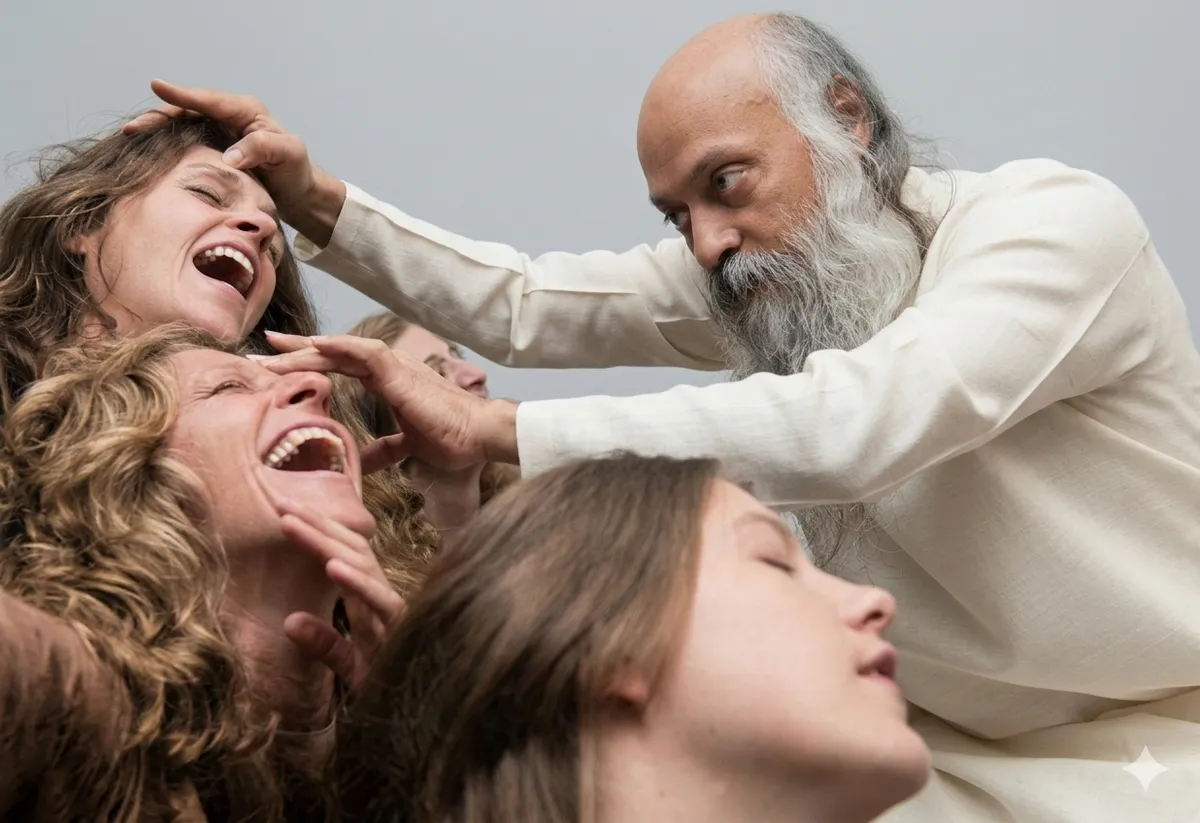
Osho's original Hindi beside Osho Live's English translation, matched passage by passage.
पहली बात, जो व्यक्ति कुछ लेने की भावना से आएगा वह चूक जाएगा। वहीं सबसे बड़ी कठिनाई है। लोभ बाधा बन जाता है। तो पहली तो आधारभूत बात यह है कि यहां मेरे पास कुछ लेने की भावना से मत आना। लेने की भावना का तनाव भीतर रहा तो वही तनाव तरंगों को प्रविष्ट नहीं होने देता। तब तुम सुनने में कम उत्सुक हो, लेने में ज्यादा उत्सुक हो। तब तुम यहां नहीं हो, तुम्हारा मन भविष्य में चला गया, परिणाम में, कि कितना इकट्ठा कर लूं, कितना पा लूं, कितनी इन तरंगों को समेट लूं, कितना इस प्रसाद को अपने हृदय में भर लूं, चूक जाओगे।
First thing: whoever comes with the intention to get something will miss. That is the greatest difficulty. Greed becomes an obstacle. So the first, fundamental point is: do not come to me with the attitude of taking. If the tension of wanting to take remains inside, that very tension will not allow the waves to enter. Then you are less eager to listen and more eager to acquire. Then you are not here; your mind has gone into the future, into results—“How much can I collect? How much can I gain? How much of these waves can I gather? How much of this grace can I fill my heart with?” You will miss.
मुझे तो ऐसे सुनना जैसे कोई पक्षियों के गीत को सुनता है--लेने को कुछ भी नहीं है। तब मिलेगा बहुत। तब अपरंपार मिलेगा। तब तुम भर जाओगे। लेने आए, खाली हाथ लौट जाओगे।
Listen to me as one listens to birdsong—there is nothing to take. Then much will be given. Then the boundless will be given. Then you will be filled. If you come to take, you will return empty-handed.
तुम्हारी तकलीफ भी मैं समझता हूं। क्योंकि जब मिलता है, तो लेने का मन पैदा होता है--और लेने का मन पैदा होता है। तुम्हारी अड़चन मुझे साफ है। ऐसा मत सोचना कि तुम्हारी अड़चन मेरे खयाल में नहीं है। जहां मिलता है, वहां मन होता है और ले लें। और लेने के कारण जो मिलने वाला था वह तो मिलेगा नहीं, जो मिलता था वह भी चूक जाएगा। तो सबसे बड़ी बात है, लोभ को छोड़कर आना।
I understand your difficulty. When something is received, the mind to take arises—of course it does. Your obstacle is clear to me; do not think I am unaware of it. Where there is something to be had, the mind wants to grab it. And because of this urge to take, not only will what was going to be given fail to be received, even what was being received will be missed. So the greatest point is: come having dropped greed.
मेरे साथ आनंदित होओ, मेरे उत्सव में सम्मिलित होओ, लेकिन उत्सव से कुछ लेने का भाव मन में रखो ही मत। लेने की भावना से ही संसार पैदा हो जाता है। वही तो वासना है। और वासना दुष्पूर है।
Rejoice with me, join my celebration—but keep no intention in your mind of taking something from the celebration. The very urge to take is what creates the world—that is desire. And desire is insatiable.
पहली बात, यहां ऐसे बैठो, खाली, न कुछ लेना, न कुछ देना। सुबह का सूरज निकला है, खाली तुमने उसके दर्शन किए, रात चांद ऊगा है, तुमने आंखें उठाकर आकाश में उसके सौंदर्य को देखा, लेना क्या है, ले क्या लोगे, लेने की वृत्ति की गुंजाइश कहां है? पक्षी गीत गा रहे, या कि जलप्रपात की मर्मर ध्वनि, या कि नदी की कलकल ध्वनि सुनायी पड़ रही है, लेने को क्या है? डूबने को कुछ है, लेने को कुछ भी नहीं है। ऐसा कुछ भी नहीं है जिस पर तुम मुट्ठी बांध लो। मुट्ठी बांधी कि चूके। मुट्ठी खुली रहे तो भर जाएगी।
First thing: sit here empty—nothing to take, nothing to give. The morning sun rises and you simply behold it. At night the moon ascends; you raise your eyes and see its beauty—what is there to take? What could you possibly take? Where is there any scope for the tendency to take? Birds are singing, or the murmur of a waterfall, or the gurgling of a river is heard—what is there to take? There is something to drown into, but nothing to take. There is nothing you can grasp in your fist. Clench the fist and you miss. Keep the fist open, and it will fill.
धीरे-धीरे इस बात की तरफ अपने को राजी करो। तो यहां ऐसे बैठो--खाली, रिक्त, भविष्य की कोई चिंता नहीं, विचार नहीं; जो यहां घट रहा है, मेरी मौजूदगी में, सम्मिलित हो जाओ। तुम्हारी मौजूदगी और मेरी मौजूदगी मिल जाए, तो तरंगें प्रविष्ट हो जाएंगी। वे तुम्हारे अंतरतम तक को नचा देंगी। उल्लास पैदा होगा, अपूर्व प्रतीतियां होंगी।
Slowly, persuade yourself toward this. Sit here like this—empty, void, with no concern for the future, no thought. Whatever is happening here, in my presence, just be included in it. If your presence and my presence merge, the waves will enter. They will make your innermost core dance. Ecstasy will arise, unprecedented perceptions will happen.
मगर, जब मैं कह रहा हूं अपूर्व प्रतीतियां होंगी, तो सावधान! तुम्हारा मन कहीं यह न कहने लगे कि यही तो हम चाहते हैं। अपूर्व प्रतीतियां चाहिए। अनूठे अनुभव चाहिए। इसी के लिए तो आए हैं। फिर तुम चूके। यह बड़ी दुविधा की बात है। जीसस ने कहा है, जो बचाएगा, खो देगा; जो खो देगा, बचा लेगा। पहली बात।
But when I say such unprecedented perceptions will happen—be alert! Let your mind not start saying, “That is exactly what we want—unique perceptions, extraordinary experiences. That is what we have come for.” Then you miss again. This is a great paradox. Jesus has said, “He who saves will lose; he who loses will be saved.” That is the first point.
दूसरी बात, यहां जब तुम बैठो तो शिथिल बैठो, शिथिलगात। तने हुए नहीं, अकड़े हुए नहीं। कहीं जा तो रहे नहीं हम, दौड़ने की तो कोई जरूरत नहीं है, इसलिए तैयार होने का कोई कारण नहीं है। शांत बैठें, शिथिल बैठें, डूब रहें, डुबकी लगा लें। विश्राम में बैठो।
Second thing: when you sit here, sit relaxed—relaxed in body; not tense, not stiff. We are not going anywhere, there is no need to run, therefore no reason to brace yourself. Sit quietly, sit relaxed. Sink, take a dip. Sit in rest.
आश्रम का अर्थ ही यही है कि जहां जाकर तुम विश्राम से बैठ सको। जहां व्यवसाय नहीं है, जहां आपाधापी नहीं है। यहां तुमसे मैं कुछ करने को नहीं कह रहा हूं कि तुम कुछ करो। सारी शिक्षा न करने की है, अक्रिया की है। करते तो तुम बहुत हो, कर-करके तो चूके हो। कर-करके तो सब नष्ट किया। जन्मों-जन्मों से कर रहे हो। यहां घड़ीभर जब मेरे पास होते हो तब कुछ मत करो। जैसे छोटे बच्चे खिलौनों से खेलते हैं, ऐसे तुम बैठ जाओ। ये जो शब्द मैं तुमसे बोल रहा हूं, खिलौने हैं। इनसे खेल लो। भूल जाओ आगा-पीछा, शिथिलगात, हल्के, तने हुए नहीं। विद्यार्थी की तरह मत बैठो यहां, सीखने को यहां क्या है? यहां तो कुछ अनसीखा करना है, कुछ भूलना है। यहां कुछ विस्मरण करना है, याद नहीं करना है।
An ashram means just this: a place where you can sit in rest; where there is no business, no hustle. Here I am not asking you to do anything. The whole teaching is of non-doing, of inaction. You have done a lot; by doing and doing you have missed. By doing and doing you have undone it all. For lifetimes you have been doing. Here, for the hour or so that you are with me, do nothing. Like little children play with toys, just sit. These words I am speaking to you are toys—play with them. Forget past and future; be relaxed in body, light, unstrained. Do not sit here like a student—what is there to learn here? Here something has to be unlearned, something forgotten. Here there is to be a letting-go of memory, not remembering.
तो एक तो याद करने का ढंग होता है, तब आदमी तना बैठता है कि कोई बात चूक न जाए। यहां तो तुम बिलकुल शांत बैठो--हल्के, शिथिल, विश्राम में। एक विराम की दशा हो मन की। फिर उस विराम की दशा में आंखें खुली रहें तो ठीक, बंद हो जाएं तो ठीक। तुम कौन बीच में आंखें खोलने वाले या बंद करने वाले? तुमने अगर खोलकर रखीं तो तनाव हो जाएगा, तुमने अगर बंद कर लीं तो तनाव हो जाएगा। तुमने कुछ भी किया तो तनाव आ जाता है। कर्ता आया कि तनाव आया। आंखें बंद हो जाएं सुनते-सुनते कभी, तो बंद हो जाने दो। यहां तक भी कि कभी-कभी सुनते अगर झपकी लग जाए, तो लग जाने दो। क्योंकि अगर वही उपयोगी है तो वही होगा। कभी-कभी विश्राम की ऐसी दशा आ सकती है कि तुम तंद्रा में खो गए। लेकिन जो तुम होश में जागकर न पा सकते, वह तंद्रा में मिल जाएगा। शायद तुम्हारी नींद में ज्यादा सरलता से तरंगें प्रवेश कर जाएं, क्योंकि तुम द्वार पर पहरेदार की तरह बैठे न होओगे।
There is a way of listening in order to remember; then a person sits tense, lest any point be missed. Here you sit utterly at ease—light, relaxed, at rest. Let the mind be in a pause. In that pause, if the eyes remain open, fine; if they close, fine. Who are you to decide to open or close them? If you keep them open deliberately, tension will arise; if you close them deliberately, tension will arise. The moment you do anything, tension comes—when the doer appears, tension appears. If, while listening, the eyes happen to close, let them close. Even if, while listening, a drowsiness comes, let it come. Because if that is what is useful, that is what will happen. Sometimes such a state of rest can arrive that you slip into a kind of trance. But what you cannot receive alertly in wakefulness may be given in that drowsiness. Perhaps the waves can enter more easily in your sleep, because you will not be sitting at the gate like a guard.
इसलिए तुम अपनी तरफ से नियंत्रण मत करो। आंख खुली तो ठीक, आंख बंद हो गयी तो ठीक, झपकी भी लग गयी तो भी ठीक। मैं तो बरस रहा हूं, तुम्हें झपकी भी लग गयी, कोई हर्जा नहीं। तुम और साधु-संन्यासियों के पास जाओगे तो वे कहेंगे कि झपकी, कभी भूलकर नहीं! जागे रहना, आंखें खुली रखना।
So do not control from your side. If the eyes are open, fine; if they close, fine; even if you doze, fine. I am pouring; even if you nod off, no harm. If you go to other sadhus and sannyasins, they will say, “Never doze! Stay awake, keep your eyes open.”
यहां मैं कुछ तुम्हें और ही सिखा रहा हूं। वह भिन्न है। यहां मैं तुम्हें विश्राम सिखा रहा हूं। अक्सर ऐसा हो जाएगा कि तना हुआ मन जब तुम ढीला छोड़ दोगे, तो कभी-कभी आंख भी बंद हो जाएगी। कभी-कभी आंख बंद करके जागे भी रहोगे, कभी-कभी आंख बंद करके सो भी जाओगे, कोई हर्जा नहीं। स्नान तुम्हारा तब भी होगा। कभी आंख खुल जाए तो ठीक, बंद हो जाए तो ठीक। सहज होने दो। स्व-स्फुरणा से चलने दो जीवन की धारा को।
Here I am teaching you something else—different. Here I am teaching you rest. Often it will happen that when you let a tense mind go loose, sometimes the eyes will close; sometimes with closed eyes you will remain awake; sometimes with closed eyes you will fall asleep—no harm. Your cleansing will happen anyway. If the eyes open, fine; if they close, fine. Let it be natural. Let the stream of life flow by its own spontaneity.
एक घंटा, डेढ़ घंटा जब तुम मेरे पास हो, तब तो कम से कम तुम ऐसे सरल हो जाओ जैसा कि प्रकृति चाहती है कि तुम होओ। वृक्षों की भांति। हवा आयी तो वृक्ष को बाएं झुका गयी तो वृक्ष बाएं झुक जाता है, वह यह तो नहीं कहता कि मैं नहीं झुकूंगा। हवा आयी, दाएं झुका गयी, तो दाएं झुक जाता है। कुछ पत्ते गिर गए हवा के झोंके में तो गिर जाते हैं, वृक्ष रोक तो नहीं देता। ऐसे ही तुम हो जाओ। इधर झुकाऊं इधर झुक जाओ, उधर झुकाऊं उधर झुक जाओ।
For the one hour, hour and a half that you are with me, at least become as simple as nature wants you to be—like trees. The wind comes and bends the tree to the left: it bends to the left; it does not say, “I will not bend.” The wind comes and bends it to the right: it bends to the right. Some leaves fall in the gust; they fall—the tree does not prevent it. Become like that. If I incline you this way, bend this way; if that way, bend that way.
यह तो शरीर की बात हुई, ऐसी ही स्थिति मन की भी हो।
This was about the body; let the same be the state of the mind.
जब मैं कुछ बोल रहा हूं, तो तुम भीतर यह मत सोचो कि ठीक कि गलत। यहां ठीक और गलत का हिसाब किसको है! तुम्हें कोई निर्णायक बनाकर बिठाया भी नहीं है, तुम कोई मेरी परीक्षा लेने आए भी नहीं। परीक्षा लेने आए तो तुम आए ही नहीं। तो तुम न आते तो अच्छा था, तुम नाहक अपना समय खराब कर रहे हो। और एक जगह रोक रखी है जहां कोई और होता तो शायद ज्यादा डूबता। ऐसा अनाचार न करो। यहां जो मैं कह रहा हूं, यह ठीक है या गलत है, इसके हिसाब में ही मत पड़ो। न तो यह ठीक है, न यह गलत है।
When I am speaking, do not inside you judge whether it is right or wrong. Who is keeping accounts of right and wrong here? No one has seated you as a judge, and you have not come to examine me. If you have come to examine, you have not come at all. It would have been better had you not come—you are wasting your time and occupying a place where someone else might have gone deeper. Do not do such an impropriety. Do not get into the arithmetic of whether what I am saying is right or wrong. It is neither right nor wrong.
असल में जो मैं कह रहा हूं, वह तो प्रयोजन ही नहीं है। कहना तो सिर्फ बहाना है, ताकि तुम्हारा मन इस बहाने में उलझ जाए और मन इतना उलझ जाए कि तुम्हारे हृदय से मेरा सीधा मिलन होने लगे। जब मन बिलकुल उलझा होता है, तल्लीन होता है, तो हृदय के द्वार खुल जाते हैं। जब मन तल्लीन नहीं होता तो हृदय के द्वार पर खड़ा रहता है, संगीन लिए पहरेदार की तरह। वह हर कुछ भीतर नहीं जाने देता। वह डरा हुआ है। मन तो बहुत भयभीत है। हृदय बहुत साहसी है, मन बहुत कायर है। तो मन एक-एक चीज को जांचकर भीतर जाने देता है--कौन अपना, कौन अपना नहीं; कौन हमारे शास्त्र से बात मेल खाती है, कौन मेल नहीं खाती है; कौन सा सत्य जो हम अब तक मानते रहे हैं, उसके अनुकूल पड़ता है कि प्रतिकूल पड़ता है; मन तो ऐसे ही हिसाब-किताब लगाता रहता है। मन बड़ा हिसाबी-किताबी है।
In truth, what I am saying is not the point at all. The speaking is only a pretext, so that under this pretext your mind becomes engrossed—so engrossed that a direct meeting from my heart to your heart can begin. When the mind is thoroughly absorbed, the doors of the heart open. When the mind is not absorbed, it stands at the doors of the heart like a guard with a bayonet; it does not allow anything to enter. It is afraid. The mind is very frightened; the heart very courageous, the mind very cowardly. So the mind inspects each and every thing before letting it in: who is ours and who is not; what agrees with our scriptures and what does not; which of the truths we have believed so far does it support, and which does it contradict. The mind keeps doing this kind of accounting. The mind is very calculating.
अगर तुम इस हिसाब-किताब में पड़े तो समय तुमने व्यर्थ ही गंवा दिया। यह सत्संग है, यहां कोई चर्चा ही नहीं चल रही है--चर्चा तो ऊपर-ऊपर है। कुछ लोग हैं जो चर्चा सुनने आए हैं। ठीक है, वे चर्चा सुनकर चले जाएंगे। उन्होंने कचरा बटोरा। वे व्यर्थ को सम्हालकर ले गए। कुछ और हैं जो सत्संग को आए हैं। उन्हें इससे कुछ लेना-देना नहीं है कि मैं जो कह रहा हूं वह ठीक है कि गलत है, सुन रहे हैं। अगर तुम इतने निर्विचार से सुन सको, निष्पक्ष होकर सुन सको, निर्णायक न बनो, तो अचानक तुम पाओगे, जो सच है वह दिखायी पड़ता है कि सच है। जो सच नहीं है, वह दिखायी पड़ता है कि सच नहीं है। यह इतना स्पष्ट हो जाता है उस उजली दशा में, मन की उस उजियारी दशा में, जहां तुम विचार नहीं कर रहे, विचार का धुआं नहीं है, वहां यह बात इतनी साफ हो जाती है--सत्य सीधा दिखायी पड़ जाता है कि सत्य है, तुम्हें सोचना नहीं पड़ता कि है सत्य या नहीं। तुम सोचोगे भी कैसे? तुम्हें सत्य का कुछ पता है? तुम किस आधार पर सोचोगे?
If you get into this calculation, you will have wasted your time. This is satsang—there is no debate going on here; discussion is only on the surface. Some people are here to hear the discussion; fine, they will hear it and go. They have collected rubbish; they carry away the trivial. Others are here for satsang. For them it does not matter whether what I say is right or wrong—they are simply listening. If you can listen so thoughtlessly, so impartially, without becoming a judge, suddenly you will find: what is true appears as true; what is not true appears as not true. It becomes so clear in that luminous state, in that bright state of mind where you are not thinking—where there is no smoke of thought—that truth is seen directly as truth. You do not have to think whether it is true or not. How will you think, anyway? What do you know of truth? On what basis will you think?
मेरे पास जो लोग सोचते बैठे रहते हैं, वे चूक जाते हैं। कई दफा तो ऐसा हो जाता है कि वर्षों हो गए उन्हें मुझे सुनते, लेकिन वे चूकते चले जाते हैं, वे सोच रहे हैं। उन्होंने छोड़ा नहीं है मेरे साथ अपने को। उन्होंने मेरा हाथ हाथ में नहीं लिया है। कुछ तो ऐसे हैं कि संन्यास भी ले लिया है, तो भी मेरे हाथ में उनका हाथ नहीं है। कभी-कभी ऐसा भी होता है कि उनका हाथ तुम्हें मेरे हाथ में दिखायी पड़ता होगा, लेकिन उन्होंने अपना हाथ मेरे हाथ में छोड़ा नहीं है। अगर मौका उनको लगे कि कुछ गलत बात हो रही है तो अपना हाथ तत्क्षण खींच लेते हैं। मेरे हाथ में छोड़ा नहीं है, गलत और सही सब के संगी-साथी नहीं हैं, चुन-चुनकर, जो उन्हें ठीक लगता है। इसका मतलब हुआ, शिष्यत्व अभी पैदा नहीं हुआ। विद्यार्थी हैं, शिष्य नहीं हैं। सो ऐसे लोग तो चूकते चले जाएंगे।
Those who sit here thinking miss. Many times it happens that they have been listening to me for years, but they go on missing—they are thinking. They have not let themselves be with me. They have not placed their hand in my hand. Some have even taken sannyas, yet their hand is not in mine. Sometimes it may even appear to you that their hand is in my hand, but they have not left their hand in my hand. If they feel at any point that something wrong is going on, they immediately pull their hand back. They have not entrusted it to my hand; they are not companions through wrong and right—they keep selecting only what suits them. This means discipleship has not yet been born. They are students, not disciples. Such people will go on missing.
तो समाधि को मैं कहूंगा कि इस भांति सुन कि तुझे कुछ निर्णय करने की जरूरत ही नहीं है। जहां निर्णय नहीं करना है, वहां चित्त शांत हो जाता है, द्वंद्व बंद हो जाता है। उस निर्द्वंद्व दशा में जो सत्य है सत्य जैसा दिखायी पड़ता है, जो असत्य है असत्य जैसा दिखायी पड़ता है, तुम्हें कुछ सोच-विचार नहीं करना पड़ता। वह दर्शन है। और जहां दर्शन है, वहीं क्रांति है।
So to Samadhi I will say: listen in such a way that you do not need to decide anything. Where there is nothing to decide, consciousness becomes quiet; duality ceases. In that non-dual state, what is true appears as true, what is false appears as false; you need not think about it. That is vision. And where there is vision, there is revolution.
इन चीजों से बाधा पड़ती होगी। या तो सोच-विचार आ जाता होगा, या लोभ आ जाता होगा, या अहंकार आ जाता होगा कि यह बात तो मेरे खिलाफ है, इसको कैसे मानूं? या तुम्हारी पुरानी धारणाएं बीच में आकर खड़ी हो जाती होंगी।
These things must be causing the obstruction: either thinking starts up, or greed comes in, or the ego arises—“This goes against me; how can I accept it?”—or your old beliefs step in and stand blocking the way.
शिथिलगात, बिना किसी लोभ के, बिना निर्णायक बने सुन सको तो समर्पण में सुना। और तब तुम्हारे जीवन में एक बड़े चकित कर देने वाले सत्य का अवतरण होगा कि सोच-विचार कर-करके जब इतना समय गंवाया तब सत्य दिखायी नहीं पड़ता था, अब बिना किसी बात को गंवाए, बिना किसी ऊर्जा को गंवाए सत्य दिखायी पड़ता है। आंख चाहिए सत्य को देखने के लिए। और आंख तभी होती है, जब तुम निर्मल हो।
If you can listen loose-limbed, without any greed, without becoming a judge, then you have listened in surrender. And then a great, astonishing truth will descend in your life: when you wasted so much time thinking and thinking, truth never appeared; now, without wasting any time, without wasting any energy, truth is seen. You need eyes to see truth—and eyes are there only when you are pristine.
तो हिंदू की तरह मत सुनो, मुसलमान की तरह मत सुनो, सिख की तरह मत सुनो, सिर्फ सुनो। और धीरे-धीरे तुम्हें यह भी दिखायी पड़ने लगेगा कि जो मैं कह रहा हूं, वह तो प्रयोजन नहीं है, प्रयोजन कुछ और है, कहना तो बहाना है। और जिस दिन तुम्हें मेरा प्रयोजन दिखायी पड़ने लगेगा--कुछ और, एक आदान-प्रदान है, ऊर्जा का ऊर्जा से, हृदय का हृदय से। जिस दिन उस आदान-प्रदान का सेतु तुम्हें स्पष्ट हो जाएगा, उस दिन तुम हंसोगे कि नाहक जो हम सुनते थे उसमें हमने इतना समय गंवाया; ठीक कि गलत, ऐसा क्यों कहा, वैसा क्यों कहा, वह तो प्रयोजन ही नहीं था।
So do not listen like a Hindu, do not listen like a Muslim, do not listen like a Sikh—just listen. And slowly you will also begin to see that what I am saying is not the purpose; the purpose is something else—the saying is only an excuse. And the day you begin to see my purpose—something else, an exchange of energy with energy, heart with heart—the day the bridge of that exchange becomes clear to you, that day you will laugh that needlessly you wasted so much time over what was said: right or wrong, why did he say this, why did he say that?—that was not the purpose at all.
छोटे बच्चों की किताबें देखीं, छोटे बच्चों की किताबों में रंगीन तस्वीरें रखनी पड़ती हैं, बड़ी-बड़ी तस्वीरें रखनी पड़ती हैं। आम, तो पूरा पृष्ठ आम की तस्वीर से भरना पड़ता है। क्योंकि बच्चा अभी आम की तस्वीर समझ सकता है, आम शब्द को तो अभी देर है समझने में। तस्वीर के बहाने आम को समझेगा। फिर जैसे-जैसे बच्चा बड़ा होने लगेगा, आम की तस्वीर छोटी होने लगती है। फिर जैसे ही बच्चा बड़ा हो गया, पढ़ने में कुशल हो गया, आम की तस्वीर विदा हो गयी। पहले पढ़ता था, आ आम का, अब आम को छोड़ देगा, अब सीधा आ पढ़ लेगा; अब आ आम का है, ऐसा कहने की कोई जरूरत नहीं रही।
Look at children’s books: they must have colorful pictures, big pictures. For a mango, an entire page has to be filled with the mango’s picture. Because the child can understand the picture of the mango; it is still too early to understand the word “mango.” Through the picture, he will come to the mango. As the child grows, the picture of the mango becomes smaller. And when the child has grown and become skillful in reading, the picture of the mango is bid farewell. Earlier he read: “aa se aam (mango)”; later he drops the mango and reads simply “aa.” Now there is no need to say “aa is for aam.”
शब्द से बोलता हूं, क्योंकि तुम अभी छोटे बच्चों की भांति हो। अगर तुम प्रौढ़ हो गए, ध्यान में उतर गए, तो तुमसे निःशब्द बोलने लगूंगा। यहां दो तरह के लोग बैठे हैं। जो थोड़े ध्यान में गए हैं, उन्हें मेरे शब्दों को सुनने की कोई जरूरत ही नहीं पड़ रही है। वे मुझे सुन रहे हैं, वे मेरे निःशब्द को सुन रहे हैं। उनसे मेरा नाता मौन का है। इसलिए तुम कभी-कभी चौंकोगे भी कि कोई इतना भावविभोर हो गया है, तुम उसके पास ही बैठे थे, तुम्हें कुछ भी न हुआ, बात क्या है! तुम कभी चौंकोगे कि कोई रो रहा है, आंख से आंसू बहे जा रहे हैं, और तुम्हारी आंख तो जरा भी गीली नहीं हुई। तुम्हें यह भी समझ में नहीं आता कि ऐसी तो कोई बात कही भी नहीं थी जिससे आंख गीली हो जाए!
I speak in words because you are still like little children. If you become mature, if you descend into meditation, I will begin to speak to you wordlessly. There are two kinds of people sitting here. Those who have gone a little into meditation do not even need to hear my words. They are listening to me; they are listening to my wordlessness. My connection with them is of silence. Therefore sometimes you will be surprised that someone has become so overwhelmed, and you were sitting right beside him—nothing happened to you. What is the matter? You will be surprised that someone is crying, tears are flowing from his eyes, and your eyes did not even grow moist. You do not even understand that nothing was said that should bring tears to the eyes!
असल में अलग-अलग बात चल रही है। उससे कुछ और बात चल रही है, तुमसे कुछ और बात चल रही है। तुमसे जो बात चल रही है उसमें आंखें गीली होतीं ही नहीं। उससे जो बात चल रही है, उसमें आंखें गीली होती हैं--उससे हार्दिक लेन-देन चल रहा है।
In truth different conversations are going on. With him something else is happening; with you something else. In what is going on with you, eyes do not become moist. In what is going on with him, eyes become moist—there is a heart-to-heart exchange with him.
झेन संप्रदाय को जन्म देने वाले बोधिधर्म का प्रसिद्ध वचन है कि एक तो शास्त्र से दी जाती है बात, शब्द से दी जाती है; और एक ऐसी बात है जो शब्दातीत है, शास्त्रातीत है--असली वही है। एक तो ऐसी बात है जो कहकर कही जाती है और एक ऐसी बात है जो अनकहे कही जाती है।
Bodhidharma, the father of the Zen tradition, has a famous saying: one kind of teaching is given through the scriptures, through words; and there is another that is beyond words, beyond scriptures—the real one is that. One kind of thing is said by saying it; and one kind of thing is said without saying it.
अनकहा भी यहां घट रहा है। जब तक तुम उसे न सुन लो, तब तक मुझे सुना, इस तरह की भ्रांति अपने मन में लाना ही मत। तब तक तुम आम की तस्वीर देखते रहे, आम शब्द का पढ़ना तुम्हें न आया।
The unspoken is also happening here. Until you have heard that, do not bring the illusion into your mind that you have heard me. Until then you have only looked at the picture of the mango; you have not learned to read the word “mango.”
ये तो बहाने हैं। इसलिए रोज बोले चला जाता हूं। क्योंकि जो बोलना ही समझ सकते हैं, अभी उनसे बोलना ही पड़ेगा। धीरे-धीरे तुममें से जिनकी थोड़ी गहराई बढ़ती जाती है, वे चुपचाप अपने में लीन होते जाते हैं। उनको रस इस बात में है कि वे मेरी मौजूदगी में यहां बैठ लेते हैं। सुना, नहीं सुना, महत्वपूर्ण नहीं है। तब खूब सत्संग होगा।
These are just excuses. That is why I go on speaking every day. Because for those who can only understand speech, for now I must speak. Slowly, among you, those whose depth grows a little go on becoming silently absorbed within. Their relish is simply to sit here in my presence. Heard or not heard—that is not important. Then there is true satsang.
और जब तुम सब तैयार हो जाओगे, तो मैं बोलना बंद कर दूंगा, तब मैं यहां चुपचाप आकर बैठ जाऊंगा और तुम डोलोगे, तुम नाचोगे। उसी की प्रतीक्षा है।
And when you all are ready, I will stop speaking. Then I will come and sit here in silence, and you will sway, you will dance. I am waiting for that.
बोलना मुझे भी कष्टपूर्ण है। बोलने में मुझे कुछ रस नहीं है। क्योंकि जो मैं कहना चाहता हूं, वह कहा नहीं जा सकता; और जो मुझे कहना पड़ता है, वह मैं कभी कहना नहीं चाहता था। लेकिन प्रतीक्षा करता हूं कि धीरे-धीरे एक बड़ी जमात तैयार हो जाए। क्योंकि अगर अभी मैं बोलना बंद कर दूं तो थोड़े से ही लोगों के काम का रह जाऊंगा--बहुत थोड़े से लोगों के काम का--तो पहले जमात तो तैयार कर लूं जो कि अनबोले को समझ सकेगी। यह उसकी तैयारी चल रही है। जिस दिन पाऊंगा कि अब काफी लोग हो गए जो कि बिना बोले समझ सकते हैं, उसी दिन मैं चुप हो जाऊंगा। उसके पहले समझने की तैयारी कर लो, अन्यथा फिर तुम्हारे लिए कोई उपाय न रह जाएगा। जिस दिन मैं चुप हुआ, हुआ। उसके पहले तुम सीख लो चुप्पी को समझने का राज। तब तक जितना इस शब्द की तस्वीर का उपयोग कर सकते हो, कर लो, फिर मुझसे मत कहना कि आप तो चुप बैठ गए, हमें तो चुप्पी कुछ समझ में नहीं आती।
Speaking is painful for me too. I take no relish in speaking. Because what I want to say cannot be said; and what I have to say, I never wanted to say. But I wait for a large band to be ready. Because if I stop speaking now, I will remain useful only to a very few—very, very few. So first let me prepare a group that will be able to understand the unspoken. That preparation is going on. The day I see that now there are enough people who can understand without speech, that very day I will fall silent. Before then, make your understanding ready; otherwise there will be no way left for you. When I fall silent, I fall silent. Before that, learn the secret of understanding silence. Till then, make as much use as you can of this picture-book of words. After that, do not come and say to me, “You sat silently, and we do not understand silence.”
तुम सौभाग्यशाली हो, क्योंकि कुछ लोग तब आएंगे जब मैं चुप होकर बैठ जाऊंगा। तब उनको सिखाने को कुछ भी न होगा। तब अगर वे बैठ गए और सीख लिया तो सीख लिया! अभी तो मैं हाथ पकड़वा-पकड़वाकर लिखा रहा हूं। अभी हाथ पकड़-पकड़कर चला रहा हूं। तुम सौभाग्यशाली हो! इस सौभाग्य का पूरा उपयोग कर लेना उचित है।
You are fortunate, because some people will come when I will be sitting in silence. Then there will be nothing at all to teach them. If they sit and learn, they learn. Right now I am holding your hand and making you write. Right now I am holding your hand to make you walk. You are fortunate. It is right to make full use of this good fortune.
होगी गंध तुम्हारे भीतर। तुम्हारी व्याख्याओं में होगी। तुम्हारे मन की धारणाओं में होगी। तो तुम वही सुन लोगे जो तुम्हारे भीतर छिपा है। और ऐसा तो बहुत कठिन है आदमी पाना जिसके भीतर किसी न किसी तरह की राजनीति न पड़ी हो। तो अगर मैं कभी राजनीति शब्द का भी उपयोग कर दूं तो तुम्हारे भीतर जल्दी से तहलका मच जाता है।
The smell must be in you. It will be in your interpretations, in the assumptions of your mind. You hear only what is already hidden within you. And it is very hard to find a person in whom some kind of politics isn’t lodged. So if I ever even use the word “politics,” an uproar quickly starts within you.
धर्म शब्द सुनकर तुम्हारे भीतर कुछ नहीं होता। परमात्मा शब्द सुनकर तुम्हारे भीतर कोई लहर पैदा नहीं होती। राजनीति शब्द सुनकर ही तुम्हारे भीतर तरंगें आ जाती हैं। उसमें तुम्हारा रस है। राजनीति शब्द सुनकर ही तुम तालियां पीटने लगते हो, उसमें तुम्हारा रस है। तुम उसे समझ पाते हो। वह तुम्हारी बुद्धि के भीतर है। वह तुम्हारी समझ के भीतर है। फिर उसकी तुम व्याख्या भी कर लेते हो। क्योंकि यह तो तुम मानोगे कि शायद धार्मिक तुम नहीं होओ, लेकिन राजनीति तो तुम भी काफी बघारते हो, काफी जानते हो, काफी बात करते हो--अखबार तो तुम भी पढ़ते ही हो न! चौबीस घंटे बात तो करते ही हो न! उसमें तो तुम बड़े कुशल हो। तो एक शब्द भी सुना कि तुम्हारे भीतर जल्दी से एक यात्रा शुरू हो जाती है। वह यात्रा तुम्हारी ही है, तुम उसे मुझ पर मत आरोपित करना।
The word “religion” does nothing inside you. The word “God” raises no wave within you. But the moment you hear “politics,” ripples arise in you. That is where your taste is. The moment you hear “politics” you start clapping—there is your relish. You can grasp it; it is within your intellect, within your understanding. Then you proceed to interpret it too. Because you will at least admit this much: you may not be religious, but you certainly spout politics, you know quite a lot, you talk plenty—after all, you read the newspapers, don’t you? You chatter all day long, don’t you? In that you are very skilled. So at the mere sound of one word, a whole journey begins inside you. That journey is yours—don’t project it onto me.
कभी-कभी मैं जानकर राजनीति शब्द का और कभी-कभी जानकर राजनीति के संबंध में कुछ वक्तव्य भी दे देता हूं।
Sometimes I deliberately use the word “politics,” and sometimes, quite knowingly, I even make a few statements about politics.
एक पागल आदमी एक पागलखाने के बाहर खिड़की के ऊपर बैठा हाथ में मछली पकड़ने की बंसी लिए है। आटा लगाकर कांटे में खिड़की से लटकाए हुए बैठा था। मुल्ला नसरुद्दीन वहां से निकला तो उसने मजाक में पूछा कि कितनी मछलियां पकड़ीं? उसने कहा, तुम्हें मिलाकर ग्यारह। मुल्ला ने पूछा, मतलब? उसने कहा, दस और पूछ चुके हैं। उस पागल ने कहा कि तुम भी भीतर क्यों नहीं आ जाते? यहां कहां मछली? तो मुल्ला ने कहा, फिर बैठे क्यों हो यह बंसी लिए हुए? तुमको पकड़ने के लिए, देख रहा हूं कितने नासमझ यहां से निकलते हैं!
A madman was sitting on the window ledge outside a madhouse, holding a fishing rod. He had put dough on the hook and was dangling it from the window. Mulla Nasruddin passed by and asked jokingly, “How many fish have you caught?” The man said, “Including you, eleven.” Mulla asked, “Meaning?” He said, “Ten have already asked.” Then the madman added, “Why don’t you come inside as well? Where are there fish here?” So Mulla said, “Then why are you sitting with this rod?” He replied, “To catch you—to see how many simpletons pass this way!”
कभी-कभी मैं चोट कर देता हूं। तत्क्षण मेरे हाथ में पकड़ में आ जाती हैं मछलियां कि किन-किन को चोट लगी? कौन-कौन बौखला गए? पत्र आने लगते हैं, प्रश्न आने लगते हैं कि आपने बहुत ऐसा कर दिया, ठीक नहीं किया।
Sometimes I give a jab. Instantly the fish come into my hand; it becomes clear who got hurt, who got flustered. Letters begin to arrive, questions begin to pour in: “You went too far; this was not right.”
मुल्ला नसरुद्दीन के घर कव्वालियों का प्रोग्राम था। बड़े-बड़े नामी कव्वाल आए हुए थे। मेहमान कव्वालियों से झूम रहे थे। ऐसे में जब एक कव्वाल ने यह पंक्ति पढ़ी--खुदा जाने पर्दे में क्या हो रहा है, हर तरफ से वाह-वाह का शोर उठा। और बार-बार कव्वाल ने इस पंक्ति को दोहराया--खुदा जाने पर्दे में क्या हो रहा है, खुदा जाने पर्दे में क्या हो रहा है। मुल्ला नसरुद्दीन, जिसके घर यह आयोजन हो रहा था, बड़े गुस्से में भर गया--खुदा जाने पर्दे में क्या हो रहा है!--यह बदतमीज कव्वाल, इसको इतनी भी समझ नहीं है कि मैंने ही बुलाया और मेरी ही फजीहत करवा रहा है कि खुदा जाने पर्दे में क्या हो रहा है!
There was a qawwali program at Mulla Nasruddin’s home. Renowned qawwals had come. The guests were swaying with ecstasy. At such a moment, when one qawwal sang the line, “God knows what is happening behind the curtain,” there was applause on all sides. Again and again the qawwal repeated: “God knows what is happening behind the curtain, God knows what is happening behind the curtain.” Nasruddin—at whose house the event was happening—was filled with fury: “God knows what is happening behind the curtain!” This ill-mannered singer—he has so little sense that I invited him, and he is disgracing me: “God knows what is happening behind the curtain!”
आखिर एक सीमा थी। और जब लोग फिर कहने लगे कि वाह-वाह, फिर से हो जाए, तो वह उठकर खड़ा हो गया। उसने कहा, ठहर, एक सीमा होती है बर्दाश्त की और शिष्टाचार की भी एक जरूरत है, एक आवश्यकता है। और जल्दी से मुल्ला उठा और उसने पर्दा उठाकर कहा कि देखिए, कव्वाल साहब! कोई हसरत न रह जाए कि पर्दे में क्या हो रहा है! पर्दे में कुछ नहीं हो रहा है, देख लीजिए, मेरी पत्नी छालियां कुतर रही है।
At last there was a limit. And when people again cried “Encore, encore!” he stood up. He said, “Stop! There is a limit to tolerance—and decorum too has a necessity.” Quickly he rose, lifted the curtain and said, “Look, sir qawwal! Let there be no longing left about what is happening behind the curtain. Nothing is happening behind the curtain—see for yourself, my wife is nibbling betel nuts.”
अपनी-अपनी समझ है। मुल्ला समझा कि शायद मेरी पत्नी के संबंध में कुछ कह रहा है कि पर्दे के भीतर पता नहीं क्या हो रहा है!
Each one’s understanding is his own. Nasruddin thought the singer must be saying something about his wife: “Who knows what is going on behind the curtain!”
तुम्हारी समझ तुम्हारे जीवन में व्याख्याएं बनाती है। तुम मेरे पास भी हो, लेकिन मेरे पास हो थोड़े ही। तुम मुझे भी नहीं समझ पाते। मेरे पास वर्षों रहकर भी तुम यह नहीं समझ पाते कि मुझे राजनीति से क्या लेना-देना हो सकता है! लेकिन तुमने हाथ मेरे हाथ में तो छोड़ा नहीं है। तुम तो बैठे हो वहां सजग होकर कि कोई मौका मिल जाए, कोई बात जो तुम्हारी पकड़ में आ जाती हो आ जाए, तो तुम जल्दी से उस पर छलांग ले लेते हो। लाख तुमसे कहूं--ध्यान करो, तब तुम नहीं पूछते कि आप ध्यान की इतनी बातें क्यों करते हैं? कि आपकी बातों से ध्यान की गंध आती है! एक दफा भी आदमी ने नहीं पूछा अब तक कि आपकी बातों से ध्यान की गंध आती है। आएगी कहां, तुम्हारे भीतर हो तो ही आएगी न! लेकिन कभी इस दो-चार साल में कभी एकाध दफा राजनीति पर मैं कुछ कह देता हूं, कि तत्क्षण...आज न-मालूम कितने प्रश्न आ गए हैं।
Your understanding spins the interpretations of your life. You are with me—and yet not really with me. Even after years with me you do not understand what possible concern I could have with politics! But you have not placed your hand in mine. You sit there alert, waiting for a chance—for some line that falls into your grip—and then you leap upon it. I may tell you a thousand times, “Meditate,” yet you never ask, “Why do you talk so much about meditation? Your talks smell of meditation!” Not once in all these years has anyone asked that my words smell of meditation. How would they? Only if the fragrance is within you will it arise in you. But let me, once in a few years, say a word or two on politics, and instantly… today an untold number of questions have arrived.
स्वामी विष्णु चैतन्य भी पूछ लिए हैं, कि आपका मन राजनीति के प्रति पक्षपात से भरा हुआ है, पूर्वाग्रह से भरा हुआ है।
Swami Vishnu Chaitanya has also asked that my mind is full of partiality toward politics, full of prejudice.
न तो पूर्वाग्रह का मतलब तुम्हें पता है, न तुम्हें अपने पूर्वाग्रहों का बोध है। एक बात तुमसे कहना चाहूंगा कि अगर तुम्हें मुझमें राजनीति की गंध आती हो, तो जितनी जल्दी यहां से भाग सको, भाग जाओ। क्योंकि राजनीति की जहां भी गंध आए, वहां रुकना मत। खतरनाक है यह बात। भाग ही जाओ। स्वामी विष्णु चैतन्य, जितनी जल्दी भाग सको यहां से भाग जाओ। क्योंकि जहां राजनीति की गंध है, वहां खतरा है। कहीं लग न जाए तुम्हें राजनीति की गंध। कहीं यह रोग तुम्हें पकड़ न जाए।
You neither know what “prejudice” means, nor are you aware of your own prejudices. Let me tell you one thing: if you smell politics in me, then run away from here as quickly as you can. Wherever there is even a whiff of politics, don’t stay. It’s dangerous. Just run. Swami Vishnu Chaitanya, run from here as fast as you can—for where there is the smell of politics, there is danger. Lest the smell of politics infect you, lest this disease catch hold of you.
अपने को खोजने की थोड़ी कोशिश करो। कहां से यह गंध आ रही है? इतनी बार तुम्हें कहा हूं कि अपने को बीच में लाकर मुझे मत सुनो। मगर जब मैं धर्म की बात करता हूं तो तुम कभी ऐसे सवाल नहीं पूछते, क्योंकि वे तुम्हारी समझ में नहीं आते, वे तुम्हारे सिर के ऊपर से निकल जाते हैं। तुम्हारी समझ में वही बात आती है जो आ सकती है। तब तुम जल्दी से पकड़ लेते हो। और तुम्हारे भीतर बड़ा ऊहापोह मच जाता है कि अरे!
Make a little effort to search yourself. From where is this smell arising? I have told you so many times: don’t bring yourself in between when you listen to me. But when I speak of religion you never ask such questions, because those words don’t fall within your understanding—they pass right over your head. You grasp only what you can grasp. Then you seize it quickly, and a great commotion starts within you: “Ah!”
तुम्हें यह तो कभी खयाल में ही नहीं आता कि तुम किस तरह के शिष्य हो, तुम्हें यह तो कभी खयाल ही नहीं आता कि तुम्हारा शिष्यत्व अभी है ही नहीं, लेकिन तुम्हें यह खयाल जरूर आ जाता है कि यह गुरु तो राजनीति में पड़ा है! गुरु कैसा होना चाहिए, इसका तो तुम्हें पूरा-पूरा हिसाब है। शिष्य कैसा होना चाहिए, इसका तुम्हें कोई हिसाब नहीं है।
It never occurs to you to consider what kind of disciple you are; it never occurs to you that your discipleship is not there yet. But it certainly occurs to you that this guru is involved in politics! You have a complete ledger of how a guru should be. Of how a disciple should be, you have no ledger at all.
और तुम ध्यान रखना, मैं इस तरह की बातें कहता रहता हूं और कहता रहूंगा। यह मेरी महत्वपूर्ण विधियों में से एक विधि रही है। जब मैं कुछ लोगों से छुटकारा पाना चाहता हूं तो मैं कुछ उपाय करता हूं।
And mark this well: I say such things and will keep saying them. This has been one of my important methods. When I want to get rid of certain people, I use a few devices.
जब मेरे पास गांधीवादियों की एक जमात इकट्ठी हो गयी और मुझे लगा कि वह तो किसी मतलब की नहीं है, तो मैं गांधी की आलोचना किया। गांधी से मुझे कुछ लेना-देना नहीं था, मगर गांधी की आलोचना करते ही से नब्बे प्रतिशत गांधीवादी हट गए। जो दस प्रतिशत बचे, वे सच में ही काम के आदमी थे। उनका लगाव मुझसे था। मेरी सदा तलाश चल रही है कि जिसका लगाव मुझसे है, मैं उसी पर मेहनत करना चाहता हूं। बाकी पर मैं मेहनत नहीं करना चाहता।
When a crowd of Gandhians gathered around me and I saw they were of no use, I criticized Gandhi. I had nothing to do with Gandhi; but the moment I criticized him, ninety percent of the Gandhians left. The ten percent who remained were truly people of worth. Their attachment was to me. My constant search is for those whose attachment is to me; I want to work only upon them. I do not want to spend my effort on the rest.
जब गांधीवादी हट गए तो मैंने उनकी फिकर छोड़ दी। जब मैं गांधीवादी के विपरीत बोल रहा था और गांधी की आलोचना कर रहा था, स्वभावतः समाजवादी और कम्युनिस्ट, सब मेरे पास आ गए। उनको लगा, यह आदमी ठीक है। तब मैं समाजवाद के खिलाफ बोला, जब मैंने देखा कि बहुत समाजवादी इकट्ठे हो गए और उनकी मुझे कोई जरूरत नहीं है। समाजवाद के खिलाफ बोला, समाजवादी भाग गए। उनमें से कोई दस प्रतिशत बच रहे। जो बच रहे, वे मेरे थे। जो भाग गए, वे मेरे थे ही नहीं, उनकी भीड़ मैं इकट्ठी भी क्यों रखूं? वे आज नहीं कल भाग ही जाने वाले थे। वे किसी और ही कारण से आए थे। उनका कारण था कि मैं गांधी के खिलाफ बोला, उन्हें मुझमें कोई रस न था।
When the Gandhians left, I dropped caring about them. When I was speaking against Gandhism, naturally the socialists and communists all came to me. They felt, “This man is okay.” Then I spoke against socialism, when I saw too many socialists had gathered and I had no need of them. I spoke against socialism, and the socialists ran away. Some ten percent of them remained. Those who remained were mine. Those who left were never mine—why keep that crowd gathered? They would have left today or tomorrow anyway. They had come for another reason: because I spoke against Gandhi. They had no juice for me.
मेरी निरंतर चेष्टा है कि मैं उन पर ही मेहनत करूं, जिनको मुझमें रस है। मैं उन थोड़े से लोगों को दे देना चाहता हूं जो दिया जा सकता है। लेकिन यह उन्हीं को दिया जा सकता है, यह वसीयत उन्हीं की हो सकती है, जो पूरे-पूरे मेरे साथ हैं, जो सौ प्रतिशत मेरे साथ हैं। जो नरक भी मेरे साथ जाने को तैयार हैं, वही मेरे साथ स्वर्ग जाने के हकदार होंगे। जो बीच में खड़े हो गए और कहने लगे कि आप तो नर्क चले, हम नहीं जाते, तो इनको मैं स्वर्ग भी ले जाने वाला साथ नहीं हूं, ये मेरे साथ स्वर्ग भी जाने के हकदार नहीं हैं।
My continual effort is to work only upon those who have a taste for me. I want to give to those few what can be given. But it can be given only to those who are wholly with me—one hundred percent. Those who are ready to go to hell with me are the ones entitled to go to heaven with me. Those who stop midway and say, “You go to hell; we’re not coming,”—I am not going to take them to heaven either. They are not entitled to go to heaven with me.
तो कभी मैं ऐसी बातें भी कहूंगा--कहता ही रहूंगा--कभी-कभी छांटने के लिए उपयोगी हैं। उन बातों में मुझे कुछ रस नहीं है। यह तो तुम बहुत बाद में समझ पाओगे--अगर कभी समझ पाए सौभाग्य से--कि मैं कभी कौन सी बात कहता हूं, क्यों कहता हूं? तुम अगर अपनी व्याख्याएं बीच में न लाओ तो बहुत आसानी होगी, तुम ज्यादा ढंग से समझ पाओगे। पूर्वाग्रह तुम्हारे हैं। पक्षपात तुम्हारे हैं। राजनीति तुम्हारे भीतर पड़ी है।
So sometimes I will say such things—and I will keep saying them—because sometimes they are useful for sifting. I have no relish in those topics. You will understand this only much later—if ever, by good fortune—what I say at times and why I say it. If you do not bring your interpretations in between, it will be very easy; you will be able to understand more rightly. The prejudices are yours. The partialities are yours. The politics is lodged within you.
संन्यास का अर्थ ही होता है कि सफलता-असफलता के प्रति अप्रभावित हो जाना। संन्यास का अर्थ ही होता है, दुख हो कि सुख, विजय मिले कि हार, समभाव को उपलब्ध हो जाना। उस समभाव की अवस्था ही तो संन्यास है।
Sannyas means becoming unaffected by success and failure. Sannyas means that whether there is sorrow or joy, victory or defeat, one attains equanimity. That very state of evenness is sannyas.
तुम्हारा प्रश्न है कि संसार की सफलताओं, असफलताओं, आकांक्षाओं और उनसे उत्पन्न उलझनों का संन्यास के ऊपर क्या प्रभाव होता है?
तुम संन्यास का अर्थ ही न समझे, संन्यास की व्याख्या ही न समझे। संन्यास की तो व्याख्या ही यही है कि अब कोई आकांक्षा न रही। इसका यह अर्थ नहीं है कि संन्यासी कुछ भी न करेगा। प्रभु जो करवाएगा, करेगा। लेकिन अपनी आकांक्षा से न करेगा, उसकी मर्जी से करेगा। फिर उसको जिताना हो तो जिता दे और हराना हो तो हरा दे। जीत भी उसकी और हार भी उसकी। सफलता भी उसकी, असफलता भी उसकी।
You ask what effect the world’s successes, failures, ambitions, and the entanglements born of them have upon sannyas? You have not understood the meaning of sannyas at all—its very definition is that there remains no personal ambition. This does not mean the sannyasin will do nothing. He will do whatever the Lord has him do. But he will not act out of his own craving; he will act by His will. If He wants to make him win, let Him make him win; if He wants to make him lose, let Him make him lose. The victory is His and the defeat is His. The success is His and the failure is His.
संन्यासी अपने को बीच से हटा लेता है, निमित्त मात्र हो जाता है। वह कहता है, जो तुम्हें करवाना हो, जैसा गीत मेरी बांसुरी से गाना हो, गा लो। मैं तो पोली बांस की पोंगरी हूं। तुम्हें सुंदर गीत गाना हो, सुंदर गीत गा लो। तुम्हें असुंदर गीत गाना हो, असुंदर गीत गा लो। मुझे क्या लेना-देना! मेरा काम इतना है कि तुम जो गाओ, उसे हो जाने दूं, उसे प्रविष्ट हो जाने दूं। जगत में तुम्हें मुझसे जो काम लेना हो, ले लो। ऐसी भावदशा को मैं संन्यास कहता हूं।
The sannyasin removes himself from the middle; he becomes a mere instrument. He says: Whatever You wish to have done, do. Whatever song You wish to sing through my flute, sing it. I am only a hollow reed of bamboo. If You want to sing a beautiful song, sing a beautiful song; if You want to sing an unbeautiful song, sing an unbeautiful song. What have I to do with it! My task is simply to allow whatever You sing to happen, to let it enter. Whatever work You wish to take from me in the world, take it. I call such a state sannyas.
इसलिए संन्यासी करेगा तो बहुत, उससे होगा तो बहुत, लेकिन कर्ताभाव उसमें नहीं है। कर्ता तो एक ही है--परमात्मा। हमसे जो भी होता है, वही कर रहा है। और जब ऐसी भावदशा, तो उलझन कैसी? उलझन तो तब पैदा होती है, जब मुझे लगता है, मैं कर रहा हूं--जीतूंगा कि हारूंगा, पाऊंगा कि खोऊंगा; कहीं ऐसा करूं तो चूक न जाऊं, वैसा करूं तो कोई भूल न हो जाए! चिंता, उलझन तो इसलिए पैदा होती है कि मैंने कर्तृत्व का भाव अपने ऊपर लिया है।
Therefore a sannyasin will do much; much will happen through him. But the sense of doership is not in him. There is only one doer—the Divine. Whatever happens through us, He is doing it. And when such a state arises, where can entanglement be? Entanglement arises when I feel I am doing—Will I win or lose? Will I gain or will I miss? If I do this, will I blunder; if I do that, will I err! Worry and entanglement arise because I have taken the sense of doership upon myself.
कर्ता परमात्मा है तो मेरी क्या चिंता! किया, रात सो गए, सुबह उठे, फिर किया, रात फिर सो गए। संन्यासी के स्वप्न भी विदा हो जाते हैं। हो जाने चाहिए। क्योंकि चिंता कुछ है ही नहीं, जो करवाता है, कर लेते हैं। झोपड़ी में रखता है, झोपड़ी में रह लेते हैं। महल में रखता है तो महल में रह लेते हैं। सिंहासन पर बिठा देगा तो सिंहासन पर बैठ जाते हैं। उतार देगा तो उतर जाते हैं। न अपनी मर्जी से आए, न अपनी मर्जी से जाते हैं। ऐसी भावदशा को मैं संन्यास कहता हूं।
If the Divine is the doer, what is there for me to worry about! One acts, sleeps at night, rises in the morning, acts again, sleeps again. Even the sannyasin’s dreams depart—and they should. Because there is nothing to worry about; whatever He has done, is done. If He keeps me in a hut, I live in a hut. If He keeps me in a palace, I live in a palace. If He seats me on a throne, I sit on the throne. If He brings me down, I get down. I did not come by my own will, nor do I go by my own will. I call such a state sannyas.
नहीं कर सकता पथभ्रष्ट आत्मदीप चिनगारी को
महकते चंदन का मादक स्पर्श
The intoxicating touch of fragrant sandalwood cannot lead astray the spark of the inner lamp.
फिर कितनी ही मादक आकांक्षाएं तुम्हें चारों तरफ बवंडर बनाकर घेरे रहें, और कितनी ही उलझनें तुम्हारे चारों तरफ खड़ी रहें, तुम उनके बाहर ही होते हो। भीतर होकर भी बाहर होते हो। संसार में होकर भी संसार में न होना संन्यास है।
Then, however many intoxicating desires may surround you like a whirlwind, however many entanglements may stand around you, you remain outside them. Within, and yet outside. To be in the world and yet not be of the world is sannyas.
नहीं गंदला पाती प्रतिबिंबों की भीड़
दर्पण का पानी
The mirror’s water is not muddied by a crowd of reflections.
कितने लोग निकल जाते हैं दर्पण के सामने से, इससे कुछ दर्पण का पानी थोड़े ही गंदला हो जाता है! ऐसा संन्यासी है, दर्पण की भांति जीता है। सफलता आयी, असफलता आयी, सुख आया, दुख आया, सम्मान, अपमान, सब गुजर जाता है। और संन्यासी के दर्पण का पानी स्वच्छ का स्वच्छ, जैसा का तैसा। कबीर ने कहा, जस का तस। जैसा था, ठीक वैसा। जरा भी फर्क नहीं पड़ता। भीड़ नहीं थी तब वैसा था, भीड़ चली गयी तब वैसा है। खाली का खाली।
So many pass before a mirror—does the mirror’s water become muddy by it? Such is the sannyasin: he lives like a mirror. Success comes, failure comes, pleasure, pain, honor, insult—everything passes by. And the sannyasin’s mirror-water remains clear as clear, as it was. Kabir has said, “as-is, as-is”—just as it was, exactly as it is. Not the slightest difference. When there was no crowd, it was thus; when the crowd has gone, it is thus—empty, empty.
धूप ही चांदनी है
बदल दिए हैं माध्यम ने गुणधर्म
Sunlight itself is moonlight; the medium has transformed the properties.
तुमने कभी खयाल किया, रात जिसको तुम चांदनी कहते हो, कितनी शीतल, कैसी मादक! लेकिन है वही धूप का रूप, जिसको तुम भरी दोपहरी में धूप कहते हो और बाहर निकलने में डरते हो और धूप के नीचे खड़े होने में जलते हो, वही है चांदनी भी। फर्क कुछ भी नहीं है। फर्क सिर्फ इतना ही है कि चांद सूरज की रोशनी को पीता और रात उंडेल लेता।
Have you noticed? The night you call moonlight—how cool, how intoxicating! But it is the very form of sunlight which at noonday you call sun and fear to step out in, which burns if you stand beneath it; that very light is moonlight too. There is no difference. The only difference is that the moon drinks the sun’s light and pours it out at night.
Sunlight itself is moonlight; the medium has transformed the properties.
धूप ही चांदनी है
बदल दिए हैं माध्यम ने गुणधर्म
चांद से प्रतिफलित होकर धूप ही जब रात को आती है, तो शीतल हो जाती है। वही जलाती है, वही घाव भर देती है। यही वासनाएं, यही आकांक्षाएं, यही चिंताएं, ध्यान के माध्यम से इनका गुणधर्म बदल जाता है।
Reflected from the moon, when sunlight comes by night it turns cool. The same that burns also heals. These very passions, these very desires, these very worries—through the medium of meditation their properties change.
तुम्हारे लिए सफलता तुम्हारी है, इसलिए परेशान हो रहे हो। ध्यानी को तो पता चलता है, मैं हूं ही नहीं, खालीपन हूं एक, सफलता किसकी, असफलता किसकी! सफलता होती है और बेचैन नहीं कर पाती। असफलता होती है और बेचैन नहीं कर पाती। न तो सफलता उन्मत्त कर देती है कि पागल बना दे, कि मैं देखो सफल हो गया। और न असफलता पागल करती है कि देखो मैं हार गया, अभिशाप से भर गया। हार-जीत दोनों आते हैं और गुजर जाते हैं।
For you, success is “yours,” and therefore you are disturbed. To the meditator it is seen, “I am not—there is only a kind of emptiness; whose success, whose failure?” Success happens and cannot agitate. Failure happens and cannot agitate. Success does not intoxicate you into madness—“Look, I have succeeded!”—nor does failure drive you mad—“Look, I have lost,” cursed and embittered. Both victory and defeat come and pass.
धूप ही चांदनी है
बदल दिए हैं माध्यम ने गुणधर्म
Sunlight itself is moonlight; the medium has transformed the properties.
थोड़ा सा फर्क पड़ा है संसारी और संन्यासी में। संसारी यानी बिना ध्यान का व्यक्ति, और संन्यासी: संसारी+ध्यान। बस इतना फर्क पड़ा है, थोड़ा ध्यान जुड़ गया। इसलिए तो ध्यान पर मेरा इतना जोर है। और किसी चीज पर जोर नहीं है। तुमसे और तो कुछ करने को कहा भी नहीं है। घर छोड़ो, दुकान छोड़ो, बाजार छोड़ो, कुछ भी नहीं कहा है। क्योंकि मैं जानता हूं, अगर ध्यान आ जाए, उतना गुणधर्म तुम्हारा बदल जाए, उतना माध्यम नया हो जाए, सब बदल जाएगा--दुकान पर बैठे-बैठे तुम मंदिर में हो जाओगे। और अभी तो तुम मंदिर में भी बैठ जाओ जाकर तो भी दुकान ही चलती है।
There is a small difference between the worldly man and the sannyasin. “Worldly” means a person without meditation; “sannyasin” means: worldly + meditation. That’s the only difference—a little meditation has been added. Hence my emphasis on meditation—not on anything else. I have not asked you to leave your home, your shop, the marketplace—nothing. Because I know: if meditation enters, your very properties change; the medium becomes new; everything changes—you will be in the temple while sitting in your shop. And right now, even if you sit in the temple, your shop keeps running.
तो इसे खयाल रखो, संन्यास का अर्थ है: अप्रभावित होने की कला। अछूते रहने की कला। क्वांरे रहने की कला।
So remember: sannyas means the art of remaining unaffected. The art of remaining untouched. The art of remaining virginal.
कबीर ने कहा है--खूब जतन से ओढ़ी रे चदरिया, वह जतन संन्यास है। ज्यों की त्यों धरि दीन्हीं रे चदरिया। जैसा जीवन मिला था, उसे वैसा का वैसा रख दिया--ऐसे जतन से ओढ़ा। जतन शब्द बड़ा प्यारा है। होशपूर्वक ओढ़ा, बोधपूर्वक ओढ़ा। मूर्च्छा में नहीं जीए, जागकर जीए।
Kabir has said—“With great care I draped this cloak; with as much care I returned the cloak just as it was given.” That “great care” is sannyas. The word “care” is very lovely. To wear it consciously, with awareness. Not to live in stupor, but to live awake.
और कौन लेगा? संन्यास कोई खिलवाड़ तो नहीं। संन्यास कोई बच्चों का खेल तो नहीं। जिन्हें जीवन की व्यर्थता का बोध हो गया है, जिन्हें यह बात दिखायी पड़ गयी कि जीवन में दौड़ो कितना ही, पहुंचोगे कहीं भी नहीं; कमाओ कितना ही, अंततः सब कमाना गंवाना सिद्ध होगा। जिन्हें यह दिख गया है कि यहां दूर के ढोल सुहावने हैं, पास आने पर सब व्यर्थ हो जाते हैं; जिन्हें जीवन की मृगमरीचिका का बोध हो गया है, वे ही तो संन्यासी होते हैं। संन्यास का अर्थ ही क्या है? संसार की व्यर्थता का बोध ही संन्यास है।
And who else would? Sannyas is not a pastime. Sannyas is not a child’s game. Those who have become aware of life’s futility, who have seen that no matter how much you run you arrive nowhere; no matter how much you accumulate, in the end all gaining turns out to be losing. Those who have seen that the drums sound sweet from afar but, when you come close, everything turns hollow; those who have recognized life’s mirage—only they become sannyasins. What does sannyas mean? Awareness of the futility of the world is sannyas.
तुम भी खूब अदभुत प्रश्न पूछ रहे हो, ‘संन्यास क्या वे ही लोग लेते हैं जिन्हें जीवन की व्यर्थता का बोध हो गया है?’
जिनको अभी जीवन में आशा है, वे तो लेंगे क्यों! यह तो सीधी-सीधी बात है।
You ask quite an extraordinary question: “Is sannyas taken only by those who have become aware of the futility of life?” Those who still have hope in life—why would they take it! It’s a straightforward matter.
एक कारीगर बड़ी देर से घंटाघर की घड़ी की मरम्मत कर रहा था। जब वह घड़ी ठीक कर चुका, तो पसीने से लथपथ सीढ़ी से नीचे उतरा। मुल्ला नसरुद्दीन, जो बड़ी देर से राह पर खड़ा-खड़ा इस आदमी को देख रहा था, पूछा उस आदमी से, क्यों भाई, क्या घड़ी खराब हो गयी थी? यह सुनकर कारीगर झुंझला उठा, मगर बड़ी शांति से बोला, जी नहीं, असल में मेरी आंखें कमजोर हैं इसलिए वक्त देखने के लिए ऊपर चढ़ा था।
A mechanic had been repairing the clock in a clock-tower for a long time. When he had finished, he climbed down the ladder, drenched in sweat. Mulla Nasruddin, who had been standing on the road watching him all this while, asked, “Brother, was the clock out of order?” Hearing this, the mechanic was annoyed, but replied very calmly, “No, actually my eyesight is weak, so I climbed up to see the time.”
अब सीधी-सादी बात है। एक आदमी घंटाघर की घड़ी घंटेभर से देख रहा है, कुछ कर रहा है, अब इसमें पूछना क्या है? कि क्यों भाई, घड़ी क्या बिगड़ गयी थी? उसने ठीक ही जवाब दिया कि नहीं, जरा आंखें खराब हो गयी हैं, सो सीढ़ी लगाकर घंटेभर से देखने की कोशिश कर रहा था कि कितने बजे हैं।
Now it’s simple. A man has been up there on the clock-tower for an hour, doing something—what is there to ask? “Brother, was the clock broken?” He gave the perfect reply: “No, my eyes are a bit weak, so I put up a ladder and have been trying for an hour to see what time it is.”
संन्यास का अर्थ ही इतना है कि जहां हमें कल तक आशा थी, वहां आशा न रही। यह एक रूपांतरण है। जहां-जहां हमने सोचा था सुख है, वहां सुख नहीं है। धन में सोचा, पद में सोचा, प्रतिष्ठा में सोचा, मोह में, मद-मत्सर में सोचा, नहीं है। नहीं है, तब भी तो एक जीवन होगा। संसार में सुख नहीं है, तब एक नए जीवन की शुरुआत होती है--सुख भीतर है, सुख स्वयं में है, सुख आंतरिक संपदा है, स्वभाव है।
Sannyas means simply this: where until yesterday we had hope, there is no hope anymore. It is a transformation. Everywhere we thought there was happiness, there is none. We thought it would be in wealth, in position, in prestige—in attachment, in pride and envy—there is none. And yet life must be lived. When there is no happiness in the world, a new kind of life begins: happiness is within, happiness is in oneself; happiness is an inner wealth, one’s very nature.
ऐसे प्रश्न लोगों के मन में बहुत उठते हैं कि मुर्गी पहले कि अंडा पहले? मगर करोगे भी क्या जानकर? और सार भी क्या होगा जानकर? अगर पक्का पता भी चल जाए कि मुर्गी पहले, कि अंडा पहले, फिर क्या करोगे? इससे क्या हल होगा? इससे तुम्हारे जीवन में कौन सी क्रांति हो जाएगी? मगर बुद्धि इस तरह के फिजूल के प्रश्न उठाने में बड़ी कुशल है, जिनका कोई सार ही नहीं है।
People often ask questions like, Which came first—the chicken or the egg? But even if you find out, what will you do with it? And what substance is there in such knowing? Suppose it becomes definitively clear that the chicken came first, or that the egg came first—then what will you do? What will it solve? What revolution will it bring to your life? The intellect is very skilled at raising such futile questions that have no essence.
एक गांव में मैं मेहमान था। गांव के दो बूढ़े रात मुझे मिलने आए, दोनों पड़ोसी। और उन्होंने कहा, हम आपकी बड़ी प्रतीक्षा कर रहे थे। आप आ गए, सो अच्छा हुआ, एक प्रश्न का हल कर दें, तीस साल से हम झगड़ रहे हैं। उनमें एक जैन था और एक हिंदू। और हम झगड़ रहे हैं इस पर कि ईश्वर ने दुनिया बनायी या नहीं बनायी? अब जैन कहता है कि नहीं बनायी, ईश्वर है ही नहीं, बनाने वाला कोई है ही नहीं, सृष्टि सदा से चलती रही। और हिंदू कहता, ऐसा कैसे हो सकता है कि बिना बनाए कोई चीज हो जाए! ऐसा कहीं होता है! घड़ी है तो घड़ी बनाने वाला है। और घड़ा है तो घड़ा बनाने वाला है। बनाने वाला तो होना ही चाहिए। और हिंदू कहता है कि ईश्वर ने बनायी। चाहे ईश्वर दिखायी न पड़े, लेकिन कर्ता का स्पष्ट लक्षण है। सब जगह छाप है। और हम तीस साल से झगड़ रहे हैं, इसका कोई हल नहीं होता।
I was once a guest in a village. Two old neighbors came to see me at night. They said, We’ve waited a long time for you. Now that you’re here, please settle a question—we’ve been quarreling over it for thirty years. One was a Jain, the other a Hindu. We’ve been arguing whether God created the world or not. The Jain says no—there is no God, no creator; existence has been flowing forever. The Hindu says, How can anything exist without being made? Where does that happen? If there’s a clock, there is a clockmaker; if there’s a pot, there is a potter. There must be a maker. So the Hindu says God created it—even if God isn’t visible, the doer’s signature is clear everywhere; the stamp is on all things. We’ve quarreled for thirty years—there’s no resolution.
मैंने उनसे पूछा कि समझ लो कि इसका हल हो जाए, फिर क्या करोगे? समझ लो कि यह बात पक्की हो गयी कि ईश्वर ने बनाया है, फिर तुम क्या करने वाले हो? उन्होंने कहा, करने को क्या है? या यह तय हो जाए कि ईश्वर ने नहीं बनाया है, तो क्या करोगे? तुम्हारे जीवन में इससे कौन सी क्रांति होगी? जिस बात से कोई क्रांति होने वाली नहीं है, उस पर समय क्यों खराब करते हो? इस तरह की फिजूल की बातें खुजली को खुजलाने जैसी हैं। नाहक समय खराब होता है, और दर्द और बढ़ जाएगा--वह जो मिठास लगती है थोड़ा सा खुजलाने में, वह महंगी है। सौदा महंगा है।
I asked them, Suppose it is resolved—then what will you do? Suppose it’s conclusively proved that God created the world—what will you do then? They said, What is there to do? Or if it’s decided that God did not create the world—then what will you do? What revolution will this bring to your life? Why waste time on something from which no transformation will come? Such idle talk is like scratching an itch. Time is wasted for nothing, and the pain increases—the little sweetness you feel in scratching is costly; it’s an expensive bargain.
बुद्ध के पास जब भी कोई आता और प्रश्न पूछता तो वह पहली बात यही पूछते, इस प्रश्न के उत्तर से तुझे क्या होगा, यह तू पहले बता! नहीं तो मेरा समय खराब न कर और अपना समय खराब न कर। इस प्रश्न के उत्तर से तुझे क्या होगा? क्या मोक्ष मिलेगा, आनंद मिलेगा, मुक्ति मिलेगी, दुख से छुटकारा होगा, दुख-निरोध होगा, इस प्रश्न के उत्तर से तुझे क्या होगा?
Whenever someone came to Buddha and asked a question, the first thing he asked was: Tell me first, what will this answer do for you? Otherwise don’t waste my time, and don’t waste your own. What will this answer do for you? Will it bring liberation, bliss, freedom, the cessation of suffering? What will it do for you?
अगर कोई कहता कि नहीं, सिर्फ कुतूहलवश पूछते हैं, कि ईश्वर के कितने हाथ हैं, हजार हाथ हैं? अब नौ सौ निन्यानबे हों तो तुम्हारा क्या बिगड़ता है! और एक हजार एक हुए तो तुम्हारा क्या जाता है! कितने चेहरे हैं, तीन हैं कि नहीं; कितने रूप हैं, लोग न मालूम कितनी व्यर्थ की बातों में समय खराब कर रहे हैं! और ऐसे ही नहीं खराब कर रहे हैं, उसके पीछे कुछ कारण हैं।
If someone said, No, we ask out of mere curiosity—how many hands does God have? A thousand? If it’s nine hundred ninety-nine, what do you lose? And if it’s one thousand and one, what goes from you? How many faces—three or not? How many forms? People waste time in countless such useless inquiries. And not without reason—there is something behind it.
इन व्यर्थ की बातों में उलझकर वे सार्थक से बचते रहे हैं। यह सार्थक से पलायन है। यह सुविधा है तुम्हारी। तुम व्यर्थ की बातों में उलझा लेते हो अपने को और सोचते हो कि बड़ी महत्वपूर्ण चिंतना में लगे हो। और पूरे समय जब तुम इस व्यर्थ की बात में समय खो रहे हो, महत्वपूर्ण पड़ा है किनारे पर, जिसका तुमने ध्यान किया होता तो जीवन में क्रांति घट जाती।
By entangling themselves in the trivial, they keep avoiding the essential. It is an escape from what is meaningful—a convenience. You entangle yourself in the futile and think you are engaged in very important contemplation. And all the while you squander time on the nonessential, the essential lies waiting at the edge; had you paid attention to it, a revolution would have happened in your life.
अब पूछते हो, ‘समझाएं कृपापूर्वक कि ज्ञान मिलने पर आनंद मिलता है, या आनंद मिलने से ज्ञान मिलता है?’
Now you ask: Kindly explain whether bliss comes from knowledge, or knowledge comes from bliss?
ये दोनों एक ही सिक्के के दो पहलू हैं। अब तुम अगर मुझसे पूछो कि सिक्के का सीधा पहलू पहले मिलता है कि उलटा पहलू पहले मिलता है? पहले का और पीछे का सवाल ही नहीं उठता, दोनों पहलू साथ ही तुम्हारे हाथ में आते हैं।
They are two sides of the same coin. If you ask me which side of a coin comes first—the head or the tail?—the question of first and later simply doesn’t arise. Both sides come into your hand together.
अगर मैं तुमको एक रुपया दूंगा तो ऐसा थोड़े ही है कि पहले एक पहलू दूंगा और फिर दूसरा पहलू दूंगा! ज्यादा से ज्यादा इतना हो सकता है कि एक पहलू ऊपर हो, एक पहलू नीचे हो, इतना हो सकता है। कि सीधा सिक्का ऊपर से दिखायी पड़ता हो, पीठ पीछे की तरफ हो, यह हो सकता है। मगर तुम्हारी हथेली में तो दोनों साथ ही साथ पड़ेंगे न!
If I give you a rupee, it’s not that I give you one side first and the other later. At most, one face may be up and the other down—that much can be. The obverse may be visible, the reverse hidden—but both fall into your palm simultaneously.
और इतना ही फर्क है। भक्त पहले आनंद को पाता है, फिर उसे ज्ञान का पता चलता है। आनंद का पहलू ऊपर होता है भक्त के लिए और ज्ञान का पहलू नीचे। और ज्ञानी के लिए ज्ञान का पहलू ऊपर होता है, आनंद का पहलू नीचे। तो ज्ञानी पहले ज्ञान पाता है। ज्ञानी पहले ध्यान में जाता है, तब एक दिन अचानक पाता है कि अरे, ध्यान तो मिला ही मिला, इसके ही उलटे में आनंद भी मिल गया है। और भक्त पहले आनंद में रसलीन होता है, डूबता है मस्ती में, एक दिन अचानक पाता है आश्चर्य से चकित होकर कि मैं तो आनंद में डूब रहा था, डुबकी लगाते-लगाते यह ज्ञान मेरे हाथ कहां से आ गया! दोनों चौंकते हैं।
That is all the difference. For the devotee, bliss comes into view first; afterward he discovers knowledge. For the devotee, the bliss side is up, the knowledge side down. For the knower, the knowledge side is up, the bliss side down. The knower goes into meditation first; then one day, suddenly, he finds: Ah! Along with meditation, on its reverse, bliss has also arrived. And the devotee becomes absorbed in bliss first, intoxicated, drowned in ecstasy; then one day, suddenly, in astonished wonder he finds: I was diving into bliss—how did this knowledge come into my hands?
Both are surprised.
ज्ञान और आनंद अलग-अलग नहीं हैं।
Knowledge and bliss are not separate.
इतना ही निवेदन कर सकता हूं कि फिर संन्यास कभी होगा नहीं। तो आधी जिंदगी शास्त्रों में गंवा दी, अब आधी जिंदगी संन्यास के संबंध में सोच-विचार करने में गंवाना है?
All I can submit is: then sannyas will never happen. You wasted half your life in the scriptures—now will you waste the other half thinking about sannyas?
मुल्ला नसरुद्दीन अपने मित्र से आधे घंटे से फोन पर बात कर रहा था। पत्नी मेज पर खाना लिए इंतजार कर रही थी। जब बहुत देर हो गयी तो परेशान होकर बोली, बस भी करो, बहुत हो गयी, बहुत बात हो गयी! मुल्ला नसरुद्दीन ने माउथपीस पर हाथ रखते हुए कहा, डिस्टर्ब मत कर, बाधा मत डाल, पता है कितने विद्वान आदमी से बात कर रहा हूं--जिनकी आधी जिंदगी शोध करते हुए बीती। तो उसकी पत्नी ने चिल्लाकर कहा, तो क्या बाकी आधी जिंदगी फोन पर बात करते रहने का इरादा है? वह आधी ही खराब हुई, अब आधी तो और खराब न करो। और भोजन ठंडा हो जाएगा। आधी जिंदगी अगर फोन करने का इरादा है।
Mulla Nasruddin had been on the phone with a friend for half an hour. His wife stood by the table waiting with the food. When it got too late she said, getting upset, “Stop it now—enough talking!” Mulla put his hand over the mouthpiece and said, “Don’t disturb me. Do you know who I’m talking to—a very learned man who has spent half his life in research!” His wife shouted back, “So is he planning to spend the other half talking on the phone? Half is already ruined—don’t ruin the other half. And the food will get cold. If the plan is to spend half his life on the telephone…”
संन्यास का भाव ही कहीं ठंडा न हो जाए! भोजन कहीं ठंडा न हो जाए। जब भाव गर्म हो, तब छलांग लेनी चाहिए। क्योंकि गर्म भोजन ही पचता है। ठंडा भोजन जहर हो जाता है। और ठंडा ही नहीं यह तो बहुत बासा हो जाएगा, दो साल तो तुम्हें हो ही गए सोचते। अब क्या इरादा है, कब तक सोचोगे? सोचना क्या है?
Don’t let your feeling for sannyas go cold! Don’t let the food get cold. When the feeling is hot, take the jump. Hot food is digested; cold food becomes poison. And not just cold—by now it will turn stale; you’ve been thinking for two years already. So what is the plan—how long will you go on thinking? What is there to think about?
तुम्हारी तकलीफ मेरे खयाल में है, तुम सोच रहे हो कि जब पूरा मन राजी हो जाएगा सौ प्रतिशत, तब लेंगे। लेकिन जिंदगी में तुमने कभी पाया कि मन किसी भी चीज के लिए सौ प्रतिशत राजी होता हो? किसी भी चीज के लिए। यह मन का ढंग ही नहीं है। यह मन का स्वभाव ही नहीं है कि वह सौ प्रतिशत राजी हो जाए। अगर मन सौ प्रतिशत राजी हो जाए तो मन तो अद्वैत हो गया फिर।
Your trouble, I think, is this: you are waiting until the mind agrees a hundred percent. But have you ever found in life that the mind agrees a hundred percent to anything? To anything at all? That is not the way of the mind. It is not the nature of the mind to agree a hundred percent; if it did, the mind would have become non-dual.
मन का तो स्वभाव द्वैत है, दुई। मन तो हर चीज में दो भाव पैदा करता है, करूं न करूं; यहां जाऊं, वहां जाऊं; ऐसा करूं, वैसा करूं? मन तो एक साथ ही विपरीत बातें सोचता है। मन कभी भी द्वंद्व के बाहर तो होता ही नहीं। तुम तो सौ प्रतिशत की आशा कर रहे हो, जो बुद्धों को नहीं हुआ, वह तुम सोच रहे हो तुम कर लोगे! वह कभी हुआ ही नहीं, वह हो ही नहीं सकता। मन का स्वभाव चीजों को दो में तोड़ देने का है, द्वैत में तोड़ देने का है।
The mind’s nature is duality, two-ness. In everything it creates two pulls: shall I do it or not; shall I go here or there; shall I do this or that? The mind thinks opposite thoughts simultaneously. It never exists outside of conflict. You are hoping for a hundred percent—what hasn’t happened even to the buddhas, you think you will manage! It has never happened; it cannot. The mind’s nature is to split things into two, to break them into duality.
इसलिए तुमने कभी कोई छोटी-मोटी बात भी करके देखी जिसमें मन सौ प्रतिशत राजी हो? यह साड़ी पहनूं कि यह, और मन इसमें ही झंझट में पड़ जाता है। इस सिनेमा को देखने जाऊं या उस सिनेमा को, मन उसमें ही द्वंद्व में पड़ जाता है। इस स्त्री से विवाह करूं कि उस स्त्री से, और मन उसी में द्वंद्व में पड़ जाता है।
Have you ever tried even a small thing in which the mind was a hundred percent in agreement? “Shall I wear this sari or that one?”—and the mind gets into a tangle. “Shall I see this film or that one?”—and the mind is at war. “Shall I marry this woman or that woman?”—and the mind is torn in two.
द्वंद्व तो मन की आदत है। द्वंद्व के द्वारा ही तो मन जीता है। द्वंद्व तो मन का भोजन है, उसकी पुष्टि है। इसीलिए तो मन से जीने वाला आदमी कभी निर्द्वंद्व नहीं हो पाता। कुछ भी करो, पछतावा रहता है। इस स्त्री से शादी करो तो पछतावा है, क्योंकि पीछे मन में सोच आने लगता है कि दूसरी से कर लिया होता तो अच्छा होता, यह कहां उपद्रव में पड़ गए! दूसरी से करते तो भी यही होता, यही पश्चात्ताप। मन की मानकर तो जो भी करोगे, पश्चात्ताप होगा। क्योंकि मन का आधा हिस्सा तो इनकार ही कर रहा था कि करो मत, ऐसा करो मत। जब कर लोगे तो वह आधा हिस्सा बदला लेगा, वह कहेगा--अब कहो, फंसे! पहले ही समझाया था, मान लेते तो अच्छा था, न माना, अब भुगतो!
Conflict is the mind’s habit. The mind lives by conflict; conflict is its food, its nourishment. That is why one who lives by the mind is never free of inner conflict. Whatever you do, there is regret. Marry this woman and there is regret, because the mind starts thinking, “Had I married the other one, it would have been better; what trouble I’ve gotten into!” Marry the other and it would be the same—regret again. If you follow the mind, whatever you do, there will be remorse—because half of the mind was saying, “Don’t do it.” Once you do it, that half takes revenge: “Now see—you’re trapped! I warned you. Had you listened, it would have been good. You didn’t—now suffer!”
दुबारा इस मन की मानकर देख लेना, और तुम पाओगे कि यह भी भुगतवा देता है। और दुनिया इसी तरह चलती है, दुनिया में इसी तरह हिसाब चलता है। दुनिया में इसी तरह आदमी एक से ऊब जाता है, दूसरे को पकड़ लेता है, दूसरे से ऊब जाता है, इसको पकड़ लेता है। ऐसा बदलता रहता है, लेकिन एक सत्य को नहीं देख पाता कि यह मन सदा द्वंद्व में है। इसलिए द्वंद्व के कारण कभी भी शांति तो हो न सकेगी। सौ प्रतिशत तो मन कभी होता नहीं।
Follow the mind again and you will find it makes you suffer again. That’s how the world goes: you get bored with one thing and grab another; you get bored with the second and grab a third. You keep on changing, but you fail to see one truth: the mind is always in conflict. Because of this conflict, there can never be peace. The mind is never a hundred percent.
तो मैं तुमसे इतना ही कह देना चाहता हूं कि अगर इक्यावन प्रतिशत मन संन्यास लेना चाहता है तो ले लो। इक्यावन प्रतिशत, मैं कहता हूं, अगर मन लेना चाहता हो तो ले लो। क्योंकि कब यह जो इक्यावन प्रतिशत है यह गिरकर उनचास प्रतिशत हो जाए, कहा नहीं जा सकता। रोज बदलती है मन की हवा। यह तो बाजार-भाव है। आज अच्छी बात लगी मेरी कोई, मन हो गया संन्यास ले लें, आज किसी संन्यासी को मगनभाव देखा, मन हुआ संन्यास ले लें। कल किसी संन्यासी को उदास देखा, मन हो गया छोड़ो भी, कहां की झंझट में पड़े थे! यह आदमी संन्यासी होकर भी उदास है, तो हमको भी क्या मिलने वाला है!
So I want to tell you only this much: if fifty-one percent of your mind wants to take sannyas, then take it. Fifty-one percent—if the mind wants it, take it. Because who knows when that fifty-one may drop to forty-nine. The winds of the mind change daily. It’s like market prices. Today something I say strikes you, and you feel, “Let me take sannyas.” Today you saw a sannyasin blissful, and you feel, “Let me take sannyas.” Tomorrow you see a sannyasin looking dejected, and you think, “Forget it—why get into this mess? If he is a sannyasin and still sad, what am I going to get out of it!”
मन तो ऐसे बदलता रहता है। यह मन में जो मात्राएं हैं, ये ठहरी हुई कभी नहीं रहतीं। ये मन की जो मात्राएं हैं, बड़ी राजनीतिक हैं, ये तो पार्लियामेंट के सदस्य समझो। किस पार्टी में कब चले जाएंगे, कुछ कहा नहीं जा सकता। बाबू जी अभी यहां, बाबू जी अभी गये! बहुत कठिन है। यह तो डांवाडोल होता ही रहता है। यह पार्टी बदलने की आदत मन की बड़ी प्राचीन है।
The proportions in the mind are never stationary. They are very political—think of them as members of parliament. You can’t say which party they’ll cross over to. Now the honorable member is here; now he has crossed the aisle! Very difficult. It keeps wobbling. Party-hopping is an ancient habit of the mind.
तो जब शुभ करने का मन आए तो कर लेना। बुद्धपुरुष कहते रहे हैं सदा से कि जब शुभ करने का मन हो तो देर मत करना, और जब अशुभ करने का मन हो तो जरा देर करना। हम उलटा करते रहे हैं सदा से। जब शुभ करने का मन होता है, हम बैठकर विचार करते हैं, और जब अशुभ करने का मन होता है तब हम एक क्षण विचार नहीं करते, तत्क्षण करते हैं। तुमने कभी सोचा कि जब क्रोध करने का विचार उठता है, जब सौ प्रतिशत क्रोध होगा तब करेंगे। नहीं, इतनी कहां फुरसत! अभी किसी ने गाली दी है, अभी क्रोध न करोगे, तो कल तक तो ठंडा हो जाएगा, फिर क्या मतलब! ताजा-ताजा हो गया तो हो गया।
So when the urge to do the good arises, do it. The awakened ones have always said: when the urge to do the good arises, don’t delay; and when the urge to do the bad arises, delay a little. We have always done the opposite. When the urge to do good arises, we sit down to deliberate; and when the urge to do bad arises, we don’t think for a moment—we do it instantly. Have you ever said to yourself, when anger arises, “I’ll get angry only when it reaches a full hundred percent”? No—who has that much leisure! Someone abuses you now; if you don’t get angry now, by tomorrow it will have cooled—what will be the point! When it’s fresh, it happens.
बुद्धपुरुष कहते हैं, बुरे को करना हो तो थोड़ा रुक जाना, सोच लेना, क्योंकि अगर सोचने के लिए रुके तो बुरा कभी तुमसे होगा नहीं। तुम भले के साथ यह तरकीब लगाते हो। दान करना हो तो तुम कहते हो, जरा सोच तो लें, घर जाकर पत्नी-बच्चों से बात कर लें और रात जरा सो जाएं मन में विचार रखकर, सुबह सोचकर फिर ठीक से...सुबह तक तुम बदल जाओगे। दान करना हो तो कर देना। गाली देना हो तो जरा रुक जाना, पत्नी-बच्चों से पूछ लेना, रात सो जाना, सुबह प्रार्थना करके फिर विचार कर लेना, फिर न माने मन तो कर लेना, गाली दे देना। लेकिन तुम सदा पाओगे, अगर जरा रुक गए तो जिस चीज में रुक गए वही रुक जाती है--भले में, या बुरे में।
The awakened say: if you are going to do something bad, pause a little, think—because if you pause to think, the bad will never happen. But you use this trick with the good. If you want to give charity, you say, “Let me think. I’ll go home and talk to the wife and children; I’ll sleep on it, keep it in mind, and decide properly in the morning…” By morning you will have changed. If you are to give, then give. If you are about to hurl an insult, pause a bit—ask your wife and children, sleep on it, pray in the morning and think again; if even then the mind insists, then do it—say it. But you will always find: if you pause a little, whatever you paused with—good or bad—stops right there.
संन्यास में अगर रुके तो रुक गए। तो इतनी ही जांच-पड़ताल कर लो--यह मैं नहीं कहता हूं कि तुम्हारा तीस प्रतिशत मन कहता हो, संन्यास ले लो; और सत्तर प्रतिशत कहता हो कि न लो, तो मैं नहीं कहता कि लो। क्योंकि फिर यह सत्तर प्रतिशत तो अभी से विरोध में खड़ा है, खतरे तो आने ही वाले हैं। सत्तर प्रतिशत मन कहता हो कि संन्यास ले लो, तो भी झंझटें आएंगी, लेने के बाद आएंगी, क्योंकि वह तीस प्रतिशत बदला लेगा। लेकिन उससे सुलझा जा सकता है। लेकिन अगर तीस प्रतिशत मन कहता है, ले लो; और सत्तर कहता है, मत लो; तो मत लेना, कभी मत लेना, ऐसी भूल कभी मत करना। क्योंकि इतनी छोटी अल्पमतीय मात्रा से टिक न पाओगे, यह बह जाएगी।
If you pause with sannyas, it will stop. So make only this much examination—I am not saying that if thirty percent of your mind says, “Take sannyas,” and seventy percent says, “Don’t,” you should take it. Because then that seventy percent is already in opposition; troubles are bound to come. Even if seventy percent of the mind says, “Take it,” there will be difficulties after taking it, because the remaining thirty percent will take revenge—but that can be resolved. But if thirty percent says, “Take it,” and seventy percent says, “Don’t,” then don’t—never take it; don’t make such a mistake. On such a tiny minority you won’t be able to stand; it will be swept away.
तो इतना ही सोच लो--सौ प्रतिशत की प्रतीक्षा मत करो--इक्यावन प्रतिशत अगर मन कहता है, तो ले लो। और एक बात और खयाल में रख लेना, जब इक्यावन प्रतिशत मन कहता है संन्यास लो और उनचास प्रतिशत मन कहता है मत लो, तो अगर तुम रुके तो तुम उनचास प्रतिशत की मानकर रुक रहे हो। तो तुम अल्पमत की मानकर रुक रहे हो। और अल्पमत की मानकर रुक जाना घातक है। सौभाग्य से ऐसा क्षण आता है कि शुभ करने की प्रबल आकांक्षा पैदा होती है। कभी-कभी ऐसी ऊंचाई होती है।
So just keep this in mind—don’t wait for a hundred percent. If fifty-one percent of the mind says yes, then take it. And remember one more thing: when fifty-one percent of the mind says “Take sannyas,” and forty-nine percent says “Don’t,” if you wait, you are actually obeying the forty-nine percent. You are siding with the minority. And to side with the minority, here, is dangerous. By good fortune such a moment comes when a strong longing to do the good is born—sometimes such a height appears.
तो अगर सच में ही भाव उठा--सौ प्रतिशत नहीं कह रहा हूं--सच में ही भाव उठा, भीतर एक आंदोलन चल रहा है, तो उसे ठंडा मत करो।
So if the feeling has truly arisen—I am not saying a hundred percent—if the feeling has truly arisen, if there is a movement within, then don’t cool it down.
खयाल रहे, शुभ करके पछताना अच्छा--कम से कम शुभ हुआ तो। अशुभ न करके पछताना अच्छा--कम से कम अशुभ टला तो। किसी ने राह पर गाली दी और तुमने गाली का उत्तर गाली से न दिया, पीछे तुम पछताए कि दे दिया होता उत्तर तो अच्छा था--यह बेहतर। अशुभ न करके पछताना बेहतर। तुमने किसी को दान दे दिया, फिर पीछे पछताए। शुभ करके पछताना बेहतर। हो तो गया।
Remember, it is better to repent after doing the good—at least the good was done. And it is better to repent for not doing the bad—at least the bad was avoided. Someone abused you on the road and you did not reply; later you repented, thinking, “I should have answered back”—that’s better. To repent for not doing the bad is better. You gave someone charity, and later you repented—that too is better. To repent after doing the good is better—at least it happened.
ऐसे ही अभ्यास बढ़ते-बढ़ते, बढ़ते-बढ़ते, शुभ की मात्रा तुम्हारे भीतर घनी होती जाएगी। इसको रत्ती-रत्ती उठाना पड़ता है। क्योंकि जन्मों-जन्मों से अशुभ का अभ्यास है। अशुभ की तो बड़ी पुरानी परंपरा है और शुभ की कोई परंपरा नहीं है। शुभ तो नयी कोंपल है और अशुभ तो पुराना पत्थर है। शुभ को जिताना है, तो सारी ऊर्जा जिस प्रकार से बन सके, शुभ की तरफ बहने दो, जब बन सके तब बहने दो, जितना जल शुभ की धारा में पड़ सके पड़ने दो, और अशुभ से जितने बच सको बचो। एक दिन क्रांति घट जाती है--तुम्हारे जीवन की अधिक धारा शुभ की तरफ बहने लगती है।
In this way, as practice grows and grows, the quantity of good within you will become dense. It has to be raised grain by grain. For lifetimes there has been practice of the bad. The bad has an ancient tradition; the good has no tradition. The good is a fresh sprout; the bad is an old rock. If you want the good to win, then let all your energy flow toward the good in every way possible; whenever it can, let it flow. Let as much water as can pour into the channel of the good pour there; and avoid the bad as much as you can. One day a revolution happens—the greater stream of your life begins to flow toward the good.
यही तो बुद्ध ने कहा, बुरे को जागकर देखना, करना मत, भले को जागकर देखना और करना और चित्त को रोज-रोज शुद्ध करते जाना।
This is what Buddha said: see the bad with awareness—don’t do it; see the good with awareness—and do it; and day by day keep purifying the mind.
ऐसा मन के कारण होता है। मन का एक नियम है कि जो तुम करते हो, उससे ऊब जाते हो। एक ही तरह के वस्त्र पहने-पहने मन ऊब जाता है, कहता है, दूसरे वस्त्र बनवा लो। एक ही कार चलाते-चलाते मन ऊब जाता है, कहता है, दूसरी कार खरीद लो। एक ही मकान में रहते-रहते मन ऊब जाता है, कहता है, दूसरा मकान खोज लो। एक ही पत्नी से ऊब जाता है, एक ही पति से ऊब जाता है, यहां तक कि एक ही गुरु से ऊब जाता है, कहता है, अब दूसरा गुरु खोज लो। मन का स्वभाव यही है। क्षणभंगुर है मन। परिवर्तनशील है मन। मन हमेशा सनसनी की तलाश में है--कुछ सनसनीखेज, कुछ नया।
It happens because of the mind. The mind has a rule: whatever you keep doing, you get bored with it. Wear the same kind of clothes and the mind gets bored: “Get some different ones.” Drive the same car and the mind gets bored: “Buy another.” Live in the same house and the mind gets bored: “Find a new place.” It gets bored with the same wife, the same husband—so much so that it gets bored even with the same master and says, “Now find another.” This is the mind’s nature. The mind is momentary, changeable. It is always hunting for sensation—something sensational, something new.
गुलाब से ऊब गए लोग, नागफनी को रख लिया। अब नागफनी से ऊब जाएंगे और गुलाब को रख लेंगे। इसलिए तो दुनिया के बड़े-बड़े देशों में दो राजनैतिक पार्टियां होती हैं। हो ही जाती हैं अंततः दो राजनैतिक पार्टियां--ज्यादा देर तक ज्यादा पार्टियां टिक नहीं सकती हैं--क्योंकि दो के साथ मन का खेल सुविधा से चलता है। एक से ऊब गए, पांच साल एक को ताकत में रख लिया, उससे ऊब गए, दूसरी पार्टी आ गयी ताकत में। पांच साल में वह तुम्हें उबा देगी, फिर पहली पार्टी आ गयी ताकत में। आदमी ऊबता रहता है, बदलता रहता है।
Those who got bored with the rose installed the cactus. Soon they’ll tire of the cactus and bring the rose back. That’s why in the great countries of the world you invariably end up with two political parties. Many parties can’t last long, because the mind plays most easily when there are two. You keep one in power for five years, you get bored; the other comes in. In another five years it bores you; the first returns. Man keeps getting bored, keeps changing.
इस ऊब को समझना।
Understand this boredom.
एक लड़का अपने कुत्ते का इलाज कराने पशु-चिकित्सालय ले गया। डाक्टर ने नाम पूछा, तो उसने जवाब दिया--टोनी। कुत्ते का नहीं, डाक्टर ने कहा, तुम्हारा नाम पूछ रहा हूं। अपना ही बता रहा हूं, डाक्टर साहब, कुत्ते का नाम तो मुन्ना है।
बदल गयी दुनिया। पहले बच्चों का नाम मुन्ना हुआ करता था, अब बच्चे टोनी हो गए। पहले कुत्ते का नाम टोनी हुआ करता था, अब कुत्ते मुन्नालाल हो गए। बदलाहट होती रहती है। आदमी का मन ऐसा करता रहता है।
A boy took his dog to the vet. “Name?” the doctor asked. “Tony,” the boy said. “Not the dog’s name,” the doctor said, “your name.” “I’m telling you mine, Doctor. The dog’s name is Munna.” The world has flipped. Once children were named Munna and dogs were Tony; now the children are Tony and the dogs are Munna-lal. Things keep changing. The human mind keeps doing this.
मुल्ला नसरुद्दीन एक नवाब के घर नौकर था। नवाब का बहुत चहेता था। एक दिन नवाब के साथ भोजन करने बैठा था--अक्सर नवाब के साथ भोजन करता। भिंडी बनी थी। तो नवाब ने पूछा कि मुल्ला, भिंडी के संबंध में क्या कहते हो, बहुत बढ़िया बनी है और मुझे बहुत पसंद है। मुल्ला ने कहा, अजी साहब, भिंडी का क्या कहना! शास्त्रों में इसका तो ऐसा वर्णन है, वनस्पति-शास्त्र इसकी प्रशंसा से भरा पड़ा है! भिंडी तो जैसे आप नवाबों में नवाब, ऐसे भिंडी सब्जियों में सब्जी। यह तो सिरमौर है, शिरोमणि।
Mulla Nasruddin worked as a servant in a nawab’s house—much favored by his master. One day he sat to eat with the nawab, as he often did. Okra had been cooked. The nawab asked, “Mulla, what do you say about okra? It’s excellent; I love it.” Mulla said, “Ah, my lord, what to say of okra! The scriptures are full of its praise—botany overflows with it! As you are the nawab among nawabs, so okra is the vegetable among vegetables—foremost, a crown jewel!”
रसोइए ने भी सुन लिया कि जब ऐसी शिरोमणि है तो उसने दूसरे दिन भी भिंडी बना दी। तीसरे दिन भी भिंडी बना दी। चौथे दिन भी भिंडी बना दी। पांचवें दिन तो नवाब चिल्लाया कि तेरा दिमाग खराब हो गया है? क्या मुझे मार डालेगा? भिंडी, भिंडी, भिंडी। मुल्ला तुम क्या कहते हो? मुल्ला ने कहा, साहब, जहर है भिंडी। यह तो आदमी को मारने का उपाय है। यह रसोइया आपकी जान लेना चाहता है, और मेरी भी ले लेगा आपके साथ।
The cook overheard that such a jewel it was, so he served okra the next day, and the third, and the fourth. On the fifth day the nawab shouted, “Have you lost your head? Are you trying to kill me? Okra, okra, okra! Mulla, what do you say now?” Mulla said, “My lord, it is poison—sheer poison! A plot to murder you. This cook will take my life along with yours!”
नवाब ने कहा, अरे नसरुद्दीन, पहले तो तुम कहते थे यह भिंडी सिरमौर है, सब्जियों में सब्जी, जैसे नवाबों में नवाब, अब तुम एकदम जहर कहने लगे! मुल्ला ने कहा, हुजूर, मैं आपका नौकर हूं, भिंडी का नौकर नहीं। मैं आपकी सेवा करता हूं, कोई भिंडी से मुझे क्या लेना-देना! अरे, आपने कहा ठीक, तो हमने कहा ठीक। हम तो जी हुजूर हैं! जो हुकुम! अब आप जब नाराज हो गए तो हम नाराज हो गए।
The nawab said, “But Nasruddin, earlier you were calling it the crown of vegetables—nawab among vegetables—and now you call it poison!” Mulla replied, “Your honor, I am your servant, not the servant of okra. I serve you; what have I to do with okra? When you said ‘good,’ I said ‘good.’ I’m a ‘Yes, sir!’ man. Now that you are angry, I am angry.”
पांच दिन भिंडी खाओगे तो ऊब जाओगे। बदलाहट चाहिए। मन बदलाहट मांगता है, क्योंकि मन बदलाहट है। शाश्वत चेतना है। जो चैतन्य से जुड़ेगा, वह धीरे-धीरे शाश्वत से जुड़ जाएगा। इसलिए मैंने तुमसे कहा, गुरु तक को बदलने का मन होने लगता है। दो-चार साल एक गुरु के पास, तुम देखते हो, लोग बदलते रहते हैं गुरु।
Eat okra five days and you’ll be bored. The mind demands change—because the mind is change. Consciousness is the eternal. The one who connects with consciousness gradually connects with the timeless. That’s why I said: the mind even wants to change the guru. People spend two-four years with one master and then wander on.
यहां मेरे पास लोग आते रहते हैं, जो लोग आते हैं, अक्सर ऐसे ही होते हैं--कोई महर्षि महेश योगी के पास रहा, कोई कृष्णमूर्ति के पास रहा, कोई प्रभुपाद के पास रहा, कोई कहीं, कोई कहीं, और कुछ तो ऐसे आते हैं जो सभी के पास रह चुके हैं। उनको मैं जानता हूं कि वे यात्री हैं, वे यहां भी कुछ दिन रहेंगे और अपना फिर कहीं चले जाएंगे। उन पर कुछ ज्यादा भरोसा करने का सवाल नहीं है। वे चले जा रहे हैं एक जगह से दूसरी जगह!
People come here who have been with Maharishi Mahesh Yogi, with Krishnamurti, with Prabhupada—some with almost everyone. I know such people are travelers; they’ll stay here a while and then move on. You can’t rely on them much. They go on from one place to another.
एक और संबंध है, जो मन का नहीं। अगर तुम्हारा प्रेम मन का है, तो तुम पत्नियां बदलोगे, पति बदलोगे--वही तो पश्चिम में हो रहा है। अगर तुम्हारा प्रेम हार्दिक है, आत्मिक है, तो बदलाहट का कोई सवाल ही नहीं है। अगर तुम्हारी श्रद्धा भी मन की है तो बदलोगे--आज यह गुरु कल वह गुरु। लेकिन अगर श्रद्धा हार्दिक है, आत्मिक है, तो बात खतम हो गयी।
There is another kind of relationship—not of the mind. If your love is of the mind, you will change wives, change husbands—as is happening in the West. If your love is of the heart, of the soul, then there is no question of change. If your reverence too is of the mind you will change—today this guru, tomorrow that. But if reverence is heartfelt, of the soul, the matter is finished.
मन की इस प्रक्रिया को समझना। मन के साथ कुछ भी चीज ज्यादा देर नहीं ठहर सकती है। और अगर तुम किसी भी चीज के साथ ज्यादा देर ठहर जाओ, तो लाभ होगा, क्योंकि मन गिरेगा। अगर तुम किसी चीज के साथ ज्यादा देर ठहर जाओ तो मन का गिरना निश्चित है। क्योंकि मन पहले पूरी कोशिश करेगा कि हटो, हटो, बदलो, कहीं और चलो, कुछ और देखो, अब यहीं-यहीं क्या रखा है? अगर तुम रुके ही रहे, रुके ही रहे, रुके ही रहे, तब मन थककर गिर जाएगा। और जहां मन गिर जाता है, वहां समाधि है।
Understand this process of the mind. With the mind, nothing stays long. Yet if you stay long with anything, it is beneficial, because the mind will drop. Stay with something and the mind’s dropping becomes certain. First the mind will try its best: “Move! Change! Go elsewhere—what’s left here?” If you keep on staying, the mind gets tired and falls. Where the mind falls, there is samadhi.
इसलिए सभी धर्मों ने इस तरह की प्रक्रियाएं खोजी हैं जिनसे मन थक जाए। संन्यासी देखते हैं? आपको मैंने कहा कि गेरुवा वस्त्र। मुझसे लोग पूछते हैं कि आपको और रंगों से कोई एतराज है?
एतराज मुझे किसी रंग से नहीं है, लेकिन कोई एक रंग चुनना ही था, ताकि एक रंग तुम्हारे मन को थका डाले। ऊबोगे तुम--रोज-रोज गेरुवा, रोज-रोज गेरुवा! तो उसमें से भी लोग तरकीब निकाल लेते हैं--गेरुवे में भी कई रंग तो होते ही हैं--तो वे तरकीब निकाल लेते हैं, थोड़ा फीका, थोड़ा गहरा, थोड़ा ऐसा, थोड़ा वैसा, थोड़ा ज्यादा लाल, थोड़ा कम लाल, वे तरकीब निकाल लेते हैं। फिर साड़ियां इकट्ठी हो जाती हैं। उसमें से तरकीब निकाल ली कि यह ठीक है, कोई बात नहीं, कभी यह पहन लेंगे, कभी ऐसा पहन लेंगे।
Therefore all religions devised ways to tire the mind. See the sannyasi’s robe? I say ochre. People ask me, “Do you object to other colors?” I don’t object to any color. But one color had to be chosen so that one color could tire your mind. You will get bored—day after day ochre! So people invent tricks even within ochre—lighter, darker, reddish, less red—and the saris start collecting: “No problem, I’ll wear this one today, that one tomorrow.”
तरकीब असल में यह है कि वस्त्र को अगर तुमने एक ही रंग स्वीकार कर लिया, तो धीरे-धीरे वस्त्र की चाह ही भूल जाएगी, वस्त्र का खयाल ही मिट जाएगा। जिनको ऐसा हुआ है, उन्होंने मुझसे आकर कहा भी है कि एक आश्चर्य की बात घटी है कि बाजार हम पहले जाते थे--खासकर स्त्रियों को--कि पहले हम बाजार जाते थे तो हर दुकान पर कौन सी साड़ी नयी, एकदम दिखायी पड़ती थी, अब नहीं दिखायी पड़ती। अब गुजर जाते हैं, कपड़े की दुकान ही नहीं दिखायी पड़ती! लेना-देना क्या है, जब अपना एक ही कपड़ा है तो बात खतम हो गयी।
But the device is this: if you accept one color, slowly the craving for clothing fades; the very thought of clothes starts disappearing. Those to whom this has happened come and tell me: “A strange thing—earlier when we went to the bazaar, especially we women, the newest sari in every shop jumped to the eye; now it doesn’t. We pass by and the cloth shops don’t even register. What’s the point when we have only one kind of dress?”
अगर कपड़ा एक ही रंग का पहना...जैनों ने, बौद्धों ने, हिंदुओं ने, सूफियों ने, ईसाइयों ने, सभी ने एक रंग चुन लिया था अपने फकीरों के लिए, क्योंकि उस एक रंग के कारण मन की जो रंग-रंग बदलने की आदत है, उसको तोड़ने में सहायता मिलती है। फिर सभी ने एक ढंग चुन लिया था अपने संन्यासी के लिए कि सुबह पांच बजे उठना, फिर रोज पांच बजे उठना। तो धीरे-धीरे पांच कि छह कि सात, ऐसा कोई विकल्प ही नहीं रहा। धीरे-धीरे एक घड़ी आती है कि विकल्प रह ही नहीं जाता, चुपचाप सहज उठ आते पांच बजे, सोच-विचार का कोई उपाय न रहा। रोज रात इतने बजे सो जाना, तो उतने बजे सो जाते। धीरे-धीरे विकल्प मिट जाता है। एक निश्चित भोजन करना है, वह भोजन कर लेते, शरीर की पूर्ति हो गयी, मन को खिलवाड़ का मौका न रहा। भोजन, वस्त्र, निद्रा, उठना, बैठना, चलना, धीरे-धीरे सब एक सीमा में, मर्यादा में आ जाता है।
Jains, Buddhists, Hindus, Sufis, Christians—all chose one color for their mendicants, because that very one color helps break the mind’s habit of changing colors. Then they chose one routine: up at five in the morning—every day five. Slowly six or seven cease to be options. A time comes when there is no option; you simply get up at five—no debate. Sleep at such-and-such time—so you sleep then. A fixed meal—just enough for the body; the mind gets no chance to play. Eating, clothing, sleep, rising, sitting, walking—everything gradually comes within a boundary, within a discipline.
इस मर्यादा को ध्यान रखना, यह शब्द बड़ा महत्वपूर्ण है। जब सब चीजें एक सीमा में और मर्यादा में आ जाती हैं तो मन को उछल-कूद करने की जगह नहीं रह जाती--मर्यादा सिकुड़ती जाती है, सिकुड़ती जाती है और एक दिन मर्यादा मन की फांसी बन जाती है। मर्यादा कस जाती मन के ऊपर और मन मर जाता है। और मन के मरते ही तुम्हारे भीतर जो जागता है, वही तुम हो--तत्वमसि--वही तुम्हारा स्वभाव है।
Keep this word in mind: maryada—limit, discipline. When all things come within limit and discipline, the mind has no room to jump about. The boundary tightens and tightens and one day the boundary becomes the mind’s noose. It tightens around the mind, and the mind dies. And the moment the mind dies, what awakens within is what you truly are: tat tvam asi—that is your nature.
तुम पूछते हो, ‘गुलाब के सिंहासन पर अब नागफनी विराजमान हो गयी, ऐसा क्यों हुआ?’
आदमी के मन के कारण, तुम्हारे मन के कारण। फिर नागफनी उतरेगी, सदा नहीं विराजी रहेगी; फिर गुलाब आएगा, देर-अबेर। तुम फैशन देखते हो, ऐसे ही चलता रोज। एक चीज फैशन में थी, फिर एकदम चली जाती। दो-चार-दस साल बाद फिर वापस। दो-चार-दस साल के लिए बिलकुल फैशन के बाहर हो जाती है। जो उसका उपयोग करे, वह समझ में आता है कि दकियानूस। देखा, कुछ दिन पहले स्त्रियां नथनी पहनती थीं, वह चली गयी फैशन के बाहर। फिर जो नथनी पहने, वह दकियानूस, गंवार, गांव की, अकल नहीं, आधुनिकता का कुछ पता नहीं। फिर नथनी लौटने लगी। अब नाक भी नहीं छिदी है तो ऊपर से जबरदस्ती नथनी चिपकाए हुए हैं। वह फिर फैशन में आने लगी। कान नंगे हो गए थे, फिर चीजें लटकने लगीं, वही चीजें--लाओगे भी कहां से बार-बार।
You ask, “Upon the rose’s throne the cactus now sits—why?” Because of the human mind—because of your mind. The cactus will also descend; it won’t reign forever. The rose will return, sooner or later. Watch fashion: it goes just like this. A thing is in; then it vanishes. Two, four, ten years later it returns. For years it is completely out; anyone who uses it seems a back number. Not long ago women wore nose rings; then they went out of fashion. Anyone who wore one seemed rustic, old-fashioned, unmodern. Then nose rings started coming back. Now noses aren’t even pierced, so rings are clipped on from above. Back in fashion again. Ears were bare; then things began to dangle—same old things; where else will you get new ones every time?
अगर तुम आदमी का पूरा इतिहास देखो तो आदमी उन्हीं बातों को हजारों बार कर चुका है। बार-बार नया लाओगे भी कहां से!
इस देश की बड़ी पुरानी कहावत है कि सूरज के तले कुछ भी नया नहीं। हो भी नहीं सकता। सब फैशन हो चुके हैं। आदमी जो आज कर रहा है, सब कर चुका है। बहुत बार कर चुका है। फिर भूल जाता है। दस-पांच साल में विस्मरण हो जाता है, फिर फैशन वापस आ गयी। फिर लगती है नयी। नयी कुछ भी नहीं है। फिर खो जाएगी, फिर लौट आएगी। ऐसा चलता रहता।
If you survey human history, you’ll see we’ve done the same things thousands of times. Where will you bring novelty from again and again? The old saying of this land is: “There is nothing new under the sun.” There cannot be. All fashions have been. Whatever man is doing today, he has done before—many times. He forgets. In five or ten years it is forgotten, and the fashion returns. It feels new—though nothing is new. Then it disappears, then returns. So it goes.
इसे खयाल में लेना और इससे सावधान होना। इस तरह आदमी का मनोरंजन होता रहता है। जीवन-क्रांति तो नहीं होती, मनोरंजन होता है।
Take note of this and be alert. In this way man keeps himself entertained. A revolution of life does not happen—only entertainment.
मुल्ला नसरुद्दीन को रात में नींद न आने की बीमारी थी। तंग आकर डाक्टर के पास पहुंचा। डाक्टर ने सोच-समझकर नुस्खा लिखा--कहा कि जिस रात नींद न आ रही हो, तो आप हर घंटे के बाद शराब का एक पैग पी लें। हालांकि यह कोई इलाज नहीं, इससे आप सो भी नहीं सकेंगे, लेकिन कम से कम आपका जागना मनोरंजन में बदल जाएगा।
Mulla Nasruddin suffered from insomnia. In despair he went to a doctor. After thinking it over, the doctor prescribed: “On any night when sleep doesn’t come, drink a peg of liquor every hour. It’s no cure, and you still won’t sleep, but at least your sleeplessness will turn into entertainment.”
यह जिंदगी दुखभरी है। कपड़े बदलो, कार बदलो, मकान बदलो, पत्नी, पति बदलो, बदलते रहो, इससे कुछ होगा नहीं। इससे कुछ आनंद न मिलेगा। लेकिन कम से कम यह जो उदासी है, थोड़े मनोरंजन में बदल जाएगी, थोड़ी पुलक रहेगी। एक कार से दूसरी कार घर लाने के बीच थोड़ी सी पुलक रहती है, घंटे-दो घंटे, दिन-दो दिन पुलक-पुलक मालूम होती है, फिर ठंडी हो जाती है। फिर बदल लेना।
This life is sorrow-laden. Change clothes, change cars, change houses, change wives and husbands—keep changing; nothing will come of it. You won’t find joy. At most the gloom will turn into a bit of entertainment, a little thrill. Between one car and the next there is a small flutter—an hour or two, a day or two—then it cools. Then change again.
अमरीका में लोग हर वर्ष कार बदल लेते हैं। कभी-कभी तो ऐसा होता है कि पिछले वर्ष की कार ज्यादा मजबूत थी, वह बेचकर और कमजोर कार ले आते हैं। मगर फिर भी बदल लेते हैं। कभी-कभी ऐसा होता है, तुमने देखा होगा कि एक आदमी अपनी नौकरानी के प्रेम में पड़ गया--सुंदर पत्नी है, सारा पड़ोस उसकी पत्नी के लिए दीवाना है और वे अपनी नौकरानी के पीछे दीवाने हो गए हैं। और तुम सिर ठोंक लेते हो कि इस आदमी को हुआ क्या है, एक साधारण सी नौकरानी, काली-कलूटी, उसके पीछे पागल हुआ जा रहा है। इसकी पत्नी इतनी सुंदर, इसको हुआ क्या है!
तुमको समझ में नहीं आ रहा--भिंडी, भिंडी, भिंडी...क्या करोगे! वह बदशकल औरत भी सुंदर दिखायी पड़ने लगती है। भिंडी, भिंडी, भिंडी...करेला तक आदमी खाने को राजी हो जाता है कि चलो कम से कम बदलाहट तो होगी!
In America people change cars every year. Sometimes last year’s car was sturdier; they sell it and buy a weaker one—still they change. Sometimes you see a man fall for the maid—while his wife is beautiful and the whole neighborhood is crazy about her—and he is crazy about the maid. You bang your head: “What’s happened to this man? A plain, dark woman—and he’s mad for her! His wife so beautiful!” You don’t understand—okra, okra, okra… What to do! Even a bitter gourd begins to look appealing. Okra, okra, okra… a man will agree to eat karela just for a change!
इस मन से थोड़े सावधान होना। यह मन तुम्हें भटकाता रहा है। और मन अपना शिकंजा तुम पर छोड़ता नहीं, क्योंकि तुम इसकी बदलाहटों को मान लेते हो। यह कहता है कि अच्छा ठीक, यह स्त्री नहीं जंच रही है अब, तो कोई स्त्रियां दुनिया में कम हैं। दुनिया पड़ी है, तू क्यों परेशान हो रहा है! यह स्त्री पहले ही से गड़बड़ थी, मैंने पहले ही कहा था--आधा मन तो पहले ही से कह रहा था--और मैंने पहले ही कहा था। इसलिए मन को एक बड़ी सुविधाहै कि मैंने पहले ही कहा था, वह हमेशा कह सकता है। और अब तो सिद्ध हो गया, अब बदल ले। लोग धंधा बदल लेते हैं, काम बदल लेते हैं, गांव बदल लेते हैं, बदलते चले जाते हैं। इस तरह मनोरंजन होता रहता है और जीवन नष्ट होता चला जाता है।
Be a little wary of this mind. It has been leading you astray. And it does not let go of its grip because you keep yielding to its changes. It says, “Alright, this woman no longer suits you; are women scarce in the world? Why be troubled? She was faulty from the beginning—I told you so!” The mind has that great convenience: “I told you so.” People change trades, jobs, towns—keep changing. Thus entertainment continues and life gets wasted.
मनोरंजन से सावधान! मनोरंजन घातक है। मनोरंजन नहीं करना है, मनोघात करना है। मनोनाश करना है। मन को जड़मूल से उखाड़ देना है। तो ही तुम आनंद को उपलब्ध हो सकोगे।
Beware of entertainment! Entertainment is lethal. Don’t entertain the mind; strike it. Annihilate it. Uproot it from the roots. Only then will you come to joy.
भीतर है अंध कुआं
बाहर है सिर्फ धुआं
रमे कहां मेरा मन
दूरागत ध्वनियों की
गूंज सुनी जाती है
निशि के रीतेपन में
Inside there is a blind well Outside there is only smoke Where can my mind abide?
अनदेखे सपनों की
छायाएं पड़ती हैं
झीलों के दर्पण में
झूठे यह सभी वहम
जर्जर संपूर्ण अहम्
भ्रमे कहां मेरा मन
Echoes of far-off sounds Are heard in the emptiness of night Shadows of unseen dreams Fall upon the mirrors of lakes All these are false phantoms The entire ego is decrepit Where can my mind roam in delusion?
धुंधलायी सड़कों पर
कुम्हलाए चेहरे हैं
शाम की उदासी है
घिरती अंधियारी के
धूल भरे जूड़े में
गुथा फूल बासी है
On dimmed, misty roads Faces are withered The evening is desolate In the dusty bun of gathering dark A stale flower is tucked All scenes are ravaged All colors have peeled away Where can my mind come to rest?
दृश्य सभी उजड़े हैं
रंग सभी उखड़े हैं
जमे कहां मेरा मन
अंजुरी में भरे हुए
पूजा के पानी-सा
समय बहा जा रहा
मुझे कुछ कहना था
नहीं कहा जा रहा
Like the water of worship Held in cupped hands Time keeps flowing away I had something to say It cannot be said Walls and roofs have collapsed Foundations are trembling Where can my mind be stilled?
दीवारें-छतें ढहीं
बुनियादें कांप रहीं
थमे कहां मेरा मन
मन थमता ही नहीं। असल में मन की दीवारें कांपती ही रहती हैं। मन कंपन का नाम है। जो तुम्हारे भीतर कंप रहा है, वही मन है। और जो तुम्हारे भीतर अकंप है, वही आत्मा है। इसलिए सारा योग, सारे धर्म, सारी ध्यान की विधियां एक ही बात कहती हैं--अकंप हो जाओ, कंपो मत। लहरों को शांत करो, लहराओ मत, लहर-शून्य हो जाओ। और यह मन तो रोज नयी लहरें उठाता है। पढ़ लिया अखबार में एक विज्ञापन और दीवाने हो गए कि अब यह खरीदना ही पड़ेगा। अब बिना खरीदे नहीं रहा जा सकता। देख ली किसी के पास कोई चीज, तुम्हें भी खरीदनी पड़ेगी। ऐसे तुम अपने को छितराए चले जाते हो। समेटो।
The mind does not come to a halt. In truth, the walls of the mind are forever trembling. The mind is the name of vibration. That which trembles within you is the mind; that which is unmoving within you is the Self. So all yoga, all religions, all methods of meditation say one thing: become unmoving; do not ripple. Still the waves; become wave-less. But this mind raises new waves every day. You read an advertisement and go mad that now you must buy this. You see someone has something; you too must have it. In this way you scatter yourself. Gather yourself.
न नागफनी से कुछ मिलने को है, न गुलाब से कुछ मिलने को है। नागफनी नागफनी है, गुलाब गुलाब है। किसी को सिंहासन पर रखने की कोई जरूरत नहीं, नागफनी को अपनी जगह रहने दो, गुलाब को अपनी जगह रहने दो। तुम्हारा सिंहासन खाली हो, तो खाली सिंहासन पर परमात्मा आ जाए। रिक्त सिंहासन, शून्य सिंहासन परमात्मा के लिए आने का द्वार बन जाता है। शून्य सिंहासन, कुछ मत बिठाओ तुम्हारे सिंहासन पर, तो परमात्मा बैठेगा। नागफनी बिठा लो कि गुलाब, कुछ फर्क नहीं पड़ता। नागफनी-गुलाब की साजिश है। जब गुलाब ऊपर होता है, नागफनी उसका विरोध करती है। जब नागफनी ऊपर हो जाती है, गुलाब उसका विरोध करेगा। उन दोनों की साजिश है। उन दोनों ने आपस में बंटवारा किया है।
There is nothing to gain from the cactus, nothing from the rose. The cactus is cactus; the rose is rose. There is no need to enthrone anyone. Let the cactus be in its place, the rose in its place. Let your throne remain empty, and on that empty throne God comes. An empty throne, a void throne, becomes the doorway for the Divine. Keep the throne empty—seat nothing upon it—and the Divine will sit. Seat a cactus or a rose—it makes no difference. The cactus and the rose have a conspiracy. When the rose is on top, the cactus opposes it; when the cactus is on top, the rose will oppose it. They have divided the parts between themselves.
मैंने सुना, एक रात एक आदमी को दो आदमियों ने आकर नमस्कार किया। अंधेरी रात थी, रास्ता सन्नाटा था, दोनों आदमियों ने एकदम झुककर नमस्कार किया और कहा, महानुभाव, क्या आपके पास एक पैसे का सिक्का होगा? उस आदमी ने कहा कि इस अंधेरी रात में और एक पैसे के सिक्के का क्या करना है? उन्होंने कहा, नहीं, कुछ जरा सा काम है। असल में हम दोनों में झगड़ा हो रहा है, वह कुछ तय करना है। उसने पूछा, तय क्या करना है? तो उन्होंने कहा, मामला यह है कि कौन तुम्हारी घड़ी रखेगा और कौन तुम्हारा पाकेट रखेगा, इस पर हम लोगों को तय करना है, तो सिक्का पास में नहीं है। तो सिक्के को हम फेंककर उलट-पुलटकर लेंगे, अभी तय हो जाएगा। सिक्का दो।
I have heard: one night a man was stopped by two fellows who bowed to him. It was dark and silent on the road. They said, “Good sir, do you have a one-anna coin?” “What will you do with a coin at this hour?” he asked. “Just a small matter,” they said. “We two are having a dispute and need to settle it.” “What dispute?” he asked. “The matter is: who will take your watch and who will take your wallet. We don’t have a coin. We’ll flip it—heads or tails—and decide right now. Give us a coin.”
इसी को लूटना है! यही तय करना है कि कौन इसका मनीबैग रखेगा और कौन इसकी घड़ी रखेगा। अब यह तय नहीं हो पा रहा, इसी से सिक्का मांग रहे हैं! मगर यही चल रहा है। नागफनी समझा रही है गुलाब के खिलाफ, गुलाब समझा रहा नागफनी के खिलाफ, तुम्हीं को। दोनों का इरादा तुम्हारी छाती पर बैठने का है। दोनों के बीच साजिश है। झगड़ा यही है कि कौन तुम्हारा मालिक हो। और कोई झगड़ा नहीं है, और तो दोस्ती है।
That’s the whole game: to loot you—deciding only who will keep your moneybag and who your watch. This is what is going on. The cactus argues against the rose; the rose argues against the cactus—to you. Both intend to sit on your chest. Their quarrel is only over who will be your master. Otherwise they are friends.
जिस दिन तुम यह समझोगे कि सारा झगड़ा संसार में एक ही चल रहा है कि कौन तुम्हारा मालिक हो, उस दिन तुम सारी मालकियत के बीच से बाहर हट जाओगे। इसमें तुम्हारा कोई भी हित नहीं है। धन तुम्हारी मालकियत करे कि पद तुम्हारी मालकियत करे, कि कौन तुम्हारी छाती पर बैठे, इससे क्या फर्क पड़ता है, तुम तो दबे ही रहोगे। तुम जिस दिन किसी को छाती पर नहीं बिठाते, न हिंदू को, न मुसलमान को, न वेद को, न कुरान को, न बाइबिल को, तुम सब उतारकर रख देते हो, तुम कहते हो, मैं सूना रहूंगा। उस सूने में ही उतरता है पूर्ण।
The day you understand that the sole quarrel in the world is this—who will be your master—that day you will step out from all claims of ownership. There is no benefit to you in any of it. Whether wealth owns you or status owns you—what difference does it make who sits on your chest? You are crushed all the same. The day you seat no one on your chest—neither Hindu nor Muslim, neither the Veda nor the Koran nor the Bible—you set them all aside and say, “I will remain empty”—only in that emptiness does the Whole descend.
खयाल ही न रहे यह, ऐसा होने दो। कविता ही न रहे यह, जीवन बने। तब तो बड़ा सार्थक हो जाए। अगर तुम्हारे हृदय में यह बात बैठ गयी है कि--
‘कभी-कभी मेरे दिल में यह खयाल आता है,
जैसे आपको बनाया गया हो मेरे लिए’
खयाल भर में मत उलझे रहना, खयाल धोखा दे जाएगा। तो फिर मैं जो कह रहा हूं, उसको जीवन में उतार लो, तो मैं जिस तरफ इशारा कर रहा हूं, उस तरफ चल पड़ो, तो प्रमाण होगा, तो सबूत होगा। अपनी कविता के लिए तुम्हें प्रमाण जुटाने होंगे। तुम्हें सबूत देना होगा।
Let it not remain merely a thought; let it be so. Let it not remain a poem; let it become life. Then it will be truly meaningful. If this has settled in your heart—that “Sometimes a thought arises in my heart, as if you were made for me”— do not stay entangled in the thought; a thought will deceive you. So bring what I am saying into your life; walk in the direction I am pointing. Then there will be proof, there will be evidence. You will have to gather proof for your poem. You will have to provide evidence.
‘आप अब से पहले सितारों में बस रहे थे कहीं,
आपको जमीं पर बुलाया गया हो मेरे लिए’
मैं तो यहीं था, लेकिन कुछ मेरे भीतर आया है जो सितारों में बस रहा था, वह तुम्हारे भीतर भी आ सकता है। तुम भी माध्यम बन सकते हो उसके। बनना ही चाहिए, तो ही प्रफुल्लता होगी, तो ही तुम्हारे जीवन में उत्सव होगा, संगीत होगा, नृत्य होगा। जो सितारों में बसा है, वह तुम्हारे प्राणों के लिए ही है, उतरने को आतुर है, तुम जगह खाली करो, तुम जरा अहंकार को हटाओ, तुम द्वार खोलो।
“As if before now you were dwelling somewhere among the stars, and were called down to earth for me.” I was here, but something has come into me that dwelt among the stars; it can come into you as well. You too can become a medium for it. You should—only then will there be radiance; only then will there be celebration, music, and dance in your life. That which dwells among the stars is for your very life-breath; it is eager to descend. Make room; set the ego aside a little; open the door.
ऐसा अगर लगा है, सच में लगा है, कविता ही नहीं, तो फिर मेरी सुनो। सुनो ही नहीं, गुनो भी।
If it feels so—truly feels so, not merely as poetry—then listen to me. Not only listen; assimilate it.
The earth has begun to call, the sky has begun to call— Rise, O human, the resonance of consciousness has begun to call!
धरा पुकारने लगी
गगन पुकारने लगा--
उठो मनुष्य,
चेतना का स्वन पुकारने लगा!
नए दिवस के आदि में
निशा का अंत हो गया
हंसी विभा
समस्त सृष्टि में वसंत हो गया
गली-गली खिले सुमन
यहां चमन, वहां चमन
At the dawn of a new day the night has come to an end; smiling radiance— all creation has become spring. In every lane the flowers bloom, here a garden, there a garden; behold the earth’s adornment— the sky has begun to call— Rise, O human, the resonance of consciousness has begun to call!
फबन धरा की देख लो
गगन पुकारने लगा--
उठो मनुष्य,
चेतना का स्वन पुकारने लगा!
हरे-भरे सुरंग भरे
असंख्य स्वप्न को जुटा
पड़े रहे हो सेज पर
अमोल जिंदगी लुटा
स्वप्न तो नहीं स्वजन
कुव्यंग व्यंग का छलन
लुटे गए बहुत
उठो, सृजन पुकारने लगा--
उठो मनुष्य,
Lush, surging waves, gathering countless dreams, you have lain upon your couch, squandering priceless life. Dreams are not your kinsfolk— they are the cheat of crooked jest and mockery. Robbed so long— rise, creation has begun to call— Rise, O human, the resonance of consciousness has begun to call!
चेतना का स्वन पुकारने लगा!
कि दागदार जिंदगी की
मांग अब संवर रही
अभी उठेगी पालकी
कि ढोलकी उभर रही
पायलों का रुनुन-झुनुन--
पिया मिलन, पिया मिलन
उठो बरात देख लो
सगुन पुकारने लगा
धरा पुकारने लगी
गगन पुकारने लगा--
उठो मनुष्य,
चेतना का स्वन पुकारने लगा!
The marred life’s parting is now being adorned; any moment the palanquin will lift, the little drum is beginning to sound; anklets’ runun-jhunun— beloved’s union, beloved’s union! Rise, look at the wedding procession— the omens have begun to call. The earth has begun to call, the sky has begun to call— Rise, O human, the resonance of consciousness has begun to call!
तो सुनो, गुनो, मेरी पुकार सुनो, तो ही प्रमाण होगा कि मैं तुम्हारे लिए हूं। कहने से नहीं कुछ होगा, कुछ करना होगा। कृत्य से सबूत जुटाना होगा, साक्षी बनना होगा। अन्यथा कविताएं कभी-कभी खूब झुठला जाती हैं। अच्छे-अच्छे गीत कभी-कभी बहुत भुला जाते हैं। अच्छे-अच्छे शब्दों का जाल कभी-कभी सपने बनकर तुम्हें खूब भटका देता है। प्रीतिकर है तुमने जो कहा, मगर और भी प्र्रीतिकर हो जाएगा अगर तुम वैसा कर भी सको।
So listen, assimilate—listen to my call; only then will there be proof that I am for you. Nothing will happen by saying; something must be done. You will have to gather evidence through action; you will have to become a witness. Otherwise, poems are often belied. Fine songs are often forgotten. The net of fine words sometimes turns into dreams and leads you far astray. What you have said is pleasing, but it will be even more pleasing if you can also live it.
उठो!
आज इतना ही।
Rise! That is all for today.