
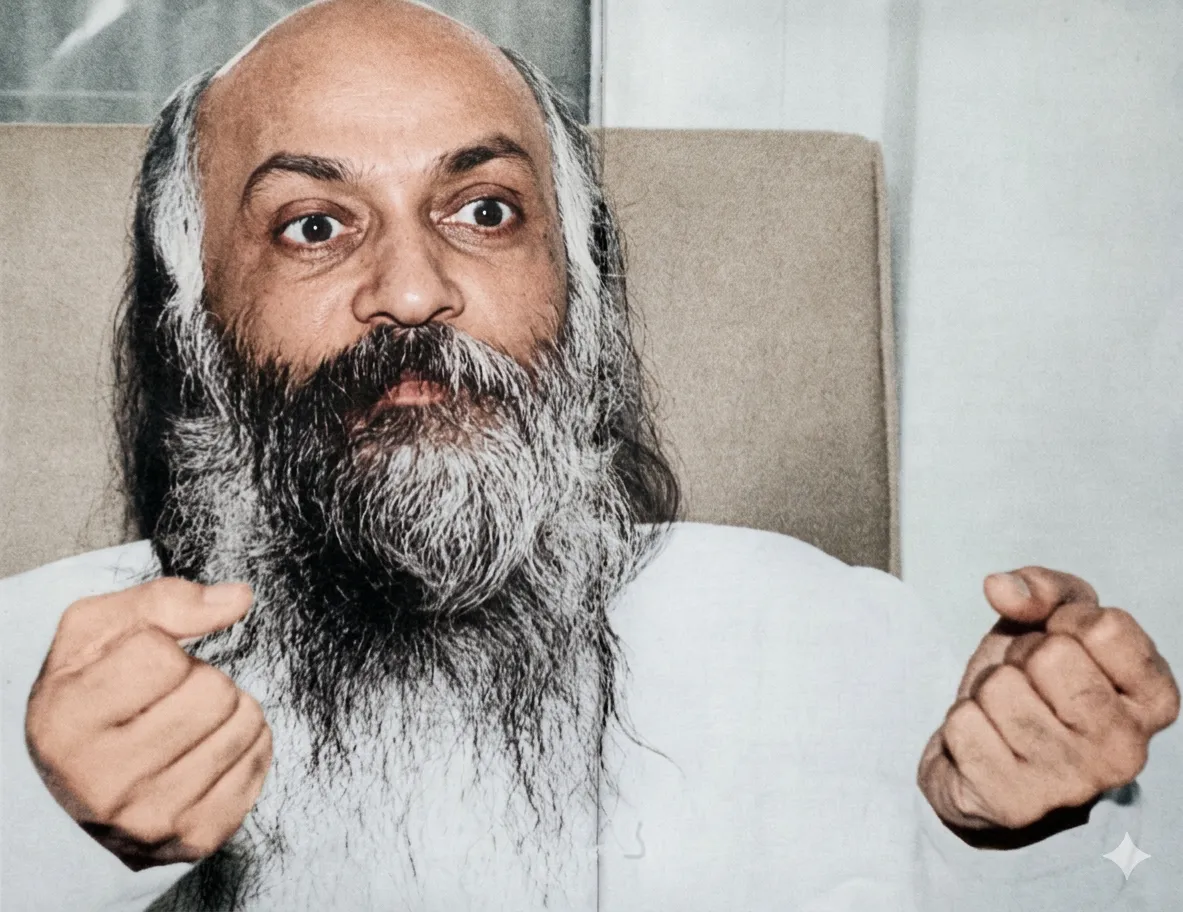
Osho's perspective on Temples
When Osho Spoke About Temples
Passages from the discourses where this theme comes alive.
Osho, in some temples water keeps dripping on its own over the idol. Is that a sign that the temple is living?
No; such things as water have nothing to do with it. Water keeps dripping even without the idol’s consecration; and even if you place an idol there, it can still drip. There is no great difficulty in that; it’s no big issue. These are all false proofs on the basis of which we assume consecration has happened. These are all false proofs on the basis of which we assume consecration has happened. Dripping water and such have nothing to do with it. Even where absolutely no water falls, there are living temples; they can be there too. Initiation is not given—it happens.
प्रश्न: ओशो, कुछ मंदिरों में मूर्ति के ऊपर पानी आप ही आप झरता रहता है। क्या यह उस मंदिर के जीवित होने का सूचक है?
नहीं, पानी वगैरह से तो कुछ लेना-देना नहीं है। पानी तो बिना मूर्ति की प्रतिष्ठा किए भी झरता रहता है; मूर्ति भी रखें तो भी झर सकता है। उसकी कोई बड़ी कठिनाई नहीं है; वह कोई बड़ा सवाल नहीं है। ये सब झूठे प्रमाण हैं जिनके आधार पर हम सोच लेते हैं कि प्रतिष्ठा हो गई। ये सब झूठे प्रमाण हैं जिनके आधार पर हम सोच लेते हैं कि प्रतिष्ठा हो गई। पानी-वानी झरने से कोई लेना-देना नहीं है। जहां बिलकुल पानी नहीं गिरता, वहां भी जीवित मंदिर हैं; वहां भी हो सकते हैं। दीक्षा दी नहीं जाती--घटित होती है
In some temples, water trickles down naturally over the images. Is this a sign that such a temple is a living temple?
No. The validity of a living temple has nothing to do with this. The water will trickle whether there is an image underneath it or not. These are false proofs, and because of them we assume that a temple is a living one. Where not a drop of water falls, still there are temples that could be and are living temples.
Osho, you are so opposed to temples and mosques—then why are you yourself building this vast temple?
We are not building a temple. We are awakening those consciousnesses whose very presence carries the fragrance of the temple by itself. Wherever they are, it will be. If they stand in the marketplace, there a temple will be. This is something altogether different; hence the trouble. That is why the people of temples, mosques, and gurdwaras are angry. They feel I am cutting their roots, pulling down their temples. And you ask, “You are building a grand temple here!” No temple is being built here. What is gathering here are the intoxicated. What is being shared here is ecstasy. A divine madness is rising—a madness that belongs to God. Had there been no tavern outside the cloister and the Kaaba, God knows where the rejected ones would have gone. Good that our own madness came in handy; else where would we have gone to convince the world? Those who…
पहला प्रश्न: ओशो, आप मंदिर-मस्जिदों के इतने खिलाफ हैं, फिर आप स्वयं ही क्यों यह विशाल मंदिर बना रहे हैं?
हम मंदिर नहीं बना रहे हैं। हम तो उन चेतनाओं को जगा रहे हैं जिनकी मौजूदगी में मंदिर की सुगंध अपने आप होती है। वे जहां होंगे, वहां होगी। बाजार में खड़े होंगे तो वहां मंदिर होगा। यह कुछ और ही बात है। यह बात इतनी भिन्न है, इसीलिए अड़चन है। इसलिए मंदिर और मस्जिद और गुरुद्वारे के लोग नाराज हैं। उनको तो लग रहा है, मैं उनकी जड़ें काट रहा हूं, उनके मंदिर गिरा रहा हूं। और तुम पूछते हो कि ‘आप यहां विशाल मंदिर बना रहे हैं!’ यहां कोई मंदिर नहीं बनाया जा रहा है। यहां मस्त जरूर इकट्ठे हो रहे हैं। यहां मस्ती जरूर बांटी जा रही है। यहां एक दीवानगी उठ रही है, एक पागलपन पैदा हो रहा है--एक पागलपन जो परमात्मा का है।
Another friend has asked: Osho, what is the relationship between the method of meditation and jati-smaran (recollection of past lives)?
But the one who becomes skilled in this—who can fully awaken any day’s memory up to the age of five—will find that the memories begin to awaken completely. And you should test it. As today passes, note down some events and lock them up. After two years, try to recall today. Most of it will have been forgotten. Then remember—and after remembering, break the lock and compare whether what you recalled matches what you had written. You will be amazed—astonished—that besides what you wrote, many more details have come back which you did not even note at the time. They will all be there in memory. Buddha called this alaya-vijnana. There is a corner of the human mind he called the storehouse of consciousness. Like a junk room in the house where we keep all the odds and ends, there is a storehouse that collects memories—where everything from birth after…
एक और मित्र ने पूछा है कि ओशो, ध्यान की विधि और जाति-स्मरण में क्या संबंध है?
लेकिन जो व्यक्ति इसमें समर्थ हो जाएगा, पांच वर्ष की उम्र तक की किसी भी दिन की स्मृति को पूरा जगाने लगेगा...और वह पूरी जगने लगती है। और फिर उसको इस तरह जांच कर लेनी चाहिए। जैसे आज का दिन गुजर रहा है, तो आज के दिन की कुछ बातें नोट करके ताले में बंद कर दें। दो साल बाद आज के दिन को याद करें। वह सब खो जाएगा आज का दिन। और तब स्मरण करें, और स्मरण करके फिर ताला तोड़ें, और फिर मेल करें कि वह बात मेल खा गई कि नहीं। और आप हैरान होंगे--आप हैरान होंगे कि जितनी आपने लिखी थीं, उससे बहुत ज्यादा बातें और भी याद आई हैं जो कि आप उस दिन भी नोट नहीं कर पाए थे। वे तो सब बातें याद आ ही जाएंगी। इसको बुद्ध ने नाम दिया है, आलय-विज्ञान। मनुष्य के मन का एक कोना है, जिसको उन्होंने आलय-विज्ञान कहा है। …
Is the presence of naturally trickling water over images a sign that a temple is a living temple?
outcomeProfound Quotes on Temples
Explore our structured collection of meaning-mapped quotes regarding Temples.