
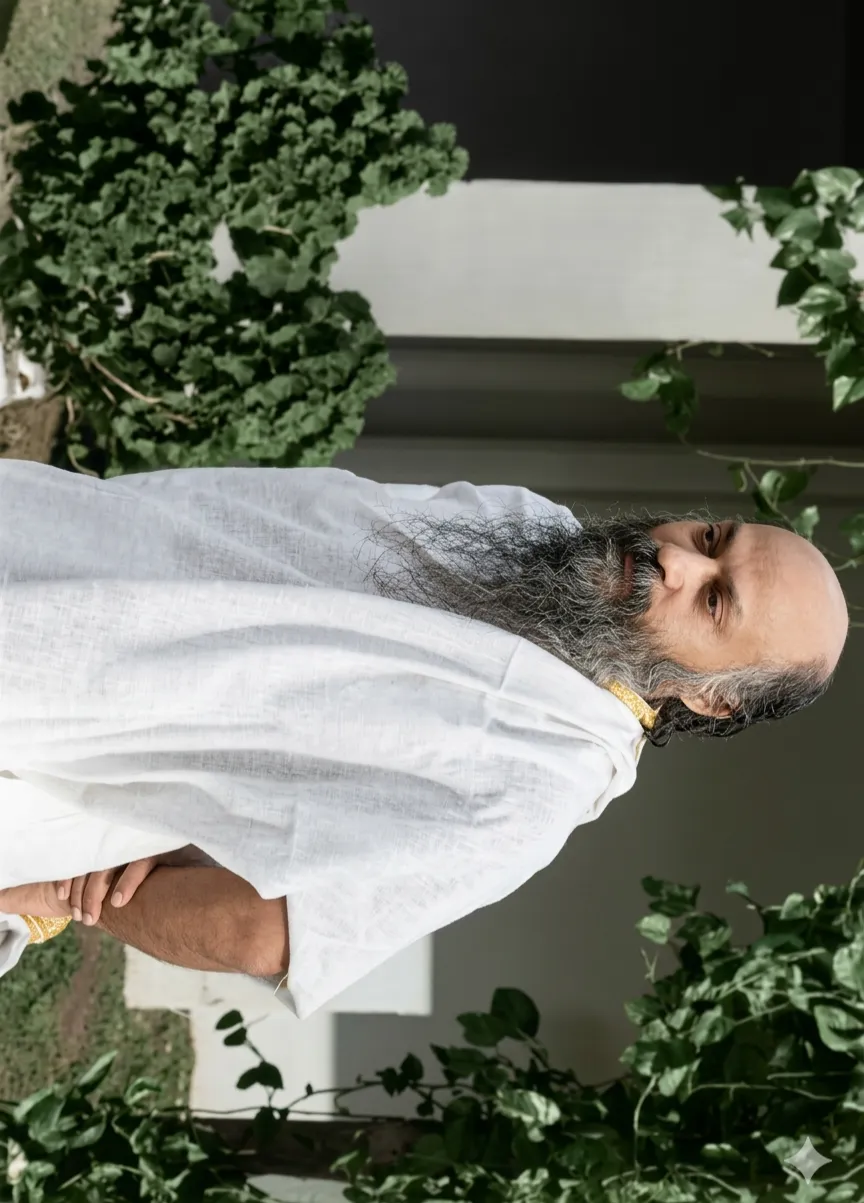
Osho's perspective on Sthitaprajna
When Osho Spoke About Sthitaprajna
Passages from the discourses where this theme comes alive.
When no desire arises for objects worthy of being enjoyed, know this as the limit of nonattachment. When no I-ness arises, know this as the limit of knowing.
WHEN THE DISSOLVED DESIRES DO NOT ARISE BACK AGAIN, THIS IS THE LIMIT OF RELAXEDNESS, AND SUCH A STHITPRAGYA, A SEEKER, STABLE IN WISDOM, EVER REMAINS IN BLISS. HE WHOSE SELF IS ABSORBED ONLY IN BRAHMA, THE ULTIMATE REALITY, REMAINS DESIRELESS AND ACTIONLESS. WHEN PURIFIED BY ITS ONENESS WITH BRAHMA AND DROWNED IN THIS ONE SINGLE RAPTURE, THE ACTIVITIES OF MIND ARE CHOICELESS AND REMAIN ONLY AS THE CONSCIOUSNESS, THEN IT IS CALLED PRAGYA, THE WISDOM. HE WHO ALWAYS HAS SUCH A PRAGYA IS CALLED JIVANAMUKTA, THE ONE LIBERATED WHILE LIVING. ONE WHO HAS NO I-NESS FOR HIS BODY AND THE SENSES, AND NO MY-NESS FOR THE OTHER THINGS, IS A JIVANAMUKTA, THE ONE LIBERATED WHILE LIVING. WHEN NO DESIRE ARISES FOR OBJECTS WORTHY OF BEING ENJOYED, THEN KNOW THIS AS THE LIMIT OF NONATTACHMENT. ... WHEN NO I-NESS ARISES, KNOW THIS AS THE LIMIT OF KNOWING. ... People come to me
Osho, before discussing the process of entering a conscious death, I would like to ask: what is the difference between stupor and awakening? What do we call the state of unconsciousness? In other words, in wakefulness and in unconsciousness, what is the state of the jivatma’s consciousness?
Religion is a search for attention; so, in their own way, are gambling, battle, hunting. The man who enters the forest to hunt a lion is also seeking attention; so is the yogi in a cave striving at the ajna chakra. The search may be noble or ignoble, desirable or undesirable, successful or futile—but the underlying hunger is one. Attention means: the knowing power within me becomes fully manifest—no part left potential or dormant. Whatever capacity to know I carry turns from potential into actual. In the moment a person is fully awake, in that very moment he fully is. Awakening and being happen together. Think of a seed: the tree is hidden in the seed, but only potentially. The seed can die without becoming a tree; the tree is not a necessity, only a possibility. When the tree manifests, it is the seed in its expressed form. Sleep is…
ओशो, सजग मृत्यु में प्रवेश की प्रक्रिया पर चर्चा करने के पहले मैं पूछना चाहूंगा कि मूर्च्छा और जागृति में क्या भेद है? बेहोशी चेतना की किस स्थिति को कहते हैं? अर्थात होश और बेहोशी में जीवात्मा की चेतना की कौन-सी स्थिति होती है?
धर्म भी ध्यान की तलाश है और जुआ भी। और जो आदमी युद्ध के मैदान पर तलवार लेकर लड़ने गया है, वह भी ध्यान की तलाश में गया है। और जो आदमी जंगल में शेर का शिकार करने चला गया है, वह भी ध्यान की तलाश में गया है। और जो आदमी गुफा में बैठकर आंख बंद करके आज्ञा चक्र पर श्रम कर रहा है, वह भी ध्यान की तलाश में गया हुआ है। यह तलाश शुभ और अशुभ हो सकती है, लेकिन यह तलाश एक है। कोई तलाश वांछनीय और कोई अवांछनीय हो सकती है, लेकिन तलाश एक है। और कोई तलाश असफल हो सकती है और कोई सफल हो सकती है, लेकिन तलाश की आकांक्षा एक है। ध्यान का अर्थ है कि मेरे भीतर जो जानने की शक्ति है, वह पूरी प्रकट हो। उसमें कोई भी हिस्सा मेरे भीतर पोटेंट न रह जाए, बीज-रूप न रह जाए। मेरे भीतर जितनी भी क्षमता है जानने की, वह पोटेंशियल न रह जाए, एक्चुअल हो जाए, वास्तविक हो जाए। तो जिस क्षण में कोई व्यक्ति पूरी तरह जागता है, उस क्षण में वह पूरी तरह होता भी है। दोनों एक साथ घटनाएं घटती हैं। जैसे एक बीज है। …
Osho, you just spoke about Krishna’s choicelessness. But the Gita mentions that if death occurs when the sun is in Uttarayana, there is liberation. If it happens during Dakshinayana, does one face any difficulty? And about the sthitaprajna and the bhakta as spoken of in the Gita—what is the similarity or difference between the two? A sthitaprajna remains unperturbed in pleasure and unperturbed in pain; isn’t there a danger that in such a state his sensitivity will get blunted? If he does not take pleasure as pleasure and pain as pain, how can we call his sensitivity human?
For example, I love someone. Then there is the lover, and there is the beloved. But in love moments come when neither the one who loves remains nor the one who is loved; only a wave of love remains that touches both. One wave remains that has two ends: on one end the lover appears to be, on the other end the beloved appears to be. Only a wave of love remains. And in the deep moments of love, lover and beloved do not remain—only love remains. These are moments of nonduality. Similar moments occur in witnessing—moments of nonduality. Subject and object vanish; only consciousness remains, with two poles—one far, one near. The near pole is what we have been calling “I”; the far pole is what we have been calling “Thou.” But now they are the two ends of a single wave. The day this state is attained in…
ओशो, अभी आपने कृष्ण के अचुनाव के संबंध में कहा। परंतु गीता में उल्लेख है कि उत्तरायण का सूर्य हो तब जिसका अंत हो तो मोक्ष होता है। यदि दक्षिणायण का सूर्य हो तो क्या कोई तकलीफ पड़ती है? और स्थितप्रज्ञ और भक्त के विषय में गीता में जो बात कही है, इन दोनों में क्या समानता या भिन्नता है? स्थितप्रज्ञ मनुष्य सुख में अनुद्विग्न रहेगा और दुख में भी अनुद्विग्न रहेगा, तो ऐसी मुसीबत खड़ी होने की शक्यता नहीं है कि सुख-दुख दोनों में उसकी संवेदनशीलता, सेंसिटिविटी ब्लंट हो जाए? अगर सुख को सुख की भांति और कष्ट को कष्ट की भांति न ले, तो उसकी संवेदना को ह्यूमन कैसे कहेंगे हम?
जैसे कि मैं किसी को प्रेम करता हूं; तो प्रेम करने वाला है, प्रेम किया जा रहा है, वह है। लेकिन प्रेम में ऐसे क्षण आते हैं जब करने वाला भी नहीं बचता, जिसे किया जा रहा है वह भी नहीं बचता, सिर्फ प्रेम की एक लहर बचती है जो दोनों को छूती है। एक लहर रह जाती है जिसके एक छोर पर करने वाला होता है, एक छोर पर किया जाने वाला होता है। एक प्रेम की लहर रह जाती है। और प्रेम के जो गहरे क्षण हैं, उसमें प्रेमी और प्रेमिका, प्रेमी और प्रेम-पात्र नहीं बचते, प्रेम ही बचता है। वे अद्वैत के क्षण हैं। साक्षी में भी ऐसे क्षण आते हैं जब अद्वैत के क्षण होते हैं। सब्जेक्ट-ऑब्जेक्ट मिट जाते हैं, सिर्फ कांशसनेस रह जाती है, जिसके दो छोर रह जाते हैं--एक दूर वाला छोर, एक पास वाला छोर। पास वाला छोर, जिसे हम ‘मैं’ कहते रहे हैं; दूर वाला छोर, जिसे हम ‘तू’ कहते रहे हैं। लेकिन अब ये एक ही लहर के दो छोर हो जाते हैं। जिस दिन यह स्थिति पूर्णता को उपलब्ध हो जाती है और कभी नहीं खोती, उस दिन साक्षी मिट जाता है। …
Osho, what do those people mean who say that, so that there is no explosion, one should search within with a subtle, refined vision...
But the effortless awakening I speak of—once it arrives, there is no question of its departure, because you did not bring it; it came. Gradually you and awakening are not two; you are the awakening. You did not make even anger “the other,” so how would awakening be “other”? It becomes you. There is no question of its return. Whatever we have truly known cannot be unknown. You cannot undo knowing. Yes, what we have merely learned by rote can wobble. But what is known—like a child who comes to know love; once he knows, he cannot un‑know it. Knowing becomes part of you; it cannot fall away. Reading four books about love is different; that can be forgotten. Through the experiment of awakening, whatever happens in us reveals itself gradually. Awakening is not something that comes from outside; it is your inner being uncovering itself. If it were an…
ओशो, उन लोगों का कहना क्या है कि वह जो विस्फोट न हो, उसके लिए सूक्ष्म दृष्टि से भीतर जो लोग खोज करते हैं...
हां, जो मैंने यह कहा कि जो सहज-सहज जागते चले जाना है। यह जागरण जैसे ही आ जाता है, इसके लौटने का कोई सवाल ही नहीं है। क्योंकि इसको आप लाए नहीं हैं, यह आया है। और धीरे-धीरे-धीरे-धीरे जागरण और आप दो चीजें नहीं रह गए हैं, आप ही जागरण हो गए हैं। आपने क्रोध तक को दूसरा नहीं माना, तो जागरण को दूसरा मानने का क्या सवाल है! वह धीरे-धीरे आप ही हो गए हैं, आप ही हैं। उसके लौटने का कोई प्रश्न नहीं है, उसके लौटने का कोई सवाल नहीं है। जो भी हमने जान लिया है--जान लिया है--उससे पीछे लौटने का सवाल नहीं है। उसको फिर अनजाना नहीं किया जा सकता। उसे अनजाना करना मुश्किल है। हां, जो हमने न जाना हो, ऐसे ही सीख लिया हो जबरदस्ती, वह कल फिर डांवाडोल हो सकता है। लेकिन जो मैंने जान लिया है--जैसे एक बच्चे ने प्रेम जान लिया, नहीं जाना था अब तक, अब उसने प्रेम जान लिया। अब वह प्रेम को अनजाना नहीं कर सकता। उसका अनजाना होना अब असंभव है। जानना जो है, चूंकि वह हमारा हिस्सा ही हो जाता है, वह हमसे कहीं अब छूट सकता नहीं। …
What is the phenomenon of sthitaprajna?
definitionProfound Quotes on Sthitaprajna
Explore our structured collection of meaning-mapped quotes regarding Sthitaprajna.