
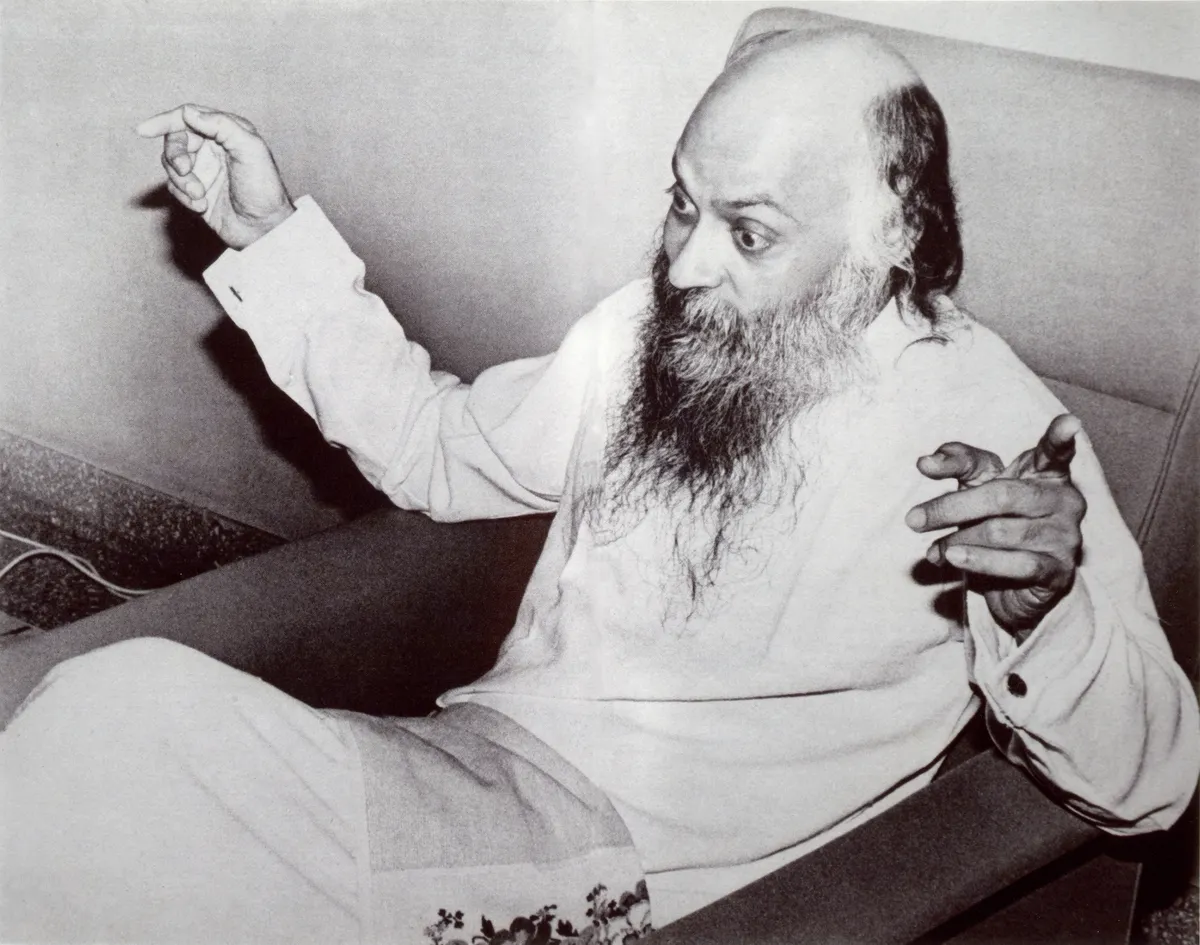
Osho's perspective on Self-Expression
When Osho Spoke About Self-Expression
Passages from the discourses where this theme comes alive.
Why do I make funny faces?
And, every child makes funny faces. Have you watched? Leave him in the bathroom and watch from the keyhole, and he will make funny faces. In fact he is enjoying having a face, trying to manipulate it in many ways, playing with it. And he can play because he is separate. When he is making a funny face, he knows "I am not this funny man. This face is only the face; I am behind it. This is just a mask." And even grown-up people do it in the bathroom. If nobody is watching, everybody is tempted to do a little.... In the mirror, one wants to make funny faces. Nothing wrong in it -- it simply shows that you cannot adjust yourself with the body, that the body is not all, that you are far beyond it, that you can play with the body like a mask. It is…
What is so special about what you teach, if it condones almost all forms of self-expression?
First, nobody in the whole history of humanity has allowed man's nature total freedom; it was always with conditions. Man's nature has never been accepted lovingly, it has been condemned as sin. All the religions have been committing that criminal act of condemning man's nature. By condemning, you cannot change man's nature, but you can poison it. They have poisoned it, so man is living in a kind of limbo. Neither can he be natural -- because then all the moral teachings in his mind disturb him, saying "You are committing sin" -- nor can he follow the moral teachings. Nature has its own way; its pull, its gravity is great. Man is torn apart. All the religions have created a schizophrenic humanity, split about each and every thing. For example, in India Mahatma Gandhi in his ashram had five great principles. The first principle was no taste: eat, but…
Osho, using the example of the onion you said that each person has many faces, masks—stolen masks. And these masks will be there, under all circumstances they will be there. One only needs to distinguish between good masks and bad masks. I hate someone, but when he comes to me I welcome him with a smile. This is an artificial face I present before him. Yet at the same time my mind is filled with immense pain, with sorrow, and still I smile. So this face, this mask, would be my good mask. A mask there will certainly be.
By “mask” I mean: the false faces we impose upon ourselves—do not impose them. That does not mean faces will not change in life. Your face will change every day, but it should be your own face. When darkness spreads, tears will come to the eyes; tomorrow a friend may die—tears will come. And tomorrow a long-lost companion may return—then the heart will throb with joy and songs will arise. Your face will change moment to moment; it should. One should be responsive. But the face must be your face. I am not saying keep one face fixed. That would be a stone face; life cannot move like that. Then you would need a single face of stone. I have heard that an American multimillionaire was approached by a man asking for a small donation. The millionaire said, “I have a rule: one of my eyes is artificial—made of stone—and…
ओशो, आपने कहा प्याज का उदाहरण देते हुए कि प्रत्येक व्यक्ति के अनेक चेहरे हैं, मुखौटे हैं चुराए हुए हैं। और ये मुखौटे तो होंगे, और हर हालत में होंगे। केवल भेद करना पड़ेगा सद-मुखौटों का और असद-मुखौटों का। मैं किसी से घृणा करता हूं, लेकिन जब वह मेरे पास आता है, तो मैं उसका मुस्कुरा कर स्वागत करता हूं। यह मेरा एक बनावटी चेहरा है, जिसे मैं उसके सामने व्यक्त करता हूं। लेकिन साथ ही साथ मेरे मन में असीम पीड़ा है, दुख है, फिर भी मैं मुस्कुराता हूं। तो यह चेहरा, यह मुखौटा, मेरा सद-मुखौटा होगा। मुखौटा तो जरूर होगा।
जिसे मैं मुखौटा कह रहा हूं, उससे मेरा प्रयोजन है कि झूठे चेहरे जो हम आरोपित कर लेते हैं अपने पर, न करें। इसका यह भी मतलब नहीं है कि जिंदगी में चेहरे बदलेंगे नहीं। जिंदगी में चेहरा रोज बदलेगा, लेकिन वह आपका ही चेहरा होना चाहिए। जब जिंदगी में अंधेरा छाएगा, तो आंखों में आंसू भी आएंगे; कल एक मित्र मर जाएगा, तो आंसू भी आएंगे। और कल दूर का बिछुड़ा हुआ साथी मिलेगा, तो हृदय में धड़कनें भी उठेंगी खुशी की, और गीत भी निकलेंगे। चेहरा आपका बदलेगा प्रतिपल। बदलना चाहिए। रिस्पांसिव होना चाहिए। लेकिन वह चेहरा आपका होना चाहिए।
Osho, Zen Master Hogen of Seiryo Monastery was just about to give his discourse before the evening meal when he noticed that the bamboo screen hung for meditation had not yet been put away. He pointed to it, and immediately two monks rose from the assembly and began to put it away. Observing that very moment, the Master said: “The first monk’s state is good, but the second’s is not.” Osho, please explain the purport of this Zen enlightenment story.
A Marwari, dying, told his lawyer: “To every servant who has served me for five years, I bequeath fifty thousand rupees.” The lawyer couldn’t believe it—he knew the man; he never gave five paise. Fifty thousand to each—and there were many servants. He asked, “Are you in your senses?” The Marwari said, “More than you. There is no servant in my house I let stay for five years! I’ll give nothing—but the news of my charity will spread.” Even at death, the relish is in reputation. The mask doesn’t drop, not even in the last moment. What people say after you die is important; what you are is not. You have no taste for being—only for others’ opinions. That is the mark of the householder. The sannyasin’s mark is: what I am is my relish. What people say—what is the use? That is their business. What I am—that is mine,…
ओशो, सीरो विहार के सदगुरु होगेन, रात्रि-भोजन के पूर्व प्रवचन करने ही वाले थे कि उन्होंने देखा कि जो बांस की जाली ध्यान के लिए लटकायी गयी थी, वह अभी तक समेटी नहीं गयी है। उन्होंने उसकी ओर इशारा किया और तुरंत दो साधु सभा से उठकर उसे समेटने लगे। उस प्रकृत क्षण का निरीक्षण करते हुए सदगुरु ने कहा: ‘पहले साधु की दशा तो अच्छी है, पर दूसरे की नहीं।’ ओशो, इस झेन बोध-कथा का अभिप्राय बताने की कृपा करें।
एक मारवाड़ी मरा, तो उसने अपने वकील को कहा कि जो-जो नौकर मेरे घर पांच साल से नौकरी कर रहे हैं, सबको पचास-पचास हजार रुपया मैं दान कर देता हूं। वकील को भी भरोसा नहीं हुआ। क्योंकि वह जिंदगी से इसको जानता था। इसने पांच पैसे कभी किसी को नहीं दिया। यह पचास हजार रुपये एक-एक नौकर को? और नौकर उसके काफी थे, बड़ा कारबार था। वकील ने कहा कि ‘मैं समझा नहीं, आप होश में तो हैं?’ उस मारवाड़ी ने कहा, ‘मैं और बेहोश? तुम्हारी समझ में नहीं आ रहा है। मेरे घर ऐसा कोई नौकर है ही नहीं जिसे पांच साल तक मैं टिकाऊं। इसलिए देना तो एक को भी न पड़ेंगे, लेकिन पचास हजार एक-एक को दिये, दान की चर्चा हो जायेगी।’ मरते वक्त भी दान की चर्चा में रस है। मुखौटा छूटता नहीं है आखिरी दम तक। मरने के बाद भी लोग मेरे संबंध में क्या कहेंगे, यही महत्वपूर्ण है। मैं क्या हूं, यह महत्वपूर्ण नहीं है। तुम्हें अपने होने में तो कोई रस ही नहीं है, लोग क्या कहते हैं तुम्हारे संबंध में बस, इसी में रस है। यह गृहस्थ का लक्षण है। …
What is the reason for making funny faces?
definitionProfound Quotes on Self-Expression
Explore our structured collection of meaning-mapped quotes regarding Self-Expression.