
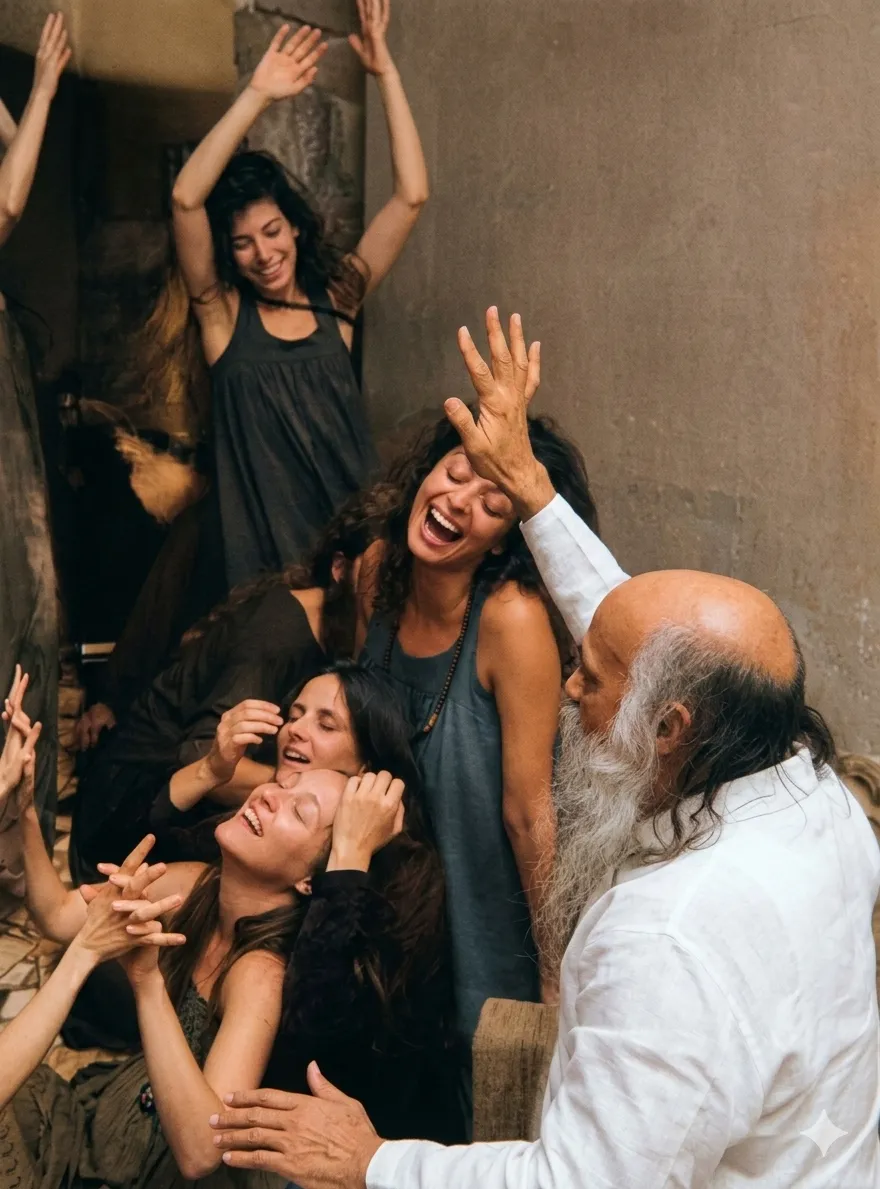
Osho's perspective on Prati-Prasav
When Osho Spoke About Prati-Prasav
Passages from the discourses where this theme comes alive.
Can prati-prasav, the process of going backwards, be that of unlearning instead of reliving?
They are both the same: when you relive, you unlearn. Reliving is a process of unlearning. Whatsoever you relive disappears from you. It has been unlearned, it leaves no marks, the slate is clean. You can call it a process of unlearning, it is the same. The seventh question:
Osho, in the Puranas there is a tale that at the time of pralaya, the great dissolution, the whole creation is submerged under water, and a small patch of land remains. There, on a banyan leaf, the tiny Bal-Mukund is found sucking his big toe; and from him the entire creation is re-created. Even when a seeker goes to a Sadguru, a similar pralaya occurs within, and after that his spiritual rebirth happens. Is this story a symbol of that event? Please describe it.
Einstein—if we could hold on to him, he seems immensely useful. Centuries will pass before such a man may be born again. And if we could keep Einstein for a hundred years more, who can say what he would not do? For just when his intelligence was becoming completely mature, his time to depart came. If we could preserve him another hundred years, new edifices could be raised upon that intelligence. And Einstein could give something which children—how will they give? So this effort is on. You may not know that thousands have insured that after their death their corpses be preserved, because there is a suspicion that by the end of this century the art of reanimating individuals will be in our hands. In America, at several places, deep-freezing arrangements have been made where some corpses have been secured. It is expensive; only millionaires can do it. It costs…
प्रश्न: ओशो, पुराणों में कथा है कि प्रलयकाल में सारी सृष्टि पानी के नीचे डूब जाती है, और जमीन का एक टुकड़ा बचा रहता है। वहां पर वट-पत्र के ऊपर, अपने पैर का अंगूठा चूसते हुए नन्हें बाल-मुकुंद पाए जाते हैं। और उनसे फिर सारी सृष्टि निर्मित होती है। सदगुरु के पास जाकर भी साधक के भीतर ऐसा ही प्रलय घटित होता है, और उसके बाद उसका आध्यात्मिक पुनर्जन्म होता है। क्या यह कथा इसी घटना का प्रतीक है? इसका वर्णन करिए।
वह आइंस्टीन है, रोक लें तो बड़े काम का लगता है। सदियां बीत जाएंगी, तब शायद ऐसा आदमी फिर पैदा होगा। और अगर आइंस्टीन को हम सौ साल रोक लें, तो वह क्या नहीं करेगा, कहना मुश्किल है। क्योंकि अब, जब उसकी बुद्धि बिलकुल परिपक्व हो रही थी, तब उसके विदा का वक्त आ गया। इसको अगर हम सौ साल और बचा लें, तो इस बुद्धि के ऊपर नए भवन खड़े होते जाएंगे। और आइंस्टीन कुछ दे सकेगा, जो बच्चे कैसे देंगे? तो इस बात की कोशिश चलती है। आपको शायद पता न हो कि हजारों लोगों ने अपने बीमा करवाए हैं कि मर जाने के बाद उनकी लाश बचा ली जाए। क्योंकि ऐसा शक है कि इस सदी के पूरे होते-होते व्यक्तियों को पुनरुज्जीवित करने की कला हमारे हाथ में आ जाएगी। तो अमरीका में कई स्थानों पर डीप फ्रीजिंग का उपाय किया गया है, जहां कुछ लाशें सुरक्षित कर दी गई हैं। खर्चीला है, सिर्फ करोड़पति करवा सकते हैं। कोई दस हजार रुपए रोज का खर्च है एक आदमी की लाश को बचाने के लिए। कुछ लाशें तो सुरक्षित हो गई हैं। …
The audio recording of the question is not clear.
I did not say—please, listen to me; no, no, listen to me—I did not say that it is a comedy; I said that it is not a tragedy. I have understood your point. Consider it in two or three parts. First, I did not say that because death came it was a good thing. I did not say that, not even by mistake. I only said that we are not entitled to decide whether it was good or bad. We know nothing about what happened.
प्रश्न: (प्रश्न का ध्वनि-मुद्रण स्पष्ट नहीं है।)
मैंने यह नहीं कहा कि, मेरी बात सुन लें, न, न, मेरी बात सुन लें, मैंने यह नहीं कहा कि वह कॉमेडी है, मैंने कहा कि वह ट्रैजिडी नहीं है। मैं जो कह रहा हूं, आपकी बात समझा मैं। उसके दो तीन हिस्सों में विचार करें। पहला तो यह कि मैंने यह नहीं कहा कि डेथ आ गई तो अच्छा हुआ। यह मैंने भूल कर भी नहीं कहा। मैंने इतना कहा कि हम निर्णय लेने के हकदार नहीं कि अच्छा हुआ कि बुरा हुआ। हमें कुछ भी पता नहीं कि क्या हुआ।
Osho, you have earlier said, “Live moment to moment, live in the present.” Now you are saying, “Return to the past.” What should we do?
So it is with the mind—there are ruts. The past means endless grooves. However much you understand, your intellect agrees, you make decisions, you resolve—at the moment of resolve you feel something is going to change. But not even an hour passes before your decision breaks. Then only self-condemnation is produced, nothing else. Your saints, your fakirs, your priests and pundits—most of the time they only succeed in producing self-condemnation in you, nothing else. Their words are logically correct. You cannot even say they are wrong; you have to admit they are right. In that admission you take a decision. But against what are you deciding? Inside are grooves carved since who knows when, deep tracks. Walking in them has become a habit. It is easy to walk in them. They will pull you again and again. The meaning of returning into the past is: these grooves must be erased.…
दूसरा प्रश्न: ओशो, आपने पहले कहा है, क्षण-क्षण जीयो, वर्तमान में जीओ। अब आप कह रहे हैं, अतीत में लौटो। हम क्या करें?
ठीक मन पर लीकें हैं। अतीत का अर्थ है, अनंत लीकें। तो आप कितनी ही बातें समझ लेते हैं; बुद्धि सहमत हो जाती है; निर्णय ले लेते हैं; संकल्प कर लेते हैं। और जब संकल्प करते हैं, तब सोचते हैं कि कुछ होने-जाने वाला है। घड़ी भी नहीं बीत पाती कि जो आपने निर्णय लिया था, वह टूट जाता है। और तब सिर्फ आत्मग्लानि पैदा होती है, और कुछ भी नहीं। आपके संत, आपके फकीर, आपके पंडित-पुरोहित, आप में सिर्फ आत्मग्लानि पैदा करवा पाते हैं और कुछ भी नहीं। क्योंकि उनकी बातें तो तर्कयुक्त हैं। आप भी कह नहीं सकते कि वे गलत कह रहे हैं। स्वीकार करना पड़ता है कि ठीक कह रहे हैं। उस स्वीकृति में आप निर्णय लेते हैं। लेकिन निर्णय किसके खिलाफ ले रहे हैं! न मालूम कितनी लंबी लकीरें भीतर हैं, गहरे खांचे हैं। उनमें चलने की आदत हो गई है। उनमें चलना सुगम है। …
Profound Quotes on Prati-Prasav
Explore our structured collection of meaning-mapped quotes regarding Prati-Prasav.