
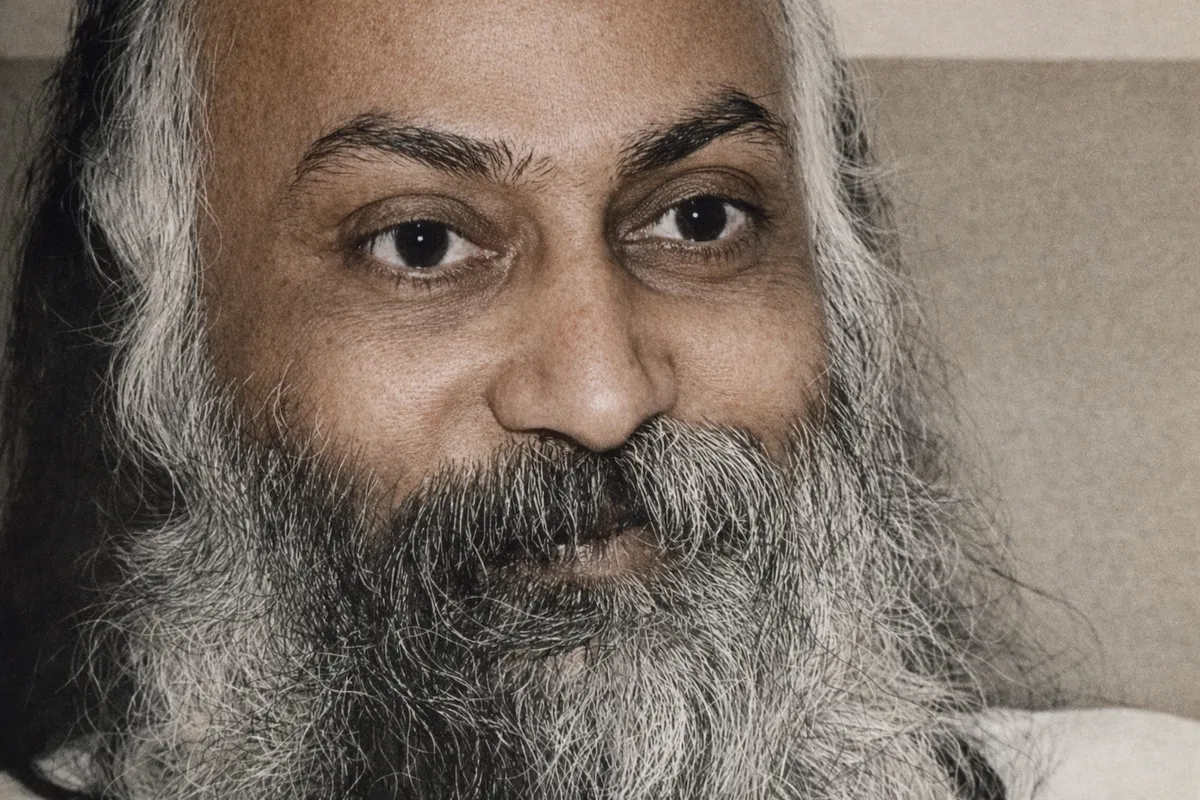
Osho's perspective on Ras-Parityaga
When Osho Spoke About Ras-Parityaga
Passages from the discourses where this theme comes alive.
A friend has asked: What does “ras-parityaga” mean? Does it mean that attention should not connect with any sense-born vibration? If so, then a ras-tyagi ought to go about with eyes, ears, etc., closed. The blind, the deaf, the mute would be the supreme renouncers. Is this what Mahavira and you think?
A room is empty. Lao Tzu said: a room is empty—you say “empty.” But you can also say: the room is full of itself, not full of things. You can say: it is filled with emptiness. Emptiness too is a fullness. But those who consider furniture to be fullness will find the room empty. The cause of seeing emptiness is not that the room is empty, but your definition of fullness. We have taken things as fullness. The soul has no things. Therefore the soul looks empty. So we try to fill it with things. Greed’s madness begins—never fullness. Mahavira says: one who goes within sees the soul is already full—full of itself, not of something else. The day you sense that fullness, greed disappears. With greed gone, the mad race to collect ends. Those who keep the habit of hoarding—whatever the object—are householders, not monks. What you hoard is…
Verse (Sanskrit): धम्म-सूत्र: बाह्य-तप-- धम्मो मंगलमुक्किट्ठं, अहिंसा संजमो तवो। देवा वि तं नमंसन्ति, जस्स धम्मे सया मणो।। Transliteration: dhamma-sūtra: bāhya-tapa-- dhammo maṃgalamukkiṭṭhaṃ, ahiṃsā saṃjamo tavo| devā vi taṃ namaṃsanti, jassa dhamme sayā maṇo|| Translation: Dhamma-sutra: Outer Austerity-- Dharma, the loftiest blessing, Nonviolence, self-restraint, austerity. Even the gods pay him homage, whose mind is ever in Dharma. The fourth step of external austerity is: renunciation of rasa. Tradition has kept taking rasa-renunciation to mean a prohibition, a control of certain rasas, certain tastes. Rasa-renunciation is not such a gross affair. In the world of sadhana, even what appears very gross is not gross. However many gross words we employ, the matter itself is subtle. We are forced to use gross words because there are no words for the subtle. For that inner world we have no words that can point with precision. The inner world has no language.
… वस्तुतः साधना के जगत में स्थूल से स्थूल दिखाई पड़ने वाली बात भी स्थूल नहीं होती। कितने ही स्थूल शब्दों का प्रयोग किया जाए, बात तो सूक्ष्म ही होती है। मजबूरी है कि स्थूल शब्दों का प्रयोग करना पड़ता है, क्योंकि सूक्ष्म के लिए कोई शब्द नहीं है। वह जो अंतर्जगत है, वहां इशारे करने वाले कोई शब्द हमारे पास नहीं हैं। अंतर्जगत की कोई भाषा नहीं है। इसलिए बाह्य जगत के ही शब्दों का प्रयोग करना मजबूरी है। उस मजबूरी से खतरा भी पैदा होता है क्योंकि तब उन शब्दों का स्थूल अर्थ लिया जाना शुरू हो जाता है। रस-परित्याग से यही लगता है कि कभी खट्टे का त्याग कर दो; कभी मीठे का त्याग कर दो; कभी घी का त्याग कर दो; कभी कुछ और त्याग कर दो। रस-परित्याग से ऐसा प्रयोजन महावीर का नहीं है। …
Do not drop the senses; drop the cravings. The senses drop away by themselves. But we find it easier to drop the senses. Someone leaves food; someone gives up salt; someone gives up ghee; someone gives up sugar; someone walks with eyes lowered; someone becomes frightened of the touch of a woman; someone refuses the touch of fine cloth. All this is giving up the senses. It is like someone disgusted with life committing suicide. But suicide does not end life; only the body changes. No sooner are you dead than a new body is taken up. The one who commits suicide is even more likely to obtain a deformed body—because the mind of one who wished to destroy himself is in a distorted state, and the imprint of that distortion—the suicide—will remain upon him. You set yourself on fire. You will not burn in a moment.
इंद्रियों को छोड़ना नहीं है, वासनाओं को छोड़ देना है। इंद्रियां अपने से छूट जाती हैं। लेकिन हमें इंद्रियां छोड़ना आसान मालूम पड़ता है। कोई भोजन छोड़ देता है; कोई भोजन में नमक छोड़ देता है; कोई भोजन में घी छोड़ देता है; कोई भोजन में शक्कर छोड़ देता है; कोई आंखें नीची करके चलने लगता है; कोई स्त्री के स्पर्श से भयभीत हो जाता है; कोई कीमती वस्त्र का स्पर्श नहीं करता। यह सब इंद्रियों का छोड़ना है। यह वैसे ही है, जैसे कोई जीवन से ऊबा हुआ आदमी आत्महत्या कर ले। और आत्महत्या से जीवन समाप्त नहीं होता; सिर्फ देह बदलती है। मरे नहीं कि नया शरीर ग्रहण हो जाएगा। और आत्महत्या करने वाले को और भी विकृत देह के उपलब्ध होने की संभावना है। क्योंकि जिसने अपने को नष्ट करना चाहा, उसका चित्त विकृत अवस्था में है। और इस विकृति की छाप उसके ऊपर रहेगी, आत्महत्या की।
Visarjan means dissolution, dissolution into the divine, immersion in the divine, the state of being lost.... One has to learn how to disperse oneself, how to come to a point where one is not. Only then god is. You and god cannot exist together; that's not possible. That's why so many people go on missing god -- because they are asking for the impossible: they want to remain themselves and they want to see god. God can be seen only when you are not. That nothingness can encounter god, not you. So the whole process of sannyas is the process of visarjan, dispersion. Slowly, slowly, one loses, goes on losing, goes on losing. The more one loses, the more one understands how beautiful it is not to be. Then more courage arises, a little bit more.
What does 'ras-parityaga' mean?
definitionProfound Quotes on Ras-Parityaga
Explore our structured collection of meaning-mapped quotes regarding Ras-Parityaga.