
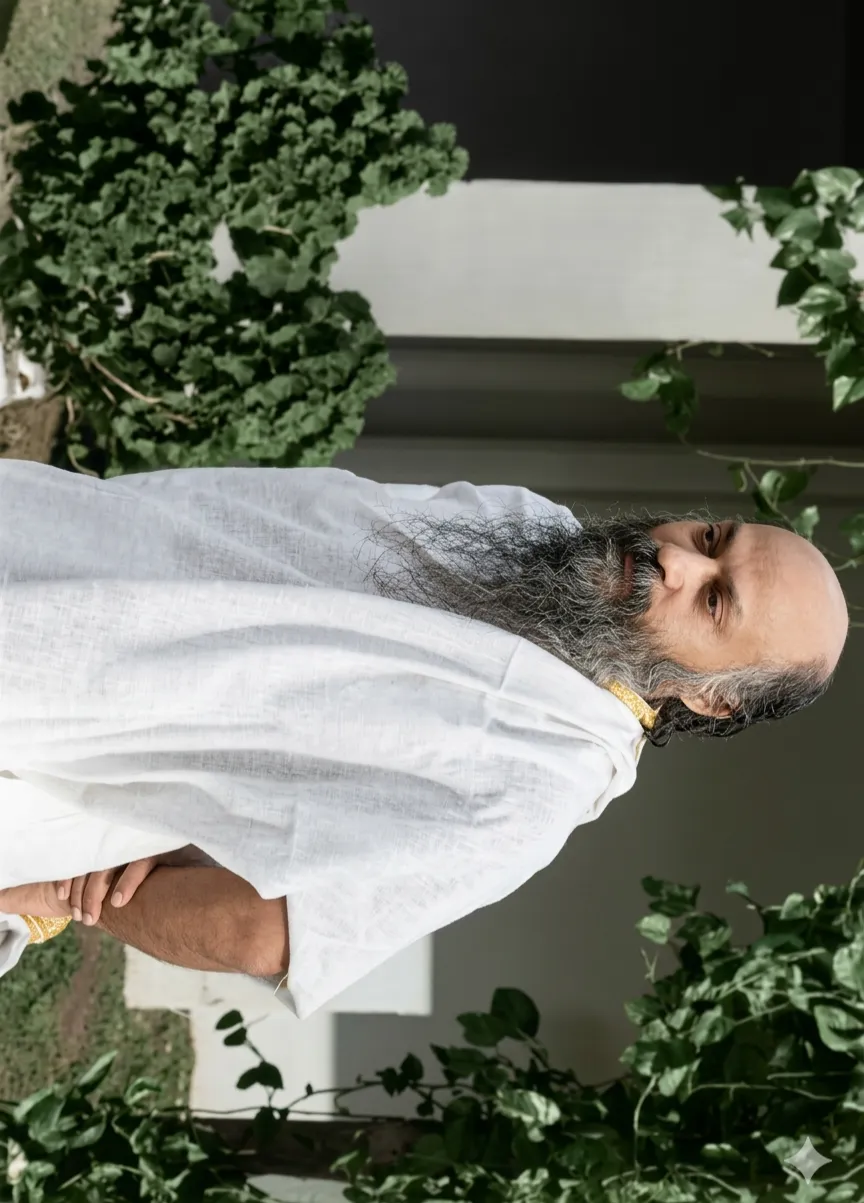
Osho's perspective on Non-Action
When Osho Spoke About Non-Action
Passages from the discourses where this theme comes alive.
A friend has again asked a similar question: Osho, from your talks it seems that Lao Tzu praised non-journeying, and yet he gave sutras of practice: the navel center, the process of breathing, etc. Don’t these two seem contradictory?
Next morning when she began, she was shocked—she could not set it right before others had already loosened it! The road remained the same. She was drenched in sweat. Many times she glanced at Gurdjieff, hoping he would call her in—but he sat comfortably in an armchair, smoking at ease, blowing his smoke rings. Her sweat kept pouring; never in her life had she broken stones or made roads. Blisters came on her hands; they bled. Many times she sighed loudly, hoping he might hear her groans. He went on smoking, not even looking her way. Evening came, the sun began to set. He kept sitting; she kept working. Around eight o’clock he called, “Enough, Mansfield!” She came inside, expecting he would say, “You worked hard; you’re drenched in sweat; your hands are bleeding!” But he said nothing. He said nothing at all. And at two in the night he…
एक मित्र का फिर करीब ऐसा ही प्रश्न है कि ओशो, आपके प्रवचन से लगता है कि लाओत्से अयात्रा की महिमा बताता था, फिर भी उसने साधना के सूत्र बताए हैं: नाभि केंद्र, श्वास की प्रक्रिया, इत्यादि। क्या इन दोनों में विरोध नहीं मालूम पड़ता है?
और जब दूसरे दिन वह सुबह साधना में लगी, तो हैरान हो गई--वह जमा नहीं पाती है कि दूसरे उसको उखाड़ रहे हैं! वह सड़क वैसी की वैसी है। पसीना-पसीना हो जाती है। कई बार देखती है कि गुरजिएफ उसको आवाज दे। मगर वह अपना मजे से बैठा हुआ सिगरेट पीता रहता है। वहीं बैठ हुआ है आरामकुर्सी पर और अपना धुआं उड़ा रहा है। और उसका पसीना-पसीना चू रहा है, कभी उसने जिंदगी में पत्थर नहीं कूटे, कभी सड़क नहीं बनाई। हाथ में फफोले आ गए हैं, लहूलुहान हुई जा रही है। कई बार वह आवाज निकालती है कि शायद उसकी आह सुन ले। मगर वह अपना धुआं उड़ाता चला जाता है। वह उसकी तरफ भी नहीं देखता कि वह वहां है भी। वह अपने हाथ देखती है, आह करती है, कि किसी तरह हाथ देख ले, कि फफोले पड़ गए। वह देखता ही नहीं उसकी तरफ। सांझ हो गई, सूरज ढलने लगा। और वह है कि बैठा हुआ है; और वह अपना कर रही है। कोई आठ बजे उसने आवाज दी कि बस मैंसफील्ड! वह आई अंदर, तो आशा रखती है कि वह कहेगा: बहुत मेहनत की, पसीने-पसीने डूब गई, हाथ में खून आ गया है! लेकिन वह कुछ नहीं बोलता। …
Osho, in Lao Tzu’s vision of life, what place is there for sadhana (spiritual practice)? And one who relies only on drifting, not on swimming—how can he reach his goal? Is effort not necessary to reach the goal? Lao Tzu’s “doing nothing,” being inactive, also seems like a kind of goal. To abandon oneself to unknowing, unknown currents—is that wisdom, a mark of the wise, or is it ignorance and the mark of the ignorant?
No: for those who do not understand and can only understand doing, something must be made for them to do. And they must be made to do so much that by doing and doing they become exhausted and drop it. But the event happens only when they drop. Remember this: the event will not happen before that point of letting go which Lao Tzu speaks of. They must be tired out by doing. They must be made to do so much that they come to such a pitch of tension that there remains no way to maintain it, and the tension falls away. Tension has its laws. Either you drop tension right now—through understanding. One way is to drop tension through understanding. My fist is clenched. One way is that you tell me: “Clenched is not the fist’s nature; therefore you will get tired. Clenched is not the fist’s nature;…
प्रश्न: ओशो, लाओत्से के ऐसे जीवन-दर्शन में साधना का क्या स्थान होगा? और जो केवल बहने पर निर्भर होता है, तैरने पर नहीं, वह अपने लक्ष्य तक कैसे पहुंच सकता है? क्या लक्ष्य तक पहुंचने के लिए भी यत्न की आवश्यकता नहीं है? लाओत्से का कुछ न करना, निष्क्रिय होना भी एक प्रकार का लक्ष्य जान पड़ता है। अबोध, अनजान धाराओं पर अपने आपको छोड़ देना ज्ञान है, ज्ञानी का लक्षण है? अथवा अज्ञान और अज्ञानी का?
नहीं, बाकी जो लोग नहीं समझ पाते हैं, करना ही समझ पाते हैं, उनसे कुछ करवाना पड़ता है। और उनसे इतना करवाना पड़ता है कि वे कर-करके थक जाएं और छोड़ दें। लेकिन घटना तभी घटती है, जब वे छोड़ते हैं। ध्यान रखें, घटना लाओत्से के पहले घटने वाली नहीं है। उनको कर-करके थकाना होता है। उनसे इतना करवाना होता है कि वे इतने तनाव में आ जाएं कि और तनाव का उपाय न रह जाए और तनाव छूट जाए। तनाव के नियम हैं। या तो आप तनाव को छोड़ दें इसी वक्त--समझपूर्वक। एक तो रास्ता है, समझपूर्वक तनाव का छोड़ देना। मेरी यह मुट्ठी बंधी है। एक रास्ता तो यह है कि आपने मुझसे कहा कि बंधा होना मुट्ठी का स्वभाव नहीं है, इसलिए तुम थक जाओगे। आपने मुझसे कहा, बंधा होना मुट्ठी का स्वभाव नहीं है, इसलिए तुम नाहक थक जाओगे। क्योंकि बांधने में तुम्हें शक्ति लगानी पड़ रही है और व्यर्थ तुम कष्ट पा रहे हो। तो मैं आपसे पूछूं कि मुट्ठी को कैसे खोलूं? क्या उपाय करूं? क्या साधना करूं कि मुट्ठी खोलूं? तो आप कहेंगे, फिर समझे नहीं। …
"from your discourses, it appears that lao tzu extolled the greatness of non-action. And yet, he has given sutras for sadhana like concentration on the navel centre, the breath, etcetera. Is this not contradictory?"
Therefore it happens that many times you know the answer until you are asked. Someone asks, and the confusion starts. A man who goes for an interview is quite confident of himself as he waits for his turn; but as soon as he steps into the room, his mind becomes blank. When he comes out of the room, he finds he knew all the answers. What happens to him? In fact, the intellect becomes so tense that it becomes inoperative. It loses its flexibility. Its power to think is lost, obstructed. This obstruction is just superficial. There are methods of removing ;these obstructions. All sadhanas, are devices to remove this hindrance. Whenever a sadhaka approached one Zen fakir, the fakir would order him not to talk of God and the soul but to do exactly as he told him. Then he would tell him to fill a pail with water,…
Osho, so far I have listened to many of your discourses and gone through many books, especially those on sadhana—I liked them very much. And in the meditation camp, the directions you gave at the beginning were also to the effect that the mind’s sankalpa–vikalpa should not arise—that there be a resolve in the mind to be the master of inaction, the master of the void, something like that. Now, the practice taught here involves a great deal of action, so it seems to me there may be some contradiction...
It may seem so; there is no contradiction. In fact, we cannot help breaking things into two parts. We look at things by splitting them into two opposing halves. We say: this is darkness, and that is light. But in life, darkness and light are not two things. In life they are the gradations of one and the same thing—degrees of one thing, not two. Yes, degrees of the same thing. What we call light is the dense degree of that very thing; what we call darkness is its rarefied degree. Darkness and light are not two hostile opposites. In the same way, action and nonaction are not enemies. Travel from either side and you arrive at the same place, because deep down the two are one. So when I say nonaction—the path of nonaction—if one can drop all action and become inactive, and drop all thought and become thought-free,…
प्रश्न: ओशो, अब तक मैंने आपके बहुत भाषण सुने, बहुत कुछ पुस्तकें देखी हैं, विशेष रूप से जो साधना पर हैं, वह मुझे बहुत पसंद आईं। और साधना शिविर में जो डायरेक्शंस आपने दिए, आरंभ में उसमें भी यही था कि यानी मन के जो संकल्प-विकल्प हैं, वे नहीं आने चाहिए। यानी क्रियाहीनता का मालिक, शून्य का मालिक, मन में संकल्प हो जाए, कुछ इस प्रकार का था। अब यहां जो साधना बताई गई, उसमें क्रिया की बहुलता है, तो इसमें कुछ विरोधाभास मुझे ऐसा लग सकता है...
… जिंदगी में एक ही चीज की तारतम्यता अंधेरा और प्रकाश है। एक ही चीज की डिग्री। दो चीजें नहीं हैं। हां, एक ही चीज की डिग्री। जिसको हम प्रकाश कहते हैं वह उसी चीज की सघन डिग्री है। जिसको हम अंधेरा कहते हैं वह उसी की विरल डिग्री है। अंधेरा और प्रकाश ऐसी दो दुश्मन जैसी चीजें नहीं हैं। ऐसे ही क्रिया और अक्रिया दो दुश्मन चीजें नहीं हैं। और दोनों तरफ से यात्रा हो तो भी एक ही जगह पहुंचते हैं आप। क्योंकि बहुत गहरे में दोनों एक हैं।
Is there a contradiction in Lao Tzu's teachings on non-action and his sutras for sadhana?
definitionProfound Quotes on Non-Action
Explore our structured collection of meaning-mapped quotes regarding Non-Action.