
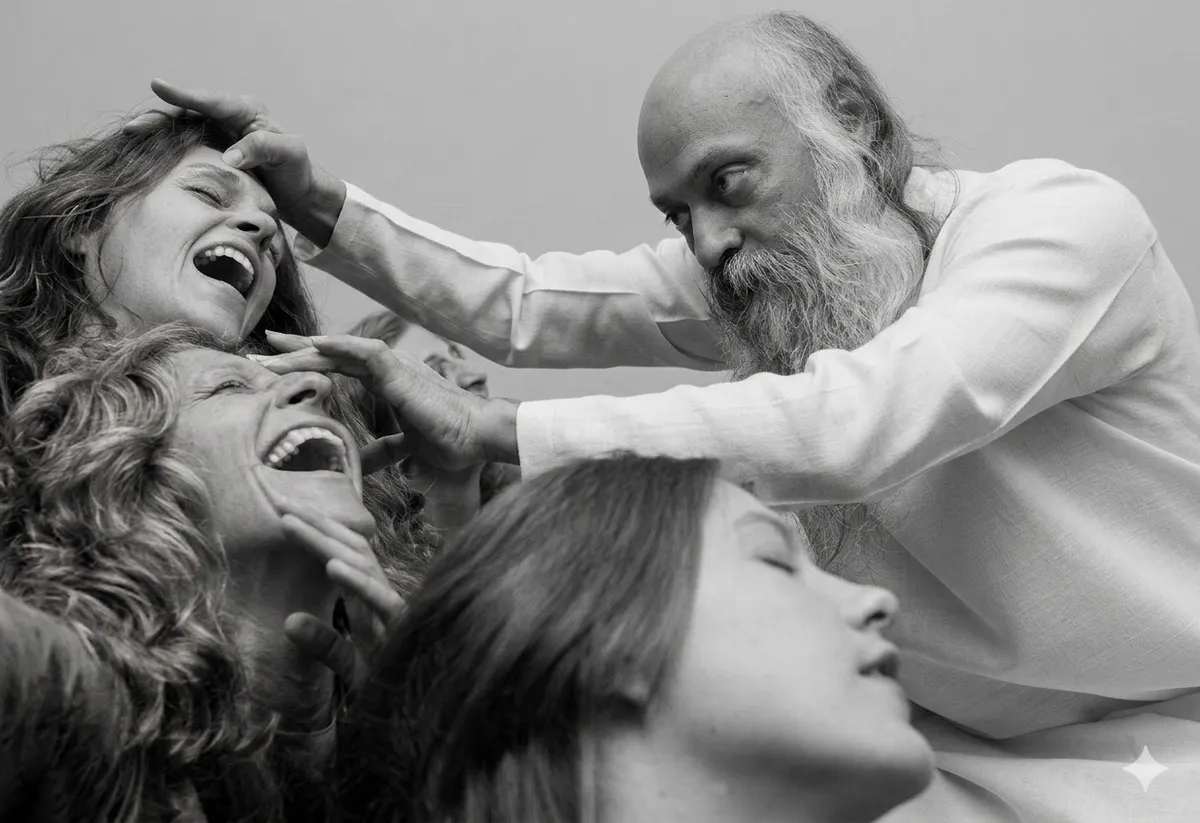
Osho's perspective on Bardo
When Osho Spoke About Bardo
Passages from the discourses where this theme comes alive.
Beloved Osho, I've always been fascinated by the state of bardo as described in ancient tibetan scriptures. Could you say something about this?
Bardo is a simple method but with great significance. Only people who have meditated a little bit in their lives can be benefited by it, and Tibet was one of the countries where almost everybody was devoting some time to meditation -- just to be alone, silent, not doing anything, just witnessing. If such a person does not achieve enlightenment in his life, and death intervenes, then bardo is used. Such a man has achieved a certain opening of the door. He has not entered in, but he has at least tried; he has knocked on the door. He has a certain receptivity, and at the time of death he is absolutely willing to go into a state of meditation. Now there is nothing to be afraid of. Death has already come; he can risk everything. And bardo is a certain soft method of hypnosis... just the way I am…
In Tibet they endeavor to prevent the dying person from slipping into deep sleep. If he falls into deep sleep, the memory of this life will be erased. To keep his memory of this life intact, special experiments are done at the dying man’s side. Through these methods, they try to keep the person deliberately awake. Not only to keep him awake, but to consciously generate dream within him—so that the dream continues, continues, and his death occurs while in the dream state. If death occurs in the state of dream, that person is born in the next life carrying all the memories of his previous life. Understand it this way and it will be easier. Throughout the night you dream—but perhaps you will not believe this. Many people say they do not dream. They simply do not know. Many say, “I dream sometimes.” They simply do not remember.
तिब्बत में मरते हुए आदमी को सुषुप्ति में न चला जाए, इसकी चेष्टा करते हैं। अगर सुषुप्ति में चला गया तो फिर उसको इस जन्म की स्मृति मिट जाएगी। तो उसको इस जन्म की स्मृति बनी रहे, तो मरते हुए आदमी के पास विशेष तरह के प्रयोग करते हैं। उन प्रयोगों में उस आदमी को चेष्टापूर्वक जगाए रखने की कोशिश की जाती है। न केवल जगाए रखने की बल्कि उस मनुष्य के भीतर स्वप्न को पैदा करने की भी चेष्टापूर्वक कोशिश की जाती है। ताकि स्वप्न चलता रहे, चलता रहे और उसकी मृत्यु स्वप्न की अवस्था में घटित हो जाए। यदि स्वप्न की अवस्था में मृत्यु घटित हो जाए, तो वह आदमी आनेवाले जन्म में अपने पिछले जन्म की सारी स्मृति लेकर पैदा होता है। इसे हम ऐसा समझें तो आसानी पड़ जाएगी। आप रात भर सपने देखते हैं, यह जान कर आपको शायद भरोसा नहीं होगा। अनेक लोग कहते हैं कि वे सपने देखते ही नहीं। सिर्फ उनको पता नहीं है। अनेक लोग कहते हैं मुझे कभी-कभी सपना आता है। उन्हें सिर्फ स्मरण नहीं रहता। सपना आप रात भर देखते हैं। …
Osho, when the soul leaves the body and has not yet assumed another one, is it possible to describe what happens in that timeless interval, and the kind of environment in which it moves? And, along with this, since you have spoken of the soul’s freedom to take birth by its own will, does it also have the freedom to leave the body whenever it wishes—or not to leave it?
If you look at descriptions of hell’s fire, you’ll find this: people are burned in the fire, yet they do not burn up. The inconsistency doesn’t occur to you at that time—that you are being burned, the fire is terrible, the heat unbearable, yet you are not actually burning! That inconsistency may occur later, not in the midst of it. In the interval between two bodies there are two kinds of souls. First, those very bad souls for whom finding a womb will take time; I call them pretas. Second, the good souls for whom finding a suitable womb will also take time; they need a worthy womb—I call them devas. There is no fundamental difference in species—only differences of personality, character, quality of mind. Their experiences are different. The bad souls come back from this interval with such painful memories that the memory itself is the fruit called hell.…
ओशो, आत्मा जब शरीर छोड़ देती है और दूसरा शरीर धारण नहीं करती है, उस बीच के समयातीत अंतराल में जो घटित होता है उसका, तथा जहां वह विचरण करती है उस वातावरण के वर्णन की कोई संभावना हो सकती है? और इसके साथ जिस प्रसंग में आपने आत्मा का अपनी मर्जी से जन्म लेने की स्वतंत्रता का जिक्र किया है, तो क्या उसे जब चाहे शरीर छोड़ने अथवा न छोड़ने की भी स्वतंत्रता है?
कभी आपने देखा कि नरक की आग का जो-जो वर्णन है, उसमें यह बात है कि आग में जलाए जाते हैं, लेकिन जलते नहीं। मगर यह इनकंसिस्टेंसी खयाल में नहीं आती कि आग में जलाया जा रहा हूं, आग भयंकर है, तपन सही नहीं जाती, और जल बिलकुल नहीं रहा हूं! मगर यह इनकंसिस्टेंसी बाद में खयाल आ सकती है। उस वक्त खयाल नहीं आ सकती। तो दो शरीरों के बीच का जो अंतराल है उसमें दो तरह की आत्माएं हैं। एक तो वे बहुत बुरी आत्माएं, जिनके लिए गर्भ मिलने में वक्त लगेगा। उनको मैं प्रेत कहता हूं। दूसरी वे भली आत्माएं, जिन्हें गर्भ मिलने में देर लगेगी, उनके योग्य गर्भ चाहिए। उन्हें मैं देव कहता हूं। इन दोनों में बुनियादी कोई भेद नहीं है--व्यक्तित्व भेद है, चरित्रगत भेद है, चित्तगत भेद है। योनि में कोई भेद नहीं है। अनुभव दोनों के भिन्न होंगे। बुरी आत्माएं बीच के इस अंतराल से इतने दुखद अनुभव लेकर लौटेंगी, उनकी ही स्मृति का फल नरक है। जो-जो उस स्मृति को दे सके हैं लौट कर, उन्होंने ही नरक की स्थिति साफ करवाई। …
A friend has asked, Osho, one can die with awareness, but how can one be born with awareness?
Most fasters spend twenty-four hours repeating, “I am hungry; I have not eaten,” with their minds absorbed in planning tomorrow’s menu. Then the fast is wasted; it is merely a hunger-strike. That is the difference: a hunger-strike means not eating; upavasa means “dwelling nearer and nearer.” Nearer to whom? To oneself. Away from the body, closer to the self. Even the word upavasa carries no implication of starving; it means nearer-dwelling. Thus one could be in upavasa even while eating—if one knows the eating is at a distance and “I am elsewhere.” And one could not be in upavasa even while not eating—if one keeps thinking, “I am hungry; I’m dying of hunger.” Upavasa is a psychological knowing of one’s separateness from hunger. Other sufferings too can be invited voluntarily. A man can even lie on thorns, simply to see that the thorns do not pierce me; they pierce elsewhere,…
एक मित्र ने पूछा है, ओशो, होश से मरा तो जा सकता है, लेकिन होश से जन्मा कैसे जा सकता है?
और आमतौर से जो आदमी उपवास करते हैं, वे चौबीस घंटे यह दोहराते रहते हैं कि मैं भूखा हूं, आज खाना नहीं खाया है। और कल खाना खाने की योजना में चित्त रमा रहता है। और कल क्या खाना है, उसकी भी योजना बनती रहती है। तब उपवास व्यर्थ हो गया, तब वह सिर्फ अनशन रहा। अनशन और उपवास का यही फर्क है। अनशन का मतलब है, न खाना। उपवास का मतलब है, और निकट, और निकट निवास करना। किसके? उपवास का मतलब है: और निकट, और निकट निवास करना। किसके निकट निवास करना? अपने! शरीर से फासले पर, स्वयं के करीब आना। उपवास का मतलब भी यही है। उपवास के मतलब से...उपवास में कहीं भी भूखा रहने का सवाल ही नहीं है। उपवास शब्द में भी भूखा रहने का कोई प्रश्न नहीं है। उपवास का मतलब है: आवास--निकट, और निकट। किसके? किसके पास? अपने पास। अपने पास रहना और शरीर से दूर। तब फिर यह भी हो सकता है कि एक आदमी भोजन किए हुए भी उपवासा हो। …
Profound Quotes on Bardo
Explore our structured collection of meaning-mapped quotes regarding Bardo.