
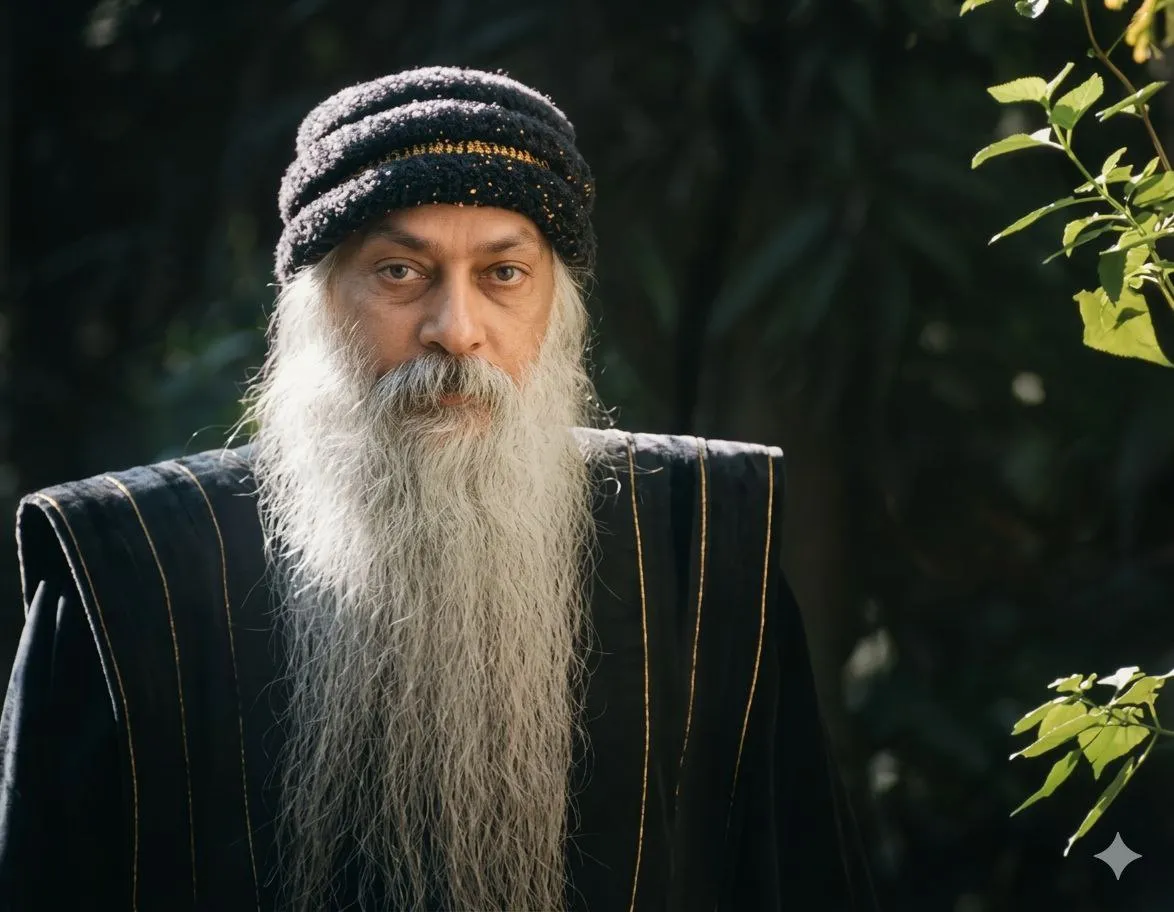
Osho's perspective on Nada
When Osho Spoke About Nada
Passages from the discourses where this theme comes alive.
You have said that the practice of chanting aum also brings about the nada, the inner sound. Does it come about spontaneously also? Which is the proper nada?
If it comes spontaneously it is more valuable. If it comes with the repetition of aum it can be imaginary. That which comes of its own accord is authentic, valuable. If the nada begins you should become a witness. Do not be merged into it, because that is the state of the seventh plane. If you tend to get lost in the nada before reaching the seventh you will halt there; it will act as a brake. As these inner sounds become more and more subtle, our witnessing too will have to become more and more subtle. We will have to go on observing to the end, when the sound is completely lost.
You said that through the practice of Om, nada arise. Do the nada also arise automatically?
If they arise automatically, they are more precious; if they arise of their own accord, they are more precious. If they arise through the use of Om, they may be imagined. They should arise by themselves. Those alone are precious; those alone are true.
प्रश्न: आपने कहा कि ओम् की साधना से नाद उपस्थित होते हैं। क्या ऑटोमैटिक भी नाद उपस्थित होते हैं?
ऑटोमैटिक उपस्थित हों, वे ज्यादा कीमती हैं; अपने आप उपस्थित हों, वे ज्यादा कीमती हैं। ओम् के प्रयोग से उपस्थित हों तो वे कल्पित भी हो सकते हैं। अपने आप ही होने चाहिए। वही कीमती हैं, वही सच्चे हैं।
Thus there are two ways to say it: either call it the soundless Word—the tone that is not born of collision, not born of the impact of two—or the saints have chosen another precious term: Anahata Nada. Anahata means: not produced by striking, not produced by collision. Is there such a sound that is Anahata? Is there a sound born without striking? If there is such a sound, that alone is the fundamental note of life. Several points need to be understood. Whatever is produced by collision will perish. For collision generates a quantity of energy, but how long will that energy last? I clap my hands; the impact of my hands releases a limited force. How long will it resound? Whatever has been produced will be destroyed. Whatever is made will be unmade. Buddha said: that which is compounded cannot be eternal, cannot be Sanatana. How could it be?
तो दो बातें हैं--या तो हम कहें नाद-रहित वाणी, नाद-रहित स्वर, ऐसा स्वर जो टक्कर से पैदा नहीं होता, जो दो चीजों के आघात से पैदा नहीं होता। और या फिर संतों ने एक और शब्द चुना है, वह भी बहुत कीमती है--अनाहत नाद। अनाहत का मतलब भी यही होता है कि जो आहत से नहीं, टक्कर से पैदा नहीं हुआ--अनाहत। क्या ऐसा कोई नाद है, जो अनाहत है? क्या ऐसा भी कोई नाद है, जो बिना टक्कर के पैदा होता है? ऐसा अगर कोई नाद है तो वही जीवन का मूल-स्वर है। इसमें कई बातें समझ लेने जैसी हैं। क्योंकि जो चीज टकराहट से पैदा होती है, वह नष्ट हो जाएगी। क्योंकि टकराहट से एक शक्ति की मात्रा उपलब्ध होती है। लेकिन वह एक शक्ति की मात्रा कितनी देर चलेगी? मैं ताली बजाता हूं, तो मेरे दोनों हाथों की टक्कर से जितनी शक्ति पैदा होती है, वह शक्ति सीमित है। कितनी देर वह स्वर गूंजेगा? जो पैदा हुआ है, वह नष्ट हो जाएगा। जो बना है, वह मिट जाएगा।
Om is the fundamental sound of Sanskrit. In Om, all the sounds of Sanskrit are included. Om is made of A, U, and M—the joining of three sounds: A, U, M. These are the three primal vowels; the rest of language is born from them. All words are then constructed of these. Om is the root; A, U, M are its three branches; and from these three branches the whole web of sound and the birth of all words happens. The Jews would call Om the Logos; Christians would call it the Word. This sutra concerns this Om. Understand this sutra well. For those who would enter within can very easily do so with the support of this sound—because it is resonating within. Every moment this sound is echoing inside. This sound is your very life-breath. If this sound disappears within, you disappear.
… ओम बना है अ, उ और म--तीन ध्वनियों के जोड़ से। ए, यू, एम। ये तीन मूल स्वर हैं। बाकी सारी भाषा इन्हीं से पैदा होती है। सारे शब्द फिर इनसे ही निर्मित होते हैं। ओम मूल है, अ, उ, म उसकी तीन शाखाएं हैं। और फिर इन तीन शाखाओं से सारी ध्वनि का जाल और सारे शब्दों का जन्म होता है। ओम को लोगोस कहेंगे यहूदियों की भाषा में; शब्द कहेंगे ईसाइयों की भाषा में। इस ओम के संबंध में यह सूत्र है। और इस सूत्र को बहुत ठीक से समझ लेना। क्योंकि भीतर जिन्हें प्रवेश करना है, वे इस ध्वनि के सहारे बड़े आसानी से भीतर प्रवेश कर सकते हैं। क्योंकि यह ध्वनि भीतर निनादित हो रही है। प्रतिक्षण यह ध्वनि भीतर गूंज रही है। यह ध्वनि ही आपका प्राण है। …
Profound Quotes on Nada
Explore our structured collection of meaning-mapped quotes regarding Nada.