
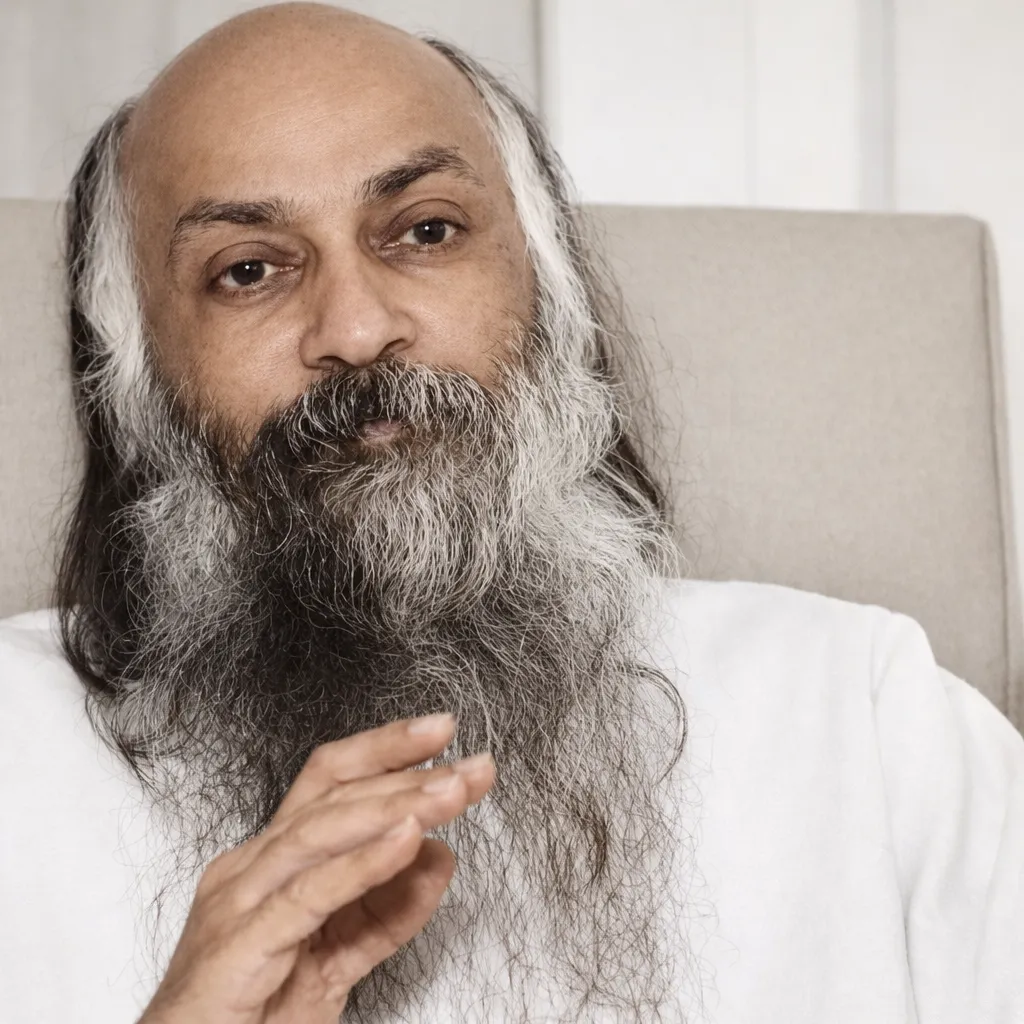
Osho's perspective on Keval-Jnani
When Osho Spoke About Keval-Jnani
Passages from the discourses where this theme comes alive.
Does the keval-jnani (one with perfect knowledge) lack expression? If he masters expression, he too becomes a teacher. If he does not, then realization does happen—he is accomplished—but he closes off; he cannot spread on all sides what he has known, cannot speak it out.
The completeness of realization happened to Mahavira in his previous birth; for the completeness of expression he had to do sadhana in this life. And I say that the perfection of realization is not as difficult a thing as the perfection of expression is. It is very difficult indeed. Because in realization I am alone; whatever I have to do, I have to do with myself. In expression, the other is involved. Therefore one must know the other, understand the other, reach the other; there is the other’s language, the other’s experience, the other’s personality. There are millions upon millions of kinds of personalities; life is distributed across countless forms of birth (yonis). For the resonance to be possible in all of them, for the news to reach all of them—so that even a stone may hear and a god may hear—cultivating the care and discipline for all that is…
प्रश्न: केवल-ज्ञानी के पास? अभिव्यक्ति नहीं है। अभिव्यक्ति साध ले तो वह भी टीचर हो जाता है, वह भी शिक्षक हो जाता है। अभिव्यक्ति न साधे तो अनुभूति तो होती है, सिद्ध होता है, लेकिन बंद हो जाता है; सब तरफ फैला नहीं पाता कि जो उसने जाना है, उसे कह दे।
तो अनुभूति की पूर्णता तो महावीर को पिछले जन्म में हुई है, अभिव्यक्ति की पूर्णता के लिए उन्हें इस जन्म में साधना करनी पड़ी। और मैं कहता हूं कि अनुभूति की पूर्णता उतनी कठिन चीज नहीं है, जितनी अभिव्यक्ति की पूर्णता कठिन चीज है। बहुत ही कठिन है। क्योंकि अनुभूति में मैं अकेला ही हूं, जो भी मुझे करना है, अपने से ही करना है। अभिव्यक्ति में दूसरा सम्मिलित हुआ जा रहा है। इसलिए दूसरे को जानना, समझना, दूसरे तक पहुंचाना; दूसरे की भाषा है, दूसरे का अनुभव है, दूसरे का व्यक्तित्व है; करोड़-करोड़ तरह के व्यक्तित्व हैं, करोड़-करोड़ योनियों में बंटा हुआ प्राण है, उन सब पर प्रतिध्वनि हो सके, उन सब तक खबर पहुंच सके; पत्थर भी सुन ले और देवता भी सुन ले; उस सबकी फिकर साधना बहुत बड़ी बात है। इसलिए केवल-ज्ञान तो बहुत लोगों को उपलब्ध होता है, लेकिन तीर्थंकर बहुत कम लोग बन पाते हैं। …
Osho, does it happen that on attaining perfection people fall silent—as you said about Makkhali Goshal, that he said nothing? Is it also possible that someone may simply not speak at all, having no urge to say anything?
Many people. Many people. Many people. In truth, to tell is one thing, and to know is an altogether different thing. Someone asked Buddha—ten thousand bhikkhus walked with him. Someone asked Buddha: You have been teaching for thirty years; these ten thousand monks listen—have any among them become like you or not? Buddha said: Many. He said: But one hears nothing of them. Buddha replied: They are silent; I speak. And this is exactly the difference in Jainism between a Tirthankara and a Kevali. A Tirthankara is also a Kevali, but a Tirthankara is a teacher as well. A Kevali is simply a Kevali; he does not speak, he is not a teacher. That is the only difference. Many like Mahavira have been, but Mahavira is a Tirthankara.
प्रश्न: ओशो, ऐसा होता है कि पूर्णता पाने से लोग तुमको--जैसा आपने बताया कि मक्खली गोशाल ने कुछ नहीं बताया। वैसा कोई ने बताया भी न हो, ऐसा भी होता है, उसका बताने का मन भी नहीं होता?
अनेक लोग। अनेक लोग। अनेक लोग। असल में बताना एक बात है और जानना बिलकुल दूसरी बात है। बुद्ध से किसी ने पूछा, बुद्ध के साथ दस हजार भिक्षु चलते थे। किसी ने बुद्ध से पूछा कि आप इतने दिन से सिखा रहे हैं तीस वर्षों से, ये दस हजार भिक्षु सुनते हैं, इनमें से कुछ आप जैसे हुए कि नहीं? बुद्ध ने कहा: बहुत। तो उसने कहा: लेकिन उनका कोई पता नहीं चलता। तो बुद्ध ने कहा: वे चुप हैं, मैं बोलता हूं। और यही फर्क जैनों में--तीर्थंकर और केवली का फर्क है। तीर्थंकर भी केवली है, लेकिन तीर्थंकर टीचर भी है साथ में। और केवली सिर्फ केवली है, वह कुछ बोलता नहीं है, वह टीचर नहीं है। बस इतना ही फर्क है। महावीर जैसे बहुत लोग हुए हैं, लेकिन महावीर तीर्थंकर हैं।
Osho, the other day you spoke of “ekant” in relation to Lord Mahavira. Was Mahavira’s realization also ekant—one-sided? Was it not complete? This is my question.
What news we bring back are drishtis, thoughts. What we actually knew and lived was darshan. In that darshan, Srinagar was one. There, night-day were joined, mountain-lake were joined, good-bad were joined—everything was together. But the moment we speak, we choose; we sift; we stand somewhere and select a viewpoint. The moment anything is spoken, a drishti is formed. This has been the great danger: mistaking drishti for darshan. Hence, the Hindus have a drishti, not darshan; the Jains have a drishti, not darshan; the Muslims have a drishti, not darshan. If we speak of darshan, then Hindu, Muslim, Jain all disappear—only the One remains; there is no drishti, no ideology. Mahavira’s experience is total; expression cannot be. Whenever we try to say it, we cannot say the total. The experience of the divine is a far greater matter—even a small, simple experience cannot be expressed in its wholeness. You…
प्रश्न: ओशो, आपने पिछले दिनों भगवान महावीर के संबंध में एकांत वाली बात कही थी। वह क्या रियलाइजेशन जो भगवान महावीर का था--वह भी एकांत ही था? क्या वह संपूर्ण नहीं था? यह मेरा प्रश्न है।
वे जो खबरें हम ले जाएंगे, वे दृष्टियां होंगी, वे विचार होंगे। लेकिन जो हमने जाना और जीया था, वह दर्शन था। उस दर्शन में श्रीनगर एक था। वहां रात-दिन जुड़े थे, पहाड़-झील जुड़ी थी, वहां अच्छा-बुरा जुड़ा था। वहां सब इकट्ठा था। लेकिन जब हम बात करने गए, चुनाव हमने किया, छांटा, तो हम खड़े हो गए और हमने एक दृष्टि से चुनाव किया। तो जैसे ही कोई बात बोली जाएगी, वैसे ही दृष्टि बन जाएगी। और यही बड़ा खतरा रहा है कि दृष्टियों को दर्शन समझने की भूल होती रही है। और इसलिए जैनों की एक दृष्टि है, दर्शन नहीं; हिंदुओं की एक दृष्टि है, दर्शन नहीं; मुसलमानों की एक दृष्टि है, दर्शन नहीं। अगर दर्शन की हम बात करते हैं तो हिंदू, मुसलमान, जैन सब खो जाएंगे। वहां तो एक ही रह जाएगा, वहां कोई दृष्टि नहीं है, कोई विचार नहीं है। महावीर का जो अनुभव है, वह तो समग्र है, लेकिन अभिव्यक्ति समग्र हो ही नहीं सकती। जब भी हम कहने जाते हैं, तभी समग्र को हम कह नहीं सकते। …
And someone has asked: Osho, who is it that thinks when one is witnessing?
As it is now, whenever we know, three things are present: the one who knows—the knower; that which is known—the known; and the relationship between the two—knowledge. Knowledge is bound and burdened by the knower and the known. Keval-gyan means the known dissolves—the object disappears. And when the known dissolves, where will the knower be? He was bound to the known. When the known dissolves, the knower dissolves. What remains then? Only knowledge remains. In that moment of pure knowing there is the sense of liberation and of freedom. So keval-gyan means to experience pure knowledge. What I have called samadhi is the experience of pure knowing. These are different names in different traditions: what Patanjali called samadhi, the Jains called keval-gyan, and Buddha called prajna. Keval-gyan does not mean telling what is going on in your head. That is very easy—a simple thing. That is ordinary telepathy, thought-reading; it…
और पूछा है, ओशो, साक्षी होकर कौन विचार करता है?
अभी जब भी हम कुछ जानते हैं, तो जानने में तीन चीजें होती हैं--जानने वाला होता है, वह ज्ञाता होता है; जिसको जानते हैं, वह होता है, वह ज्ञेय होता है; और इन दोनों के बीच जो संबंध होता है, वह ज्ञान होता है। तो ज्ञान जो है, ज्ञाता और ज्ञेय से दबा रहता है, उनसे बंधा रहता है। केवल-ज्ञान का अर्थ है कि ज्ञेय विलीन हो जाए, आब्जेक्ट विलीन हो जाए। और अगर ज्ञेय विलीन हो जाएगा, तो फिर ज्ञाता कहां रहेगा! वह तो ज्ञेय से बंधा हुआ था। जब ज्ञेय विलीन हो जाएगा, तो ज्ञाता विलीन हो जाएगा। तब क्या शेष रह जाएगा? तब मात्र ज्ञान शेष रह जाएगा। उस ज्ञान की घड़ी में मुक्ति का बोध होता है और स्वतंत्रता का बोध होता है। तो केवल-ज्ञान का अर्थ है, शुद्ध ज्ञान को अनुभव कर लेना। जिसको मैंने समाधि कहा है, वह शुद्ध ज्ञान का अनुभव है। यह अलग-अलग संप्रदायों के अलग-अगल सत्य हैं। जिसे पतंजलि ने समाधि कहा है, उसे जैनों ने केवल-ज्ञान कहा है, उसे बुद्ध ने प्रज्ञा कहा है।
Does a keval-jnani lack expression?
definitionProfound Quotes on Keval-Jnani
Explore our structured collection of meaning-mapped quotes regarding Keval-Jnani.