
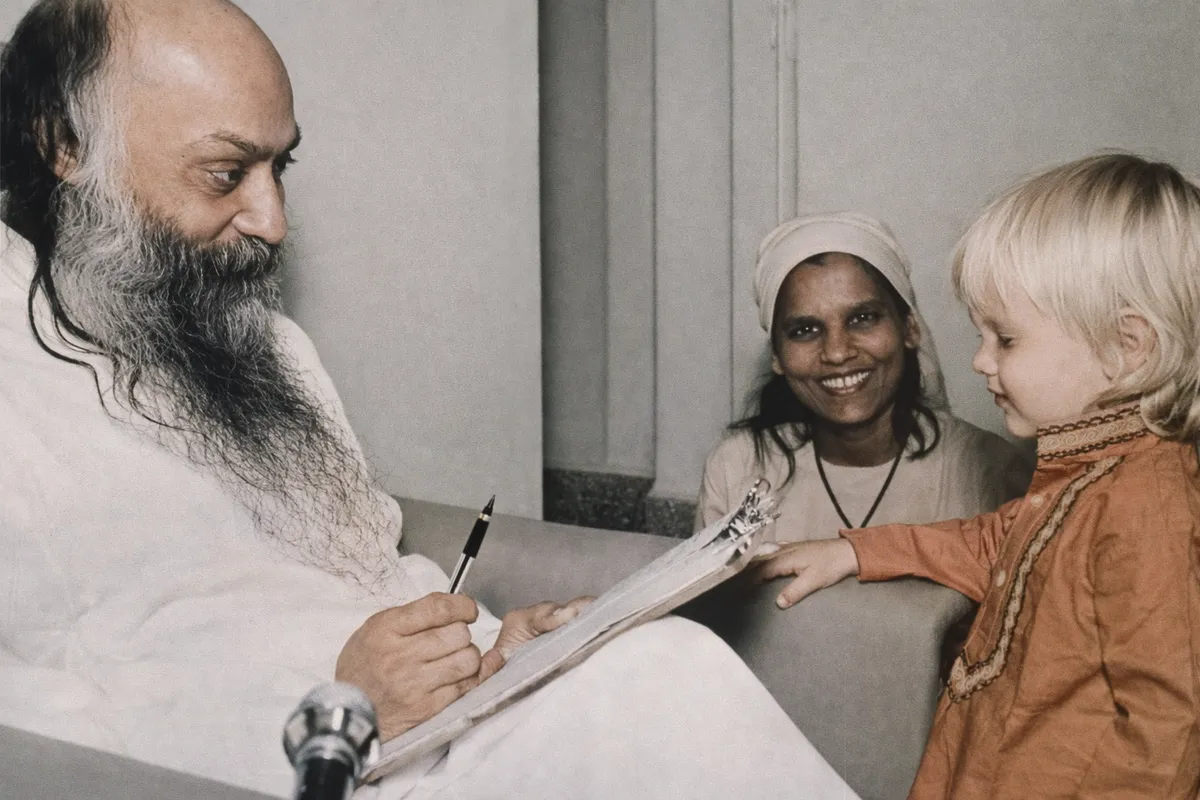
Osho's perspective on Introspection
When Osho Spoke About Introspection
Passages from the discourses where this theme comes alive.
Osho, I practice self-analysis, “introspection,” to awaken the witnessing. Is this right as a first step? Kindly explain.
That is why you see: the wife is happily sitting, listening to the radio, knitting her sweater; the moment the horn honks downstairs—husband has arrived—she lies down: “I have a headache.” Don’t think she’s faking; it really happens. I’m not saying she is deceiving—this has become her habit. The husband’s horn is enough to trigger a headache. Association has formed. Don’t think I say she’s cheating. Perhaps in the beginning she faked it; now that is long past—now it’s a habit. As the husband comes, the headache rises—because only when she has a headache does the husband put his hand on her head. Otherwise, who puts his hand on his wife’s head! Someone might put a hand on another’s wife; who puts a hand on his own! Only when the wife is troubled does the husband show a little sympathy. Love is gone; now only sympathy keeps things moving. The…
पहला प्रश्न: ओशो, मैं साक्षीभाव को जगाने के लिए आत्मविश्लेषण, ‘इंट्रॉस्पेक्शन’ करता हूं। क्या यह पहले कदम के रूप में सही है? कृपापूर्वक समझाएं।
इसलिए तुम देखते, पत्नी मजे से बैठी है, रेडियो सुन रही है, अपना स्वेटर बुन रही है और जैसे ही हार्न नीचे बजा कि पति आ गये कि एकदम लेट गयी, सिर में दर्द हो गया। और तुम ऐसा मत सोचना कि वह बनकर ही लेटी है। हो ही जाता है। तुमसे मैं यह नहीं कह रहा हूं कि वह धोखे दे रही है। यह उसकी अब आदत हो गयी है, पति का जो हार्न बजना है यह काफी है सिरदर्द के लिए। संयोग हो गया, दोनों का जोड़ बैठ गया। जिसको मनोवैज्ञानिक एसोसिएशन कहते हैं। इसका संयोग हो गया। ऐसा मत सोचना कि मैं यह कह रहा हूं कि वह धोखा दे रही है। शायद कभी शुरू-शुरू में दिया होगा, अब तो वह बहुत गये दिनों की बात हो गयी। अब तो यह आदत का हिस्सा हो गयी। पति के आते ही सिर में दर्द उठता है। क्योंकि जब सिर में दर्द होता है तभी पति सिर पर हाथ रखता है। नहीं कौन अपनी पत्नी के सिर पर हाथ रखता है! कोई दूसरे की पत्नी के सिर पर हाथ भला रख दे, अपनी पत्नी के सिर पर कौन हाथ रखता है! पत्नी जब परेशान होती है, तब पति थोड़ी सहानुभूति दिखाता है। …
What is the difference between waiting for godot and waiting for god?
It is as if the sun has risen in the morning and you are sitting in your room with closed doors and windows, in darkness. Open the doors, you become available to the sun. The sun was already available -- just the meeting happens. You cannot wait for God. All waiting is for Godot. Godot means the one who never comes, who CANNOT come, whose arrival is impossible. And the only impossible thing is that which has already happened -- how can it happen again? You are alive, and you are waiting for life, Now, this is ridiculous. The real man of religion does not think in terms of God. He thinks in terms of life or, even better, of living -- because life can again become an abstract idea. Living, moment-to-moment living. In that very living, one knows what God is, because one knows who one is. Your idea…
Osho said that there was no need to try to still the mind, to stop the thoughts. He said that just as the traffic goes by and one remains on the sidewalk, unaffected, just a watcher, so one should simply witness the thoughts as they went by. We are not our thoughts, and recognising that we are the witness is enough. The very acceptance of the thoughts makes one more relaxed. The relaxation helps to create a distance, to separate oneself. To evaluate a thought as good or bad means that you are attached to your thoughts -- so one should not put labels on them.] ... put yourself aside, sit under a tree, and just watch the traffic. Soon, one day, the traffic disappears and the road is empty. Suddenly there is an interval and in that interval is meditation. But that interval cannot be created or cultivated.
For years I am most of the time witnessing and I feel it like a disease. So is it that there are two kinds of witnessing and mine is wrong? Tell me.
And only then can the third step be taken, which will bring you close to what Gurdjieff calls self-remembering, or Krishnamurti calls awareness, or the Upanishads call witnessing. But first the two steps have to be fulfilled; then the third comes easy. Don't start doing the third immediately. First the object, then the consciousness, then the subject. Once the object is dropped and the emphasis on the consciousness is no longer a strain, the subject is there but there is no subjectivity in it. You are there but there is no "I" in it, just being. You are, but there is no feeling that "I am." That confinement of "I" has disappeared; only amness exists. That amness is divine. Drop the "I" and just be that amness. And if you have been working too long on witnessing, then for a few months, at least for three months, drop it completely,…
Is practicing self-analysis and introspection the right first step to awaken the witnessing?
practiceProfound Quotes on Introspection
Explore our structured collection of meaning-mapped quotes regarding Introspection.