
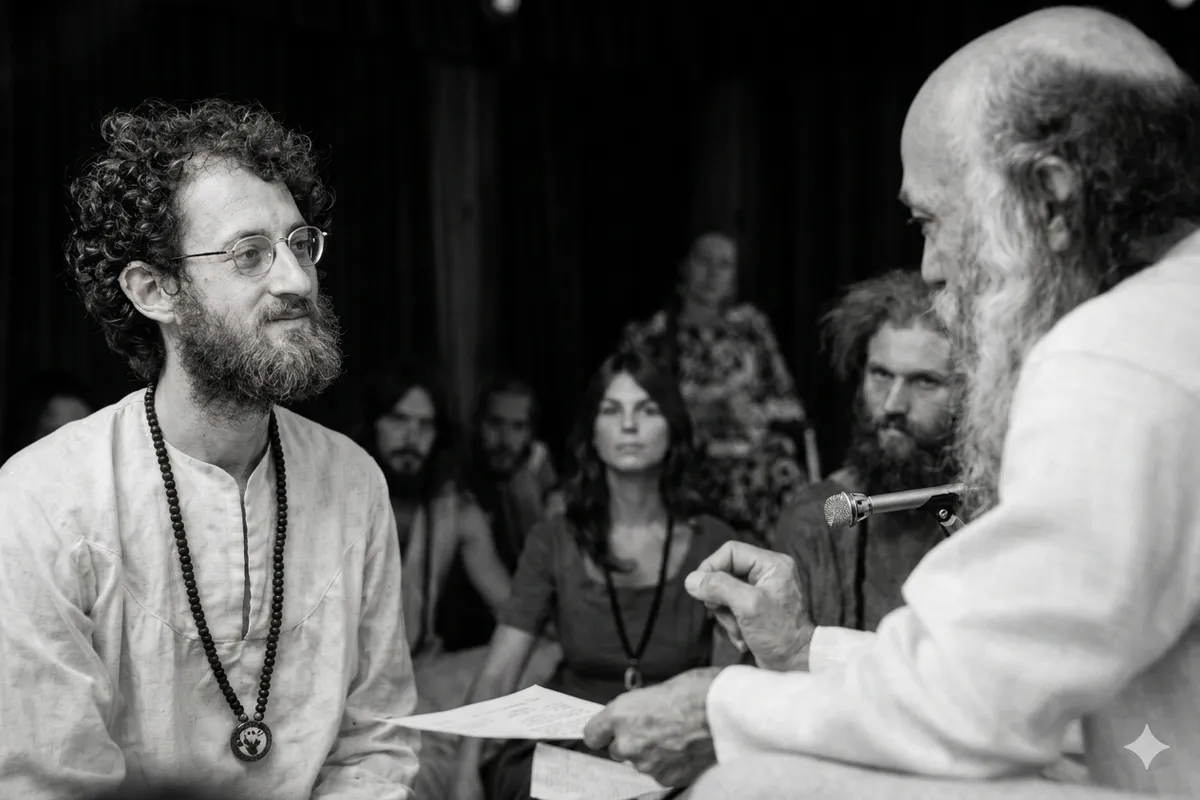
Osho's perspective on Hari-katha
When Osho Spoke About Hari-katha
Passages from the discourses where this theme comes alive.
Osho, “When one speaks, it is Hari-katha!” What is this phenomenon of Hari-katha? Does it happen after passing through silence and meditation, or through prayer? Who is fit and entitled for Hari-katha? Can we also call your discourses Hari-katha?
Bhakti karain nishkam—and whatever is in such a life is devotion without desire. Your devotion is false; it always carries desire. You go to God to ask—this, that; if not worldly, then otherworldly. Your very notion of God is as a means to get. Think: if God stood before you, what would you do? Immediately a long list! Money, position, immortality, endless youth. Children ask their father “Daddy, Daddy”—and the father knows: money for cinema, for sweets, for the fair. Husbands and wives too—gestures harbor demands. This world’s relations are bargains. Mulla Nasruddin’s wife lamented, “I lost my ring—worth a hundred rupees.” Nasruddin said, “Don’t worry. I too lost a hundred rupees, and I am not worried.” “Where did you lose them?” “Where does one lose! But I found a hundred-rupee ring in my pocket!” Wives search husbands’ pockets first thing! One day Nasruddin was beating his son Fazlu: “Put…
Osho, the Gita has been the most read and heard in this land, and Krishna the most worshiped. Then how did song and celebration vanish from this country, and sannyas become filled with stench?
Reading the Gita does not bring song into one’s life. Reading the Gita is not the same as becoming suffused with song. That is where the mistake happened. Hearing these unique words from Krishna, Arjuna awakened. We thought there was some magic in the words. We thought the words contained certain keys. We thought: if these words opened the lock of Arjuna’s heart, they will open the locks of our hearts too. So the recitation of the Gita began. For five thousand years we have been reciting the Gita. No one’s lock opens. It seems there is no key in the words. Not only does the lock not open; by repeating the Gita the lock becomes more and more rusty. It does not open, and even the hope of opening breaks. There is a reason behind this delusion. The first time, the event truly happened: the lock opened. We saw…
चौथा प्रश्न: ओशो, गीता इस मुल्क में सर्वाधिक पढ़ी और सुनी गयी और कृष्ण भी सर्वाधिक पूजे गए। फिर ऐसा कैसे हुआ कि इस देश से गीत और उत्सव खो गया और संन्यास सड़ांध से भर गया?
गीता को पढ़ने से कोई जीवन में गीत नहीं आता। गीता को पढ़ना गीतामय हो जाना नहीं है। वहीं भूल हो गयी। कृष्ण से सुनकर इन अनूठे शब्दों को, अर्जुन जागा। हमने सोचा, इन शब्दों में कुछ जादू है। हमने सोचा, इन शब्दों में कुछ कुंजियां हैं। हमने सोचा, ये शब्द अर्जुन के हृदय के ताले को खोल दिए, तो हमारे हृदयों के ताले भी इन शब्दों से खुल जाएंगे। तो गीता का पाठ शुरू हुआ। पांच हजार साल से हम गीता का पाठ कर रहे हैं। किसी का ताला खुलता नहीं। लगता है, शब्दों में कोई चाबी नहीं है। न केवल ताला खुलता नहीं, बल्कि गीता को दोहरा-दोहरा कर ताला और जंग खा जाता है। खुलता तो है ही नहीं, खुलने की आशा भी टूट जाती है।
Scriptures are almost like this: dead truth. When they were spoken, arising from someone’s innermost, they had life—they breathed, their heart beat, there was a soul within. When Krishna spoke to Arjuna, it must have been something else entirely—the flower was still on the plant, sap still flowing. Then you pluck the flower, press it in a book—open it a thousand years later—you will find the flower’s corpse. So with the Gita, the Quran, the Bible, the Dhammapada. You can revive these corpses if you too come to experience—if you too become a witness. As Jesus said, I testify that what is written here is true—on the day you too can say, I testify that what is written here is true—until then it is belief. Beliefs are hollow, superficial. Believe as much as you like—there will be no substance.
शास्त्र करीब-करीब ऐसे ही हैं। मुर्दा सत्य हैं। जब बोले गए थे, जब किसी व्यक्ति के अंतरतम से उठ रहे थे, तब उनमें प्राण था, तब उनकी श्वास चलती थी, हृदय धड़कता था, तब उनके भीतर एक आत्मा थी। जब कृष्ण ने अर्जुन से बोला होगा तब बात कुछ और ही रही होगी। फूल अभी पौधे पर लगा था, अभी उसमें रसधार बहती थी। फिर तुम फूल को तोड़ लो, किताब में दबा कर रख दो। हजार साल बाद खोलोगे तो मिलेगी फूल की लाश।
Question: Third question: Osho, please explain a little about kirtan-meditation. ... Kirtan has many moods. Sometimes the devotee dances in separation; then his kirtan has a great poignancy—tears flow, there is pain and longing. Sometimes he dances in rejoicing; then his mood is bright, it is spring, flowers everywhere. See his intoxication then—rays of joy dance all around him. Sometimes he dances in thirst; sometimes in fulfillment. The devotee has great seasons, and kirtan has many expressions. Kirtan is a rich happening—every depth of life is included in it, and every height. At first the devotee hides his love within. It is intrinsic to love that we do not wish to tell anyone—love is no spectacle, no exhibition. He hides it, ties it in the corner of his garment like a diamond. Kabir says, “I have found the diamond and knotted it tight.
तो कीर्तन की बहुत भंगिमाएं हैं। कभी भक्त विरह में नाचता है; तब उसकी कीर्तन में बड़ी उदास भंगिमा होती है। आंसू बहते हैं। पीड़ा और विरह होती है। कभी भक्त आनंदोल्लास में नाचता है; तब उसकी बड़ी प्रसन्न भंगिमा होती है, वसंत होता है, सब तरफ फूल होते हैं! तब उसकी मस्ती देखें! तब उसके चारों तरफ आनंद की किरणें नाचती हैं। कभी प्यास में नाचता है; कभी तृप्ति में नाचता है। भक्त की बड़ी ऋतुएं हैं और कीर्तन की बड़ी भाव-भंगिमाएं हैं। कीर्तन बड़ी समृद्ध घटना है। जीवन की सभी गहराइयां उसमें समाविष्ट हैं, और सभी ऊंचाईयां भी। पहले तो भक्त छिपाता है अपने प्रेम को भीतर। प्रेम का वह अनिवार्य अंग है कि हम उसे किसी को बताना नहीं चाहते। वह कोई तमाशा थोड़े ही है! वह कुछ ऐसी बात थोड़े ही है जो दिखलाते फिरें! उसकी कोई प्रदर्शनी तो नहीं, कोई नुमाइश तो नहीं! उसे छिपाता है, उसे हीरे की तरह गांठ में बांधकर रखता है। कबीर कहते हैं: हीरा पायो गांठ गठियायो! …
What is the phenomenon of Hari-katha?
definitionProfound Quotes on Hari-katha
Explore our structured collection of meaning-mapped quotes regarding Hari-katha.