
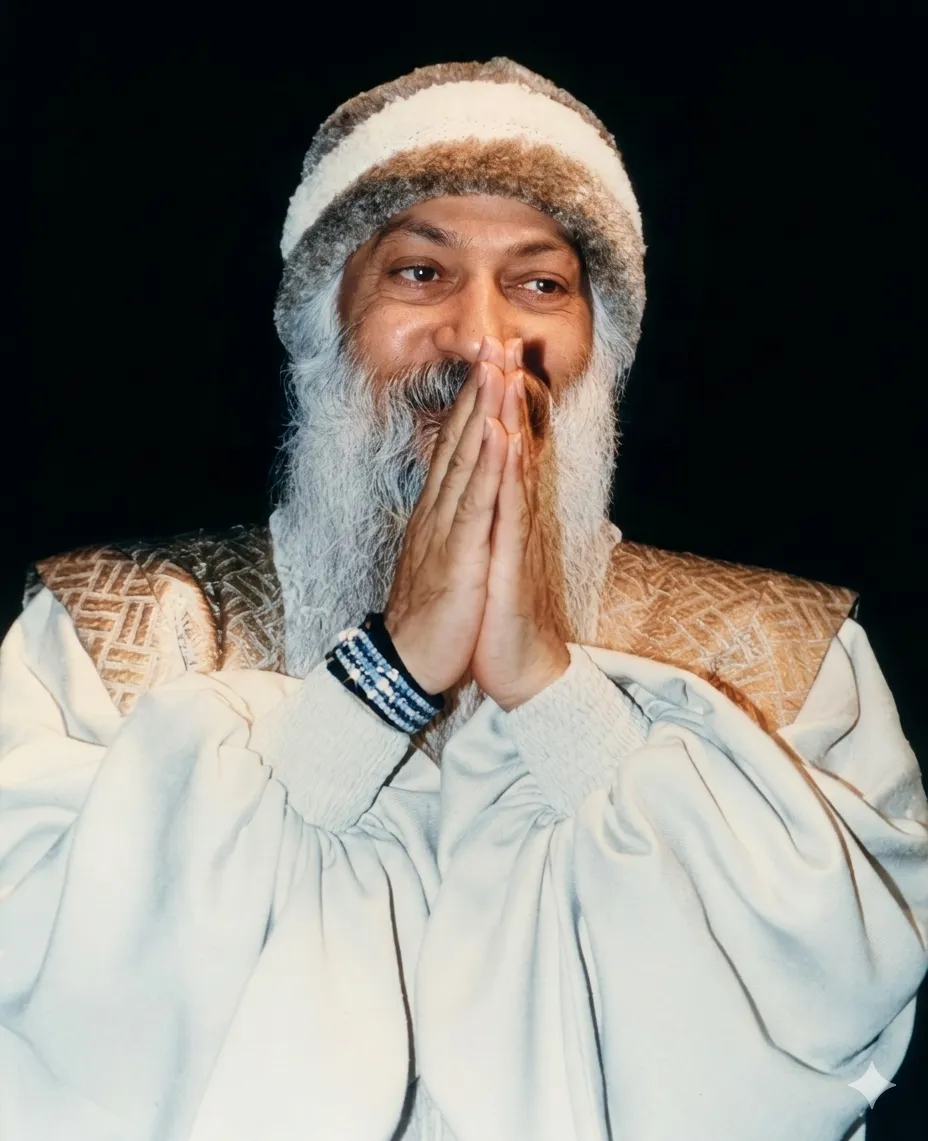
Osho's perspective on Hanumana
When Osho Spoke About Hanumana
Passages from the discourses where this theme comes alive.
Questioner: does hanumana take to dancing once in a while?
It is possible. When a strong wind comes, the plants of a garden sway and dance, even the plant in a flower pot begins to sway. But the dance of a jungle is like Shiva's tandava, his dance of destruction. This dance is mighty. It is immense; it is awesome. This dance of the jungle is, as the jungle is, beyond our control, and it is frightening to us. The dance of a garden is small and manageable; we can manage it. Hanumana can dance, but he is subject to Rama's control. Meera is different. When she dances even Krishna cannot control her. Hanumana cannot disobey Rama; he is disciplined and obedient. It is true that we need discipline in the world, but discipline is not everything. Everything that is profound, great and immense in life is free from discipline. Everything that is true, good and beautiful in life comes…
Osho, this morning you compared Rama and Krishna, and also Meera and Hanuman. Our tradition holds Rama and Krishna, Meera and Hanuman, as equivalent. It does not carry the feeling that any is inferior or superior. It may be that Hanuman’s uniqueness is to be exactly what he is, and Rama’s uniqueness is to be exactly what he is—and that among us there are some for whom the very uniqueness of Hanuman and Rama is what suits. Then would it not be paradharma—another’s dharma—if they were to regard Hanuman and Rama as in some way inferior and choose only the path of Krishna and Meera?
I did not call anyone inferior; I only called them different. Not low, just distinct. And one whose innermost nature lies close to Hanuman will not, on the basis of what I said, be able to take Hanuman as inferior. In my own innermost nature Hanuman does not fall close. So I cannot make a false statement while keeping someone else’s nature in mind. You asked me. I answered. If I had to choose, I would feel like choosing Meera. If I had to choose, I would feel like leaving Rama and choosing Krishna. And I have given my reasons for why it would feel so to me. It is not that you should choose Krishna and drop Rama. Understand what I am saying; that is enough. You must go where your own innermost nature takes you. In my view, Rama’s personality is bounded by maryada—restraint, limit—and I believe even…
ओशो, आपने आज प्रातः राम और कृष्ण की कुछ तुलना की, मीरा और हनुमान की कुछ तुलना की। हमारी परंपरा राम और कृष्ण, मीरा और हनुमान, दोनों को समकक्ष ही रखती है। कोई उनमें इनफीरियर है या सुपीरियर है, ऐसा भाव नहीं रखती। यह हो सकता है कि हनुमान की निजता वही हो जो वह हैं, राम की निजता वही हो जो वह हैं, और हममें कुछ लोग ऐसे हों जिन्हें हनुमान और राम की निजता ही अनुकूल पड़े। तो क्या यह परधर्म न होगा कि वे हनुमान और राम को कुछ इनफीरियर मान कर कृष्ण और मीरा का ही मार्ग अपनाना चाहें?
मैंने जो कहा, उसमें किसी को इनफीरियर नहीं कहा, सिर्फ भिन्न-भिन्न कहा। हीन नहीं कहा, अलग-अलग कहा। और जिसकी निजता हनुमान के करीब पड़ती है, वह मेरे कहने से हनुमान को हीन न मान सकेगा। अब मेरी निजता में तो हनुमान करीब नहीं पड़ते हैं। तो मैं किसी और की निजता का ध्यान रख कर झूठा वक्तव्य नहीं दे सकता हूं। मुझसे आपने पूछा है। मैंने ही उत्तर दिया है। मुझे अगर चुनना हो, तो मीरा चुनने जैसी लगेगी। मुझे अगर चुनना हो, तो राम छोड़ देने जैसे लगेंगे और कृष्ण चुनने जैसे लगेंगे। और मुझे क्यों लगेंगे, उसके कारण मैंने कहे। ऐसा नहीं है कि आप कृष्ण को चुनें और राम को छोड़ें। समझ लें मेरी बात को, उतना काफी है। आपकी निजता आपको जहां ले जाए वहीं जाना है।
My understanding is that dance, in the beginning, was born out of meditation. And I think all that is significant in life has had its origin in meditation. Meera did not have to go anywhere to learn dancing. People are mistaken if they think that Meera found God through dancing. Meera burst into dancing when she found God. The fact is otherwise: no one finds God through dancing, but one can dance if he finds God. What can a drop do but dance when a whole ocean enters into it? What can a beggar do but dance when he suddenly comes upon a treasure of infinite wealth? But man has been so much crushed and crippled by civilization that he cannot dance.
Osho, I am dancing here. I, who never danced. Far from dancing—I had never even thought I would dance. I am astonished at myself. I ask: what has happened to me?
Love has happened to you; religion has happened to you. You have begun to come toward your home. You have turned back. You have set out toward your source. The Ganges has started flowing back toward Gangotri. The current has reversed. Your first steps have begun to fall in the direction from which you came. And when the first steps fall that way, dance is born. The farther you go from the divine, the more dance is lost; gloom, frustration, melancholy spread through life. When you are very miserable, understand that you are very far from the divine. The rishis have described the divine as sat-chit-ananda—being, consciousness, bliss. Saraha says, Tilopa says: it is mahāsukha, the great bliss. That means the more you are in sorrow, the farther you are from it. The proportion of your sorrow is the proportion of your distance. The measure of your sorrow is the…
दूसरा प्रश्न: ओशो, मैं नाच रहा हूं यहां। मैं जो कि कभी नाचा नहीं। नाचना तो दूर, कभी सोचा भी नहीं था कि मैं नाचूंगा। मैं अपने पर ही चकित हूं। पूछता हूं कि यह क्या हो गया है मुझे?
प्रेम हो गया है तुम्हें, धर्म हो गया है तुम्हें। तुम अपने घर की तरफ आने लगे। तुम लौट पड़े। तुम अपने स्रोत की तरफ चल पड़े। गंगा गंगोत्री की तरफ बहने लगी है। उलटबांसी हो गई। जहां से आये थे उस तरफ तुम्हारे पहले कदम पड़ने लगे। और उस तरफ जो पहले कदम पड़ते हैं, उन्हीं के कारण नाच पैदा होता है। परमात्मा से जितने दूर जाते हो उतना नाच खोता जाता है। उतना जीवन में उदासी, हताशा, विषाद छाता जाता है। जब तुम बहुत दुख में होते हो तो समझना कि परमात्मा से बहुत दूर होते हो ऋषियों ने परमात्मा की व्याख्या की है सच्चिदानंद--वह सत है, वह चित है, वह आनंद है। सरहपा कहते हैं, तिलोपा कहते हैं: वह महासुख है। इसका अर्थ हुआ कि जितने तुम दुख में होते हो उतने उससे दूर होते हो। तुम्हारे दुख का अनुपात तुम्हारी दूरी का अनुपात है। तुम्हारे दुख की मात्रा तुम्हारी दूरी की सीमा है। जितना कम दुख उतने उसके पास। …
Profound Quotes on Hanumana
Explore our structured collection of meaning-mapped quotes regarding Hanumana.