
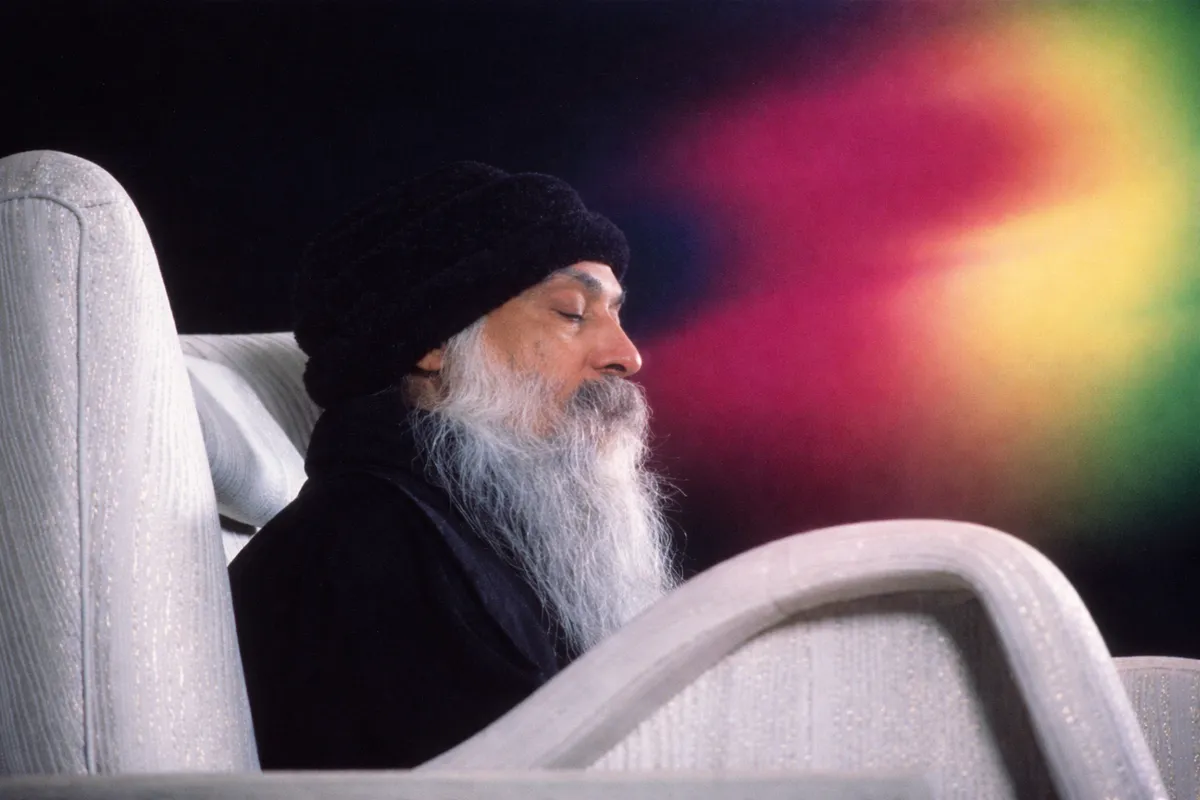
Osho's perspective on Advaita
When Osho Spoke About Advaita
Passages from the discourses where this theme comes alive.
Question: bhagwan sri, from lao tzu's elucidation of the original advaita mono-theist philosophy, it is clear that he had attained the supreme knowledge. Then why is it that very few people followed his philosophy and tread on the path he showed? Is not this failure to gain followers, a bitter criticism of his view-point? And if many followed aristotle, is that not the proof of the excellence of his science? Please enlighten us on this.
It is Man's bad luck that he does not live on the mountains. He lives on the plains and therefore the wisdom of the peaks get lost and forgotten. Then after a long time someone comes along and brings them back and they appear new. These sayings of Lao Tzu are a few of the supreme statements that Man has given before. They are the statements that are on the boundary-line, the very last words that can be spoken. And Lao Tzu stands tottering at the verge of this boundary-line, beyond which is the realm of No-Word. Lao Tzu speaks from this ultimate boundary-line. So he alone can understand him, who has reached this boundary whereas those who have not do not understand him. This is no fault of Lao Tzu. Then there are a few things which you will not understand until you have experienced them. If we tell…
Osho, from the exposition of Lao Tzu’s nondual philosophy it is clear that he had attained supreme knowing. Then why is it that only a handful in the world have taken his vision of life as their guiding light? Is this very lack of acceptance not a harsh criticism of his standpoint? And does the wide adoption of Aristotle not prove the excellence of his science? Please throw light on this!
These statements of Lao Tzu are among the finest ever uttered by man. He stands on the last frontier where nothing more can be said—beyond is silence. On that ultimate boundary he says a few things. Only when someone reaches there can he understand; if he does not, he cannot. In that, there is no fault of Lao Tzu. And there are some things you will not know until they become part of your own experience. A small child—if you tell him things that are not part of his experience—will hear like a deaf person; he will forget. They will not even be imprinted on his memory, because only that is imprinted which matches experience. Our experience must resonate somewhere. What Lao Tzu says does not match our experience anywhere. That his book survives at all—is that not something! His words do not meet our experience anywhere. Lao Tzu says:…
प्रश्न: ओशो, लाओत्से के अद्वैत मूलक दर्शन की व्याख्या से पता चलता है कि वह परम ज्ञान को उपलब्ध हो चुका था। फिर क्या कारण है कि संसार के इने-गिने लोगों ने ही उसके जीवन-दर्शन को अपना मार्ग-दर्शक बनाया? क्या उसकी यह विफलता ही उसके दृष्टिकोण की कटु आलोचना नहीं है? और क्या अरस्तू का अपनाया जाना उसके विज्ञान की उत्कृष्टता का प्रमाण नहीं है? कृपया इस पर प्रकाश डालें!
ये जो लाओत्से के वक्तव्य हैं, ये श्रेष्ठतम वक्तव्यों में से कुछ हैं, जो मनुष्य ने कभी भी दिए हैं। बहुत आखिरी जो कहा जा सकता है, जिसके आगे कहने का कोई उपाय ही नहीं बचता, उस बाउंड्री लैंड पर, उस सीमांत पर लड़खड़ाता हुआ आदमी है लाओत्से, जिसके पार निःशब्द है। बस आखिरी सीमा पर वह कुछ कह रहा है। तो वहां तक जब कोई पहुंचता है, तो समझ में आता है; नहीं पहुंचता, तो नहीं समझ में आता है। उसमें लाओत्से का कसूर नहीं है। फिर कुछ बातें हैं, जो तब तक आपको पता नहीं चलेंगी, जब तक आपके अनुभव का हिस्सा न बन जाएं। एक छोटा बच्चा है। उससे हम कुछ ऐसी बातें करें, जो उसके अनुभव का हिस्सा नहीं हैं। सुन लेगा, बहरे की तरह; भूल जाएगा। वे उसकी स्मृति में भी टंकेंगी नहीं। क्योंकि स्मृति में वही टंक सकता है, जो अनुभव से मेल खा जाए। भूल जाएगा। हमारा अनुभव भी तो कहीं मेल खाना चाहिए! अब लाओत्से जो भी कहता है, हमारा अनुभव कहीं भी मेल नहीं खाता। बस लाओत्से की किताब बची है, यही क्या कम है! …
Osho, the other day you quoted the following verse of Adi Shankaracharya. Please elaborate on it— tatvaṁ kim ekaṁ śivam advitīyaṁ, kim uttamaṁ sac-caritaṁ yad asti. tyājyaṁ sukhaṁ kim striyam eva, samyag deyaṁ paramaṁ kim tv abhayam sadaiva. What is the one principle? The nondual Shiva-tattva alone. What is the highest? Virtuous conduct. Which pleasure should be renounced? In every way, the pleasure of woman alone. What is the supreme gift? Fearlessness, always.
The second outcome of declaring “virtue” supreme is for the simple, guileless people: their lives fill with guilt. They still end up doing what nature makes them do. There is not yet the lamp of samadhi to walk by. They are told, Don’t bump into walls; find the door. Exit only by the door—that is virtue. To bump into the wall is vice. But without light, without the flame of awareness, without the awakening of samadhi, without discrimination—how will one not collide? One will. It’s inevitable. The simple person, not being a deceiver, feels guilt: I am a sinner, a great sinner; I can’t even walk straight; I keep falling; I can’t even find the door. What heinous crimes must I have committed in past lives! How will I be redeemed? Once guilt settles in, self-respect is lost—the very foundation of all religion. Without self-trust, the ground slips from under…
Some friends have asked: Osho, for the realization of non-duality (Advaita), how should the mind be oriented? In what way, on which path, should life be set in motion? How can Advaita bear fruit?
Join these three to what I said earlier, and it will be clear how to take step by step on the path of Advaita. In truth, only the first steps need be told. Take one, and the second becomes visible; take the second, and the third appears. Only those fail who never take the first step. Those who do—win. The first step, and half the journey is done—because with it comes a freshness and joy that pulls your feet onward, and onward. Over these three days I have said a few things about this journey. Even saying “I have said” is not quite right. As I said this morning: “Because there is the sun, a blade of grass flowers”—but I also say, “Perhaps because the blade flowers, the sun is.” Such is the interrelatedness. I could not have said what I did had even one of you not been present.…
कुछ मित्रों ने पूछा है कि ओशो, अद्वैत भाव की सिद्धि के लिए किस भांति चित्त को निर्दिष्ट किया जाए, किस भांति, किस मार्ग पर जीवन को गतिमान किया जाए? अद्वैत कैसे फलित हो सकता है?
ये तीन बातें सुबह की बात से जोड़ देना, तो अद्वैत के रास्ते पर कैसे एक-एक कदम उठाया जा सकता है वह खयाल में आ जाएगा। और सच बात इतनी ही है कि प्राथमिक कदम ही बताने की जरूरत है, फिर तो एक कदम आदमी उठाता है दूसरा कदम उसे दिखाई पड़ना शुरू हो जाता है, दूसरा उठाता है तीसरा दिखाई पड़ना शुरू हो जाता है। हारते केवल वे ही हैं जो पहला कदम ही नहीं उठाते। जो पहला उठा लेते हैं वे तो जीत ही जाते हैं। पहला कदम और आधी मंजिल पूरी हो गई। क्योंकि पहला कदम उठा नहीं कि दूसरा साफ हो जाता है। और पहला उठा नहीं कि उसके साथ जो ताजगी और जो आनंद की खबर आती है वह पैरों को खींचने लगती है और आगे और आगे और आगे। इस यात्रा पर निकलें। तीन दिनों में इस यात्रा के संबंध में थोड़ी सी बातें मैंने कही हैं। ये बातें मैंने कही हैं, ऐसा कहना ठीक नहीं होगा। जैसा मैंने सुबह कहा, सूरज है इसलिए घास का एक फूल होता है, लेकिन मैं कहता हूं, यह भी हो सकता है कि घास का फूल है इसलिए सूरज है। इतना अंतर-संबंध है। …
Profound Quotes on Advaita
Explore our structured collection of meaning-mapped quotes regarding Advaita.