
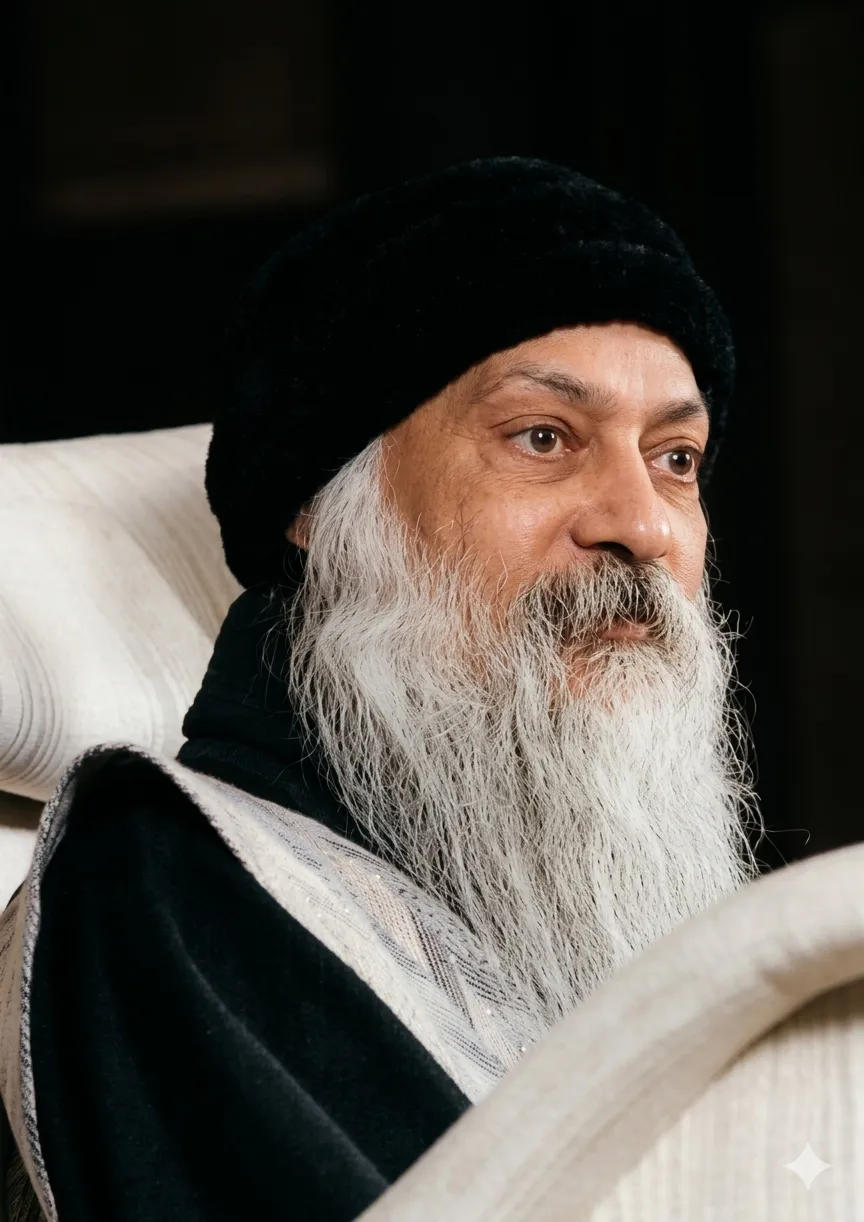
Osho's original Hindi beside Osho Live's English translation, matched passage by passage.
इस सूत्र को समझने के लिए कुछ प्रारंभिक बातें समझ लेनी जरूरी हैं।
To understand this sutra, a few preliminaries must be grasped.
पहली बात: वैज्ञानिक कहते हैं कि आदमी का सारा विकास अस्त्र-शस्त्रों के द्वारा हुआ है; मनुष्य की सारी प्रगति हिंसा के कारण हुई है। और मनुष्य अगर सारे पशुओं में जीत पाया है, तो बुद्धिमानी के कारण नहीं, ज्यादा हिंसा करने की क्षमता के कारण। ऐसे वैज्ञानिक भी हैं, जो कहते हैं, मनुष्य की बुद्धि हिंसा करने के कारण ही विकसित हुई है।
The first thing: scientists say that the whole evolution of man has happened through weapons; all of human progress has been due to violence. And if man has triumphed over all animals, it is not because of intelligence, but because of a greater capacity for violence. There are even scientists who say that human intelligence itself developed because of the need to commit violence.
इसे थोड़ा हम समझ लें, क्योंकि लाओत्से की बात इसके बिलकुल विपरीत है। तभी इसके ठीक आमने-सामने लाओत्से की बात समझना आसान भी होगा, उचित भी।
Let us understand this a little, because Lao Tzu’s statement is exactly the opposite. Only then, standing right face-to-face with it, will Lao Tzu be easier and more fitting to understand.
शायद आपको पता न हो, डार्विन से लेकर जे.बी.एस.हाल्डेन तक जिन लोगों ने विकास के संबंध में गहन अध्ययन किया है, वे एक बहुत अजीब नतीजे पर पहुंचे हैं। और वह नतीजा यह है कि आदमी का सारा विकास उसके अंगूठे के कारण हुआ। सुन कर थोड़ी हैरानी होगी, लेकिन बात में सचाई है। अकेला आदमी ही ऐसा पशु है, जिसका अंगूठा उसकी अंगुलियों के विपरीत काम कर सकता है। जैसे आपका पैर का अंगूठा है, वह अंगुलियों के विपरीत काम नहीं कर सकता; इसलिए पैर से आप कोई चीज पकड़ नहीं सकते। और जब पकड़ ही नहीं सकते, तो फेंक नहीं सकते। आदमी के हाथ का अंगूठा अंगुलियों के विपरीत काम करता है--अंगुलियां एक दिशा से और अंगूठा दूसरी दिशा से। इस विरोध के कारण आप हाथ में कोई चीज पकड़ सकते हैं। और इस विरोध के कारण ही आप किसी चीज को फेंक सकते हैं। फेंकने की ताकत ही अस्त्र-शस्त्र का निर्माण बनती है।
You may not know, but from Darwin to J. B. S. Haldane, those who have studied evolution in depth have arrived at a very strange conclusion. And that conclusion is that man’s entire evolution has happened because of the thumb. It sounds surprising, but there is truth in it. Man alone is the animal whose thumb can work in opposition to the fingers. Your big toe, for example, cannot work against the other toes; hence you cannot grasp anything with your foot. And if you cannot grasp, you cannot throw. The human thumb works opposite to the fingers—fingers from one direction and the thumb from another. Because of this opposition you can hold something in the hand. And because of this very opposition you can throw. The power to throw becomes the basis for the making of weapons.
कोई जानवर शस्त्रों का उपयोग नहीं कर सकता; क्योंकि पकड़ ही नहीं सकता। और जब पकड़ ही नहीं सकता, तो फेंक भी नहीं सकता। जो जानवर उपयोग कर सकते हैं अंगूठे का, जैसे बंदर, चिम्पांजी, बबून--बंदरों की जातियां हैं। इसलिए वैज्ञानिक कहते हैं कि आदमी और बंदर सजातीय हैं। क्योंकि उनके पास भी अंगूठा है, जो अंगुलियों के विपरीत थोड़ा सा काम कर सकता है। ज्यादा नहीं। आदमी के मुकाबले गतिमान नहीं है, लेकिन थोड़ी-बहुत चीजें वे पकड़ सकते हैं; थोड़ी दूर तक चीजें फेंक भी सकते हैं।
No animal can use weapons; because it cannot grasp. And when it cannot grasp, it cannot throw. Those animals who can use a kind of thumb—like monkeys, chimpanzees, baboons—are the simian tribes. That is why scientists say that man and monkey are of kindred stock. They too have a thumb that can work somewhat against the fingers; not much. Not as mobile as man’s, but enough to grasp a little; enough to throw a short distance.
आदमी का अंगूठा उसकी हिंसा का आधार है। वैसे आदमी कमजोर है। यह भी हम ठीक से समझ लें कि आदमी को इतने हिंसक होने की क्या जरूरत पड़ गई होगी। क्योंकि आदमी से ज्यादा हिंसक कोई पशु नहीं है। कोई पशु खेल में हिंसा नहीं करता; सिर्फ आदमी शिकार करता है और खेल में हिंसा करता है। कोई पशु अपनी ही जाति में हिंसा नहीं करता; आदमी आदमी को मारने में बड़ा रस लेता है। कोई पशु अकारण हिंसा नहीं करता; आदमी अकारण हिंसा करता है, और पीछे कारण खोज लेता है। पशुओं में कोई बड़े युद्ध नहीं होते, कोई विश्वयुद्ध नहीं होते। होने की कोई संभावना नहीं है।
Man’s thumb is the base of his violence. Otherwise, man is weak. Let us also understand clearly why man came to need to be so violent. For there is no animal more violent than man. No animal commits violence for sport; only man hunts and practices violence as play. No animal is violent toward its own kind; man takes great relish in killing man. No animal commits violence without cause; man commits causeless violence and afterwards invents a cause. Among animals there are no great wars, no world wars. There is no possibility of it.
क्या कारण है आदमी के इतने हिंसक हो जाने का? और क्या कारण है आदमी के अस्त्र-शस्त्र की खोज का?
What is the reason that man became so violent? And what is the reason that man discovered weapons?
कारण बड़ा अजीब है--वह भी खयाल में नहीं आता--क्योंकि आदमी कमजोर है। सारे पशुओं में आदमी कमजोर से कमजोर पशु है। अगर निहत्थे आप एक कुत्ते से भी लड़ें तो नहीं लड़ सकते। न तो आपके पास उतने मजबूत दांत हैं और न उतने नुकीले नाखून। जानवरों के पास दांत और नाखून उनके अस्त्र-शस्त्र हैं, उनके औजार हैं। आदमी बिलकुल कमजोर है। निहत्था आदमी किसी जानवर से जीत नहीं सकता। यही कमजोरी हिंसा की खोज बन गई। क्योंकि आदमी के पास नाखून न थे, इसलिए उसे छुरी-तलवारें बनानी पड़ीं। वे नाखून की पूरक हैं। आदमी के पास इतने बड़े दांत न थे जितने पशुओं के पास थे, तो उसे औजार के दांत बनाने पड़े, जो पशुओं की छाती में घुस जाएं, उनका कलेजा बाहर खींच लें।
The reason is very strange—it does not occur to the mind—because man is weak. Among all animals man is the weakest of the weak. Unarmed, you could not even fight a dog. You have neither such strong teeth nor such sharp claws. For animals, teeth and claws are their weapons, their tools. Man is utterly weak. Unarmed, man cannot defeat any animal. This very weakness became the search for violence. Because man had no claws, he had to make knives and swords. They are substitutes for claws. Man did not have the great teeth that animals have, so he had to make toothed tools that could enter an animal’s chest and pull out its heart.
आदमी कमजोर है, इसलिए हिंसक हो गया। यह बड़े मजे की बात है। इसका मतलब यह होगा कि जब तक आदमी की भीतरी कमजोरी न मिट जाए, तब तक वह अहिंसक नहीं हो सकता। और तब इसका मतलब भी यह हुआ कि जितना बड़ा हिंसक आदमी हो, समझना कि उतना भीतर कमजोर है। और इसका यह भी मतलब हुआ कि जितना शक्तिशाली मनुष्य होगा, उतना अहिंसक हो जाएगा।
Man is weak; therefore he became violent. This is most amusing. It would mean that until man’s inner weakness disappears, he cannot be nonviolent. And it would also mean that the more violent a man is, understand that the more he is weak within. And it would further mean that the more powerful a man becomes, the more nonviolent he will be.
भय के कारण हिंसा पैदा हुई। आदमी भयभीत है, तो उसने हिंसा खोजी। और उसके पास हाथ थे, अंगूठा था, कमजोर मनोदशा थी--उसने चीजें फेंक कर मारनी शुरू कर दीं। उसके अस्त्र-शस्त्रों की खोज शुरू हो गई। फिर आदमी ने पत्थर के औजार से लेकर एटम बम तक की यात्रा की।
From fear, violence was born. Man, being afraid, sought violence. And he had hands, a thumb, a weak inner psyche—so he began to kill by throwing things. The search for weapons began. Then man journeyed from stone tools to the atom bomb.
यह भी थोड़ा समझने जैसा है कि जैसे-जैसे आदमी के पास ताकतवर अस्त्र-शस्त्र बनते चले गए, वैसा-वैसा आदमी और कमजोर होता चला गया। आज से दस हजार साल पहले की कब्रों में अगर हम आदमी को देखें, तो वह शरीर की दृष्टि से हमसे बहुत मजबूत था। हमारे पास एटम बम हैं। अगर हम दस हजार साल के पहले के आदमी से युद्ध करें, तो वह हमसे जीत नहीं सकेगा। बाकी वह हमसे शरीर में मजबूत था। अगर हम अस्त्र-शस्त्रों को अलग कर दें और निहत्था लड़ें, तो हम पीछे के आदमियों से जीत नहीं सकते। आज भी जो जंगल में आदिवासी रह रहा है, उससे हम जीत नहीं सकते। शारीरिक रूप से वह ताकतवर है। क्यों?
It is also worth understanding that as stronger and stronger weapons were made available to man, in the same proportion man grew weaker. If you look at graves from ten thousand years ago, those men were physically stronger than we are. We have atom bombs. If we were to wage war with men of ten thousand years ago, they could not defeat us. But physically they were stronger than us. If we put weapons aside and fight unarmed, we cannot defeat men of the past. Even today, if you encounter a tribal in the jungle, you cannot defeat him. Physically he is stronger. Why?
एक दुष्ट-चक्र है। कमजोर आदमी कमजोरी के कारण हिंसा के अस्त्र खोजता है। फिर हिंसा के अस्त्र जितने मिल जाते हैं, उतनी ही ताकत की जरूरत कम होती चली जाती है, तो वह कमजोर होता चला जाता है। जिस दिन हमारे पास सब तरह के स्वचालित यंत्र होंगे, उस दिन आदमी बिलकुल कमजोर होगा।
There is a vicious circle. The weak man, because of his weakness, seeks weapons of violence. Then, the more weapons he acquires, the less he needs his own strength; so he grows weaker. The day we possess every sort of automatic device, man will be utterly weak.
जो लोग पैदल चलते थे, उनके मुकाबले हमारे पैर कमजोर हैं। होंगे ही। क्योंकि हम पैदल तो चलने का कोई काम ही नहीं कर रहे हैं। पैर का कोई उपयोग नहीं है। जिन चीजों का उपयोग खोता चला जाता है, वे कमजोर होती चली जाती हैं। अब हमने कंप्यूटर खोज लिया है। जल्दी ही आदमी के मस्तिष्क की ज्यादा जरूरत नहीं रह जाएगी, और आदमी का मस्तिष्क भी कमजोर होता चला जाएगा। जिस चीज का हम यंत्र बना लेते हैं, उसकी फिर हमारे शरीर में कोई जरूरत नहीं रह जाती।
Compared with those who walked on foot, our legs are weaker. They must be. Because we have hardly any occasion to walk. The leg has no use. Whatever is unused grows weak. Now we have discovered the computer. Soon the greater part of man’s brain will be unnecessary, and man’s brain will also grow weak. Whatever we invent a machine for is no longer needed in our own body.
कमजोरी के कारण आदमी हिंसक हुआ। हिंसक होने के कारण और कमजोर होता चला गया। एक तरफ बड़ी ताकत है हमारे हाथ में कि हम लाखों लोगों को एक सेकेंड में मिटा दें; और दूसरी तरफ हम इतने निहत्थे हैं कि एक छोटा सा जानवर भी हम पर हमला कर दे तो हम सीधा उससे जीत नहीं सकते। हमारा बड़े से बड़ा सेनापति भी निहत्था जीत नहीं सकता एक साधारण जंगली पशु से।
Out of weakness man became violent. And by becoming violent he has been growing weaker and weaker. On the one hand we have in our hands a great power—to wipe out millions in a second; on the other hand we are so helpless that if a small animal were to attack us, we could not straightforwardly win against it. Even our greatest general, unarmed, cannot defeat a common wild beast.
ये तथ्य खयाल में ले लेने जरूरी हैं। सब हिंसा परिपूरक है कमजोरी की।
These facts must be kept in mind. All violence is a complement of weakness.
पश्चिम के एक बहुत बड़े विचारक एडलर ने इस सदी में बहुत महत्वपूर्ण विचार प्रस्तावित किया था। और वह था कि जिंदगी निरंतर परिपूरक की खोज करती है। इसलिए जिन लोगों में कोई कमी होती है, वे उस कमी की पूर्ति के लिए कुछ ईजाद करते हैं। अक्सर यह होता है--अक्सर--कि जो लोग किसी दृष्टि से हीन अनुभव करते हैं अपने को, वे किसी दूसरी दिशा में श्रेष्ठ होने की कोशिश करके पूर्ति कर लेते हैं। कुरूप आदमी हो, तो वह किसी दूसरी दिशा में अपनी कुरूपता की पूर्ति खोजता है--वह बड़ा कवि हो जाए, कि बड़ा चित्रकार हो जाए, कि बड़ा संगीतज्ञ हो जाए, कि बड़ा नेता हो जाए--वह कुछ हो जाए, ताकि उसको ऐसा न लगे कि मैं हीन हूं।
A very great Western thinker, Adler, proposed a most important idea in this century. And that was: life continuously seeks compensations. Therefore those who have any deficiency invent some way to compensate it. Often it happens—often—that people who feel inferior in some respect compensate by trying to be superior in another direction. A man may be ugly; he will seek to compensate for his ugliness in some other direction—he will become a great poet, or a great painter, or a great musician, or a great leader—he will become something, so that he does not feel inferior.
दुनिया के राजनीतिज्ञों का जीवन अगर हम खोजें तो बड़ी आश्चर्य की बात मालूम पड़ेगी। वे किसी न किसी रूप में बहुत हीनता से पीड़ित थे। लेनिन के पैर, कुर्सी पर बैठता था, तो जमीन तक नहीं पहुंचते थे। पैर उसके छोटे थे, ऊपर का हिस्सा बड़ा था। और बचपन से लोग उससे कहते रहे थे कि तुम क्या करोगे जिंदगी में, तुम साधारण सी कुर्सी पर भी बैठ नहीं सकते हो! तो उसने सोवियत रूस के सिंहासन पर बैठ कर दिखला दिया कि साधारण कुर्सी तो कुछ भी नहीं है, मैं बड़े से बड़े सिंहासन पर बैठ सकता हूं।
If we probe into the lives of the world’s politicians, we will be amazed. In one way or another they were afflicted with deep inferiority. Lenin’s legs, when he sat on a chair, did not reach the ground. His legs were short, the upper body long. From childhood people kept telling him, “What will you do in life? You cannot even sit properly on an ordinary chair!” So he demonstrated by sitting on the throne of Soviet Russia that an ordinary chair is nothing—I can sit on the greatest throne.
मनसविद कहते हैं कि वह जो पैर जमीन को नहीं छूते थे, वह जो हीनता थी, लेनिन सदा पैर छिपा कर बैठता था। जब वह सिंहासन पर बैठ गया--तब भी--तब भी वह किसी के सामने कुर्सी पर एकदम से नहीं बैठ सकता था; क्योंकि पैर उसके ऊपर उठ जाते थे। वह उसके लिए दीनता की बात थी। वह उसके लिए कठिनाई हो गई।
Psychologists say that those legs which did not touch the ground—that very inferiority—Lenin always sat hiding his legs. When he sat on the throne—even then—he could not abruptly sit on a chair before anyone, because his legs would hang up. For him it was an embarrassment—a difficulty.
हिटलर के संबंध में अब वैज्ञानिकों ने जो खोज-बीन की हैं, वे बहुत सी बातें बताती हैं। वह अनेक तरह की बीमारियों से परेशान था और उन सारी बीमारियों की परेशानी और हीनता उसे पागल बना दी। वह किसी दूसरी दिशा में सिद्ध करके बता देगा कि वह हीन नहीं है।
Regarding Hitler, what scientists have now uncovered tells many things. He was plagued by many kinds of illnesses, and the torment and inferiority of all those illnesses drove him mad. He would prove in some other direction that he was not inferior.
जो भी इनफीरियारिटी से, हीनता से पीड़ित होते हैं, वे किसी दिशा में सुपीरियर, श्रेष्ठ सिद्ध करने की चेष्टा करते हैं। इस लिहाज से मनुष्य सबसे ज्यादा हीन पशु है--भौतिक शक्ति में। और उसने सब पशुओं से श्रेष्ठ होने की कोशिश करके अपने को सिद्ध भी कर दिया है कि वह श्रेष्ठ है। और जिन-जिन चीजों की कमी थी, उसने परिपूर्ति कर ली है। हाथ कमजोर थे, तो उसने अस्त्र बना लिए। शरीर कमजोर था, तो उसने मकान बना लिए, किले बना लिए। उसने सब तरह से अपनी सुरक्षा की है। वैज्ञानिक कहते हैं कि इसी हिंसा के बल पर, आदमी जो है आज तक, वह बन पाया है। पर इसके अब खतरे भी हैं। यह बात सच है कि आदमी जो भी बन पाया है, वह हिंसा के कारण ही बन पाया है। अगर लाओत्से या महावीर या बुद्ध ने आज से बीस हजार साल पहले आदमी को अहिंसा समझा दी होती और आदमी मान लिया होता, तो आदमी आज कहीं होता ही नहीं। अगर जंगल के आदमी को अहिंसा समझाने वाले लोग मिल गए होते, तो जंगली जानवर उसे कभी का साफ कर चुके होते।
Whoever suffers from inferiority tries to prove himself superior in some direction. In this sense, man is the most inferior of animals—physically. And in trying to prove himself superior to all animals, he has indeed succeeded in establishing that he is superior. Whatever was lacking, he compensated. The hands were weak, he made weapons. The body was weak, he built houses, built forts. He has secured himself in every possible way. Scientists say that it is on the strength of this very violence that man has become what he is. But now there are dangers. It is true: whatever man has become, he has become because of violence. Had Lao Tzu or Mahavira or Buddha taught nonviolence twenty thousand years ago and had man accepted, man would not be anywhere today. If the jungle man had been met by teachers of nonviolence, wild animals would long ago have finished him off.
इसलिए आज से बीस हजार साल पहले कोई महावीर पैदा नहीं हुआ। हो भी नहीं सकता था। ध्यान रहे, महावीर के पैदा होने के लिए वह स्थिति जरूरी है, जब हिंसा जरूरी न रह गई हो। तभी अहिंसा की बात की जा सकती है। इसलिए महावीर के इसके पहले पैदा होने का कोई उपाय नहीं। न लाओत्से का। खयाल करें, लाओत्से, महावीर, बुद्ध, सुकरात, अरस्तू, प्लेटो, सभी का समय एक है। सारी जमीन पर यह आज से पच्चीस सौ साल पहले ये लोग पैदा हुए। इनको और पीछे नहीं हटाया जा सकता है। क्योंकि पीछे तो अहिंसा की बात ही करने का कोई अर्थ नहीं हो सकता था; पीछे तो हिंसा जीवन की अनिवार्यता थी।
Therefore twenty thousand years ago no Mahavira was born. He could not have been. Remember, for Mahavira to be born the condition is necessary that violence is no longer necessary. Only then can nonviolence be spoken of. Hence there was no way for Mahavira or Lao Tzu to be born earlier. Consider: Lao Tzu, Mahavira, Buddha, Socrates, Aristotle, Plato—all are from around the same time. Across the earth they appeared about twenty-five hundred years ago. They cannot be pushed further back. Earlier, talk of nonviolence could have had no meaning; earlier, violence was life’s inevitability.
लेकिन जो अनिवार्यता थी कल, वही बाद में कठिनाई बन जाएगी।
But what was inevitable yesterday later becomes a difficulty.
आज वैज्ञानिक कहते हैं कि आदमी ने कोई दस लाख साल में हिंसा से अपने को विजेता घोषित किया; पशुओं को हरा डाला और वह एकछत्र मालिक हो गया। दस लाख साल में उसके जीवाणुओं की आदत हिंसा की हो गई। अब हिंसा की कोई जरूरत नहीं है; लेकिन उसकी आदत हिंसा की है। यही आज की तकलीफ है।
Today scientists say that in about a million years man declared himself the victor through violence; he defeated the animals and became the sole master. In a million years his very cells have become habituated to violence. Now there is no longer any need for violence; but the habit of violence remains. This is today’s trouble.
आज की सारी बड़ी से बड़ी पीड़ा यही है कि आपकी बनावट जिस रास्ते से हुई है, वह रास्ता समाप्त हो गया। अब न तो आप जंगली जानवरों से लड़ रहे हैं; न आप अंधेरी रात में किसी गुहा में बैठे हुए हैं। न आज आपके दांत और नाखून की कोई जरूरत है। और उनके विस्तार का तो कोई काम नहीं है। लेकिन आदमी के सेल्स, उसके शरीर के जीवाणुओं में बिल्ट-इन, बना हुआ प्रोग्राम है। दस लाख साल में आपके जीवाणुओं ने जो सीखा है, वे आपकी जिंदगी में भूल नहीं सकते। उनको दस लाख साल लगेंगे भूलने में।
The greatest suffering today is that the very route through which you have been made is now finished. You are no longer fighting wild animals; nor do you sit in a dark cave at night. Your teeth and claws are not needed today. And their extensions are of no use. But in man’s cells, in his body, a built-in program remains. What your cells learned in a million years cannot be forgotten in your lifetime. They will take a million years to forget.
तो जो लोग विज्ञान की तरह से सोचते हैं, जैसे स्किनर और दूसरे विचारक, वे कहते हैं, आदमी को अहिंसक बनाने का तब तक कोई उपाय नहीं, जब तक हम उसके जेनेटिक, उसके जीवाणुओं के मूल आधार को न बदल दें। तब तक आदमी को अहिंसक बनाने का कोई उपाय नहीं है। क्योंकि आदमी पैदा ही होता है, हिंसा का प्रोग्राम उसमें छिपा हुआ है, ब्लू-प्रिंट उसके भीतर है। जंगल नहीं रहा, संघर्ष नहीं रहा, हिंसा का उपयोग नहीं रहा; लेकिन आदमी की बनावट, उसके शरीर का ढांचा हिंसा के लिए है, उसकी ग्रंथियां हिंसा के लिए हैं। उसकी सारी संरचना हिंसक की है। और इसीलिए जिंदगी में बड़ी तकलीफ है।
Those who think as scientists—like Skinner and other thinkers—say there is no way to make man nonviolent unless we change his genetic base, the very foundation of his cells. Until then, there is no way. Because man is born with a program of violence hidden within, the blueprint is inside. The jungle is gone, the struggle is gone, the use of violence is gone; but the design of the body is for violence, his glands are for violence. His whole structure is violent. And hence the great suffering in life.
वह तकलीफ यह है कि आप हिंसा करना चाहते हैं और कर नहीं पाते। तब आप भीतर उबलते हैं, परेशान होते हैं, जैसे एक ज्वालामुखी भीतर जल रहा हो। फिर यह ज्वालामुखी आपकी पूरी जिंदगी को विषाक्त कर देता है। क्योंकि यह जहां नहीं जरूरत थी, वहां भी आग गिर जाती है आपके हाथ से। न भी गिराएं तो भीतर जलती है।
The suffering is this: you want to be violent and you cannot be. Then you boil within, you are tormented as if a volcano burns inside. Then this volcano poisons your whole life. Because even where there is no need, fire drops from your hand. Or, if it does not drop, it burns within.
दो बातें घटित होती हैं। एक तो आप जलते हुए लावा बन जाते हैं। इसलिए आप ऐसा मत सोचना कि आप कभी-कभी क्रोध करते हैं। सचाई उलटी है; आप सदा ही क्रोध में होते हैं, कभी-कभी ज्यादा प्रकट हो जाता है, कभी-कभी छिपाए रखते हैं। शांत होना मुश्किल है आपके लिए, आप अशांत ही होते हैं। लेकिन जब बहुत अशांत हो जाते हैं, तब आपको पता चलता है। असल में, बुखार में रहने की आपकी आदत है।
Two things occur. First, you become molten lava. Do not think that you sometimes get angry. The truth is the reverse; you are always in anger—sometimes it shows more, sometimes you keep it hidden. It is difficult for you to be peaceful; you are, in fact, unpeaceful. But only when you become too unpeaceful do you notice it. Actually, you have the habit of fever.
अगर आप गौर करें तो आप पाएंगे कि आप चौबीस घंटे क्रोध में हैं, और तलाश में हैं कि कहां से क्रोध बाहर निकल जाए। चौबीस घंटे आपके भीतर हिंसा का रस है--छोटे बच्चे से लेकर बूढ़े तक। छोटा बच्चा भी, एक चींटा चल रहा हो, उसको तोड़-मरोड़ कर नष्ट कर देगा। स्कूल चला जा रहा है, कुत्ते को पत्थर मार देगा। उसे हो क्या रहा है उसके भीतर?
If you watch carefully you will find that you are angry twenty-four hours, and you are on the lookout for where anger can escape. The juice of violence is within you for twenty-four hours—from the small child to the old. Even a small child—if an ant is crawling, he will twist and crush it. On the way to school he will throw a stone at a dog. What is happening inside him?
यह बच्चा जंगल में पैदा होना चाहिए था। इसके भीतर के सेल को कोई खबर नहीं है कि अब जंगल में नहीं है। इसका भीतर का सेल बिलकुल आपकी शिक्षा, संस्कृति से अपरिचित है। वह अपना काम पूरा कर रहा है। उसे कोई प्रयोजन नहीं है कि दुनिया बदल गई है चारों तरफ। उसी हिंसा के कारण बदल गई है; लेकिन वह हिंसा गहरी बैठ गई है। स्किनर कहता है, कोई आशा नहीं है, जब तक हम आदमी की जनन-प्रक्रिया को न बदल दें और उसके मूल सेल में प्रवेश करके हिंसा के तत्वों को अलग न कर दें।
This child should have been born in the jungle. The cells within him have no news that he is no longer in the jungle. The inner cell is utterly unfamiliar with your education and culture. It is simply fulfilling its program. It is of no concern to it that the world around has changed. It is because of that very violence that it has changed; but that violence has sunk deep. Skinner says, there is no hope until we change man’s reproductive process and enter his basic cell to remove the elements of violence.
लेकिन वह अभी शायद जल्दी आसान नहीं होगा। अभी हमने एटम में प्रवेश किया है; वह मृत अणु है। और जीवित अणु में प्रवेश करने में अभी बहुत समय लगेगा। क्योंकि जीवित अणु को तोड़ते ही वह मृत हो जाता है। जब तक हम ऐसी कला न खोज लें वैज्ञानिक कि जीवित अणु टूट कर भी मृत न हो, तब तक हम उसे बदल न सकेंगे।
But that will not be easy. We have only just entered the atom; it is a dead particle. It will take much time yet to enter the living particle. Because the moment you break the living particle, it dies. Until we discover a science by which the living particle can be broken and yet not die, we will not be able to change it.
लेकिन ज्यादा देर नहीं लगेगी। सौ साल ज्यादा से ज्यादा, और बीस साल कम से कम। इस सदी के पूरे होते-होते आसार हैं कि हम आदमी के जीवाणु को तोड़ लेंगे, जैसे हमने अणु को तोड़ लिया।
But it will not take too long—one hundred years at most, and perhaps twenty at the least. Before this century ends, there are signs that we will split the human germ-cell as we split the atom.
लेकिन इतने से बात हल नहीं होती। तब बड़े खतरे हैं। अगर हम जीवाणु को बदल सकते हैं तो हम आदमी को ही नष्ट कर देंगे। क्योंकि जीवाणु को बदलने का मतलब यह हुआ कि हम जैसे आदमी चाहेंगे वैसे आदमी पैदा करेंगे। कौन चाहेगा? कौन निर्णय करेगा कैसे आदमी हों?
But even that will not solve it. Then great dangers arise. If we can change the germ-cell, we will destroy man. Because to change the cell means: we will produce the kind of human beings we desire. Who will desire? Who will decide what kind of men there should be?
निश्चित ही, राजनीतिज्ञ निर्णय करेंगे; ताकत उनके हाथ में है। राजनीतिज्ञ पसंद नहीं करेंगे कि बुद्धिमान लोग पैदा हों। क्योंकि समाज जितना बुद्धिहीन हो, राजनीतिज्ञ उतना ही बड़ा मालूम पड़ता है। राजनीतिज्ञ नहीं चाहेगा कि बहुत स्वतंत्र विचार के लोग पैदा हों। क्योंकि स्वतंत्र विचार विद्रोह का जन्मदाता है। राजनीतिज्ञ चाहेगा आज्ञाकारी, अनुशासनबद्ध गुलाम पैदा हों। और अगर आदमी के जेनेटिक सेल को बदला जा सके, तो राजनीतिज्ञ अपने अनुयायियों की एक जमात पैदा कर लेगा, जिसमें गुलाम आदमी होंगे जिनके पास कोई आत्मा नहीं होगी। ज्यादा कुशल होंगे, लेकिन आदमी होने की बात विलीन हो गई होगी। यंत्रवत होंगे।
Certainly, politicians will decide; the power is in their hands. Politicians will not prefer the birth of intelligent people. The more stupid the society, the bigger the politician appears. The politician will not want people of very independent thought—because independent thought is the womb of rebellion. The politician will want obedient, disciplined slaves. And if the genetic cell can be changed, the politician will produce a herd of his followers—slaves without any soul. More efficient, but the very thing called man will have dissolved. They will be mechanical.
शायद हम इसके लिए राजी भी न हों कि यह किया जाए। तब क्या उपाय है?
We may not agree to allow this. Then what is the way?
लाओत्से, महावीर और बुद्ध जो कहते हैं अहिंसा की बात, उनकी बात में सार तो है। क्योंकि मनुष्य हिंसा के द्वारा पशु से ऊपर उठा और मनुष्य हुआ। अब हिंसा के ही द्वारा और ऊपर उठने का कोई उपाय नहीं है। पशुओं का युद्ध ही समाप्त हो चुका है। आदमी और पशु के बीच अब कोई संघर्ष नहीं है। अब तो संघर्ष आदमी और आदमी के बीच है। इसीलिए आदमी आदमी के साथ हिंसा कर रहा है। क्योंकि हिंसा उसे करनी है। पशुओं से कोई संघर्ष नहीं रहा, और संघर्ष करने की वृत्ति उसके भीतर है, तो आदमी आदमी से लड़ता है। बहाने करता है--कभी हिंदू-मुसलमान से, कभी ईसाई-मुसलमान से, कभी कम्युनिस्ट-गैर-कम्युनिस्ट से, कभी हिंदुस्तान-पाकिस्तान से, कभी अमरीका-वियतनाम से--ये सब बहाने हैं। वैज्ञानिक दृष्टि से तो आदमी लड़ना चाहता है। क्योंकि लड़े बिना उसे राहत नहीं मिलती। वह बेचैन है भीतर। और किससे लड़ने जाए? या तो पशुओं से लड़ता रहे।
Lao Tzu, Mahavira and Buddha, who speak of nonviolence, have substance in their words. Because man rose above the animal and became human through violence. Now there is no way to rise further through violence. The war with animals is finished. There is no longer any struggle between man and animal. Now the struggle is between man and man. That is why man is violent with man. Because he must be violent. There is no struggle with animals, and the urge to struggle is within him, so man fights man. He invents excuses—Hindu against Muslim, Christian against Muslim, Communist versus non-Communist, India versus Pakistan, America versus Vietnam—these are all excuses. From the scientific viewpoint, man wants to fight. For without fighting he finds no relief. He is restless within. And whom should he fight? Either he should go on fighting animals...
इसलिए एक आप मजे की बात देखेंगे। पशुओं के शिकारी आमतौर से भले आदमी होते हैं। अगर आपकी शिकारी से दोस्ती है, तो आप पाएंगे, वह बहुत मिलनसार और अच्छा आदमी है। क्योंकि सारी हिंसा वह पशुओं के साथ निकाल लेता है; आदमियों के साथ हिंसा निकालने की कोई जरूरत नहीं रह जाती। जिनको हम सज्जन कहते हैं, जो चींटी भी न दबाएंगे, वे भले आदमी नहीं मालूम होते। उनके साथ रहना दुखद मालूम होगा। उनके साथ घंटे भर रहना बोर्डम, ऊब पैदा करेगा। अगर उनके साथ महीने भर रहना पड़े तो आप आत्महत्या का विचार करने लगेंगे। सज्जनों से दूर ही रहना अच्छा मालूम पड़ता है। वे भारी पड़ते हैं; वे भारी पड़ते हैं। क्यों?
Hence you will notice a funny thing: animal hunters are generally good men. If you befriend a hunter you will find him very friendly and good-natured. Because he spends all his violence on animals; there is no need to express violence with people. Those we call respectable—who would not crush even an ant—do not feel like good men. To live with them feels painful. An hour with them brings boredom, weariness. If you had to live a month with them you would begin to think of suicide. Better to keep away from the respectable. They weigh heavy; they weigh heavy. Why?
उबलती हुई हिंसा उनके भीतर भरी है। वही उनका बोझ है। और वे तरकीबों से उसे निकालते रहते हैं। वे आपको न मारेंगे लकड़ी उठा कर, लेकिन विचारों से आप पर हमला करते रहेंगे। वे आपकी छाती में छुरा नहीं भोंकेंगे, लेकिन ऐसे शब्द भोंक देंगे जो छुरे से भी गहरे चले जाते हैं। वे आपको गाली न देंगे, लेकिन तरकीब से बता देंगे कि आप आदमी, अभी आदमी नहीं हो।
Boiling violence fills them within. That is their burden. And they release it by devices. They will not hit you with a stick, but with thoughts they will keep attacking you. They will not stab your chest with a dagger, but will thrust words that go deeper than daggers. They will not abuse you; but they will contrive to make you feel you are not yet a man.
सभी साधु--तथाकथित--यही समझा रहे हैं लोगों को कि तुम पतित हो, पापी हो, अपराधी हो। उनका सारा खेल ही एक है कि दूसरा अपराधी सिद्ध हो जाए। दूसरे को नीचा दिखाने में उनकी हिंसा निकल रही है। हिंसा बहुत रूपों में निकल सकती है। दूसरे को चोट पहुंचाना अनेक तरह से हो सकता है। एक नजर निंदा की, और हिंसा हो जाती है। एक साधु-महात्मा के पास आप सिगरेट पीते चले जाएं, तब उनकी नजर देखें। तब वह नजर बता देगी कि तलवार इतनी बुरी तरह नहीं काटती।
All so-called sadhus keep telling people that you are fallen, you are sinners, you are criminals. Their entire game is to prove the other guilty. In making the other small their violence is finding an outlet. Violence can take many forms. Hurting the other can be done in many ways. A single condemning glance—and violence has happened. Go smoking a cigarette to a sadhu-mahatma; then see his look. That look will tell you a sword does not cut so cruelly.
मैंने सुना है कि पुरी के शंकराचार्य से एक आदमी मिलने गया। पुरी के शंकराचार्य की प्रशंसा में लिखे गए एक लेख में मैंने पढ़ा। जिसने लिखा है, उसने जरा भी नहीं सोचा कि क्या लिख रहा है। बीस-पच्चीस लोग, उनके भक्त, पास बैठे थे। उस आदमी ने शंकराचार्य से पूछा कि ब्रह्म को कैसे पाया जाए, कुछ रास्ता बताएं। शंकराचार्य ने उसे नीचे से ऊपर तक देखा। वह आदमी फुल पैंट, शर्ट पहने हुए था। वह अपराध की बात थी। उसके उत्तर में शंकराचार्य ने कहा कि जनेऊ, यज्ञोपवीत पहने हुए हो?
I have heard: a man went to meet the Shankaracharya of Puri. I read this in an essay written in praise of the Shankaracharya. The writer did not think at all what he was writing. Twenty or twenty-five devotees were sitting nearby. The man asked the Shankaracharya how Brahman could be realized—show some way. The Shankaracharya looked him up and down. The man was wearing trousers and a shirt—that was a crime. In reply the Shankaracharya asked, “Are you wearing the janeu, the yajyopavita?”
वह आदमी डर गया; नहीं पहने हुए था। तो शंकराचार्य ने कहा, तो तुम समझते हो कि ऋषि-मुनि हमारे नासमझ थे? बिना यज्ञोपवीत के और ब्रह्मज्ञान की खोज शुरू कर दी!
The man was frightened; he was not. So the Shankaracharya said, “Then you think our rishis and munis were fools? Without the yajyopavita you begin the search for Brahman-knowledge!”
वे बीस-पच्चीस जो नासमझ वहां इकट्ठे होंगे, वे बड़े प्रसन्न हुए होंगे; क्योंकि वे यज्ञोपवीत पहने हुए थे। और वह आदमी अचानक निंदित...। उस आदमी को लगा होगा, जमीन फट जाए तो मैं समा जाऊं। यह कहां फंस गया! यह प्रश्न मैंने कहां से पूछा!
Those twenty-five simpletons sitting there would have rejoiced; for they were wearing yajyopavita. And that man was suddenly condemned... He must have wished the earth would split and swallow him. Where has he got stuck! Why did I ask this question!
लेकिन अभी तो यह शुरुआत थी। शंकराचार्य ने कहा, मैं यह भी पूछना चाहता हूं कि पेशाब खड़े होकर करते हो कि बैठ कर? क्योंकि फुल पैंट पहने हुए हो, बैठ कर करना बहुत मुश्किल पड़ेगा। खड़े होकर पेशाब करते हो और ब्रह्मज्ञान की कोशिश कर रहे हो?
But this was only the beginning. The Shankaracharya said, “I also want to ask: do you urinate standing or sitting? Because you wear trousers; to sit would be difficult. You urinate standing—and you attempt Brahman-knowledge?”
इसको क्या कहिएगा? इससे बड़ी हिंसा और कुछ हो सकती है? इस आदमी के साथ जो दुर्व्यवहार हुआ है, वह सिर्फ सज्जन ही कर सकते हैं ऐसा दुर्व्यवहार! लेकिन हमें पता नहीं चलता कि दूसरे को बुरा दिखाने की चेष्टा में जो रस है, वही हिंसा है। दूसरे को नीचा दिखाने की चेष्टा में जो रस है, वही हिंसा है।
What would you call this? Can there be any violence greater? Only a respectable man can do such misbehavior! But we do not see that the gusto in making another look bad—that very relish is violence. The relish in showing the other low—that is violence.
आदमी हिंसा से पशुओं से जीता। और हिंसा अगर बनी रही तो आदमी अपने से ही हार जाएगा। आज जो खतरा है, वह हिंसा के कारण ही है। क्योंकि हमारे पास इतने साधन हो गए हैं कि अगर हिंसा की हमारी वृत्ति जारी रहती है तो आदमी इस जमीन पर ज्यादा देर नहीं रहेगा। हम अपना आखिरी अध्याय लिख रहे हैं। इतिहास आखिरी किनारे खड़ा है। हिंसा से ही हम जीत कर आए हैं, लेकिन अब हिंसा ही हमारी मौत बनेगी। क्योंकि वह जो आदत हमने सीख ली है, उसके दो परिणाम हो रहे हैं।
Man conquered animals through violence. And if violence remains, man will be defeated by himself. The danger today is because of violence. We possess so many means that if our tendency to violence continues, man will not remain on this earth for long. We are writing the last chapter. History is standing at the final shore. We won by violence, but now that very violence will be our death. Because the habit we have learned has two results.
एक तो हमें रोज हिंसा चाहिए। खयाल करें, हर पंद्रह वर्ष में हमें एक बड़ा युद्ध चाहिए। दस-पंद्रह साल में हम इतनी हिंसा इकट्ठी कर लेते हैं कि बड़ा युद्ध न हो तो निकास नहीं होता। और एक-एक आदमी को दो, चार, आठ दिन में क्रोध और हिंसा का उपाय चाहिए। नहीं तो आग जलने लगती है और आदमी बुखार से ग्रस्त हो जाता है। निकास चाहिए! तो हम निकालते रहते हैं। यह जो इकट्ठी होती हिंसा है, यह कितने रूपों में आज निकल रही है, उसे देखें। नाम, बहाने; विद्यार्थी शिक्षकों पर निकाल रहे हैं; बेटे बाप पर निकाल रहे हैं। पुरुष सदा से स्त्रियों पर निकालते रहे हैं; अब पश्चिम में स्त्रियां पुरुषों पर निकाल रही हैं। ऐसा समझ में पड़ता है कि कारण न भी हो...।
First, we need a war every fifteen years. In ten to fifteen years we collect so much violence that unless a great war happens there is no release. And every person needs an outlet for anger and violence every two, four, or eight days. Otherwise the fire begins burning and man becomes feverish. An outlet is needed! So we keep letting it out. See how this accumulated violence is releasing in many forms today. Names, excuses; students releasing it on teachers; sons on fathers. Men have always released it on women; now in the West women are releasing it on men. It seems that even if there is no cause...
अभी मैं एक हिप्पी-विचारक की एक किताब पढ़ रहा हूं। किताब का नाम है: डू इट। किताब में लेखक ने सुझाव दिया है कि जो भी कानून हो, उसे तोड़ो। इसकी फिक्र मत करो कि क्यों तोड़ रहे हो। तोड़ना ही लक्ष्य है। जिसको भी मना किया जाता हो, वह काम करो; इसकी फिक्र मत करो कि उसका क्या फल होगा। उसे तोड़ना ही लक्ष्य है। लेखक ने सुझाव दिया है: किताबें जला दो, बाइबिल जला दो, चर्चों में आग लगा दो, यूनिवर्सिटीज को फूंक डालो! क्यों? तो वह कहता है, क्यों का सवाल नहीं है। आग क्रांति है। और हमें सब जला डालना है, ताकि हम सब फिर से शुरू कर सकें।
I was just reading a hippie-thinker’s book. Its name is: Do It. The author suggests: whatever the law is, break it. Don’t bother why you are breaking it. Breaking is the goal. Whatever is forbidden—do it; don’t bother what its consequence will be. The author suggests: burn the books, burn the Bible, set fire to churches, blow up the universities! Why? He says: there is no “why.” Fire is revolution. And we must burn everything, so that we may start again afresh.
उसने एक बड़ी मजे की बात कही है। उसने यह कहा है कि हमें कुछ चीज शुरू करने का मौका ही नहीं बचने दिया लोगों ने। पुराने लोग सभी कुछ कर गए हैं। हमें कुछ करने का मौका नहीं है। सब जला दो! ताकि हम फिर से शुरुआत कर सकें।
He has said a very amusing thing. He says: people have not left us any chance to begin anything. The old have done everything. We have no chance to do anything. Burn it all! So that we can begin again.
यह जो युवक कह रहा है, यह कोई एक युवक की बात नहीं है। आज यूरोप और अमरीका में लाखों युवक इस बात से राजी हैं। बड़ी अजीब बातें!
What this youth says is not the statement of one youth. Today in Europe and America millions of youths agree. Very strange things!
अभी मैं एक छोटी पुस्तिका देख रहा था, जिसमें सुझाव दिया गया है कि तुम्हें जो पहली साध्वी मिले, उसके साथ व्यभिचार करो। जो पहली नन, साध्वी मिल जाए, उसके साथ तत्काल व्यभिचार करो। क्यों?
I was looking at a small pamphlet suggesting that the first nun you meet, commit adultery with her. The first nun—commit adultery with her immediately. Why?
उस लेखक ने कहा है कि दुनिया ने गरीबों की क्रांतियां देखी हैं अब तक। तो गरीब कुछ पाने के लिए क्रांति करता है, स्वभावतः। अमरीका उस क्रांति को देखेगा, जो अमीरों के लड़कों की क्रांति है। वे कुछ पाने को क्रांति नहीं करते; कुछ मिटाने को, कुछ खोने को, नष्ट करने को क्रांति करते हैं।
The author says: the world has seen the revolutions of the poor so far. Naturally, the poor make revolution to get something. America will see the revolution of the sons of the rich. They do not make revolution to get anything; they make revolution to erase, to lose, to destroy.
तो अभी कैलिफोर्निया यूनिवर्सिटी के कैंपस में उन्होंने एक राल्स रायस गाड़ी नई खरीद कर आग लगाई, होली जलाई। खरीद कर नई गाड़ी। और जब पत्रकारों ने पूछा कि तुम क्या कर रहे हो? तो उन्होंने कहा, हम सिर्फ तुम्हारे सिंबल को, तुम्हारे प्रतीक को, राल्स रायस को आग लगा रहे हैं। न्यूयार्क एक्सचेंज में जाकर लड़कों ने डालर के नोटों में आग लगाई और डालर लुटाए। लोगों ने पूछा कि यह तुम क्या कर रहे हो? तो उन्होंने कहा कि हम तुम्हारे प्रतीक को नष्ट कर रहे हैं। किसलिए नष्ट कर रहे हो? क्रोधित हैं, हम सिर्फ क्रुद्ध हैं।
So in the campus of the University of California they bought a brand new Rolls-Royce and set it on fire—made a holi of it. When reporters asked, “What are you doing?” they said, “We are only burning your symbol—your Rolls-Royce.” In the New York Exchange boys set dollar notes on fire and threw dollars around. People asked, “What are you doing?” They said, “We are destroying your symbol.” For what? “We are enraged—we are simply enraged.”
हमारी समझ में नहीं आ सकती यह बात; लेकिन जल्दी आ जाएगी समझ में। क्योंकि अगर क्रोध बौखला जाए और कारण न मिले तो क्या करेगा? बच्चे स्कूल तोड़ रहे हैं, फर्नीचर मिटा रहे हैं, कांच तोड़ रहे हैं। हम सोचते हैं, शायद कोई वजह है। कोई वजह नहीं है। आदमी हिंसक है। और आदमी को हिंसा के अब उपाय नहीं हैं।
We cannot understand this now; but we will soon. For if anger goes berserk and finds no cause, what will it do? Children are breaking schools, smashing furniture, breaking glass. We think there must be a reason. There is none. Man is violent. And man now has no avenues for violence.
मनसविद कहते हैं कि जो लोग लकड़ी काटते हैं जंगल में, पत्थर तोड़ते हैं, उनकी हिंसा पत्थर तोड़ने, लकड़ी काटने में निकल जाती है। जब सांझ को आठ घंटे लकड़ी काट कर कोई लौटता है, तो पत्नी से प्रेम से मिलता है, बच्चों के साथ गपशप करता है। उसकी हिंसा वह जंगल में निकाल आया है। लेकिन एक आदमी आठ घंटे दफ्तर में बैठ कर घर चला आ रहा है। हिंसा कहीं निकली नहीं, भरा हुआ आ रहा है। यह घर निकालेगा। यह रास्ते खोजेगा घर जाते ही से कि इसकी हिंसा निकल जानी चाहिए। जो आदमी पत्थर तोड़ रहा है, उसकी हिंसा निकल रही है। पत्थर तोड़ने वाला आदमी अचानक पत्थर नहीं तोड़े तो कुछ और तोड़ेगा। तोड़े बिना उसे मजा नहीं आएगा।
Psychologists say: those who cut wood in the forest, who break stones—their violence is exhausted in cutting and breaking. When such a man returns in the evening after eight hours of chopping wood, he meets his wife with love and chats with his children. He has left his violence in the forest. But a man who sits in an office eight hours returns home—his violence has not been released; he comes full. He will release it at home. He will search for ways from the moment he steps in—this violence must come out. The man who breaks stones—his violence is being released. Should the stone-breaker suddenly not break stones, he will break something else. He will not enjoy unless he breaks.
एक तो परिणाम यह हो रहा है कि हिंसा उबल कर व्यर्थ, अकारण टूटती है। और दूसरा परिणाम यह हो रहा है कि यह जो अकारण टूटती हिंसा है, इसकी मौजूदगी के कारण भीतर के सब रस-स्रोत विषाक्त हो जाते हैं। आदमी प्रेम भी करता है तो उसमें भी हिंसा समाविष्ट हो जाती है। आदमी किसी को गले भी लगाता है तो उसमें भी दूसरे को मरोड़ डालने का, तोड़ डालने का भाव समाविष्ट हो जाता है। क्योंकि जो भीतर छिपा है, वह सब तरफ छा जाएगा।
So one result is that violence boils up—pointless, causeless, breaking. And the second result is that because this causeless violence is present, all the inner streams of nectar are poisoned. Even when a man loves, violence gets mixed in it. Even when he embraces someone, there is included in it a feeling to twist the other, to crush him. Because whatever is hidden within will spread everywhere.
इसलिए अगर दो प्रेमियों को प्रेम करते देखें, और अगर वे थोड़े ईमानदार हों और अपने को समझते हों, तो वे भी समझ पाएंगे कि उनके प्रेम में भी थोड़ी हिंसा है। दो प्रेमी चुंबन लेते-लेते एक-दूसरे को काटने भी लगेंगे, दांत भी गड़ा देंगे। वात्स्यायन ने तो, दांत गड़ाया नहीं जिसने, उसने प्रेम किया ही नहीं, ऐसा लिखा है। जब तक दांत के निशान न छूट जाएं प्रेयसी पर या प्रेमी पर, तब तक भी कोई प्रेम है! वात्स्यायन ने तो लिखा है कि नाखून कैसे बना कर रखना चाहिए प्रेमी को कि जब वह मांस में गड़ा दे, तो निशान छूट जाएं, रक्त प्रकट हो जाए। नख-दंश प्रेम की प्रक्रियाओं में एक बात उसने बताई।
Therefore, if you watch two lovers loving—and if they are a little honest and understand themselves—they too will see that their love also carries a little violence. While kissing each other, they begin to bite as well; they sink their teeth. Vatsyayana has even written: he who has not sunk his teeth has not loved. Until there are marks of teeth left on the beloved or the lover, is it even love yet! Vatsyayana has written how the lover should keep his nails, so that when he sinks them into the flesh, marks remain, blood appears. Nakh-dansh—nail-bites—he has included among the processes of love.
अभी वात्स्यायन की किताब पश्चिम में काफी पढ़ी जा रही है। पूरब में तो अब कोई पढ़ता नहीं है। उसका कारण है। पूरब में यह किताब तब लिखी गई थी, जब हम भी समृद्ध थे। और हमारी भी हिंसा कहीं मौका नहीं पाती थी, तो हमने प्रेम में भी निकाली थी हिंसा। आज वात्स्यायन और पंडित कोक की किताबें सारी दुनिया की भाषाओं में अनुवादित होकर प्रचारित हो रही हैं। और पश्चिम के लोग आह्लादित होते हैं पढ़ कर वात्स्यायन को कि गजब के लोग थे हिंदू भी! क्या-क्या प्रेम की तरकीबें उन्होंने हजारों साल पहले निकाल दी थीं!
These days Vatsyayana’s book is much read in the West. In the East, no one reads it now. There is a reason. That book was written in the East when we too were prosperous—and our violence found no occasion; so even in love we released violence. Today Vatsyayana and Pandit Koka’s books are translated into all languages and widely circulated. Westerners, reading Vatsyayana, become ecstatic—“Amazing people these Hindus! What techniques of love they discovered thousands of years ago!”
लेकिन नाखून का गड़ाना किस अर्थ में प्रेम हो सकता है? इसी अर्थ में हो सकता है कि प्रेम के बहाने थोड़ी सी हिंसा बह गई। तो फिर आदमी होशियार है। फ्रांस में हुआ मार्क्विस दि सादे, तो उसने सोचा जब नाखून गड़ाने से इतना प्रेम होता है, तो फिर उसने तैयार कर लिए लोहे के नाखून! और वह अपने पास एक छोटी सी थैली रखता था, जिसमें कोड़ा, लोहे के नाखून और और औजार रखता था--प्रेम के औजार। और बड़ा मजा तो यह है कि प्रेयसियां उसकी बहुत थीं; मार्क्विस था। और उसकी प्रेयसियों का कहना है कि जिसने मार्क्विस दि सादे का प्रेम पा लिया, फिर दूसरे का प्रेम फीका मालूम पड़ेगा। पड़ेगा ही। क्योंकि वह नग्न करके कोड़े मारता और लोहे के नाखून शरीर में गड़ाता। और स्त्रियों ने कहा है कि पहले तो यह बहुत घबड़ाने वाली बात मालूम पड़ती, लेकिन पीछे इसमें रस आने लगता। और उसकी इस हिंसा से, उसके कोड़े के मारने से, उसके लोहे के नाखून गड़ाने से पैशन जागता, वासना जाग कर उद्दाम हो जाती।
But how can sinking nails be love? Only in this sense: under the pretext of love, a little violence has passed out. Man is clever. In France arose Marquis de Sade—he thought: if sinking nails is so blissful, then why not prepare iron nails! He kept a small kit with him—whip, iron nails, other instruments—the tools of love. And the great fun is that he had many mistresses; he was a marquis. And his mistresses said: whoever has received the love of Marquis de Sade will find everyone else’s love insipid. Of course. Because he would strip them naked and whip, and sink iron nails into the body. Women have said: at first it seemed very frightening, but later we began to relish it. And from his violence—from his whip, from his iron nails—passion was aroused, lust rose and went wild.
यह मार्क्विस दि सादे विक्षिप्त है, पागल है। लेकिन सभी लोग थोड़ी-बहुत मात्रा में वैसे ही हैं। कोई लोहे के नाखून खोज लाता है, यह सिर्फ आविष्कारक बुद्धि है। कोई अपने ही नाखून से काम चलाता है, यह जरा गैर-आविष्कारक बुद्धि है। और अगर इस हिंसा को लोग प्रेम में रोक लेते हैं तो फिर यह दूसरे मार्गों से निकलती है। इसलिए पति-पत्नी दिन-रात लड़ते रहते हैं। मां-बाप, बेटे-मां, बेटे-पिता दिन-रात लड़ते रहते हैं। यह संघर्ष भी इसी कारण है कि वह जो हिंसा भीतर भरी है, उसे निकास का कोई भी उपाय नहीं है, वह कहीं भी बह रही है। अब झरना कहीं भी फूट कर बह रहा है।
Marquis de Sade is deranged, mad. But everyone is that way in small doses. Someone invents iron nails—that is only an inventive mind. Someone else manages with his own nails—that is a less inventive mind. And if people block this violence in love, then it finds other routes. Hence husband and wife quarrel day and night. Mother and son, son and father—day and night they quarrel. This conflict is for the same reason: the violence within has no outlet; it flows anywhere. The spring bursts anywhere and flows.
मनुष्य तब तक मनुष्य नहीं हो पाएगा, जब तक वह इस भीतर की हिंसा से मुक्त न हो जाए। दो उपाय हैं। एक तो स्किनर और दूसरे वैज्ञानिक जो कहते हैं कि हम आदमी के सेल को बदल दें। वह तो कुछ हितकर मालूम नहीं पड़ता। हो भी सके तो भी करने योग्य नहीं है; क्योंकि उसके साथ ही आदमी मर जाएगा।
Man will not become truly man until he is free of this inner violence. There are two ways. One is what Skinner and the other scientists say: change the human cell. That does not seem very beneficial. Even if it can be done, it is not worth doing—because with that, man will die.
आदमी के भीतर जो सर्वाधिक महत्वपूर्ण घटना घटती है, वह स्वेच्छा से घटती है। और जब स्वेच्छा का कोई उपाय न हो, तो जो भी घटता है, उसका कोई भी मूल्य नहीं है। अगर आप क्रोध को स्वेच्छा से छोड़ देते हैं, तो आप में करुणा पैदा होती है। और अगर क्रोध के सेल और हारमोन अलग कर दिए जाएं और ग्रंथियां काट दी जाएं, तो आपमें करुणा पैदा नहीं होती, सिर्फ आप क्रोध की दृष्टि से नपुंसक हो जाते हैं।
The most significant event in man happens through his own will. When there is no possibility for will, whatever happens has no value. If you let go of anger with your own will, compassion arises in you. And if the cell and hormones of anger are removed and glands are cut away, compassion does not arise; you become only impotent with respect to anger.
इस फर्क को ठीक से समझ लें। अगर क्रोध के ऊपर कोई स्वेच्छा से उठता है तो क्रोध की शक्ति ही करुणा बनती है। अगर क्रोध को कोई काट ही डालता है सिर्फ शरीर के तल पर तो भीतर चित्त और आत्मा के तल पर तो क्रोध की ग्रंथि मौजूद ही रहेगी। शरीर के तल पर कट जाने से सिर्फ आप वैसी हालत में हो जाएंगे कि एक आदमी हमला करना चाहे, उसके हमने दोनों हाथ काट दिए हों, तो हमला न कर सके। आपकी हालत वैसी हो जाएगी, जैसे एक व्यक्ति को हम ब्रह्मचारी कहें, क्योंकि हमने उसके वीर्य का सारा संस्थान काट डाला। वह ब्रह्मचारी नहीं है। उसके ब्रह्मचर्य का कोई अर्थ ही नहीं है। और वह ब्रह्मचारी होना भी चाहे तो अब बहुत मुश्किल है होना। क्योंकि अब वह जगह ही न रही, जिसके ऊपर उठ कर वह स्वेच्छा की घोषणा कर सकता था।
Understand this difference well. If someone rises above anger by his own will, the very energy of anger becomes compassion. If someone merely cuts anger off at the bodily level, then at the level of mind and Atman the knot of anger remains. Cutting it at the bodily level only makes you like a man who wants to attack but whose hands have been cut off—he cannot attack. Your condition becomes like someone we call a brahmachari because we have cut all his seminal apparatus away. He is not a brahmachari; his brahmacharya has no meaning. And even if he wants to become a brahmachari now, it is very difficult—because the very ground on which he could rise and declare his will no longer exists.
इसलिए बुद्ध, महावीर और लाओत्से कहते हैं कि इसकी संभावना है कि आदमी स्वेच्छा से ऊपर उठ सके। और जिस दिन आदमी स्वेच्छा से अपनी हिंसा के ऊपर उठता है, उसी दिन वस्तुतः आदमी का जन्म होता है। जब तक हम हिंसा से भरे हैं, हम एक तरह के पशु हैं, जो पशुओं से लड़ता रहा है। जिस दिन हम हिंसा से शून्य होते हैं, मुक्त होते हैं, उस दिन हम पशुओं के बाहर निकल जाते हैं। उस दिन हम पशु नहीं रह जाते।
Therefore Buddha, Mahavira and Lao Tzu say: it is possible that man rises above by his own will. And the day man rises above his violence by his own will, that day truly man is born. So long as we are filled with violence we are a kind of animal, fighting animals. The day we become empty, free of violence, that day we step outside animality. That day we are no longer animals.
इसलिए अब हम लाओत्से के सूत्र को समझने की कोशिश करें।
Now let us try to understand Lao Tzu’s sutra.
लाओत्से कहता है, ‘सैनिक, सबसे बढ़ कर, अनिष्ट के औजार हैं।’
Lao Tzu says, “Soldiers, above all, are instruments of ill omen.”
क्यों सैनिक को अनिष्ट का औजार कहा जाए? इसीलिए कि हिंसा पशुता है। अगर हिंसा पशुता है, तो ही सैनिक अनिष्ट का औजार है। अगर हिंसा पशुता नहीं है, तो फिर सैनिक अनिष्ट का औजार नहीं, बल्कि श्रेष्ठ का साधन है।
Why call the soldier an instrument of ill omen? Because violence is animality. Only if violence is animality does the soldier become an ill-omened instrument. If violence is not animality, then the soldier is not an ill-omened instrument but a means of the noble.
नीत्शे ने कहा है; क्योंकि नीत्शे बिलकुल उलटा सोचता है। नीत्शे सोचता है, सैनिक मनुष्य के जीवन का सर्वश्रेष्ठ फूल है। तो नीत्शे कहता है कि सैनिक को देख कर मेरी आत्मा विस्तीर्ण हो जाती है, फैल जाती है; साधु को देख कर सिकुड़ जाती है। नीत्शे कहता है कि मैंने इस जगत में जो सबसे श्रेष्ठ संगीत सुना है, वह वही है जब सैनिक अपनी नंगी तलवारों को लेकर धूप में अपने पैरों की लयबद्ध आवाज करते हुए गुजरते हैं। उनके पैरों की जो लयबद्ध आवाज है, वही श्रेष्ठतम संगीत है। क्योंकि उसके साथ ही जगता है पुरुष, उसके साथ ही जगता है पौरुष, उसके साथ ही जगती है शक्ति की आकांक्षा। नीत्शे कहता है, शक्ति को पाने की आकांक्षा ही मनुष्य की आत्मा है।
Nietzsche says so—because Nietzsche thinks in exact reverse. Nietzsche thinks the soldier is the supreme flower of human life. He says: when I see the soldier, my soul expands; when I see the monk, it shrinks. Nietzsche says: the most sublime music I have heard in this world is when soldiers, with naked swords glittering in the sun, pass with the rhythmic sound of their marching feet. That rhythmic sound of feet is the highest music. Because with it manliness awakens, virility awakens, the will to power awakens. Nietzsche says: the aspiration to power is the very soul of man.
अगर हम नीत्शे के व्यक्तित्व में भी उतरें तो भी बड़ी हैरानी होगी। नीत्शे कमजोर आदमी था, और दर्शन उसने लिखा है शक्ति का। नीत्शे बिलकुल कमजोर आदमी था, लेकिन बात करता है वह: विल टु पावर। वह कहता है, शक्ति पा लेना ही एकमात्र लक्ष्य है जीवन का। और आदमी वह कमजोर था; जिंदगी के अधिक दिन बीमार था।
If we enter Nietzsche’s personality, it is astonishing. He was a weak man, yet wrote a philosophy of power. Nietzsche was utterly weak, but he talks of the will to power. He says: to attain power is the only goal of life. And he himself was weak; he spent most of his life ill.
एडलर ठीक कहता है कि लोग अपनी हीनता की परिपूर्ति कर लेते हैं। नीत्शे कमजोर है, और शक्ति की बात करता है। और हमने महावीर और बुद्ध और लाओत्से से ज्यादा शक्तिशाली आदमी नहीं देखे, और वे अहिंसा की बात कर रहे हैं। असल में, शक्तिशाली शक्ति की बात ही क्यों करेगा; कमजोर ही शक्ति की बात करता है। जो हमारे पास नहीं है, वही हम चाहते हैं। जो हमारे पास नहीं है, उसे ही हम मांगते हैं।
Adler is right that people compensate their inferiority. Nietzsche is weak, and he talks of power. And we have not seen men more powerful than Mahavira, Buddha and Lao Tzu—and they speak of nonviolence. In truth, why should the powerful talk of power? Only the weak talk of power. We desire what we do not have. We ask for what we lack.
नीत्शे की दृष्टि में सैनिक श्रेष्ठतम है। और नीत्शे की फिलासफी का परिणाम हुआ कि हिटलर पैदा हो सका और सारी दुनिया दूसरे महायुद्ध से गुजरी। उस युद्ध का असली श्रेय या अपयश, नाम या बदनामी, हिटलर की नहीं है; उसकी असली जड़ नीत्शे में है। हिटलर अपने तकिए के पास नीत्शे की किताब सदा रखे रहता था। किताब का नाम है: विल टु पावर। और हिटलर ने कहा है कि जब भी मन मेरा डरने लगता है, या डांवाडोल होने लगता है, तत्काल मैं नीत्शे की किताब उठा कर एक कोई भी पन्ना पढ़ लेता हूं, प्राण फिर भर जाते हैं भीतर, ओज फिर लौट आता है, बल फिर साथ खड़ा हो जाता है।
In Nietzsche’s view the soldier is the highest. And the outcome of Nietzsche’s philosophy was that Hitler could arise and the whole world went through the Second World War. The real credit or discredit of that war is not Hitler’s; its root is in Nietzsche. Hitler always kept Nietzsche’s book by his pillow—the book called The Will to Power. Hitler said: whenever my mind starts to fear or waver, I immediately pick up Nietzsche, read any page at random—breath fills again within, energy returns, strength stands by my side.
नीत्शे कहता है, सैनिक है श्रेष्ठतम फूल, और हिंसा है मनुष्य का कर्तव्य। जो हिंसा से विमुख है, वह मनुष्य ही न रहा। इसलिए जीसस को, बुद्ध को, नीत्शे कहता है, ये स्त्रैण हैं। ये भी कोई पुरुष हैं जो प्रेम की और करुणा की बात कर रहे हैं! ये कमजोर लोग हैं, नीत्शे कहता है। और ये अपनी कमजोरी के लिए दर्शन-शास्त्र रच रहे हैं। ये स्वीकार नहीं करना चाहते।
Nietzsche says: the soldier is the supreme flower, and violence is man’s duty. He who turns away from violence is no longer a man. Therefore Nietzsche calls Jesus and Buddha effeminate. “Are these men,” he says, “who talk of love and compassion! They are weak people,” says Nietzsche, “creating a philosophy to cover their weakness. They do not want to admit.”
नीत्शे कहता है, जीसस कहते हैं कि जो तुम्हारे एक गाल पर चांटे मारे, दूसरा उसके सामने कर दो। नीत्शे कहता है, यह सिर्फ तरकीब है अपनी कमजोरी को छिपाने की। दूसरा तो तुम्हें करना ही पड़ेगा; तुम इतने कमजोर हो। न करोगे तो तुम्हारा दुश्मन तुम्हारा दूसरा सामने कर लेगा। तो नीत्शे कहता है, कमजोर भी अपनी फिलासफी, अपना तत्वदर्शन निर्मित करता है। और वह यह अपने को समझाना चाहता है कि तुमने मुझे मारा नहीं, मैंने ही तुम्हें मारने का मौका दिया है; मैं खुद ही अपना मुंह तुम्हारे सामने किए दे रहा हूं। इस भांति वह सांत्वना खोजता है।
Nietzsche says: Jesus says, if someone slaps your one cheek, offer the other. Nietzsche says: this is only a device to hide your weakness. You will have to offer the other anyway—you are so weak. If you do not, your enemy will turn it for you. So, Nietzsche says, the weak too construct their philosophy. And they console themselves: you did not hit me; I gave you the opportunity. I myself presented my face. Thus he seeks consolation.
तो नीत्शे के लिए यह सूत्र तो बहुत हैरानी का होता। अगर उसने ताओ तेह किंग पढ़ा होता, तो वह फाड़ कर फेंक देता किताब, आग लगा देता। क्योंकि लाओत्से कहता है, सैनिक सबसे बढ़ कर अनिष्ट के औजार होते हैं। क्योंकि सैनिक का मतलब यह है कि जिसे हमने हिंसा के लिए तैयार किया है--व्यवसायी हिंसक, प्रोफेशनल। हमने एक धंधे के लिए ही उसको तैयार किया है, एक खास काम के लिए तैयार किया है कि वह हिंसा करे।
For Nietzsche this sutra would be bewildering. If he had read the Tao Te Ching he would have torn and burnt it—because Lao Tzu says: soldiers are instruments of ill omen. A soldier means one we have prepared for violence—a professional violent man. We have trained him for one business alone, one specific task: to commit violence.
सैनिक को हम तैयार इस तरह करते हैं कि उसमें कोई मानवीय गुण न रह जाए। सैनिक का सारा प्रशिक्षण ऐसा है कि उसके भीतर मस्तिष्क न रह जाए, हृदय न रह जाए; वह यंत्र हो जाए। इसलिए हम सालों तक उससे कोई और काम नहीं लेते। हम क्या करवाते हैं? हम उसको लेफ्ट-राइट परेड करवाते रहते हैं। घंटों--बाएं घूमो, दाएं घूमो; बाएं घूमो, दाएं घूमो; बायां पैर ऊंचा करो, दायां नीचा करो! हम क्या करवा रहे हैं उससे? वर्षों तक हम उससे यह क्यों करवा रहे हैं?
We prepare the soldier in such a way that no human quality remains in him. The entire training of the soldier is so that within him no mind remains, no heart remains; he becomes a machine. Therefore for years we do not take any other work from him. What do we make him do? We make him do left-right parade. For hours—“Left turn! Right turn! Left turn! Right turn! Raise the left leg! Lower the right!” What are we making him do? For years why do we make him do this?
इसके पीछे एक पूरा मनोविज्ञान है। क्योंकि जो आदमी वर्षों तक बाएं घूमो, दाएं घूमो करता रहेगा, वह धीरे-धीरे कंडीशंड हो जाएगा। आज्ञा, और उसके भीतर कोई विचार नहीं उठेगा, कृत्य। आज्ञा और कृत्य के भीतर विचार नहीं होगा। बाएं घूमो! तो सैनिक सोचता नहीं कि मैं घूमूं या न घूमूं? या कि घूमने का कोई लाभ है? या क्यों व्यर्थ घुमा रहे हो? न, इस सबकी सुविधा उसे नहीं है। उसे सिर्फ घूमना है। तो जब उससे कहा जाता है: गोली चलाओ! तो वह चलाता है। तब वह सोच नहीं सकता कि मैं क्यों चलाऊं? या सामने जिसे मैं मार रहा हूं, उसे मारना जायज है? या मैं कौन हूं जो उसे मारूं? और मैं क्या पा रहा हूं मार कर?
There is a whole psychology behind it. A man who for years does “left turn, right turn” will gradually become conditioned. Command—and between command and act there will be no thought. Command and act—no thought in between. “Left turn!” The soldier does not think: shall I turn or not? Is there any benefit in turning? Why this futile turning? He has no such freedom. He simply turns. So when he is told: “Fire!” he fires. He cannot think: why should I fire? Is it just to kill the one in front? Who am I to kill? And what do I gain by killing?
कोई सौ रुपए, दो सौ रुपए की महीने की नौकरी पा रहा है एक सैनिक। अपनी रोटी के लिए वह हत्या का धंधा कर रहा है। वह हजार लोगों को काट सकता है। जिस आदमी ने हिरोशिमा पर एटम गिराया, उससे बाद में जब पूछा गया, तो उसने कहा कि मैंने तो सिर्फ आज्ञा का पालन किया, मेरा और कोई जिम्मा नहीं है। जब उस आदमी से पूछा गया कि तुम रात सो सके हिरोशिमा पर एटम गिरा कर? तो उसने कहा, मैं बिलकुल आनंद से सोया, क्योंकि मैं अपना काम पूरा कर आया था। ड्यूटी पूरी हो गई थी, फिर मैं सो गया।
For a salary of one or two hundred a month. For his bread he is in the business of murder. He can cut down thousands. The man who dropped the atom on Hiroshima—when asked later, he said: I only obeyed orders. I have no other responsibility. When asked, “Were you able to sleep at night after dropping the atom on Hiroshima?” he said, “I slept in complete bliss—because I had completed my duty. My duty was done, so I slept.”
वहां एक लाख बीस हजार आदमी जल कर राख हो गए--इस आदमी के गिराने से। अगर यह आदमी सोचे कि मैं पा क्या रहा हूं--तीन सौ रुपए महीना, कि पांच सौ रुपए महीना--कि मैं रोटी ही तो कमा रहा हूं, रोटी तो भिखमंगे भी सड़क पर भीख मांग कर कमा लेते हैं, तो मैं एक लाख बीस हजार आदमियों की हत्या करने का रोटी कमाने के लिए कारण बनूं? तो शायद यह आदमी कहे कि नहीं, यह आज्ञा मानने से मैं इनकार करता हूं। लेकिन यह मौका नहीं आएगा। अगर हम किसी आदमी को सीधा एटम बम गिराने भेज दें तो आएगा। इसलिए वर्षों हम इसको लेफ्ट-राइट कराते हैं, इसके सोचने की क्षमता को मारते हैं, इसके भीतर बुद्धि को क्षीण करते हैं। यह यंत्रवत हो जाता है।
There, one hundred and twenty thousand people were burned to ash—because this man dropped the bomb. If this man were to think, “What am I getting—three hundred a month? Five hundred a month? I am only earning bread. Beggars on the street earn bread too—should I become the cause of one hundred and twenty thousand murders to earn bread?” perhaps he would say, “No, I refuse to obey this order.” But such a moment will not arise. If we send a man directly to drop an atom bomb, perhaps it would. That is why for years we put him through left-right, killing his capacity to think, weakening the intelligence inside him. He becomes mechanical.
विलियम जेम्स मजाक में कहा करता था कि एक दिन ऐसा हुआ कि वह एक होटल में बैठ कर अपने मित्रों से कुछ बात कर रहा था। बड़ा मनोवैज्ञानिक था अमरीका का और वह कह रहा था कि आदमी कैसे संस्कारित, कंडीशंड हो जाता है। और तभी एक रिटायर्ड सैनिक सड़क से गुजर रहा था अंडे अपने सिर पर लिए। और विलियम जेम्स ने एक जिंदा उदाहरण देने के लिए चिल्ला कर कहा, अटेंशन! सावधान!
William James used to joke that once he was sitting in a hotel, talking with friends. He was a great American psychologist. He was saying how man becomes conditioned. Just then a retired soldier was passing on the road with eggs on his head. To give a live example, William James shouted, “Attention!”
वह आदमी, जो कि रिटायर्ड था कोई दस साल से, उसकी अंडे की टोकरी नीचे गिर गई और वह अटेंशन खड़ा हो गया। जब वह खड़ा हो गया, तब उसे समझ में आया कि अरे! बहुत नाराज हुआ और उसने कहा, क्या मजाक करते हैं, सब अंडे फूट गए।
That man—retired for ten years—the basket of eggs fell and he stood at attention. When he had stood, then he understood: oh! He became very angry: “What kind of joke is this? All the eggs are broken.”
पर विलियम जेम्स ने कहा कि तुम्हें हक था, तुम अटेंशन न करते। पर उसने कहा कि वह हक तो हम खो चुके। दस साल हो गए छोड़े हुए नौकरी, लेकिन यंत्रवत। तुमने कहा तो सोचने का मौका ही नहीं रहा कि...। नहीं करने का सवाल ही नहीं उठता। और हमने किया, यह कहना ठीक नहीं है; अटेंशन हो गया--यंत्रवत।
William James said: you had the right not to attend. He replied: that right we have lost. Ten years since leaving the job, but mechanically—you said it and there was no opportunity to think... There is no question of not doing. And to say we did it is not right—“attention happened”—mechanically.
तो सैनिक की तैयारी है यंत्रवत।
So the soldier’s preparation is mechanical.
मनुष्य का जो सर्वाधिक पतन हो सकता है, वह यंत्र है। पशु मनुष्य का पतन नहीं है, बड़ा पतन नहीं है। आदमी दो सीढ़ियां नीचे गिर सकता है; आदमी चाहे तो पशु हो सकता है। लेकिन पशु की भी एक गरिमा है। क्योंकि पशु भी सोचता तो है थोड़ा; पशु भी अनुभव तो करता है थोड़ा; पशु भी निर्णय तो लेता है कभी। आपका कुत्ता है; उसे भूख भी लगी हो, लेकिन आप बेमन से दुतकार कर रोटी डाल दें, तो वह भी रोटी खाने को तैयार नहीं होगा। वह जो दुतकारा है, वह दीवार बन गया। वह तैयार नहीं होगा। वह भी कुछ अनुभव करता है, कुछ सोचता है, कुछ निर्णय लेता है। उससे भी बड़ा पतन है यंत्रवत हो जाना। तब कोई निर्णय का सवाल ही नहीं रहता।
The greatest fall possible for man is to become a machine. The animal is not man’s great fall. Man can fall two steps down—he can become an animal. But the animal has a certain dignity. For the animal too thinks a little, experiences a little, sometimes decides. Your dog—even if hungry—if you throw bread with contempt, he will not be ready to eat. Your contempt becomes a wall; he will refuse. He too experiences something, thinks something, decides. A greater fall than that is to become mechanical. Then there is no question of decision.
इसलिए लाओत्से कहता है, सैनिक अनिष्ट का साधन है। क्योंकि वह मनुष्य की अधिकतम पतन की अवस्था है। यह तो बड़ी बुरी बात लाओत्से कह रहा है। क्योंकि फिर क्या होगा हमारे सेनापतियों का? हमारे नेपोलियन, हमारे सिकंदर, हमारा सारा इतिहास तो सैनिकों का इतिहास है। इतिहास में जो चमकदार नाम हैं, वे सैनिकों के नाम हैं।
Therefore Lao Tzu says: the soldier is an instrument of ill omen—because he is the maximum degeneration of man. This is very bad, what Lao Tzu says. For then what of our generals? Our Napoleons, our Alexanders—our whole history is the history of soldiers. The dazzling names in history are soldiers’ names.
लेकिन हमारा सारा इतिहास हिंसा का इतिहास है। और हमारा सारा इतिहास आदमियत का नहीं है; हमारा सारा इतिहास, आदमी अभी भी पशु है, इस बात का इतिहास है। स्वभावतः, उसमें सैनिक श्रेष्ठ मालूम पड़ता है। उसमें सैनिक के तगमे चमकते हैं। उसकी बांहों पर लगी रंगीन पट्टियां इंद्रधनुष बन जाती हैं--पूरे इतिहास पर।
But our whole history is the history of violence. Our whole history is not of humanity; it is the history that man is still an animal. Naturally, in it the soldier appears supreme. On his arms the colored stripes become rainbows—over the whole of history.
लाओत्से कहता है, सैनिक अनिष्ट के औजार हैं; क्योंकि व्यवसायी हिंसक हैं वे। इससे तो गैर-व्यवसायी हिंसक भी ठीक हैं। अगर कोई आदमी आपका अपमान करे और आप क्रोध से भर जाएं, तो इस क्रोध में भी एक गरिमा है। लेकिन व्यवसायी हिंसक क्रोध से भी नहीं भरता और हत्या करता है। सैनिक को क्रोध का कोई कारण नहीं है। वह सिर्फ धंधे में है, वह अपना काम कर रहा है।
Lao Tzu says: soldiers are instruments of ill omen—because they are professional violent men. Even nonprofessional violence is better. If someone insults you and you are filled with anger, there is a certain dignity even in that anger. But the professional violent man is not even angry and he kills. The soldier has no reason for anger. He is only in the trade—doing his job.
सैनिक और वेश्या में बड़ी निकटता है। वेश्या शरीर को दे देती है बिना किसी भाव के। कोई प्रेम नहीं है, कोई घृणा नहीं है; बड़ी तटस्थता है। इसीलिए तो पैसे पर शरीर को बेचा जा सकता है। वेश्या को हम सब पापी कहते हैं। लेकिन वेश्या का कसूर क्या है? कि वह अपने शरीर को पैसे पर बेच रही है, यही कसूर है न! सैनिक क्या कर रहा है? वह भी अपने शरीर को पैसे पर बेच रहा है। और अगर दोनों में चुनना हो तो वेश्या बेहतर है। क्योंकि वेश्या सिर्फ अपने शरीर को बेच रही है, किसी दूसरे के शरीर की हत्या नहीं कर रही। सैनिक अपने शरीर को बेच रहा है दूसरे की हत्या करने के लिए। लेकिन वेश्या अपमानित है और सैनिक सम्मानित है। वेश्या से किसी को क्या बड़ा नुकसान पहुंचा है?
There is a great kinship between the soldier and the prostitute. The prostitute gives her body without any feeling. There is no love, no hate; great neutrality. That is why the body can be sold for money. We call the prostitute a sinner. But what is her fault? That she sells her body for money—that is all. What is the soldier doing? He too sells his body for money. And if one had to choose between the two, the prostitute is better. Because she sells only her body; she does not murder another’s body. The soldier sells his body in order to kill others. Yet the prostitute is insulted and the soldier is honored. Whom has the prostitute harmed?
विचारशील लोग कहते हैं कि वेश्याओं के कारण बहुत से परिवार बचे हैं; नुकसान तो किसी को पहुंचा नहीं। असल में, वेश्याएं न हों, तो सतियों का होना बहुत मुश्किल हो जाए। वहां वेश्या है, तो घर में पत्नी सती बनी रहती है। और पत्नी भी बहुत डरती नहीं पुरुष के वेश्या के पास जाने से; पत्नी डरती है पड़ोसिन के पास जाने से। क्यों? क्योंकि वेश्या से कोई खतरा नहीं है; क्योंकि कोई लगाव नहीं है, कोई इनवाल्वमेंट नहीं है। पुरुष जाएगा और आ जाएगा। वेश्या के पास जाना एक बिलकुल तटस्थ प्रक्रिया है। वह पैसे का ही संबंध है। लेकिन पड़ोसिन के पास अगर पुरुष चला जाएगा तो लौटना फिर आसान नहीं है। क्योंकि पैसे का संबंध नहीं है; भाव का संबंध बन जाएगा।
Thoughtful people say: because of prostitutes many families have been saved; she has harmed no one. In fact, without prostitutes, the existence of chaste wives would become very difficult. Where there is a prostitute, in the home the wife remains sati. Even the wife does not fear her husband going to a prostitute; she fears him going to the neighbor woman. Why? Because there is no danger from the prostitute; there is no attachment, no involvement. The man will go and come back. Going to a prostitute is a completely neutral process; it is only a monetary relationship. But if he goes to the neighbor, returning is not easy—because money is not the relationship; feeling will arise.
इसलिए वेश्याओं से किसी को कोई चिंता नहीं है। पुराने राजा-महाराजाओं की औरतें पास में बैठ कर, और वेश्याओं को राजा नचाता रहता, और वे भी देखती रहतीं। उससे कोई अड़चन न थी। क्योंकि उससे सती होने में कोई बाधा नहीं पड़ती। बल्कि जो लोग समाज की गहराई में खोज करते हैं, वे कहते हैं, उससे सुविधा बनती है। सुविधा यह बनती है कि समाज व्यवस्थित चलता जाता है। कुछ स्त्रियों के शरीर बिकते रहते हैं; समाज का घाव सब तरफ नहीं फूटता, कुछ स्त्रियां उस घाव को अपने ऊपर ले लेती हैं। वह जो बीमारी सब तरफ फैल जाती, वह सब तरफ नहीं फैलती; उसकी धाराएं बन जाती हैं।
Therefore no one is worried about prostitutes. The queens of old kings would sit nearby while prostitutes danced for the king—they too would watch. There was no obstacle in being a sati because of that. Rather, those who delve into the depth of society say the presence of prostitutes creates convenience. The convenience is that society flows in an orderly way. Some women’s bodies keep getting sold; the wound of society does not burst everywhere; some women take that wound upon themselves. The disease that would spread everywhere does not spread; channels are formed.
जैसे हमारे घर का गंदा पानी नालियों से बह जाता है। तो नालियां आपके घर की सफाई के लिए जरूरी हैं; नहीं तो पूरी सड़कों पर पानी फैल जाएगा। वे वेश्याएं नालियों का काम कर जाती हैं। और जो गंदगी घर-घर में इकट्ठी होती है, वह वहां से बह जाती है। जब तक घर में गंदगी होती है, तब तक वेश्या रहेगी। जिस दिन घर का संबंध ही पति और पत्नी का प्रेम का गहन संबंध हो जाएगा, कोई गंदगी पैदा न होगी, तभी वेश्या मिटेगी। नहीं तो वेश्या मिटाई नहीं जा सकती। क्योंकि वह जरूरत है।
Like the dirty water of our house flows away through drains. Drains are necessary for your house to remain clean; otherwise filth will spread on the streets. Prostitutes serve as drains. The filth that accumulates in every house flows out there. As long as there is filth in the home, the prostitute will remain. The day the relation of husband and wife becomes a deep love-relationship, no filth will be produced—only then will the prostitute disappear. Otherwise she cannot be eliminated—because she is a necessity.
लेकिन वेश्या को हम पापी कहते हैं। और वेश्या आ जाए तो हमारे मन में तत्क्षण निंदा आ जाती है। लेकिन सैनिक को...सैनिक क्या कर रहा है? सैनिक भी शरीर बेच रहा है रोटी के लिए, और साथ में दूसरे के शरीरों की भी हत्या कर रहा है।
But we call the prostitute sinful. Let a prostitute appear—immediately condemnation arises in our mind. But the soldier—what is he doing? He is also selling his body for bread—and along with it murdering other bodies.
लाओत्से कहता है, ‘सैनिक अनिष्ट के औजार होते हैं। और लोग उनसे घृणा करते हैं।’
Lao Tzu says, “Soldiers are instruments of ill omen. And people abhor them.”
लेकिन इसे थोड़ा हम समझ लें, कि लोग साधारणतः सैनिक से घृणा करते हैं; साधारणतः पुलिसवाले को कोई अच्छी नजर से नहीं देखता। जब तक आप सुरक्षित हैं और शांत हैं और जिंदगी में कोई तकलीफ नहीं, तो पुलिस को और सैनिक को कोई अच्छी नजर से नहीं देखता। लेकिन जैसे ही तकलीफ होती है, वैसे ही पुलिस ही आपका रक्षक हो जाता है। जैसे ही बेचैनी फैलती है, युद्ध की आशंका होती है, सैनिक ही आपका सब कुछ हो जाता है। इसलिए सैनिक सदा उत्सुक रहते हैं कि युद्ध चलता रहे। और पुलिसवाला भी सदा उत्सुक रहता है कि कुछ उपद्रव होता रहे। क्योंकि जब उपद्रव होता है, तभी वह सम्मानित है। जैसे ही उपद्रव खोया, वह खो जाता है।
But understand this a little: ordinarily people do abhor soldiers; ordinarily the policeman is not viewed kindly. As long as you are safe and peaceful, you do not view the police or the soldier kindly. But as soon as trouble arises, the police becomes your protector. As soon as unrest spreads, as soon as war is in the air, the soldier becomes your everything. Therefore soldiers are always eager that war continues. And policemen are always eager that some disturbance remains. For when disturbance is there, they are respected. As soon as it ends, they vanish.
अभी आपने देखा, हिंदुस्तान-पाकिस्तान का थोड़े दिन युद्ध हुआ, तो सेनापतियों के नाम अखबारों में सुर्खियां बन गए। धीरे-धीरे अब कम होते जा रहे हैं वे नाम, लेकिन अभी भी चल रहे हैं। साल, छह महीने कोई उपद्रव न हुआ, आप भूल जाएंगे कि कौन है सेनापति।
You saw recently: for a few days India and Pakistan went to war; the names of generals became headlines. Slowly those names diminish; but they are still going. Let a year or six months pass without disturbance—you will forget who the general is.
सैनिक की प्रतिष्ठा तभी है, जब उपद्रव चल रहा हो; अन्यथा लोग घृणा करते हैं। क्योंकि लोग भी भीतर अनुभव तो करते हैं कि यह हिंसा का व्यवसाय, यह हत्या का धंधा, सब तरह से गलत है। फिर भी कभी-कभी हम इसे ठीक मानते हैं। अगर एक आदमी किसी की हत्या कर दे तो वह अपराधी है और फांसी की सजा होती है। और एक आदमी युद्ध में हजारों की हत्या कर दे तो सम्मानित होता है। मरने की बात तो एक ही है; मारने की बात तो एक ही है। लेकिन कभी वही अपराध है, और कभी वही सम्मान बन जाता है। तो गहरे में तो हम जानते हैं कि सैनिक कोई शुभ लक्षण नहीं है।
The soldier’s prestige exists only when disturbance runs; otherwise people abhor him. Because deep down people do experience that the trade of violence, the business of murder, is wrong in every way. Yet sometimes we consider it right. If a man kills someone, he is a criminal and is hanged. And if in war a man kills thousands, he is honored. Death is the same; killing is the same. But sometimes it is a crime, and sometimes the same thing becomes honor. Deep down we know the soldier is no auspicious sign.
इसलिए लाओत्से कहता है, ‘और लोग उनसे घृणा करते हैं। ताओ से युक्त धार्मिक पुरुष उनसे बचता है।’
Therefore Lao Tzu says, “And people abhor them. The religious man endowed with Tao keeps away from them.”
हमने सुना है कि धार्मिक पुरुष वेश्या से बचता है। लेकिन कभी आपने यह भी सुना कि धार्मिक पुरुष सैनिक से बचता है? नहीं, आपके खयाल में नहीं होगा। लेकिन लाओत्से ठीक कह रहा है। वेश्या से भी ज्यादा सैनिक से बचना जरूरी है धार्मिक पुरुष का। क्योंकि सैनिक का प्रयोजन ही एक है कि आदमी अभी आदमी नहीं हुआ, इसलिए उसकी जरूरत है। वह सबूत है हमारे पशु होने का।
We have heard that the religious man stays away from the prostitute. But have you ever heard that the religious man stays away from the soldier? No—it would not have occurred to you. But Lao Tzu is right. More necessary than avoiding the prostitute is for the religious man to avoid the soldier. Because the soldier’s very purpose is proof that man is not yet man; hence his necessity. He is proof of our animality.
आपके लिए जेल की जरूरत है, सिपाही की जरूरत है, अदालत की जरूरत है, मजिस्ट्रेट की जरूरत है। ये सब प्रतीक हैं हमारे चोर-बेईमान होने के। मजिस्ट्रेट अकड़ कर अपनी कुर्सियों पर बैठे हुए हैं; वे हमारी बेईमानी के प्रतीक हैं। उनकी कोई जरूरत नहीं है, जिस दिन हम बेईमान नहीं हैं। सैनिक खड़ा है चौरस्ते पर; वह आपके चोर होने का, धोखेबाज होने का, नियमहीन होने का सबूत है। अगर वह चौरस्ते पर नहीं है तो आप फिर फिक्र करने वाले नहीं हैं कि आप कार कैसी चला रहे हैं--बाएं जा रहे हैं, कि दाएं जा रहे हैं, कि क्या कर रहे हैं। वह वहां खड़ा है; वह आपके भीतर जो गलत है, उसका प्रतीक है। जिस दिन आदमी बेहतर होगा, उस दिन पुलिसवाले की चौरस्ते पर कोई जरूरत नहीं होनी चाहिए। जिस दिन आदमी सच में ही आदमी होगा, उस दिन अदालतें खो जानी चाहिए।
You need prisons, policemen, courts, magistrates. These are symbols of our being thieves and dishonest. Magistrates sit puffed up on their chairs; they are symbols of our dishonesty. There is no need for them the day we are not dishonest. The soldier standing at the crossroads is proof that you are thieves, deceivers, lawless. If he were not there, you would not bother how you drive your car—left, right, whatever. He stands there as a symbol of what is wrong within you. The day man becomes better, there should be no need for a policeman at the crossroads. The day man truly becomes man, the courts should disappear.
मगर हम देखते हैं, हमारे राज्यों में अदालत का जो मकान होता है, वह सबसे शानदार होता है। हाईकोर्ट जाकर देखते हैं! पीछे आने वाला आदमी इतिहास में लिखेगा कि कैसे अपराधी लोग रहे होंगे कि अदालतों के इतने-इतने बड़े मकान बनाते थे! अदालतों के इतने-इतने बड़े मकान बनाने की जरूरत क्या है? अदालत कोई गौरव है? कि अदालत कोई कलात्मक कृति है? कि अदालत कोई संस्कृति का प्रतीक है? अदालत तो हमारे भीतर वह जो पशु छिपा है, उसकी जरूरत है।
But we see that in our states the courthouse is the most splendid building. Go see the High Court! Those who come later will write in history: what kind of criminals must these people have been to build such grand courthouses! What need is there for such big court buildings? Is the court a glory? Is a court an artistic creation? Is a court a symbol of culture? The court is a necessity for the animal hidden within us.
लेकिन कोई आदमी अगर जस्टिस हो जाए, चीफ जस्टिस हो जाए, तो हम समझते हैं और क्या होने जैसा बचता है! फलां आदमी चीफ जस्टिस हो गया! उसे पता नहीं कि वह दूसरा छोर है हमारे चोरों, अपराधियों, हत्यारों का; और उनके ऊपर ही खड़ा है। जिस दिन वे खो जाएंगे, वह भी खो जाएगा।
Yet if a man becomes a justice, a chief justice, we think—what more remains to become! So-and-so became Chief Justice! He does not know that he is the other end of our thieves, criminals and murderers—and stands only because they stand. The day they disappear, he disappears.
कानून बताता है कि लोग अच्छे नहीं हैं। जितना ज्यादा कानून, उतना बुरा समाज! जितनी ज्यादा कानून की जरूरत, उतना बेहूदा समाज! कानून बढ़ते जाते हैं हमारे रोज, तो उससे डर लगता है कि कहीं आदमी और बुरा तो नहीं होता जाता है! क्योंकि कल
दस कानून थे तो आज बीस हैं, कल तीस हो जाते हैं। कानून रोज बढ़ते जाते हैं। बढ़ता हुआ कानून बताता है कि आदमी बिगड़ते चले जाते हैं।
Law tells that people are not good. The more the law, the worse the society! The greater the need for law, the more absurd the society! Laws increase every day—and that frightens: is man becoming worse? Yesterday there were ten laws; today there are twenty; tomorrow there will be thirty. Laws keep increasing. The growing law tells that man keeps deteriorating.
लाओत्से कहता है, ताओ से युक्त धार्मिक पुरुष सैनिक से भी बचता है। क्योंकि सैनिक, आदमी के पीछे, अतीत की घटना है; पशुओं से संघर्ष की घटना है। सैनिक, आदमी का भविष्य नहीं है, अतीत है। और भविष्य में सैनिक नहीं होना चाहिए।
Lao Tzu says: the religious man endowed with Tao keeps away from the soldier. Because the soldier is man’s past—the episode of struggle with animals. The soldier is not man’s future—he is the past. In the future there should be no soldier.
‘सज्जन असैनिक जीवन में वामपक्ष अर्थात शुभ के लक्षण की ओर झुकता है।’
“In civil life the gentleman leans to the left—toward the auspicious sign.”
चीन में वामपक्ष को शुभ का लक्षण, प्रतीक माना जाता है।
In China, the left is taken as a symbol of the auspicious.
‘सज्जन असैनिक जीवन में वामपक्ष, शुभ के लक्षण की ओर झुकता है; लेकिन युद्ध के मौकों पर वह दक्षिणपक्ष अर्थात अशुभ के लक्षण की ओर झुक जाता है।’
“The gentleman in civil life leans to the left, toward the auspicious; but in times of war he leans to the right—toward the inauspicious.”
आप साधारणतः हत्या पसंद नहीं करते, लेकिन युद्ध के समय में पसंद करते हैं। पसंद ही नहीं करते, जो जितनी ज्यादा हत्या कर आए उसे उतना सम्मानित करते हैं। हत्यारा आदृत हो जाता है। साधारण जीवन में आप हत्या के विरोधी हैं; युद्ध के समय आपका सारा रुख बदल जाता है। आप और ही तरह के आदमी हो जाते हैं।
Ordinarily you do not like killing, but in wartime you do. Not only do you like it; the more someone kills, the more you honor him. The killer is revered. In ordinary life you oppose murder; in war your whole stance changes. You become a different kind of man.
तो लाओत्से कहता है कि शांत जीवन में सज्जन आदमी शुभ की तरफ होता है, अशांत और युद्ध के क्षणों में वह भी अशुभ की ओर झुक जाता है। अशुभ तो अशुभ रहते ही हैं, युद्ध के समय में जो सज्जन थे वे भी अशुभ की ओर झुक जाते हैं।
So Lao Tzu says: in peaceful life the gentleman is inclined to the auspicious; in restless times, in war—even he tilts to the inauspicious. The inauspicious remain inauspicious; but in war even the respectable tilt toward the inauspicious.
इसलिए युद्ध का समय मनुष्य के जीवन में, समाज के जीवन में, धर्म की दृष्टि से पतन का समय है। युद्ध के समय में बहुत सी बुराइयां सहज स्वीकृत हो जाती हैं, जिनका हम कभी वैसे खयाल भी नहीं करते। पिछले महायुद्ध में ऐसा हुआ कि जब हजारों सैनिक अपने घरों को छोड़ कर युद्ध पर गए। तो जैसा भारत में हुआ कि स्टेशन-स्टेशन पर हम सैनिक का स्वागत करने लगे, फूलमालाएं पहनाने लगे, मिठाइयां भेंट करने लगे, कि स्वेटर और कपड़े और ऊनी कपड़े भेंट करने लगे--कुछ हम भेंट करने गए। लेकिन आपको शायद पता न हो कि पिछले महायुद्ध में स्त्रियों ने, लड़कियों ने सैनिकों को जाकर स्टेशनों पर अपने शरीर भी भेंट किए। एक लिहाज से तो अगर भेंट ही करना हो, तो क्या स्वेटर भेंट कर रहे हैं! स्त्रियों ने अपने शरीर भी भेंट किए; क्योंकि जो मरने-मारने जा रहा है, उसे सब कुछ दिया जाए। जो स्त्रियां कभी सोच भी नहीं सकती थीं--क्योंकि वे साधारण स्त्रियां थीं, कोई वेश्याएं नहीं थीं--जो सोच भी नहीं सकती थीं किसी पुरुष का संसर्ग, उन्होंने अनजान, अपरिचित लोगों को शरीर दिए। क्या हुआ?
Therefore war, in the life of man and society, is—seen from the angle of religion—a time of fall. In war many evils are easily accepted which we otherwise never even imagine. In the last world war, when thousands of soldiers left their homes for the front—just as in India we began to welcome soldiers at stations, garlanding them, offering sweets, sweaters, woolens—some of us went to offer. But you may not know that in the last world war women, girls, went to the stations and offered their bodies to soldiers. In one sense, if you have to offer, what are you offering—a sweater! Women offered their bodies; because the one who goes to kill and die should be given everything. Women who could never even imagine—because they were ordinary housewives, not prostitutes—women who could never imagine union with a stranger—offered their bodies to unknown men. What happened?
युद्ध सारे मूल्यों को उलटा देता है। जो मूल्य कल तक प्रतिष्ठित थे वे नीचे गिर जाते हैं, और जो अप्रतिष्ठित थे वे ऊपर आ जाते हैं। युद्ध एक उत्पात की स्थिति है। इसलिए जितने ज्यादा युद्ध होते हैं, समाज की गति धर्म की ओर उतनी ही कम हो जाती है।
War reverses all values. Values honored till yesterday fall down; the dishonored rise up. War is a state of upheaval. Therefore the more wars happen, the less the society’s movement toward religion.
पिछले पांच हजार साल में पंद्रह हजार युद्ध हुए। हिसाब लगा कर देखा जाए तो ऐसा दिन खोजना मुश्किल है, जब जमीन पर कहीं न कहीं युद्ध न हो रहा हो। युद्ध हो ही रहा है, युद्ध चल ही रहा है। कहीं न कहीं हम आदमी को मार रहे हैं, और मर रहे हैं। आदमी मरने और मारने के लिए है?
In the last five thousand years there have been fifteen thousand wars. If one calculates, it is difficult to find a day when somewhere on earth a war was not happening. War is happening, war is ongoing. Somewhere we are killing and dying. Is man meant to kill and die?
फिर हम बड़े-बड़े लक्ष्य खड़े करते हैं। और उन लक्ष्यों के कारण ही सज्जन पुरुष भी युद्ध में सैनिक की तरफ झुक जाता है। तब हिंसा छिप जाती है। इसे थोड़ा ठीक से समझ लें। क्योंकि हमारे जीवन की व्यवस्था का बहुत नाजुक पहलू है कि जब भी हमें बुराई करनी होती है, तो हम बहुत अच्छे, रंगीन पर्दों की ओट में उसे छिपा देते हैं। क्योंकि बुराई को सीधा करना मुश्किल है। और अगर हम बड़े नारे लगाएं और बड़ी आदर्शों की बात करें, तो फिर बुराई करना आसान हो जाती है। इसलिए कोई भी युद्ध बिना आदर्श के नहीं होता। यह कहा जा सकता है कि जब तक दुनिया में आदर्श हैं, युद्ध से बचना मुश्किल है। आदर्श बदल जाते हैं, लेकिन युद्ध नहीं बदलता, युद्ध जारी रहता है। आदर्श की आड़ में बुरा करना कितना आसान है, इसे थोड़ा खयाल करें।
Then we erect grand goals. Because of such goals even the respectable tilt toward the soldier in war. Then violence goes hidden. Understand this well. It is a delicate thing in the arrangement of our life: whenever we want to do evil, we hide it behind very fine, colorful curtains. Because to do evil nakedly is difficult. If we shout great slogans and talk of great ideals, doing evil becomes easy. Therefore no war happens without ideals. It can be said: as long as there are ideals in the world, it is difficult to avoid war. Ideals change; war does not. War continues. See how easy it is to do evil behind the veil of ideals.
अगर आप एक मस्जिद जला रहे हैं, और यह धार्मिक कृत्य समझ में आए; या एक मंदिर तोड़ रहे हैं, और यह जेहाद हो; तो फिर मंदिर को तोड़ने में, आग लगाने में, निर्दोष पुजारी को काट डालने में आपके मन में जरा भी ग्लानि न होगी। क्यों? क्योंकि जो आप कर रहे हैं, वह दिखाई ही नहीं पड़ता; आदर्श दिखाई पड़ता है। मुसलमानों ने इतने मंदिर जला डाले, इतनी मूर्तियां तोड़ डालीं, इतने निर्दोष लोगों की हत्या कर दी--जेहाद! उनका धर्मगुरु उनसे कह रहा है कि यह धर्मयुद्ध है! अगर जीते, तो यहीं सुख पाओगे। अगर मर गए युद्ध में, तो स्वर्ग में, बहिश्त में परमात्मा का आशीर्वाद मिलेगा। तो फिर आसान है मामला। अगर कुरान हाथ में हो, बाइबिल हाथ में हो, या गीता हाथ में हो, तो छुरा भोंकना बहुत आसान है। क्यों? क्योंकि छुरा फिर छोटी चीज हो जाती है; बड़ी चीज कुरान, बड़ी चीज बाइबिल। अब कोई डर नहीं है। अब किया जा सकता है।
If you are burning a mosque—and this is taken as a religious act; or you are breaking a temple—and this is a jihad; then setting the temple on fire, breaking it, cutting down the innocent priest will cause not a trace of remorse in you. Why? Because what you are doing is not visible; the ideal is visible. Muslims burned so many temples, broke so many idols, murdered so many innocents—jihad! Their religious leaders told them this is a holy war! If you win, you will find bliss here. If you die in battle, then in heaven—Bahisht—you will receive God’s blessing. Then the matter is easy. With the Quran in hand, or the Bible in hand, or the Gita in hand, thrusting the dagger becomes very easy. Why? Because then the dagger is a small thing; the Quran is big, the Bible is big. Now there is no fear. Now it can be done.
अभी हमारे मुल्क में आजादी के बाद लाखों लोग काटे गए। हिंदुओं ने काटे, मुसलमानों ने काटे। जिन्होंने काटे, वह हम ही लोग थे। कभी सोच भी नहीं सकते थे कि यह आदमी, जो दुकान करता है, स्कूल में मास्टरी करता है, या पढ़ता है, या लकड़ी काटता है, या घास बेचता है, यह आदमी कभी हत्या करेगा! इसको कभी कोई सोच भी नहीं सकता था। इसी ने हत्या की। और यह कैसे कर सका? क्योंकि इसकी हमने कभी कल्पना भी न की थी कि यह आदमी किसी को काट भी सकता है। इसने काटा। क्या हुआ?
After our country’s independence, millions were cut down. Hindus cut, Muslims cut. Those who cut—people like us. You could never have imagined that this shopkeeper, this schoolteacher, this student, this woodcutter, this grass-seller—this man could ever kill! You could never even imagine. The same man killed. How could he do it? Because we never imagined he could cut anyone. He did—how?
बड़ा आदर्श! फिर आदमी के पागल होने में कठिनाई नहीं होती। युद्ध आदर्शों की आड़ में चलते हैं।
A great ideal! Then there is no difficulty for a man to go mad. Wars run behind ideals.
दूसरा महायुद्ध चला। हिटलर लड़ा रहा था अपने लोगों को, क्योंकि सारी दुनिया में श्रेष्ठ मनुष्य पैदा करना है, सुपर मैन, महामानव पैदा करना है। तो जर्मन खून में उसने लहर भर दी। जर्मन खून इस आदर्श के पीछे दीवाना हो गया कि ठीक, सारी पृथ्वी को स्वर्ग बना देंगे, नार्डिक जाति को बचा लेंगे, जो श्रेष्ठतम है उसी को बचने देंगे, निकृष्ट को विदा कर देंगे। एक सर्जिकल आपरेशन था, एक गलत को हटा देना है, ठीक को स्थापित करना है। यह बड़ा ऊंचा लक्ष्य था। इसके लिए कोई मरे-मारे, सब उचित था। तो जर्मन लड़ रहे थे।
The Second World War was fought. Hitler fought his people for the sake of producing superior men in the whole world—the superman. He created a surge in German blood. German blood became mad behind this ideal—that we will transform the whole earth into heaven, save the Nordic race—the supreme—and eliminate the inferior. It was a surgical operation—removing the wrong, establishing the right. This was a high goal. For this, if some died or killed, all was justified. So the Germans fought.
इंग्लैंड, अमरीका और रूस इसलिए लड़ रहे थे कि दुनिया को फासिज्म से बचाना है, नाजिज्म से बचाना है। यह फासिज्म हत्या है लोकतंत्र की, फासिज्म हत्या है समाजवाद की, फासिज्म हत्या है स्वतंत्रता की; इससे बचाना है। तो इंग्लैंड का जवान लड़ रहा था, अमरीका का जवान लड़ रहा था, रूस का जवान लड़ रहा था--कि दुनिया एक गर्त में जा रही है पाप के, उससे उसे बचाना है।
England, America and Russia fought to save the world from fascism and Nazism. Fascism murders democracy, murders socialism, murders freedom; it must be stopped. So the English youth fought, the American youth fought, the Russian youth fought—to save the world from a pit of sin.
बड़े आदर्श! आदमी फिर कुछ भी कर सकता है। आदर्श न हो, नग्न सत्य सामने हो, तो युद्ध आदमी कर नहीं सकता। इसलिए कोई युद्ध सीधा नहीं होता। सिद्धांत, शास्त्र, आइडियोलाजी जरूरी है बीच में।
High ideals! Then a man can do anything. If there were no ideals, if naked truth stood before us, man could not wage war. Hence no war is straightforward. Doctrine, scripture, ideology is necessary in between.
इसलिए जब तक दुनिया में आदमी सिद्धांतों में बटे हैं, तब तक कोई न कोई युद्ध कभी भी करवाया जा सकता है। और जब तक दुनिया में लोग कहते हैं कि मेरा विचार ठीक और तुम्हारा गलत, तब तक कभी भी तलवार निकाली जा सकती है। क्योंकि आखिरी निर्णय कैसे हो कि किसका विचार ठीक? तर्क निर्णय नहीं कर पाता। वर्षों लग जाते हैं और तर्क से कुछ सिद्ध नहीं होता। तलवार जल्दी सिद्ध कर देती है। जो हार जाता है उसका सिद्धांत गलत, और जो जीत जाता है उसका सिद्धांत सही।
Therefore, so long as people in the world are divided by doctrines, a war can be manufactured anytime. So long as people say, “My view is right and yours wrong,” a sword can be drawn anytime. For how to decide whose view is right? Reason cannot decide. Years pass and reason proves nothing. The sword proves quickly. Whoever loses—his doctrine is wrong. Whoever wins—his doctrine is right.
यह हैरानी की बात है। आपने सूत्र सुना होगा, हम तो अपने राष्ट्र का प्रतीक बना रखे हैं उस सूत्र को: सत्यमेव जयते, सत्य सदा जीतता है। लेकिन हालत उलटी दिखती है। जो जीत जाता है, वह सत्य मालूम पड़ता है; जो हार जाता है, वह असत्य मालूम पड़ता है। सत्य सदा जीतता है, इसका तो कुछ पक्का पता नहीं चलता। लेकिन जो जीत जाता है, उसको आप असत्य नहीं कह सकते, इतना पक्का है। वह सत्य हो जाता है।
It is a strange thing. You have heard the formula—we have made it the emblem of our nation: Satyameva Jayate—truth always triumphs. But the condition appears reversed. Whoever triumphs appears to be truth; whoever loses appears to be untruth. That truth always triumphs—there is no solid evidence. But whoever has triumphed—you cannot call him untrue; that is certain. He becomes the truth.
थोड़ा सोचें। अगर हिटलर जीत जाता दूसरे महायुद्ध में, तो चर्चिल, स्टैलिन, रूजवेल्ट कहां होते आज? उनकी गिनती पागलों में होती। स्टैलिन, रूजवेल्ट, चर्चिल जीत गए, हिटलर हार गया, तो हिटलर की गिनती पागलों में है। हालांकि दोनों ही पागल हैं। जो जीत जाए, वह लगता है ठीक, जो हार जाए, वह पागल। असल में, बिना पागल हुए राजनीतिज्ञ होना मुश्किल है। थोड़े नट-बोल्ट भीतर ढीले होने ही चाहिए, तो ही आदमी को राजनीति का बुखार चढ़ता है। फिर उसमें जो बड़े पागल होते हैं, वे जीत जाते हैं; जो छोटे रहते हैं, वे हार जाते हैं। पर जो हार जाते हैं, वे इतिहास नहीं बनाते; जो जीत जाते हैं, वे इतिहास बनाते हैं।
Think a little. If Hitler had won the Second World War, where would Churchill, Stalin, Roosevelt be today? They would be counted among the mad. Churchill, Stalin, Roosevelt won; Hitler lost—so Hitler is counted among the mad. Though both are mad. Whoever wins seems right; whoever loses seems mad. In truth, without being a little mad it is difficult to be a politician. A few nuts and bolts inside must be loose—only then does the fever of politics arise. And among them the greater madmen win; the lesser lose. But the losers do not write history; the winners do.
इसलिए सब इतिहास झूठा है। क्योंकि हारा हुआ आदमी तो बना ही नहीं पाता। थोड़ा सोचें कि रावण जीत जाता और राम हार गए होते। रामायण होती आपके पास? कभी नहीं हो सकती थी। क्योंकि रावण ने कोई वाल्मीकि खोजा होता, कोई तुलसीदास रावण को मिले होते, सारी कथा और होती! सारी कथा और होती; क्योंकि जो जीत जाता है, उसके इर्द-गिर्द चापलूस इकट्ठे होते हैं, कवि इकट्ठे होते हैं, खुशामदखोर इकट्ठे होते हैं, वे इतिहास रचते हैं। जो हार जाता है, उसकी तरफ तो कोई हाथ उठाने को भी राजी नहीं रह जाता। तो इसलिए इतिहास सब झूठा है। इतिहास सच हो नहीं सकता; क्योंकि कौन बनाता है, इस पर निर्भर करता है।
Therefore all history is false. Because the loser cannot write it. Think a little: if Ravana had won and Rama had lost—would you have the Ramayana? Never could be. Because Ravana would have found a Valmiki, a Tulsidas to glorify Ravana. The whole story would have been different. Because around the victorious gather flatterers, poets, sycophants—they create history. For the defeated, not a hand is raised. Therefore history is all false. It cannot be true—because it depends on who writes it.
स्टैलिन ने सारे रूस को निर्मित किया। और स्टैलिन के मरते ही ख्रुश्चेव ने स्टैलिन के नाम को इतिहास से मिटा दिया। रूस की इतिहास की किताबों में स्टैलिन का नाम नहीं है अब। फोटो नहीं है। जिन जगह पर स्टैलिन की फोटो लेनिन के साथ थी, वहां-वहां लेनिन की बची है फोटो, स्टैलिन की काट दी गई। आपको पता हो, न हो, लेनिन की कब्र--कब्र नहीं कहना चाहिए--लेनिन की जहां समाधि है, जहां उसकी लाश रखी है अभी भी, क्रेमलिन के चौराहे पर, उसके बगल में ही स्टैलिन की लाश भी रखी गई थी। फिर जब ख्रुश्चेव ताकत में आया, तो वह लाश वहां से हटवा दी गई। इतिहास से नाम काट दिया गया। रूस के बच्चे स्कूल में, रूस के बच्चों को पता ही नहीं कि स्टैलिन भी हुआ है।
Stalin shaped all of Russia. And as soon as he died, Khrushchev erased Stalin’s name from history. In Russian history books, Stalin’s name is no more. There is no photo. Wherever Stalin’s photo was with Lenin, Lenin’s remains; Stalin’s is cut out. You may know or not know—Lenin’s “tomb”—not exactly a tomb—the place where his body is still kept, at the Kremlin square—beside it Stalin’s body was also kept. When Khrushchev came to power, he had that body removed. The name was cut from history. Russian children in school do not even know a Stalin ever was.
अब बड़ा कठिन है। यही काम स्टैलिन ने किया था। जब स्टैलिन ताकत में आया, तो जहां-जहां ट्राटस्की के चित्र थे, वे हटा दिए गए। क्योंकि लेनिन के बाद नंबर दो की ताकत का आदमी ट्राटस्की था। तो जगह-जगह उसके चित्र थे, किताबों में उल्लेख था, अखबारों में उल्लेख था, इतिहास में उल्लेख था। वह सब जगह से पोंछ दिया गया। जो स्टैलिन ने ट्राटस्की के लिए किया था, वह ख्रुश्चेव ने स्टैलिन के लिए किया। और अब जो हैं, वे ख्रुश्चेव के साथ वही कर रहे हैं। इतिहास का तय करना बहुत मुश्किल है। हजार साल बाद जिनके हाथ में किताबें लगेंगी, जिनमें स्टैलिन का नाम भी न होगा, वे कैसे समझेंगे कि स्टैलिन ने क्या किया था? या जो किताबें होंगी, उनमें लिखा होगा कि स्टैलिन पागल था, विक्षिप्त था, हत्यारा था। तो वे यही समझेंगे।
It is very difficult. This is exactly what Stalin did. When he came to power, wherever Trotsky’s pictures were, they were removed. Because after Lenin the number two was Trotsky. So his photos were at many places, he was mentioned in books, newspapers, histories. All that was erased. What Stalin did to Trotsky, Khrushchev did to Stalin. And now those who are there are doing the same with Khrushchev. To determine history is very difficult. A thousand years later, those who find the books in whose pages there is no Stalin—how will they understand what he did? Or the books that will exist will say: Stalin was mad, deranged, a murderer. That is what they will understand.
अंग्रेजों ने शिवाजी के लिए लिखा है कि वह लुटेरा था। अगर अंग्रेज हिंदुस्तान में बने रहते तो शिवाजी लुटेरे रहते; कोई और उपाय नहीं था। अंग्रेज चले गए तो शिवाजी अब लुटेरे नहीं हैं; अब शिवाजी की हम जगह-जगह मूर्तियां खड़ी कर रहे हैं। अब शिवाजी महाराष्ट्र-नायक हैं।
The British wrote of Shivaji that he was a bandit. Had the British remained in India, Shivaji would have remained a bandit—there was no other way. The British left; Shivaji is no longer a bandit. We now raise Shivaji’s statues everywhere; he is Maharashtra’s hero.
पर बड़ी कठिनाई है, कौन सच कह रहा है? कौन इतिहास बना रहा है? जो जीतता चला जाता है, वह इतिहास बनाता चला जाता है। हार सब पोंछ देती है।
But the difficulty is: who is speaking truth? Who is writing history? Whoever wins keeps writing history. Defeat wipes all out.
लाओत्से कहता है कि सज्जन आदमी भी युद्ध के क्षण में असत्य की तरफ झुक जाता है, गलत की तरफ झुक जाता है। क्योंकि प्रचार, हवा, आदर्श, सज्जन को भी उलझा देते हैं। जिनको हम अच्छे आदमी कहते हैं, वे भी प्रार्थनाएं करने लगते हैं। और कभी तो बड़ी मजेदार प्रार्थनाएं हो जाती हैं। क्योंकि दूसरे महायुद्ध में दोनों तरफ ईसाई थे, इसलिए पोप बड़ी मुश्किल में पड़ा कि प्रार्थना किसके लिए करे। और तब जर्मनी का च
र्च टूट गया और जर्मनी के प्रधान पुरोहित ने जर्मनी के लिए प्रार्थना की कि परमात्मा हिटलर को जिताए। और इंग्लैंड के चर्च ने इंग्लैंड के लिए प्रार्थना की कि परमात्मा इंग्लैंड को जिताए। और परमात्मा इंग्लैंड को ही जिताएगा, क्योंकि इंग्लैंड सत्य के पक्ष में है। और वही जर्मन पुरोहित भी कह रहा था कि हिटलर ही जीतेगा; क्योंकि हिटलर जो है, वह वस्तुतः ईश्वर का संदेशवाहक है।
Lao Tzu says: even the gentleman leans to the untrue, to the wrong, in a time of war. Because propaganda, the climate, the ideals entangle even the respectable. Those we call good men— they too begin to pray. And sometimes the prayers become very amusing. Because in the Second World War both sides were Christian, the Pope faced a great difficulty—whom to pray for? The German Church split, and the German Primate prayed for Germany: “May God grant victory to Hitler.” The Church of England prayed for England: “May God grant victory to England; for England is on the side of truth.” And the German prelate said: Hitler will win—because he is in truth the messenger of God.
अब अगर दो ईश्वर हों, तब भी चल जाए। यह तो एक ही ईश्वर से प्रार्थना हो रही है। और वह भी हिंदू-मुसलमान का ईश्वर हो, तो भी समझें; ईसाइयों के एक ही ईश्वर से प्रार्थना चल रही है। लेकिन भला आदमी भी...। अब यह पुरोहित कोई बुरा आदमी नहीं है; यह कोई किसी की हत्या करने वाला आदमी भी नहीं है। यह कोई किसी को चोट भी नहीं पहुंचाएगा; जरा किसी के पैर में कांटा गड़ जाए, तो उसे निकालने की, सेवा करने की इसकी तत्परता है। यह भी भला आदमी है। लेकिन यह भी उलझ जाता है। यह भी उलझ जाता है।
If there were two Gods, it might do. This was prayer to the same God. And even if it were the Hindu’s or the Muslim’s God, we might understand. But Christians pray to the one God. Yet even good men... This priest is not a bad man; he will not kill anyone. He will not hurt anyone; if a thorn enters someone’s foot, he will rush to remove it. He is a good man. But he too gets entangled. He too gets entangled.
यहां हिंदुस्तान में कोई युद्ध की हवा चलती है, तो जिनको हम अहिंसक कहें, वे भी जोश में आ जाते हैं। फिर उनकी अहिंसा वगैरह सब विलीन हो जाती है। फिर उनको भी पता नहीं रहता कि खून बुद्धि से ज्यादा जोर मार रहा है, और बुद्धि एक तरफ रह गई और खून छलांग मार रहा है। और वे बातें करने लगते हैं युद्ध की।
Here in India, when the wind of war blows, even those we call nonviolent get inflamed. Then their nonviolence dissolves. Then they do not see that blood is surging stronger than intelligence; intelligence stands aside and blood leaps. And they speak of war.
लाओत्से कहता है, युद्ध इसलिए बहुत बुरा है कि भला भी उसमें बुरा जैसा हो जाता है। सारे मूल्य उलटे हो जाते हैं।
Lao Tzu says: war is so evil that even the good become like the evil in it. All values are inverted.
‘सैनिक अनिष्ट के शस्त्र-अस्त्र हैं, वे सज्जनों के शस्त्र नहीं हो सकते। जब सैनिकों का उपयोग अनिवार्य हो जाए, तब शांत प्रतिरोध ही सर्वश्रेष्ठ नीति है।’
“Soldiers are instruments of ill omen; they cannot be the weapons of the gentleman. When their use becomes unavoidable, then calm restraint is the highest policy.”
‘सैनिक अनिष्ट के शस्त्र-अस्त्र हैं।’
“Soldiers are instruments of ill omen.”
यह थोड़ा सोचने जैसा है। क्योंकि हम ऐसा कभी नहीं सोचते। हमारा सोचना कुछ और है।
This is worth thinking. Because we never think so. We think quite differently.
एक गांव में मैं था। वहां कुछ दंगा-फसाद की हवा थी; हिंदू-मुसलमानों में तनाव था। तो हिंदू मेरे पास आए; उन्होंने कहा, आप अपने वक्तव्य में कहें कि आततायियों को तो नष्ट करने के लिए भगवान ने भी कृष्ण ने आज्ञा दी है कि आततायी को तो नष्ट कर देना चाहिए।
I was in a village. There was a wind of riots; tension between Hindus and Muslims. The Hindus came to me: they said, in your talk please say that Bhagwan himself, Krishna himself, commanded that the assailants, the atatayis, must be destroyed.
मैंने कहा कि मुझे पक्का पता नहीं कि आततायी कौन है। आततायी को नष्ट कर देना चाहिए, यह कृष्ण ने कहा है। लेकिन तुम्हारे पास कोई कसौटी है कि तुम जानो कि आततायी कौन है? उन्होंने कहा, यह भी कोई पूछने की बात है; मुसलमान आततायी हैं।
I said: I am not sure who is an atatayi. Krishna did say that atatayis should be destroyed. But do you have any criterion by which you know who the atatayi is? They said: is there any need to ask? Muslims are atatayis.
अगर यह सिद्ध ही है कि मुसलमान आततायी हैं, तब तो ठीक है। लेकिन यह सिद्ध कौन कर रहा है? यह हिंदू सिद्ध कर रहे हैं।
If it is already proved that Muslims are atatayis, then fine. But who is proving it? The Hindus are proving it.
मैंने उनसे पूछा, मुसलमानों से पूछा? उन्होंने कहा, उनसे क्या पूछना है! तो मैंने उनको कहा, अगर मुसलमान मेरे पास आएं, क्योंकि न मैं हिंदू हूं, न मैं मुसलमान हूं, अगर वे मेरे पास आएं और वे कहें कि काफिरों को तो नष्ट करने की आज्ञा कुरान में दी हुई है। तो मैं उनसे पूछूंगा कि काफिर कौन है? अगर सिद्ध है कि हिंदू काफिर हैं, तब तो कोई मामला ही नहीं है। मगर हिंदुओं से पूछा? वे भी राजी नहीं होंगे पूछने, कि काफिरों से क्या पूछना है! हम मान कर ही बैठे हैं। तो फिर ठीक है, मुसलमान समझते हैं कि तुम गलत हो, हिंदू समझते हैं कि मुसलमान गलत हैं। कौन तय करे?
I asked them: have you asked the Muslims? They said: what is there to ask them! I said: if Muslims came to me—since I am neither Hindu nor Muslim—and if they said: the Quran commands that kafirs must be destroyed. I would ask: who is a kafir? If it is proved that Hindus are kafirs, then, of course, there is no issue. But have you asked the Hindus? They too will not agree to ask: what is there to ask kafirs! We assume. Then fine—the Muslim thinks you are wrong; the Hindu thinks the Muslim is wrong. Who will decide?
एक बात पक्की है, जो आदमी सदा देखता है कि दूसरा गलत है और मैं ठीक हूं, वह गलत होगा। यह गलत आदमी का लक्षण है असल में। सही आदमी बहुत विचार करता है, इसके पहले कि दूसरे को गलत कहे, अपने गलत होने की सारी संभावनाओं को सोच लेता है कि कहीं मैं गलत तो नहीं हूं। बुरा आदमी इस झंझट में नहीं पड़ता। वह मान कर चलता है कि दूसरा गलत है। मुसलमान गलत होते हैं, ऐसा नहीं है; मुसलमान गलत होते ही हैं, इसमें कुछ और सोच-विचार की जरूरत नहीं है। उनका मुसलमान होना उनके गलत होने के लिए काफी है। ऐसे ही हिंदू का हिंदू होना काफिर होने के लिए काफी है।
One thing is certain: whoever always sees that the other is wrong and I am right—he is wrong. That is truly the sign of a wrong man. The right man thinks deeply, and before calling another wrong, considers all possibilities that he himself might be wrong. The bad man does not enter this trouble. He assumes the other is wrong. “Muslims are wrong”—not “they might be wrong”—“Muslims are wrong as such; nothing else needs thought.” Their being Muslim is enough to make them wrong. Likewise, the Hindu’s being Hindu is enough to make him a kafir.
फिर जब मुसलमान हिंसा करता है, तो वह नहीं मानेगा कि हिंसा हर हालत में अनिष्ट का साधन है। वह कहेगा कि हिंदू जब हिंसा करते हैं, तब अनिष्ट का साधन है। और जब हम कर रहे हैं, तो काफिर का नाश करना, यह कहीं अनिष्ट है? यह तो इष्ट है।
So when the Muslim is violent, he will not admit that violence is inauspicious in every case. He will say: when Hindus are violent, it is inauspicious. When we are violent, is the destruction of kafirs inauspicious? It is auspicious.
इसलिए सभी युद्धखोर अपनी हिंसा को इष्ट मानते हैं, दूसरे की हिंसा को अनिष्ट मानते हैं।
Therefore all war-mongers take their own violence as auspicious, the other’s violence as inauspicious.
लाओत्से कहता है, सैनिक हर हालत में, हिंसा हर हालत में अनिष्ट का साधन है। कौन उपयोग करता है, इससे सवाल नहीं है; हर हालत में अनिष्ट का साधन है। अच्छा आदमी भी उपयोग करे, तो भी उससे अनिष्ट ही होता है; बुरा आदमी करे, तो भी अनिष्ट होता है। साधन ही अनिष्ट का है। तब फिर अच्छा आदमी क्या करे?
Lao Tzu says: the soldier in every case, violence in every case, is an instrument of ill omen. Who uses it is not the issue; in every case it is ill-omened. If a good man uses it, ill comes of it; if a bad man uses it, ill comes. The instrument itself is ill. Then what should a good man do?
हिंसा उसका शस्त्र नहीं हो सकती। सैनिक सज्जन के लिए शस्त्र नहीं हो सकते। इसलिए जब तक कोई राष्ट्र वस्तुतः समस्त सैन्य शक्ति का विसर्जन नहीं करता, तब तक सुसंस्कृत कहने का अधिकारी नहीं है। कोई राष्ट्र जब तक सैनिक को रखता है, तब तक वह सुसंस्कृत कहलाने का अधिकारी नहीं है।
Violence cannot be his weapon. Soldiers cannot be the gentleman’s weapon. Therefore as long as a nation has not truly renounced all military power, it has no right to call itself cultured. A nation that still keeps soldiers has no right to be called cultured.
लेकिन कोई राष्ट्र यह हिम्मत नहीं जुटा सकता कि सैनिक को विदा कर दे। मजबूरियां हैं। क्योंकि चारों तरफ जो लोग इकट्ठे हैं, वे तत्काल दौड़ पड़ेंगे, वे तत्काल मुल्क को पी जाएंगे। यह भय है। तो सज्जन भी क्या कर सकता है? सैनिक को अपना साधन न भी माने, लेकिन अगर असज्जन उस पर हमला करे, तो वह क्या कर सकता है? हमले का प्रतिरोध तो करना पड़ेगा। क्योंकि अगर प्रतिरोध न किया जाए तो यह भी असज्जन को सहयोग है, यह भी बुराई को साथ देना है।
But no nation can muster the courage to bid farewell to the soldier. There are compulsions. Because the people surrounding will at once rush in, at once devour the country. There is this fear. So what can the gentleman do? Even if he does not take the soldier as his means, if an ungentleman attacks him, what can he do? He must resist. Because if he does not resist, he cooperates with the ungentleman—he supports evil.
समझें कि जीसस ने कहा है कि दूसरा गाल सामने कर दें। लेकिन सामने अगर आदमी बुरा है, तो मैं उसके लिए सहयोगी हो रहा हूं। और यह भी हो सकता है, मैं उसकी आदत बिगाड़ रहा हूं। और कल वह किसी और को भी चांटा मारेगा इसी आशा में कि दूसरा गाल भी आता ही होगा।
Understand: Jesus said, offer the other cheek. But if the man in front is bad, I am becoming his accomplice. And it may be that I spoil his habit; tomorrow he will slap another with the same expectation that another cheek will come.
सुना है मैंने कि मुल्ला नसरुद्दीन एक काफी हाउस के सामने बैठ कर रोज गपशप किया करता था। एक छोटा बच्चा, शरारती बच्चा रोज की आदत बना लिया कि वह आता और मुल्ला की पगड़ी में हाथ मार कर भाग जाता। पगड़ी नीचे गिर जाती, मुल्ला अपनी पगड़ी फिर ऊपर रख लेता। अनेक बार लोगों ने कहा कि मुल्ला, एक दफे इस लड़के को डांट दो। यह भी क्या बेतुकी बात है! और इस लड़के की कोई ताकत है? एक दफा जोर से इसको चांटा लगा दो, दुबारा नहीं लौटेगा। मुल्ला ने कहा, ठहरो, हमारे भी अपने रास्ते हैं।
I have heard that Mulla Nasruddin used to sit every evening gossiping in front of a coffee house. A naughty boy made a daily habit of running by and knocking off Mulla’s turban. The turban would fall; Mulla would put it back. Many told him: “Mulla, scold this boy once. What nonsense! He has no strength. Give him one strong slap; he will never return.” Mulla said: wait, we too have our ways.
फिर एक दिन ऐसा हुआ--यह वर्षों की आदत हो गई, यह रोज का नियम हो गया कि वह लड़का मुल्ला की पगड़ी गिरा जाता--एक दिन ऐसा हुआ कि एक पठान सैनिक उधर बैठा हुआ था, उस जगह, शाम का वक्त, जहां मुल्ला शाम को रोज बैठते थे। मुल्ला आकर दूसरी जगह बैठ कर देख रहा था। वह लड़का आया, उसने पगड़ी पर एक हाथ मारा। पठान ने तलवार निकाल कर उसकी गर्दन काट दी। मुल्ला ने कहा, देखा! हम रास्ता देख रहे थे। इसका अभ्यास पक्का हो गया था; अब यह होने ही वाला था कभी।
Then one day it happened—this had become a rule of years—that the boy would knock the turban off—one day a Pathan soldier was sitting at that spot in the evening where Mulla sat. Mulla sat in another place and watched. The boy came, knocked the turban. The Pathan drew his sword and cut off the boy’s head. Mulla said: “See! I was waiting for this. The habit had become fixed; this was bound to happen one day.”
इस हत्या में पठान से ज्यादा मुल्ला का हाथ है। पठान दिखेगा अपराधी, मगर वह बेचारा केवल एक लंबी श्रृंखला की आखिरी कड़ी है। उनका कोई इसमें ज्यादा हाथ नहीं है। ज्यादा हाथ तो उस आदमी का है, जो साल भर पगड़ी गिरवा रहा था, और अभ्यास करवा रहा था।
In that murder the Pathan’s hand is less responsible than Mulla’s. The Pathan will appear the criminal; but the poor fellow is only the last link of a long chain. He has little part. The greater part belongs to the man who for a year kept getting his turban knocked off and trained the habit.
तो यह भी हो सकता है--जिंदगी जटिल है और वहां जड़ नियम काम नहीं करते--कि एक गाल पर आप चांटा मारें, दूसरा आपके सामने कर दूं, जरूरी नहीं है कि यह हितकर ही हो। मैं आपकी आदत भी बिगाड़ रहा हूं। और इसमें किसी दिन आपकी गर्दन भी कट सकती है। और जिम्मा मेरा भी होगा।
So it may be—life is complex, and fixed rules do not work—that if you slap me on one cheek and I offer the other, it is not necessary this is beneficial. I may be spoiling your habit. And some day your head may be cut off. And the responsibility will be mine as well.
तो सज्जन क्या करे? अगर वह सैनिक पर भरोसा करे और तलवार का भरोसा करे, तो अनिष्ट का सहयोगी होता है। अगर वह न कुछ करे, तो भी अनिष्ट का सहयोगी होता है।
So what should the gentleman do? If he relies on soldiers and the sword, he becomes a helper of ill. If he does nothing, he still becomes a helper of ill.
तो लाओत्से कहता है उसके पास एक ही उपाय है। इस बुरी दुनिया में उसके पास एक ही उपाय है।
Lao Tzu says: he has only one way. In this bad world he has only one way.
‘दि बेस्ट पालिसी इज़ काम रेस्ट्रेंट।’
“The best policy is calm restraint.”
शांत प्रतिरोध, शांत, संयमित प्रतिरोध ही उसके पास एकमात्र उपाय है। वह विरोध तो करे ही, अगर जरूरत पड़े तो वह तलवार भी लेकर विरोध करे और हिंसा का भी उपाय करे और जरूरत पड़े तो सैनिक को लेकर भी विरोध करे; लेकिन शांत रहे। यह शर्त है। तलवार तो बुरे आदमी के हाथ में भी होती है, अच्छे आदमी के हाथ में भी होती है। तलवार का कोई फर्क नहीं है। लेकिन बुरा आदमी भीतर शांत नहीं होता; अच्छा आदमी भीतर शांत होगा। और अगर वह शांत नहीं है, तो सिद्धांतों की बकवास न करे, समझे कि मैं भी बुरा आदमी हूं।
Calm, restrained resistance is his only means. He must resist—if needed, even take up the sword, even take recourse to violence, even employ soldiers; but remain calm. This is the condition. The sword is in the bad man’s hand and in the good man’s hand—the sword is the same. But the bad man is not calm within; the good man will be calm within. And if he is not calm, let him not prattle philosophies—let him understand he too is a bad man.
एक कहानी, और मैं आज की बात पूरी करूं।
One story, and I will complete today’s talk.
मुसलमान खलीफा हुआ, उमर। बड़ी मीठी घटना है उसकी जिंदगी में। दस साल तक एक दुश्मन से युद्ध चलता रहा। दस साल में न मालूम कितनी हत्या, न मालूम कितने गांव जलाए गए! और न मालूम कितने लोग मरे, कितनी धन-जन की हानि हुई! फिर दस साल बाद एक मुकाबले में आमने-सामने उमर अपने दुश्मन के पड़ गया। और एक ही दांव में उमर ने दुश्मन के घोड़े को काट दिया। दुश्मन नीचे गिर पड़ा। उमर छलांग लगा कर उसकी छाती पर बैठ गया और उसने अपना भाला निकाला उसकी छाती में भोंक देने को। दुश्मन नीचे पड़ा था, असहाय; एक क्षण, और मौत घट जाएगी! दुश्मन ने आखिरी मौका नहीं चूका; इसके पहले कि भाला उसकी छाती में जाए, उसने उमर के मुंह पर थूक दिया। उमर ने भाला वापस लौटा लिया, उठ कर खड़ा हो गया।
A Muslim Caliph ascended—the Caliph Umar. There is a sweet incident in his life. For ten years a war continued with an enemy. In ten years—who knows how many murders, how many villages burned, how many died, how much loss of wealth and people! After ten years, in one encounter, Umar and his enemy came face to face. In one stroke Umar cut down the enemy’s horse. The enemy fell. Umar leapt, sat on his chest, pulled out his spear to thrust into his heart. The enemy lay below—helpless. One moment more and death would happen! The enemy did not miss his last chance—before the spear entered his chest, he spat on Umar’s face. Umar withdrew the spear and stood up.
उसके दुश्मन ने कहा, मैं समझा नहीं। क्या बात है? ऐसा मौका मैं नहीं छोड़ सकता था।
His enemy said: I do not understand. What is the matter? Such a chance I would not miss.
उमर ने कहा, बात खतम हो गई। मुझे क्रोध आ गया, तुम्हारे थूकने से मुझे क्रोध आ गया। और कसम है मेरी कि शांत ही लडूं तो ही लडूंगा। अशांत हो गया आज। कल सुबह फिर लड़ेंगे।
Umar said: the matter is finished. Anger arose in me. Your spitting brought anger. And I have sworn that I will fight only if I am calm. I became uncalm today. Tomorrow morning we will fight again.
यह तो खतम हो गया। क्योंकि वह दुश्मन पैर पर गिर पड़ा। उसने कहा, मैं सोच भी नहीं सकता, यह मौका छोड़ा ही नहीं जा सकता। दस साल से जिस दुश्मन के पीछे तुम थे और जिसके पीछे मैं था; दस साल का लंबा उपद्रव और आज फैसला हुआ जाता था। यह भी तुम क्या बात कर रहे हो उमर कि क्रोध हो गया? क्या यह युद्ध बिना क्रोध के चल रहा था?
But it was finished. Because the enemy fell at his feet. He said: I could never imagine—such a chance cannot be left. For ten years, the enemy behind whom you were, and I behind you; ten years of long havoc—and today the decision was imminent. What are you saying, Umar—that you felt anger? Was this war running without anger?
उमर ने कहा, मेरा कोई क्रोध न था, एक शांत प्रतिरोध था। तुम पागल थे लड़ने को, कोई और उपाय नहीं था, तो मैं लड़ रहा था। लेकिन लड़ने में कोई रस नहीं था। आज व्यक्तिगत रस हो गया लड़ने में। तुमने जब थूका, तो क्षण भर को मुझे लगा कि भोंक दो! लेकिन तब मैं भोंक रहा था--उमर। दस साल सब विलीन हो गए। तुम बुरे आदमी हो, इसलिए मारना; तुम नुकसान कर रहे हो लोगों का, इसलिए मारना; यह सब सवाल न रहा। तुमने मेरे मुंह पर थूका, सारी बात इस पर अटक गई, इस छोटे से थूक के दाग पर। तो फिर रुक जाना जरूरी हो गया। क्योंकि कसम है मेरी कि शांत लड़ सकूं तो ही लडूंगा। क्योंकि अगर अशांत होकर लड़ रहा हूं तो फायदा ही क्या है? दो बुरे आदमियों के लड़ने से हल भी क्या है? कोई जीतेगा, हर हालत में बुराई जीतेगी। फिर मेरी उत्सुकता नहीं है।
Umar said: I had no anger—a calm resistance. You were mad to fight; there was no other way, so I fought. But there was no relish in fighting. Today fighting became personal relish. When you spat, for a moment I felt, “Thrust!” But then it was Umar thrusting. Ten years were dissolved. “You are a bad man—therefore kill you. You are harming people—therefore kill you”—all these questions were gone. You spat on my face; all settled on this small stain of spit. Then it became necessary to stop. Because I have taken a vow that I will only fight if I am calm. For if I fight uncalmly, what gain is there? If two bad men fight, what solution? Whoever wins—in all cases, evil wins. Then I have no eagerness.
लाओत्से कहता है, ‘शांत प्रतिरोध ही सर्वश्रेष्ठ नीति है।’
Lao Tzu says, “Calm resistance is the supreme policy.”
अगर ऐसी स्थिति आ जाए कि युद्ध में उतरना पड़े, सैनिक बनना पड़े, तलवार उठानी पड़े, तो भी वह जो धर्मिष्ठ व्यक्ति है, वह निरंतर अव्यक्तिगत, निरंतर शांत, निरंतर शून्य, निरंतर अपनी तरफ से अलिप्त, लड़ने में बिना रस लिए, युद्ध में उतरेगा।
If such a situation arises that one has to enter war, become a soldier, raise the sword, then even so the truly religious person will go to war ever impersonal, ever calm, ever empty, ever detached from his own side, taking no relish in fighting.
यही कोशिश कृष्ण की अर्जुन के लिए है कि वह ऐसा हो जाए--संन्यासी, सैनिक एक साथ। तो ही सैनिक का जो विष है, जो जहर है, वह विलीन हो जाता है।
This is Krishna’s effort with Arjuna—that he become such: a sannyasi and a soldier together. Only then does the poison of the soldier, the venom, dissolve.
संन्यासी का अमृत अगर सैनिक पर गिर जाए, उसका जहर विलीन हो जाता है।
If the sannyasi’s nectar falls upon the soldier, his poison dissolves.
आज इतना ही। कीर्तन करें; और फिर जाएं।
Enough for today. Let us sing the kirtan; and then disperse.