
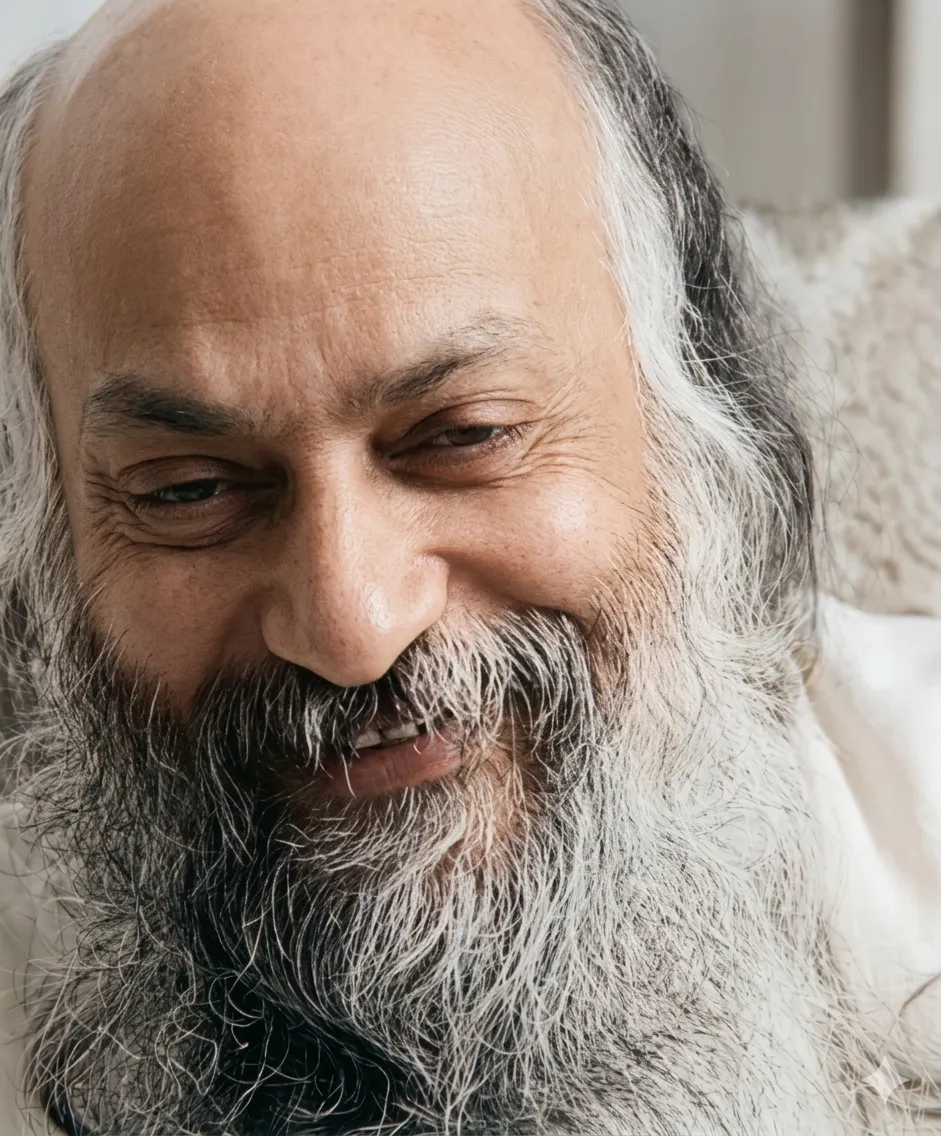
Osho's original Hindi beside Osho Live's English translation, matched passage by passage.
जिसका जन्म है, उसकी मृत्यु भी होगी। जो प्रारंभ होगा, वह अंत भी होगा। वही केवल मृत्यु के पार हो सकता है, जिसका जन्म न हो। और वही केवल अनंत हो सकता है, जो अनादि हो।
Whatever is born will also die. Whatever begins will also end. Only that can be beyond death which is never born. And only that can be infinite which is without beginning.
प्रकाश जन्मता है, मिट जाता है। अंधकार सदा है। शायद इस भांति कभी न सोचा हो। सूर्य निकलता है, सांझ ढल जाता है। दीया जलता है, बाती चुक जाती है, बुझ जाती है। जब दीया नहीं जला था, तब भी अंधकार था। जब दीया जला, अंधकार हमें दिखाई नहीं पड़ा। दीया बुझ गया, अंधकार अपनी जगह है। अंधकार का बाल भी बांका नहीं होता। और अंधकार कभी बुझता नहीं। और अंधकार का कभी अंत नहीं आता, क्योंकि अंधकार का कभी प्रारंभ नहीं होता। प्रकाश का प्रारंभ होता है, इसलिए प्रकाश का अंत होता है।
Light is born—and it fades. Darkness is always. Perhaps you have never thought of it this way. The sun rises, evening descends. A lamp is lit, the wick is spent, it goes out. Before the lamp was kindled, darkness was. When the lamp was lit, darkness did not appear to us. The lamp went out—darkness is in its place. Not a hair of darkness is bent. Darkness is never extinguished. Darkness never ends, because it never begins. Light has a beginning; therefore light has an end.
और भी मजे की बात है, प्रकाश को हम पैदा कर सकते हैं, इसलिए प्रकाश को हम मिटा भी सकते हैं। अंधकार को हम पैदा नहीं कर सकते, इसलिए अंधकार को हम मिटा भी नहीं सकते। अंधकार की शक्ति अनंत है। प्रकाश की शक्ति अनंत नहीं है।
More curious still: we can produce light, and therefore we can also put it out. Darkness we cannot produce, and therefore we cannot dispel it. The power of darkness is infinite; the power of light is not infinite.
लाओत्से कहता है, घाटी की आत्मा अमर है। दि वैली स्पिरिट डाइज नॉट। नहीं, कभी घाटी की आत्मा नहीं मरती। एवर दि सेम, वही बनी रहती है। जैसी है, वैसी ही बनी रहती है।
Lao Tzu says, the valley spirit is immortal. The valley spirit dies not. No, the valley spirit never dies. Ever the same, it remains as it is—unchanged.
यह घाटी की आत्मा क्या है?
What is this valley spirit?
जहां भी पर्वत-शिखर होंगे, वहां घाटी भी होगी। लेकिन पर्वत पैदा होते हैं और मिट जाते हैं; घाटी न पैदा होती, न मिटती। घाटी का अर्थ है, दि निगेटिव, वह जो निषेधात्मक है, अंधकार। पहाड़ का अर्थ है, पाजिटिव, विधायक, जो है। ठीक से समझें तो घाटी क्या है? घाटी किसी चीज का अभाव है। पहाड़ किसी चीज का भाव है, किसी चीज का होना है। प्रकाश किसी चीज का होना है। अंधकार अभाव है, एब्सेंस है, अनुपस्थिति है।
Wherever there are mountain peaks there will be valleys. But mountains are born and erode; the valley neither is born nor does it vanish. Valley means the negative, the negating, the darkness. Mountain means the positive, the assertive, that which is. Properly understood, what is a valley? A valley is the absence of something. A mountain is the presence of something, a certain being. Light is the presence of something. Darkness is absence, is non-presence.
मैं इस कमरे में हूं, तो मुझे बाहर निकाला जा सकता है। जब मैं इस कमरे में नहीं हूं, तो मेरी अनुपस्थिति, माई एब्सेंस इस कमरे में होगी। उसे आप बाहर नहीं निकाल सकते। अनुपस्थिति को छूने का कोई उपाय नहीं है। अगर मैं जिंदा हूं, तो मेरी हत्या की जा सकती है। लेकिन अगर मैं मर गया, तो मेरी मृत्यु के साथ कुछ भी नहीं किया जा सकता। जो नहीं है, उसके साथ कुछ भी नहीं किया जा सकता। जो है, उसके साथ कुछ किया जा सकता है। इसलिए अंधेरे को हम बना भी नहीं सकते और मिटा भी नहीं सकते।
I am in this room, so I can be taken out. When I am not in this room, then my absence will be in this room; you cannot take that out. There is no way to touch an absence. If I am alive, I can be killed. But if I have died, nothing can be done with my death. Nothing can be done with that which is not. Something can be done with that which is. Hence we can neither create darkness nor can we eliminate it.
घाटी की आत्मा लाओत्से का पारिभाषिक शब्द है--दि वैली स्पिरिट। क्या है घाटी की आत्मा? घाटी होती नहीं, दो पर्वतों के बीच में दिखाई पड़ती है। पर्वत खो जाते हैं, घाटी तो बनी रहती है। घाटी कहीं जाती नहीं, लेकिन दिखाई नहीं पड़ती पर्वत के खो जाने पर। जब दो पर्वत खड़े होते हैं, घाटी फिर दिखाई पड़ने लगती है। अंधेरा कहीं जाता नहीं; जब आप दीया जलाते हैं, तब सिर्फ छिप जाता है। प्रकाश की वजह से दिखाई नहीं पड़ता। प्रकाश चला जाता है, अंधेरा अपनी जगह है। शायद अंधेरे को पता भी नहीं है कि बीच में प्रकाश जला और मिट गया।
“Valley spirit” is Lao Tzu’s technical term—the valley spirit. What is the valley spirit? The valley is not a thing; it appears between two mountains. The mountains disappear, yet the valley remains. The valley goes nowhere, but when the mountains are gone it is not seen. When two mountains stand, the valley appears again. Darkness goes nowhere; when you light a lamp, it only hides. Because of light it is not seen. The light departs—darkness is in its place. Perhaps darkness is not even aware that in between a light burned and went out.
लाओत्से का समस्त चिंतन, लाओत्से का समस्त दर्शन निगेटिव पर खड़ा है, नकारात्मक पर खड़ा है; शून्य पर खड़ा है। और इसलिए लाओत्से ने कहा है, ‘दि फीमेल मिस्ट्री दस डू वी नेम; हम इसे स्त्रैण रहस्य का नाम देते हैं।’
Lao Tzu’s entire reflection, his entire philosophy, stands upon the negative; it stands upon no-ness; upon shunya, the void. Therefore Lao Tzu has said: “The female mystery—thus do we name it.”
इसे समझ लेना जरूरी है। और इसमें थोड़ा गहरे उतरना पड़ेगा। क्योंकि यह लाओत्से के तंत्र का मूल आधार है। फेमिनिन मिस्ट्री, स्त्री का रहस्य क्या है? वही घाटी का रहस्य है। और जो स्त्री का रहस्य है, वही अंधकार का रहस्य है। और जो स्त्री का रहस्य है, वह अस्तित्व में बहुत गहरा है।
This must be understood. And we must go a little deeper into it. For this is the very foundation of Lao Tzu’s tantra. What is the feminine mystery? It is the very mystery of the valley. And the mystery of the feminine is also the mystery of darkness. And the feminine mystery is very deep in existence.
इसलिए दुनिया के जो प्राचीनतम धर्म हैं, वे परमात्मा को पुरुष के रूप में नहीं मानते थे, स्त्री के रूप में मानते थे। और उनकी समझ परमात्मा को फादर या पिता मानने वाले लोगों से ज्यादा गहरी थी। लेकिन पुरुष का प्रभाव भारी हुआ और तब हमने ईश्वर की जगह भी पुरुष को बिठाना शुरू किया। लेकिन ईश्वर की जगह गॉड दि फादर बहुत नई बात है, गॉड दि मदर बहुत पुरानी बात है।
Therefore the most ancient religions of the world did not regard the Divine as male; they regarded the Divine as female. And their understanding was deeper than that of those who called God the Father. But the influence of man grew, and then we began to seat a male even upon God’s throne. God the Father is a very new idea; God the Mother is very ancient.
सच तो यह है, फादर ही नई बात है, मदर पुरानी बात है। पिता को जन्मे हुए पांच-छह हजार वर्ष से ज्यादा नहीं हुआ। पिता से पुराना तो काका या चाचा या अंकल है। शब्द भी अंकल पुराना है फादर से, पिता से। पशुओं में, पक्षियों में पिता का तो कोई पता नहीं चलता, लेकिन मां सुनिश्चित है। इसलिए पिता की जो संस्था है, वह मनुष्य की ईजाद है। बहुत पुरानी भी नहीं है। पांच हजार साल से ज्यादा पुरानी नहीं है। लेकिन जब हमने मनुष्य में पिता को बना लिया, तो हमने बहुत शीघ्र परमात्मा के सिंहासन से भी स्त्री को हटा कर पुरुष को बिठाने की जल्दी की। और तब जिन धर्मों ने परमात्मा की जगह पिता को रखा, उनके हाथ से फेमिनिन मिस्ट्री के सूत्र खो गए; वह जो स्त्रैण रहस्य है, उसका सारा राज खो गया।
In truth, the father is the new idea; the mother is ancient. The institution of the father is not more than five or six thousand years old. “Uncle” is older than “father.” Even the word “uncle” is older than “father.” Among animals and birds there is no trace of the father, but the mother is certain. Hence the institution of fatherhood is a human invention—not very old, not more than five thousand years. But once we installed the father among humans, we hastened to remove the feminine from God’s throne as well and enthroned the male. And then the religions that placed the father in God’s place lost the keys of the feminine mystery; the whole secret of the feminine was lost from their hands.
और लाओत्से उस समय की बात कर रहा है, जब कि गॉड दि फादर का कोई खयाल ही नहीं था दुनिया में। और यह बहुत अर्थों में सोच लेने जैसी बात है। इसे कई तरफ से देखना पड़ेगा, तभी आपके खयाल में आ सके।
Lao Tzu is speaking of a time when the notion of God the Father did not even exist in the world. This is worth contemplating in many ways. We must look from several angles, only then will it come to your understanding.
एक बच्चे का जन्म होता है। पिता बच्चे के जन्म में बहुत एक्सीडेंटल है, उसका कोई बहुत गहरा भाग नहीं है। और अब वैज्ञानिक कहते हैं कि पिता के बिना भी चल जाएगा, बहुत ज्यादा दिन जरूरत नहीं रहेगी। पिता का हिस्सा बहुत ही न के बराबर है। जन्म तो मां से ही मिलता है। तो जीवन को पैदा करने की जो कुंजी है और रहस्य है, वह तो मां के शरीर में छिपा है। पिता के शरीर में वह कुंजी और रहस्य नहीं छिपा हुआ है। इसलिए पिता को कभी भी गैर-जरूरी सिद्ध किया जा सकता है। उसका काम एक इंजेक्शन भी कर देगा।
A child is born. The father’s part in the birth is very accidental; it is not deep. And now scientists say that even the father will not be needed for long. His role is almost negligible. Birth comes through the mother. The key and the secret of bringing forth life are hidden in the mother’s body. That key and secret are not hidden in the father’s body. Therefore the father can always be rendered dispensable. Even an injection can do his work.
और अगर मैं आज से दस हजार साल बाद किसी बच्चे का पिता बनना चाहूं, तो बन सकता हूं। लेकिन कोई मां अगर आज तय करे, तो दस हजार साल बाद मां नहीं बन सकती है। क्योंकि मां की मौजूदगी अभी जरूरी होगी, मेरी मौजूदगी जरूरी नहीं है। मेरे वीर्य-कण को संरक्षित रखा जा सकता है, डीप फ्रीज किया जा सकता है। दस हजार साल बाद इंजेक्शन से किसी भी स्त्री में वह जन्म का सूत्र बन सकता है। मेरा होना आवश्यक नहीं है। इसलिए बहुत जल्दी पोस्थुमस चाइल्ड पैदा होंगे। पिता मरे दस हजार साल हो गए, उसका बच्चा कभी भी पैदा हो सकता है। क्योंकि पिता का काम प्रकृति बहुत गहरा नहीं ले रही थी। गहरा काम तो मां का था। सृजनात्मक काम तो मां का ही था।
And if I wish to become a father ten thousand years from today, I can. But if some woman resolves today, she cannot become a mother ten thousand years later, because the mother’s presence will be necessary then; mine is not. My semen can be preserved, deep frozen. Ten thousand years later, by injection, the formula of birth can arise in any woman. My presence is not necessary. Soon there will be posthumous children: the father dead for ten thousand years, and his child born at any time. For nature was not taking the father’s work very deeply. The profound work was the mother’s; the creative work was the mother’s alone.
मनोवैज्ञानिक कहते हैं, इसीलिए स्त्रियां दुनिया में कोई क्रिएटिव काम नहीं कर पाती हैं। क्योंकि वे इतना बड़ा क्रिएटिव काम कर लेती हैं कि और कोई सब्स्टीट्यूट खोजने की जरूरत नहीं रह जाती है--एक जीवित बच्चे को जन्म देना! लेकिन पुरुष ने दुनिया में बहुत सी चीजें पैदा की हैं, स्त्री ने नहीं पैदा की हैं। पुरुष चित्र बनाता है, मूर्तियां बनाता है, विज्ञान की खोज करता है, गीत लिखता है, संगीत बनाता है। यह जान कर आप हैरान होंगे कि स्त्रियां सारी दुनिया में खाना बनाती हैं, लेकिन अच्छे खाने की खोज सदा ही पुरुष करता है। नए खाने की खोज पुरुष करता है। और दुनिया का कोई भी बड़ा होटल या कोई बड़ा सम्राट स्त्री-रसोइए को रखने को राजी नहीं है, पुरुष-रसोइए को रखना पड़ता है। चाहे चित्र बनता हो दुनिया में, चाहे कविता पैदा होती हो, चाहे एक उपन्यास लिखा जाता हो, चाहे एक नई मूर्ति गढ़ी जाती हो, वह सब काम पुरुष करता है। बात क्या है?
Psychologists say this is why women do not do creative work in the world—because they accomplish such a great creative act that there remains no need to seek any substitute: to give birth to a living child! Men have created many things in the world; women have not. Men paint, sculpt, discover in science, write poems, make music. It will surprise you to know: women cook everywhere in the world, yet the exploration of fine cuisine has always been by men. New dishes are discovered by men. And no great hotel or emperor would agree to employ a woman cook; a male cook is required. Whether paintings are made or poetry arises or a novel is written or a new statue is fashioned—these are men’s works. What is the reason?
मनोवैज्ञानिक कहते हैं कि पुरुष ईर्ष्या अनुभव करता है; स्त्री के समक्ष हीनता भी अनुभव करता है। वह भी कुछ पैदा करके दिखाना चाहता है, जो स्त्री के समक्ष सामने खड़ा हो जाए और कहा जा सके, हमने भी कुछ बनाया है, हमने भी कुछ पैदा किया है। और स्त्री कुछ पैदा नहीं करती, क्योंकि वह इतनी बड़ी चीज पैदा करती है कि उसके मन में फिर और पैदा करने की कोई कामना नहीं रह जाती। और एक स्त्री अगर मां बन गई है, तो कितना ही अच्छा चित्र बनाए, वह उसके बेटे या उसकी बेटी के सामने सदा फीका और निर्जीव होगा। इसलिए बांझ स्त्रियां जरूर कुछ-कुछ कोशिश करती हैं पुरुषों जैसी। वे जरूर पुरुष के साथ कुछ निर्माण करने की प्रतियोगिता में उतरती हैं। लेकिन एक स्त्री अगर सच में मां बन जाए, तो उसका जीवन बहुत आंतरिक गहराइयों तक तृप्त हो जाता है। स्त्री को प्रकृति ने सृजन का स्रोत चुना है।
Psychologists say the man feels jealousy; he also feels inferior before the woman. He too wants to create something that can stand before woman and it can be said, “We too have made, we too have brought forth.” And the woman does not create because she creates such a great thing that no desire remains in her to create further. And if a woman has truly become a mother, then however fine a painting she may make, it will always be pale and lifeless before her son or daughter. Hence barren women do try, somewhat, like men. They enter the competition of building something alongside men. But if a woman truly becomes a mother, her life becomes fulfilled to very inner depths. Nature has chosen woman as the source of creation.
निश्चित ही, स्त्री के शरीर में, वह जिसे लाओत्से कह रहा है स्त्रैण रहस्य, उसे हमें समझना पड़ेगा, तो ही हम अस्तित्व में स्त्रैण रहस्य को समझ पाएंगे। और हमारी कठिनाई ज्यादा बढ़ जाती है, क्योंकि सारी कोशिश जीवन को समझने की पुरुष ने की है। और सारी फिलासफीज, सारे दर्शन पुरुष ने निर्मित किए हैं। अब तक एक भी धर्म किसी स्त्री पैगंबर, स्त्री तीर्थंकर के आस-पास निर्मित नहीं हुआ है। सब शास्त्र पुरुषों के हैं। इसलिए लाओत्से को साथी खोजना मुश्किल हो गया, क्योंकि उसने स्त्रैण रहस्य की तारीफ की।
Surely, in the woman’s body—what Lao Tzu calls the feminine mystery—if we understand that, only then will we understand the feminine mystery in existence. And our difficulty grows greater because the entire endeavor to understand life has been by men. All philosophies, all systems have been made by men. Until now not a single religion has been built around a woman prophet, a woman Tirthankara. All scriptures are by men. Hence Lao Tzu found it difficult to find companions, for he praised the feminine mystery.
पुरुष जो भी सोचेगा और जो भी करेगा, उसमें पुरुष जहां खड़ा है, वहीं से सोचता है। और पुरुष को स्त्री कभी समझ में नहीं आ पाती है। इसलिए पुरुष निरंतर अनुभव करता है कि स्त्री बेबूझ है, समथिंग मिस्टीरियस। कुछ है जो छूट जाता है। वह क्या है जो छूट जाता है? निश्चित ही, पुरुष और स्त्री साथ-साथ जीते हैं। पुरुष स्त्री से पैदा होता है, स्त्री के साथ जीता है, प्रेम करता है, जन्म, पूरा जीवन बिताता है। फिर भी क्या है जो स्त्री के भीतर पुरुष के लिए अनजान और अपरिचित रह जाता है? वही अनजान और अपरिचित तत्व का नाम लाओत्से कह रहा है, फेमिनिन मिस्ट्री। घाटी का रहस्य, अंधकार का रहस्य, निषेध की खूबी। क्या है स्त्री के भीतर?
Whatever a man thinks or does, he thinks from where he stands. And man can never truly understand woman. Thus man continually experiences woman as unintelligible—something mysterious. Something is missed. What is it that is missed? Surely, man and woman live together. Man is born of woman, lives with woman, loves, is born and spends a whole life with woman. Even so, what is it within woman that remains unknown and unfamiliar to man? Lao Tzu names that unknown and unfamiliar element the feminine mystery—the mystery of the valley, the mystery of darkness, the virtue of negation. What is within woman?
अगर एक स्त्री आपके प्रेम में पड़ जाए, तो भी आक्रमण नहीं करती है। प्रेम में भी आक्रमण नहीं करती है। प्रेम में भी प्रतीक्षा करती है। आक्रमण का मौका आपको ही देती है। आप कभी किसी स्त्री से ऐसा न कह सकेंगे कि तूने मुझे प्रेम में उलझा दिया, कि तूने मुझे विवाह में डाल दिया। स्त्रियां ही डालती हैं। लेकिन कभी आप किसी स्त्री से ऐसा न कह सकेंगे कि तूने मुझे प्रेम में उलझा दिया। क्योंकि इनीशिएटिव वे कभी नहीं लेतीं, पहल वे कभी नहीं करतीं। वही उनका रहस्य है: खींचना बिना किसी क्रिया के, बिना किसी कर्म के आकर्षित करना, सिर्फ होने मात्र से आकर्षित करना। जिसको कृष्ण ने गीता में इन-एक्शन कहा है, अकर्म कहा है, स्त्री का रहस्य वही है।
Even if a woman falls in love with you, she does not attack. Not even in love does she attack. Even in love she waits. She gives you the opportunity to attack. You will never be able to say to a woman that “You trapped me in love, you forced me into marriage.” Women do bring it about, yet you cannot say, “You trapped me in love,” because they never take the initiative. That is their mystery: to draw without any act, to attract without any doing—by mere being to attract. What Krishna in the Gita called inaction, akarma—that is the woman’s mystery.
वह अगर प्रेम में भी गिर जाए, तो उसकी तरफ से इशारा भी नहीं मिलता कि वह आपके प्रेम में गिर गई है। उसकी मौजूदगी आपको खींचती है, खींचती है। आप ही पहली दफा कहते हैं कि मैं प्रेम में पड़ गया हूं। स्त्री कभी किसी से नहीं कहती कि मैं तुम्हारे प्रेम में पड़ गई हूं। पहल कभी नहीं करती, क्योंकि पहल आक्रामक है, एग्रेसिव है, पाजिटिव है। जब मैं किसी से कहता हूं कि मैं तुम्हें प्रेम करता हूं, मैं अपने से बाहर गया। मैंने कहीं जाकर आक्रमण किया। मैंने ट्रेसपासिंग शुरू की। मैं दूसरे की सीमा में प्रवेश कर रहा हूं। स्त्री कभी किसी की सीमा में प्रवेश नहीं करती। फिर भी स्त्री आकर्षक है। उसका रहस्य क्या है?
Even if she falls in love, no sign comes from her side that she has fallen for you. Her very presence pulls and pulls. You say the first time, “I have fallen in love.” A woman never says to anyone, “I have fallen in love with you.” She never takes the initiative, for initiative is aggressive, assertive, positive. When I say to someone, “I love you,” I have gone out of myself. I have attacked somewhere. I have begun trespassing. I am entering the territory of the other. Woman never enters another’s territory. Yet woman is attractive. What is her secret?
निश्चित ही, उसका आकर्षण इन-एक्टिव है, एक्टिव नहीं है। पुकारती है, लेकिन आवाज नहीं होती उस पुकार में; हाथ फैलाती है, लेकिन उसके हाथ दिखाई नहीं पड़ते; निमंत्रण दिया जाता है, लेकिन निमंत्रण की कोई भी रूप-रेखा नहीं होती। कर्म पुरुष को करना पड़ता है। कदम उसे उठाना पड़ता है। जाना उसे पड़ता है। प्रार्थना उसे करनी पड़ती है। और फिर भी स्त्री इनकार किए चली जाती है। और जब भी कोई स्त्री किसी के प्रेम में जल्दी हां भर देती है, तब समझना चाहिए, उस स्त्री को भी स्त्रैण रहस्य का कोई पता नहीं है। क्योंकि जैसे ही स्त्री हां भरती है, वैसे ही व्यर्थ हो जाती है। उसका निषेध, उसका इनकार, उसका इनकार किए चले जाना ही उसका अनंत रस का रहस्य है। लेकिन उसकी नहीं कुछ ऐसी है, जैसी नहीं पुरुष कभी नहीं बोल सकता। क्योंकि जब पुरुष बोलता है नहीं, कहता है नो, इटमीन्स नो! और जब स्त्री कहती है नो, इट मीन्स यस। अगर स्त्री को नो ही कहना है, तो वह नो भी नहीं कहेगी। क्योंकि उतना कहना भी बहुत ज्यादा कहना है।
Surely, her attraction is inactive, not active. She calls, but there is no voice in that call; she stretches her hands, but her hands are not seen; an invitation is given, but there is no outline to the invitation. The doing has to be done by the man. The step he must take. He must go. He must pray. And yet the woman keeps refusing. And whenever a woman quickly says yes to someone’s love, understand that she too knows nothing of the feminine mystery. For as soon as the woman says yes, she becomes futile. Her negation, her continual no is the very secret of her endless flavor. But her “no” is such that no man can speak it—because when a man says no, it means no; and when a woman says no, it means yes. If a woman has to say no, she will not even say no—because even that is too much to say.
मुल्ला नसरुद्दीन एक युवती के प्रेम में पड़ गया है। बहुत परेशान है। घर आकर अपने पिता को कहा है...। चिंतित, उदास है। तो पिता ने पूछा है, इतना चिंतित क्यों है नसरुद्दीन? नसरुद्दीन ने कहा कि मैं बड़ी मुश्किल में पड़ गया हूं। जिस स्त्री के पीछे मैं नौ महीने से चक्कर लगा रहा हूं, आज उसने सब बात ही तोड़ दी। पिता ने कहा, तू नासमझ है! स्त्री जब कहे नहीं, तो उसका अर्थ नहीं नहीं होता। नसरुद्दीन ने कहा, वह तो मैं भी जानता हूं। लेकिन उसने नहीं नहीं कहा, उसने कहा कि तू कुत्ता! नहीं उसने कहा ही नहीं। अगर वह नहीं कहती, तो अभी मैं और नौ वर्ष चक्कर लगा सकता था। उसने नहीं भी नहीं कहा है। उतना भी रास्ता नहीं छोड़ा है।
Mulla Nasruddin fell in love with a young woman. He was very troubled. On reaching home he told his father... He was anxious, despondent. The father asked, “Nasruddin, why so worried?” Nasruddin said, “I have fallen into great difficulty. The woman I have been circling for nine months today broke off everything.” The father said, “You are foolish! When a woman says no, it does not mean no.” Nasruddin said, “That I also know. But she did not say ‘no-no’; she said, ‘You dog!’ She did not say no at all. If she had said no, I could have circled for nine years more. She did not even say no. She left not even that path.”
स्त्री जब हां करती है, तब वह पुरुष की भाषा बोल रही है। इसलिए स्त्री के मुंह से हां बहुत ही छोछा, उथला और गहरे अर्थों में अनैतिक मालूम पड़ता है। उतना भी आक्रमण है। स्त्री का सारा रहस्य और राज तो इसमें है, उसकी मिस्ट्री इसमें है कि वह नहीं कहती है और बुलाती है। नहीं बुलाती और निमंत्रण जाता है। अपनी ओर से कभी कोई कमिटमेंट स्त्री नहीं करती। सब कमिटमेंट पुरुष करता है। सब प्रतिबद्धताएं पुरुष की हैं।
When a woman says yes, she is speaking the man’s language. Therefore a woman’s yes seems very shallow and, in a deep sense, immoral. It is also an attack. The whole mystery and secret of the woman is exactly this—her mystery lies in not saying and yet calling; not inviting and yet the invitation goes out. From her side she never makes any commitment. All commitments are by the man. All obligations are the man’s.
और इस भ्रांति में कोई पुरुष न रहे कि स्त्री ने कुछ भी नहीं किया है। स्त्री ने बहुत कुछ किया है। लेकिन उसके करने का ढंग निषेधात्मक है, घाटी की तरह है, अंधेरे की तरह है। निषेध ही उसकी तरकीब है। दूर हटना ही पास आने का निमंत्रण है। उसकी बचने की कोशिश ही बुलावा है। यह फेमिनिन मिस्ट्री है। और इसमें और गहरे उतरेंगे, तो बहुत सी बातें खयाल में आएंगी। स्त्री संभोग की दृष्टि से भी निषेधात्मक है, पैसिव है। इसलिए दुनिया में स्त्रियों के ऊपर कोई बलात्कार का जुर्म नहीं रखा जा सकता। किसी स्त्री ने लाखों वर्ष के इतिहास में किसी पर बलात्कार नहीं किया है। स्त्री के व्यक्तित्व में बलात्कार असंभव है।
Let no man be in the delusion that the woman has done nothing. Woman has done much. But her way of doing is negative—like the valley, like darkness. Negation is her device. By moving away she sends the invitation to come near. Her very attempt to evade is the call. This is the feminine mystery. And if you go deeper into this, many things will come to mind. From the perspective of intercourse too, the woman is negative, passive. Therefore throughout history you cannot place the crime of rape upon women. No woman, in the long history of millions of years, has ever raped anyone. In the woman’s personality, rape is impossible.
पुरुष बलात्कार कर सकता है, करता है। और सौ में नब्बे मौके पर पुरुष जो भी करता है, वह बलात्कार ही होता है। सौ में नब्बे मौके पर! उन मौकों पर नहीं, जो अदालत में पकड़े जाते हैं; पति अपनी पत्नी के साथ भी जो संबंध निर्मित करता है, उसमें नब्बे मौके पर बलात्कार होता है। क्योंकि स्त्री चुप है। उसकी चुप्पी हां समझी जा सकती है। और जो हमने व्यवस्था की है समाज की, पति के प्रति हमने उसका कर्तव्य बांधा हुआ है। पति उससे प्रेम मांगे, तो वह चुप होकर दे देती है। लेकिन अगर उसके भीतर उस क्षण प्रेम नहीं था, तो पति का यह प्रेम बलात्कार होगा। लेकिन पुरुष बलात्कार कर सकता है, क्योंकि पुरुष का पूरा व्यक्तित्व आक्रामक, एग्रेसिव है, हमलावर है।
Man can rape; he does. And ninety out of a hundred times, whatever a man does is rape—ninety out of a hundred! Not those occasions that are caught in court; even in the relationship a husband builds with his wife, in ninety cases it is rape. Because the woman is silent. Her silence can be taken as yes. And we have made such an arrangement in society that the wife is bound by duty toward the husband. If the husband demands love, she silently yields. But if at that moment there was no love within her, then this love of the husband is rape. Man can rape because his whole personality is aggressive, attacking.
स्त्री का व्यक्तित्व रिसेप्टिव, ग्राहक है। यह न केवल व्यक्तित्व है, बल्कि शरीर की संरचना भी प्रकृति ने ऐसी ही की है कि स्त्री का शरीर केवल ग्राहक है। पुरुष का शरीर आक्रामक है। लेकिन सृजन होता है स्त्री से, जन्म होता है स्त्री से। आक्रमण करता है पुरुष, जो कि बिलकुल सांयोगिक है, जिसके बिना चल सकता है। और जन्म होता है स्त्री से, जो केवल ग्राहक है।
The woman’s personality is receptive, a receiver. Not only personality, nature has shaped the body so that the woman’s body is only receptive. The man’s body is aggressive. But creation happens through the woman; birth happens through the woman. The man attacks—which is entirely incidental, and dispensable. And birth happens through the woman, who is only receptive.
वैज्ञानिक कहते हैं, जब भी कहीं जन्म होता है, तो अंधेरे में; बीज फूटता है, तो जमीन के अंधेरे में। रोशनी में ले आओ, और बीज फूटना बंद कर देता है। एक व्यक्ति जन्मता है, तो मां के गर्भ के अंधकार में, निपट गहन अंधकार में। प्रकाश में ले आओ, जन्म मृत्यु बन जाती है। जीवन में जो भी पैदा होता है सूत्र रहस्य का, वह सदा अंधकार में, गुप्त और छिपे हुए जगत में होता है। और गुप्त वही हो सकता है, जो एग्रेसिव न हो, आक्रामक न हो। जो आक्रामक है, वह गुप्त कभी नहीं हो सकता।
Scientists say wherever birth occurs it is in darkness. When a seed sprouts, it does so in the dark earth. Bring it into the light, and the sprouting stops. A person is born in the darkness of the mother’s womb—utter, profound darkness. Bring it into light and birth becomes death. Whatever of the secret formula of life is born is always in darkness, in the hidden, concealed realm. And only that can be hidden which is not aggressive. That which is aggressive can never be hidden.
इसलिए पुरुष के व्यक्तित्व में सतह बहुत होती है, गहराई नहीं होती उतनी। स्त्री के व्यक्तित्व में सतह बहुत कम होती है, गहराई बहुत ज्यादा होती है। और यही कारण है कि पुरुष जल्दी थक जाता है और स्त्री जल्दी नहीं थकती। आक्रमण थका देगा। इसलिए पुरुष-वेश्याएं नहीं हो सकीं, क्योंकि कोई पुरुष वेश्या नहीं हो सकता। एक संभोग, थक जाएगा। स्त्री वेश्या हो सकी; क्योंकि पचास संभोग भी उसे नहीं थका सकते। वह सिर्फ रिसेप्टिव है, वह कुछ करती ही नहीं। इसलिए एक अनोखी घटना घटी कि पुरुष वेश्याएं नहीं हो सके, स्त्रियां वेश्याएं हो सकीं। पुरुष बलात्कारी हो सके, स्त्रियां बलात्कारी नहीं हो सकीं। पुरुष गुंडे हो सके, स्त्रियां गुंडे नहीं हो सकीं। लेकिन स्त्रियां वेश्याएं हो सकीं, पुरुष वेश्याएं नहीं हो सके। और कारण कुल इतना है कि पुरुष का सारा व्यक्तित्व आक्रामक है। जो आक्रमण करेगा, वह थक जाएगा।
Therefore in the man’s personality there is much surface and little depth; in the woman’s personality there is little surface and very much depth. That is why man tires quickly and woman does not. Aggression will tire you. Therefore there could not be male prostitutes, because no man can be a prostitute. One coitus—and he is tired. Woman could be a prostitute; fifty coitus will not tire her. She is only receptive, she does nothing. Thus a strange phenomenon occurred: men could not be prostitutes, women could; men could be rapists, women could not; men could be goons, women could not. But women could be prostitutes; men could not. The reason is only this: the man’s whole personality is aggressive. Whoever attacks will be tired.
यह जान कर आप हैरान होंगे कि जब बच्चे पैदा होते हैं, तो सौ लड़कियां पैदा होती हैं तो एक सौ सोलह लड़के पैदा होते हैं। प्रकृति संतुलन को कायम रखती है। क्योंकि पुरुष कमजोर है। हम सब यही सोचते हैं कि पुरुष बहुत शक्तिशाली है। वह सिर्फ पुरुष का खयाल है। पुरुष कमजोर है। इसलिए एक सौ सोलह लड़के पैदा करने पड़ते हैं और सौ लड़कियां। क्योंकि चौदह वर्ष के होते-होते सोलह लड़के मर जाते हैं, और लड़के और लड़कियों का अनुपात बराबर हो जाता है। सोलह लड़के एक्सट्रा, अतिरिक्त, स्पेयर प्रकृति को पैदा करने पड़ते हैं। क्योंकि पता है कि सोलह लड़के सौ में से चौदह वर्ष की उम्र पाते-पाते मर जाएंगे।
It will surprise you to know that when children are born, for every hundred girls, one hundred sixteen boys are born. Nature maintains balance. Because man is weak. We all think man is very strong. That is only a man’s notion. Man is weak. Hence one hundred sixteen boys must be born and one hundred girls—because before reaching fourteen years sixteen boys out of the hundred will die, and the ratio of boys and girls becomes equal. Sixteen extra boys—spares—nature must produce, knowing that sixteen will die before reaching fourteen.
स्त्रियों की औसत उम्र पुरुषों से ज्यादा है पांच वर्ष। अगर पुरुष सत्तर साल जीता है, तो स्त्रियां पचहत्तर साल जीती हैं। और स्त्रियां जितना श्रम उठाती हैं शरीर से! क्योंकि एक बच्चे को जन्म देने में जितना श्रम है, उतना एक एटम बम को जन्म देने में भी नहीं है। एक स्त्री बीस बच्चों को जन्म दे और फिर भी पुरुष से पांच साल ज्यादा जीती है। स्त्रियां कम बीमार पड़ती हैं। और जो बीमारियां स्त्रियों को हैं, वे स्त्रियों की नहीं, पुरुषों ने जो समाज निर्मित किया है, उसकी परेशानी की वजह से हैं। स्त्रियां कम बीमार पड़ती हैं। फिर भी जितनी बीमार पड़ती हैं, उसमें भी कोई सत्तर प्रतिशत कारण, पुरुषों ने जो व्यवस्था की है वह है, स्त्रियां नहीं। क्योंकि सारी व्यवस्था पुरुष की है, मैन-डामिनेटेड है। और पुरुष अपने ढंग से व्यवस्था करता है। उसमें स्त्री को एडजस्ट होना पड़ता है। वह उसकी बीमारी का कारण है।
Women’s average lifespan is five years more than men. If men live seventy years, women live seventy-five. And what labor women bear with the body! For the labor it takes to bring forth a child is greater than the labor to produce an atom bomb. A woman can bear twenty children and still live five years longer than a man. Women fall ill less. And whatever illnesses women have are not women’s; they are due to the trouble of the society men have made. Women fall ill less; and even among their illnesses, seventy percent of the cause is the arrangement men have created—man-dominated—not the woman. Because the entire structure is the man’s; it is man-dominated. And man organizes in his own way. The woman has to adjust to it. That is the cause of her illness.
हिस्टीरिया पुरुषों के समाज में स्त्रियों को एडजस्ट होने का परिणाम है। अगर स्त्रियों का समाज हो और पुरुषों को उसमें एडजस्ट होना पड़े, तो हिस्टीरिया इससे पांच गुना ज्यादा होगा। करीब-करीब सारे पुरुष पागल हो जाएंगे। वह स्त्रियों का रेसिस्टेंस है, प्रतिरोधक शक्ति है कि वे सब पागल नहीं हो गई हैं। फिर भी स्त्रियां आपको क्रोधी दिखाई पड़ती हैं, ईर्ष्यालु दिखाई पड़ती हैं, उपद्रव-कलह चौबीस घंटे वे जारी रखती हैं। उसका कुल कारण इतना है कि वे जो होने को पैदा हुई हैं, समाज उनको वह नहीं होने देता और कुछ और करवाने की कोशिश करता है। उससे उनकी सृजनात्मक शक्ति विध्वंस की तरफ, परवर्शन की तरफ, विकृति की तरफ चली जाती है।
Hysteria in a man’s society is the result of women having to adjust. If there were a women’s society and men had to adjust, hysteria would be five times greater. Almost all men would go mad. It is the woman’s resistance, her power to endure, that has kept them from all going mad. Still women appear to you angry, jealous, forever engaged in quarrels and disturbances. The reason is only this: what they were born to be, society does not allow them to be; it tries to make them something else. Thus their creative energy turns toward destruction, perversion, distortion.
और पुरुषों ने स्त्रियों को इतना दबाया और इतना सताया, तो आमतौर से लोग समझते हैं--स्त्रियां भी यही समझती हैं--कि स्त्रियां कमजोर थीं, इसलिए पुरुषों ने इतना सताया।
And men oppressed women so much that common people think—and women also think—that women were weak, hence men oppressed them.
मैं आपसे कहना चाहता हूं, जो जानते हैं वे कुछ और जानते हैं। वे यह जानते हैं कि स्त्रियां इतनी शक्तिशाली थीं कि अगर न दबाई गई होतीं, तो पुरुषों को उन्होंने कभी का दबा डाला होता। उनको बचपन से ही दबाने की जरूरत है; नहीं वे खतरनाक सिद्ध हो सकती हैं। स्त्रियों को सारी दुनिया में दबाए जाने का जो असली कारण है, वह असली कारण यह है कि वे इतनी शक्तिशाली सिद्ध हो सकती हैं, अगर बिना दबाई छोड़ दी जाएं, कि पुरुष बहुत मुश्किल में पड़ जाएगा। इसलिए उन्हें सब तरफ से रोक देना जरूरी है। और बचपन से रोक देना जरूरी है।
I want to tell you: those who know, know otherwise. They know women were so powerful that if they had not been suppressed, they would have suppressed men long ago. They must be suppressed from childhood; otherwise they can prove dangerous. The real reason why women have been suppressed all over the world is that, if left unsuppressed, they can prove so powerful that men would be in great difficulty. Therefore they must be stopped from every side. And from childhood they must be stopped.
और रुकावट करीब-करीब वैसी है, जैसे चीन में हम स्त्रियों को लोहे के जूते पहना देते थे। फिर उनका पैर बड़ा नहीं हो पाता था। फिर वे स्त्रियां दौड़ नहीं सकती थीं, चल नहीं सकती थीं ठीक से, भाग नहीं सकती थीं। सच तो यह है, उन्हें सदा ही पुरुष के कंधे के सहारे की जरूरत थी। और फिर पुरुष उनसे कहता था: नाजुक, डेलिकेट। और नाजुक होने को पुरुष ने एक मूल्य बना दिया, एक वैल्यू बना दिया। क्योंकि स्त्री नाजुक हो, तो ही उस पर काबू किया जा सकता है।
And the obstruction is nearly like what we used to do in China—putting iron shoes on women. Then their feet could not grow. Then those women could neither run nor even walk properly, nor could they flee. In truth they always needed to lean upon a man’s shoulder. And then the man would say: delicate, fragile! And delicacy was made a value by men. Because only if the woman is fragile can she be controlled.
स्त्री पुरुष से ज्यादा मजबूत सिद्ध हो सकती है, अगर उसको पूरा विकसित होने दिया जाए। क्योंकि प्रकृति ने उसे जन्म की शक्ति दी है। और जन्म की शक्ति सदा उसके पास होती है, जो ज्यादा शक्तिशाली है। अन्यथा गर्भ को खींच लेना असंभव हो जाएगा।
Woman can prove stronger than man if she is allowed full development, because nature has given her the power of birth. And the power of birth is always with the one who is more powerful; otherwise it would be impossible to carry the womb.
लाओत्से कहता है, इस स्त्रैण रहस्य को ठीक से समझ लें। यह घाटी की जो आत्मा है, इसे ठीक से समझ लें। यह घाटी की आत्मा कभी थकती नहीं। यह कभी मरती नहीं। यह जो निषेध है, यह जो न करने के द्वारा करने की कला है, यह जो बिना आक्रमण के आक्रमण कर देना है, यह बिना बुलाए बुला लेने का जो राज है, इसे ठीक से समझ लें। क्योंकि लाओत्से कहता है, इस राज को समझ कर ही कोई जीवन के परम सत्य को उपलब्ध कर सकता है। हम पुरुष की तरह परम सत्य को कभी नहीं पा सकते, क्योंकि परम सत्य पर कोई आक्रमण नहीं किया जा सकता। कोई हम बंदूकें और तलवारें लेकर परमात्मा के मकान पर कब्जा नहीं कर लेंगे।
Lao Tzu says: understand this feminine mystery rightly. Understand this valley spirit rightly. The valley spirit never tires. It never dies. This negation, this art of doing by not-doing; this attacking without attack; this calling without calling—understand it rightly. For Lao Tzu says, only by understanding this secret can one attain the ultimate truth of life. We can never reach the ultimate truth in a manly way, because the ultimate cannot be attacked. We cannot seize God’s house with guns and swords.
परमात्मा को केवल वे ही पा सकते हैं, जो स्त्रैण रहस्य को समझ गए, जिन्होंने अपने को इतना समर्पित किया, इतना छोड़ा, लेट गो, कि परमात्मा उनमें उतर सके। ठीक वैसे ही, जैसे स्त्री पुरुष के प्रेम में अपने को छोड़ देती है; कुछ करती नहीं, बस छोड़ देती है; और पुरुष उसमें उतर पाता है।
Only those can realize the Divine who have understood the feminine mystery—who have surrendered themselves so much, have let go so much, that the Divine can descend into them. Just as a woman, in love, lets herself go; she does nothing—she only lets go—and the man can enter her.
एक बहुत अनूठी बात जो इधर दस वर्षों में खयाल में आनी शुरू हुई। क्योंकि वास्तविक स्त्री खो गई है दुनिया से। और जो स्त्री है, वह बिलकुल सूडो है, वह पुरुष के द्वारा बनाई गई है, वह बिलकुल बनावटी है। जिसको हम आज स्त्री कह कर जानते हैं, वह पुरुष के द्वारा बनाई गई गुड़िया से ज्यादा नहीं है। वह स्वाभाविक स्त्री नहीं है, जैसी होनी चाहिए।
A very unique fact has begun to be noticed in the last ten years. Because the real woman has disappeared from the world, and the woman that remains is pseudo—made by men—a doll made by men. She is not the natural woman she should be.
अभी पश्चिम में एक छोटा सा वैज्ञानिकों का प्रयोग चलता है, जिसमें वे यह कोशिश करते हैं कि क्या यह संभव है! और तंत्र ने इस पर बहुत पहले काम किया है--बहुत पहले, कोई दो हजार साल पहले--और यह अनुभव किया है कि यह हो सकता है। स्त्री और पुरुष के संभोग में चूंकि पुरुष सक्रिय होता है। अगर पुरुष सक्रिय न हो पाए, तो संभोग असंभव है। अगर पुरुष कमजोर हो जाए, वृद्ध हो जाए, उसके जनन-यंत्र शिथिल हो जाएं, तो संभोग असंभव है। लेकिन अभी पश्चिम में दस वर्षों में कुछ प्रयोग हुए हैं गहरे, जिनमें वे कहते हैं कि अगर पुरुष की जननेंद्रिय बिलकुल शिथिल और क्षीण, शक्तिहीन हो जाए, तो भी फिक्र नहीं। स्त्री अगर उस पुरुष को प्रेम करती है, तो सिर्फ स्त्री-जननेंद्रिय के पास पहुंच जाने पर स्त्री की जननेंद्रिय पुरुष की जननेंद्रिय को चुपचाप अपने भीतर खींच लेती है। पुरुष को प्रवेश की भी जरूरत नहीं है। अगर स्त्री का प्रेम भारी है, तो उसका शरीर ऐसे खींच लेता है, जैसे खाली जगह में हवा खिंच कर आ जाए।
A small scientific experiment is going on in the West, in which they try to see whether this is possible. And tantra worked upon this long ago—two thousand years ago—and found it is possible. In the intercourse of woman and man, it is the man who is active. If the man is not active, intercourse is impossible. If a man becomes weak, old, if his sexual organs become flaccid, then intercourse becomes impossible. But in the last ten years in the West, some deep experiments have been done, and they say that even if the man’s organ is utterly flaccid and powerless, there is no worry. If the woman loves that man, then by merely coming near to the woman’s organ, the woman’s organ will silently draw the man’s organ within itself. The man need not even make entry. If the woman’s love is strong, her body will draw him in, as air rushes into an empty space.
यह बहुत हैरानी का तथ्य है। और अगर ऐसा नहीं होता, तो उसका कुल कारण इतना है कि स्त्री प्रेम नहीं करती है उस पुरुष को। इसलिए उसका शरीर उसे खींचता नहीं। और इसलिए पुरुष जो भी कर रहा है, वह बलात्कार है। अगर स्त्री प्रेम करती है, तो खींच लेगी। उसका पूरा बायोलॉजिकल, उसका जैविक यंत्र ऐसा है कि वह व्यक्ति को अपने भीतर खींच लेगी।
This is a surprising fact. And if it does not happen, the only reason is that the woman does not love that man; the body does not draw him. Therefore whatever the man is doing is rape. If the woman loves, she will draw him. Her entire biological mechanism is such that she will draw the person into herself.
लाओत्से कहता है, यह स्त्री का रहस्य है कि बिना कुछ किए वह कुछ कर सकती है। बिना कुछ किए! पुरुष को कुछ भी करना हो, तो करना पड़ेगा। धर्म का रहस्य भी स्त्रैण है। अगर कोई परमात्मा को पाने जाए, तो कभी न पा सकेगा। और कोई केवल अपने हृदय के द्वार क
ो खोल कर ठहर जाए, तो परमात्मा यहीं और अभी प्रवेश कर जाता है। दूर-दूर खोजे कोई, अनंत की यात्रा करे कोई, भटके जन्मों-जन्मों तक, तो भी परमात्मा को नहीं पा सकेगा। क्योंकि परमात्मा को पाने का राज ही यही है कि हम रिसेप्टिव हो जाएं, एग्रेसिव नहीं। हम अपने को खुला छोड़ दें। हम सिर्फ राजी हो जाएं कि वह आता हो तो हमारे द्वार-दरवाजे बंद न पाए। हमारा प्रेम इतना ही करे कि वह एक पैसिव अवेटिंग, एक निष्क्रिय प्रतीक्षा बन जाए।
Lao Tzu says: this is the woman’s secret—that without doing anything she can do. Without doing anything! Whatever a man wants to do must be done. The secret of religion is also feminine. Whoever goes to “obtain” God will never attain. And whoever simply opens the doors of the heart and waits—here and now the Divine enters. Search far and wide, travel infinite journeys, wander for births upon births—you will not attain the Divine. For the very secret of attaining the Divine is that we become receptive, not aggressive. We leave ourselves open. We only consent that when He comes, He may not find our doors shut. Let our love become nothing but a passive awaiting—a silent waiting.
स्त्री जन्म-जन्म तक अपने प्रेमी की प्रतीक्षा कर सकती है; पुरुष नहीं कर सकता। पुरुष प्रतीक्षा जानता ही नहीं है। पुरुष के मन की जो व्यवस्था है, उसमें प्रतीक्षा नहीं है। उसमें अभी और यहीं, इंसटैंट सब चाहिए। इंसटैंट काफी भी, इंसटैंट सेक्स भी। अभी! इसलिए पुरुष ने विवाह ईजाद किया। क्योंकि विवाह के बिना इंसटैंट सेक्स, अभी, संभव नहीं है। पुरुष प्रतीक्षा बिलकुल नहीं कर सकता। आतुर है, व्यग्र है, तनावग्रस्त है। लेकिन स्त्री प्रतीक्षा कर सकती है, अनंत प्रतीक्षा कर सकती है।
A woman can wait for her lover birth after birth; a man cannot. Man does not know how to wait. In the arrangement of man’s mind there is no waiting. In it there is “now and here,” instant everything—instant coffee, instant sex—now! Therefore man invented marriage, because without marriage instant sex—now—would not be possible. Man cannot wait at all; he is impatient, restless, tense. But woman can wait—an infinite waiting.
इसलिए जब इस मुल्क में हिंदुओं ने पुरुषों को विधुर रखने की व्यवस्था नहीं की और स्त्रियों को विधवा रखने की व्यवस्था की, तो यह सिर्फ स्त्रियों पर ज्यादती ही नहीं थी, यह स्त्रियों की प्रतीक्षा के तत्व की समझ भी इसमें थी। एक स्त्री अपने प्रेमी के लिए पूरे जन्म, अगले जन्म तक के लिए प्रतीक्षा कर सकती है। यह भरोसा किया जा सकता है। लेकिन पुरुष पर यह भरोसा नहीं किया जा सकता।
Thus, when in this land the Hindus did not arrange for men to be widowers, and arranged for women to be widows, it was not only an injustice to women; it was also an understanding of the element of waiting in woman. A woman can wait for her lover for an entire life, for the next life—this can be trusted. But a man cannot be trusted.
इसलिए भारत ने अगर स्त्रियों को विधवा रखने की व्यवस्था दी और पुरुषों को नहीं दी, तो सिर्फ इसलिए नहीं कि यह व्यवस्था पुरुष के पक्ष में थी। जहां तक मैं समझ पाता हूं, यह पुरुष का बहुत बड़ा अपमान था, यह स्त्री का गहनतम सम्मान था। क्योंकि इस बात की सूचना थी कि हम स्त्री पर भरोसा कर सकते हैं कि वह प्रतीक्षा कर सकती है। लेकिन पुरुष पर भरोसा नहीं किया जा सकता है। पुरुष पर भरोसा नहीं किया जा सकता, इसलिए विधुर को रखने के लिए आग्रह नहीं रहा। कोई रहना चाहे, वह उसकी मर्जी! लेकिन स्त्री पर आग्रह था।
Therefore, if India arranged widowhood for women and not for men, it was not just that the arrangement favored men. As I understand, it was a great insult to men, and a profound honor to women. For it meant: we can trust a woman to wait. But a man cannot be trusted. Men cannot be trusted, therefore there was no insistence that widowers must remain widowers; if one wished, that was his choice. But there was insistence upon the woman.
और आग्रह इसलिए था कि उसकी प्रतीक्षा में ही उसका वह जो स्त्रैण तत्व है, वह ज्यादा प्रकट होगा। उसे जितना अवसर मिले निष्क्रिय प्रतीक्षा का, उसके भीतर की गहराइयां उतनी ही गहन और गहरी हो जाती हैं। और उसके आंतरिक रहस्य मधुर और सुगंधित हो जाते हैं।
And the insistence was because in her waiting her feminine element would manifest more. The more opportunity she has for passive waiting, the deeper her inner depths become. And her inner mysteries become sweet and fragrant.
एक बहुत हैरानी की बात मैं कभी-कभी पढ़ता रहा हूं। कभी मेरे खयाल में नहीं आती थी कि बात क्या होगी। कैथोलिक प्रीस्ट के सामने लोग अपने पापों की स्वीकृतियां करते हैं, कन्फेशन करते हैं। अनेक कैथोलिक पुरोहितों का यह अनुभव है कि जब स्त्रियां उनके सामने अपने पापों की स्वीकृति करती हैं, तो स्वभावतः वे भी मनुष्य हैं और केवल ट्रेंड प्रीस्ट हैं।
A very surprising thing I have read from time to time—never could I think what the reason would be. Before Catholic priests people confess their sins. Many Catholic priests have experienced that when women confess before them—naturally, they too are human, though only trained priests—
ईसाइयत ने एक दुनिया को बड़े से बड़ी जो बुरी बात दी है, वह यह, प्रशिक्षित पुरोहित दिए। कोई प्रशिक्षित पुरोहित नहीं हो सकता। प्रशिक्षित डाक्टर हो सकते हैं, प्रशिक्षित वकील हो सकते हैं, लेकिन प्रशिक्षित पुरोहित नहीं हो सकता; उसी तरह, जैसे प्रशिक्षित पोएट, कवि नहीं हो सकता। और अगर आप कविता को सिखा दें और ट्रेनिंग दे दें और सर्टिफिकेट दे दें कि यह आदमी ट्रेंड है कविता में, तो वह सिर्फ तुकबंदी करेगा। कविता उससे पैदा नहीं हो सकती। पुरोहित भी जन्मजात क्षमता है, साधना का फल है। उसे कोई प्रशिक्षित नहीं कर सकता। लेकिन ईसाइयत ने प्रशिक्षित किए। ट्रेंड पुरोहित हैं, उनके पास डिग्रियां हैं, उनमें कोई डी.डी. है, डाक्टर ऑफ डिविनिटी है। डाक्टर ऑफ डिविनिटी कोई नहीं होता, क्योंकि सर्टिफिकेट पर जो डिविनिटी तय हो जाएगी, वह डिविनिटी नहीं हो सकती है। वह क्या दिव्यता होगी जो एक स्कूल-सर्टिफिकेट देने से तय हो जाती हो!
Christianity has given the world one of the worst things—trained priests. No trained priest can be. You can train doctors, you can train lawyers, but you cannot train a priest; just as you cannot train a poet. If you teach poetry and give training and issue a certificate that this man is trained in poetry, he will only make rhymes; poetry will not be born from him. The priest too is a native capacity, the fruit of sadhana; he cannot be trained. Yet Christianity trained them. Trained priests with degrees—some D.D., Doctor of Divinity. No one can be a Doctor of Divinity; for any divinity that can be decided by a school certificate cannot be divinity. What divinity is that which is settled by a certificate!
तो पुरोहित के पास जब स्त्रियां अपने पापों का कन्फेशन करती हैं, तो यह कन्फेशन बहुत टेंपटिंग हो जाता है। स्वाभाविक! जब कोई स्त्री अपने पाप का स्वीकार करती है, और एकांत में करती है, तो पुरोहित के लिए बड़ी बेचैनी हो जाती है। स्त्री तो हलकी हो जाती है, पुरोहित भारी हो जाता है। लेकिन कैथोलिक पुरोहितों का एक वक्तव्य मुझे सदा हैरान करता था, वह यह कि विधवा स्त्रियां ज्यादा आकर्षक और टेंपटिंग सिद्ध होती हैं। मैं बहुत हैरान था कि यह क्या कारण होगा?
So when women confess their sins to a priest, this confession becomes very tempting. Naturally. When a woman accepts her sin, and does so in solitude, the priest becomes very restless. The woman becomes lighter; the priest becomes heavy. But one statement of Catholic priests always surprised me: that widows prove more attractive and tempting. I was puzzled—what could be the reason?
असल में, विधवा अगर सच में विधवा हो, तो उसके सौंदर्य में बहुत बढ़ती हो जाती है। क्योंकि प्रतीक्षा उसके स्त्रैण रहस्य को गहन कर देती है। कुंवारी लड़की में जो रहस्य होता है, वह प्रतीक्षा का है। इसलिए सारी दुनिया में जो समझदार कौमें थीं, उन्होंने तय किया कि कुंवारी लड़की से ही विवाह करना। क्योंकि सच तो यह है कि जो लड़की कुंवारी नहीं है, उससे विवाह करने का मतलब है कि आपको स्त्री के रहस्य को जानने का मौका ही नहीं मिलेगा। वह रहस्य पहले ही खंडित हो चुका। वह स्त्री छिछली हो गई। उसने प्रतीक्षा ही नहीं की है इतनी, जितनी प्रतीक्षा पर वह भीतर का पूरा का पूरा रहस्यमय फूल खिलता है।
In truth, if a widow is truly a widow, her beauty greatly increases. For waiting deepens her feminine mystery. The mystery that is in a virgin girl is the mystery of waiting. Therefore the wise cultures of the world decided to marry only virgin girls. Because the truth is: to marry a girl who is not virgin means you will never have the chance to know the feminine mystery. That mystery has already been broken; that woman has become shallow. She has not waited enough for that inner mysterious flower to fully blossom.
इसलिए जिन समाजों ने स्त्री के कुंवारे रहने पर और विवाह पर जोर दिया, उन्होंने पुरुष के कुंवारेपन की बहुत फिक्र नहीं की है। उसका कारण है कि पुरुष के कुंवारेपन या न कुंवारेपन से कोई फर्क नहीं पड़ता है। लेकिन स्त्री के कुंवारेपन से फर्क पड़ता है। कुंवारी स्त्री में एक सौंदर्य है जो विवाह के बाद उसमें खो जाता है।
Hence the societies that insisted a woman remain a virgin until marriage did not much worry about the man’s virginity. The reason is that whether the man is virgin or not makes no difference. But with the woman it does. In a virgin woman there is a certain beauty which is lost after marriage.
वह सौंदर्य उसमें फिर से जन्मता है, जब वह मां बनना शुरू होती है। क्योंकि अब वह एक और बड़े रहस्य के द्वार पर, और एक और बड़ी प्रतीक्षा के द्वार पर खड़ी हो जाती है। उसे गर्भवती देख कर पति चिंतित हो सकता है। और पति चिंतित होते हैं। और उनकी चिंता स्वाभाविक है। क्योंकि उनके लिए प्रतीक्षा नहीं, केवल एक और इकोनॉमिक, एक आर्थिक उपद्रव उनके ऊपर आने को है। लेकिन मां मधुर हो जाती है। असल में, मां का गर्भ जैसे बढ़ने लगता है, उसकी आंखों की गहराई बढ़ने लगती है; उसके शरीर में नए कोमल तत्वों का आविर्भाव होता है। गर्भिणी स्त्री का सौंदर्य स्त्रैण रहस्य से बहुत भारी हो जाता है। यह क्या होगा रहस्य?
That beauty is born in her again when she is about to be a mother. For now she stands at the door of a greater mystery, at the door of a greater waiting. Seeing her pregnant, the husband may be anxious—and husbands are. Their anxiety is natural, because for them it is not waiting—only another economic burden is coming upon them. But the mother becomes sweet. Indeed, as the womb grows, the depth of her eyes grows; new tender elements appear in her body. The beauty of the pregnant woman becomes heavy with the feminine mystery. What is this mystery?
यह पैसिविटी इज़ दि सीक्रेट। अब मां बनने के लिए कुछ उसे करना तो पड़ता नहीं। बेटा उसके पेट में बड़ा होने लगता है; उसे सिर्फ प्रतीक्षा करनी होती है। उसे कुछ भी नहीं करना होता। असल में, उसे सब करना छोड़ देना होता है; सिर्फ प्रतीक्षा ही करनी होती है। जैसे-जैसे उसके बेटे का या उसकी बेटी का, उसके गर्भ का विकास होने लगता है, वैसे-वैसे सब काम उसे छोड़ देना पड़ता है। वह सिर्फ प्रतीक्षा में रह जाती है, वह सिर्फ स्वप्न देखने लगती है। इसलिए अगर सारा काम स्त्री छोड़ दे बच्चे के जन्म के करीब, तो वह वे स्वप्न देख सकती है, जो उसके बच्चे के भविष्य की सूचनाएं होंगे। इसलिए महावीर या बुद्ध की मां के स्वप्न बड़े मूल्यवान हो गए। महावीर या बुद्ध के संबंध में कहा जाता है कि जब वे पैदा हुए, तो उनकी मां ने स्वप्न देखे। वे स्वप्न रोज मां के सामने प्रकट होते गए। उन स्वप्नों में बुद्ध या महावीर के जीवन की सारी रूप-रेखा प्रकट हो गई।
Passivity is the secret. To become a mother, she does not have to do anything. The child grows in her belly; she only has to wait. She has nothing to do. In fact, she has to abandon doing everything; only wait. As her son or daughter grows in the womb, she must drop all other work. She remains only in waiting; she begins to dream. Therefore if the woman leaves all work near the time of birth, she can see those dreams which will be intimations of her child’s future. Thus, about the mothers of Mahavira or Buddha it is said that when they were born, their mothers saw dreams—dreams that appeared day by day to the mother, in which the whole blueprint of Buddha’s or Mahavira’s life was revealed.
अगर मां सच में ही मां हो और आने वाले भविष्य में जो जन्म लेने वाला प्राण है उससे, उसके साथ पूरी पैसिविटी में हो, तो वह अपने बच्चे की जन्मकुंडली खुद ही लिख जा सकती है। किसी पुरोहित, किसी पंडित को दिखाने की जरूरत नहीं है। और मां जिसकी जन्मकुंडली न लिख सके, उसकी कोई पुरोहित और पंडित न लिख सकेगा। क्योंकि इतना तादात्म्य, इतना एकात्म फिर कभी किसी दूसरे से नहीं होता है। पति से भी नहीं होता है इतना तादात्म्य पत्नी का, जितना अपने बेटे से होता है। बेटा उसका ही एक्सटेंशन है, उसका ही फैलाव है।
If the mother is truly a mother and is in complete passivity with the being that is to be born, she can write her child’s horoscope herself. There is no need to show it to any priest or pundit. And the child whose horoscope the mother cannot write—no priest or pundit will be able to write it. For such identity, such oneness, will never again be with anyone else—not even with her husband—as much as with her son. The son is her extension, her own expansion.
लेकिन मां बनने के लिए कुछ भी करना नहीं पड़ता; पिता बनने के लिए बहुत कुछ करना पड़ता है। मां बनने के लिए कुछ भी नहीं करना होता। मां बनने के लिए केवल मौन प्रतीक्षा करनी होती है। इस मौन प्रतीक्षा में दो चीजों का जन्म होता है: एक तो बेटे का जन्म होता है और एक मां का भी जन्म होता है।
But to become a mother she does not have to do anything; to become a father he has to do a lot. To become a mother, nothing is to be done—only silent waiting. In this silent waiting two births occur: the birth of the child, and the birth of the mother as well.
इसलिए पूरब के मुल्क, जिन्होंने फेमिनिन मिस्ट्री को समझा, उन्होंने स्त्री को जो चरम आदर दिया है, वह मां का, पत्नी का नहीं। यह बहुत हैरानी की बात है।
Therefore Eastern lands that understood the feminine mystery gave to woman her highest honor not as wife, but as mother. This is very surprising.
मुझसे लोग पूछते थे कि आप संन्यासियों को स्वामी कहते हैं, लेकिन संन्यासिनियों को मां क्यों कहते हैं, जब कि अभी उनका विवाह भी नहीं हुआ? उनका बच्चा भी नहीं हुआ?
People asked me: you call male renunciates “Swami,” but female renunciates “Mother,” even though they are not married yet, even though they have no child?
असल में, मां का संबंध स्त्री की चरम गरिमा से है। वह अपनी चरम गरिमा पर सिर्फ मां के क्षण में होती है। उसका जो पीक एक्सपीरिएंस है, वह पत्नी होना नहीं है, प्रेयसी होना नहीं है--प्रेयसी और पत्नी होना केवल चढ़ाई की शुरुआत है--उसका जो पीक एक्सपीरिएंस है, जो शिखर-अनुभव है, वह उसका मां होना है।
In truth, “mother” pertains to the woman’s supreme dignity. She is at her highest only in the moment of motherhood. Her peak experience is not to be a wife, not to be a beloved—being a beloved or wife is only the beginning of the ascent; her peak experience, the summit, is to be a mother.
इसलिए जिन समाजों में भी स्त्रियों ने तय कर लिया है कि पत्नी होना उनका शिखर है, उन समाजों में स्त्रियां बहुत दुखी हो जाएंगी; क्योंकि वह उनका शिखर है नहीं। यद्यपि पुरुष राजी है कि वे पत्नी होने को ही अपना शिखर समझें। क्योंकि पुरुष को पति होने पर शिखर उपलब्ध हो जाता है। पिता होने पर उसे शिखर उपलब्ध नहीं होता। उसे प्रेमी होने पर शिखर उपलब्ध हो जाता है। लेकिन स्त्री को उपलब्ध नहीं होता।
Therefore, in those societies where women decide that to be a wife is their summit, women will be very miserable—because that is not their summit. Though men are pleased that women take being wife as their summit, for the man’s summit is attained in being a husband. He does not attain a summit by being a father; his peak is in being a lover. But not for the woman.
स्त्री का यह जो मातृत्व का राज है, इसे लाओत्से कहता है, यह अंधेरे जैसा है।
This secret of motherhood—Lao Tzu says—it is like darkness.
इसमें और बहुत सी बातें खयाल में लेने जैसी हैं। जब पुरुष पैदा होता है, जब एक बच्चा पैदा होता है, लड़का पैदा होता है, तो उसके पास अभी सेक्स हारमोन होते नहीं, बाद में पैदा होने शुरू होते हैं। उसका वीर्य बाद में निर्मित होना शुरू होता है। लेकिन यह जान कर आप हैरान होंगे कि जब लड़की पैदा होती है, तो वह अपने सब अंडे साथ लेकर पैदा होती है। उसके जीवन भर में जितने अंडे प्रति माह उसके मासिक धर्म में निकलेंगे, उतने अंडे वह लेकर ही पैदा होती है। स्त्री पूरी पैदा होती है। उसके पास पूरा कोश होता है उसके एग्स का। फिर उनमें से एक-एक अंडा समय पर बाहर आने लगेगा। लेकिन वह सब अंडे लेकर आती है। पुरुष अधूरा पैदा होता है।
There are yet many more points to consider. When a boy is born, he has no sex hormones yet; they arise later. His semen begins to be produced later. But it will surprise you to know that when a girl is born, she is born with all her eggs. Throughout her life, the eggs that will be released each month during menstruation—she brings them all with her. The woman is born complete. She has her entire store of eggs. Then, one by one, at the right time, they will come out. But she brings all the eggs. The man is born incomplete.
और अधूरे पैदा होने की वजह से लड़के बेचैन होते हैं और लड़कियां शांत होती हैं। एक अनइजीनेस लड़के में जन्म से होती है। लड़की में एक एटईजनेस जन्म से होती है। लड़की के शरीर का, उसके व्यक्तित्व का जो सौंदर्य है, वह उसकी शांति से बहुत ज्यादा संबंधित है। अगर लड़की को बेचैन करना हो, तो उपाय करने पड़ते हैं। और लड़के को अगर शांत करना हो, तो उपाय करने पड़ते हैं; अशांत होना स्वाभाविक है।
And because he is born incomplete, boys are restless while girls are at ease. There is a born uneasiness in a boy; there is a born ease in a girl. The beauty of the girl’s body and personality relates very much to her peace. If you want to make a girl restless, you must make efforts. And if you want to make a boy peaceful, you must make efforts; unrest is natural to him.
बायोलॉजिस्ट कहते हैं कि उसका कारण है कि स्त्री जिस अंडे से बनती है, उसमें जो अणु होते हैं, वे एक्स-एक्स होते हैं। दोनों एक से होते हैं। और पुरुष जिस क्रोमोसोम से बनता है, उसमें एक्स-वाई होता है; उसमें एक एक्स होता है, एक वाई होता है; वे समान नहीं होते। स्त्री में जो तत्व होते हैं, वे एक्स-एक्स होते हैं, दोनों समान होते हैं। इसलिए स्त्री सुडौल होती है, पुरुष सुडौल नहीं हो पाता। स्त्री के शरीर में जो कर्व्स का सौंदर्य है, वह उसके एक्स-एक्स दोनों संतुलित अंडों के कारण है। और पुरुष के शरीर में वैसा संतुलन नहीं हो सकता, क्योंकि एक्स-वाई, उसके एक और दूसरे में समानता नहीं है। स्त्री के व्यक्तित्व को बनाने वाले अड़तालीस अणु हैं; वे पूरे हैं चौबीस-चौबीस। पुरुष को बनाने वाले सैंतालीस हैं। और बायोलॉजिस्ट कहते हैं कि वह जो एक अणु की कमी है, वही पुरुष को जीवन भर दौड़ाती है--इस दुकान से उस दुकान, जमीन से चांद--दौड़ाती रहती है। वह जो एक कम है, उसकी खोज है। वह पूरा होना चाहता है।
Biologists say the reason is that the ovum from which a woman is formed has XX chromosomes—both the same. The male has XY—one X, one Y; they are not the same. The woman’s elements are XX—both identical. Therefore woman is well proportioned; man is not. The beauty of curves in the woman’s body is due to the balance of her two X’s. And the man’s body cannot have that balance because of XY—his two are not similar. The woman’s personality is built by forty-eight units—complete, twenty-four and twenty-four. The man is built by forty-seven. And biologists say it is that one missing unit that keeps man running his whole life—from shop to shop, from earth to moon. He seeks that which is missing; he wants to be whole.
यह जो स्त्री का संतुलित, शांत, प्रतीक्षारत व्यक्तित्व है, लाओत्से कहता है, यह जीवन का बड़ा गहरा रहस्य है। परमात्मा स्त्री के ढंग से अस्तित्व में है; पुरुष के ढंग से नहीं। इसलिए परमात्मा को हम देख नहीं पाते हैं। उसे हम पकड़ भी नहीं पाते हैं। वह मौजूद है जरूर; लेकिन उसकी प्रेजेंस स्त्रैण है, न होने जैसा है। उसे हम पकड़ने जाएंगे, उतना ही वह हमसे छूट जाएगा, उतना ही हट जाएगा। उतनी ही उसकी खोज मुश्किल हो जाएगी।
This balanced, peaceful, waiting personality of woman—Lao Tzu says—is a very deep secret of life. The Divine exists in the manner of the woman, not in the manner of the man. Therefore we cannot see the Divine; we cannot grasp Him. He certainly is, but His presence is feminine—like non-being. The more we try to grasp, the more He slips from us, the more He withdraws, and the more difficult becomes the search.
अस्तित्व स्त्रैण है। इसका अर्थ यह है कि अस्तित्व में जो भी प्रकट होता है, अस्तित्व में पहले से छिपा है--एक। जैसा मैंने कहा, स्त्री में जो भी पैदा होगा, वह सब पहले से ही छिपा है। वह अपने जन्म के साथ लेकर आती है सब। उसमें कुछ नया एडीशन नहीं होता। वह पूरी पैदा होती है। उसमें ग्रोथ होती है, लेकिन एडीशन नहीं होता। उसमें विकास होता है, लेकिन कुछ नई चीज जुड़ती नहीं। यही वजह है कि वह बड़ी तृप्त जीती है। स्त्रियों की तृप्ति आश्चर्यजनक है। अन्यथा इतने दिन तक उनको गुलाम नहीं रखा जा सकता था। उनकी तृप्ति आश्चर्यजनक है; गुलामी में भी वे राजी हो जाती हैं। कैसी भी स्थिति हो, वे राजी हो जाती हैं। अतृप्ति उनमें बड़ी मुश्किल से पैदा की जा सकती है; बड़ी कठिन है। और तभी पैदा की जा सकती है, जब कुछ बायोलॉजिकल कठिनाई उनके भीतर पैदा हो जाए। जैसा पश्चिम में लग रहा है कि कठिनाई पैदा हुई है। तो उनमें पैदा की जा सकती है बेचैनी।
Existence is feminine. This means: whatever manifests in existence is already hidden in existence—first. As I said, whatever is to be born from the woman, she brings with her at birth. Nothing new is added. She is born complete. There is growth in her, but no addition. There is development, but nothing new is appended. That is why she lives very content. The contentment of women is astonishing; otherwise they could not have been kept slaves so long. Their contentment is astonishing; even in bondage they consent. In any condition they consent. Discontent is difficult to arise in them; very difficult. Only if some biological troubles arise within them—such as seems to be happening in the West—can restlessness be created.
और जिस दिन स्त्री बेचैन होती है, उस दिन उसको चैन में लाना फिर बहुत मुश्किल है। क्योंकि वह बिलकुल अप्राकृतिक है उसका बेचैन होना। इसलिए स्त्री बेचैन नहीं होती, सीधी पागल होती है। यह आप जान कर हैरान होंगे कि स्त्री या तो शांत होती है या पागल हो जाती है; बीच में नहीं ठहरती, ग्रेडेशंस नहीं हैं। पुरुष न तो शांत होता है इतना, न इतना पागल होता है; बीच में काफी डिग्रीज हैं उसके पास। अशांति की डिग्रीज में वह डोलता रहता है। बड़ी से बड़ी अशांति में भी वह पागल नहीं हो जाता; और बड़ी से बड़ी शांति में भी वह बिलकुल शांत नहीं हो जाता।
And the day a woman becomes restless, it is then very difficult to bring her back to peace—because her restlessness is altogether unnatural. Therefore a woman is either peaceful or she goes mad; she does not remain in between—there are no gradations. Man is neither so peaceful nor so mad; he has many degrees in between. He wavers among degrees of unrest. Even in the greatest unrest he does not go mad; and even in the greatest peace he is not altogether peaceful.
नीत्शे ने बहुत विचार की बात कही है। उसने कहा है कि जहां तक मैं समझता हूं, बुद्ध जैसे व्यक्ति में स्त्रैण तत्व ज्यादा रहे होंगे। बुद्ध को वूमेनिश कहा है नीत्शे ने। और मैं मानता हूं कि इसमें एक गहरी समझ है। सच यह है कि जब कोई पुरुष भी पूरी तरह शांत होता है, तो स्त्रैण हो जाता है। हो ही जाएगा। हो जाएगा इसलिए कि इतना शांत हो जाएगा कि वह जो पुरुष की अनिवार्य बेचैनी थी, वह जो अनिवार्य अशांति थी, अनिवार्य तनाव था, वह जो टेंशन था पुरुष के अस्तित्व का, वह खो जाएगा।
Nietzsche said something very thoughtful: as far as I understand, in a person like Buddha there must have been a greater feminine element. Nietzsche called Buddha womanish. And I think there is a deep understanding in this. The truth is, when a man becomes utterly peaceful, he becomes feminine. He will—because he becomes so peaceful that the inevitable uneasiness of man, the inevitable unrest, the tension of the male existence, is lost.
यही वजह है कि हमने भारत में प्रतीकात्मक रूप से कृष्ण की, बुद्ध की, महावीर की दाढ़ी-मूंछ नहीं बनाई। ऐसा नहीं कि नहीं थी; थी। लेकिन नहीं बनाई; क्योंकि वह सांकेतिक नहीं रह गई। सांकेतिक नहीं रह गई। वह बुद्ध के भीतर की खबर नहीं देती, इसलिए उसे हटा दिया। सिर्फ एक मूर्ति पर बुद्ध की दाढ़ी है, इसलिए लोग उस मूर्ति को कहते हैं वह झूठ है, वह ठीक नहीं है। क्योंकि किसी मूर्ति पर दाढ़ी नहीं है। महावीर की एक मूर्ति पर मूंछ है, तो लोग कहते हैं कि वह कुछ किसी जादूगर ने उन पर मूंछ उगा दी है। तो उस पूरे मंदिर का नाम मुछाला महावीर है, मूंछ वाले महावीर। क्योंकि महावीर तो मूंछ वाले थे नहीं।
लेकिन महावीर में मूंछ न हो, बुद्ध में मूंछ न हो, कभी एकाध दफा ऐसी घटना घट सकती है; क्योंकि कुछ पुरुष होते हैं, जिनमें हारमोन्स की कमी की वजह से दाढ़ी-मूंछ नहीं होती। लेकिन जैनों के चौबीस तीर्थंकर और किसी को दाढ़ी न हो, जरा कठिन है! इतना बड़ा संयोग मुश्किल है।
That is why in India, symbolically, we made no beard or mustache on Krishna, Buddha, Mahavira. Not that they had none; they did. But we did not make them—because they were no longer symbolic. They no longer conveyed the inner news of Buddha; thus we removed them. Only on one statue is Buddha bearded; thus people say that statue is false, not correct—because on no statue is there a beard. On one statue of Mahavira there is a mustache; thus people say some magician has grown a mustache on him. So the whole temple is called Muchhala Mahavira—the mustached Mahavira. Because Mahavira, they say, had no mustache.
लेकिन वह प्रतीकात्मक है। वह इस बात की खबर है कि हमने यह स्वीकार कर लिया था कि यह व्यक्ति अब स्त्रैण रहस्य में प्रवेश कर गया, दि फेमिनिन मिस्ट्री में।
But it is symbolic. It indicates that we accepted this person has entered into the feminine mystery—into the feminine secret.
ध्यान रहे, जब मैं स्त्रैण रहस्य कह रहा हूं, तो कोई ऐसा न समझे कि मेरा मतलब स्त्री से ही है। स्त्री भी, हो सकती है, स्त्रैण रहस्य में प्रवेश न करे; और पुरुष भी प्रवेश कर सकता है। स्त्रैण रहस्य तो जीवन का एक सूत्र है।
Remember, when I say the feminine mystery, let no one think I mean only woman. A woman too may not enter the feminine mystery; and a man may enter it. The feminine mystery is a formula of life.
लाओत्से इसलिए कहता है कि दि फीमेल मिस्ट्री दस डू वी नेम। हम इस तरह नाम देते हैं। नाम देने का कारण है। क्योंकि यह नाम अर्थपूर्ण मालूम पड़ता है। हम उस रहस्य को पुरुष जैसा नाम नहीं दे सकते; क्योंकि वह रहस्य परम शांत है। वह इतना शांत है कि उसकी उपस्थिति की भी खबर नहीं मिलती। क्योंकि उपस्थिति की भी खबर तभी मिलती है, जब कोई खबर दे।
Therefore Lao Tzu says: “The female mystery—thus do we name it.” We name it thus for a reason—because this name seems meaningful. We cannot name that mystery as male, for that mystery is supremely silent—so silent that even its presence does not make itself known. Presence is known only when someone gives news of it.
इसलिए सच्ची प्रेयसी वह नहीं है जो अपने प्रेमी को अपने होने की खबर चौबीस घंटे करवाती रहती है। करवाते रहते हैं लोग। अगर पति घर आया है, तो पत्नी हजार उपाय करती है। बर्तन जोर से छूटने लगते हैं हाथ से। खबर करवाती है कि मैं हूं, इसे स्मरण रखना; मैं यहीं आस-पास हूं। पति भी पूरे उपाय करता है कि तुम नहीं हो। अखबार फैला कर, जिसे वह दस बार पढ़ चुका है, फिर पढ़ने लगता है। वह अखबार दीवार है, जिसके पार बजाओ कितने ही बर्तन, कितनी ही करो आवाज, बच्चों को पीटो, शोरगुल मचाओ, रेडियो जोर से बजाओ, नहीं सुनेंगे। हम अखबार पढ़ते हैं!
Hence the true beloved is not she who is constantly making her presence known to her lover. People do keep doing that. If the husband has come home, the wife devises a thousand means—the utensils begin to fall loudly from her hands. She makes it known: I am here; remember, I am right here. The husband too does all he can to show: you are not here. He spreads the newspaper, which he has read ten times already, and begins reading again. That newspaper is a wall—bang your dishes or make as much noise as you like, beat the children, turn up the radio—he will not hear. “I am reading the paper!”
लेकिन प्रेयसी सच में वही है, जिस स्त्री को स्त्रैण रहस्य का पता चल गया। वह अपने प्रेमी के पास अपनी उपस्थिति को पता भी नहीं चलने देगी।
But the beloved who truly knows the feminine mystery will not let even the awareness of her presence arise in her lover.
एक बहुत अदभुत घटना मैं आपसे कहता हूं। वाचस्पति मिश्र का विवाह हुआ। पिता ने आग्रह किया, वाचस्पति की कुछ समझ में न आया; इसलिए उन्होंने हां भर दी। सोचा, पिता जो कहते होंगे, ठीक ही कहते होंगे। वाचस्पति लगा था परमात्मा की खोज में। उसे कुछ और समझ में ही न आता था। कोई कुछ भी बोले, वह परमात्मा की ही बात समझता था। पिता ने वाचस्पति को पूछा, विवाह करोगे? उसने कहा, हां।
Let me tell you a very wondrous event. Vachaspati Mishra was married. His father insisted; Vachaspati could not understand much, so he said yes. He was engaged in the search for the Divine. Nothing else made sense to him. Whatever anyone said, he understood only the Divine. The father asked, “Will you marry?” He said, “Yes.”
उसने शायद सुना होगा, परमात्मा से मिलोगे? जैसा कि हम सब के साथ होता है। जो धन की खोज में लगा है, उससे कहो, धर्म खोजोगे? वह समझता है, शायद कह रहे हैं, धन खोजोगे? उसने कहा, हां। हमारी जो भीतर खोज होती है, वही हम सुन पाते हैं। वाचस्पति ने शायद सुना; हां भर दी।
Perhaps he heard, “Will you meet the Divine?”—as happens with all of us. Speak to a man seeking wealth, “Will you seek dharma?” He thinks you said, “Will you seek wealth?” He says, “Yes.” We can hear only that which we seek within. Vachaspati heard and said yes.
फिर जब घोड़े पर बैठ कर ले जाया जाने लगा, तब उसने पूछा, कहां ले जा रहे हैं? उसके पिता ने कहा, पागल, तूने हां भरा था। विवाह करने चल रहे हैं। तो फिर उसने न करना उचित न समझा; क्योंकि जब हां भर दी थी और बिना जाने भर दी थी, तो परमात्मा की मर्जी होगी।
When he was mounted on the horse to be taken, he asked, “Where are you taking me?” The father said, “Madman, you said yes. We are going to marry you.” Then he did not think it appropriate to refuse, because he had said yes without knowing; it must have been God’s will.
वह विवाह करके लौट आया। लेकिन पत्नी घर में आ गई, और वाचस्पति को खयाल ही न रहा। रहता भी क्या! न उसने विवाह किया था, न हां भरी थी। वह अपने काम में ही लगा रहा। वह ब्रह्मसूत्र पर एक टीका लिखता था। वह बारह वर्ष में टीका पूरी हुई। बारह वर्ष तक उसकी पत्नी रोज सांझ दीया जला जाती, रोज सुबह उसके पैरों के पास फूल रख जाती, दोपहर उसकी थाली सरका देती। जब वह भोजन कर लेता, तो चुपचाप पीछे से थाली हटा ले जाती। बारह वर्ष तक उसकी पत्नी का वाचस्पति को पता नहीं चला कि वह है। पत्नी ने कोई उपाय नहीं किया कि पता चल जाए; बल्कि सब उपाय किए कि कहीं भूल-चूक से पता न चल जाए, क्योंकि उनके काम में बाधा न पड़े।
He returned after marriage. The wife came into the house, and Vachaspati forgot all about it. What was there to remember! He had not married; he had not really said yes. He remained immersed in his work. He was writing a commentary on the Brahmasutra. In twelve years the commentary was completed. For twelve years, every evening his wife would light the lamp, every morning place flowers by his feet, at noon slide his plate near him. When he had eaten, she quietly removed the plate from behind. For twelve years Vachaspati did not come to know that his wife existed. The wife made no effort to let it be known; rather she made every effort that by some mistake it not be known, that his work not be interrupted.
बारह वर्ष जिस पूर्णिमा की रात वाचस्पति का काम आधी रात पूरा हुआ और वाचस्पति उठने लगे, तो उनकी पत्नी ने दीया उठाया--उनको राह दिखाने के लिए उनके बिस्तर तक। पहली दफा बारह वर्ष में, कथा कहती है, वाचस्पति ने अपनी पत्नी का हाथ देखा। क्योंकि बारह वर्ष में पहली दफा काम समाप्त हुआ था। अब मन बंधा नहीं था किसी काम से। हाथ देखा, चूड़ियां देखीं, चूड़ियों की आवाज सुनी। लौट कर पीछे देखा और कहा, स्त्री, इस आधी रात अकेले में तू कौन है? कहां से आई? द्वार मकान के बंद हैं, कहां पहुंचना है तुझे, मैं पहुंचा दूं!
On the full moon night when Vachaspati’s work was completed at midnight and he began to rise, his wife lifted the lamp—to show him the way to his bed. For the first time in twelve years, the story says, Vachaspati saw his wife’s hand. For the first time in twelve years the work was complete; now the mind was not tied to any task. He saw the hand, saw the bangles, heard the tinkling of the bangles. He turned back and said, “Woman, in this midnight solitude, who are you? Where have you come from? The doors are closed; how did you get here? Tell me where you wish to reach; I will see you there.”
उसकी पत्नी ने कहा, आप शायद भूल गए होंगे, बहुत काम था। बारह वर्ष आप काम में थे। याद आपको रहे, संभव भी नहीं है। बारह वर्ष पहले, खयाल अगर आपको आता हो, तो आप मुझे पत्नी की तरह घर ले आए थे। तब से मैं यहीं हूं।
His wife said, “You may have forgotten—you had much work. For twelve years you were at work. It is not possible that you would remember. If you recall twelve years ago, you brought me home as your wife. Since then I have been here.”
वाचस्पति रोने लगा। उसने कहा, यह तो बहुत देर हो गई। क्योंकि मैंने तो प्रतिज्ञा कर रखी है कि जिस दिन यह ग्रंथ पूरा हो जाएगा, उसी दिन घर का त्याग कर दूंगा। तो यह तो मेरे जाने का वक्त हो गया। भोर होने के करीब है; तो मैं जा रहा हूं। पागल, तूने पहले क्यों न कहा? थोड़ा भी तू इशारा कर सकती थी। लेकिन अब बहुत देर हो गई।
Vachaspati began to weep. He said, “Now it is very late—because I had vowed that as soon as this text is complete, that very day I will renounce the house. So it is time for me to go. Dawn is near; I am going. Foolish one, why did you not say so earlier? You could have given even a little sign. But now it is too late.”
वाचस्पति की आंखों में आंसू देख कर पत्नी ने उसके चरणों में सिर रखा और उसने कहा, जो भी मुझे मिल सकता था, वह इन आंसुओं में मिल गया। अब मुझे कुछ और चाहिए भी नहीं है। आप निश्चिंत जाएं। और मैं क्या पा सकती थी इससे ज्यादा कि वाचस्पति की आंख में मेरे लिए आंसू हैं! बस, बहुत मुझे मिल गया है।
Seeing the tears in Vachaspati’s eyes, the wife placed her head at his feet and said, “Whatever could be given to me has come in these tears. I need nothing more. Go at peace. What more could I receive than tears in Vachaspati’s eyes for me! Enough has been given to me.”
वाचस्पति ने अपने ब्रह्मसूत्र की टीका का नाम भामति रखा है। भामति का कोई संबंध टीका से नहीं है। ब्रह्मसूत्र से कोई लेना-देना नहीं है। यह उसकी पत्नी का नाम है। यह कह कर कि अब मैं कुछ और तेरे लिए नहीं कर सकता, लेकिन मुझे चाहे लोग भूल जाएं, तुझे न भूलें, इसलिए भामति नाम देता हूं अपने ग्रंथ को। वाचस्पति को बहुत लोग भूल गए हैं; भामति को भूलना मुश्किल है। भामति लोग पढ़ते हैं। अदभुत टीका है ब्रह्मसूत्र की। वैसी दूसरी टीका नहीं है। उस पर नाम भामति है।
Vachaspati named his Brahmasutra commentary Bhamati. Bhamati has no relation to the commentary; nothing to do with the Brahmasutra. It is his wife’s name. Saying, “I can do nothing more for you; but though people may forget me, they will not forget you—therefore I name my work Bhamati.” Many have forgotten Vachaspati; Bhamati is hard to forget. People read Bhamati—an extraordinary commentary on the Brahmasutra. There is no other like it. And upon it is the name Bhamati.
फेमिनिन मिस्ट्री इस स्त्री के पास होगी। और मैं मानता हूं कि उस क्षण में इसने वाचस्पति को जितना पा लिया होगा, उतना हजार वर्ष भी चेष्टा करके कोई स्त्री किसी पुरुष को नहीं पा सकती। उस क्षण में, उस क्षण में वाचस्पति जिस भांति एक हो गया होगा इस स्त्री के हृदय से, वैसा कोई पुरुष को कोई स्त्री कभी नहीं पा सकती। क्योंकि फेमिनिन मिस्ट्री, वह जो रहस्य है, वह अनुपस्थित होने का है।
The feminine mystery was with that woman. And I think that in that moment she attained Vachaspati as much as no woman could attain a man by striving for a thousand years. In that moment, in that very moment, Vachaspati must have become one with that woman’s heart as no woman can ever attain a man—because the feminine mystery is the mystery of absence.
छुआ क्या प्राण को वाचस्पति के? कि बारह वर्ष! और उस स्त्री ने पता भी न चलने दिया कि मैं यहीं हूं। और वह रोज दीया उठाती रही और भोजन कराती रही। और वाचस्पति ने कहा, तो रोज जो थाली खींच लेता था, वह तू ही है? और रोज सुबह जो फूल रख जाता था, वह कौन है? और जिसने रोज दीया जलाया, वह तू ही थी? पर तेरा हाथ मुझे दिखाई नहीं पड़ा!
What touched Vachaspati’s very life? That for twelve years that woman did not even let it be known that she was there. And she daily lifted the lamp, daily served food. And Vachaspati said, “So it is you who daily slid the plate? And who laid the flowers each morning? And who lit the lamp each evening? And your hand I never saw!”
भामति ने कहा, मेरा हाथ दिखाई पड़ जाता, तो मेरे प्रेम में कमी साबित होती। मैं प्रतीक्षा कर सकती हूं।
Bhamati said, “Had my hand been seen, it would have proven a lack in my love. I can wait.”
तो जरूरी नहीं कि कोई स्त्री स्त्रैण रहस्य को उपलब्ध ही हो। यह तो लाओत्से ने नाम दिया, क्योंकि यह नाम सूचक है और समझा सकता है। पुरुष भी हो सकता है। असल में, अस्तित्व के साथ तादात्म्य उन्हीं का होता है, जो इस भांति प्रार्थनापूर्ण प्रतीक्षा को उपलब्ध होते हैं।
So it is not necessary that every woman attains the feminine mystery. Lao Tzu gave this name because it points and helps us understand. A man can also attain it. In truth, the identity with existence happens only to those who attain such prayerful waiting.
‘इस स्त्रैण रहस्यमयी का द्वार स्वर्ग और पृथ्वी का मूल स्रोत है।’
“This mysterious feminine is the gate—the root source of heaven and earth.”
चाहे पदार्थ का हो जन्म और चाहे चेतना का, और चाहे पृथ्वी जन्मे और चाहे स्वर्ग, इस अस्तित्व की गहराई में जो रहस्य छिपा हुआ है, उससे ही सबका जन्म होता है। इसलिए मैंने कहा, जिन्होंने परमात्मा को मदर, मां की तरह देखा, दुर्गा या अंबा की तरह देखा, उनकी समझ परमात्मा को पिता की तरह देखने से ज्यादा गहरी है। अगर परमात्मा कहीं भी है, तो वह स्त्रैण होगा। क्योंकि इतने बड़े जगत को जन्म देने की क्षमता पुरुष में नहीं है। इतने विराट चांद-तारे जिससे पैदा होते हों, उसके पास गर्भ चाहिए। बिना गर्भ के यह संभव नहीं है।
Whether the birth be of matter or of consciousness, whether earth is born or heaven, from the mystery hidden in the depths of existence is born all. Therefore I said: those who saw the Divine as Mother—as Durga or Amba—their understanding is deeper than seeing the Divine as Father. If the Divine is anywhere, He will be feminine. For the capacity to give birth to such an immense cosmos cannot be in the male. To bring forth such vast moons and stars, a womb is needed; without a womb it is not possible.
इसलिए खासकर यहूदी परंपराएं, ज्यूविश परंपराएं--यहूदी, ईसाई और इसलाम, तीनों ही ज्यूविश परंपराओं का फैलाव हैं--उन्होंने जगत को एक बड़ी भ्रांत धारणा दी, गॉड दि फादर। वह धारणा बड़ी खतरनाक है। पुरुष के मन को तृप्त करती है, क्योंकि पुरुष अपने को प्रतिष्ठित पाता है परमात्मा के रूप में। लेकिन जीवन के सत्य से उस बात का संबंध नहीं है। ज्यादा उचित एक जागतिक मां की धारणा है। पर वह तभी खयाल में आ सकेगी, जब स्त्रैण रहस्य को आप समझ लें, लाओत्से को समझ लें। अन्यथा समझ में न आ सकेगी।
Therefore the Jewish traditions—Jew, Christian, and Islam are all expansions of the Jewish line—gave to the world a great delusion: God the Father. That notion is dangerous. It satisfies the male mind because he finds himself exalted in the image of God. But that notion has no relation to the truth of life. More appropriate is the notion of a cosmic Mother. But that will occur only when you understand the feminine mystery, understand Lao Tzu; otherwise it will not be understood.
कभी आपने देखा है काली की मूर्ति को? वह मां है और विकराल! मां है और हाथ में खप्पर लिए है आदमी की खोपड़ी का! मां है, उसकी आंखों में सारे मातृत्व का सागर। और नीचे? नीचे वह किसी की छाती पर खड़ी है। पैरों के नीचे कोई दबा है। क्योंकि
जो सृजनात्मक है, वही विध्वंसात्मक होगा। क्रिएटिविटी का दूसरा हिस्सा डिस्ट्रक्शन है। इसलिए बड़ी खूबी के लोग थे, जिन्होंने यह सोचा! बड़ी इमेजिनेशन के, बड़ी कल्पना के लोग थे। बड़ी संभावनाओं को देखते थे। मां को खड़ा किया है, नीचे लाश की छाती पर खड़ी है। हाथ में खोपड़ी है आदमी की, मुर्दा। खप्पर है, लहू टपकता है। गले में माला है खोपड़ियों की। और मां की आंखें हैं और मां का हृदय है, जिनसे दूध बहे। और वहां खोपड़ियों की माला टंगी है!
Have you ever seen the image of Kali? She is mother—and terrible! Mother—and in her hand a skull-cup of a man! She is mother, and in her eyes the ocean of all motherhood. And below? Below she stands upon someone’s chest. Someone is crushed beneath her feet. Because he who is creative is also destructive. The other half of creativity is destruction. How exquisite were the people who thought this! People of great imagination. They saw far. They set up the Mother, standing upon a corpse’s chest. In her hand a human skull; a cup dripping blood. Around her neck a garland of skulls. And she is mother, with a mother’s heart from which milk would flow. And there hangs a garland of skulls!
असल में, जहां से सृष्टि पैदा होती है, वहीं प्रलय होता है। सर्किल पूरा वहीं होता है। इसलिए मां जन्म दे सकती है। लेकिन मां अगर विकराल हो जाए, तो मृत्यु भी दे सकती है। और स्त्री अगर विकराल हो, तो बहुत खतरनाक हो जाती है। शक्ति उसमें बहुत है। शक्ति तो वही है, वह चाहे क्रिएशन बने और चाहे डिस्ट्रक्शन बने। शक्ति तो वही है, चाहे सृजन हो, चाहे विनाश हो। जिन लोगों ने मां की धारणा के साथ सृष्टि और विनाश, दोनों को एक साथ सोचा था, उनकी दूरगामी कल्पना है। लेकिन बड़ी गहन और सत्य के बड़े निकट!
In truth, where creation arises, there dissolution occurs. The circle is completed there. Therefore the mother can give birth; but if the mother becomes terrible, she can also give death. And if a woman becomes terrible, she becomes very dangerous. The power is in her. Power is the same—whether it becomes creation or destruction. Those who envisioned both creation and destruction together with the concept of Mother—their imagination was far-reaching, and close to truth.
लाओत्से कहता है, स्वर्ग और पृथ्वी का मूल स्रोत वहीं है। वहीं से सब पैदा होता है। लेकिन ध्यान रहे, जो मूल स्रोत होता है, वहीं सब चीजें लीन हो जाती हैं। वह अंतिम स्रोत भी वही होता है।
Lao Tzu says: the root source of heaven and earth is there. From there all is born. But remember, the root source is also where all returns and dissolves.
‘यह सर्वथा अविच्छिन्न है।’
“It is utterly unbroken.”
यह जो स्त्रैण अस्तित्व है, यह जो पैसिव अस्तित्व है, यह जो प्रतीक्षा करता हुआ शून्य अस्तित्व है, इसमें कभी कोई खंड नहीं पड़ते। अविच्छिन्न है, कंटीन्युअस है, इसमें कोई डिसकंटीन्यूटी नहीं होती। जैसा मैंने कहा, दीया जलता है, बुझ जाता है; अंधेरा अविच्छिन्न है। जन्म आता है, जीवन दिखता है; मृत्यु अविच्छिन्न है। वह चलती चली जाती है। पहाड़ बनते हैं, मिट जाते हैं; घाटियां अविच्छिन्न हैं। पहाड़ होते हैं, तो वे दिखाई पड़ती हैं; पहाड़ नहीं होते, तो वे दिखाई नहीं पड़तीं। लेकिन उनका होना अविच्छिन्न है।
This feminine existence—this passive existence, this waiting, void-like existence—never has any breaks. It is unbroken, continuous; it has no discontinuity. As I said, the lamp burns and goes out; darkness is unbroken. Birth comes, life appears; death is unbroken—it goes on. Mountains arise and erode; valleys are unbroken. When mountains are, they are visible; when mountains are not, they are not visible. But their being is unbroken.
‘सर्वथा अविच्छिन्न है। इसकी शक्ति अखंड है।’
“Utterly unbroken; its power is whole.”
कितनी ही शक्ति इस शून्य से निकाली जाए, वह चुकती नहीं है, वह समाप्त नहीं होती है। पुरुष चुक जाता है, स्त्री चुकती नहीं है। पुरुष क्षीण हो जाता है, स्त्री क्षीण नहीं होती।
However much power is drawn from this void, it is not exhausted; it does not end. Man is exhausted; woman is not. Man becomes depleted; woman does not.
साधारणतया जिसे हम स्त्री कहते हैं, वह भी पुरुष से कम क्षीण होती है। और अगर किसी स्त्री को स्त्रैण होने का पूरा राज मिल जाए, तो वह अपने वार्धक्य तक अपरिसीम सौंदर्य में प्रतिष्ठित रह सकती है। पुरुष का रहना बहुत मुश्किल है। पुरुष तूफान की तरह आता है और विदा हो जाता है। स्त्री को अगर उसका ठीक मातृत्व मिल जाए, तो वह अंतिम क्षण तक सुंदर हो सकती है। और पुरुष भी अंतिम क्षण तक तभी सुंदर हो पाता है, जब वह स्त्रैण रहस्य में प्रवेश कर जाता है। कभी! कभी-कभी ऐसा होता है।
Ordinarily, even what we call woman is less depleted than man. And if a woman receives the full secret of being feminine, she can remain established in immeasurable beauty even into old age. For a man it is very difficult. Man comes like a storm and departs. If woman rightly receives her motherhood, she can be beautiful to the last moment. And a man too can be beautiful to the last moment only when he enters the feminine mystery. Sometimes—sometimes it happens.
इसलिए मैं एक दूसरा प्रतीक आपसे कहूं। हमने बुद्ध, राम, कृष्ण या महावीर के बुढ़ापे के कोई भी चित्र नहीं बनाए हैं। सब चित्र युवा हैं।
Therefore let me tell you another symbol: we have made no images of Buddha, Rama, Krishna or Mahavira in old age. All images are youthful.
यह बात एकदम झूठ है। क्योंकि महावीर अस्सी वर्ष के होकर मरते हैं; बुद्ध अस्सी वर्ष के होकर मरते हैं; राम भी बूढ़े होते हैं, कृष्ण भी बूढ़े होते हैं। लेकिन चित्र हमारे पास युवा हैं। कोई बूढ़ा चित्र हमारे पास नहीं है। वह जान कर; वह प्रतीकात्मक है।
This is plainly untrue—Mahavira dies at eighty; Buddha dies at eighty; Rama grows old; Krishna grows old. But the images we have are youthful. We have no image of them old. This is by design; it is symbolic.
असल में, जो व्यक्ति इतना लीन हो गया अस्तित्व के साथ, हम मानते हैं, अब वह सदा ही यंग और फ्रेश, ताजा और युवा बना रहेगा। भीतर उसके युवा होने का सतत सूत्र मिल गया। अब वह अविच्छिन्न रूप से, अखंड रूप से अपनी शक्ति में ठहरा रहेगा।
In truth, the person who becomes so absorbed with existence—we hold that he will remain ever young and fresh—ever green, youthful. He has found the inner source of youth. Now he will remain unbroken, whole, in his power.
‘इसका उपयोग करो।’
“Use it.”
लाओत्से कहता है, इस अखंड शक्ति का उपयोग करो। इस स्त्रैण रहस्य का उपयोग करो।
Lao Tzu says: use this whole power. Use this feminine mystery.
‘और इसकी सहज सेवा उपलब्ध होती है।’
“And its effortless service becomes available.”
तुम्हें पता भर होना चाहिए, हाऊ टु यूज इट; एंड यू गेट इट। सिर्फ पता होना चाहिए, कैसे उपयोग करो; और सहज सेवा उपलब्ध होती है। क्योंकि यह द्वार जो है स्त्रैण, यह तैयार ही है अपने को देने को; तुम भर लेने को राजी हो जाओ।
You need only to know how to use it—and you get it. Only know how—and its effortless service becomes available. For this feminine gate is prepared to give itself; only you be willing to receive.
‘यूज जेंटली एंड विदाउट दि टच ऑफ पेन, लांग एंड अनब्रोकेन डज इट्स पावर रिमेन।’
“Use gently and without the touch of pain; long and unbroken does its power remain.”
थोड़ी भद्रता से, यूज जेंटली, थोड़े भद्र रूप से इसका उपयोग करो।
Use gently—use it with gentleness.
ध्यान रहे, जितने आप भद्र होंगे, उतने आप स्त्रैण हो जाएंगे। जितने आप पुरुष होंगे, उतने अभद्र हो जाएंगे। इसलिए अगर पुरुष बहुत भद्र होने की कोशिश करेगा, तो उसमें पुरुष का तत्व कम होने लगेगा। इसलिए एक बड़ी अदभुत बात घटती है; जैसे अमरीका में आज हुआ है। आज अमरीका में नीग्रो, काली चमड़ी वाले आदमी से सफेद चमड़ी वाले आदमी को जो भय है, वह भय सिर्फ आर्थिक नहीं है, वह भय सेक्सुअल और भी ज्यादा है। सफेद चमड़ी का आदमी इतना भद्र हो गया है कि वह जानता है कि अब सेक्सुअली अगर नीग्रो और उसके सामने चुनाव हो, तो उसकी पत्नी नीग्रो को चुनेगी। जो घबड़ाहट पैदा हो गई है, वह घबड़ाहट यह है। क्योंकि वह नीग्रो ज्यादा पोटेंशियली सेक्सुअल मालूम पड़ता है। वह अभद्र है, जंगली है। जंगली पुरुष में एक तरह का आकर्षण होता है पुरुष का। वाइल्ड, तो एक रोमांटिक, एक रोमांचकारी बात हो जाती है। बिलकुल भद्र पुरुष को...बिलकुल भद्र पुरुष स्त्रैण हो जाता है।
Remember, the more gentle you are, the more feminine you become. The more male you are, the more ungentle you will be. Therefore, if a man tries to be very gentle, the male element in him begins to diminish. Thus a strange thing has occurred, as in America today. Today the fear that a white man has of a Negro is not merely economic, it is even more sexual. The white man has become so gentle that he knows that if sexually a Negro and he stand side by side, his wife will choose the Negro. The panic has arisen thus—because the Negro appears more potentially sexual. He is raw, wild. In a wild man there is a certain masculine attraction. Wild—a kind of romantic thrill arises. A thoroughly gentle man... a thoroughly gentle man becomes feminine.
अगर बुद्ध के आस-पास एक प्रेम की फिल्म-कथा बनानी हो, तो बड़ी मुश्किल पड़े, बड़ी मुश्किल पड़ जाए। प्रेम की कथा के लिए एक अभद्र नायक चाहिए। और जितना अभद्र हो, उतना रोचक, उतना पुरुष मालूम पड़ेगा। इसलिए अगर पश्चिम का डायरेक्टर, फिल्म का डायरेक्टर किसी अभिनेता को चुनता है, तो देखता है, छाती पर बाल हैं या नहीं! हाथों पर बाल हैं या नहीं! स्त्री को देखता है, तो बाल बिलकुल नहीं होने चाहिए। थोड़ा जंगली दिखाई पड़े, रॉ, थोड़ा कच्चा दिखाई पड़े, तो एक सेक्सुअल अट्रैक्शन, एक कामुक आकर्षण है।
If you had to make a love film around Buddha, you would be in great difficulty. For a love story requires an ungentle hero. The more ungentle, the more interesting, the more manly he appears. Therefore if a Western film director chooses an actor, he looks to see if there is hair on his chest, on his arms. Looking at a woman, he wants no hair at all. A little wildness, rawness, a little uncooked look creates sexual attraction.
नीग्रो से भय पैदा हो गया है। वह भय आर्थिक कम, मानसिक ज्यादा है। जैसे ही कोई पुरुष भद्र होगा, जितना भद्र होगा, उतना स्त्रैण हो जाएगा, उतना कोमल हो जाएगा। और बड़े मजे की बात है, जितना कोमल हो जाएगा, उतना कम कामुक हो जाएगा। जितना पुरुष कोमल होता जाता है, उतना कम कामुक होता चला जाता है। और यह उसकी जो कम कामुकता है, उसे जीवन के परम रहस्य की तरफ ले जाने के लिए मार्ग बन जाती है।
The fear of the Negro has increased; it is less economic, more mental. As a man becomes gentle, the more feminine, the more tender he becomes. And, curiously, the more tender he becomes, the less lustful he becomes. The more tender a man becomes, the less sexual he becomes. And this lessening of lust becomes a path that can lead him toward the ultimate mystery of life.
लाओत्से कहता है, यूज जेंटली, भद्ररूपेण अगर उपयोग किया। एंड विदाउट दि टच ऑफ पेन।
Lao Tzu says: use gently; and without the touch of pain.
ध्यान रहे, यह थोड़ा समझने जैसा है। पुरुष जब भी स्त्री को छूता है, तो बहुत तरह के दर्द उसको देना चाहता है, बहुत तरह के पेन। असल में, पुरुष का जो प्रेम है, मेथडोलॉजिकली--विधि की दृष्टि से--स्त्री को सताने जैसा है। अगर वह ज्यादा प्रेम करेगा, तो ज्यादा जोर से हाथ दबाएगा। अगर चुंबन ज्यादा प्रेमपूर्ण होगा, तो वह काटना शुरू कर देगा। नाखून गड़ाएगा। पुराने कामशास्त्र के जो ग्रंथ हैं, उनमें नखदंश की बड़ी प्रशंसा है, कि वह पुरुष ही क्या जो अपनी स्त्री के शरीर में नख गड़ा-गड़ा कर लहू न निकाल दे! प्रेमी का लक्षण है, नखदंश। फिर प्रेमी अगर बहुत कुशल हो, जैसा कि मार्कस-डी सादे था। तो नाखून काम नहीं करते, तो वह साथ में छुरी-कांटे रखता था। जब किसी को प्रेम करे, तो थोड़ी देर नाखून; और फिर नाखून जब काम न करे, तो छुरी-कांटे!
Remember, this requires some understanding. Whenever a man touches a woman, he wants to give her many kinds of pain—much hurt. In truth, methodologically, a man’s way of loving is like torturing the woman. If he loves more, he will press the hand harder. If the kiss is more loving, he will begin to bite. He will dig in his nails. The ancient texts of kama praise nail-marks—that he is no lover who does not drive his nails into his woman’s body to draw blood! The mark of a lover is nikhadansh—the nail-bite. If the lover is very skillful, like Marquis de Sade, when nails do not suffice he keeps knife and fork by his side—so that when he loves someone, after a while nails—and when nails fail, the knife and fork!
पुरुष का जो प्रेम का ढंग है, उसमें हिंसा है। इसलिए वह जितना ज्यादा प्रेम में पड़ेगा, उतना हिंसक होने लगेगा। इस बात की संभावना है कि अगर पुरुष अपने पूरे प्रेम में आ जाए, तो वह स्त्री की हत्या कर सकता है--प्रेम के कारण। ऐसी हत्याएं हुई हैं। और अदालतें बड़ी मुश्किल में पड़ गईं, क्योंकि उन हत्याओं में कोई भी दुश्मनी न थी। अति प्रेम कारण था। इतने प्रेम से भर गया वह, इतने प्रेम से भर गया कि दबाते-दबाते कब उसने अपनी प्रेयसी की गर्दन दबा दी, वह उसे पता नहीं रहा।
A man’s way of loving has violence in it. Therefore the more he falls in love, the more violent he becomes. There is the possibility that if a man comes into his full love, he can kill the woman—out of love. Such murders have happened. And courts were in great difficulty, because there was no enmity in these murders; excessive love was the cause. He became so full of love, so full, that pressing and pressing, when he pressed his beloved’s neck to death, he did not know.
लाओत्से कहता है, यूज जेंटली। यह परम सत्य के संबंध में वह कहता है कि बहुत भद्रता से व्यवहार करना। एंड विदाउट दि टच ऑफ पेन। और तुम्हारे द्वारा अस्तित्व को जरा सी भी पीड़ा न पहुंचे। तो ही तुम, तो ही तुम स्त्रैण रहस्य को समझ पाओगे।
Lao Tzu says: use gently. He is speaking of the ultimate truth—deal with great gentleness. And without the touch of pain: let not even the slightest hurt come to existence through you. Only then will you understand the feminine mystery.
स्त्री अगर पुरुष को प्रेम भी करती है, अगर स्त्री पुरुष के कंधे पर भी हाथ रखती है, तो वह ऐसे रखती है कि कंधा छू न जाए। और वही स्त्री का राज है। और जितना उसका हाथ कम छूता हुआ छूता है, उतना प्रेमपूर्ण हो जाता है। और जब स्त्री भी पुरुष के कंधे को दबाती है, तो वह खबर दे रही है कि उस स्त्रैण जगत से वह हट गई है और पुरुष की नकल कर रही है। वह सिर्फ अपने को छोड़ देती है, जस्ट फ्लोटिंग, पुरुष के प्रेम में छोड़ देती है। वह सिर्फ राजी होती है, कुछ करती नहीं। वह पुरुष को छूती भी नहीं इतने जोर से कि स्पर्श भी अभद्र न हो जाए!
Even if a woman loves a man, if she places her hand on his shoulder, she places it so that the shoulder is hardly touched. That is her secret. The less it touches while touching, the more loving it becomes. And when a woman presses a man’s shoulder, she is signaling that she has moved away from the feminine realm and is imitating the man. She only lets herself go—just floating—in the man’s love. She only consents; she does nothing. She does not even touch the man’s shoulder so strongly that the touch becomes ungentle.
लेकिन अभी पश्चिम में उपद्रव चला है। अभी पश्चिम की बुद्धिमान स्त्रियां--उन्हें अगर बुद्धिमान कहा जा सके तो--वे यह कह रही हैं कि स्त्रियों को ठीक पुरुष जैसा एग्रेसिव होना चाहिए। ठीक पुरुष जैसा प्रेम करता है, स्त्रियों को करना चाहिए। उतना ही आक्रामक।
But now in the West a disturbance has arisen. The intelligent women of the West—if you can call them intelligent—say women should be as aggressive as men. Just as men love, so should women—equally aggressive.
निश्चित ही, उतना आक्रामक होकर वे पुरुष जैसी हो जाएंगी। लेकिन उस फेमिनिन मिस्ट्री को खो देंगी, लाओत्से जिसकी बात करता है। और लाओत्से ज्यादा बुद्धिमान है। और लाओत्से की बुद्धिमत्ता बहुत पराबुद्धिमत्ता है। वह जहां विजडम के भी पार एक विजडम शुरू होती है, जहां सब बुद्धिमानी चुक जाती है और प्रज्ञा का जन्म होता है, वहां की बात है।
Surely, by becoming that aggressive they will become like men. But they will lose the feminine mystery that Lao Tzu speaks of. And Lao Tzu is more wise—his wisdom is para-wisdom: where beyond wisdom another wisdom begins, where all cleverness is exhausted and prajna is born—he speaks from there.
पर यह पुरुष-स्त्री दोनों के लिए लागू है, अंत में इतना आपको कह दूं। यह मत सोचना, स्त्रियां प्रसन्न होकर न जाएं, क्योंकि उनमें बहुत कम स्त्रियां हैं। स्त्री होना बड़ा कठिन है। स्त्री होना परम अनुभव है। पुरुष परेशान होकर न जाएं, क्योंकि उनमें और स्त्रियों में बहुत भेद नहीं है। दोनों को यात्रा करनी है। समझ लें इतना कि हम सत्य को जानने में उतने ही समर्थ हो जाएंगे, जितने अनाक्रामक, नॉन-एग्रेसिव, जितने प्रतीक्षारत, अवेटिंग, जितने निष्क्रिय, पैसिव, घाटी की आत्मा जैसे! शिखर की तरह अहंकार से भरे हुए पहाड़ की अस्मिता नहीं; घाटी की तरह विनम्र, घाटी की तरह गर्भ जैसे, मौन, चुप, प्रतीक्षा में रत!
But this applies to both men and women; let me say this in the end. Do not think that women should go away happy—because among them very few are truly women. To be a woman is very difficult. To be a woman is the supreme experience. And let not men go away troubled—because there is not much difference between them and women. Both have to journey. Understand this much: we will be able to know truth to the extent we are non-attacking, non-aggressive—to the extent we are waiting, awaiting—to the extent we are passive, like the valley spirit. Not like the peak full of ego, the mountain of selfhood; but like the valley—humble, womb-like, silent, quiet, immersed in waiting.
तो उस पैसिविटी में, उस परम निष्क्रियता में अखंड और अविच्छिन्न शक्ति का वास है। वहीं से जन्मता है सब, और वहीं सब लीन हो जाता है।
In that passivity, in that supreme non-doing, the unbroken and whole power abides. From there all is born, and there all dissolves.
आज इतना ही। फिर हम कल बात करें। लेकिन अभी जाएं न। अभी हम कीर्तन में चलेंगे, हो सकता है यह कीर्तन स्त्रैण रहस्य को समझने का द्वार बन जाए। सम्मिलित हों।
Enough for today. We will speak again tomorrow. But do not go yet. Now we will move into kirtan; perhaps this kirtan may become a door to understanding the feminine mystery. Join in.