
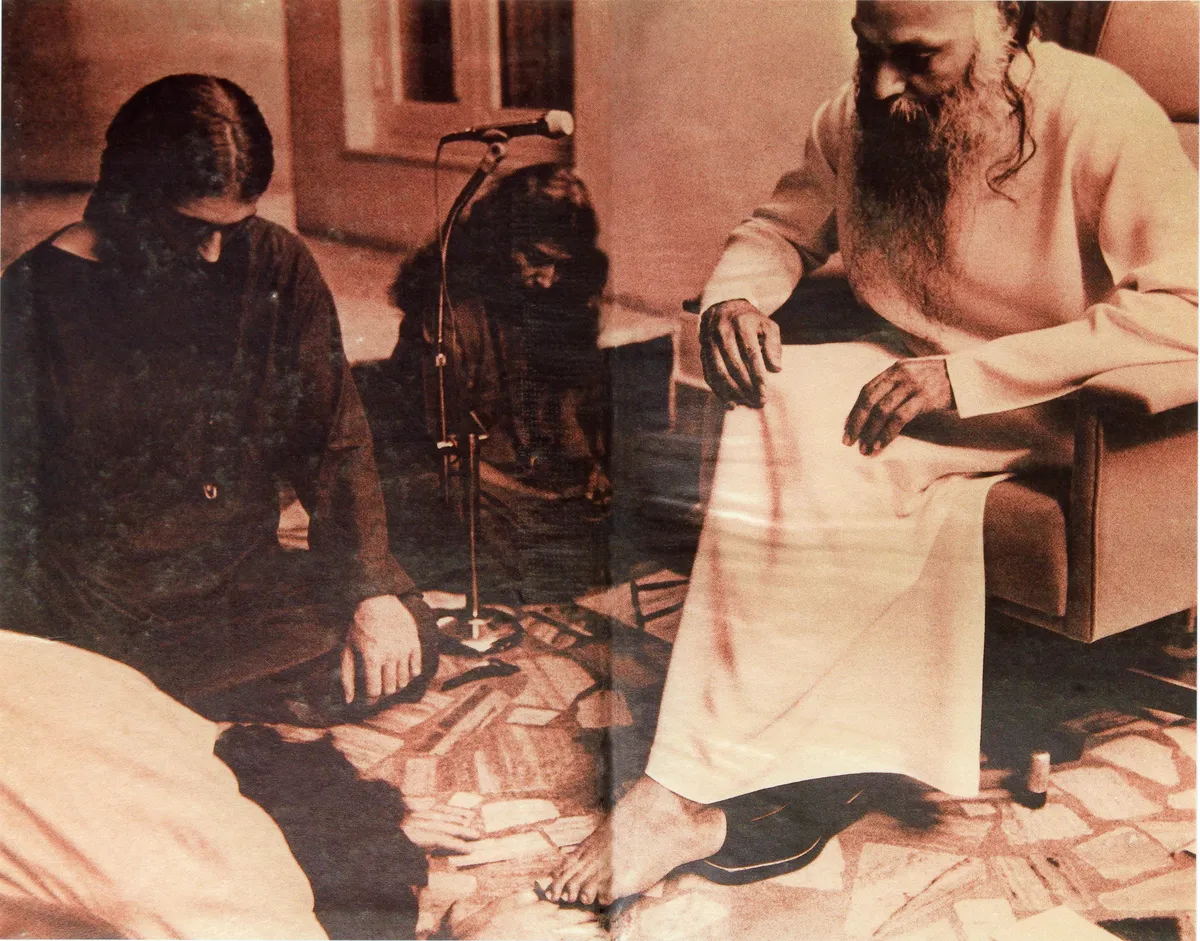
Osho's original Hindi beside Osho Live's English translation, matched passage by passage.
बंधन क्या है? मोक्ष क्या है? ऐसे प्रश्नों के उत्तर अब शुरू होते हैं।
What is bondage? What is liberation? The answers to such questions begin now.
जीवन को, अस्तित्व को, पहचानने की, खोजने की, अन्वेषण की दो विधियां हैं, दो संभावनाएं हैं। एक विधि है विश्लेषण, एनालिसिस; और दूसरी विधि है संश्लेषण, सिंथेसिस। एक मार्ग विज्ञान का है, एक धर्म का।
There are two ways, two possibilities, of recognizing, seeking, exploring life and existence. One method is analysis; and the other is synthesis. One road is of science, one of religion.
विज्ञान चीजों को तोड़ता है उनकी अंतिम इकाई तक, आणविक इकाई तक, एटॉमिक यूनिट तक। और उस तोड़ने से ही विज्ञान ज्ञान को संगृहीत करता है। विज्ञान चीजों को उनके अंतिम टुकड़ों में विभाजित करता है। उस विभाजन से ही विज्ञान के ज्ञान का जन्म होता है।
Science breaks things down to their ultimate unit — the atomic unit. By breaking, science gathers knowledge. It divides things into their final fragments. From that division the knowledge of science is born.
धर्म की प्रक्रिया ठीक उलटी है। धर्म जोड़ता है प्रत्येक इकाई को अंतिमविराट से; टुकड़ों को उसकी परिपूर्णता में; खंड को अखंड के साथ। और जब सभी कुछ संयुक्त हो जाता है, तभी धर्म ज्ञान को उपलब्ध होता है।
Religion’s process is exactly the reverse. Religion joins each unit to the ultimate Vast; the fragments to their fullness; the part to the Whole. And only when all is joined does religion come upon knowledge.
ऐसा समझें, एक फूल है, तोड़ सकते हैं उसे। वैज्ञानिक तोड़ेगा--फूल को समझने जाएगा तो तोड़ेगा...उसके केमिकल्स में, उसके रासायनिक तत्वों में--खनिज कितना, पानी कितना, रसायन कितनी--वह तोड़ कर विश्लेषण करेगा, और बता सकेगा फूल किन-किन चीजों का जोड़ है। लेकिन कोई कवि इससे राजी न होगा; कोई सौंदर्य का प्रेमी इस विश्लेषण को हत्या कहेगा--क्योंकि इस तोड़ने में ही फूल नष्ट हो गया; और जो हमने जाना वह फूल नहीं है; और तोड़ कर जो हमें मिला, उससे भला फूल बनता हो, लेकिन फूल कुछ और ही चीज थी। जिन अंगों को काट-काट कर हमनें फूल को पहचाना, उससे हमें यह तो पता चला कि फूल किन चीजों से मिल कर बना था, लेकिन फूल क्या था यह बिलकुल भी पता नहीं चला; वरन तोड़ने में ही फूल खो गया।
Understand it this way: there is a flower — you can take it apart. The scientist, if he goes to understand the flower, will dismantle it… into its chemicals, its elements — how much mineral, how much water, how many reagents — he will analyze by breaking, and he will be able to tell of what things the flower is a composite. But no poet will be satisfied with this; a lover of beauty will call such analysis a murder — because in the very act of breaking, the flower is destroyed; and what we have known is not the flower. What we got by dismantling may well be what a flower is built from, but the flower itself was something else. By cutting and labeling its organs we have learned what ingredients were joined to make the flower, but what the flower was — that we have not discovered at all; rather, in breaking it, the flower was lost.
तो जब वैज्ञानिक फूल को तोड़ कर उसके अलग-अलग खंडों में लेबल लगा कर बोतलों में बंद कर दे, तब फिर कोई सौंदर्य दिखाई नहीं पड़ेगा--वह सौंदर्य फूल की परिपूर्णता में था, उसके पूरे होने में था; वह सौंदर्य उसके अंगों में नहीं है, उसके जोड़ में था।
So when the scientist dismembers the flower, labels the parts, seals them in bottles — then beauty will nowhere be seen; that beauty abided in the flower’s wholeness, in its totality. The beauty is not in its parts; it was in their togetherness.
इसे ऐसा समझें, किसी ने एक गीत लिखा हो, तो गीत को हम उसके शब्दों में तोड़ सकते हैं। जो भाषाशास्त्री है, अगर उससे कहेंगे कि इस गीत को समझो, तो वह शब्दों को तोड़ कर अलग-अलग रख देगा--बता सकेगा कि गीत कैसे बना, किन शब्दों के जोड़ से बना, कौन से नियम व्याकरण के काम में आए, लेकिन गीत खो जाएगा, क्योंकि गीत व्याकरण नहीं है। और गीत, गहरे में समझें तो शब्दों का जोड़ भी नहीं है; शब्दों के जोड़ से कुछ ज्यादा है, समथिंग प्लस। वह जो ज्यादा है वह खो जाता है।
Understand further: someone has written a song. We can break the song into its words. If we tell a linguist, “Understand this song,” he will take the words apart, set them out, explain how the song was made, by what combination of words, which grammatical rules came into play. But the song will be lost — for a song is not grammar. And, understood more deeply, a song is not merely the sum of words; it is something more — something plus. That “something more” is what gets lost.
तो विज्ञान अणु को उपलब्ध हो जाता है, सूक्ष्मतम को जान लेता है, अंतिम खंड को पहचान लेता है, लेकिन अखंड से वंचित हो जाता है? परमात्मा से खो जाता है।
Thus science arrives at the atom, knows the most subtle, recognizes the final fragment — but is deprived of the Whole; loses the Divine.
धर्म कहता है: सब जुड़ कर जो उस जोड़ से आविर्भूत होता है, वही प्रभु है, वही ईश्वर है।
Religion says: when all join, and from that togetherness a new presence shines forth — that is the Lord, that is Ishvara.
ये ज्ञान के दोनों ढंग बड़े भिन्न हैं, बड़े विपरीत भी। ये दो मार्ग हैं जानने के।
These two approaches to knowledge are very different, even opposed — two paths of knowing.
विश्लेषण से हम कभी भी पदार्थ के पार नहीं पहुंच पाते; नहीं पहुंच सकेंगे। नहीं, कोई उपाय नहीं है। सब आशाएं व्यर्थ हैं कि विज्ञान किसी दिन परमात्मा को घोषित करेगा। वैज्ञानिक भला कहने लगें कि परमात्मा है, लेकिन वैज्ञानिक का वक्तव्य विज्ञान का वक्तव्य नहीं है।
By analysis we never cross beyond matter; we never can. No — there is no way. It is vain hope that science will one day declare God. A scientist may well say, “There seems a divine presence,” but the scientist’s statement is not science’s statement.
आइंस्टीन मरते समय अनुभव करने लगा था कोई दिव्य उपस्थिति। पर वह वैज्ञानिक का वक्तव्य है, विज्ञान का नहीं। वह वक्तव्य वैसे ही है जैसे एक वैज्ञानिक प्रेम में पड़ जाए किसी के और कहने लगे, इस स्त्री से ज्यादा सुंदर और कोई स्त्री जमीन पर नहीं है। लेकिन यह कोई विज्ञान का वक्तव्य नहीं है, एक वैज्ञानिक का वक्तव्य है। और एक वैज्ञानिक फूल को देख कर आनंदित हो उठे और नाच उठे; लेकिन यह नृत्य विज्ञान का नृत्य नहीं है, यह वैज्ञानिक का नृत्य है।
Einstein, at the time of death, began to feel some divine presence. But that is the statement of a scientist — not of science. It is just as if a scientist were to fall in love and say, “There is no woman more beautiful on this earth than this one.” That is not a scientific statement; it is a statement by a scientist. A scientist may look at a flower, be delighted, dance — but that dance is not the dance of science, it is the dance of the scientist.
लेकिन धार्मिक लोग अक्सर ऐसा सोच लेते हैं...अगर कभी कोई वैज्ञानिक कह देता है कि हां, परमात्मा की प्रतीति मालूम पड़ती है--कभी कोई एडिंग्टन, या कभी कोई ओलिवर लाज, या कभी कोई आइंस्टीन अगर कह देता है, तो धार्मिक आदमी बड़े जल्दी सोचने लगता है कि विज्ञान भी अब परमात्मा की बात करने जा रहा है। बड़ी भूल है। ये वक्तव्य निजी हैं और वैयक्तिक हैं; इनका विज्ञान से कोई लेना-देना नहीं है।
Religious people, however, often imagine… if some scientist ever says, “Yes, there seems to be a sense of the Divine” — if an Eddington, or an Oliver Lodge, or an Einstein says so — the religious mind quickly starts thinking that science is now about to speak of God. A great mistake. These statements are personal and private; they have nothing to do with science itself.
विज्ञान कभी भी परमात्मा की बात नहीं कह सकेगा, क्योंकि विज्ञान जिस विधि का उपयोग करता है वह विधि ही खंड पर ले जाती है, वह अखंड पर ले जाती नहीं। यह बात दूसरी है कि किसी दिन विज्ञान भी धर्म की विधि का उपयोग करे तो परमात्मा की बात कह सके, लेकिन उस दिन वह विज्ञान ही नहीं होगा, वह धर्म ही हो जाएगा।
Science will never be able to say anything of God, because the very method science employs leads to the fragment, and does not lead to the Whole. It is another matter that if one day science were to use the method of religion, it could speak of God — but then it would not be science; it would be religion.
ऋषि का उत्तर इस बात से ही शुरू होता है।
The seer’s answer begins here.
‘‘आत्मा ही ईश्वर और आत्मा ही जीव है।’’
“Atman itself is Ishvara, and Atman itself is Jiva.”
वह जो मनुष्य के भीतर बोध की क्षमता है, चैतन्य है; वह जो चिदरूप; वह जो मनुष्य के भीतर जानने वाला है--ज्ञाता है, द्रष्टा है; वह जो साक्षी है, उसे उपनिषद ‘आत्मा’ कहते हैं।
That within the human being which has the capacity to be aware — consciousness itself; that which is of the nature of Chit; that within us which knows — the knower, the seer; that which is the witness — the Upanishads call it “Atman.”
लेकिन यह वक्तव्य बहुत अदभुत है। यह वक्तव्य कहता है: ‘आत्मा ही ईश्वर।’ कोई ईश्वर इस आत्मा से अतिरिक्त नहीं है। संश्लेषण की यह विधि है। आत्मा आपके भीतर है, और परमात्मा इस सारे अस्तित्व का नाम है।
But this is an extraordinary statement. It says: “Atman is Ishvara.” There is no God other than this Atman. This is the method of synthesis. The Atman is within you; and “Paramatman” is the name of the entire existence.
बूंद है आपके पास...अगर हम वैज्ञानिक से पूछें कि सागर क्या है, तो वैज्ञानिक कहेगा: बूंदों के जोड़ के अतिरिक्त और कुछ भी नहीं। और गलत नहीं कहता। अगर सागर को बांटने जाएं तो बूंदों के सिवाय और क्या हाथ में लगेगा? लेकिन निश्चय ही क्या सागर बूंदों का जोड़ ही है? बूंद में न तो कभी तूफान उठते, बूंद में कभी लहरें नहीं उठतीं; बूंद का जोड़ ही नहीं है सागर, सागर कुछ और भी है--बूंद के जोड़ से भी ज्यादा। लेकिन विज्ञान कहेगा: कहां है वह सागर? हम सब बूंदें खींच कर निकाल लेते हैं, फिर सागर नहीं बचता। वे ठीक कहते हैं।
You have the drop… If we ask the scientist, “What is the ocean?” the scientist will say: nothing but a sum of drops. And he is not wrong. If you were to divide the ocean, what would you get in your hands except drops? But surely — is the ocean only a sum of drops? In a drop no storms arise, no waves surge; the ocean is not simply a heap of drops — it is something more; more than the sum of drops. But science will say, “Where is that ocean? We can pull out all the drops — then no ocean remains.” They are, in their way, right.
मेरा हाथ काट लें, मेरा पैर काट लें, मेरा सिर अलग कर दें, मेरे सारे अंगों को अलग कर लें, मैं कहां बचता हूं पीछे! फिर भी मैं हाथ और पैर के जोड़ से ज्यादा हूं; और जब मेरा पैर काटा जा सकता है, तब भी मैं इस बोध में थिर हो सकता हूं कि मैं नहीं काटा जा रहा हूं; और मेरी गर्दन कटती हो, तो भी मैं इस चैतन्य से भरा हो सकता हूं कि इस गर्दन को दूसरे लोग ही कटता नहीं देख रहे हैं, मैं भी कटता हुआ देख रहा हूं।
Cut off my hand, my foot, separate my head, take apart all my limbs — what of me will remain behind? And yet I am more than a sum of hands and feet; and even if my foot is being cut off, I can remain steady in the knowing that I am not being cut. Even if my neck is severed, I can be so full of awareness that, as others are seeing a neck being cut, I too am seeing it being cut — you from the outside, I from the inside; both of us are the watchers. As you are spectators from without, so am I a spectator from within; this body which you see from the outside, I see from the inside.
मंसूर काटा जा रहा है, और हंस रहा है...और भीड़ में एक आदमी पूछता है कि मंसूर तुम पागल तो नहीं हो! तुम काटे जा रहे हो और हंस रहे हो? मंसूर ने कहा: पहले मैं पागल था, और कांटा भी चुभता था तो रोता था; मैं अब पागल नहीं हूं, क्योंकि जिस तरह तुम देख रहे हो कि गर्दन काटी जा रही है, उसी तरह मैं भी देख रहा हूं कि गर्दन काटी जा रही है--तुम बाहर से, मैं भीतर से; हम दोनों ही देखने वाले हैं। जैसे तुम दर्शक हो, वैसा मैं भी दर्शक हूं; यह शरीर तुम बाहर से देखते हो, इसे मैं भीतर से देखता हूं।
Mansoor is being cut to pieces — and he laughs… Someone in the crowd asks, “Mansoor, are you not mad? You are being cut, and you laugh?” Mansoor says: “Earlier I was mad — and even a thorn pricked and I wept. Now I am not mad, because, just as you are seeing that the neck is being cut, I too am seeing that the neck is being cut — you from without, I from within; both of us are only seeing. As you are spectators, so am I a spectator; you see the body from the outside, I see it from within.”
अगर हम धार्मिक से पूछें कि बूंद क्या है, तो वह कहता है, सागर ही। वह कहता है, सागर ही!
If we ask the religious man, “What is the drop?” he says, “Ocean.” He says, “Ocean itself!”
वैज्ञानिक सागर को बूंद बना देता है, धार्मिक बूंद को सागर बना देता है। और यह बड़ा क्रांतिकारी फर्क है; यह फर्क छोटा नहीं। विज्ञान सभी चीजों को उनके क्षुद्रतम हिस्से के साथ जोड़ देता है और धर्म सभी चीजों को उनके श्रेष्ठतम हिस्से के साथ जोड़ देता है।
The scientist reduces the ocean to the drop; the religious transforms the drop into the ocean. And this is a revolutionary difference; not a small one. Science links everything to its smallest part; religion links everything to its highest possibility.
यह बात साधारण नहीं है। यह केवल शब्दों का खेल नहीं है कि बूंद सागर है कि सागर बूंद है, इसमें क्या फर्क पड़ता है? फर्क पड़ता है; क्योंकि विज्ञान विश्लेषण करता है, विश्लेषण करके जो निम्नतम इकाई उसकी पकड़ में आती है, उसी को वह समस्त जीवन का आधार मान लेता है कि यही आधार है। आदमी को काटते हैं तो पदार्थ हाथ लगता है, हड्डी हाथ लगती है, मांस हाथ लगता है, आत्मा हाथ नहीं लगती। इसलिए विज्ञान कहता है, आत्मा वगैरह कुछ भी नहीं है, हड्डी-मांस-मज्जा का जोड़ है--सिर्फ जोड़; कुछ और ज्यादा नहीं।
This is no ordinary matter. It is not a mere play of words — whether drop is ocean or ocean is drop — what does it matter? It matters; because science analyzes, and then takes the lowest unit that comes into its grasp and declares, “This is the foundation of all life.” Cut a man and matter is what you get — bone, flesh — Atman does not come into your hands. Therefore science says, “There is nothing like Atman; there is only the sum of bone, flesh, marrow — only a sum; nothing more.”
धर्म कहता है: निकृष्ट से श्रेष्ठ को नहीं समझाया जा सकता।
Religion says: the superior cannot be explained by the inferior.
उलटा हो सकता है...बूंद से सागर को नहीं समझाया जा सकता, सागर से बूंद को समझाया जा सकता है; श्रेष्ठ से निकृष्ट को समझाया जा सकता है, निकृष्ट से श्रेष्ठ को नहीं समझाया जा सकता। इसके कारण हैं। इस बात को ठीक से समझ लें तो उपनिषद की भाषा समझ में आ सकेगी।
The reverse is possible… The ocean can explain the drop, but the drop cannot explain the ocean; the superior can explain the inferior, the inferior cannot explain the superior. There are reasons for this. If you understand this rightly, you will be able to understand the Upanishadic language.
बच्चे से बूढ़े को नहीं समझाया जा सकता, लेकिन बूढ़े से बच्चे को समझाया जा सकता है; क्योंकि बूढ़ा दोनों रह चुका--बच्चा भी और बूढ़ा भी। बच्चा अभी सिर्फ बच्चा ही है, अभी बूढ़ा हुआ ही नहीं। सागर से हम बूंद को भी समझा सकते और सागर को भी, लेकिन बूंद से हम सागर को नहीं समझा सकते। पदार्थ से हम सिर्फ शरीर को और पदार्थ को ही समझा सकते हैं, परमात्मा से हम दोनों को समझा सकते हैं। विराट जो है वह शुद्र को अपने भीतर समा लेता है, लेकिन शुद्र विराट को अपने भीतर नहीं समा पाता है। तो जितनी विराट की धारणा हो उतना हम सभी को उससे समझा सकते हैं, लेकिन क्षुद्र की धारणा से विराट को समझाना असंभव है।
A child cannot explain an old man, but an old man can explain a child — for the old man has been both: child and old. The child is only a child yet; he has not yet been old. From the ocean we can understand both the drop and the ocean; from the drop we cannot understand the ocean. From matter we can understand only the body and matter; from the Divine we can understand both. The Vast can encompass the small within itself, but the small cannot encompass the Vast. So the greater the conception of the Vast, the more we can understand all things through it; but through the conception of the small it is impossible to explain the Vast.
ऐसा समझें कि विज्ञान सदा ही प्रथम पर ध्यान रखता है और धर्म सदा ही अंतिम पर। विज्ञान पहले कदम पर ध्यान रखता है, धर्म अंतिम मंजिल पर; क्योंकि धर्म कहता है, अगर मंजिल नहीं है तो पहला कदम भी नहीं समझाया जा सकता--क्योंकि बिना मंजिल के उसे पहला कदम भी कैसे कहिएगा? वह पहला कदम भी इसीलिए है कि कोई आखिरी कदम भविष्य में प्रतीक्षा करता है।
Understand it thus: science always keeps its attention on the first step, while religion keeps its attention on the last. Science is concerned with the first step; religion with the final goal — because religion says, if there is no goal, even the first step cannot be explained; without a goal, how will you even call it a first step? It is a first step only because a last step awaits in the future.
तो मंजिल से हम पहले कदम को समझा सकते हैं, लेकिन पहले कदम को ही अगर हम सब-कुछ मान लें तो मंजिल तो समझाई ही नहीं जा सकती, पहला कदम भी नहीं समझाया जा सकता। साध्य से हम साधन को समझा सकते हैं, लेकिन साधन से साध्य को नहीं।
From the goal we can understand the first step; but if we take the first step as everything, then neither the goal can be explained nor, in truth, even the first step. From the end (sadhya) we can understand the means (sadhana); but from the means we cannot understand the end.
तो बूंद सागर को नहीं समझा सकेगी, लेकिन सागर बूंद को भी आत्मसात कर लेता है।
So the drop will not be able to explain the ocean, but the ocean will also take the drop into itself.
ऋषि कहता है: ‘‘आत्मा ही ईश्वर और आत्मा ही जीव।’’
The seer says: “Atman itself is Ishvara, and Atman itself is Jiva.”
तीन शब्दों का उपयोग है: ईश्वर...ईश्वर से अर्थ है, शुद्धतम चैतन्य--दि प्योर कांशसनेस।
Three words are used: Ishvara — by Ishvara is meant purest consciousness — the pure Consciousness.
फिर आत्मा। आत्मा और ईश्वर में क्या फर्क है?
Then Atman. What is the difference between Atman and Ishvara?
ऋषि कहता है: कोई भी फर्क नहीं। उतना ही फर्क है, जैसा सागर और बूंद में है। बूंद भी सागर ही है। सब-कुछ सागर का उसमें समाया हुआ है। एक ही बात ध्यान रखना कि सागर सिर्फ बूंदों का जोड़ नहीं है। व्यक्ति के भीतर जब वह परम चैतन्य निवास करता है, तो उसे ‘आत्मा’ कहा है।
The seer says: none at all. The difference is only that of ocean and drop. The drop is the ocean as well. Everything of the ocean is contained within it. Only one thing must be remembered: the ocean is not merely the sum of drops. When that supreme consciousness abides within the individual, it is called “Atman.”
जैसे सूरज निकला है आकाश में, और आपके आंगन में सूरज की किरणें भर गई हैं। सूरज की किरणों में और आपके आंगन की किरणों में कोई भी फर्क नहीं, फिर भी आपके आंगन की किरणों की सीमा है। आपके मकान की दीवालें, आपके आंगन में पड़ती सूरज की किरणों को घेरती हैं--सीमा बन जाती है।
The sun shines in the sky, and sunrays are filling your courtyard. There is no difference between the sunrays in the sky and those in your courtyard — and yet there is a limit to the rays that fall in your courtyard; the walls of your house enclose the light — limits arise.
सीमा में ऐसा निवास करता हुआ ईश्वर आत्मा है। लेकिन क्या सच में ही जब आपके आंगन में सूरज की किरणें बरसती हैं, तो सूरज की किरणों पर कोई सीमा बनती है कि सीमा आपके आंगन की ही होती है? सूरज की किरणों पर आपकी दीवालें क्या बाधा बनेंगी। सूरज की किरणों को आपकी दीवालें क्या बांध पाएंगी। दीवालें आपके आंगन को ही बांधती हैं। लेकिन अगर आपके आंगन में पड़ती हुई धूप को यह वहम हो जाए, यह भ्रम हो जाए कि मैं भी बंध गया, तो इसका नाम ‘जीव’ है।
Abiding within a boundary, Ishvara is called Atman. But truly, when sunrays shower into your courtyard, do the rays get bounded — or is the boundary only of your courtyard? Do your walls obstruct the sunrays? Can they bind the rays? The walls only confine your courtyard. But if the sunlight falling in your courtyard were to suffer the delusion: “I too am bound,” that delusion is called “Jiva.”
शरीर की सीमाओं में जो परमात्मा है उसका नाम आत्मा है, लेकिन अगर इस आत्मा को यह भ्रम हो जाए कि मैं यही शरीर हूं तो इसका नाम जीव है। अंतर कुछ भी नहीं है--चाहे भ्रम हो सूरज की किरण को कि मैं आंगन में बंधी हूं तो भी वह बंधती नहीं। किरण बंध ही नहीं सकती; न-बंधा होना उसका स्वभाव है। मुट्ठी बांधिएगा, किरण भीतर नहीं पकड़ में आएगी; न-बंधा होना उसका स्वभाव है--वह उसकी स्वतंत्रता है, उसका जीवन है। सीमा उस पर नहीं है, सीमा आंगन की है; लेकिन भ्रम पैदा हो सकता है। वह भ्रम आत्मा को जीव बना देता है। भ्रम टूट जाए तो आत्मा ईश्वर हो जाती है। धर्म इतनी विराट व्याख्या में समस्त जीवन को पिरोता है।
Within the limits of the body, the Paramount Consciousness is called Atman; but if that Atman falls into the illusion, “I am this body,” it is called Jiva. The difference is nothing at all — even if the sunray imagines, “I am bound within the courtyard,” it is not bound. A ray cannot be bound; unboundedness is its nature. Close your fist — the ray will not be caught; unboundedness is its nature — its freedom, its life. The limit is not upon it; the limit is of the courtyard. Yet delusion can arise. That delusion turns Atman into Jiva. When the delusion breaks, Atman is Ishvara. In such vast explanation religion strings the whole of life.
यह जो चिंतन की सरणी है, इसे ठीक से खयाल में ले लेना साधक के लिए बड़ा उपयोगी है; क्योंकि उसकी भी फिर यात्रा आंगन से है--आंगन की दीवालों से है, धूप और धूप से सूरज की तरफ है।
This chain of understanding, if rightly kept in the heart, is of great use to the seeker; because his journey too is from the courtyard — from the walls of the courtyard — from sunlight to the sun.
‘‘आत्मा ही ईश्वर और जीवरूप है, फिर भी जो आत्मा नहीं है, ऐसे शरीर में जीव को अहंभाव हो जाता है।’’
“Atman is Ishvara and appears as Jiva; and yet, in a body that is not the Atman, the Jiva comes to possess the ego-sense.”
अहंभाव का अर्थ है: तादात्म्य; जो मैं नहीं हूं, उसके साथ मुझे ऐसा भाव पैदा हो जाए कि मैं हूं। आंगन में आई हुई किरणों को खयाल हो जाए कि ये आंगन की दीवालें और यह आंगन, यही हमारा होना है। ऐसी आइडेंटिटी, ऐसा तादात्म्य ही अहंभाव है।
By ego-sense is meant identification; that I am that which I am not. If the rays in the courtyard were to take the walls and the courtyard as their own being — such identity, such tadataamya, is ego-sense.
‘‘अहंभाव का हो जाना बंधन और अहंभाव का निकल जाना, यही मोक्ष है। इस अहंभाव को जो उत्पन्न करती है वह अविद्या, और जिससे यह अहंभाव निकल जाता है वह विद्या कहलाती है।’’
“For the ego-sense to arise is bondage, and for the ego-sense to fall away — that is liberation. That which generates this ego-sense is Avidya; that by which this ego-sense disappears is called Vidya.”
इस अहंभाव को जो उत्पन्न करती है, वह अविद्या। जिस विधि से, जिस ढंग से, जिस प्रक्रिया से यह अहंभाव निर्मित होता है, उसे ‘अविद्या’ कहा है। और जिस विधि से, जिस मार्ग से यह अहंभाव क्षीण होता है, गलता, बिखर जाता, बिसर जाता है, उसे ‘विद्या’ कहा है।
That which produces the ego-sense is Avidya: the method, the way, the process by which this ego-sense is manufactured is called “Avidya.” And the method, the path by which this ego-sense wanes, melts, scatters, is forgotten — that is called “Vidya.”
हम सब अविद्या में ही जीते हैं, क्योंकि हम सिवाय अहंकार निर्मित करने के और कुछ भी तो नहीं करते। चाहे हम धन कमाते हों, तो भी हम अहंकार निर्मित करने को ही कमाते हैं; और चाहे हम ज्ञान इकट्ठा करते हों, तो भी हम अंहकार को भरने को ही इकट्ठा करते हैं; और चाहे हम पदों की लंबी यात्रा पर निकलते हों, सीढ़ी दर सीढ़ी चढ़ते हों राजधानियों की, तब भी हम सिंहासनों पर पहुंच कर करते क्या हैं? सिंहासनों पर आप प्रतिष्ठित नहीं होते, अहंकार ही प्रतिष्ठित होता है; राजमुकुट आपके सिर पर नहीं रखे जाते हैं, राजमुकुट आपकी अस्मिता, आपके अहंकार के सिर पर ही बंधते हैं।
We all live in Avidya, for we do nothing but manufacture ego. Whether we earn money — we earn it to build the ego; or we gather knowledge — we gather it to stuff the ego; or we set out upon the long climb of positions, ascending step by step to capitals — then too, upon arriving at thrones, what do we do? You are not installed upon the throne — it is the ego that is installed; the crown is not placed upon your head — it is bound upon the head of your “I,” your ego.
अहंकार के अतिरिक्त हम कुछ भी अर्जन नहीं करते। हमारे पूरे जीवन की सारी प्रक्रिया इतनी है कि कैसे मैं कुछ हो जाऊं? और कैसे मैं दूसरों के मैं को हटाऊं पीछे और आगे खड़ा हो जाऊं। एक थोथी दौड़! लेकिन जीवन भर वही चलती है; खटोले से लेकर कब्र तक वही चलती है...वही दौड़! वही दौड़ ईर्ष्या की, प्रतिस्पर्धा की, प्रतियोगिता की।
Other than the ego, we acquire nothing. The entire process of our life amounts to: how can I become somebody? And how can I push other “I’s” behind and stand ahead? A hollow race! Yet it runs lifelong — from cradle to grave the same… the same race! The same race of jealousy, rivalry, competition.
क्या है ईर्ष्या? क्या है प्रतिस्पर्धा? क्या है प्रतियोगिता? किससे है संघर्ष? और किसलिए है? एक ही आधार है सिर्फ कि मैं पिछड़ न जाऊं; मैं छोटा न रह जाऊं; मैं दीन-हीन न रह जाऊं; मेरे सिरपर भी राजमुकुट बंधे; मेरे गले में भी फूलमालाएं हों; मेरे अहंकार में भी हीरे-जवाहरात जड़ें; मैं भी चमकूं; मैं भी ना-कुछ न रह जाऊं--कुछ हो जाऊं!
What is jealousy? What is rivalry? What is competition? With whom is the struggle? And for what? There is only one basis: that I may not fall behind; I may not remain small; I may not remain poor and mean. Let there be a crown on my head too; garlands around my neck; let diamonds and jewels be studded in my ego; let me shine; let me not remain a nobody — let me become something!
छोटे से छोटे आदमी से लेकर बड़े से बड़ा आदमी एक ही दौड़ में है। और यह दौड़ इतनी अदभुत है कि कभी-कभी यह दौड़ विपरीत भी हो जाती है और फिर भी मूल आधार बना रहता है। एक आदमी धन कमाए चला जाता है इसलिए कि मैं चोटी पर पहुंच जाऊं...गौरीशंकर की...धन की चोटी पर। फिर एक आदमी धन को लात मार कर जंगल चला जाता है, तपश्चर्या करता है, और तब भी हो सकता है मैं की अकड़ कायम हो और वह आदमी अब धन की जगह तप के सिक्के इकट्ठे कर रहा हो--और अब भी अकड़ यही हो कि मेरे जैसा तपस्वी और कोई भी नहीं--कहां मैं और कहां यह सारी दुनिया!
From the smallest person to the greatest — the same race. And this race is so strange that sometimes it runs in reverse and yet its base remains the same. One person piles up wealth to reach the peak… the highest summit of wealth. Another kicks wealth aside, goes to the forest, practices austerity — and still the stiffness of the “I” may persist, and that man may now be collecting the coins of penance — and the stiffness remains: “There is no ascetic like me — where am I, and where is this whole world!”
अहंकार ईश्वर की खोज तक से अपने को भर सकता है। अहंकार इसलिए भी ईश्वर की चर्चा में पड़ सकता है कि मेरी मुट्ठी में छोटी-मोटी बातें नहीं, ईश्वर भी है।
The ego can even fill itself by seeking God. The ego may enter the talk of God just to say, “Not small coins in my fist — even God.”
अहंकार के अर्जन की प्रक्रिया अगर अविद्या है तो हम सब अविद्या में जी रहे हैं। और जिसे हम विद्या कहते हैं, विद्यालय कहते हैं, जिन्हें हम विद्यापीठ कहते हैं, विश्वविद्यालय कहते हैं, अगर ऋषि की बात को समझें तो वे सब अविद्यालय हैं, अविद्यापीठ हैं; क्योंकि वहां सिर्फ अहंकार को भरने के अतिरिक्त और तो कोई कला सिखाई नहीं जाती। सारी शिक्षा अहंकार को जगाने का प्रयोग है; महत्वाकांक्षा, एंबीशन को उठाने की कोशिश है। तो बाप बेटे से कह रहा है कि पिछड़ मत जाना--अपनी क्लास में नंबर एक आना। बाप दुखी होता है लड़का पिछड़ जाता है तो; लड़का नंबर एक आ जाता है तो बाप भी जैसे नंबर एक आ जाता है।
If the process of acquiring ego is Avidya, then we are all living in Avidya. And what we call “Vidya,” our schools and universities — if the seer is understood — they are all “A-vidyalayas,” houses of Avidya; because there nothing is taught except how to stuff the ego. All education is an experiment in arousing the ego; an effort to raise ambition. The father says to the son, “Do not fall behind — come first in your class.” The father is unhappy if the boy lags; if the boy comes first, the father too feels as if he himself came first.
दौड़ना है सबको, एक ही खेल है। अगर यह अविद्या है तो हमारा सारा जीवन अविद्या है; विद्या का हमें कोई पता ही नहीं है। क्योंकि ऋषि कहता है, विद्या उस प्रक्रिया का नाम है, उस विधि का, जिससे मैं गलता, बिसर जाता, नहीं बनता--और एक घड़ी आती है कि अहंकार नहीं होता, केवल आत्मा रह जाती है, केवल होना रह जाता है। उसे धर्म कहें, उस विद्या को योग कहें, ध्यान कहें, प्रार्थना कहें, पूजा कहें--कोई भी नाम दें; हजार नाम दिए गए हैं।
All must run — the same game. If this is Avidya, then our whole life is Avidya; we have no taste of Vidya at all. For the seer says: Vidya is the name of that process, that method, by which the “I” melts, is forgotten, does not take shape — and a moment comes when there is no ego, only Atman remains, only being remains. Call it religion, call that Vidya yoga, call it meditation, prayer, worship — any name; a thousand names have been given.
लेकिन विद्या का सार-सूत्र एक ही है: घटानी है वह घटना, जहां आप तो बच जाएं, लेकिन आपा न बचे; जहां चेतना तो बच जाए, लेकिन चेतना के बीच में कोई मैं की घोषणा करने वाला केंद्र न हो।
But the essence-thread of Vidya is one: the event must happen in which you remain, but your “I” does not; where consciousness remains, but there is no center within consciousness to proclaim “I.”
किसी भी द्वार से और किसी भी मार्ग से मैं अपने को खो पाऊं। खो पाऊं का अर्थ सो जाऊं नहीं है; खो पाऊं का अर्थ विस्मरण हो जाऊं नहीं है; खो पाऊं का अर्थ भूल जाऊं अपने को नहीं है; खो पाऊं का अर्थ है: बचूं पूरी तरह--जागा, होश से भरा, स्मरणपूर्वक, फिर भी मैं न बचूं...वही बच जाए जिसके साथ मैं का कोई भी जोड़ नहीं है।
By any door, by any path, if I may lose myself. To lose does not mean to fall asleep; to lose does not mean to lapse into unconsciousness; to lose does not mean to forget oneself. To lose means: to remain utterly — awakened, full of awareness, with remembrance — and yet the “I” does not remain… only that remains which has no joining with “I.”
बुद्ध के चरणों में किसी ने आकर सिर रखा है एक सुबह। कोई संदेहशील व्यक्ति आया है, वह भी बैठा है पास में। उसने बुद्ध से कहा: आप इस व्यक्ति को रोकते नहीं कि आपके चरण न छुए, क्योंकि आपने ही तो हमें समझाया है कि किसी के शरण में जाने की जरूरत नहीं है, स्वयं को खोजो। यह आदमी आपकी शरण में आ रहा है, आप इसे रोकते नहीं!
One morning someone laid his head at Buddha’s feet. A doubting person was also sitting nearby. He said to Buddha, “Do you not stop this man from touching your feet, because you have explained to us there is no need to go into anyone’s refuge — seek yourself. This man is going into your refuge — you do not stop him!”
बुद्ध ने कहा: अगर मैं होता तो जरूर रोकता; यदि मैं होता तो जरूर रोकता। और बुद्ध ने कहा: अगर मैं होता, तो चाहे रोकता और चाहे इसका सिर झुकाता, दोनों बराबर थे। चाहे इसका सिर पकड़ कर चरणों में रखता तो, और चाहे इसका सिर रोकता कि नहीं, मत छुओ मेरे पैर, दोनों बराबर थे। लेकिन जो आदमी झुकाता इसका सिर और जो आदमी रुकाता इसका सिर, वह अब नहीं है। जैसे तुमने देखा कि इसने सिर झुकाया, मैंने भी देखा। जरा सा भूल हुई। तुमने देखा इसने मुझे सिर झुकाया, मैं सोच रहा हूं: इसने किसे सिर झुकाया? टु हूम ही हैज बोड डाउन? कोई दिखाई तो नहीं पड़ता। इसने किसे सिर झुकाया?
Buddha said: “If I were, I would certainly stop him; if I were, surely I would stop him. And if I were, whether I stopped him or made his head bow — both would be the same. Whether I took his head and placed it at my feet, or whether I restrained him saying, ‘Do not touch my feet’ — both would be equal. But the one who would make his head bow, and the one who would stop his head — is no longer. As you saw that he bowed his head, so did I. A small mistake occurred. You saw that he bowed to me; I am wondering — to whom has he bowed down? To whom has he bowed? None is to be seen. To whom has he bowed?”
ऐसी घड़ी जिस द्वार से आती है, उसे ऋषि ‘विद्या’ कहते हैं।
The moment which comes from any such door — the seer calls it “Vidya.”
यह जो विज्ञान है धर्म का, उसे ही मैं ध्यान कह रहा हूं। जब भी आपसे कहता हूं ध्यान, तो मैं इसी विद्या की बात कर रहा हूं। हम सब जीते हैं गैर-ध्यान में। हम ऐसे जीते हैं, जैसे सोए-सोए। कभी आपने अगर किसी व्यक्ति को हिप्नोसिस में, सम्मोहन में देखा हो...चलते हुए, या कभी आपने किसी व्यक्ति को निद्रा में चलते हुए देखा हो--किसी सोम्नाम्बुलिस्ट को...बहुत लोग रात नींद में उठते हैं और चलते हैं।
This science of religion, I call it meditation. Whenever I say “meditation,” I am speaking of this Vidya. We all live in non-meditation. We live as if asleep. If you have ever seen someone under hypnosis, in trance — walking; or ever seen a person walking in sleep — a somnambulist… many people get up at night and walk.
आपमें भी यहां बहुत लोग होंगे, क्योंकि सौ में से कम से कम सात लोग नींद में चल सकते हैं। कम से कम सात! पर उसको पता भी नहीं चलता, क्योंकि वह चल-फिर कर वापस सो जाता है। आंखें खोल कर चल लेता है। लोगों ने हत्याएं तक की हैं नींद में चल कर, और सुबह उनको बिलकुल पता नहीं है; वे केवल इतना ही कह सकते हैं कि हां, ऐसा कोई सपना देखा रात कि किसी की हत्या की। लोगों ने चोरियां की हैं, और जरा भी वे कसूरवार नहीं थे, क्योंकि वह सब नींद में हुआ।
Among you here too there will be many; at least seven out of a hundred can walk in sleep. At least seven! But they do not even know it, because they walk and return to bed. Eyes open, they walk. People have even committed murders walking in sleep, and in the morning they know nothing at all; they can only say, “Yes, I had some dream in which I killed someone.” People have committed thefts — and they were not at all culpable, because it all happened in sleep.
लेकिन यह तो कुछ लोगों की बात कर रहा हूं जो नींद में चलते हैं। अगर हम अपनी तरफ बहुत गौर से देखें तो हम सभी थोड़े या बहुत नींद में चलते हैं। आप जो कर रहे होते हैं, उस पर आपका कहां होता है ध्यान, ध्यान तो कहीं और होता है। राह पर चलते हैं आप, तब चलने में आपका ध्यान होता है? चलने को छोड़ कर और कहीं भी होता होगा। जब आप भोजन कर रहे होते हैं तब भोजन करने में ध्यान होता है? भोजन को छोड़ कर और कहीं भी होता होगा। हां, भोजन पर भी कभी-कभी होता है, लेकिन वह तब होता है जब भोजन नहीं कर रहे होते।
But this I am saying about a few who walk in sleep. If we look within carefully, we all walk in a little — or much — sleep. When you are doing something, where is your attention? Anywhere but there. You walk on the road — is your attention in walking? It is anywhere except in walking. When you are eating, is attention in eating? Anywhere except in eating. Yes, sometimes attention is on food — but only when you are not eating.
जहां होते हैं आप वहां ध्यान नहीं होता। तो वहां क्या होता होगा जहां आप होते हैं जब ध्यान नहीं होता? वहां नींद होती है। उसी नींद में सब उपद्रव होते हैं। जब आपने किसी पर क्रोध किया है तो आपने खयाल किया कि आपका ध्यान वहां था? क्योंकि ध्यान होता तो क्रोध करना असंभव है। ध्यान और क्रोध का कोई मेल ही नहीं बैठता। ध्यान हो तो क्रोध हो नहीं सकता। क्रोध के होने के लिए नींद जरूरी है, नशा जरूरी है।
Where you are, attention is not. Then what is there where you are when attention is not? There is sleep. In that sleep all mischiefs happen. When you become angry — did you notice your attention was there? If attention were there, anger would be impossible. Attention and anger do not go together. If attention is, anger cannot be. For anger to be, sleep is necessary — intoxication is necessary.
इसीलिए तो आदमी क्रोध के बाद पछताता है; कहता है कि कैसे मैंने किया? और क्यों किया? क्या सार था? इसी ने किया है। और ऐसा भी नहीं है कि पहली दफे किया है; और ऐसा भी नहीं है कि पहली दफे पछता रहा है। बहुत दफे ऐसे ही पछताया है, ऐसे ही क्रोध किया है। और हर बार यही सोचा है, क्यों किया? क्या सार था? फिर किया क्यों अगर सार नहीं था?
That is why a man repents after anger; he says, “How did I do it? And why did I do it? What was the point?” The same man did it. And it is not that it happened for the first time; nor that he repents for the first time. Many times he has repented thus, and many times he has been angry thus. And every time he thought, “Why did I do it? What was the sense?” Then why did you do it if there was no sense?
यह आदमी मौजूद ही नहीं था। यह तो जब क्रोध चला गया, तब ये वापस आए हैं घर। ये थे नहीं, तब हो गया। जब लौटे तो पछता रहे हैं। लेकिन अब पछताने से कोई फायदा नहीं; अब कोई भी अर्थ नहीं है; अब कोई भी सार नहीं है।
He was not present. Only when anger is gone does he return home. He was not there when it happened. When he returns, he repents. But now repentance is of no use; now it has no meaning; now it has no point.
कुछ चीजें ध्यान में हो ही नहीं सकतीं। असल में जिसे पाप कहा है जानने वालों ने, उसे ही पाप कहा है जो ध्यानपूर्वक नहीं हो सकता। पाप की यही परिभाषा है कि जो ध्यानपूर्वक न हो सके वह पाप है; और जो ध्यानपूर्वक हो सके वह पुण्य है। ध्यानपूर्वक चोरी नहीं हो सकती है; और ध्यानपूर्वक हत्या नहीं की जा सकती; और ध्यानपूर्वक क्रोध नहीं हो सकता; लेकिन ध्यानपूर्वक करुणा हो सकती है; और ध्यानपूर्वक प्रेम हो सकता है।
Some things cannot happen in attention. In fact, what the knowers have called sin — that alone is sin which cannot be done attentively. This is the definition of sin: what cannot be done with awareness is sin; and what can be done with awareness is virtue. Theft cannot happen attentively; murder cannot be committed attentively; anger cannot happen attentively. But compassion can be; love can be — attentively.
और ध्यानपूर्वक जो भी हो सकता है, वह सब धर्म है, और पुण्य है।
And whatever can happen attentively — all that is religion, and virtue.
जो ध्यानपूर्वक हो ही न सके, जिसके लिए नींद अनिवार्य तत्व हो, जो नींद में ही फल सकता हो, वही पाप है।
That which cannot happen attentively, for which sleep is an essential ingredient, which can grow only in sleep — that is sin.
तो हम ध्यान में जीते नहीं। कभी-कभी ध्यान करने बैठते हैं तो वहां भी नींद आती है--वहां भी! बल्कि और जोर से आती है। उसका कारण है कि उसका हमें कोई खयाल ही नहीं है, कोई अनुभव ही नहीं है। जिस ढंग से हम चलते हैं, उठते हैं, बैठते हैं, उस सबके हम अभ्यासी हैं--वह नींद में हो जाता है।
We do not live in attention. Even when we sit to meditate, sleep comes — there too! Rather, it comes even more strongly. Because we have no familiarity with it, no experience of it. The way we walk, sit, and stand — we are trained in those — they happen in sleep.
मैंने कहा कि हम सब-कुछ नींद में कर रहे हैं। अभी मैं एक व्यक्ति का जीवन पढ़ रहा था, उसे हकलाने की आदत थी। लाख उपाय किए, हकलाना न गया। मनोवैज्ञानिकों ने मनोविश्लेषण किया। वर्षों हजारों डालर उसकी चिकित्सा पर खर्च हुए। बड़े आदमी का लड़का था। कोई रास्ता न निकला। दवाएं चलीं, सब हुआ, लेकिन नहीं, हकलाना बंद नहीं हुआ। और एक मजेदार घटना घटी। गांव में एक नाटक चल रहा था, और उस नाटक में एक हकलाने वाले पात्र की जरूरत थी। और जो पात्र अभ्यासी था सदा का, जो पार्ट करता था वह बीमार पड़ गया था; वह मंच पर आ नहीं सकता था। तो किसी ने खबर दी कि गांव मे फलां-फलां आदमी का लड़का जितनी कुशलता से हकलाता है, कोई क्या हकलाएगा! उससे प्रार्थना कर ली जाए। थोड़ा ही पार्ट है, और तत्काल मौजूद है। सिखाना बहुत मुश्किल मामला है। हकलाने वाले युवक को लाया गया, और चमत्कारों का चमत्कार हुआ कि उस दिन वह नाटक के मंच पर न हकला सका। बहुत कोशिश की उसने, लेकिन हकलाना था कि आया ही नहीं। क्या हो गया?
I said we do everything in sleep. I was reading the life of a man — he had a habit of stammering. A thousand devices were tried, the stammer would not leave. Psychologists psychoanalyzed him. Years passed; thousands of dollars were spent on treatment. He was the son of a wealthy man. No way out was found. Medicines went on — nothing; the stammer did not stop. Then a strange thing happened. In the village, a play was being performed, and the play needed a character who stammered. The actor who usually played that role fell ill; he could not come on stage. Someone gave the news: “In this village, So-and-so boy stammers with such skill — who else could stammer so well! Request him. The part is small, and he is present. Training someone else is difficult.” The stammering youth was brought — and the greatest of miracles happened: that night he could not stammer on stage. He tried hard — the stammer would not come. What happened?
मैं एक गांव में था। एक युवक विश्वविद्यालय का मेरे पास आया। उसे एक अजीब सी आदत पड़ गई है, स्त्रियों जैसा चलने की। तो बहुत उपाय हो गए हैं, लेकिन वह जाती नहीं; कभी भी वक्त-बेवक्त सड़क पर अचानक वह पाता है कि वह स्त्रियों जैसा चल रहा है। स्त्रियों जैसा
चलने में कोई बुराई नहीं है, क्योंकि स्त्रियां चलती ही हैं; लेकिन वह मुश्किल में पड़ गया है, और खुद ही दीन और हीन हो गया है।
I was in a village. A university youth came to me. He had acquired a strange habit — walking like a woman. Many methods had been tried — it would not go; at any time, suddenly on the road, he would find he was walking like a woman. There is no harm in walking like a woman — women do walk — but he had fallen into difficulty, and had become poor and mean in his own eyes.
असल में स्त्री और पुरुषों के मांस का विभाजन शरीर में अलग-अलग है। और स्त्रियां कुछ स्थानों पर चर्बी इकट्ठी करती हैं जहां पुरुष चर्बी इकट्ठी नहीं करते, इसलिए उनकी चाल में फर्क स्वाभाविक है; चर्बी का भेद है।
In truth, the distribution of flesh and fat in women and men is different; women gather fat in places where men do not, hence a difference of gait naturally arises; it is a difference of fat.
पर उसकी चर्बी में कोई ऐसी बात नहीं है कि वह स्त्रियों जैसा चले, क्योंकि कभी-कभी वह पुरुषों जैसा चलता ही है। और कभी-कभी एकदम बस स्त्रियों जैसा चलने लगता है। तो बड़ी मुसीबत में था। मैंने उससे कहा: तू एक काम कर; तू अब जान कर स्त्रियों जैसा चलने लग। उसने कहा: क्या कहते हैं आप? बिना जाने इस मुसीबत में पड़ा हूं, और जान कर चलने लगूं? मैं तो जान कर रोकने की कोशिश करता हूं दिन-रात; जब भी चूक जाता हूं, बस चल जाता हूं। मैंने कहा कि तूने जान कर कोशिश कर ली रोकने की, नहीं रुक पाया; अब मैं तुझसे कहता हूं तू जान कर चलने की कोशिश कर--उठ और मेरे सामने चल कर बता दे। उसने बहुत कोशिश की, वह न चल पाया। उसने कहा: पता नहीं, क्या हो गया आज! आपने कुछ चमत्कार किया। कहा, यह तू किसी और को मत बताना। हाथ मेरा इसमें जरा भी नहीं है। तू ही चमत्कार कर रहा है; तुझे पता नहीं इस चमत्कार का।
But in his fat there was nothing to force him to walk like a woman, because sometimes he walked like a man. And sometimes — all at once — exactly like a woman. So he was in great trouble. I said to him: “Do one thing; now begin to walk like a woman knowingly.” He said, “What are you saying? I am plagued by this unknowingly, and you say to do it knowingly? I have tried day and night to stop it knowingly; whenever I slip, I start walking. You say — knowingly do it? Rise, and show me here by walking.” He tried hard; he could not do it. He said, “I do not know what happened today! Have you done some miracle?” I said, “Do not tell anyone this. My hand has nothing to do with it. You yourself are doing the miracle; you do not know the miracle.”
कुछ चीजें जान कर की ही नहीं जा सकतीं--होशपूर्वक नहीं की जा सकतीं। कुछ चीजें बस होश के साथ ही टूट जाती हैं।
Some things cannot be done knowingly — not with awareness. Some things simply break in the presence of awareness.
ध्यान विधि है विद्या की। अहंकार भी होशपूर्वक नहीं किया जा सकता। अहंकार होशपूर्वक करके देखें तो आपको पता चलेगा।
Meditation is the method of Vidya. Ego too cannot be done with awareness. Try to do ego knowingly and you will come to know.
गुरजिएफ अपने साधकों के साथ एक खेल खेला करता था। वह अपने साधकों को ऐसी हालत में ला देता था कि उन्हें खयाल ही न रहे कि वे अब क्रोध में भरे जा रहे हैं। कुछ ऐसी बात कर देता, कुछ ऐसी स्थिति पैदा कर देता कि किसी साधक को चिढ़ पैदा हो जाए, परेशान हो जाए, चिल्लाने लगे, गालियां बकने लगे, आगबबूला हो जाए--और यह सब आयोजित होता, और इसमें सब सहयोगी होते; यह खेल होता--सिर्फ उस आदमी को भर पता नहीं होता कि उसके साथ खेल खेला जा रहा है।
Gurdjieff used to play a game with his disciples. He would bring them into such a situation that they would have no idea they were getting filled with anger. He would say something, create such a situation that a certain disciple would be irritated, troubled, start shouting, abusing, become furious — and all was arranged, with everyone’s cooperation; it was a game — only the man himself did not know he was being played with.
और जब वह अपने पूरे तूफान में आ जाता, अपना बोरिया-बिस्तर बांध कर भागने के करीब हो जाता, और गालियां बकने लगता, तब गुरजिएफ कहता कि होश! इस वक्त होश ला कि तू क्या कर रहा है! और वह आदमी एकदम...भीतर सब खो गया, और चारों तरफ वह देख कर हंसने लगता; और वह कहता कि हद कर दी! तो यह सब खेल था?
And when he would reach his full storm, bind up his bundle and bedding, about to run away, cursing — at that very moment Gurdjieff would say: “Awareness! Bring awareness this instant — what are you doing!” And that man, all at once… everything within would drop; looking around he would start laughing; and he would say, “You have crossed the limit! So this was a game?”
वह अहंकार को जगाने की कोशिश करता, और जब जग जाता किसी का अहंकार, तो वह ऐन वक्त पर उसको जोर से आवाज दे देता कि इस वक्त देख भीतर ‘मैं’ है? और वह आदमी जो आगबबूला हो रहा था अहंकार से, वह आंख बंद करके भीतर देखता, शांत हो जाता...आंख खोल कर कहता कि नहीं, भीतर खोजता हूं, बिलकुल नहीं है। फिर यह क्या था जो इतना तूफान मचा रहा था?
He would try to provoke the ego — and when someone’s ego would flare up, he would shout at the exact moment: “Look inside right now — is there a ‘me’?” And the man who was exploding with ego would close his eyes, look within, fall silent… open his eyes and say, “No, I search within — there is nothing.” Then what was it that was creating such a storm?
ना-कुछ से भी बड़े तूफान उठ जाते हैं। प्यालियों में तूफान उठ जाते हैं! ना-कुछ से बड़े तूफान उठ जाते हैं।
From nothing, great storms arise. Tempests rise in teacups! From nothing, great storms arise.
विद्या प्रयोग है इस बात का कि हमारे भीतर जो हमने व्यर्थ के झूठे आकार निर्मित कर लिए हैं उन्हें हम कैसे गिरा दें?
Vidya is the experiment of how we may bring down the useless false shapes we have constructed within.
बहुत विधियां हैं विद्या की। कुछ विधियों पर हम यहां प्रयोग कर रहे हैं। आज रात की विधि पर थोड़ी बात आपको समझा दूं और कल के प्रयोगों के लिए थोड़ी बात आपको समझा दूं, फिर हम रात के ध्यान में उतरें।
There are many methods of Vidya. We are experimenting here with some. Let me explain a little about the method for tonight, and a little for tomorrow’s experiments — then we will descend into the night’s meditation.
रात की जो विधि है, जिसे हम अभी करने जाने वाले हैं, उस विधि में तीस मिनट तक मेरी तरफ आपको एकटक, बिना पलक झपकाए देखना है; जितनी आंख खोल कर आप मेरी तरफ देख सकें। आंख के द्वारा आपको मुझसे संबंधित हो जाना है। आंख द्वार है। तो आपको अपनी चेतना आंख से मेरे तक ले आनी है; मुझ तक फैला देनी है। इतनी अगर फैल सके तो फिर कितनी ही फैल सकती है, इसकी बहुत फिकर न करें। इतना अगर हो जाए कि मुझ तक आ जाए, तो आकाश तक ले जाने में कठिनाई नहीं होगी।
The method for the night, which we are about to do, has you gaze at me for thirty minutes — unblinking, without even a flutter; with eyes as open as you can keep them. Through the eyes you will relate to me. The eyes are the door. You have to bring your consciousness through the eyes to me; spread it to me. If it can spread this far, it can spread to the sky — do not worry too much about how far. If it reaches me, reaching the sky will not be difficult.
तो तीस मिनट आंख को झपकाना ही नहीं है। आप कहेंगे, बड़ा मुश्किल है। जरा भी मुश्किल नहीं है। आपको पता नहीं रहता, फिल्म में आप बैठे रहते हैं और घंटों आंख नहीं झपकती। इसलिए तो आंख थक जाती है। आपको खयाल ही नहीं रहता और आंख नहीं झपकती। इसलिए आंख थक जाती है। जब भी आप कोई चीज गौर से देख रहे होते हैं, आंख का झपकना बंद हो जाता है।
So for thirty minutes do not blink at all. You will say, “It is very difficult.” Not at all. You are not aware of it, but while sitting in a film you often do not blink for hours — that is why the eyes get tired. You are not conscious and the eyes do not blink — hence the fatigue. Whenever you look at anything intently, blinking stops.
कोई अड़चन नहीं है। अड़चन मन की बनाई हुई है; क्योंकि जैसे ही आपके मन को पता चलेगा कि यह तो खतरा हुआ जा रहा है, यह तो मेरी अविद्या टूटने का मौका आ गया, यह तो सारा जाल गिर जाएगा, अगर यह छलांग एक लग गई तो मिटा! वैसे ही मन कहेगा, आंख बिलकुल थकी जा रही है; पागल हो गए हो? बंद करो! झपकाओ! वे सब मन की तरकीबें हैं; उनसे सावधान होना जरूरी है। कोई फिकर नहीं, आंसू आएंगे तो अच्छा ही है; थोड़ी आंखें साफ ही हो जाएंगी; थोड़े आंसू हलके हो जाएंगे। कोई फिकर न करें; तीस मिनट आंख नहीं झपकानी है--एक।
There is no obstacle. The obstacle is mind-made; because as soon as the mind senses, “This is becoming dangerous — this is an opportunity for my Avidya to break — the whole net will fall if this one leap happens — finished!” — at once the mind will say, “The eyes are utterly tired; have you gone mad? Stop! Blink!” These are the mind’s tricks; be alert to them. No worry; tears will come — good; the eyes will be washed, the tears will be lightened. Do not worry. Thirty minutes — no blinking. That’s one.
प्रयोग खड़े होकर होगा! आंख नहीं झपकानी है बिलकुल, मेरी तरफ एकटक देखते रहना है। दोनों हाथ आकाश की तरफ ऊपर रखने हैं; क्योंकि पूरी चेष्टा यह है कि जो चेतना मेरी तरफ आपकी आ रही है, उसे किसी भी क्षण आकाश की तरफ गतिमान करना है। तो दोनों हाथ आकाश की तरफ उठे हुए रखने हैं। एकटक मेरी तरफ देखना है, नाचते रहना है, कूदते रहना है, और साथ में हू...हू...हू...की जोर से आवाज करते रहना है।
The experiment will be standing! Do not blink at all; keep looking at me unbroken. Both hands must be kept raised towards the sky; because the whole effort is that the consciousness that is coming towards me may at any moment be set in motion toward the sky. So keep both hands lifted toward the sky. Look unblinking at me, keep dancing, keep jumping, and along with it, make a loud sound of “Hu… Hu… Hu…”
यह ‘हू’ एक मंत्र की तरह प्रयोग किया जा रहा है। इस ‘हू’ की चोट से आपके भीतर, जिसे कुंडलिनी कहें, उस पर चोट पड़ती है। जब आप ‘हू’ जोर से कहते हैं, तो आपको खयाल में आएगा कि यह चोट ठीक आपके काम-केंद्र पर पहुंच जाती है, ठीक मूलाधार पर पहुंच जाती है।
This “Hu” is being used like a mantra. The impact of this “Hu” strikes your inner energy — what is called Kundalini. When you say “Hu” strongly, you will notice that its blow reaches precisely your sex-center, precisely the Muladhara.
तो तीस मिनट एकटक आंख मेरी तरफ, चेतना मेरी तरफ दौड़ती हुई, ‘हू’ की आवाज आपकी कुंडलिनी पर चोट करती हुई, हाथ आकाश की तरफ यात्रा को तत्पर; और आप नाचते हुए; क्योंकि वह जो आपका नाचना है, उस नाचने में चोट तीव्रता से पड़ेगी, और भीतर से ऊर्जा उठनी शुरू होगी, और आपकी रीढ़ से ऊपर की यात्रा पर निकलने लगेगी।
So — thirty minutes: eyes one-pointed on me, consciousness rushing towards me; the sound of “Hu” hammering your Kundalini; hands poised for the journey to the sky; and you, dancing — because in your dancing the blow will strike with intensity, and from within the energy will begin to rise, setting out upon the journey up the spine.
इस बीच मैं चुप ही रहूंगा, लेकिन कभी-कभी दोनों हाथ से इशारे करूंगा आपको ऊपर की तरफ जाने के। जब मैं यह हाथ का इशारा करूं तो आपको अपनी पूरी शक्ति लगा देनी है नाचने में, हुंकार करने में, आंखें फाड़ कर देखने में, आपको बिलकुल पागल हो जाना है। जितनी शक्ति आपके भीतर हो, लगा देनी है और उछलते जाना है। जब मैं हाथ बिलकुल ऊपर ले जाऊं और रोक लूं तो आपको पूरी ताकत लगा देनी है। ऐसा मैं दस-पच्चीस बार आपको नीचे से ऊपर तक ले जाने के लिए इशारे करूंगा, उस वक्त आप जरा भी कंजूसी न करें, कृपण न हों, पूरी शक्ति लगा दें!
Meanwhile I will remain silent, but from time to time I will gesture with both hands, upward. When I make this upward gesture, you must put your whole strength into dancing, into the roar of “Hu,” into widening your eyes — you must become utterly mad. Whatever power is within you, pour it in and leap. When I take my hands completely up and hold them there — you must give your total strength. I will make such a gesture from down to up ten, twenty-five times to take you higher — at those moments do not be miserly; do not be stingy — put in your whole strength!
और जब मुझे...अभी बैठे रहें, अभी बैठे रहें, पूरी बात समझ लें...और जब मुझे ऐसा लगेगा कि आपकी रीढ़ में दौड़ने लगी ऊर्जा, और आपका शरीर एक नाचता हुआ शक्ति का प्रवाह हो गया, तब जब मुझे लगेगा कि बहुत लोग नाच कर उस जगह आ गए, जहां उनका परम मिलन परमात्मा की शक्ति से भी हो सकता है, तो मैं अपने हाथों को उलटा दूंगा। जब मैं हाथ उलटाऊं तब आपको और अपने भीतर खोज कर लेनी है कि थोड़ी बहुत शक्ति बची हो तो वह भी लगा दें। और मैं हाथों को नीचे की तरफ लाऊंगा। यह इशारा आपके लिए ही होगा कि अगर इस क्षण आप अपनी पूरी-पूरी शक्ति लगाते हैं तो ऊपर से परमात्मा की शक्ति भी आपके भीतर उतर सकती है।
And when I feel… Remain seated for now — understand it fully… and when I feel that energy has begun to run in your spine, and your body has become a dancing flow of power — when I feel many have danced to the place where their supreme meeting with the power of the Divine could also happen — then I will invert my hands. When I invert my hands, you must search within and, if there is a little strength left, pour that too. And I will bring my hands downward. This will be a signal for you that, if at this moment you put in your absolute totality, then from above the power of the Divine can also descend into you.
और जहां इन दोनों का मिलन होता है वहीं आनंद है, और जहां इन दोनों का मिलन होता है वहीं विद्या फलित हो जाती है। जहां व्यक्ति की चेतना का मिलन शरीर से हो जाता है, वहीं अविद्या हो जाती है, अहंकार जन्म ले लेता है; और जहां व्यक्ति की चेतना का मिलन परमात्म-चेतना से हो जाता है, वहीं विद्या फलित हो जाती है और व्यक्ति निर-अहंकार अवस्था को उपलब्ध हो जाता है। जहां चेतना शरीर से जुड़ती है, वहां जीव निर्मित हो जाता है; और जहां चेतना परमात्मा से मिलती है, वहां आत्मा निर्मित हो जाती है। तो यह तो रात का प्रयोग।
And where these two meet, there is bliss; where these two meet, Vidya bears fruit. Where individual consciousness unites with the body, there Avidya happens; ego is born. And where individual consciousness unites with the Divine Consciousness, there Vidya flowers and the person attains the egoless state. Where consciousness fastens to the body, the Jiva is made; where consciousness meets the Divine, the Atman is realized. This is the experiment for the night.
दो-तीन सूचनाएं और। आज तो...आज के प्रयोग में मैंने थोड़ा सा, आप थोड़े अभ्यस्त हो जाएं, इसलिए बहुत ताकत आपसे नहीं लगवाई, और प्रयोग को थोड़ा उदार रखा था, कल से प्रयोग गहरा होगा।
Two or three notices more. Today… in today’s experiment I asked you for little strength so that you might become a bit accustomed; I kept the experiment a little lenient. From tomorrow the experiment will be deeper.
तो कल से जो प्रयोग की व्यवस्था पूरे कैम्प में चलेगी, शिविर में, वह आपको समझा दूं।
So from tomorrow the arrangement that will run throughout the camp, let me explain.
सुबह हमने आज जो प्रयोग किया था वह हम दोपहर करेंगे--चार से पांच। कीर्तन पंद्रह मिनट, पंद्रह मिनट नृत्य, और तीस मिनट विश्राम। सुबह हम कल से दूसरा प्रयोग शुरू करेंगे--दस मिनट तीव्र श्र्वास; दस मिनट नृत्य, चीखना, चिल्लाना, हंसना, शरीर की सारी शक्तियों को बाहर उलीच देना; दस मिनट ‘हू’ के मंत्र का प्रयोग--जैसा रात करेंगे, ऐसा; और फिर तीस मिनट विश्राम।
In the afternoon, we will do the experiment we did this morning — from four to five. Fifteen minutes of kirtan, fifteen minutes of dance, and thirty minutes of rest. From tomorrow morning we will begin a second experiment — ten minutes of intense breathing; ten minutes of dance, screaming, shouting, laughing — pouring out all energies of the body; ten minutes of the mantra “Hu” — as we will do at night; and then thirty minutes of rest.
सुबह यह प्रयोग होगा। सुबह वाला जो हमने आज किया, वह दोपहर होगा। और रात जैसा हम प्रयोग करते हैं, वह रात जारी रहेगा।
This will be the morning experiment. What we did in the morning today will be done in the afternoon. And the experiment as we are doing at night will continue at night.