
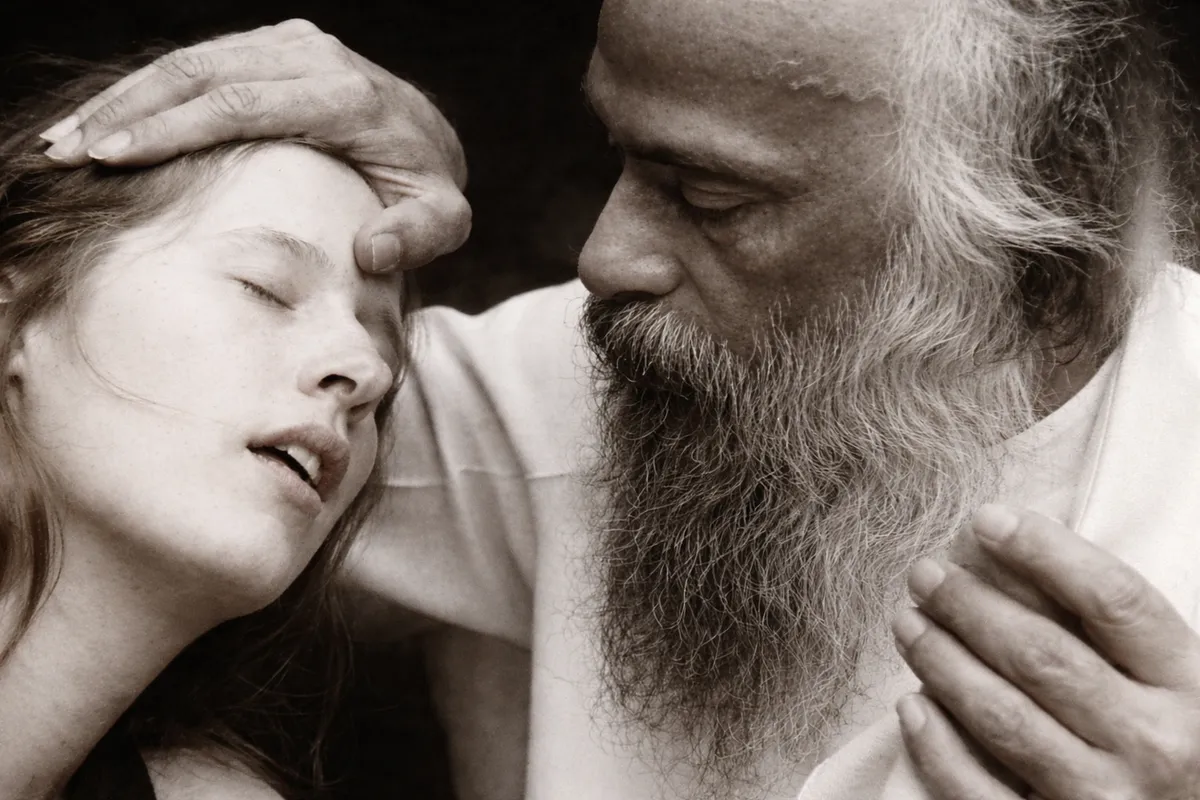
In the "Saravsar Upanishad" discourse series, Osho delves into profound spiritual inquiries central to human existence: the nature of bondage and liberation. With incisive clarity, Osho contrasts the analytical path of science with the synthetic experience of religion. He posits that while science dissects reality into its smallest components, seeking knowledge through fragmentation, religion strives to unify and connect the part with the Whole, seeking an experiential understanding of existence. Osho evokes the metaphor of a flower to elucidate this difference, suggesting that while science might understand a flower through its chemical components, the essence and beauty perceived by a poet lie in its entirety, not in its dismembered parts. This series invites seekers to embrace synthesis over analysis, to perceive life as an interconnected whole where ultimate spiritual insight arises. Osho's unique approach integrates Eastern mystical perspectives with contemporary sensibilities, offering a journey toward recognizing the indwelling vastness of existence. Through this discourse, he illuminates the path from fragmentation to wholeness, advocating a vision of life that transcends mere logical understanding to reach the profound depths of spiritual liberation.
-
Chapter 1
Truth is dangerous: Sarvasar says inner transformation must precede knowledge; guru and disciple must strive together and conserve energy for awakening.
-
Chapter 2
Prayer opens the heart so true inquiry can arise; recognize bondage before seeking moksha, and learn vidya vs avidya to find the real path now.
-
Chapter 3
Bondage is the ego born of Avidya; liberation is Vidya — realizing Atman as Ishvara through attention and meditation, not analysis; try gaze, 'Hu' and dance.
-
Chapter 4
Sense-based knowing produces personal Mayas; only direct, mediumless seeing reveals truth. Break dreams and awaken Turiya by fierce breath, dance, total effort.
-
Chapter 5
Consciousness depends on objects; true awakening (Turiya) is remaining aware when all objects vanish - discover the self beyond waking, dream, sushupti.
-
Chapter 6
Layers of being, from the food-made body to pranic energy, must be known and purified; diet, breath and air shape a transparent body that leads beyond itself.
-
Chapter 7
Self's layers - gross to bliss - are built by food, breath and thought; purify mind with meditation so vijnana ripens into ananda and grace can draw you beyond.
-
Chapter 8
Craving pleasure and avoiding pain bind us to the body; consenting to pain (tapas) transforms experience, dissolves the doer, and opens to timeless bliss.
-
Chapter 9
Bondage is inner: mind, prana and desire are knots (granthi). Consciousness is the ocean; mind the waves—only witnessing awareness can untie the knot.
-
Chapter 10
Man-as-he-is is illness: hoarding Sattva or Punya builds ego; liberation arises by knowing—witnessing (Sakshi/Kutastha/Antaryami)—not by accumulating.
-
Chapter 11
Forms are transient; the formless Brahman is the imperishable witness and pure Knowledge. Make 'Thou' the center, dissolve the I to meet Truth.
-
Chapter 12
True knowledge is chaitanya - not object-bound knowing but an eternal, causeless bliss-state beyond relations; can love and joy arise from within?
-
Chapter 13
Know the I as a shadow and leap from I -> Thou -> That to Parabrahman; humility is ego's mask—who will remove the I? Only deep seeing dissolves it.
-
Chapter 14
Maya is a beginningless waking-dream that shapes love, suffering and identity; like a rope-seen-as-snake, our projections bind us until awareness frees us.
-
Chapter 15
Ego is a self-made burden of names, wealth and roles; only when it dissolves does the true I - witness, Chit-svarupa - remain. What am I beyond ego?
-
Chapter 16
You are the witness, not the doer or enjoyer; proximity to body and mind creates the false 'I'. How to be free? Effortless witnessing or tapa dissolve identification.
-
Chapter 17
Drop every doctrine and knowledge; Vedanta is the end of knowing—become knowledge‑less to meet Brahman, then who is bound and what meaning has liberation?