
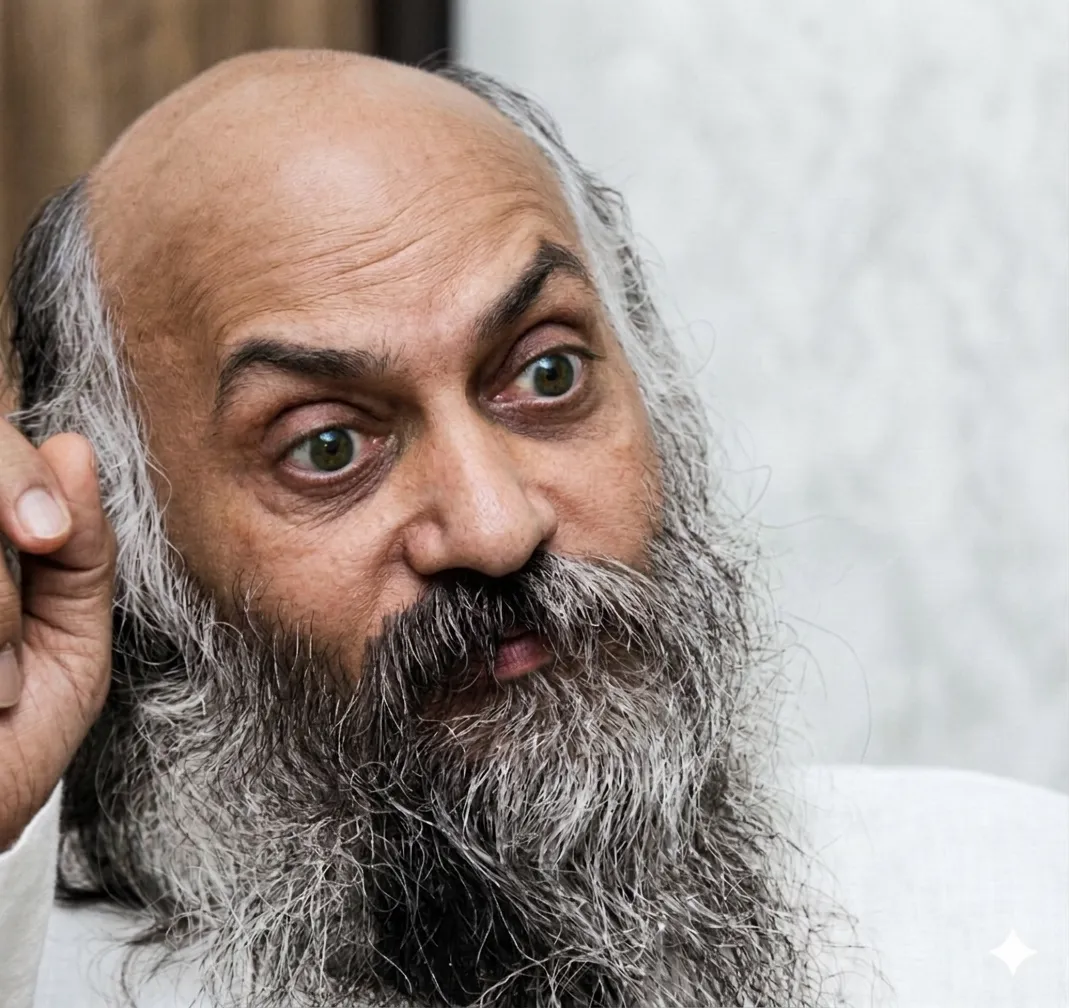
Osho's original Hindi beside Osho Live's English translation, matched passage by passage.
लोहे की दीवारें, पंछी!
कैसे तुझे सुहाती होंगी?
अन्तर में संघर्ष छिपाए,
तेरा जीवन जलता होगा!
हासों में छिप क्रन्दन तेरा,
भोले जग को छलता होगा!
पर अनजाने में तो तेरी,
अंखियां भी भर आती होंगी!
Iron walls, O bird! How could they ever please you? Hiding a struggle within, your life must be burning! Laughter veils your sobbing, deceiving this innocent world! And yet, unawares, your eyes must fill again and again! Iron walls, O bird! How could they ever please you?
लोहे की दीवारें, पंछी!
कैसे तुझे सुहाती होंगी!
जग की खुशियों पर न्योछावर,
होंगी कब तक तेरी चाहें!
पलकों के डोरों से कब तक,
नापेगा जीवन की राहें?
सोच रही हूं, बुझती कितनी--
यों ही जीवन-बाती होंगी!
लोहे की दीवारें, पंछी!
Spending yourself on the world’s delights— how long will your longings endure? How long will you measure life’s roads with the fine threads of your eyelashes? I wonder how many tiny wicks of life have flickered out just so! Iron walls, O bird! How could they ever please you?
कैसे तुझे सुहाती होंगी?
जागृति का संदेश लिये जब,
लेती होगी वायु हिलोरें!
ऊषा की आभा से रक्तिम,
होती होंगी नभ की कोरें!
जग के आंगन में जब चिड़ियां,
गाती मधुर प्रभाती होंगी!
लोहे की दीवारें, पंछी!
When the wind takes a ripple bearing the message of awakening, when the rims of the sky blush crimson with the aura of dawn, when birds sing sweet morning songs in the courtyard of the world— Iron walls, O bird! How could they ever please you?
कैसे तुझे सुहाती होंगी?
मनुष्य भी बंद है--लोहे की दीवारों में नहीं, लोहे से भी ज्यादा संघातक चित्त की दीवारों में, विचार की दीवारों में। ऊपर से कितने ही तुम स्वतंत्र मालूम पड़ो, लेकिन तुम्हारे पंख काट दिए गए। उड़ तुम सकते नहीं। आकाश तुम्हारा तुमसे छीन लिया गया है और ऐसे सुंदर शब्दों की आड़ में छीना गया है कि तुम्हें याद भी नहीं आती। तुम्हारी जंजीरों को तुम्हारा आभूषण बना दिया गया है। तुम्हारे कारागृह, समझाया गया है कि तुम्हारे मंदिर हैं। और जिनके बोझ से तुम दबे जा रहे हो, बताया गया है वह ज्ञान है, शास्त्र हैं, सिद्धांत हैं।
Man is imprisoned too—not by iron walls, but by walls more lethal than iron: the walls of mind, the walls of thought. Outwardly you look so free, yet your wings have been clipped. You cannot fly. Your sky has been stolen—and stolen behind such beautiful words that you no longer remember. Your chains have been turned into ornaments. Your prisons have been explained to you as your temples. And the burdens beneath which you are being crushed have been certified as knowledge, scripture, doctrine.
यह सारा विराट आकाश तुम्हारा है मगर जीते हो तुम बड़े संकीर्ण आंगन में-- हिंदू का आंगन, ईसाई का, मुसलमान का, जैन का। संकीर्ण आंगन हैं। छोटे-छोटे आंगन हैं। परमात्मा में जिसे जीना हो उसे सब जंजीरें तोड़ देनी पड़ती हैं; फिर वे जंजीरें चाहे सोने की ही क्यों न हों।
This vast sky is yours, yet you live in cramped courtyards—the Hindu’s courtyard, the Christian’s, the Muslim’s, the Jain’s. Narrow courtyards. Little yards. Whoever would live in Paramatma must break every chain—even golden chains.
और ध्यान रखना, लोहे की जंजीरें तोड़ना आसान है, सोने की जंजीरें तोड़ना कठिन है, क्योंकि सोने की जंजीरें प्रीतिकर मालूम होती हैं, बहुमूल्य मालूम होती हैं। आदमी बचा लेना चाहता है सोने की जंजीरों को। और जंजीरों के पीछे सुरक्षा छिपी है। जो पक्षी तुम्हें पींजड़े में बंद मालूम होता है, तुम अगर पींजड़े का द्वार भी खोल दो तो शायद न उड़े। क्योंकि एक तो न मालूम कितने समय से पींजड़े के भीतर बंद रहा है, उड़ने की क्षमता खो चुका होगा। क्षमता भी न खोई हो तो विराट आकाश भयभीत करेगा। क्षुद्र में रहने का संस्कार विराट में जाने से रोकेगा। पंख फड़फड़ाएंगे भी तो आत्मा कमजोर मालूम होगी, आत्मा कायर मालूम होगी।
Remember, iron chains are easy to break; golden chains are difficult. Golden chains appear lovely, precious. Man wants to save them. And behind chains hides security. The bird you see locked in a cage—if you open the door, perhaps it still will not fly. For who knows how long it has been confined—maybe it has lost the capacity to fly. Even if the capacity remains, the vast sky will terrify. The habit of the small will hinder the leap into the infinite. The wings may flutter, but the soul will feel weak, the soul will feel cowardly.
फिर, पींजड़े की सुरक्षा भी है। भोजन समय पर मिल जाता है, नियत मिल जाता है, खोजना नहीं पड़ता। कभी ऐसा नहीं होता कि भूखा रह जाना पड़े। खुला आकाश, माना कि सुंदर है और वृक्ष हरे हैं और फूल रंगीन हैं और उड़ने का आनंद, सब ठीक, लेकिन भोजन समय पर मिलेगा या नहीं मिलेगा? किसी दिन मिले, किसी दिन न मिले! असुरक्षा है। फिर खतरा भी है। पींजड़े में बंद, कोई हमला तो नहीं कर सकता। पींजड़े में बंद बाहर की दुनिया भीतर तो प्रवेश नहीं कर सकती। पींजड़े के बाहर शत्रु भी होंगे, बाज भी होंगे, हमला भी हो सकता है, जीवन संकट में हो सकता है। पींजड़े में सुरक्षा है, सुविधा है। आकाश असुरक्षित है, असुविधापूर्ण है। तुम द्वार भी खोल दो पींजड़े का तो जरूरी नहीं कि पक्षी उड़ जाए।
Then too, there is the cage’s security. Food comes on time, regularly; no need to seek. There is no chance of going hungry. The open sky—granted, it is beautiful, the trees are green, the flowers are colored, and the joy of flight—granted. But will food arrive on time? Some days it may, some days it may not. There is insecurity. There is danger too. Enclosed in the cage, no attacker can reach you; the outer world cannot intrude. Outside the cage there will be enemies, hawks—an attack could come, life could be in peril. The cage offers security, convenience. The sky is insecure, inconvenient. Even if you open the cage door, it is not necessary that the bird will fly.
मैंने तुम्हारे द्वार खोले हैं, मगर जरूरी नहीं कि तुम उड़ो। सच तो यह है जो तुम्हारा द्वार खोलता है उससे तुम नाराज हो जाते हो, क्योंकि तुम्हारे लिए द्वार खुलने का अर्थ होता है: बाहर से शत्रु के आने के लिए भी द्वार खुल गया। तुमने अपनी एक छोटी-सी दुनिया बना ली है। तुम उस छोटी-सी दुनिया में मस्त मालूम होते हो। कौन विराट की झंझट ले!
I have opened your doors, but it is not necessary that you will fly. In truth, the one who opens your door—you grow angry with him, because for you a door opening also means that enemies can now enter. You have made a small world of your own; you seem content within it. Who wants the bother of the boundless?
इसलिए लोग मंदिरों में परमात्मा को खोजते हैं, जबकि परमात्मा चारों तरफ मौजूद है। मंदिर छोटा-छोटा आंगन, छोटे-छोटे पींजड़े...। परमात्मा को लोग शास्त्रों में खोजते हैं, जबकि परमात्मा चारों तरफ जीवंत है! उसी का सागर लहरा रहा है। परमात्मा के संबंध में लोग दूसरों से पूछते हैं, जबकि परमात्मा तुम्हारे भीतर बैठा हुआ है!
That is why people search for God in temples, while Paramatma is present everywhere. Temples are small courtyards—small cages. People search for God in scriptures, while God is vibrant all around; his ocean is surging. Regarding God, people ask others, while God sits within you.
यही सहज-योग की घोषणा है। तुम परमात्मा हो, रत्तीभर कम नहीं। लेकिन जरा अपनी स्वतंत्रता को स्वीकार करो। और मजा यह है कि पक्षियों पर तो पींजड़े दूसरे लोगों ने बनाए हैं, तुम्हारा पींजड़ा तुम खुद ही बना लिए हो। पक्षी को तो शायद किसी और ने बंद कर रखा है; तुमने खुद ही अपने को बंद कर लिया है। क्योंकि तुम्हारा पींजड़ा ऐसा है, तुम जिस क्षण तोड़ना चाहो टूट सकता है।
This is the declaration of Sahaj-yoga: You are God— not a grain less. Simply accept your freedom. And the wonder is, cages for birds are made by others, but your cage you yourself have made. The bird perhaps has been locked by someone else; you have locked yourself. Your cage is such that the moment you choose to break it, it can be broken.
सहज का अर्थ होता है: जहां चेतना परिपूर्ण स्वाभाविक हो गई, सारे बंधन गिर गए, सारी जंजीरें गिर गईं। जंजीरें सूक्ष्म हैं, दिखाई पड़ने वाली नहीं हैं। लेकिन हैं जरूर। हर आदमी बंधा है। और जब भी कोई व्यक्ति यहां बंधन के बाहर हो जाता है तो बुद्ध हो जाता है, महावीर हो जाता है, मुहम्मद हो जाता है, जीसस हो जाता है, सरहपा और तिलोपा हो जाता है।
Sahaj means: where consciousness becomes perfectly natural, all bonds drop, all chains fall. The chains are subtle, not visible, yet they are. Every person is bound. And whenever someone becomes unbound here, he becomes a Buddha, a Mahavira, a Muhammad, a Jesus, a Saraha, a Tilopa.
स्मरण करो, अपनी क्षमता को स्मरण करो। तुम भी यही होने को हो। इससे कम मत होना। होना हो तो ईसा होना, ईसाई मत होना, ईसाई होना बहुत कम होना है। जब ईसा हो सकते हो तो क्यों ईसाई होने से तृप्त हो जाओ? और जब महावीर हो सकते हो तो जैन होने से राजी होना बड़े सस्ते में अपनी जिंदगी बेच देना है।
Remember—remember your capacity. You too are to become this. Do not settle for less. If you must be something, be Jesus—do not be Christian; to be Christian is to be far less. When you can be Jesus, why be content with being a Christian? And when you can be Mahavira, to be content with being a Jain is to sell your life cheap.
मैं तुम्हें चाहता हूं बुद्ध बनो, उससे कम नहीं। उससे कम अपमानजनक है। उससे कम परमात्मा का सम्मान नहीं है। क्योंकि तुम्हारे भीतर परमात्मा बैठा है और तुम छोटी-छोटी चीजों में होकर छोटे-छोटे होकर उलझ गए हो। और अगर कोई तुम्हें तुम्हारी उलझन से बाहर निकालना चाहे तो तुम नाराज होते हो, तुम क्रोधित हो जाते हो। तुमने बड़ा मूल्य दे दिया है क्षुद्र बातों को। मूल्य तो सिर्फ एक बात का है--समाधि का। और सब निर्मूल्य है। उसी समाधि के ये सूत्र हैं।
I want you to become a Buddha—nothing less. Anything less is an insult—to you and to God. For God abides within you, and you have gotten entangled in small things, becoming small yourself. If anyone would pull you out of your entanglement, you grow angry, you rage. You have given immense value to trifles. Value belongs to one thing only—Samadhi. All else is valueless. These are the aphorisms toward that Samadhi.
Now the life-breath is so very tired, wandering here and there, forever seeking this or that, worn out with perplexity. Now the life-breath is so very tired.
अब तो बहुत थक गये, प्राण;
इधर-उधर, नित कुछ न कुछ खोजते फिरते बहुत हुए हैरान,
अब तो बहुत थक गये, प्राण।
पांव थके, हिय थका, जिय थका, लोचन थके, थके अंग-अंग
आशा थकी, प्रतीक्षा हारी, थकी कल्पना--अथक उड़ान,
Feet tired, heart tired, the life tired, eyes tired, each limb tired. Hope tired, waiting defeated, imagination tired—its tireless flight exhausted. Now the life-breath is so very tired.
अब तो बहुत थक गये, प्राण।
अन्वेषणमय अष्ट याम की परिक्रमा है श्रांत नितांत,
दरसन-प्यास बढ़ी अधिकाधिक ज्यों-ज्यों बढ़ती गयी थकान,
The circuit of eight watches of ceaseless quest— it stands utterly fatigued. The thirst for Darshan grows ever more as weariness deepens. Now the life-breath is so very tired.
अब तो बहुत थक गये, प्राण।
नीरस, अति निष्फल यह जीवन, हृदय-रिक्त, मन निपट अशान्त,
केवल व्यर्थ प्रयोगों में ही बीते जीवन क्षण सुनसान,
अब तो बहुत थक गये, प्राण।
गत जीवन पर डाल रहे हैं, अब हम हसरत भरी निगाह,
This life is dull, fruitless, heart empty, mind wholly unquiet— only futile experiments have consumed the silent moments of life. Now the life-breath is so very tired.
Now we cast a wistful gaze over the life already spent— what we might have become had we not wandered on unknowing. Now the life-breath is so very tired.
क्या से क्या हो जाते गर हम, यूं से यूं चलते अनजान,
अब तो बहुत थक गये, प्राण।
गत कृत अभ्यासों के बंधन हुए बहुत ही हैं मजबूत,
प्रीतम, कठिन दीख पड़ता है इस गति से पाना निर्वाण,
अब तो बहुत थक गये, प्राण।
The bonds of past practices have grown very strong. Beloved, by this pace Nirvana seems hard to attain. Now the life-breath is so very tired.
Playfully, O wayward Mind, if you just give one little jolt— by that single shake may life find its blessedness. Now the life-breath is so very tired.
खेल-खेल में तुम मन-मौजी, गर हमको दो झटका एक,
तो बस, उस इकटल्ले से ही हो जाये जीवन-कल्याण,
अब तो बहुत थक गये, प्राण।
जरा देखो गौर से अपने भीतर, कितने थक गए हो! कितने हताश-उदास हो गए हो! कितना बोझ लिए चल रहे हो! कितनी ऊब है तुम्हारे भीतर! तुम्हारे भीतर ऊब ही ऊब है। जीए जाते हो, क्योंकि जीना है। मगर कहां है जीवन का स्पंदन? कहां है जीवन का नृत्य? कहां है जीवन का उत्सव? बांसुरी तो बजती नहीं। वीणा पर तो टंकार उठती नहीं। मृदंग पर तो कोई थाप पड़ती नहीं। कहीं कोई मधुमयता नहीं है, कहीं कोई रसधार नहीं दिखाई पड़ती।
Look closely within yourself—how tired you are! How desolate and disheartened! How much weight you drag! How much weariness within! Within you there is only weariness upon weariness. You go on living because one must live. But where is the pulse of life? Where is life’s dance? Where is life’s festival? The flute does not sing; the vina gives no twang; no beat falls on the drum. Nowhere any honeyedness, no streams of rasa are seen.
इसे जीवन कहते हैं तो फिर मृत्यु क्या है? इसे जीवन कहते हैं तो फिर जीवन दो कौड़ी का है! जीवन हो सकता था, हो नहीं पाया। तुम चाल ही न चले ऐसी कि जीवन हो जाता। तुम चाल ऐसी चले कि रोज-रोज संकीर्ण होते गए, रोज-रोज सिकुड़ते गए। तुम फैले नहीं, विस्तीर्ण न हुए।
If this is life, then what is death? If this is life, then life is worth two cowries! Life could have been—but did not become. You walked in such a way that life could not happen. Each day you grew narrower, more shrunken. You did not spread, you did not become vast.
‘ब्रह्म’ शब्द का अर्थ होता है: विस्तार। जो फैलता ही चला जाए, जो सब सीमाओं का उल्लंघन कर दे, जो अतिक्रमण कर दे सारी मर्यादाओं का--वही ब्रह्म को उपलब्ध हो पाता है।
The very meaning of the word Brahman is expansion—that which goes on extending, which crosses all boundaries, which transgresses every limit—only that one attains Brahman.
सहज-योग एक महाक्रांति है। इसे समझो तो द्वार खुल जाए परम अनुभूति का। इसे समझो तो तुम्हारा जीवन भी कृतार्थ हो।
Sahaj-yoga is a great revolution. Understand it, and the door of supreme realization opens. Understand it, and your life too is fulfilled.
एक-एक शब्द को गौर से समझना, क्योंकि तिलोपा ने बहुत शब्द नहीं कहे, थोड़े से शब्द हैं। मगर एक-एक शब्द पर्याप्त है तुम्हें मुक्त करने को।
Listen to each word with care, for Tilopa did not speak many words; there are few words. But one word is enough to set you free.
जिम विस भक्खइ विसहि पलुत्ता। तिम भव भुज्जइ भवहि ण जुत्ता।।
‘जिस प्रकार विष का शोधक विष खाकर भी मरता नहीं है, उसी प्रकार योगी सांसारिक विषयों को भोगता हुआ भी संसार के बंधनों में नहीं पड़ता।’
As the one who knows how to neutralize poison may eat poison and not die, so the yogi, enjoying the objects of the world, does not fall into worldly bondage.
सुनो यह घोषणा। यह भगो़ड़ों की घोषणा नहीं है। यह संन्यास का पलायनवादी रूप नहीं है। यह संन्यास की आत्यंतिक रूप से विधायक धारणा है। तिलोपा कहते हैं कि जो विष का जानकार है वह विष को भी औषधि में बदल देता है। और जब तक तुम विष को औषधि में न बदल सको तब तक समझना तुम्हारे भीतर ज्ञान की किरण ही पैदा न हुई । तब तक समझना तुम्हारी बुद्धिमत्ता न जागी। तब तक तुम बुद्धू हो, तुम बुद्ध न हुए। जिस दिन जीवन के जहर को भी अमृतमय बनाने की कला आ जाती है, जो उस रसायन को जान लेता है वही योगी है।
Listen to this proclamation. It is not a proclamation for escapees. It is not the escapist form of sannyas. It is the most creative vision of sannyas. Tilopa says: the one who knows the science of poison can turn poison into medicine. Until you can turn poison into medicine, know that no ray of wisdom has yet arisen within you. Know that your intelligence has not awakened—you remain a simpleton; you have not become a Buddha. The day the art is mastered of making even life’s poisons into nectar—the one who knows that alchemy is the yogi.
योगी भगोड़ा नहीं हो सकता। भगोड़ा तो कायर होता है। भगोड़े का अर्थ तो यह है कि जहर देखकर जहर को छोड़कर भाग खड़े हुए। यह तो चुनौती का अस्वीकार हो गया। यह तो पीठ दिखा दी। यह तो जीवन के रण-क्षेत्र से कायर की तरह पूंछ दबाकर भाग गए। इसलिए मैं अपने संन्यासी को कहता हूं कि तू सहज-योगी होना, छोड़ना मत, भागना मत। जिंदगी में जो भी परमात्मा ने दिया है वह सभी रूपांतरित हो सकता है अमृत में। ठीक दुकान पर बैठे-बैठे मंदिर का आगमन हो सकता है। और मजा तो तभी है जब तुम्हें मंदिर न जाना पड़े और मंदिर तुम्हारे पास आए। रस तो तभी है जब तुम्हें हिमालय न जाना पड़े, तुम्हारे भीतर हिमालय उमगे; तुम्हारी अंतरात्मा हिमालय जैसी शांत और हरी-भरी हो जाए; तुम्हारी अंतरात्मा में झरने फूटें। हिमालय पर जाकर बैठ गए, जरूर थोड़ी शांति मालूम पड़ेगी, क्योंकि बाजार का शोरगुल न होगा। लेकिन वह शांति तुम्हारी नहीं है, याद रखना। एक क्षण को भी भूलना मत। वह शांति हिमालय की है।
A yogi cannot be a deserter. The deserter is a coward. To see poison and run away is to refuse the challenge; to show your back; to flee the battlefield of life with tail tucked. Therefore I tell my sannyasin: be a sahaj-yogi; do not renounce, do not run. Whatever Paramatma has given in life can be transmuted into nectar. Right in your shop, temple can arrive. And the true joy is precisely this—that you need not go to the temple, the temple comes to you. The true relish is that you need not go to the Himalayas; the Himalayas surge within you. Your inner being becomes calm as the Himalayas, lush and green; springs bubble up in your soul. Go sit upon the Himalaya—surely a little peace will be felt, because the marketplace’s clamor will not be there. But remember, that peace is not yours; do not forget it even for a moment. That peace is of the Himalaya.
ऐसे ही समझना कि दर्पण के सामने एक सुंदर व्यक्ति आकर खड़ा हो गया और दर्पण सोचने लगे कि मैं सुंदर हो गया!...सुंदर व्यक्ति के हटते ही दर्पण वही का वही रह जाएगा, जैसा था, टेढ़ा-मेढ़ा, गंदा-कुरूप। सुंदर व्यक्ति की छाया बन गई थी। छाया पर भरोसा मत कर लेना। छाया माया है। छाया आत्मा नहीं है।
Understand it thus: a beautiful person stands before a mirror, and the mirror begins to think, I have become beautiful! The beautiful one departs and the mirror is as it was—warped, grimy, ugly. It was the reflection. Do not trust the reflection. The reflection is maya; it is not the soul.
तुम हिमालय गए, एकांत में बैठ गए, हिमालय का सन्नाटा--कुंआरा सन्नाटा! शांत हवाएं, धूल रहित! हरे वृक्ष, उनकी आकाश को छूने की उमंग! हिमालय के हिमाच्छादित शिखरों पर सूरज से बरसता हुआ सोना, कि पूर्णिमा की रात में चारों तरफ चांदनी का फैलाव! तुम अभिभूत हो गए। तुम्हें लगा, लगा ध्यान। तुमने समझा कि बनी समाधि, पकी समाधि। और जब उतरकर आओगे वापस मैदान में, सब खो जाएगा। कुछ भी हाथ न लगेगा। छाया थी। छाया ने भ्रम में डाल दिया।
You went to the Himalayas, sat in solitude—the virgin hush of the mountains! Quiet winds, dustless air. Green trees, with their yearning to touch the sky. On snow-sheathed peaks, sunlight pouring as gold; on a full moon night, the spread of silver everywhere. You were overwhelmed. You felt it—you thought meditation has happened, Samadhi has ripened. Return to the plains, and it all is lost. Nothing remains in your hand. It was a shadow that deluded you.
तिलोपा कहते हैं: जो जानता है वह अमृत की तलाश में नहीं जाता; वह तो जहर को अमृत बना लेता है। जहर है ही नहीं, अमृत ही है, सिर्फ जरा तलाश की बात है। परमात्मा ने संसार बनाया ही नहीं है, परमात्मा ही है, जरा तलाश की बात है। संसार तो ऊपर-ऊपर है, बाहर-बाहर है; भीतर-भीतर परमात्मा है।
Tilopa says: the knower does not go seeking nectar; he turns poison into nectar. There is no poison; there is only nectar—only the art of discovery is needed. God has not made a world; there is only God—only the art of discovery is needed. The world is on the surface, outside; within, within, there is God.
जरा खोदो, थोड़ी मिट्टी की पर्तों को हटाओ--और जलस्रोत मिल जाएंगे! अपनी पत्नी में ही थोड़ा खोदो और परमात्मा मिल जाएगा। अपने पति में थोड़ा खोदो और परमात्मा मिल जाएगा। अपने बच्चे में थोड़ा खोदो और परमात्मा मिल जाएगा। दुकान पर बैठे-बैठे, थोड़े शांत होने की कला सीखो और परमात्मा मिल जाएगा।
Dig a little, remove a few layers of earth, and you will meet water sources. Dig a little within your wife—and you will find God. Within your husband—God. Within your child—God. Sit in your shop, learn a touch of quietness—and you will find God.
यह संसार जहर उनके लिए है, जो मूढ़ हैं। यह संसार अमृत है उनके लिए, जो बुद्धिमान हैं। संसार न तो जहर है न अमृत, सब तुम पर निर्भर है।
This world is poison for the foolish; it is nectar for the wise. The world is neither poison nor nectar; it all depends on you.
जिम विस भक्खइ विसहि पलुत्ता।
जो जानकार है वह विष को भी पी जाए तो हानि नहीं होती। वह विष को पीने की कला जानता है। जो जानकार है वह जीवन के सारे विष पी जाता है--अहंकार, क्रोध, लोभ, माया, मोह, सब पी जाता है। और मजा यह है कि इन सबको पीकर समृद्ध हो जाता है।
As the knower of poison may drink it and come to no harm, so the knower of life drinks all its poisons—ego, anger, greed, illusion, attachment—and by drinking them he becomes enriched.
समझो थोड़ा, अगर तुमने क्रोध को काट दिया, पी न सके, तो तुम्हारे जीवन में करुणा कभी पैदा न होगी। अगर क्रोध को काट दिया तो करुणा पैदा न होगी।
Understand a little: if you cut off anger, unable to digest it, compassion will never be born in your life. If anger is cut off, compassion cannot arise.
ऐसा समझो, थोड़ा और स्थूल उदाहरण लो। तुम्हारे पैर तुम्हें वेश्यागृह में ले जाते हैं, तुमने पैर काट दिए, क्योंकि पैर न होंगे तो वेश्यागृह कैसे जाओगे? न होंगे पैर, न जाना पड़ेगा वेश्यागृह। तुमने पैर काट दिए, लेकिन अब मंदिर कैसे जाओगे? अब तीर्थयात्रा कैसे होगी? तुमने पैर तो काट दिए वेश्यागृह जानेवाले लेकिन पैरों का कोई ठेका थोड़े ही था वेश्यागृह जाने का। तुम ले जाते थे सो जाते थे। तुम मंदिर ले जाते तो मंदिर जाते। तुम काशी ले जाते तो काशी जाते। तुम काबा ले जाते तो काबा जाते। तुम जहां ले जाते वहां जाते। पैर काटकर तो तुम बड़ी मुश्किल में पड़ गए। अब तो तीर्थयात्रा हो ही न सकेगी।
Take a more gross example. Your legs carry you to the brothel; you cut off your legs—without legs, how will you go to the brothel? But without legs, how will you go to the temple? How will pilgrimage be? You cut off the legs that went to the brothel—but the legs had no contract with brothels. You took them there, so you went there; you could have taken them to the temple, to Kashi, to Kaaba—wherever you take them, there they go. By cutting off your legs you set yourself in great difficulty. Now pilgrimage cannot be.
तुम्हारे मुंह से क्रोध निकलता था, गालियां निकलती थीं, तुमने जबान काट दी। लेकिन अब अमृत-वचन भी पैदा न हो सकेंगे, अब गीत भी न गा सकोगे, अब गुनगुना भी न सकोगे।
From your mouth came anger, abuses—you cut off the tongue. Now nectar-words can never arise, now songs you cannot sing, no humming will be.
आंखें रूप पर मोहित हो जाती थीं, तुमने आंखें फोड़ दीं। लेकिन अब जब गुलाब में परमात्मा खिलेगा तो तुम वंचित रहोगे। और जब कमल पर उसके चरण-चिह्न होंगे, तुम वंचित रहोगे। और जब आकाश में सूरज उगेगा, तुम वंचित रहोगे। और इन सभी रूपों में वही प्रगट हो रहा है। तुमने बड़ी भूल कर ली। आंख का कोई कसूर न था। आंख तो निष्पक्ष है। तुम जो देखना चाहते वही देख लेते।
Your eyes were enchanted by form—you gouged them out. But when God blossoms in the rose, you will be deprived. When his footprints appear upon the lotus, you will miss them. When the sun rises in the sky, you will be deprived. And in all these forms, it is he who reveals himself. You made a great mistake. Eyes were not to blame; eyes are impartial—you see whatever you intend to see.
मगर यही हो रहा है। लोग क्रोध को दबा देते हैं, काट देते हैं; लोभ को दबा देते हैं, काट देते हैं। परिणाम क्या होता है? परिणाम ऐसा होता है, तुम अगर गौर से देखो तो तुम्हें अपने महात्माओं में दिखाई पड़ जाएगा। जिसने क्रोध को दबाया, काटा, नष्ट किया, उसके जीवन में करुणा पैदा नहीं होती, क्योंकि करुणा क्रोध का ही रूपांतरण है। करुणा क्रोध नाम के जहर का ही अमृत में रूपांतरण है। और जिसने लोभ काट दिया उसके जीवन से दान कट जाता है, क्योंकि दान तो लोभ की ही परिष्कृत अवस्था है। और जिसने काम काट दिया उसके जीवन से राम विदा हो जाता है, क्योंकि काम-ऊर्जा का ही ऊर्ध्वगमन, सहस्रार में प्रवेश राम का अनुभव है। जब काम की गंगा गंगोत्री की तरफ बहने लगती है तो राम का अनुभव होता है; जब कोई स्रोत की तरफ लौट चलता है। हां, काम की ऊर्जा बाहर की तरफ बहती थी तो राम का अनुभव नहीं होता। काम की ऊर्जा भीतर की तरफ बहने लगे, अंतर्यात्रा हो, तो राम का अनुभव होगा।
Yet this is what is happening. People suppress anger, cut it off; suppress greed, cut it off. What is the outcome? Look closely at your so-called saints and you will see: the one who suppressed anger, destroyed it, never finds compassion—for compassion is anger transformed; compassion is the same poison of anger become nectar. The one who cut off greed loses charity from his life, for charity is greed refined. The one who cut off lust loses Ram from his life, for the upward journey of sexual energy into the sahasrar is the experience of Ram. When the Ganga of sex-energy begins to flow toward its source, the experience of Ram happens. Yes, when sex-energy flows outward, Ram is not experienced; when it begins to flow inward—an inner pilgrimage—then Ram is realized.
काम ने तुम्हें जरूर बहुत झंझटों में डाला है, यह सच है। न मालूम कितनी उलझनों में पड़ गए हो, काम के कारण! कामवासना ही तुम्हें भटका रही है जन्मों-जन्मों से। मगर याद रखना, यह कसूर काम की ऊर्जा का नहीं है। तुम समझ नहीं पाए। तुम जहर का राज नहीं समझ पाए। तुम इस काम की ऊर्जा का रूपांतरण करने की कीमिया नहीं समझ पाए। तुम कलाविद नहीं हो। काम ने नहीं भटकाया है, तुम्हारी नासमझी ने भटकाया है। तुम्हारी बेहोशी ने भटकाया है। होश होता, तब तो काम की ही सीढ़ियां बना लेते।
Sex has certainly entangled you in endless knots—true. But remember, the fault is not sex-energy’s; you did not understand. You failed to know the secret of the poison. You did not understand the alchemy by which sex-energy is transformed. You are not an artist. Sex did not lead you astray; your ignorance did. Your unconsciousness did. Had there been awareness, you would have made steps out of sex itself.
काम की ही ऊर्जा से ही कोई परमात्मा को उपलब्ध होता है। यह जानकर तुम्हें हैरानी होगी कि पूरे मनुष्य-जाति के इतिहास में कोई नपुंसक समाधि को उपलब्ध नहीं हो सका है। क्यों? नपुंसक को तो सबसे पहले समाधि को उपलब्ध हो जाना चाहिए। उसमें तो काम-ऊर्जा है ही नहीं। लेकिन काम-ऊर्जा नहीं है तो सोपान नहीं बनता, सीढ़ी नहीं लगती। नाव किससे बनाए? कैसे राम की तरफ चले? बाहर ही नहीं जा सकता तो भीतर कैसे जाए? जाने की क्षमता ही नहीं है कहीं, अटका रह जाता है। इसलिए नपुंसक बड़ी दयनीय अवस्था में है।
It will startle you to know: in the entire history of mankind, no eunuch has ever attained Samadhi. Why? A eunuch should be first to attain; he has no sex-energy. But without sex-energy the stairway is not built; the ladder does not stand. With what wood will you build the boat to move toward Ram? If you cannot go outward at all, how will you go inward? There is no capacity to move—he remains stuck. Hence the eunuch’s condition is pitiable.
और कौन लोग नपुंसक की तरह पैदा होते हैं, कभी तुमने इस पर विचार किया है? मैं कहूंगा तो तुम चौंकोगे। जिन लोगों ने भी पिछले जन्मों में कामवासना को जबर्दस्ती दबाया है, तोड़ा है, मरोड़ा है, वे ही लोग नपुंसक की तरह पैदा होते हैं। तुम्हारे तथाकथित ब्रह्मचारी नपुंसक की तरह पैदा होते हैं, क्योंकि वही उनकी इच्छा थी। वही उन्होंने पिछले जन्मों में बार-बार करने की कोशिश की थी। सफल हो गई इच्छा, उनकी कामना पूरी हो गई। जो मांगा था मिल गया। अब रोते हैं। अब परेशान हो रहे हैं।
And consider: who is born eunuch-like? You will be startled when I say: those who in past lives violently suppressed sex-desire, broke it, twisted it—such people are born eunuch-like. Your so-called brahmacharis are born eunuch-like—because that was their wish. Over many lives they tried again and again; the wish succeeded, the desire fulfilled. What was asked was received. Now they weep, now they are troubled.
तुम जरा सोचो, एक बच्चा पैदा हो जिसमें भय न हो, जी सकेगा बच्चा? जी नहीं सकेगा। उसमें अगर भय न हो तो तुम सोचते हो, उसके जीवन में अभय होगा? जिसमें भय ही नहीं है उसमें अभय तो हो ही नहीं सकता। अभय की तो बात छोड़ दो, जीवन ही नहीं बचेगा; आग में हाथ डाल देगा, भय नहीं है उसे, जल जाएगा। सांप को पकड़ लेगा, सांप काट खाएगा, जल जाएगा। रास्ते पर ट्रक का ड्राइवर हार्न बजाता रहेगा, वह बैठा ही रहेगा; उसे कोई भय ही नहीं है। लेकिन इसको तुम बुद्धिमता कहोगे? यह तो बुद्धिहीनता हो गई।
Think: if a child is born without fear, can he live? Without fear, will he have fearlessness? If there is no fear, not only will fearlessness not be—life itself will not remain. He will put his hand into fire; it will burn. He will grab a snake; it will bite. He will sit on the road while a truck blares its horn; he will stay seated—there is no fear. Will you call this wisdom? It is mindlessness.
भय आवश्यक है। और भय में ही छिपा हुआ है अभय। जो भय की पर्त को तोड़ देगा, जो भय को शुद्ध कर लेगा, उसके भीतर अभय की धारा पैदा होती है।
Fear is necessary; within fear lies fearlessness. One who purifies fear, who breaks its crust, within him the stream of fearlessness begins.
स्मरण रखो, तुम्हारे भीतर जो भी हो, काटना मत, त्यागना मत--परिष्कार करना, संशोधन करना। तिलोपा कहते हैं: जिस प्रकार विष का संशोधक विष खाकर भी मरता नहीं, ऐसे तुम संशोधक बनो। तुम जीवन की हर ऊर्जा का संशोधन करो।
Remember: whatever is within you—do not cut it off, do not renounce—purify it, refine it. Tilopa says: as the purifier of poison does not die by eating poison, so become a purifier. Refine every energy of life.
विज्ञान ने यही किया है--बाहर के जगत में। धर्म को यही करना चाहिए--भीतर के जगत में। विज्ञान ने क्या किया? कोई नई शक्तियां तो विज्ञान ने पैदा नहीं कर दी हैं; जो शक्तियां मौजूद थीं, उनका संशोधन किया है। आकाश में बिजली तो कब से चमकती थी, सदा से चमकती है। लेकिन जब अतीत में आज से पांच हजार साल पहले ऋग्वेद के जमाने में चमकती थी तो लोग भयभीत हो जाते थे, भयाक्रांत हो जाते थे, छाती दहल जाती थी। उसी भय से उन्होंने सोचा था इंद्र देवता नाराज हैं। सोचते थे कि बिजली इंद्र देवता का धनुष है। बिजली की टंकार धनुष की टंकार है। देवता नाराज है। देवता की पूजा करो, प्रार्थना करो, अर्चना करो, बली चढ़ाओ, हवन-यज्ञ करो--ताकि देवता शांत हो जाए, कुपित न हो।
This is exactly what science has done in the outer world; religion must do in the inner world. What has science done? It has created no new forces; it has refined the forces that exist. Lightning flashed in the sky since forever. Five thousand years ago in the age of the Rigveda, lightning flashed, and people were terrified—chests shook; they thought Indra was angry. They thought lightning was Indra’s bow; its crack was the twang of his bowstring. The god is enraged—worship him, pray, offer oblations, perform sacrifice, so the god may be appeased.
अब तुमने कभी सोचा कि जो कुपित हो जाए वह देवता कैसा? लेकिन नहीं, इससे इंद्र का कोई लेना-देना नहीं। इंद्र कहीं कोई है भी नहीं। यह मनुष्य के भय ने कथा गढ़ी। आखिर और कोई उपाय भी न था समझने का। और सांत्वना देने की भी कोई व्यवस्था तो करनी ही होगी। आकाश में बिजली चमक रही है, करो क्या? बिजली गिरेगी, गाज गिरेगी, किसी का प्राण ले लेगी। आज तुम्हें इसमें कुछ भय नहीं मालूम होता; आज आकाश में बिजली चमकती है, तो तुम हवन नहीं करते--हां, कुछ मू़ढ़ों को छोड़कर। आज आकाश में बिजली चमकती है तो तुम जरा भी भयभीत नहीं होते; तुम एकदम से माला लेकर राम-राम राम-राम नहीं जपने लगते। तुम जानते हो कि बिजली से इंद्र के कुपित होने का कोई संबंध नहीं; बिजली एक प्राकृतिक ऊर्जा है। अब तुम भलीभांति जानते हो, क्योंकि तुम्हारे घर में बिजली हजार तरह से सेवा कर रही है। जरा बटन दबाओ और इंद्र देवता हाजिर। पंखा डुलने लगे, इंद्र देवता पंखा डुल रहे हैं। जरा बटन दबाओ, इंद्र देवता हाजिर हैं, चाय बनाने लगे, इंद्र देवता चाय बना रहे हैं! जरा बटन दबाओ, रोशनी हो गई। इंद्र देवता तुम्हारे अंधेरे को तोड़ रहे हैं! अब बिजली तुम्हारे हाथ में है। विज्ञान ने किया क्या?
Have you ever thought: the god who grows angry—what god is that? But it had nothing to do with Indra; there is no Indra anywhere. Man’s fear wove the tale; there was no other way to understand, and one needed some consolation. Lightning flashes—what to do? It will strike, it may take a life. Today you feel no such fear; lightning flashes and you do not perform a fire-ritual—barring a few fools. You do not seize a rosary to chant Ram-Ram. You know lightning is unrelated to Indra’s anger; it is a natural energy. Today you know it well—because electricity in a thousand ways serves you at home. Press a button and Indra appears—the fan moves, Indra fanning you. Press a button—Indra arrives to make tea. Press a button—there is light; Indra is breaking your darkness. Electricity is in your hands. What did science do? It studied that lightning that flashed in the sky, grasped its laws, recognized its secret. Once the secret was in hand, you became master.
जो आकाश में बिजली चमकती थी, उसका संशोधन किया, उसको समझने की कोशिश की, उसके सूत्र पकड़े, उसका राज पहचाना। एक दफा राज हाथ में आ गया कि तुम मालिक हो गए। बाहर की बिजली तो हाथ में आ गई, भीतर की बिजली कब हाथ में लाओगे? मैं उसी भीतर की बिजली को हाथ में लाने की बात करता हूं तो लोग नाराज हैं। मगर यह भी समझने जैसी बात है, क्योंकि वैज्ञानिकों ने भी जब पहली दफा बाहर की बिजली को वश में लाने की बात की तो लोग नाराज थे। क्योंकि लोगों ने कहा: यह कैसी बात! क्या इंद्र देवता को वश में करोगे? यह तो बड़ा अधार्मिक कृत्य होगा। क्या इंद्र देवता से तुम अपने घर में काम करवाओगे? यह तो इंद्र देवता बहुत नाराज हो जाएंगे। फिर तो उनके पास जो आखिरी अस्त्र होगा, ब्रह्मास्त्र, वही निकालकर सबकी गर्दन काट डालेंगे
Outer lightning is in hand—when will you bring the inner lightning into your hand? When I speak of bringing inner lightning into your hand, people become angry. Yet understand: when scientists first sought to harness outer lightning, people were angry then too. They said: how can you bring Indra under control? This is irreligious—will you make Indra serve in your house? He will grow furious—he will hurl the Brahmastra and behead everyone.
लेकिन वैज्ञानिक बढ़े चले गए, उन्होंने फिकिर न की तुम्हारे विरोधों की। और आज तुम भूल ही गए अपने विरोध, आज तुम उन्हीं वैज्ञानिकों की खोज पर जी रहे हो, मजे से जी रहे हो। आज तुम सोच भी नहीं सकते कि बिना बिजली के दुनिया कैसी होगी। तुम्हारी सारी सभ्यता खो जाएगी बिना बिजली के। आज हर चीज बिजली पर निर्भर है।
But the scientists went on; they paid no heed to your opposition. Today you have forgotten your protests and live off their discoveries, happily. You cannot imagine the world without electricity; your whole civilization would collapse. Everything depends on electricity.
अमेरिका में पिछले दो वर्ष पहले तीन दिन के लिए बिजली खो गई! और लोग चकित हो गये कि तीन दिन में सारी सभ्यता खो गयी। तुम थोड़ा सोचो अमेरिका की हालत तीन दिनों में क्या हो गई! न्यूयार्क में बिजली नहीं थी तीन दिन तक, भाएं-भाएं हो गया नगर। जो आदमी एक सौ बीसवीं मंजिल पर था, प्यासा अटका है, क्योंकि पानी को चढ़ाए कौन, इंद्र देवता मौजूद नहीं। भूखा बैठा है, क्योंकि लिफ्ट काम नहीं कर रही। अब एक सौ बीस मंजिल सीढ़ियां उतरना भोजन लेने जाने और भोजन लेकर आना, इससे तो बेहतर भूखे बैठे रहना, और जो वर्षों से इतनी सीढ़ियां उतरे नहीं, एक सौ बीस मंजिल, वे आज उतरेंगे तो हृदय का दौरा पड़ जाएगा। रास्तों पर लूट मच गयी, क्योंकि रोशनी नहीं है। कोई रास्ते पर जाए, कोई भी पकड़कर उसके पैसे छीन ले, कोई भी! एकदम जंगल का राज्य शुरू हो गया। तीन दिन में हत्याएं हो गयीं, चोरियां हो गयीं, लूट हो गयीं, बलात्कार हो गये। न पुलिस का वश, न कानून की व्यवस्था, सब खो गई। ट्रेनें बंद, रास्ते सब सुनसान पड़े, दुकानें बंद, दफ्तर बंद। सब कानून ठप्प हो गया। जो लोग तीन दिन न्यूयार्क जैसे नगरों में रहे, उन्होंने लिखा है कि हमने जाना कि हमारी सारी सभ्यता बिजली पर खड़ी है। बिजली खो जाए कि सब खो जाएगा। आदमी बच न सकेगा।
Two years ago, in America, electricity failed for three days. People were astounded—civilization vanished in three days. Consider New York’s condition: a man on the 120th floor, stranded thirsty—who will lift water? Indra is absent. Hungry, because the elevator does not move. To descend 120 flights for food and return with it—better to stay hungry. And those who have not descended so many stairs in years—if they do today, a heart attack will come. Loot erupted on the streets—no lights. Anyone could snatch your money. The jungle returned. In three days, murders, thefts, rapes. The police was helpless, the law broken; trains stopped, roads deserted, shops and offices closed. All law was at a standstill. Those who lived in New York then wrote: we learned our entire civilization stands on electricity. Let electricity be lost—and all is lost; man cannot survive.
आज तुम इतने निर्भर हो गए बिजली पर! और जब पहली दफे वैज्ञानिकों ने ये शोधें शुरू की थीं तो तुम नाराज थे; तुम सोचते थे इंद्र नाराज हो जाएगा कि परमात्मा नाराज हो जाएगा।
You are so dependent on electricity—and when the scientists began these researches, you were angry; you thought Indra or God would be displeased.
वैसे ही लोग मुझ पर नाराज हैं। वैसे ही लोग तिलोपा पर नाराज थे। नाराजगी क्या है? हम भीतर की ऊर्जा को, भीतर की बिजली को वश में करना चाहते हैं। काम-ऊर्जा तुम्हारे भीतर की बिजली है। वही तुम्हें जलाए है। वही तुम्हें जिलाए है। वही तुम्हें चलाती है। हां, अभी इस ढंग से चलाती है जैसे पहले बिजली आकाश में चमकती थी और घबड़ाती थी। यह बिजली बस में की जा सकती है। कामवासना का ध्यान से थोड़ा संबंध हो जाए बस। कामवासना ऊपर की तरफ उठने लगे तो संभोग से समाधि की यात्रा कठिन नहीं है। संभोग से ही समाधि की यात्रा हो सकती है! काम ही राम बनेगा! क्रोध ही करुणा बनेगी। लोभ ही दान बनेगा। और संसार ही ब्रह्म का अनुभव हो जाता है।
In the same way people are angry with me; in the same way they were angry at Tilopa. The anger is because we would master the inner energy, the inner lightning. Sex-energy is your inner electricity; the same power burns you and enlivens you and drives you. Yes, for now it drives you as lightning drove the ancient—by blinding flashes. This lightning can be mastered. Let sex-desire meet meditation, just a little—and it rises upward. Then the journey from sex to Samadhi is not difficult. From sex itself, the journey to Samadhi can be made. Kama becomes Rama; anger becomes compassion; greed becomes charity; the world becomes the experience of Brahman.
‘जिस प्रकार विष का शोधक विष खाकर भी मरता नहीं है उसी प्रकार योगी सांसारिक विषयों को भोगता हुआ भी संसार के बंधनों में नहीं पड़ता।’
As the one who knows poison does not die by eating it, so the yogi, enjoying worldly objects, does not become bound by the world.
स्मरण रखना, तिलोपा यह नहीं कह रहे हैं कि योगी भोगता नहीं है। तिलोपा कह रहे हैं: योगी इस कला से भोगता है कि भोगता भी है और बंधता भी नहीं। यही परम गुह्य विज्ञान है। ऐसे भोगो कि भोग भी लो और बंधो भी न।
Remember, Tilopa is not saying the yogi does not enjoy; he says, the yogi enjoys with such art that he enjoys and yet does not become bound. This is the supreme secret science. Enjoy in such a way that you partake—and yet you do not bind yourself.
दुनिया में दो तरह के लोग हैं आमतौर से। भोगी हैं, जो बंध गए। बंधने के डर से, योगी हैं जो भाग गए। तिलोपा तीसरे मनुष्य की बात कर रहा है, जैसे मैं तीसरे मनुष्य की बात कर रहा हूं। भोगी बंध गया, यह कोई बड़ी सुंदर अवस्था नहीं है। दीन-हीन हो गया, गिड़गिड़ा रहा है, भिक्षापात्र लिये बैठा है। जो-जो किया है उसी में उलझ गया है। इसको उलझा देखकर योगी भाग गया है, भगोड़ा हो गया है, पलायनवादी हो गया है; वह डरता है कि अगर संसार में आए तो बंध जाएंगे। वह जंगलों में छिपा है डर के मारे।
In the world there are two usual kinds of people: the hedonist who becomes bound, and the yogi who, fearing bondage, runs away. Tilopa speaks of a third kind of man, as I do. The hedonist is bound—no beautiful state that; poor, begging, whining, bowl in hand; tangled in his doings. Seeing him ensnared, the yogi runs—he becomes a fugitive, an escapist; he fears that if he enters the world he will be bound. He hides in forests out of fear.
मगर डर से ही तो सिर्फ भीतर की वासना समाप्त न हो जाएगी, वहां भी वासना प्रज्वलित रहेगी। वहां भी वासना उसे बांधती रहेगी। छोटी-छोटी चीजों से बांध लेगी; कोई महल थोड़े ही चाहिए बांधने के लिए, लंगोटी काफी है।
But fear does not end inner craving. It burns there too; it binds him there as well. Little things are enough to bind; palaces are not required—a loincloth suffices.
एक सूफी फकीर के पास एक खोजी आया। लेकिन खोजी देखकर दंग हुआ कि सूफी फकीर तो बड़ी शान से रहता था। उसने तो सुना था कि फकीरों को तो दीनता और दरिद्रता में रहना चाहिए। फकीर का अर्थ ही होता है कि जो गरीब है। यह कैसा फकीर! सोने का सिंहासन था उस फकीर का। राजमहल था उसका आश्रम। सब तरह की सुख-सुविधाएं थीं। हीरे-जवाहरात बरसे पड़ते थे। सम्राट उसके शिष्य थे। इस फकीर से बड़ी बेचैनी होने लगी। यह तो बिलकुल उलटा ही हो रहा है!
लेकिन उस सूफी ने कहा कि अब आ ही गए हो, माना कि तुम्हारा मन राजी नहीं हो रहा है, कुछ देर तो मेहमान रहो, फिर जाना है तो चले जाना। थोड़ा और करीब से देखो।
A seeker came to a Sufi fakir—and was stunned: the fakir lived in great splendor. He had heard fakirs must live in poverty; fakir means poor. But this one had a golden throne, a palace-like ashram, all comforts, jewels, emperors as disciples. The seeker grew restless—this is upside down! Yet the Sufi said: since you have come, even though your mind finds no peace, be my guest a while—then go. Look a little closer.
देखा करीब से, लेकिन कुछ दिखाई नहीं पड़ा कि इसमें योग कहां है! भोग तो खूब चल रहा था; योग कहां है, वह दिखाई नहीं पड़ता था। फिर उसे यह भी डर लगा कि अगर यहां ज्यादा देर रुका तो यही गति मेरी हो जाएगी। क्योंकि उसे भी धीरे-धीरे रस आने लगा। अच्छा भोजन मिला। अभी तो रूखा-सूखा खाता था। अच्छा भोजन मिला, स्वाद लगा। अच्छे बिस्तर पर सोने को मिला, तो डर लगने लगा कि अब वृक्षों के नीचे सो सकूंगा या नहीं, नींद आएगी भी कि नहीं? उस सूफी ने दो आदमी लगा रखे थे जो रोज सुबह उसका हाथ-पैर दाबते, मालिश करते। उसने कहा: यह मुसीबत हुई जा रही है! अब बिना मालिश के चैन न पड़ेगी, कौन मेरी मालिश करेगा?
He looked, but could not see where yoga was—enjoyment seemed abundant; yoga was not visible. Then another fear arose: if I stay here longer, this will become my fate. He began to relish good food; till now he had eaten coarse fare. A good bed—he worried whether he could ever sleep under a tree again. Two attendants massaged the Sufi each morning—this too felt like a trap: without massage, how will I rest? Who will massage me?
वह घबड़ा गया। आठ-पंद्रह दिन बाद उसने कहा: मुझे आज्ञा दें, मैं जाना चाहता हूं। सूफी ने कहा: घबड़ा गए! डर गए! कला नहीं आती? कहां जाना चाहते हो?
कहा: मैं तो जंगल जा रहा हूं। उस सूफी ने कहा: तो मैं भी चलता हूं। खोजी तो मान नहीं सका कि यह सूफी कैसे जाएगा--इतना बड़ा महल, इतनी व्यवस्था सब छोड़कर! मगर वह चल पड़ा उसके साथ। जब कुछ मील दोनों निकल गए, तब उस खोजी को याद आया कि मैं अपना भिक्षापात्र आपके महल में भूल आया, तो मैं जाकर उसे वापिस ले आऊं? तो उसे सूफी ने कहा: अपना साथ न चलेगा। मैं अपना पूरा महल छोड़ आया, तू भिक्षापात्र भी नहीं छोड़ सकता! फिर नमस्कार! फिर हमारे रास्ते अलग हो गए। फिर हमारी दोस्ती न चलेगी।
He panicked. After a fortnight he begged leave. The Sufi said: frightened? Afraid? Lacking art? Where will you go? He said: to the forest. The Sufi said: then I will come too. The seeker could not believe—how will he go, leaving his palace? But the Sufi walked with him. A few miles out the seeker remembered: I left my begging-bowl in your palace—I must fetch it. The Sufi said: your bowl will not do with me. I left my entire palace; you cannot leave a bowl. Our paths part here. Our friendship cannot continue.
वह सूफी फकीर उसे यह स्मरण दिला रहा था कि सवाल क्या पकड़ा है यह नहीं है; सवाल तो पकड़ने का है! लंगोटी कोई पकड़ सकता है, भिक्षापात्र कोई पकड़ सकता है। कोई महल ही थोड़े ही चाहिए बंधने के लिए। कुछ भी हो तो बंध सकता है, अगर कला न आती हो। और कला आती हो तो फिर महल में भी रहकर भी कोई आवश्यक नहीं है कि बंधे। फिर जल में कमलवत हो सकता है।
The Sufi reminded him: the question is not what is held, but the act of holding. One can cling to a loincloth, to a bowl. No palaces are required to bind you. Anything will bind if the art is missing; and when the art is present, even in a palace one need not be bound—then one can be like a lotus in water.
एक फकीर मर रहा था तो उसने अपने शिष्य से कहा कि देख, एक बात का खयाल रखना, बिल्ली भर मत पालना। वह फकीर मर गया इतना ही कहकर। इसकी व्याख्या भी न कर गया। शिष्य तो बड़ा परेशान हुआ। बिल्ली न पालना, आखिरी संदेश! कोई ब्रह्मज्ञान की बात करनी थी। जीवन-भर इस बुद्धू की सेवा की और आखिर में मरते वक्त यह कह गया कि बिल्ली न पालना! बिल्ली हम पालेंगे ही क्यों! बिल्ली से लेना-देना क्या है! और बिल्ली पाल भी ली तो इससे मोक्ष में कौन-सी बाधा पड़ती है! किसी शास्त्र में लिखा नहीं कि बिल्ली मत पालना। बड़े-बड़े आदेश दिए हैं--ऐसा मत करना, वैसा मत करना; दस आज्ञाएं हैं--मगर बिल्ली मत पालना! चोरी मत करना, बेईमानी मत करना, झूठ मत बोलना--समझ में आता है, मगर बिल्ली मत पालना, यह कौन-सी नैतिकता का आधार है!
A fakir was dying. He said to his disciple: remember one thing—do not keep a cat. He died, saying only this—offered no commentary. The disciple was perplexed: do not keep a cat—the final message! Should have spoken of Brahma-knowledge. I served him my whole life, and at the end he says, do not keep a cat. Why would I keep a cat? What has that to do with liberation? No scripture forbids cats. There are great commandments—do not steal, do not lie—but do not keep a cat?
उसे हैरान देखकर एक दूसरे बूढ़े आदमी ने कहा: तू परेशान मत हो। मैं तेरे गुरु को जानता हूं, वह ठीक कह गया है। और मैं भी तुझसे कहता हूं कि अगर उसकी बात मानकर चला तो बच जाएगा। उसकी बात न मानी तो मुश्किल में पड़ेगा। क्योंकि वह मुश्किल में पड़ा था।
Seeing him troubled, an old man said: do not worry. I knew your master; he spoke rightly. And I too tell you—if you follow it, you will be saved; if not, you will fall into difficulty, as he did.
शिष्य ने पूछा: मुझे पूरी बात समझाकर कह दें, कैसी मुश्किल? क्योंकि मेरी अकल में ही नहीं बात बैठती। मैंने बड़े शास्त्र पढ़े हैं, मगर बिल्ली मत पालना!
तो उसने कहा: सुन, तेरा गुरु कैसी मुसीबत में पड़ा। तेरे गुरु ने संसार छोड़ दिया डर से कि यहां फंस जाऊंगा; जैसे लोग छोड़ देते हैं डर से। शादी नहीं की, दुकान नहीं की, बाजार में नहीं बैठा, भाग गया। जंगल में जाकर रहने लगा। एक मुसीबत आई। सिर्फ दो लंगोटियां थीं उसके पास। बस उतनी दो लंगोटियां ले गया था। लेकिन चूहे उसकी लंगोटियां काट जाते। वह सूखने डालता, रात को चूहे लंगोटी काट देते। उसने गांव के लोगों से पूछा कि क्या करना? उन्होंने कहा एक बिल्ली पाल लो। बस वहीं से सारा उपद्रव शुरू हुआ, सारा संसार शुरू हुआ। बात जंची गुरु को, उसने बिल्ली पाल ली। बिल्ली चूहे तो खा गई, लेकिन जब चूहे खा गई तब बिल्ली भूखी बैठी रहे वहां, सूखने लगी। अब उसकी हत्या का पाप लगेगा।
Explain, said the disciple. My mind cannot grasp it—I have studied great scriptures, but do not keep a cat? The elder said: listen. Your guru fled the world from fear of entanglement—like others. He did not marry, did no trade, left the market, went to the forest. One problem arose. He had only two loincloths. Mice kept gnawing them as they dried at night. He asked the villagers what to do. They said: keep a cat. And there began all the trouble— the whole world. The advice seemed sound; he kept a cat. The cat ate the mice, but then grew hungry—was he to let it starve and incur the sin of killing?
तो उस फकीर ने लोगों से पूछा कि भाई यह तो ठीक है, तुमने सुझाव दिया, तुम्हारी बात काम कर गई, चूहे खतम कर दिए बिल्ली ने। मगर अब बिल्ली का क्या हो? तो उन्होंने कहा: ऐसा करो, एक गाय पाल लो, तुम्हें भी दूध मिल जाएगा, बिल्ली को भी दूध मिल जाएगा। तुम यह जो रोज-रोज भीख मांगने जाते हो, इस झंझट से भी बचोगे। और गाय हम दे देते हैं, हमारी भी झंझट मिटेगी कि तुम्हें रोज-रोज आना, रोज तुम्हें हमें भिक्षा देना। गायें गांव के पास बहुत हैं, हम एक गाय तुम्हें गांव की तरफ से दे देते हैं।
फकीर को बात जंची, बात सीधी गणित की थी। गाय पाल ली, लेकिन झंझट--अब गाय के लिए घास चाहिए, भोजन चाहिए। गांव के लोगों ने कहा: अच्छा यह हो कि जमीन तो यहां पड़ी ही है ढेर तुम्हारे पास, थोड़ी खेती-बाड़ी करने लगो, बैठे-बैठे करते भी क्या हो! तो घास भी हो जाएगा, गेहूं भी हो जाएंगे, तुम्हारी रोटी का भी इंतजाम हो जाएगा। बिल्ली भी मजा करेगी, गाय भी मजा करेगी, तुम भी मजा करो।
He asked: what now? They said: keep a cow—you will have milk, the cat will have milk; and you will be spared begging. We will give you the cow, and be spared giving alms daily. The idea appealed; he kept a cow. Now the cow needed grass. Villagers said: there is plenty of land; do some farming—you sit idle, so why not? Grass will come, wheat will come; your bread, the cat, the cow—everyone happy.
तो बेचारे ने खेती-बाड़ी शुरू की। अब खेती-बाड़ी करे कि भजन-कीर्तन करे? गाय को सम्हाले, बिल्ली को सम्हाले कि शास्त्र पढ़े? फुर्सत ही न मिले भजन-कीर्तन की। शास्त्र इत्यादि भूलने लगे। उसने गांव के लोगों से कहा: तुमने तो यह झंझट बना दी। मुझे समय ही नहीं मिलता।
तो उन्होंने कहा: ऐसा काम करो कि गांव में एक विधवा है, उसका कोई है भी नहीं, वह भी परेशान है। उसको हम रख देते हैं यहां, तुम्हारी सेवा भी करेगी, रोटी भी...तुम मजे से भजन करना, तुम कीर्तन करना, वह रोटी भी बना देगी। और मजबूत विधवा है और किसान रही है, खेती-बाड़ी भी कर देगी।
He began farming. But should he farm or do bhajan-kirtan? Tend the cow and cat or read the scriptures? There was no time for devotion. He told the villagers: you have made a mess; I have no time. They said: a widow in the village, with no one to care for her—is troubled. We will place her here; she will serve you, cook your meals, and being strong, she will do the farming too.
यह बात भी जंची। गणित फैलता चला गया। विधवा भी आ गई! उसने खेती-बाड़ी भी शुरू कर दी, हाथ-पैर भी दबा देती, बीमारी होती तो सिर भी दबा देती। फिर जो होना था सो हुआ। फिर विधवा से प्रेम लग गया। कुछ बुरा भी न था, आखिर इतनी सेवा करती थी और उस पर प्रेम न उमगे तो क्या हो! वे ही गांव के लोग आ गये कि यह बात ठीक नहीं, अब अच्छा यही होगा कि आप इससे विवाह कर लो, क्योंकि इससे बड़ी बदनामी हो रही है, हमारे गांव की बदनामी हो रही है। तो विवाह हो गया, बच्चे हुए। फिर उपद्रव फैलता चला गया, फैलता चला गया। फिर बच्चों का विवाह हुआ।
That made sense. The arithmetic went on expanding. The widow arrived; she farmed, massaged his limbs, pressed his head in illness. Then what had to happen happened—love arose. Not wrong: she served so much—how could love not surge? The villagers came: this is not good; marry her, else it is scandal. He married, had children. The trouble spread and spread; then their children married.
और उस बूढ़े आदमी ने कहा: तुम्हारा गुरु ठीक कह गया है कि बिल्ली मत पालना; यह उसकी जिंदगी भर का सार-निचोड़ है। इस बिल्ली से ही सब उपद्रव शुरू हुआ था।
The elder said: your guru was right—do not keep a cat. It is his life’s distilled essence. The mischief began with the cat.
उपद्रव तो कहीं से भी शुरू हो सकते हैं। और बिल्ली की भी और गहराई में जाओ तो लंगोटी से शुरू हुआ। गुरु को असल में कहना था कि लंगोटी मत रखना। मगर कुछ तो रखोगे। लंगोटी, भिक्षापात्र, कुछ तो रखोगे! नहीं तो जिंदगी चलेगी कैसे? जीओगे कैसे? कोई राजमहल ही नहीं बांधते हैं, कोई भी चीज बांध लेगी।
तो असली सवाल यह नहीं है कि क्या तुम्हारे पास है; असली सवाल यह है कि क्या तुम्हारे पास वह कला है जिससे तुम वस्तुओं के बीच रहते हुए भी वस्तुओं से मुक्त रह सको?
Mischief can begin anywhere—and deeper still, with the loincloth. Your master should truly have said: do not keep a loincloth. But you will keep something—the loincloth, the bowl—how will life move otherwise? It is not what you have; it is whether you possess the art to remain free amidst things.
भोगी हैं, बंध गये हैं। योगी हैं, भाग गये हैं। भाग गये हैं, मगर भोगी मरा नहीं है, क्योंकि भागने से कहीं कोई मरता है? भागने से कहीं चित्त बदलता है? योगी हैं, चित्त कह रहा है कि वापस चलो, पता नहीं चूक न हो गई हो, वहीं कहीं रस न हो, यहां बैठे-बैठे क्या कर रहे हो! भोगी हैं, वे सोचते हैं कि कब समय आयेगा, ठीक समय, जब हम छोड़कर जंगल चले जायेंगे! और जंगल में जो बैठे हैं वे सोच रहे हैं कि हम कहां फंस गये हैं, वहीं ठीक थे! लोग वहीं मजा कर रहे हैं, यहां तो और उदासी आ गई है। यहां बैठे-बैठे भी क्या करना है?
The hedonist is bound; the yogi has fled. But the hedonist within is not dead; does fleeing ever kill anything? Does fleeing ever change consciousness? The forest yogi’s mind whispers: go back—perhaps I missed the point; perhaps there is the juice, what am I doing sitting here? The hedonist thinks: when the time comes, I will renounce and go to the forest. The one in the forest thinks: where have I trapped myself? I was better there. People enjoy themselves there; here there is only gloom. What to do sitting here?
ये चित्त की दशायें हैं। मैं योगियों को जानता हूं, भोगियों को जानता हूं। भोगी सोचते हैं योगी मजे में हैं, योगी सोचते हैं भोगी मजे में हैं। तिलोपा कहते हैं: भोग में योग, योग में भोग। ऐसी कला सीखो कि भोग में योग सधे। रहो यहीं, मगर अलिप्त रहो। रहो बाजार में, मगर भीतर रहो। बाहर बाहर है। बाहर का बाहर चलने दो, मगर उसे भीतर प्रवेश न करने दो। भोग में रहो और योग को साधो। और योग में भी परम भोग को साधो, क्योंकि ध्यान में भी लेना तो है रस परमात्मा का। ध्यान में भी आलिंगन तो करना है परमात्मा का। संसार का आलिंगन करके भी आलिंगन मत करना और ध्यान में आलिंगन न करते हुए भी परमात्मा का आलिंगन करना--यह महत कला है। यह सहज-योग है। इसमें आदमी न तो भोगी बनता है, न भगोड़ा बनता है।
These are states of mind. I know yogis and I know hedonists. Hedonists think yogis are happy; yogis think hedonists are happy. Tilopa says: yoga within bhoga, bhoga within yoga. Learn the art by which yoga is mastered in the midst of enjoyment. Stay right here, but remain unattached. Stay in the marketplace, but stay within. The outside is outside—let it move outside; do not let it enter within. Dwell in enjoyment and cultivate yoga. And in yoga, realize supreme enjoyment—for even in meditation the supreme rasa is to be imbibed—the embrace of God. Embrace not the world and yet in meditation, without embracing, embrace God—this great art is Sahaj-yoga. In it, one becomes neither hedonist nor escapee.
मगर यह बात तो भीतरी है और आंतरिक है। दूसरे शायद समझ भी न पायें। दूसरों को पता भी न चलेगा, क्योंकि बाहर की चीजें दिखाई पड़ती हैं। तुमने लंगोटी लगा ली, सिर घुटा लिया, चले जंगल की तरफ--सारे लोग कहेंगे: योगी हो गये! लेकिन तुमने भीतर ध्यान साधा, दुकान पर बैठे रहे, जैसे पहले बैठे थे अब भी बैठे रहे, किसको पता चलेगा? मगर पता किसी को चलाना ही क्यों? पता चलाने में तो अहंकार की ही आकांक्षा है। सारी दुनिया जाने कि मैं योगी हूं, यह तो अहंकार ही है।
But this is inner, intimate; others may not understand. Others will not even notice—outer things alone are seen. You tie on a loincloth, shave your head, head for the forest—everyone declares: you have become a yogi. But if you cultivate meditation within and still sit in your shop as before—who will know? And why should anyone know? The urge to be known is ego’s aspiration. To have the whole world know I am a yogi—this is ego.
और अहंकार तो बड़ी-से-बड़ी बाधा है तुम्हारे और परमात्मा के बीच। किसी को पता ही क्यों चले? चुपचाप, अलिप्त भाव से जी लेना। ध्यान का रस रहे; संसार बाहर चलता है चलता रहे, समानांतर चलने देना। संसार बाहर चले, ध्यान भीतर चले। और खयाल रखना, समानांतर रेखायें कहीं भी मिलती नहीं। रेल की पटरियां देखीं? बिलकुल साथ-साथ दौड़ती हैं। हजारों मील तक साथ-साथ दौड़ती हैं, मगर कहीं मिलती हैं? समानांतर रेखायें कहीं मिलती ही नहीं।
Ego is the greatest barrier between you and God. Why should anyone know? Live quietly, unattached. Let the sweetness of meditation be; let the world run outside and let awareness run within. And remember—parallel lines never meet. The rails of the track—see how they run side by side for miles, yet nowhere do they meet.
योग और भोग समानांतर रेखायें बन जानी चाहिए, यह सहज-योग है। भोग चलता रहे बाहर, योग चलता रहे भीतर--पास ही पास, सटे-सटे, कदम में कदम मिलाकर, छंदबद्ध! मगर न तो तुम्हारा योग तुम्हारे भोग का दुश्मन हो और न तुम्हारा भोग तुम्हारे योग का दुश्मन हो। दोनों समानांतर हों, संतुलन करें एक-दूसरे का। एक-दूसरे के शत्रु न हों, एक दूसरे के परिपूरक हों--और तब तुम देखते हो! तब एक महिमाशाली व्यक्तित्व का जन्म होता है।
Yoga and bhoga must become parallel lines—that is Sahaj-yoga. Let enjoyment run outside, let yoga run within—side by side, step for step, rhythmic; but let not your yoga be the enemy of your bhoga, nor your bhoga the enemy of your yoga. Let them be parallel, balancing each other, not enemies but complements—and then you will see: a majestic personality is born.
मगर दुनिया उसे शायद न पहचान पायेगी, क्योंकि दुनिया के पास तो दो ही कोटियां हैं--या तो योगी या भोगी। इसलिये तिलोपा पहचाना न जा सका; इसलिये सरहपा पहचाना न जा सका; इसलिए मैं भी पहचाना नहीं जा सकता हूं। किस कोटि में मुझे रखोगे? जिस कोटि में रखोगे वही कोटि छोटी पड़ेगी। और तुम बिना कोटि में रखे मान नहीं सकते, तुम्हें किसी न किसी कोटि में रखना पड़ेगा। लेकिन इस जगत में कुछ थोड़े-से लोगों को कोटि के बाहर रहने दो, क्योंकि वे ही नमक हैं; क्योंकि उन्हीं के कारण इस जगत में थोड़ा सौरभ है। न तो तुम्हारे तथाकथित भोगियों के कारण, न तुम्हारे तथाकथित योगियों के कारण; वरन उनके कारण जो योग में भोग को साध लेते हैं, भोग में योग को साध लेते हैं--उन थोड़े-से लोगों के कारण परमात्मा और प्रकृति मिलती रहती है। उन लोगों के कारण परमात्मा और प्रकृति के बीच एक सुसंवाद चलता रहता है, एक गुफ्तगू होती रहती है। परमात्मा और प्रकृति के बीच वे ही सेतु हैं। उनके ही कारण प्रकृति और परमात्मा छिन्न-भिन्न नहीं हो गये हैं।
But the world may not recognize him, for it has only two categories—yogi and bhogi. Thus Tilopa was not recognized; Saraha was not recognized; thus I cannot be recognized. In which category will you place me? Whichever you choose will be too small. And you cannot rest without categories; you must place everyone somewhere. Let a few in this world live beyond categories—for they are the salt of the earth; because of them there is fragrance here. Not due to your hedonists and not due to your so-called yogis, but because of those few who master yoga in bhoga and bhoga in yoga—because of them, God and Nature go on meeting. Because of them, between God and Nature there is an intimate dialogue, a whispered conversation. They are the bridge between Nature and God. Because of them, Nature and God have not been torn apart.
तुम्हारा योगी तो प्रकृति में डूबा है, दमन करके डूबा है, दबाकर डूबा है। तुम्हारा भोगी भी प्रकृति में डूबा है; भोग की अति करके डूबा है। उन दोनों में बहुत भेद नहीं है। उन दोनों में से किसी का भी परमात्मा से कोई संबंध नहीं है। दोनों की नजर एक है।
एक धन से भाग रहा है, एक धन की तरफ भाग रहा है; लेकिन दोनों की नजर एक है। दोनों की नजर में धन का मूल्य है। एक धन की तरफ मुंह करके भाग रहा है, एक धन की तरफ पीठ करके भाग रहा है; मगर दोनों भाग रहे हैं, और दोनों धन के कारण ही भाग रहे हैं। दोनों की जीवनचर्या का आधार धन है, या पद है, या प्रतिष्ठा है, या काम है, या तृष्णा है। मगर दोनों में कोई बुनियादी भेद नहीं है। हां, एक-दूसरे से भिन्न हैं। एक पैर के बल खड़ा है, एक सिर के बल खड़ा है; मगर दोनों एक ही जैसे व्यक्ति हैं, जरा भी भेद नहीं है।
Your yogi is sunk in Nature—by suppression; your hedonist is sunk in Nature—by excess. There is little difference between them; neither has any relation to God. Both value the same things: one runs toward wealth, one runs away from it—but both are running because of wealth. One runs facing wealth, one with his back to it—both are running; both base their lives on wealth, or status, or fame, or sex, or craving. No fundamental difference. Yes, they differ in posture—one stands on one foot, one on his head; but they are the same sort of person.
क्या तुम सोचते हो जब तुम शीर्षासन करते हो तो तुम दूसरे व्यक्ति हो जाते हो? क्या सिर के बल खड़े हो जाने से तुम समझते हो क्रांति घट गई, तुम दूसरे व्यक्ति हो गये? तुम वही के वही हो!
Do you think by doing a headstand you become another person? Does standing on your head create a revolution? You remain the same.
मैंने सुना, एक आदमी महा क्रोधी था। इतना क्रोधी था कि उसने अपनी पत्नी को धक्का दे दिया कुएं में। पत्नी मर गई। चौंका। गांव में एक जैन मुनि आये थे, उनके पास गया, चरणों में गिर पड़ा और कहा कि मुझे दीक्षा दें। जैन मुनि ने कहा: इतनी जल्दी दीक्षा! उसने कहा: इसी समय दें। जैन मुनि ने कहा: साध सकोगे? उसने कहा कि जो मैं न साध सकूं, वह कोई नहीं साध सकता। कहो क्या साधना है? जैन मुनि ने कहा: नग्न होना पड़ेगा। उसने तत्क्षण वस्त्र फेंक दिये। जैन मुनि भी चौंका, आदमी बड़ा साहसी था! साहसी नहीं था, था सिर्फ वह क्रोधी। वह हर काम में, उसकी क्रोध की प्रज्वलित अग्नि होती थी। उसको तुमने चुनौती दे दी, उसके क्रोध को जगा दिया।
I heard of a man of great anger. So angry that he pushed his wife into a well—she died. He was shocked. A Jain muni had come to the village; he fell at his feet: give me initiation. The muni asked: so quickly? He said: right now. The muni asked: will you be able to manage? He said: anything I cannot manage, no one can—tell me what to do. The muni said: you must be naked. He immediately threw off his clothes. The muni was startled—courageous fellow! Not courage—only anger. Anger was the fire behind every act; you challenged him and provoked it.
लेकिन तुम संन्यास लेना क्यों चाहते हो, जैन मुनि ने पूछा। उसने कहा कि मैं महा क्रोधी हूं। मैंने अपनी पत्नी मार डाली। अब बस बहुत हो गया, मुझे शांति का पाठ दें। तो मुनि ने दीक्षा दी और नाम दिया: शांतिनाथ। और मुनि ने बड़ी प्रशंसा भी की कि तुम...मैंने बहुत देखे लोग, वे कहते हैं कल लेंगे संन्यास, परसों लेंगे संन्यास, फिर ले भी लेते हैं तो भी वर्षों लगते हैं नग्न दिगंबर होने में; तुम एक क्षण में कर दिये, तुम साहसी आदमी हो!
आदमी कुल जमा क्रोधी था। यह संन्यास भी उसका क्रोध का ही परिणमन था। यह कोई शांति की घोषणा नहीं थी, यह क्रोध का ही प्रज्वलन था। क्योंकि एकदम से कोई पत्नी को धक्का मारकर शांत हो जाता है! पत्नी को धक्का मारा, अब अपने को धक्का मार दिया कुएं में उसने; बस इतना ही समझना।
Why do you want sannyas? asked the muni. He said: I am very angry; I killed my wife. It is enough—teach me peace. The muni gave initiation and named him Shantinath. He praised him, too: I have seen many—some say they will renounce tomorrow; even when they do, it takes years to become a naked Digambara. You did it in a moment—you are brave. He was only angry; this renunciation was his anger’s transformation. Not a declaration of peace—only anger aflame. Having pushed his wife into the well, he now pushed himself into another well.
फिर उसकी बड़ी ख्याति हो गई। ख्याति होनी ही थी, क्योंकि वह खूब अपने को सताने लगा। दो-दो तीन-तीन दिन उपवास करे, तब एकाध बार भोजन ले। महीनों का उपवास करने लगा, कांटों पर सोये, पत्थरों पर पड़ा रहे, धूप में खड़ा रहे। सर्दी में जाकर पानी में खड़ा हो जाये, जहां कि बर्फ जम रही हो। उसकी ख्याति फैलने लगी। ऐसे ही लोगों की तो ख्याति फैलती है। लोग दूर-दूर से उसके दर्शन करने आने लगे। अंततः वह दिल्ली पहुंच गया, क्योंकि दिल्ली तो पहुंचना ही पड़ेगा। सारे मुनि धीरे-धीरे दिल्ली पहुंच जाते हैं। और दिल्ली पहुंचे कि फिर नहीं छोड़ते वे।
जैन मुनियों के लिये नियम है कि वे एक जगह तीन दिन से ज्यादा न रुकें। अब यह बड़ी झंझट की बात है। अगर वर्षा काल हो तो चार महीने ज्यादा से ज्यादा एक जगह रुक सकते हैं। तो फिर उन्होंने तरकीब निकाल ली, वे दिल्ली को एक नगर मानते ही नहीं, वे दिल्ली को कई नगर मानते हैं। बंबई को भी वे एक नगर नहीं मानते, कई नगर मानते हैं। तरकीब निकाल ली, गणित तो आदमी हर जगह बिठा लेता है। तो कृष्ण नगर, तिलक नगर...अलग-अलग नगर हैं। तो कृष्ण नगर में रहते हैं, फिर तिलक नगर में चले जाते हैं, फिर तिलक नगर से कृष्ण नगर में आ जाते हैं। मगर दिल्ली नहीं छोड़ते।
His fame spread—how could it not? He tormented himself greatly—fasted two or three days, then ate once; then months of fasting; slept on thorns, lay on stone, stood in the sun, stood in freezing water. His fame grew; such people become famous. People came from afar to see him. Eventually he reached Delhi, for all monks must, and then never leave. There is a rule for Jain monks: do not remain anywhere more than three days; during the rains, four months. They found a trick— they do not consider Delhi one city but many: Krishna Nagar, Tilak Nagar—so they keep moving within Delhi and do not leave.
शांतिनाथ भी दिल्ली पहुंच गये। उनके गांव से एक आदमी दिल्ली आया था। सोचा कि शांतिनाथ जी बड़े प्रसिद्ध हो गये हैं, इनके दर्शन कर आऊं। बचपन का साथी था उनका, सोचता था कि मान तो मैं नहीं सकता कि इसका क्रोध चला गया हो, क्योंकि आदमी ऐसा क्रोधी है, इसका अगर क्रोध चला जाये तो दुनिया में सबका क्रोध चला जाये। मगर कौन जाने हो भी गया हो, चमत्कार भी तो घट ही जाते हैं! असंभव कुछ तो, लगता हो तो भी होता नहीं, संभव है हो गया हो। गया। शांतिनाथ बैठे थे, सिंहासन पर नग्न। उन्होंने देख तो लिया, पहचान तो लिया कि बचपन का साथी है। पहचानते भी कैसे न! मगर अब वे हो गये थे शांतिनाथ महामुनि। पहचान लिया, मगर पहचाना नहीं। क्या पहचानना ऐेरे-गैरे नत्थू खैरे को! देख लिया और अनदेखा कर दिया।
Shantinath too reached Delhi. A man from his village came; thought: he is renowned—I will see him. He doubted that his anger had gone—if his anger could go, everyone’s could. But miracles do happen. He went. Shantinath sat on a throne, naked. He saw and recognized his childhood friend—but now he was Shantinath the great muni. He recognized, but did not acknowledge—how to recognize the riffraff? He looked and looked away.
मित्र को भी समझ में तो आ गई आंख कि देख तो लिया है, पहचान भी लिया है और यह भी इधर आंख फेर ली। वह पास सरका। उसने कहा कि महाराज, क्या मैं आपका नाम पूछ सकता हूं? पुराना जानकार था उनके बाबत। उन्होंने कहा: मेरा नाम! अखबार नहीं पढ़ते? कौन मेरा नाम नहीं जानता? नाम पूछने चले आये!
The friend understood: he saw me and looked away. He edged closer. He said: Maharaj, may I ask your name? Knowing him well, he teased. Shantinath said: my name? Do you not read the papers? Who does not know my name? You come to ask my name!
उसने कहा: महाराज, मैं जरा गैर-पढ़ा-लिखा हूं। अखबार वगैरह की फुरसत भी नहीं है। मूढ़ समझें मुझे, नाम बता ही दें।
तो उन्होंने कहा: मेरा नाम शांतिनाथ! मगर जिस ढंग से उन्होंने कहा मेरा नाम शांतिनाथ, मित्र तो समझ गया कि कुछ बदलाहट हुई नहीं है। जो अकड़ थी कहने में...। थोड़ी देर इधर-उधर की बात चलती रही। मित्र ने पूछा: महाराज, मेरी जरा स्मृति कमजोर है, मैं भूल गया, आपका नाम। अब तो महाराज को क्रोध आ गया। उन्होंने कहा कि सुनते हो कि नहीं, बहरे तो नहीं हो? मैंने कहा--शांतिनाथ।
मित्र ने कहा: धन्यवाद महाराज! फिर इधर-उधर की बात चली, फिर उसने पूछा कि महाराज! अब मैं जा ही रहा हूं, आपका नाम तो बता दें। तो जो कमंडल वे लेकर चलते थे, उठाकर उसकी खोपड़ी में मार दिया। कहा कि हजार दफे कह दिया शांतिनाथ, तुझे होश नहीं आता?
उस मित्र ने कहा: अब मुझे बिलकुल होश आ गया। यह जो आपका कमंडल सिर में लगा, उससे सब बात साफ हो गई। आप वही हो, जरा भी भेद नहीं हुआ है।
The friend said: Maharaj, I am unlettered, with no leisure for newspapers; consider me a fool—tell me your name. He said: my name is Shantinath. The way he said it—the friend knew nothing had changed—the same stiffness. They spoke a while. The friend said: my memory is weak—I am forgetting your name. Now anger rose: are you deaf? Did you not hear me say—Shantinath. The friend said: thank you. They spoke more. Then as he prepared to leave, the friend asked again: Maharaj, tell me your name. Shantinath, enraged, struck his skull with his begging bowl: I have told you a thousand times—Shantinath—will you have no sense? The friend said: now I have perfect sense; your blow has clarified everything—you are the same; not a hair has changed.
कपड़े उतार लेने से कोई भेद नहीं होगा। नग्न खड़े हो जाने से कोई भेद नहीं होगा। सिर के बल खड़े हो जाने से भेद नहीं होगा। बुद्ध की तरह आसन मारकर बैठ जाने से कुछ भेद नहीं होगा। भेद तो करना हो तो चैतन्य को बदलना पड़ता है। ध्यान के अतिरिक्त और कोई भेद नहीं होता।
Taking off clothes does nothing; standing naked does nothing; standing on your head does nothing; sitting Buddha-like in posture does nothing. If anything is to happen, consciousness must change—only meditation effects difference.
तो भोग में ध्यान को जोड़ दो और योग हो जायेगा और योग में प्रेम को जोड़ दो और भोग हो जायेगा। और ये दो ही बातें हैं महत्वपूर्ण। भोग में ध्यान का प्रवेश करो, योग बना लो; योग में प्रेम का प्रवेश करो, भोग बना लो। और जब तुम इतने कलाकार हो जाओ कि ध्यान और प्रेम दोनों सध जायें तो किसी को पता चले न पता चले, इससे प्रयोजन नहीं है। परमात्मा जानेगा। तुम्हारे और उसके बीच बात घट गई। जो होने योग्य था हो गया। जो पाने योग्य था पा लिया गया।
जिस दिन ध्यान और प्रेम सध जाते हैं, उस दिन मनुष्य संसार में रहकर ही संसार से मुक्त हो जाता है और संसार से मुक्त होकर भी संसार का परम भोगी होता है।
Bring meditation into enjoyment—and it becomes yoga; bring love into yoga—and it becomes supreme enjoyment. These two are essential. Enter enjoyment with awareness; the result will be yoga. When yoga is in hand, take a second aphorism: now live yoga with love—and supreme enjoyment will be in hand.
मैं तुमसे यह कहना चाहता हूं कि बुद्धपुरुष जैसा भोगते हैं, तुम क्या भोगोगे। जब बुद्ध देखते हैं एक कमल के फूल को तो उनकी आंखें जैसा रसास्वादन करती हैं, तुम्हारी आंखें क्या खाक करेंगी! तुम्हारी आंखों पर इतनी धूल जमी है कि क्या रसास्वादन होगा! जब बुद्ध देखते हैं हरियाली वृक्षों की तो हरियाली दिखाई पड़ती है, तो वृक्ष भी धन्यभागी होते हैं, क्योंकि किसी ने देखा। तुम तो देखते ही कहां हो! तुमने अपने को नहीं देखा, क्या खाक तुम वृक्षों को देखोगे! तुम स्वयं को देखने में असमर्थ हो, तुम किसे और देख सकोगे? जो स्वयं को नहीं देख सकता, कुछ भी न देख सकेगा। स्वदर्शन सारे दर्शन की आधारशिला है।
और जो भीतर रसमय नहीं है, वह कैसे भोगेगा, क्या भोगेगा? माना कि तुम भोजन कर लेते हो, जरूरत से ज्यादा भी कर लेते हो, मगर भोग नहीं है वहां। भोग तो सिर्फ बुद्ध करते हैं। जब बुद्ध भोजन करते हैं, तो एक-एक कौर भोजन का ब्रह्म का स्वाद लिये होता है। जब बुद्ध पानी पीते हैं तो एक-एक घूंट पानी का अमृत का स्वाद लिये होता है।
तुम तो अमृत भी पीयोगे तो समझोगे कोकाकोला है। तुम तो अमृत भी पीयोगे तो भी शायद ही तुम्हें उसका स्वाद आ सके, क्योंकि स्वाद के लिये ध्यान की जरूरत है। तुम्हें ध्यान ही कहां है! तुम तो गटके जा रहे हो, भरे जा रहे हो, फेंके जा रहे हो चीजें भीतर। और इसलिये तो तुम ज्यादा भोजन कर लेते हो क्योंकि स्वाद नहीं ले पाते हो। तो स्वाद की जो कमी रह गई, वह मात्रा से पूरी करते हो। जो व्यक्ति स्वाद लेकर भोजन करता है, वह ज्यादा भोजन नहीं कर सकता। जरूरत ही न रही। तुम खयाल करना इस बात का।
मेरे पास लोग आते हैं और अगर मुझसे पूछते हैं कि हम ज्यादा भोजन करने की आदत में पड़े हैं, क्या करें ? तो मेरा उनको एक ही सुझाव होता है और वे चौंकते हैं सुनकर मेरा सुझाव। मेरा सुझाव यही होता है कि खूब रसपूर्वक भोजन करो। वे कहते हैं: रसपूर्वक! क्या कह रहे हैं आप? हम मरे जा रहे हैं भोजन से ही, हम ज्यादा कर रहे हैं--और आप कह रहे हैं और रसपूर्वक! जिनके पास भी हम गये उन्होंने कहा कि भोजन छोड़ो, यह मत खाओ वह मत खाओ, आधा कर दो भोजन। आप कहते हैं रसपूर्वक!
मैं कहता हूं: रसपूर्वक! आधा अपने से हो जायेगा। एक-एक कौर को इतना चबाओ, इतना रस लो, जितना कि उसमें रस हो, पूरा का पूरा रस ले लो।
वैज्ञानिक कहते हैं कि एक कौर को कम से कम चवालिस बार चबाना चाहिये तो पूरा रस मिलता है। अब तुम जब एक कौर को चवालिस बार चबाओगे तो एक कौर ने तुमसे उतनी मेहनत करवा ली जितनी चवालिस कौर करवाते। और एक कौर से तुम्हें उतना रस मिल गया जितना शायद चवालिस से भी न मिलता। तृप्ति जल्दी हो जायेगी। आधे भोजन में, शायद एक चौथाई भोजन में तृप्ति हो जायेगी। और वही तृप्ति भोग है।
बुद्धपुरुष जानते हैं कैसे सोना कैसे जगना, कैसे उठना कैसे बैठना। उनके जीवन में सब तरफ प्रसाद ही प्रसाद होता है। उनका जीवन एक कला है, एक काव्य है। भोग को बोध बनाओ। मैं तुम्हें भोग सिखाता हूं। लेकिन अगर तुम ध्यानपूर्वक भोग कर सको तो तुम चकित हो जाओगे: भोग के भीतर से ही योग का शिखर उठने लगा। क्योंकि जैसे-जैसे ध्यान सम्हलेगा वैसे-वैसे योग सम्हलेगा। सार में भोग को ध्यानपूर्वक करो, परिणाम में योग हाथ आयेगा! और जब योग हाथ में आ जाये तब तुम्हें दूसरा सूत्र मैं देता हूं कि अब योग को प्रेमपूर्वक जीयो तो महाभोग हाथ में आये।
योग को प्रेमपूर्वक जीने का क्या अर्थ है? आंख तो स्वच्छ हो गई, ध्यान ने स्वच्छ कर दी। अब तुम फूल को देखते हो तो
फूल अपनी परिपूर्णता में दिखाई पड़ता है। यह ध्यान ने एक काम पूरा कर दिया कि दर्पण की धूल झाड़ दी, दर्पण को स्वच्छ कर दिया पोंछकर धो डाला, स्नान करवा दिया। ध्यान स्नान है। दर्पण बिलकुल स्वच्छ हो गया। अब फूल जैसा है वैसा दिखाई पड़ने लगा। यह योग हुआ। लेकिन अभी और थोड़ी बात होनी है। अभी दर्पण सिर्फ ग्राहक है; सिर्फ फूल को अपने भीतर प्रतिबिंबित करता है। फूल को कुछ देता नहीं, लेता है। प्रेम चाहिये अब, ताकि दर्पण फूल को कुछ दे भी; ताकि दर्पण फूल पर बरस पड़े; ताकि दर्पण बह उठे फूल पर। ले ही क्यों, दे भी!
What does it mean to live yoga with love? The eyes have been cleansed by meditation. Now when you behold a flower, it appears in its fullness. Meditation has cleansed the mirror, washed away its dust, given it ablution; meditation is bathing. The mirror is spotless; now the flower appears as it is. This is yoga. But more remains. The mirror is only receptive; it reflects the flower within itself; it gives nothing to the flower. Love is needed—so the mirror may also give itself to the flower; so the mirror may pour itself over it; so it not only take, but give.
ध्यान ने स्वच्छ किया, लेने के लिये पात्र बनाया; अब प्रेम देने के योग्य बनाया।...बांटो! लुटाओ! दोनों हाथ उलीचिये! फिर जिस पर नजर पड़ जाये, सिर्फ नजर ही न पड़े, उस पर प्रेम भी बरस जाये, मेघ बनो प्रेम के! वृक्ष को देखो तो सिर्फ देखना ही मत, आदान-प्रदान होने देना। वृक्ष ने अपनी हरियाली दी, तुम भी कुछ दो। वृक्ष ने अपने फूल दिये, तुम भी कुछ दो। वृक्ष ने अपने रंग तुम पर डाले, तुम भी कुछ अपना रंग दो। वृक्ष बेचारा इतना दे रहा है, तुम लिये-लिये चले जाओगे? लौटाओगे नहीं? प्रतिध्वनि न करोगे? तो तुम पत्थर हो। तो फिर यात्रा आधी रह गई।
Meditation cleansed and made you a vessel for receiving; love makes you able to give. Distribute, lavish, pour with both hands. Let not your glance merely fall—let love shower too; become a cloud of love. When you see a tree, do not only see it—let exchange happen. The tree gave you its greenness; give something too. It gave flowers; give something too. It cast its colors upon you; give some of your color too. The poor tree gives so much—will you go on only taking? Will you not return anything? If you do not echo back, you are a stone; then the journey remains half-done.
इसलिये जिसने सिर्फ ध्यान साधा और प्रेम नहीं साधा, वह पथरीला हो जायेगा। वह बैठा रहेगा रसहीन, बहेगा नहीं! सरोवर हो जायेगा। स्वच्छ सरोवर। स्फटिक जैसा जल होगा उसका। मगर बहाव न हो तो जीवन नृत्य नहीं हो सकता, उत्सव नहीं हो सकता। बहो।
Therefore, the one who cultivates only meditation without love grows stony. He sits juiceless; he does not flow. He becomes a pool—clear, crystal water perhaps, but without current there is no dance, no festival. Flow.
ध्यान सिखाता है थिर होना, प्रेम सिखाता है बहाव। और जब स्वच्छ जल बहता है तो उतरती है गंगा आकाश से। उसी क्षण तुम भर्तृहरि हो गये। उसी क्षण तुम्हारे भीतर अपूर्व ध्यान और अपूर्व प्रेम दोनों का जन्म होगा।
Meditation teaches stillness; love teaches current. When pure water flows, Ganga descends from the sky. In that very moment you become Bhartrihari. In that moment, within you are born extraordinary meditation and extraordinary love.
भर्तृहरि ने दो किताबें लिखी हैं--एक शृंगार शतक और एक वैराग्य शतक। तुम्हारे भीतर दोनों बातें एक साथ घट जायेंगी। तुम्हारे भीतर योग घटेगा, वैराग्य और तुम्हारे भीतर प्रेम घटेगा, शृंगार। तुम्हारे भीतर बुद्ध जैसा ध्यान होगा, मीरा जैसा प्रेम होगा। और जिसके भीतर बुद्ध और मीरा का मिलन हो जाये, वह इस जगत के सर्वोच्च शिखर को छू लिया।
Bhartrihari wrote two books—Shringar Shataka and Vairagya Shataka. Within you both will happen together—yoga, renunciation; love, adornment. Within you there will be Buddha-like meditation and Meera-like love. Where Buddha and Meera meet, the highest peak of this world is touched.
मैं चाहता हूं कि मेरे संन्यासी ऐसे हों कि बुद्ध जैसा उनका ध्यान हो और मीरा जैसा उनका प्रेम हो। इस अपूर्व घड़ी में--जब ध्यान और प्रेम का मिलन होता है, जब ध्यान और प्रेम का संगम होता है--तो एक तीसरी नदी सरस्वती भी आकर प्रगट होती है--जो और किसी को दिखाई नहीं पड़ेगी; सिर्फ उसी को दिखाई पड़ेगी, जिसने ध्यान और प्रेम को साध लिया। जिसने गंगा और यमुना साध लीं उसके जीवन में सरस्वती का आविर्भाव होगा। उसके प्रतीक रूप में ही हमने प्रयाग को तीर्थराज कहा है। और तो सब तीर्थ हैं--प्रयाग तीर्थराज! तीर्थों का तीर्थ! क्यों? वहां तीन नदियां मिल रही हैं, दो दिखाई पड़ती हैं, एक दिखाई नहीं पड़ती। यह सिर्फ प्रतीक है। यह अंतर्तम का प्रतीक है। ध्यान की नदी दिखाई पड़ती है, प्रेम की नदी दिखाई पड़ती है--फिर एक तीसरी नदी पैदा होती है, वह है साक्षी। प्रेम और ध्यान दोनों के प्रति साक्षी-भाव, वह दिखाई नहीं पड़ता। वह अदृश्यतम है। और वह सर्वाधिक बहुमूल्य है। सरस्वती!
I want my sannyasins to be such that their meditation is like Buddha’s and their love like Meera’s. In that incomparable moment when meditation and love unite, when they confluence—a third river, Saraswati, appears—unseen by others, visible only to the one who has mastered meditation and love. To the one who has mastered Ganga and Yamuna, Saraswati manifests. As a symbol of this, Prayag is called the king of pilgrimages; others are pilgrimages—Prayag is the king. Why? Three rivers meet there; two are visible, one invisible. It is a symbol of the innermost. The river of meditation is visible; the river of love is visible; then a third is born—witnessing. It is not seen; it is the most invisible—and the most precious. Saraswati.
सरस्वती है ज्ञान की देवी। साक्षी है ज्ञान का स्रोत, ज्ञान का देवता! वहीं से सारा ज्ञान जन्मा है--वेद, उपनिषद, कुरान, गीता, धम्मपद। सारा ज्ञान साक्षी-भाव से बहा है। मगर साक्षी तक वही पहुंचता है जिसने प्रेम और ध्यान को सम्हाल लिया।
Saraswati is the goddess of knowledge. Witnessing is the source of knowledge, the deity of knowledge. From there all knowledge has sprung—Vedas, Upanishads, Quran, Gita, Dhammapada. All knowledge has flowed from the witness. But only he reaches witnessing who has mastered love and meditation.
भोगी भी चूक जाते हैं, तथाकथित योगी भी चूक जाते हैं। तुम कुछ ऐसे बनो जो दोनों को साथ-साथ जीओ--समानांतर। कठिन होगी यह यात्रा। मगर जितनी कठिन होगी, उतने ही मीठे फल होनेवाले हैं। बहुत मूल्य चुकाना होता है। लेकिन जो जितना मूल्य चुकाता है उतनी ऊंचाइयों पर उठ जाता है; उतनी ऊंचाइयों पर विराजमान हो जाता है।
Hedonists miss; so-called yogis miss. Become such that you live both together—parallel. The journey is arduous. But the more arduous, the sweeter the fruits. A great price must be paid; whoever pays rises to great heights, enthroned upon summits.
परम आणंद भेउ जो जाणइ, खणहि सोवि सहज बुज्झइ।
‘अपूर्व आनंद के भेद को जो जानता है, उसे सहज का ज्ञान एक क्षण में प्राप्त हो जाता है।’
He who knows the secret of supreme bliss realizes the Sahaj in a single instant.
भेद मैंने तुमसे कहा। भोग में ध्यान, योग में प्रेम--और तब साक्षी प्रगट होता है। यही राज है, यही विज्ञान है अंतर का। यही रसायन की प्रक्रिया है।
The secret I have told you—meditation within enjoyment, love within yoga—and then the witness appears. This is the royal secret, the science of the inner, the alchemical process.
तिलोपा कहते हैं: परम आणंद भेउ जो जाणइ...। और जिसको परम आनंद का ऐसा भेद पता हो गया...खणहि सोवि सहज बुज्झइ। एक क्षण में क्रांति हो जाती है, समय नहीं लगता। एक क्षण में सहज का ज्ञान हो जाता है। एक क्षण में पहुंचना हो जाता है। एक क्षण में हम पहुंच क्यों सकते हैं और कैसे पहुंच सकते हैं, यह सवाल उठता है। एक क्षण में इसीलिये पहुंच सकते हैं, कि वहां हम पहले से ही पहुंचे हुए हैं, सिर्फ हमें होश नहीं है। अगर दूरी होती तो एक क्षण में तय नहीं हो सकती थी।
Tilopa says: He who knows the secret of supreme bliss— in a single instant revolution happens; no time is needed. In a single instant, the Sahaj is known; in a single instant, arrival happens. How can we arrive in one instant? Because we are already there—only unaware. If there were a distance, it could not be traversed in a moment.
जैसे कि तुम यहां बैठे, एक क्षण में तुम न्यूयार्क नहीं पहुंच सकते और न पेकिंग पहुंच सकते हो। यात्रा करनी होगी। पूना और पेकिंग के बीच फासला है। लेकिन कोई बैठा-बैठा यहां मेरी बातें सुनते-सुनते सो गया और सपना देख रहा है कि पेकिंग में है; इसको एक क्षण में पूना लाया जा सकता है, जरा हिला दो। ऐसा नहीं है कि यह कहेगा कि अभी मैं कैसे आऊं, अभी मैं पेकिंग में हूं! अभी मैं बहुत दूर हूं! अभी हवाई जहाज पकड़नी पड़ेगी, टिकट खरीदनी पड़ेगी, जब मिलेगा, तब; अभी नहीं आ सकता। नहीं; जरा-सा हिला दो, एक क्षण में आ जायेगा।
Sitting here, you cannot in a moment reach New York or Peking; travel is required—Pune and Peking have a gap. But if someone drowses while listening to me and dreams he is in Peking, he can be brought to Pune in a moment—shake him. He will not say: how can I come now, I am in Peking, far away; I must buy a ticket and catch a flight. No—shake him a little; he returns in an instant.
वास्तविक यात्रा हो तो समय लगता है। लेकिन तुम वहां हो ही जहां तुम्हें होना है। यही तो सहज का अर्थ है। तुम वहां हो ही, वही जो तुम्हें होना है। यह तुम्हारा स्वभाव है। परमात्मा तुम्हारी सहजता है। सिर्फ सो गये हो, जरा सपना देखने लगे हो, जरा-सा कोई झकझोर दे।
When the journey is real, time is needed. But you are exactly where you wish to be; that is the meaning of Sahaj— you already are what you seek to become; it is your nature. Paramatma is your naturalness. You have only fallen asleep, begun to dream; a little shake is enough.
खेल-खेल में तुम मन-मौजी गर हमको दो झटका एक
तो बस, उस इकटल्ले से ही हो जाये जीवन-कल्याण,
अब तो बहुत थक गये प्राण!
Playfully, O wayward Mind, if you just give one little jolt— by that single shake may life find its blessedness. Now the life-breath is so very tired.
जरा-सा धक्का...वही तो गुरु करता है। गुरु कुछ लेता-देता थोड़े ही--जरा-सा धक्का! जरा झकझोर देना और नींद टूट गई और सपने बिखर गये और सत्य प्रगट हो गया!
Just a slight push—this is what the guru does. He gives nothing, takes nothing—just a little push; a slight shaking, and sleep breaks, dreams scatter, truth appears.
पत्थर क्या विश्वास करेगा!
चाहे कितने पुष्प चढ़ाओ,
चाहे जितने दीप जलाओ!
जल-जल कर उर दीपक प्रतिपल
अपना ही तो नाश करेगा!
पत्थर क्या विश्वास करेगा!
Will stone have faith? Heap flowers as you like, light as many lamps as you will— kindling moment by moment, that lamp only consumes itself. Will stone have faith?
क्या जाने यह मन की चाहें,
क्या जाने अंतर की दाहें!
प्राणों की मनुहारों का,
यह निर्मम क्या आभास करेगा!
पत्थर क्या विश्वास करेगा!
What knows it of heart’s longings, what knows it of the inner blaze? Of the wooing of life-breaths— what can that ruthless thing feel? Will stone have faith?
क्यों इस पर निज ममता वारूं,
क्यों इस पर निज क्षमता वारूं!
मेरी इस दुर्बलता का यह,
युग-युग तक उपहास करेगा!
पत्थर क्या विश्वास करेगा!
Why pour my tenderness upon it, why offer it my strength? This weakness of mine it will mock through the ages. Will stone have faith?
और तुम पत्थरों के सामने पूजा कर रहे हो। किसी सदगुरु को खोजो। पत्थर तुम्हें झकझोर नहीं सकते। पत्थर तुम्हें जगा नहीं सकते, खुद ही सोये हुए हैं। पत्थर तो निद्रा की आखिरी अवस्था है। पत्थरों के सामने दीये जला रहे, समय गंवा रहे। किसी सदगुरु को खोजो। कहीं जहां चैतन्य प्रगट हुआ हो, जहां दीया जल गया हो--वही तुम्हें जगा सकता है। जागा हुआ तुम्हें जगा सकता है।
And you worship before stones. Seek a true master. Stones cannot shake you awake—they themselves are asleep, the final stage of sleep. You light lamps before stone and waste time. Find a true guru—where consciousness has manifested, where the lamp is aflame—only that can awaken you. The awakened alone awakens.
तुम कारागृह के भीतर हो। जो कारागृह के बाहर हो, उससे संबंध जोड़ो। और माना कि बड़ी अड़चन होती है। कारागृह के भीतर जो है उसका संबंध बाहर से जुड़ना बड़ा कठिन मालूम होता है। सबसे बड़ी कठिनाई यही होती है कि कारागृह की भाषा अलग है, बाहर की भाषा अलग है। सोये की भाषा अलग, जागे की भाषा अलग। संवाद नहीं हो पाता। सोये की धारणायें अलग, जागे की धारणायें अलग। संबंध नहीं ज़ुड पाता। इसीलिये तो जागे हुए पुरुषों को हम कभी भी अंगीकार नहीं कर पाये। अंगीकार भी हमने उन्हें किया तो तभी किया जब वे जा चुके थे। फिर हमने उनकी पत्थर की मूर्तियां बना लीं और सदियों तक पूजा हम करते हैं। जिंदा बुद्धों को इनकार करते हैं, मुर्दा बुद्धों की पूजा करते हैं। जैसे पत्थर की मूर्ति से हमारा संवाद ज्यादा आसान होता है! हम भी पत्थर हैं और मूर्ति भी पत्थर है; दोस्ती बन जाती है। बुद्धों से बड़ी मुश्किल हो जाती है।
You are inside the prison; make contact with one who is outside. Granted, the greatest difficulty lies here: the prison’s language is one thing, the outside’s another. The asleep have one language; the awakened, another. Dialogue does not happen. The asleep have their doctrines, the awakened theirs. Connection does not form. Thus we have never accepted the living awakened. We accept them only once they are gone. Then we carve their forms in stone and worship them for centuries. We deny living Buddhas; we worship dead Buddhas. As though with stone idols our dialogue is easier. We are stone and the idol is stone; friendship arises. With Buddhas there is great difficulty.
हम कहते तो हैं कि हमें जगाओ, मगर सच में हम नहीं चाहते कि कोई हमें धक्का मारे, कोई हमें झकझोरे। हम चाहते तो हैं कि जाग जायें, मगर हम चाहते हैं कि हमारे सारे सुंदर सपने भी बच जायें और जाग भी जायें। हां, हम चाहते हैं कि दुख-स्वप्न छूट जायें, मगर सुंदर प्यारे सपने बच जायें! यह नहीं हो सकता। जागोगे तो सब सपने टूट जायेंगे--सुंदर-असुंदर, प्यारे-जहरीले, सब टूट जायेंगे।
We say we want to be awakened—but truly, we do not want anyone to jolt us. We want to awaken, but want to keep all our sweet dreams as well; yes, let the nightmares go—but preserve the pretty ones! This cannot be. When you awaken, all dreams break—the sweet and the bitter, the dear and the poisonous, all break.
हम शर्तें रखकर सदगुरु के पास जाते हैं, इसलिये धक्का नहीं लग पाता। हमारी शर्तों की दीवाल धक्कों को पी जाती है, हम तक नहीं पहुंचने देती। जो सारी शर्तें छोड़कर पहुंचता है, वही जाग सकता है।
We go to the guru with conditions; the push cannot reach us. Our walls of conditions absorb the shock before it reaches. Only the one who comes leaving every condition behind—he can awaken.
जाति, रंग, देश से मनुष्य तू विभिन्न है!
कृष्ण, श्वेत, रक्त, पीत;
हो रहा तुझे प्रतीत!
आत्मा के वस्त्र सभी
अंग-अंग में पुनीत!
रंगों से ऊपर तू
Man, you are not different by caste or color or country. Black, white, red, yellow— it only appears to you so. These are garments of the Atman, holy upon every limb. Beyond colors you are one hue, one tone, indivisible.
एक वर्ण, एक रंग और अविच्छिन्न है!
तुझमें क्या जाति-भेद!
एक रुधिर एक स्वेद!
हे मनुष्य, बंधा हुआ
आज तक महान खेद!
उठ न अभी तक सका?
कौन शत्रु तेरा है? किससे तू भिन्न है?
What caste have you? One blood, one sweat. O man, you are bound by a great sorrow to this day; why still can you not rise? Who is your enemy? From whom are you separate?
घेर नगर, प्रांत देश,
आप बंध रहा अशेष;
हे असीम, अंतहीन
इतना क्यों क्षुद्र वेश!
क्या स्वदेश, क्या विदेश?
तेरा सम्पूर्ण भुवन, फिर क्यों तू खिन्न है?
You encircle town, province, nation— binding yourself without end. O infinite, without boundary, why this petty attire? What homeland, what foreign land? The whole earth is yours—why then this grief?
थोड़ा जागो! थोड़ा क्षुद्र सीमायें छोड़ो! छोटे-छोटे आग्रह विदा करो। पक्षपात, धारणायें, अंधविश्वास हटाओ। तो शायद किसी जाग्रत से मिलन हो। तो किसी जाग्रत की जागृति तुम्हें झकझोरे। बस उतना ही काफी है। एक क्षण में घटना घट जाती है। एक ही क्षण में घटनी चाहिये, क्योंकि तुम जहां जाना चाह रहे हो वहां तुम हो ही, वहां तुम सदा से ही हो!
Wake a little! Drop small limits. Let little obsessions depart. Put aside prejudice, dogma, blind belief. Perhaps then there will be a meeting with someone awakened; perhaps another’s awakening will jolt you. That is enough. In a single instant, the happening happens. It should happen in a single instant—because where you would go, you already are; you have always been there.
गुण दोस रहइ एहु परमत्थ। सह संवेअण केवि णस्थ।
‘परमार्थ अर्थात परम सत्य यही है जिसमें न गुण है न दोष। स्व-संबंध कुछ भी नहीं है--न गुण न दोष।’
This is the supreme truth—there, no virtue, no fault; how then can touch remain?
परम सत्य एक ही है--तिलोपा कहते हैं--कि वहां न कोई गुण हैं न वहां कोई दोष; न कोई पाप, न कोई पुण्य; न कोई अच्छाई न कोई बुराई; न दिन न रात; न दृश्य न द्रष्टा। वहां सारे द्वंद्व समाप्त हो गये हैं। वहां कोई साधु नहीं है, वहां कोई असाधु नहीं है। वहां सारे द्वंद्वों के पार केवल साक्षी-भाव है। सिर्फ द्रष्टा मात्र रह गया है। द्रष्टा भी दृश्य के विपरीत नहीं। दृश्य के विपरीत जो द्रष्टा है, वह तो गया। सिर्फ बोध मात्र रह गया है। हूं, इतना बोध मात्र रह गया है। एक हुंकार है वहां। होने का एक भाव है। और विराट आकाश जैसा!
Supreme truth is one—Tilopa says—there are no virtues there, no faults; no sin, no merit; no good, no bad; no day, no night; no seen, no seer. All dualities have ended. There is no saint there, no sinner. Beyond every pair, only the witness remains— not as seer opposed to seen; even that duality is gone. Only awareness remains. I am remains—just a hum of being—vast as the sky.
आकाश न कभी शुद्ध होता न अशुद्ध। देखा तुमने? काले बादल घिरते हैं तो आकाश काला नहीं हो जाता। और गोरे बादल घिरते हैं तो आकाश गोरा नहीं हो जाता। बादल आते हैं और जाते हैं, आकाश वैसा का वैसा। उसकी निर्दोषता, उसका कुंवारापन अखंड है। ऐसा ही आकाश तुम्हारे भीतर है चैतन्य का। वह भी अखंड है। वहां भी न कोई गुण है न कोई दोष है। इसको कहा तिलोपा ने परम सत्य।
Sky is never pure nor impure. Have you seen? Black clouds gather—the sky does not turn black. White clouds gather—the sky does not grow white. Clouds come and go; the sky remains as it is. Its innocence, its virginity is unbroken. Such is the sky of your consciousness within—unbroken. There are no virtues, no faults—that is the supreme truth.
और जब तक इसे न जान लो, रुकना मत। तब तक छोटी-मोटी बातों को सत्य मानकर मत रुक जाना। परम सत्य को न जान लो तब तक समझना कि अभी यात्रा शेष है, अभी और चलना, और चलना; अभी और चुकाना। और जो भी चुकाना पड़े चुकाना। अगर जीवन से भी मूल्य चुकाना पड़े तो चुकाना क्योंकि असली जीवन तभी शुरू होता है जब परम सत्य उपलब्ध हो जाता है।
Until you know this, do not stop. Do not take small things for truth and halt. Until the supreme truth is known, know that the journey remains—walk on and on; pay whatever must be paid. If the price is life itself, pay it—for true life begins only when the supreme truth is realized.
साक्षी की भांति जो जीता है वह परमात्मा की भांति जीता है। और वही परम जीवन है। और वही आनंद है।
The one who lives as witness lives as God—that alone is the supreme life, the dance of bliss.
चित्ताचित्त विवज्जहु ण णित्त। सहज सरूएं करहु रे थित्त।
‘चित्त और अचित्त को सदा के लिए त्याग दे और सहज स्वरूप में स्थित हो जा।’
Abandon both chitta and achitta forever; abide in your Sahaj nature.
‘यह मेरा यह तेरा’ छोड़ दो। यह मेरा-तेरा, मैं-तू छोड़ दो। यह भेद जाने दो। चित्त क्या है? अचित्त क्या है? चित्त है तुम्हारे भीतर विचार की प्रक्रिया और अचित्त है तुम्हारा तन, तुम्हारी देह। चित्त यानी चैतन्य। अचित्त यानी तुम्हारे भीतर जो जड़ देह है। न तो तुम देह हो और न तुम मन हो। तुम तन-मन दोनों के पार हो। न तो तुम गंगा हो, न तुम यमुना हो; तुम सरस्वती हो। उस तीसरे की याद करो। और धीरे-धीरे उस तीसरे के ही साथ लीन हो जाओ। उसी तीसरे में प्रतिष्ठित हो जाओ।
Leave this mine and thine; let go of I and you; let the divisions pass. What is chitta? What is achitta? Chitta is the process of thought within; achitta is the body, the matter. Chitta means consciousness; achitta, the inert body. You are neither body nor mind—you are beyond both. You are neither Ganga nor Yamuna; you are Saraswati. Remember the third—merge into it, become established there.
It neither comes nor goes, nor does it stop anywhere; yet by the guru’s upadesh, it abides in the heart.
‘चित्त और अचित्त को सदा के लिए त्याग दे और सहज स्वरूप में स्थित हो जा।’
आवइ जाइ कहवि ण णइ। गुरु उपएसें हइहि समाइ।
बहुत प्यारा वचन है। वह परम तत्व, वह परम सत्य न तो कहीं से आता है न कहीं जाता है, न किसी स्थान पर ठहरा है। तथापि गुरु के उपदेश से वह हृदय में प्रविष्ट होता है। वह परम सत्य न आता न जाता। आए तो कहां से, क्योंकि सभी जगह वही है? जाये तो कहां, क्योंकि सभी जगह वही है? वह परम तत्व सर्वव्यापी है। सब कुछ उसी में समाया हुआ है। जैसे आकाश, आकाश आये तो कहां से, जाये तो कहां? न आना न जाना। लेकिन इससे यह मत समझ लेना कि आकाश ठहरा हुआ है, क्योंकि ठहरता तो वही है जो आ सकता है और जा सकता है। ठहरना तो आने-जाने के बीच का पड़ाव है। इसलिये आकाश को हम यह भी नहीं कह सकते कि ठहरा हुआ है। आकाश हमारे सारे शब्दों के पार है।
A very lovely saying. That supreme element, that supreme truth neither comes nor goes, nor rests in any place. Nevertheless, by the guru’s upadesh it enters the heart. If it comes, from where—when everywhere is it? If it goes, where—when everywhere is it? It is all-pervading—everything is contained in it. Like the sky— from where would it come, to where would it go? Neither coming nor going. Do not say it is static either—for only that can be still which can move. Stillness is a halt between coming and going. Thus sky is beyond our words.
ऐसा ही साक्षी है। ऐसा ही तुम्हारे भीतर का अंतराकाश है। न कहीं से आता न कहीं जाता, लेकिन फिर भी एक चमत्कार घटता है--‘तथापि गुरु के उपदेश से वह हृदय में प्रविष्ट होता है।’ गुरु कौन? गुरु वह, जो मिट गया है। गुरु वह, जो नहीं है। गुरु वह, जिसके भीतर अब कोई मैं-भाव नहीं है, सिर्फ हुंकार है, सिर्फ हूं-भाव है। गुरु वह, जो साक्षी में जाग गया है। गुरु वह, जो साक्षी की अदृश्य सरस्वती हो गया है।
So too is the witnessing—the inner sky. It neither comes nor goes—and yet a miracle occurs: by the guru’s upadesh it enters the heart. Who is guru? He who has disappeared; who is no more. He in whom no I remains, only the hum of being. He who has awakened to the witness—who has become the unseen Saraswati.
गुरु एक अदृश्य अवस्था है; सिर्फ शिष्यों की पहचान में आती है, दर्शकों की पहचान में नहीं आ सकती। दर्शकों को तो गंगा दिखाई पड़ती है, यमुना दिखाई पड़ती है। भक्तों को सरस्वती का अनुभव होता है। इसलिए अड़चन है, बड़ी अड़चन है। शिष्य अगर समझाना चाहे तो समझा नहीं सकता। जो मेरे प्रेम में हैं, वे अगर मेरे संबंध में किसी को कुछ भी समझाना चाहें, न समझा सकेंगे। क्योंकि वे कहेंगे कुछ, सुननेवाला सुनेगा कुछ। वे कहेंगे सरस्वती की बात, सुनने वाला समझेगा यमुना-गंगा की बात। और सरस्वती के लक्षण गंगा-यमुना के लक्षण से मेल नहीं खाते। गंगा-यमुना का जल है, रंग है, धार है, रूप है; वे व्याख्य हैं। सरस्वती का न कोई रंग है, न रूप है; सरस्वती अव्याख्य है।
Guru is an invisible state—recognized only by disciples, not by onlookers. Spectators see the Ganga and Yamuna; devotees experience Saraswati. The difficulty is great. A disciple cannot explain his guru to the world. Those who love me cannot explain me to anyone; they will say one thing, the listener will hear another. They speak of Saraswati; the listener understands Ganga-Yamuna. Saraswati’s marks do not match the marks of the other two; they flow as water with color and form; Saraswati has no color, no form—she is the inexpressible.
शिष्य को अव्याख्य की प्रतीति होती है। भक्त को ही प्रतीति होती है। वह तो प्रेम की आत्यंतिक घड़ी में ही अनुभव होता है कि वहां जो बोल रहा है, वह जो गुरु है, जो उपदेश दे रहा है, वह है नहीं; उसके भीतर से परमात्मा बोल रहा है। लेकिन यह तो जानने के लिये बड़ी सूक्ष्म आंख चाहिये, बड़ी निकटता चाहिए, बड़ा निष्कपट भाव चाहिये। इसलिए कोई शिष्य कभी अपने गुरु के संबंध में दुनिया को कुछ समझा नहीं सके। गूंगे का गुड़ हो जाता है!
The disciple gets the taste of the inexpressible. Only in the ultimate moment of love does it become evident that the one who speaks, the guru—he is not; through him, God speaks. But to know this, you need a very subtle eye, great nearness, utter guilelessness. Thus no disciple has ever been able to explain his guru— the sweet lump in the dumb man’s mouth.
लेकिन चमत्कार, तिलोपा कहते हैं, घटता है। जो न आता है न जाता है, वह भी गुरु के उपदेश से शिष्य के हृदय में समा जाता है।
And yet the miracle happens: that which neither comes nor goes, by the guru’s upadesh enters the disciple’s heart.
उपदेश का अर्थ भी समझना। ‘उपदेश’ शब्द बड़ा प्यारा है। देश का अर्थ होता है: स्थान। उपदेश का अर्थ होता है: उस स्थान में बैठना, उस स्थान में जुड़ना। उपदेश का अर्थ, जो कहा जाता है वह नहीं; उपदेश का अर्थ होता है गुरु की सन्निधि, निकट वास, सत्संग। सत्संग बोलकर भी होता है, अबोल भी होता है। असली सत्संग तो अबोल ही होता है। जब गुरु बोलता भी है, तब भी उसके बोलने में तीनों बातें होती हैं--गंगा-यमुना के रंग के शब्द होते हैं, और शब्दों के बीच में सरस्वती की अदृश्य धारा होती है।
Understand upadesh. Desh means place; upadesh means to sit in that place—to be near. Upadesh is not what is said; it is the master’s presence, proximity, satsang. Satsang can be with words or without; the real satsang is wordless. When the guru speaks, even then three things flow—words colored like the Ganga and Yamuna, and between the words the invisible stream of Saraswati.
शिष्य वह है जो गुरु के शब्दों को ही नहीं सुनता, शब्दों के बीच में शून्य को भी सुनता है। गुरु की पंक्तियां ही नहीं पढ़ता, पंक्तियों के बीच-बीच में रिक्त स्थान भी पढ़ता है। और तभी सरस्वती की पकड़ आती है। और सरस्वती की पकड़ ही असली बात है।
A disciple is one who does not only hear the words but also the silence between them; who reads not only the lines but the spaces between them; only then does the grasp of Saraswati come. That grasp is the essence.
उपदेश का अर्थ होता है: पास बैठना। यही उपासना का अर्थ होता है। यही उपवास का अर्थ होता है। यही उपनिषद का अर्थ होता है: पास बैठना!
Upadesh means sitting near. This is also the meaning of upasana, also the meaning of upavasa, and the meaning of Upanishad—sitting close by.
और पास बैठना बड़ी कला है। यह कला पूर्व में ही विकसित हुई, पश्चिम को इसका कुछ भी पता नहीं है। पश्चिम जानता है संभाषण, संवाद; गुरु बोले, शिष्य सुने। पूर्व जानता है वह घड़ी भी कि न गुरु बोले न शिष्य सुने--और बोलना भी हो जाए और सुनना भी हो जाए! चुप-चुप हो जाए! मौन में घट जाए! हृदय से हृदय मिले। बोलना तो मस्तिष्क के बीच आदान-प्रदान है। मौन में हृदय और हृदय का मिलन होता है। और वहीं संप्रेषण है और वहीं जागता है वह जो सोया था। वहीं समाता है वह जो आता है न जाता है।
Sitting close is a great art—cultivated in the East; the West knows nothing of it. The West knows discourse and dialogue— the guru speaks, the disciple listens. The East knows the moment when neither guru speaks nor disciple listens—yet speaking and listening happen. It happens silently; heart meets heart. Speaking is an exchange between minds; in silence, heart and heart meet—there transference happens, there the sleeper awakens; there the one that neither comes nor goes abides.
यदि मेरे नन्हे हाथों में अर्चन का सामान नहीं था,
कैसे कह दूं इन प्राणों में पूजन का अरमान नहीं था।
If my tiny hands lacked the ritual offerings— how could I say my life did not long for worship?
The disciple does not speak, but his silence is his offering. The guru does not speak, but his silence is his teaching. Yet that silent teaching is understood only by a silent disciple. Hence the guru’s first lesson is meditation—silence— the scripture of being still.
शिष्य बोलता नहीं, लेकिन अबोल उसकी अर्चना है। गुरु बोलता नहीं, लेकिन मौन उसकी देशना है। मगर यह मौन देशना सिर्फ मौन शिष्य को ही समझ में आ सकती है। इसलिए गुरु का पहला पाठ है कि तुम्हें ध्यान सिखाए, मौन सिखाए, चुप होने का शास्त्र सिखाए।
यदि मेरे नन्हे हाथों में अर्चन का सामान नहीं था,
कैसे कह दूं इन प्राणों में पूजन का अरमान नहीं था।
मन मंदिर में बाला था वह,
मैंने प्रेम प्रदीप अनोखा।
जिसे बुझाने में निष्फल था,
If my tiny hands lacked the ritual offerings— how could I say my life did not long for worship? In the temple of my mind a child stood; I lit an unmatched lamp of love— which even the harsh gust of wind could not extinguish. If my lips did not move when I beheld your grace, how could I say my life did not long to sing your praise?
निष्ठुर झंझा का भी झोंका।
तब छवि देखी और विमोहित अधर न यदि हिल पाए मेरे,
Worship is not done—it happens. Praise is not crafted—it breaks forth. Words are not formed—yet the head bows of itself. Then a disciple…
कैसे कह दूं इन प्राणों में प्रिय तेरा गुणगान नहीं था।
अर्चना की नहीं जाती--और हो जाती है। गुणगान किया नहीं जाता--और हो जाता है। निवेदन शब्द नहीं बनता और सिर झुक जाते हैं। तब कोई शिष्य...।
यदि मेरे नन्हे हाथों में अर्चन का सामान नहीं था,
कैसे कह दूं इन प्राणों में पूजन का अरमान नहीं था।
मन मंदिर में बाला था वह,
मैंने प्रेम प्रदीप अनोखा
If my tiny hands lacked the ritual offerings— how could I say my life did not long for worship? In the temple of my mind a child stood; I lit an unmatched lamp of love— which even the cruel wind could not douse. If my lips did not stir, enraptured by your beauty, how could I say my life did not long to sing your praise?
जिसे बुझाने में निष्फल था,
निष्ठुर झंझा का भी झोंका।
तब छवि देखी और विमोहित अधर न यदि हिल पाए मेरे,
कैसे कह दूं इन प्राणों में प्रिय तेरा गुणगान नहीं था।
कब से पलकें बनी हुई थीं,
आशा का सुकुमार बिछौना।
कब से आंखें अकुलाई थीं,
जैसे आकुल हो मृग छौना।
जिस लघुता की अवहेला की, तूने भी मुसका मुसका कर,
अपनी उस लघुता पर भी तो मुझको कब अभिमान नहीं था?
For so long my lashes were made into a delicate bed of hope; for so long my eyes grew restless, like a fawn on edge. The littleness you mocked with smiles— I too was proud of that very littleness.
मेरे नयनों के निर्झर ने,
तुझ पर अपना जीवन वारा।
मेरे अंतर की आहों ने,
तुझको सौ सौ बार पुकारा।
कैसे तुझको रिझा न पाया इन प्राणों का मौन समर्पण,
पाषाणों में रहने वाले, प्रिय! तू तो पाषाण नहीं था।
The springs of my eyes poured out their life upon you; my inner sighs called you a hundred times. How could my life’s silent surrender fail to please you? Dweller among stones, beloved— you were no stone.
सदगुरु मिला तो बुद्धों और महावीर की पाषाणों की प्रतिमाओं में जो छिपा था वह प्रगट मिला। लेकिन उसके पास पूजा के थाल नहीं ले जाने हैं; हां, हृदय का थाल जरूर ले जाना है। उसके पास शब्दों की प्रार्थनाएं नहीं करनी हैं, लेकिन मौन भाव जरूर निवेदन करना है। उसके पास आंख बंद करके बैठना है। उसके पास झुके-झुके बैठना है। उसके पास झोली फैलाकर बैठना है। फिर कुछ घटता है--अघट घटता है। नहीं घटना चाहिए, वह घटता है। जो आता नहीं, जाता नहीं--वह अचानक एक महान लहर की तरह, एक बाढ़ की तरह हृदय को आपूरित कर देता है।
When a true master is found, what lay hidden in stone images of Buddhas and Mahaviras is revealed as living. Do not take platters of ritual; carry the platter of the heart. Do not recite word-prayers; offer the feeling of silence. Sit with closed eyes; sit bowed; sit with your begging-bag spread. Then something happens— the impossible happens. What ought not happen—happens. That which neither comes nor goes, all at once like a great surge, a flood, fills the heart.
और ध्यान रखना, गुरु कुछ देता नहीं; तुम्हारे भीतर ही जो सोया पड़ा था उसी को जगाता है, उसी को पुकारता है गुरु केवल पुकार देता है।
Remember, the guru gives nothing; he awakens what already sleeps within, he calls it forth.
मैं तुम्हें परिचित सदा,
फिर तुम मुझे अनजान क्यों हो?
जानती हूं दीप मैं हूं,
और तुम आलोक नूतन!
जानती हूं देह मैं हूं,
और तुम हो दिव्य चेतन!
I have always known you— how then are you unknown to me? I know I am the lamp, you the ever new light. I know I am the body, you the divine consciousness— why then this barrier between us? I have always known you— how then are you unknown to me?
फिर तुम्हारे और मेरे,
बीच में व्यवधान क्यों हो?
मैं तुम्हें परिचित सदा,
फिर तुम मुझे अनजान क्यों हो?
ले तुम्हीं से ज्योति जग में,
बांट रवि दानी कहाया!
बन सके जग प्राण, तुमसे--
वायु ने वरदान पाया!
From you the world took light and called the sun a giver. From you the winds took breath and received your boon. Filling dust-motes with consciousness— how then are you turned to stone? I have always known you— how then are you unknown to me?
रजकणों में चेतना भर,
तुम बने पाषाण क्यों हो?
मैं तुम्हें परिचित सदा,
फिर तुम मुझे अनजान क्यों हो?
ऐसे निवेदन लेकर जब कोई शिष्य झुकता है तो भर जाता है--सदा के लिए भर जाता है! फिर कभी खाली नहीं हो पाता। इतने शून्य भाव से झुकना है, इतने अपूर्व प्रेम से झुकना है। इतनी समग्रता से जब समर्पण होता है तो उसी शून्य में पूर्ण का आविर्भाव हो जाता है।
When a disciple bows with such a plea, he is filled—filled forever. He can never again be empty. Bow with such emptiness, with such unparalleled love; when surrender is so total, in that emptiness the Full appears.
कौन प्राणों में समाया जा रहा उल्लास बनकर?
चन्द्र किरणें ले गईं जो
नयन के मोती चुरा कर,
अब बिखरते जा रहे हैं
Who is entering my life-breath as a wave of joy? Moonbeams that stole away the pearls of my eyes— now they scatter upon my lips as laughter. Who is entering my life-breath as a wave of joy?
वे अधर पर हास बनकर,
कौन प्राणों में समाया जा रहा उल्लास बनकर?
जिन दृगों की नीड़ में
लेते रहे सपने बसेरा,
अब वहां पर हैं विहंसती
सजगता विश्वास बनकर,
In those nests of eyes where dreams made their home, now wakefulness smiles, faith alive. Who is entering my life-breath as a wave of joy?
कौन प्राणों में समाया जा रहा उल्लास बनकर?
क्यों न पिक पंचम स्वरों में
गाए मेरा गान मधुमय,
आज पतझड़ भी यहां पर
आ गया मधुमास बनकर,
Why should not the cuckoo sing in the fifth note my honeyed song? Even autumn has arrived today as spring. Who is entering my life-breath as a wave of joy?
कौन प्राणों में समाया जा रहा उल्लास बनकर?
जिस हृदय में युग युगों से
याचना के गान पनपे,
अर्चना का गीत मुखरित
है वहां प्रतिश्वास बनकर,
कौन प्राणों में समाया जा रहा उल्लास बनकर?
In the heart where for ages songs of begging were nursed, there the hymn of worship is made with every breath. Who is entering my life-breath as a wave of joy?
कौन स्पंदित हो उठा है
आज फिर सूने हृदय में,
कौन छाया भाव भू पर
विमल शरदाकाश बनकर,
कौन प्राणों में समाया जा रहा उल्लास बनकर?
Who has quickened today this empty heart? Who has spread over the field of feeling an autumn-sky made pure? Who is entering my life-breath as a wave of joy?
पहली बार जब ज्योति लपटती है, पहली बार जब भीतर का अंकुर उमगता है, पहली बार जब समाधि बरसती है--तो भरोसा ही नहीं आता! भरोसा नहीं आता कि क्या घट रहा है! अघट घट रहा है!
The first time the flame leaps within, the first time the inner sprout pushes up, the first time Samadhi rains—you cannot believe what is happening. The impossible is happening.
क्यों न पिक पंचम स्वरों में
गाए मेरा गान मधुमय,
आज पतझड़ भी यहां पर
आ गया मधुमास बनकर,
कौन प्राणों में समाया जा रहा उल्लास बनकर?
Why should not the cuckoo sing in the fifth note my honeyed song? Even autumn has arrived today as spring. Who is entering my life-breath as a wave of joy?
पतझड़ एक क्षण में मधुमास हो जाता है। मृत्यु एक क्षण में परम जीवन हो जाती है। अंधेरा रोशनी हो जाता है। रात कट गई, सुबह आ गई--और ऐसी सुबह जो फिर कभी मिटती नहीं; और ऐसा सूर्योदय जिसका कोई सूर्यास्त नहीं!
आवइ जाइ कहवि ण णइ। गुरु उपएसे हइहि समाइ।।
Autumn in a moment becomes spring. Death in a moment becomes supreme life. Darkness turns to light. Night is over, morning has come— that morning which never fades, that sunrise which has no sunset.
गुरु के पास बैठकर, गुरु के इशारों, इंगित पर चलकर, गुरु के साथ नाचकर, गुरु के साथ गाकर, गुरु के साथ होकर--जो न आता न जाता, वह हृदय में समा उठता है। और तब जीवन में गीत ही गीत हो जाते हैं। तब जीवन में फूल ही फूल हो जाते हैं।
It neither comes nor goes; yet through the guru’s upadesh it enters and abides.
Sitting near the master, moving by his hints, his gestures; dancing with him, singing with him, being with him— that which neither comes nor goes, enters the heart. Then life becomes all song; life becomes all blossom.
एक सूनी-सी दिशा से सुन पड़ा कुछ ललित मृदु स्वर,
थी किसी की कण्ठ-ध्वनि वह, था किसी का गान मनहर!
कण्ठ स्वर के संग ही कुछ मींड-मय झंकार आयी,
गान गंगा में मुदित मन वीण-यमुना धार धायी
कुछ सुपरिचित-सा लगा वह कण्ठ गायन-भारवाही,
थी किसी कर की सुपरिचित अंगुलियों में वीण थर-थर!
From a desolate direction came a tender, lovely sound— perhaps someone’s throat-voice, perhaps someone’s sweet song. Along with that voice came a jingling, a shimmering glide; into the Ganga of song my delighted mind sent the Yamuna of the vina’s stream.
Something familiar in that voice, bearing a weight of song; those fingers upon the strings were known to me— trembling. I heard a heart-stealing sound.
सुन पड़ा कुछ हिय-हरण स्वर!
मुड़ गयी ग्रीवा उधर को, खिंच गये लोचन बेचारे,
किन्तु उस सूनी दिशा को देख हारे दृग हमारे;
विफल अन्वेषण-उदधि में तैर उट्ठे नयन-तारे;
शून्य में दृग-किरण बिखरी झर उठे अरमान झर-झर!
My neck turned that way, my eyes were drawn— but to that empty direction our sight was defeated. In the ocean of failed searching, stars rose in my eyes; vision scattered in the void, desires fell like rain. I heard a heart-stealing sound.
सुन पड़ा जब हिय-हरण स्वर!
ओ अनिश्चित-सी दिशा से उद्गता तू गान-धारा,--
क्यों समायी है श्रवण में? विकल है यह हिय बिचारा;
सुरत-स्मृतियों का जगा यह आज फिर संसार सारा;
देखना, क्या बीतती है अब हमारे प्राण, मन पर;
O stream of song rising from an uncertain direction— why have you entered my hearing? This poor heart is shaken; a whole world of memory is awakened. See what passes now upon my life and mind— I have heard a tender voice.
सुन पड़ा है जब मृदुल-स्वर!
हम कभी का ले चुके थे छन्द-स्वर-संन्यास मन में,
हम विरागी बन चुके थे, मल चुके थे भस्म तन में;
किन्तु गायन धार, तूने धो दिया वैराग्य क्षण में;
हो गये फिर से वही हम एक मजनूं घूम-फिरकर;
सुन पड़ा जब हिय-हरण स्वर!
I had long renounced rhythm and sound within; I had become a renunciate, smeared ash upon my body— but your current of song washed away my dispassion in a moment; again I became a wandering Majnun. I heard a heart-stealing sound.
एक बार जब हृदय को हर लेने वाला वह स्वर सुनाई पड़ता है, तो छूट जाता है सब विराग, छूट जाता है सब राग; छूट जाता है योग, छूट जाता है भोग; छूट जाते हैं सब द्वंद्व। फिर साक्षी की मस्ती है--ऐसी मस्ती, जिससे तुम अभी परिचित नहीं; ऐसी मस्ती जिससे परिचित होना है! होना ही है! जिससे बिना परिचित हुए विदा नहीं हो जाना है, अन्यथा एक जीवन फिर व्यर्थ गया।
हउ सुण जुग सुण तिहुअण सुण। णिम्मल सहजे ण पाप ण पुण।।
Once that heart-stealing voice is heard, all dispassion falls, all passion falls; yoga falls, bhoga falls; every duality drops away. Then there is only the intoxication of witnessing— a drunkenness you do not yet know, but will know—must know. Do not depart without it, else another life will be wasted.
‘मैं भी शून्य हूं, जगत भी शून्य है, त्रिभुवन भी शून्य है। महासुख निर्मल सहज स्वरूप है। न वहां पाप है न पुण्य।’... तिलोपा का अंतिम वचन। शिष्य ने जान लिया गुरु के पास बैठ-बैठकर जो जानने योग्य है। क्या है वह जानने योग्य? शून्य भाव, शून्याकाश। न जहां कुछ पाप है न जहां कुछ पुण्य है। प्रगट हुई सरस्वती। अदृश्य उतरा।
I am empty, the world is empty, the three worlds are empty. The immaculate Sahaj is the great bliss—there is no sin, no virtue there.
Tilopa’s final word. The disciple has known what is to be known by sitting at the master’s feet. What is that? Shunyata—the sky of emptiness—where there is neither sin nor virtue. Saraswati has manifested—the invisible descended.
हउ सुण जुग सुण तिहुअण सुण। तब सब शून्य रह जाता है। मैं भी शून्य, जगत भी शून्य, त्रिभुवन भी शून्य।
I am empty, the world is empty, the three worlds are empty.
शून्य का क्या अर्थ है? शून्य का अर्थ नहीं है कि सब मिट गया। शून्य का अर्थ है सब सीमाएं मिट गईं। शून्य का अर्थ है: सब भेद मिट गए। शून्य का अर्थ है: सब संयुक्त हो गया। अब किस को आदमी कहें और किस को पत्थर कहें और किस को वृक्ष कहें! किस को स्त्री कहें! किस को जवान, किस को बूढ़ा, किस को जीवित किस को मृत! भेद न रहे, परिभाषाएं न रहीं, सब एक-दूसरे में लीन हो गया। एक ही बचा। अव्याख्य बचा।
What does shunya mean? Not that all is erased; shunya means all boundaries are erased. All distinctions have dissolved. All has become united. Whom will you call man, whom stone, whom tree? Whom woman? Whom young, whom old, whom living, whom dead? Definitions are gone; all has merged into One. The inexpressible remains.
शून्य से ऐसा मत समझ लेना जैसे बहुतों ने गलती से समझ लिया है कि शून्य कोई नकार है। शून्य नकार नहीं है। शून्य पूर्ण का ही दूसरा नाम है। शून्य शून्य नहीं है। शून्य का मतलब जीरो मत समझ लेना। शून्य तो पूर्ण का गर्भ है। शून्य में से ही सब उठता है और शून्य में ही सब लीन हो जाता है; जैसे आकाश से ही बादल उठते और फिर आकाश में ही लीन हो जाते हैं।
Do not mistake shunya for a negation, as many have. Shunya is not denial. Shunya is another name for the Full. Shunya is not zero; it is the womb of the Whole. From shunya all arises and into shunya all dissolves—as clouds arise from sky and return into sky.
All is contained in this shunya. The day you recognize it, you are free. That day your wings open in the sky. Until then— sorrow, hell; you are a bird trapped in a cage.
इस शून्य में ही सब समाया हुआ है। यह शून्य तुम्हारे भीतर भी है। जिस दिन पहचान लोगे उसी दिन मुक्त हो जाओगे। उसी दिन तुम्हारे पंख खुल जाएंगे आकाश में। जब तक उसे नहीं पहचाना, जब तक उसे नहीं जाना, तब तक दुख है, नर्क है। तब तक तुम एक पक्षी हो जो पींजड़े में बंद है।
लोहे की दीवारें, पंछी!
कैसे तुझे सुहाती होंगी?
अंतर में संघर्ष छिपाए,
तेरा जीवन जलता होगा!
हासों में छिप क्रन्दन तेरा,
Iron walls, O bird! How could they ever please you? Hiding a struggle within, your life must be burning! Laughter veils your sobbing, deceiving this innocent world! And yet, unawares, your eyes must fill again and again! Iron walls, O bird! How could they ever please you?
भोले जग को छलता होगा!
पर अनजाने में तो तेरी,
अंखियां भी भर आती होंगी !
लोहे की दीवारें, पंछी!
कैसे तुझे सुहाती होंगी?
जग की खुशियों पर न्योछावर ,
होंगी कब तक तेरी चाहें!
पलकों के डोरों से कब तक,
नापेगा जीवन की राहें?
सोच रही हूं बुझती कितनी--
यों ही जीवन-बाती होंगी!
लोहे की दीवारें, पंछी!
Spending yourself on the world’s delights— how long will your longings endure? How long will you measure life’s roads with the fine threads of your eyelashes? I wonder how many tiny wicks of life have flickered out just so! Iron walls, O bird! How could they ever please you?
कैसे तुझे सुहाती होंगी?
जागृति का सन्देश लिये जब,
लेती होगी वायु हिलोरें !
ऊषा की आभा से रक्तिम,
होती होंगी नभ की कोरें!
जग के आंगन में जब चिड़ियां,
When the wind takes a ripple bearing the message of awakening, when the rims of the sky blush crimson with the aura of dawn, when birds sing sweet morning songs in the courtyard of the world— Iron walls, O bird! How could they ever please you?
गाती मधुर प्रभाती होंगी!
लोहे की दीवारें, पंछी!
कैसे तुझे सुहाती होंगी?
मैं गा रहा हूं प्रभाती। जागो! यह जीवन-बाती तुम्हारी ऐसे ही नष्ट न हो जाए, पुकारता हूं, सुनो। इस जीवन को सार्थक कर लेना है। इस जीवन को मधुमय कर लेना है । यह जीवन पतझड़ ही न रह जाए, इसे मधुमास कर लेना है। सूत्र: भोग में योग, योग में भोग--और तब जागेगा साक्षी--और तुम बन जाओगे तीर्थराज।
I am singing a morning song. Wake up. Let not your life-wick be wasted so. I call to you—listen. Make this life meaningful. Make this life honeyed. Let it not remain an autumn; turn it into spring. The formula: yoga in bhoga, bhoga in yoga—and then the witness will awaken—and you will become the king of pilgrimages.
आज इतना ही।
Enough for today.