
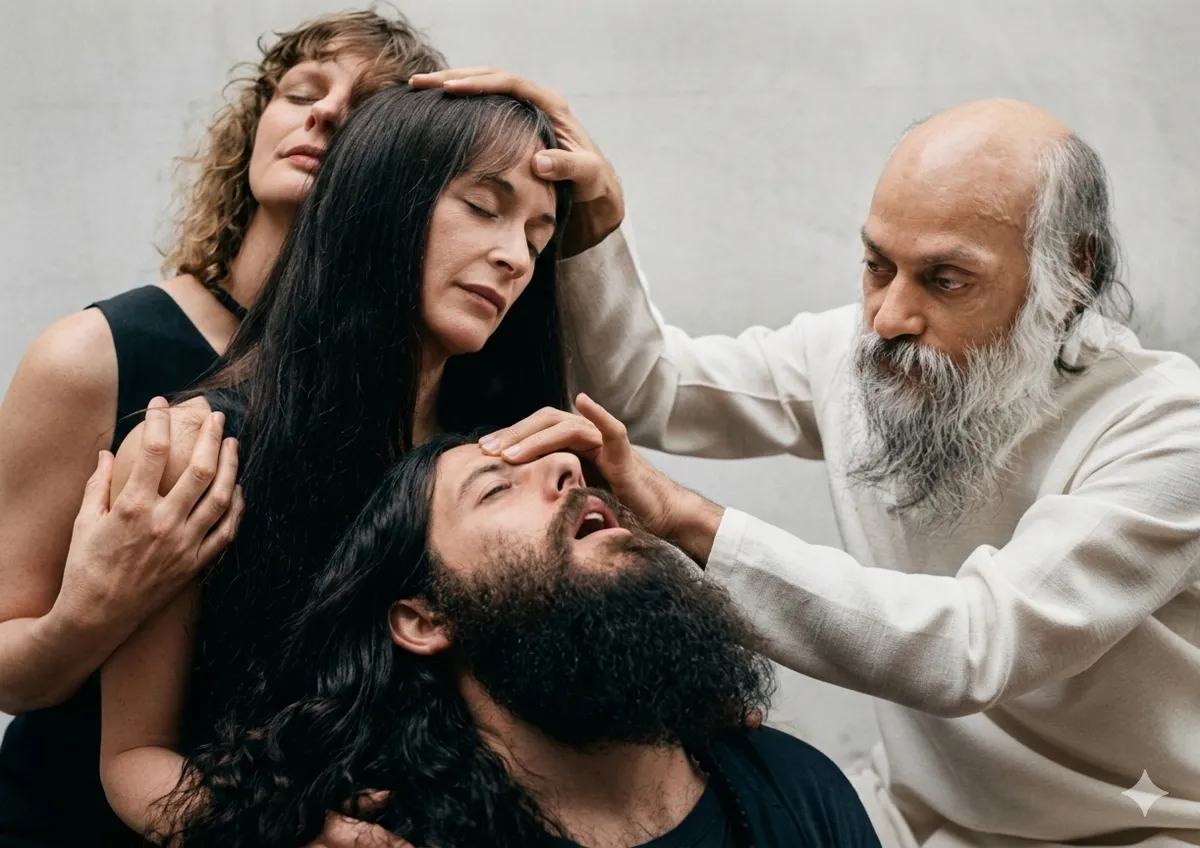
"Sahaj Yog" is a profound exploration of the interplay between love, attachment, and spiritual awakening, as articulated by Osho. Central to this discourse is the transformative power of raga, or the deep, enriching love that transcends mere worldly attachments and elevates the seeker towards the divine. Osho critiques the conventional notion of dispassion, describing it metaphorically as a disease that severs one's connection from the essence of life. Instead, he advocates for channeling one's innate capacity for love toward the divine, illustrating that genuine dispassion is not a forced detachment but an organic release of insignificance as the heart becomes absorbed in the meaningful. Osho delineates love as an instrument that can be either misapplied in worldly desires or refined to serve as a conduit to the divine. He vividly portrays this process using the analogy of a fruit: when ripe, it naturally detaches from the tree. Similarly, true spiritual love leads to an effortless severance from worldly attachments. Through "Sahaj Yog," Osho invites his followers to embrace love's potential to unlock inner divinity, transforming the seeker into a divine lover and illustrating that ultimate joy lies in spontaneous, genuine dispassion rooted in supreme love for God.
-
Chapter 1
Awake now: inner awakening is immediate — drop scriptures, mantras and desires; live in present silence where the true Self dawns. Will you open your eyes?
-
Chapter 2
Sadhana differs from ritual: living practice contains an inner flame where means and ends merge; oppose empty forms and kindle silence to hear Omkar.
-
Chapter 3
Honor the body as God's temple; drop the mind's death‑wish and live fully. Life is Leela, not self‑destruction; liberation dawns when craving and asking cease.
-
Chapter 4
Sahaj-yoga and Zen are one nondual awakening: naturalness, moment-to-moment awareness, and total surrender dissolve hypocrisy, superstition and self-will.
-
Chapter 5
God is the indefinable; definitions trap the seeker—seek direct experiential knowing, not words. Existence is lovingly neutral; prayer is the heart's plea.
-
Chapter 6
Longing for the Unknown (Paramatma): turn inward, close the eyes, dry inner dampness, awaken the witness and taste sahaja Samadhi—how can one reach this state?
-
Chapter 7
God is not to be sought; drop seeking and relax—God is omnipresent and found in spontaneous being; transform craving and resolve life's real problems to meet the Divine.
-
Chapter 8
Tears and spontaneous love are true prayer; be natural and view love as life. Transform repressed energies into creative work, and let remembrance bind the heart.
-
Chapter 9
Morality follows commands; true religion blooms when conscience awakens—live beyond commanded rules in spontaneous holiness arising from inner experience.
-
Chapter 10
Sahaj Yoga yokes effort and effortless rest: disciplined labor prepares the spontaneous blossom of awakening, turning contradiction into inner unity.
-
Chapter 11
Every being can awaken: through surrender, naturalness and a guru's grace the ego falls; simple acts become meditation and liberation here and now.
-
Chapter 12
Death of the mind is life: ask for annihilation and receive nectar—true knowing blooms in love and surrender, not in scholastic knowledge. Emptiness follows.
-
Chapter 13
Religion is neti-neti: negate all forms until the indubitable witness remains; dance, love and sorrow become footprints guiding you home to God.
-
Chapter 14
Transform worldly attachment into supreme raga: fall in love with the Divine so false loves drop away naturally, sannyas becomes celebration and joy
-
Chapter 15
Love defeats death; live body, mind, soul and Divine fully; reject imposed ideals and hypocrisy; masters must awaken each disciple’s own color.
-
Chapter 16
Break golden cages of mind: Sahaj-yoga teaches yoga in bhoga and bhoga in yoga, so inner lightning-witnessing-awakens and life becomes sacred.
-
Chapter 17
Nakedness dissolves secrecy and porn; Leela group-therapy awakens and transforms libido into upward kundalini, creating inner man-woman union and brahmacharya.
-
Chapter 18
Rishis transcend nation and creed; ego hides behind religion and priests. Let go of attachments—renunciation, inner awakening and meditation reveal truth.
-
Chapter 19
Die to the ego, not the body: true sannyas is psychological death and rebirth into celebration, love and awareness; cults exploit weakness, not genuine masters.
-
Chapter 20
Death is an illusion; threats are futile—embrace remembrance of the Divine, see beyond the body, and make urgent your inner work before the lamp dies.