
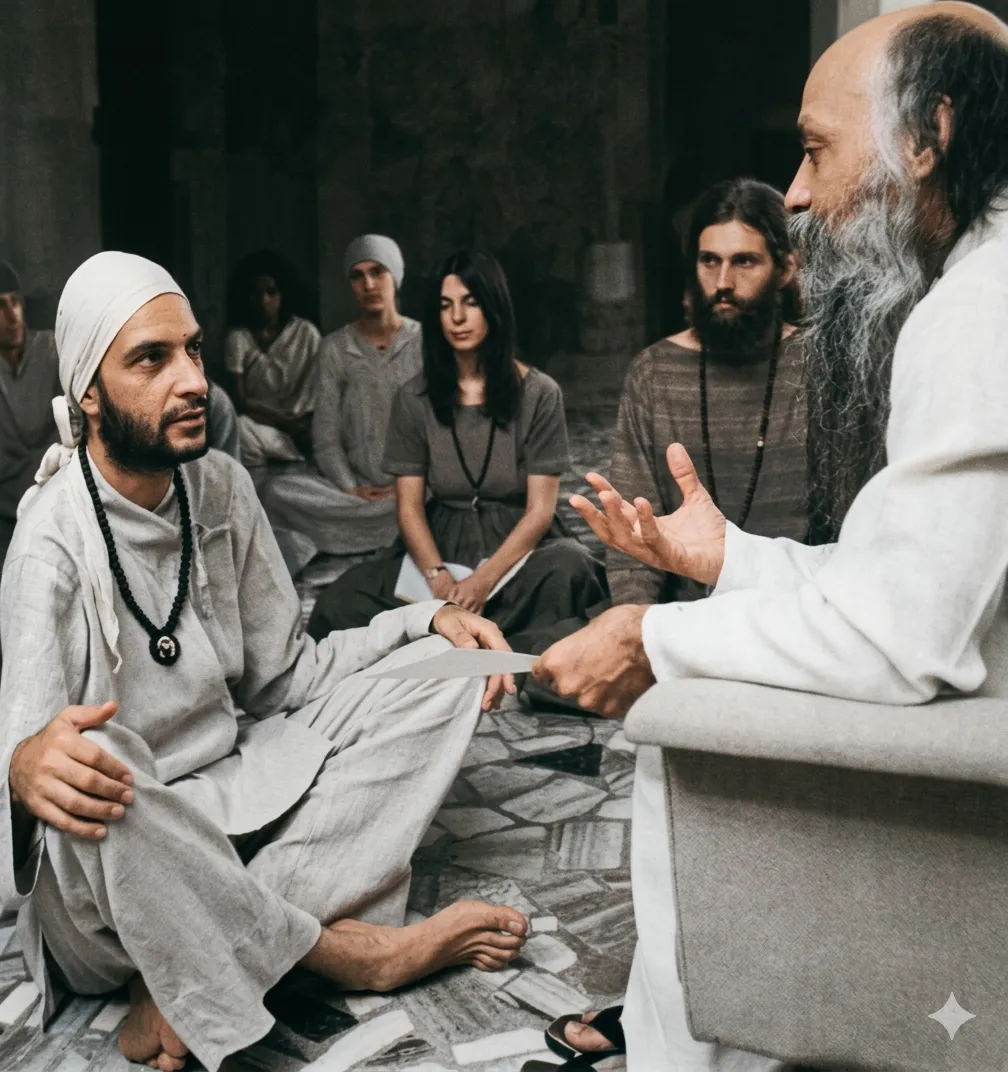
Osho's original Hindi beside Osho Live's English translation, matched passage by passage.
जो जानते हैं, उनके लिए जीवन दुख से ज्यादा नहीं है। जो नहीं जानते हैं, उनके लिए जीवन सुख की एक आशा है। जो नहीं जानते हैं, वे भी दुख भोगते हैं; लेकिन दुख को बिना देखे भोगते हैं। दुख भोगते हैं सुख की आशा में। और वही आशा उनकी आंखों पर धुंध बन जाती है।
For those who know, life is nothing more than suffering. For those who do not know, life is a hope for happiness. Even the unknowing suffer—but they suffer without seeing their suffering. They endure pain in the hope of pleasure. And that very hope becomes a mist over their eyes.
आज दुख भोगते हैं, क्योंकि लगता है: कल सुख मिलेगा। कल का सपना आज के सच को छिपा लेता है। नरक में भी गुजार देते हैं जीवन, क्योंकि लगता है कभी न कभी स्वर्ग उपलब्ध होगा। आशा से बड़ा अंधकार नहीं है। और आशा से बड़ी कोई मूर्च्छा नहीं है।
They suffer today because they feel: tomorrow happiness will come. Tomorrow’s dream hides today’s reality. People even pass their lives in hell because they believe that someday, somehow, heaven will be attained. There is no darkness greater than hope. And there is no intoxication greater than hope.
जो व्यक्ति आशा को छोड़ कर जीवन को देखेगा, उसे दुख ही दिखाई पड़ेगा। दुख है। लेकिन अज्ञानी दुख को समझता है सीढ़ी--सुख तक पहुंचने की। दूर कहीं भविष्य में सुख है। यात्रा में होगा दुख, लेकिन मंजिल सुख की है। उस मंजिल के लिए कुछ भी झेलने को तैयार हो जाता है। लेकिन संसार सिर्फ सीढ़ियां ही सीढ़ियां है, यहां मंजिल है ही नहीं। यहां रास्ता ही रास्ता है, यहां मुकाम है ही नहीं। और जो मुकाम नहीं है, उसके लिए हम उस रास्ते की व्यर्थ तकलीफें झेल लेते हैं। जो सीढ़ियां कहीं पहुंचाती ही नहीं हैं, हम उन पर व्यर्थ ही चढ़ते हैं, थकते हैं, परेशान होते हैं। लेकिन सीढ़ियां अंतहीन हैं, इसलिए तुम उनके अंत पर भी कभी नहीं आ पाते हो।
Whoever drops hope and looks at life will see only suffering. Suffering is. But the ignorant person takes suffering to be a staircase—to reach to happiness. Somewhere far in the future there is happiness. The journey will be painful, but the destination is bliss. For that destination one becomes ready to bear anything. But the world is only staircases upon staircases: there is no destination here. Here there are only roads upon roads; here there is no station. And for a destination that does not exist, we keep enduring the useless hardships of the road. We climb steps that lead nowhere; we tire, we are harassed. The steps are endless, so you never come to their end.
ध्यान रहे, मंजिल होती तो सीढ़ियों का अंत भी आ जाता। चूंकि मंजिल नहीं है, और सीढ़ियां अंतहीन हैं। तुम चलते ही जाते हो; कितना ही तुम चलो, तुम पाते हो आगे सीढ़ियां बाकी हैं। लगता है: बस, अब मंजिल आई ही।
Remember, if there were a destination, then the steps would end too. Because there is no destination, the steps are endless. You keep walking; however far you go, you find more steps ahead. It always seems: just now, the destination is about to arrive.
बुद्ध एक गांव के पास से गुजरते थे। जल्दी में थे। पहुंचना था दूसरे गांव--सांझ होने के पहले। पूछा एक किसान से: कितनी दूर होगा गांव? उसने कहा: बस, दो ही मील; चले नहीं कि पहुंचे! बुद्ध दो मील चल चुके। सूरज ढलने के करीब आ गया। एक दूसरा ग्रामीण गुजरता था, उससे पूछा, कि कितना होगा दूर? उसने कहा: बस, कोई दो मील, चले नहीं कि पहुंचे!
Buddha was once passing by a village. He was in a hurry—he had to reach another village before dusk. He asked a farmer, “How far is the village?” The farmer said, “Just two miles; start walking and you’ll be there!” Buddha walked two miles. The sun was close to setting. He met another villager and asked, “How far now?” He said, “Just two miles; walk and you’re there!”
बुद्ध मुस्कुराए और उन्होंने अपने शिष्यों को कहा: ठीक से सुन लेना इनकी बात। पहला ग्रामीण हमें दो मील चला गया! शिष्य फिर भी न समझे।
Buddha smiled and said to his disciples, “Listen well to what they say. The first villager took us two miles away!” The disciples still didn’t understand.
दो मील चल चुके, रात पड़ने लगी। तीसरे ग्रामीण से पूछा: कितना दूर होगा गांव? उसने कहा: घबड़ाने की कोई जरूरत नहीं है। बस, दो मील है। बुद्ध ने कहा: सुनते हो? ऐसे ही मन की आशा चलाए जाती है--कि मंजिल, बस पास है। ये ग्रामीण बुद्धिमान हैं। ये झूठ नहीं बोल रहे हैं। ये मन के सूत्र को समझते हैं।
After two more miles it was getting dark. A third villager came by; Buddha asked again. He said, “No need to worry. Just two miles.” Buddha said, “Do you hear? This is how the mind’s hope keeps moving us along—‘the destination is near.’ These villagers are wise. They aren’t lying. They understand the mind’s formula.”
दो मील चलना आसान है--दो मील की आशा में आदमी दो हजार मील भी चल लेता है। पहले से ही पता हो कि दो हजार मील चलना है, तो थक कर गिर जाए, टूट जाए, वहीं मिट जाए।
Two miles is easy—on the hope of two miles a man can walk two thousand. If you knew beforehand it was two thousand, you’d collapse and die right there.
तुम इतने जीवन तक चलते आए हो, तुमने सिवाय सीढ़ियों के कुछ भी पाया नहीं है। हर सीढ़ी नई सीढ़ी को शुरू करती है। कोई सीढ़ी मंजिल पर नहीं आती है। सब रास्ते नया मोड़ ले लेते हैं, फिर रास्ता बन जाता है। कोई रास्ता पूरा नहीं होता, समाप्त नहीं होता।
You have been walking through so many lives and have found nothing but steps. Each step begins another. No step ends at the destination. Every road takes a new turn, and becomes more road. No road completes, none concludes.
संसार मार्ग है। मोक्ष में कोई मार्ग नहीं है, वहां मंजिल ही मंजिल है। संसार में मार्ग ही मार्ग हैं, वहां कोई मंजिल नहीं है।
The world is a way. In liberation there is no way; there is only destination. In the world there are only ways; there is no destination.
सम्राट अकबर ने अपनी विजय की बड़ी यात्राओं के बाद एक छोटा सा नगर बसाया--फतेहपुर। फतेहपुर का मतलब है: विजय का नगर। वह सारे जीवन की विजय यात्रा के बाद उसने एक विजय की नगरी बनानी चाही, तो सीकरी नाम के छोटे से गांव को फतेहपुर में बदल दिया। करोड़ों रुपये खर्च किए। बड़ी खूबसूरत नगरी बनाई। और जब वह बूढ़ा हो रहा था, तो उसने एक फकीर को पूछा कि इस नगरी के द्वार पर मुझे कोई वचन लिखना है; कोई बहुमूल्य वचन लिखना है--कि यात्री जब इस फतेहपुर सीकरी में पहुंचे, तो वह वचन सब-कुछ कह दे। उस सूफी फकीर ने जीसस का एक वचन अकबर को कहा--इसे खुदवा दें। वह अभी भी फतेहपुर सीकरी के द्वार पर खुदा है। वह वचन बाइबिल में कहीं मिलता नहीं। लेकिन सूफियों की परंपरा में उस वचन का उल्लेख है। वह वचन बड़ा कीमती है। वह वचन है: यह संसार एक सेतु है; चलना जरूर, गुजरना जरूर, पर इस पर कहीं भूल कर भी मकान मत बनाना। दिस वर्ल्ड इ़ज ए ब्रिज, पास थ्रू इट बट डोंट मेक ए ड्वेलिंग ऑन इट।
Emperor Akbar, after his great campaigns, founded a small city—Fatehpur. Fatehpur means “City of Victory.” At the end of his life’s victorious journeys he wanted to create a city of victory, so he turned the small village of Sikri into Fatehpur. He spent millions. He built a very beautiful city. When he was growing old, he asked a fakir, “I want an inscription on the city’s gate—a precious saying that, when a traveler arrives at Fatehpur Sikri, will say all that needs to be said.” That Sufi fakir gave him a saying attributed to Jesus—“Have this engraved.” It still stands on the gate of Fatehpur Sikri. You won’t find it in the Bible, but the Sufi tradition remembers it. The saying is priceless: “This world is a bridge; pass over it, but do not build your dwelling on it.” This world is a bridge: pass through it, but don’t make a home upon it.
अकबर ने वचन तो खुदवा दिया, लेकिन चिंतित हुआ। और उसने फकीर को कहा: मुसीबत में डाल दिया। क्योंकि मैं तो सोचता था--विजय की नगरी बना रहा हूं। तुम कहते हो, संसार एक सेतु है। इस संसार में फिर विजय की नगरी बन ही नहीं सकती। यहां कोई विजय होती ही नहीं।
Akbar had it inscribed, then grew troubled. He told the fakir, “You’ve put me in a fix. I thought I was building a city of victory. You say this world is a bridge. Then no city of victory can ever be built here. There is no victory here.”
और अकबर का रस फतेहपुर सीकरी में समाप्त हो गया। नगर बना भी और बिना बसे रह गया। फतेहपुर सीकरी कभी आबाद नहीं हुआ। वह जिस दिन से बना है, उसी दिन से खंडहर पड़ा है। उसमें कभी कोई बसने नहीं गया। वह बात ही खत्म हो गई। अकबर को भी दिखाई पड़ गया कि इस संसार में कोई विजय संभव नहीं है। यहां कोई मंजिल ही उपलब्ध नहीं होती।
Akbar’s interest in Fatehpur Sikri vanished. The city was built, and yet it remained uninhabited. From the day it was made, it has been a ruin. No one ever settled in it. The matter ended there. Akbar too saw that no victory is possible in this world. No destination is attained here.
मनुष्य इतना दुख झेल लेता है--असह्य दुख झेल लेता है। तरकीब क्या है? दुख झेलने की आदमी की तरकीब क्या है? जागता क्यों नहीं, इतनी भी पीड़ा उसे उठाती क्यों नहीं? इतनी भी पीड़ा उसे चौंकाती क्यों नहीं? कोई गहरी तंद्रा है। और वह तंद्रा--आशा है। आशा से लगता है सुख मिलेगा, लेकिन सच्चाई यह है कि आशा से केवल तुम दुख झेलने में समर्थ हो जाते हो।
How does man bear so much suffering—even the unbearable? What is his trick? Why doesn’t he awaken—why doesn’t pain jolt him awake? There is a deep stupor. That stupor is hope. Hope seems to promise happiness; the truth is, hope only makes you capable of enduring suffering.
कोलंबस भारत की खोज में निकला था। तीन बड़ी नावें लेकर--कोई सौ नाविक लेकर। कोई तीन महीने के भोजन का इंतजाम था। ज्यादा से ज्यादा जितना भोजन ले जा सकता था, साथ ले लिया था। लेकिन भोजन चुकने के करीब आ गया। केवल तीन दिन का भोजन बचा। नाविक क्रोध से भर गए। मंजिल कहीं पहुंचती मालूम नहीं होती। यात्रा भटक गई लगती है। सिर्फ सागर, सिर्फ सागर--कोई कूल-किनारा दिखाई नहीं पड़ता है।
Columbus set out to find India with three large ships and around a hundred sailors. They carried food for about three months—the maximum they could take. The provisions were almost finished; only three days’ food remained. The sailors grew angry. No destination seemed to be coming into view. The journey seemed lost. Only sea, only sea—no shore in sight.
तो उन सभी नाविकों ने, जब रात कोलंबस सोया था, तो एक बैठक की। और उस बैठक में तय किया कि हम कोलंबस को उठा कर समुद्र में फेंक दें और वापस लौट जाएं। क्योंकि यह आदमी तो मुसीबत में डाले हुए है! मरेंगे; भोजन चुक गया है। कहीं पहुंचते हुए लगते नहीं। इस आदमी ने अटका दी जिंदगी।
At night, while Columbus pretended to sleep, they met and decided to throw him overboard and turn back. “He has put us in trouble! We’ll die; the food is gone. Nowhere to be seen is any land. This man has trapped our lives.”
कोलंबस ने सुना; वह सिर्फ बना हुआ सो रहा था। उसे भी डर था कि अब खतरा है। और जब तक कोलंबस जिंदा है, तब तक नावें वापस नहीं होंगी, यह भी नाविकों को पता है। क्योंकि कोलंबस वापस होना जानता ही नहीं; जिद्दी है, अहंकारी है। मर जाएगा, लौटेगा नहीं। क्योंकि क्या कहेगा लौट कर--अपने देश में? पहले ही लोगों ने कहा था कि तुम मूढ़ हो। किन बातों में पड़े हो? सिद्धांतों के चक्कर में आ गए हो! लोग कहते हैं: पृथ्वी गोल है। और तुमने मान लिया? और जीसस की बाइबिल तो कहती है कि पृथ्वी चपटी है। लौटने पर लोग कहेंगे, आ गए वापस! नहीं पहुंच पाए! क्योंकि पृथ्वी अगर गोल है, तो तुम पहुंच ही जाते! कहीं न पहुंचते, तो यहीं लौट आते।
तो कोलंबस जाग रहा था। जैसे ही उसने सुना कि उन्होंने तय कर लिया है--एक मत से--उसे फेंक देने का, तो वह उठा और उसने कहा कि एक बात मुझे भी पूछनी है! वह यह कि तीन महीने का सामान था, वह समाप्त हो गया है। तीन दिन का बचा है। अगर तुम लौटे भी तो पहुंच पाओगे? क्योंकि लौटने में कम से कम तीन महीने तो लगेंगे ही। अगर तुम ठीक उसी रास्ते से लौट सको, जिससे हम आए हैं। और समुद्र में कहीं कोई रास्ता नहीं बना है। अगर तुम लौटे तो तीन दिन ही लौट पाओगे न? बाकी दिनों का क्या होगा? और जब लौट कर ही मरना है, तो आगे बढ़ने की हिम्मत रखो। जब मरना ही है, तो पीछे क्या जाना! और मैं तुमसे कहता हूं कि पीछे लौटने में तो तीन महीने लगेंगे, आगे हो सकता है कि तीन दिन में भी हम पहुंच जाएं। इसकी संभावना है।
Columbus heard them. He had been afraid of just this. He rose and said, “I have one question. We had three months of provisions; they are gone. Three days are left. Even if you turn back, will you reach home? It will take at least three months to return—if you can find exactly the same route, and on the ocean there is no road. With three days of supplies you can sail back three days—what about the rest? If we are to die on the way back, then have the courage to go forward. If death is certain either way, why go back? And I tell you: turning back will take at least three months. Going forward, we might reach land in three days. It’s possible.”
आशा बंधी; बात तो सीधी थी; गणित साफ था। आगे शायद तीन दिन में भी पहुंच जाएं, क्योंकि पता नहीं, किनारा कितनी दूर हो। लेकिन पीछे तो तीन महीने से कम में पहुंचने वाले नहीं हैं। इसलिए मौत निश्र्चित है। आशा बंधी; कि नाविक फिर श्रम में लग गए।
Hope was kindled; the logic was clear. Perhaps in three days they might reach land; who knew how far it was. But returning would take no less than three months; death was certain. Hope was kindled; the sailors resumed their labor.
जैसे ही आशा बंधती है, वैसे ही तुम श्रम में लग जाते हो। जैसे ही आशा छूटती है, वैसे ही तुम्हारे हाथ-पैर शिथिल हो जाते हैं। जैसे आशा छूटती है, दुख दिखाई देने लगता है। जैसे ही आशा बंधती है, सुख का स्वाद आने लगता है।
As soon as hope arises, you start exerting. As soon as hope drops, your limbs go slack. When hope drops, suffering becomes visible. When hope rises, the taste of happiness seems to come.
संसार आदमी को नहीं बांधे हुए है। संसार से ज्यादा जगाने वाली जगह खोजनी कठिन है। चौबीस घंटे दुख है। सब तरफ से दुख है। हर घड़ी कांटा चुभता है। लेकिन तुम यहां हो ही नहीं, जिसको कांटा चुभे। तुम आशाओं के किसी लोक में भटके हुए हो।
It is not the world that binds people. It would be hard to find a place more provoking to wakefulness than the world: suffering is twenty-four hours a day, all around, every moment a thorn pricks. But you are not here to be pricked—you are wandering in some realm of hopes.
सुना है मैंने, एक सूफी फकीर मरा और स्वर्ग पहुंचा। देख कर हैरान हुआ कि स्वर्ग में द्वार पर ही चार लोग जंजीरों से बंधे हैं। थोड़ा चौंका कि भीतर प्रवेश करूं या न करूं! क्योंकि मैंने तो सुना था: संसार में बंधन होते हैं! ये स्वर्ग में लोग जंजीरों से बंधे हैं! उसने पूछा द्वारपाल को कि यह क्या राज है? इन लोगों को क्यों बांधा गया है? उसने कहा कि पहले तुम भीतर तो आओ, फिर सारी बात समझ लेना। इनकी आशा टूट गई है; ये स्वर्ग में भी रुकने को राजी नहीं हैं। तुम संसार में भी रुके थे--आशा थी। इनको रोकने के लिए जंजीरें बांधनी पड़ीं।
I have heard: a Sufi fakir died and reached heaven. He was astonished to see four people chained right at the gate. He hesitated—“Should I enter or not? I had heard that bonds are in the world; here in heaven people are chained?” He asked the gatekeeper, “What’s this mystery? Why are these people tied?” The gatekeeper said, “First come in, then you’ll understand. Their hope is broken; they aren’t willing to stay even in heaven. In the world, you stayed—because you hoped. To keep these from leaving, we had to chain them.”
स्वर्ग भी आशा है--आखिरी आशा है। अगर वह भी टूट जाए, तो तुम्हारे मुक्त होने के लिए कोई भी बाधा नहीं रह गई। फिर तुम्हें रोकना हो तो जंजीरों से बांधकर रोकना पड़ेगा।
Heaven too is hope—the last hope. If that also breaks, no obstacle remains to your freedom. Then to stop you, you would have to be chained.
इस एक बात को बहुत ठीक से समझ लेना कि तुम्हारी आंखों पर जो धुंध है, वह तुम्हारी अपनी आशाओं की है। इसलिए बुद्ध के चार आर्य-सत्यों में मैं एक और आर्य-सत्य जोड़ता हूं--जो ज्यादा प्राथमिक है।
Understand this clearly: the mist over your eyes is your own hopes. Therefore, to the Buddha’s four noble truths I add one more—more primary than all.
बुद्ध कहते हैं: ‘सारा जगत दुख है, सारा जीवन दुख है।’ तुम सुनते हो, लेकिन ऐसा अनुभव नहीं होता। तुम्हें लगता है, दुख जरूर हैं, लेकिन सीढ़ियों की भांति हैं। और जो श्रम न लेगा यात्रा का, वह सुख तक पहुंचेगा कैसे! कष्ट झेलना होगा। कीमत चुकानी होगी। यह कीमत है दुख, फल सुख का है।
Buddha says: “All life is suffering.” You hear it, but you don’t experience it so. You feel there is suffering, yes—but as steps. And without the labor of the journey, how will one reach happiness? One must bear hardships; suffering is the price, happiness the fruit.
लेकिन ध्यान रहे, जब बीच में ही दुख हो, तो फल में सुख नहीं हो सकता। और जब यात्रा कष्ट की हो, तो अंतिम परिणाम सुख का नहीं हो सकता। क्योंकि अंतिम परिणाम तो सारी यात्रा का जोड़ होगा। तुम मरते क्षण सुखी कैसे हो सकते हो, अगर तुम जीवन भर दुखी रहे हो? क्योंकि तुम्हारे जीवन भर की दुख की रात ही मरते क्षण में पूरी होगी।
But remember: when the middle is suffering, the fruit cannot be happiness. When the journey is pain, the end cannot be bliss—because the end is the sum total of the entire journey. How can you die happy if you have lived unhappy? The long night of your suffering culminates in the moment of death.
मृत्यु से इतना दुख क्यों लगता है? मृत्यु उसका कारण नहीं है। मृत्यु से इतना दुख इसलिए लगता है कि जीवन भर के दुख इकट्ठे हो जाएंगे। और मृत्यु का अर्थ है: अब कोई भविष्य नहीं है। इसलिए आशा बचेगी नहीं छिपाने को। नशा टूटेगा और जीवन भर के दुखों का जोड़ इकट्ठा होगा। सीढ़ियां, सीढ़ियां, सीढ़ियां... यात्रा के पथ, न मालूम कितने कष्ट--आगे जाने को कोई जगह नहीं, आशा का कोई उपाय नहीं। क्योंकि मृत्यु का अर्थ है: अब आशा नहीं; समय समाप्त हुआ। अब कल बचा नहीं कि तुम कह सको कि कल सुख मिलेगा।
Why does death seem so painful? Death is not the cause. Death hurts because all the pains of life gather together there. And death means: there is no future left. Hope will no longer remain to hide the truth. The intoxication breaks, and the sum of lifelong suffering appears. Steps, steps, steps… path after path, countless hardships—and now no further place to go, no more device of hope. Death means: no more hope; time is over. There is no tomorrow for you to say “tomorrow happiness will come.”
मौत वर्तमान में खड़ा कर देगी। और सदा से तुम जीए थे--भविष्य में। मौत तुम्हें झटके से ले आएगी वर्तमान में। देखोगे तुम दुख और दुख को छिपाने का कोई नशा तुम्हारे पास न होगा।
Death forces you into the present. And you have always lived in the future. Death jerks you into the present—you will see suffering, and you will have no narcotic left to cover it.
मौत में इतना दुख इसीलिए मालूम पड़ता है, वह मौत का नहीं है; वह जीवन के सत्य के प्रकट हो जाने का है।
The pain of death is not death’s; it is the revelation of life’s truth.
मौत बड़ी उदबोधक है। वह तुम्हें चौंकाती है--जगाती है। तुम्हारी अनस्थेसिया से--तुम्हारी गहरी बेहोशी से, तुम्हें बाहर ले आती है। इसलिए ज्ञानियों ने मौत को सदगुरु कहा है।
Death is a great awakener. It startles you—wakes you up. It brings you out of your anesthesia, your deep unconsciousness. That is why the wise have called death the true master.
अगर मृत्यु न होती, तो तुम शायद कभी जागते ही नहीं। इसलिए ज्ञानियों ने कहा है कि अगर मृत्यु न होगी, तो दुनिया में कोई आदमी धार्मिक न होगा। ठीक कहा है। क्योंकि जिंदगी में तो तुम सोए ही रहते हो। और सोने की तरकीब सीधी है--कल की आशा। फिर तुम कुछ भी झेल लेते हो। फिर कोई भी कष्ट बड़ा नहीं है।
If there were no death, you might never awaken. So the sages have said: without death, no one would be religious. Rightly said. In life you remain asleep. And the technique of sleeping is simple—hope for tomorrow. Then you can bear anything; no hardship is too great.
मैंने सुना है कि मुल्ला नसरुद्दीन पहली दफा समुद्र की यात्रा पर गया। उसे फिट, उल्टियां, वमन, नॉसिया पैदा हुई। वह इतना घबड़ा गया, इतना परेशान हो गया कि कप्तान जहाज का उसे समझाने आया और उसने कहा कि सुनो नसरुद्दीन, तुम्हें मैं एक अनुभव की बात कहता हूं। तकलीफ कितनी ही हो--तकलीफ है--लेकिन पूरे मनुष्य-जाति के इतिहास में कोई कभी सी-सिकनेस से मरा नहीं। यह जो तकलीफ तुम्हें हो रही है--वमन आदि की, यह सब ठीक है; लेकिन कभी कोई मरता नहीं है इससे। इसलिए घबड़ाओ मत।
I have heard that Mulla Nasruddin went to sea for the first time. He got seasick—fits, vomiting, nausea. He became so panicky that the captain came to reassure him: “Listen, Nasruddin, I will tell you from experience: however bad it feels, no one in the history of mankind has ever died of seasickness. Vomiting and nausea happen, but no one dies of it. So don’t panic.”
नसरुद्दीन ने छाती पीट ली। उसने कहा: इसी एक आशा से तो हम जी रहे थे कि मरे कि झंझट मिटी। तुमने वह भी छीन ली!
Nasruddin beat his chest: “That was my only hope—that I would die and be rid of this mess. You snatched that too!”
आदमी अदभुत है। जीवन में तो आशा रखता ही है; मौत में भी आशा रखता है। इसलिए तो लोग आत्महत्या करते हैं। आत्महत्या मौत से भी आशा बांधनी है। आत्महत्या का अर्थ है: मौत से भी हम कुछ आशा रखते हैं। दुख से छुटकारा हो जाएगा; इस जिंदगी का अंत होगा। शायद इससे कुछ बेहतर शुरू हो। इससे बुरा तो कुछ हो नहीं सकता।
Man is strange. He hopes in life—and he hopes even in death. That’s why people commit suicide. Suicide is hoping in death. To commit suicide is to hope that death will deliver something. “I’ll be rid of pain; this life will end. Perhaps something better will begin. It can’t be worse than this.”
आत्महत्या मृत्यु से भी आशा बांधने का नाम है। और ज्ञानी कहते हैं: तुम जीवन से भी आशा छोड़ देना। और अज्ञानी कहते हैं: मृत्यु से भी तुम आशा बांधे रखना।
The wise say: drop hope even from life. The unwise say: keep hoping even from death.
इसलिए कोई ज्ञानी आत्महत्या नहीं कर सकता। ज्ञानी जीने तक को तैयार नहीं है, मरने को क्यों तैयार होगा! ज्ञानी की कोई आशा नहीं है। उसे जीवन का सत्य जैसा है, वैसा दिखाई पड़ गया है। इसके साथ ऐसा लगता है कि ज्ञानी दुखवादी है, जो कि भ्रांति है।
Therefore no sage can commit suicide. A sage is not even ready to live, why would he be eager to die? The sage has no hope. He has seen life as it is. It seems as if the sage is a pessimist—that is a misunderstanding.
पश्र्चिम में बुद्ध को लोग पेसिमिस्ट समझते हैं--निराशावादी समझते हैं, जो कि गलत है। बुद्ध निराशावादी नहीं हैं। ज्ञानी दुखवादी नहीं है; केवल तथ्यवादी है। ऐसा है।
In the West, people think of Buddha as a pessimist—this is wrong. The sage is not a worshiper of suffering; he is a worshiper of fact. Such it is.
बुद्ध जीवन में दुख को ‘देख’ नहीं रहे हैं; दुख जीवन में है। कुशल तो तुम हो कि जहां दुख है, वहां तुम सुख देख रहे हो! तुमने कोई इंतजाम किया हुआ है; तुमने कोई मानसिक ढांचा बनाया है कि दुख बाहर ही रुक जाता है। दुख भीतर तक नहीं आ पाता।
Buddha is not “seeing” suffering in life; suffering is in life. You are the clever ones—you see happiness where there is suffering! You have made arrangements; a mental structure that keeps suffering at the door, so it never reaches inside.
मैंने सुना है: एक फकीर यात्रा कर रहा है--एक जहाज से। तूफान आया बड़ा; नाव डूबने को होने लगी। अब डूबी, तब डूबी। सारे नाविक घुटने टेक कर परमात्मा से प्रार्थना करने लगे। सिर्फ वह फकीर चुपचाप खड़ा रहा। आखिर कप्तान को क्रोध आ गया। उसने कहा कि तुम क्यों खड़े हो? धार्मिक आदमी होकर तुमसे इतना भी नहीं बनता कि तुम प्रार्थना में सम्मिलित हो जाओ? उस फकीर ने कहा: यह नाव मेरे बाप की है? जिसकी है, वह फिकर करे।
I have heard: a fakir was traveling by ship. A huge storm came; the boat was about to sink. All the sailors fell to their knees, praying to God. Only the fakir stood silent. The captain grew angry: “Why do you just stand there? As a religious man, can’t you at least join the prayer?” The fakir said, “Is this boat my father’s? Whoever owns it can worry.”
अजीब लगता है उसका वक्तव्य। लेकिन बड़ा सोचने जैसा है।
His statement seems strange—but it is worth deep thought.
कप्तान ने सीधा कहा: न हो नाव तुम्हारी, लेकिन डूबोगे तो तुम भी? उस फकीर ने कहा: जिसको समझ में आ गया है कि नाव मेरी नहीं है, वह कभी डूबता नहीं। ‘मेरापन’ ही डुबाता है। न नाव मेरी है, न शरीर मेरा है, न जीवन मेरा है। जिसकी हो वह रोए, चिल्लाए, प्रार्थना करे। हम कुछ बचाने को उत्सुक नहीं हैं। क्योंकि बचाने योग्य कुछ है भी नहीं। हम राजी हैं; जो हो जाए।
The captain said, “Even if the boat isn’t yours, you’ll drown too!” The fakir said, “One who has understood that the boat is not his never drowns. ‘Mine-ness’ drowns you. The boat is not mine, the body is not mine, life is not mine. Let the owner cry out and pray. I have nothing to save. There is nothing worth saving. I am content—whatever happens.”
आशा के दो रुख हैं। जो है--आशा उससे तुम्हें कभी राजी नहीं होने देती। और जो नहीं है और जो कभी नहीं होगा, उसका भ्रम बनाए रखती है।
Hope has two directions. Regarding what is, hope never lets you be content. Regarding what is not—and never will be—hope keeps the illusion alive.
आशा टूटते से ही धार्मिक व्यक्ति का जन्म होता है। आशा खोई आंख से कि आंखें निर्मल हो जाती हैं। और वह दिखाई पड़ने लगता है--जो है।
From the very breaking of hope, the religious person is born. When the eye is freed of hope, the eye becomes clear—and then what is, is seen.
‘बुद्ध ने कहे हैं चार आर्य-सत्य: दुख, दुख का कारण, दुख-निरोध और दुख-निरोध का मार्ग।’
“Buddha has said four noble truths: suffering, the cause of suffering, the cessation of suffering, and the path to the cessation of suffering.”
पहला, कि जीवन में दुख है। दूसरा, कि दुख अकारण नहीं है। क्योंकि जो अकारण हो, उसको मिटाया नहीं जा सकता है।
First, there is suffering in life. Second, suffering is not causeless—for what is causeless cannot be removed.
अगर कोई दीया बिना बाती, बिना तेल के जल रहा हो, तो तुम उसे बुझा नहीं सकते! हां, अगर तेल और बाती से जल रहा हो तो बुझा सकते हो। तेल हटा लो, बुझ जाएगा। लेकिन अगर कोई दीया ‘बिन बाती बिन तेल’ जल रहा हो, फिर तुम उसे कैसे बुझाओगे? जिस आग के जलने का कारण न हो, उस आग के बुझने का उपाय भी न होगा। ‘अकारण’ को मिटाया नहीं जा सकता है।
If a lamp burns without wick and oil, you cannot put it out! But if it burns by oil and wick, you can. Remove the oil and it will go out. If a fire burns without cause, there is no way to extinguish it. The ‘causeless’ cannot be eliminated.
बुद्ध कहते हैं: लेकिन दुख का कारण है, इसलिए भयभीत मत हो जाओ। दुख का कारण है और दुख मिटाया जा सकता है।
Buddha says: suffering has a cause; therefore do not be afraid. Because it has a cause, it can be ended.
दुख-निरोध की स्थिति, ऐसी चेतना की स्थिति है, जहां दुख नहीं होता। क्योंकि यह भी हो सकता है कि तुम एक दुख मिटाओ, लेकिन दुख-निरोध की स्थिति बनती ही न हो। तो दूसरा दुख पैदा होगा--तीसरा दुख पैदा होगा। तुम एक दीया बुझाओ, दूसरा पैदा होगा। तुम तीसरा बुझाओ, चौथा पैदा होगा। तो बुद्ध कहते हैं कि ऐसी भी चेतना की अवस्था है, जहां दुख नहीं होता। इसलिए दुख मिटाया जा सकता है और निर्दुख की अवस्था में रहा जा सकता है। और दुख-निरोध का मार्ग है। और वह रास्ता भी है, जिससे कारण समाप्त किए जाते हैं, जड़ें काटी जाती हैं।
The state of cessation is a state of consciousness in which suffering is not. It is not merely that you remove one suffering and yet never reach the state of cessation—otherwise the second and third will keep arising. You blow out one lamp, another appears. You blow out the third, a fourth appears. Buddha says: there is a state of consciousness in which suffering does not arise. Therefore suffering can be ended, and one can live in a state of freedom from it. And there is a path to that cessation—the way by which the causes are removed, the roots are cut.
बुद्ध ने अपने पूरे धर्म को चार हिस्सों में विभाजित किया है। वे ये चार हिस्से हैं। पहला धर्म--दुख को जानना। दूसरा धर्म--दुख के कारण को पहचानना। तीसरा धर्म--दुख के निरोध की संभावना को जानना और चौथा धर्म--दुख-निरोध के जितने उपाय हैं, उनकी साधना। इन चार में--बुद्ध कहते हैं--पूरा धर्म समाहित हो जाता है। इसलिए इनको उन्होंने चार आर्य-सत्य कहा है। आर्य का अर्थ है--श्रेष्ठ। इनसे ऊपर और कोई सत्य नहीं है।
Buddha divided his whole religion into four parts: - To know suffering. - To recognize the cause of suffering. - To know the possibility of cessation. - To practice the path to cessation—the disciplines that end the causes.
In these four, he says, the whole religion is contained. Therefore he called them the four noble truths—noble meaning supreme; beyond them there is no higher truth.
लेकिन मैं कहता हूं कि एक और भी सत्य है, जो इन चारों के पूर्व है।
But I say there is another truth, prior to these four.
‘मैं पांचवां आर्य सत्य भी देखता हूं। और यह पांचवां इन चारों के पूर्व है। वह न हो, तो ये चारों भी नहीं रह सकते।’
“I see a fifth noble truth—and this fifth comes before the other four. Without it, the four cannot stand.”
‘यह पांचवां या प्रथम आर्य-सत्य है--दुख के प्रति मूर्च्छा।’
वही भेद है--बुद्ध में और तुम में।
“This fifth, or first, noble truth is: stupefaction with regard to suffering.”
तुम में और बुद्ध में क्या फासला है! जरा सा फासला है। जो बुद्ध देख रहे हैं, वह तुम नहीं देख रहे हो। जो बुद्ध को दिखाई पड़ता है, वह तुम्हें सुनाई भी पड़ जाए तो भी दिखाई नहीं पड़ता। तुम सुन भी लो, समझ भी लो, फिर भी पकड़ में नहीं आता; फिर भी तुम्हारी अपनी प्रत्यभिज्ञा नहीं बनती, तुम्हारी पहचान उससे निर्मित नहीं होती।
क्या कारण है कि बुद्ध चिल्लाए चले जाते हैं और तुम नहीं सुन पाते? शायद तुम्हारी आंख पर कोई परदा है, कि जो भी तुम देखते हो, वह विकृत हो जाता है। जैसे पीलिया का मरीज होता है, उसे सब पीला दिखाई पड़ने लगता है।
मेरे दादा निरंतर कहा करते थे कि ‘सावन के अंधे को हरा-हरा सूझता है।’ सावन में अगर कोई अंधा हो जाए, तो फिर उसे जिंदगी भर हरा-हरा ही सूझता है। क्योंकि वह सावन का हरापन आंख में रह जाता है; और आंख बंद हो गई।
जिंदगी में हमें जो हरा-हरा सूझता है, उसके सूत्र को अगर समझ लें, तो बुद्ध में और तुम में क्या अंतर है, वह साफ हो जाएगा। अंतर जरा सा है। जैसे कोई सोता हो और कोई जगता हो; बस उतना ही अंतर है।
That is the difference between Buddha and you.
What distance lies between you and Buddha? A very slight one—the difference between sleeping and waking.
तुम्हें दुख दिखाई नहीं पड़ रहा है। बुद्ध को सिवाय दुख के कुछ दिखाई नहीं पड़ रहा है। तुम्हारी संख्या बड़ी है। बुद्धों की कोई संख्या नहीं है। तुम्हारी भीड़ महान है, अनगिनत है। तुम एक-दूसरे की भ्रांति को मजबूत करते हो। बुद्ध की आवाज जैसे शून्य में खो जाती है।
You do not see suffering. Buddha sees nothing but suffering. Your numbers are large; the Buddhas are few. Your crowd is vast; you reinforce one another’s delusions. The Buddha’s voice vanishes into emptiness.
किसी ने जॉन दि बैप्टिस्ट को पूछा कि तुम कौन हो? जॉन, बप्तिस्मा वाले जॉन ने ही जीसस को दीक्षा दी थी। वह जीसस का गुरु था। उसने ही जीसस को बप्तिस्मा दिया, इसलिए वह जॉन बप्तिस्मा वाला कहलाता था। वह अनूठा फकीर था। उससे किसी ने पूछा कि तुम कौन हो? क्या तुम वही मसीहा हो, जिसके आने का शास्त्रों में उल्लेख है? उसने कहा कि नहीं, मैं तो सिर्फ सूने रेगिस्तान में गूंजती हुई एक आवाज हूं। जस्ट ए वायस इन वाइल्डरनेस। बस, एक आवाज--जंगल में गूंजती हुई। बड़ा ठीक उत्तर दिया। बुद्धों की आवाज जंगल में गूंजती हुई आवाज है। कोई सुननेवाला नहीं है। लोग सुन भी लेते हैं, तो फिर, अपने रास्ते पर चले जाते हैं। उनके चलने से पता चलता है कि वे चूक गए; उन्होंने सुना नहीं।
Someone asked John the Baptist, “Who are you?” He had given initiation to Jesus; he was Jesus’ guru. He said, “I am just a voice crying in the wilderness.” Just a voice—echoing in the jungle. That is exactly right. The voice of Buddhas is a voice in the wilderness. No one is listening. People seem to listen, then continue on their ways. From the way they walk it is clear they did not hear.
आंख पर कोई ऐसा परदा है कि हर चीज को विकृत कर जाता है! बुद्ध की बात को सुनकर उसको भी हम विकृत कर लेते हैं। जब हम सुनते हैं: जीवन में दुख है, तो तत्क्षण हमारे मन में यह आशा बंधती है कि शायद बुद्ध के पास हमें कोई उपाय मिल जाए, जिससे जीवन का दुख मिट जाए। तत्क्षण हम बुद्ध के चरण पकड़ लेते हैं कि बताओ मार्ग, जीवन का दुख मिट जाए।
There is a veil over the eye that distorts everything. Hearing Buddha we distort even his words. As soon as we hear “life is suffering,” hope springs up in our mind: perhaps Buddha will give us a way to remove suffering. We instantly clutch at his feet: “Show us the path to end suffering.”
दुख को मिटाने का कोई मार्ग नहीं है। वस्तुतः दुख को मिटाने की कोई जरूरत नहीं है। तुम्हारी आशा टूट जाए, तो आशा के साथ ही सुख-दुख सब विलीन हो जाते हैं।
There is no path to remove suffering as such. In fact, there is no need to remove suffering. If your hope drops, along with hope both happiness and suffering dissolve.
आशा के दो पहलू हैं--भविष्य में सुख, अभी दुख। जैसे ही आशा टूटी कि भविष्य का सुख खो जाता है और अभी का दुख खो जाता है। क्योंकि जो तुम्हें दुख दिखाई पड़ता है, वह इसीलिए तो दुख दिखाई पड़ता है, क्योंकि तुमने सुख के कोई सपने संजो रखे हैं; उनकी तुलना में ही, उनकी अपेक्षा में ही दुख है।
Hope has two faces—future happiness and present pain. When hope breaks, the future happiness is lost and the present pain also vanishes. What you call suffering appears as such only because you are carrying dreams of happiness—by comparison, by expectation, suffering is created.
तुम्हारे सभी दुख तुम्हारे सुख की अपेक्षा से निर्मित होते हैं। इसलिए जितनी बड़ी अपेक्षा, उतना दुखी आदमी। जिसकी कोई अपेक्षा नहीं, उसका कोई दुख नहीं। लेकिन तुम बुद्ध को सुन कर फिर सुख के सपने बनाते हो। तुम बुद्ध से भी सपना निकाल लेते हो। तुम बुद्ध को भी अपने नींद की दवा बना लेते हो। तुम बुद्ध से भी पूछते हो: बताओ रास्ता--सुख को पाने का।
All your sufferings are produced by your expectations of happiness. The greater the expectation, the greater the suffering. One who has no expectation has no suffering. But you hear Buddha and create new dreams of happiness. You extract dreams even from Buddha. You turn Buddha into a sleeping pill. You ask him: “Show the path—to attain happiness.”
और ध्यान रहे, बुद्ध केवल तुम्हें दुख को देखने का रास्ता बता सकते हैं। सुख को पाने का कोई सवाल ही नहीं है। जिस दिन तुम दुख को देख लेते हो, जिस दिन कोई सुख तुम्हें लुभाता नहीं है; जिस दिन तुम लोभ की वृत्ति से मुक्त हो जाते हो और जान लेते हो कि सब भ्रांति है, जिस दिन तुम दुख के लिए राजी हो जाते हो, उसी दिन दुख विसर्जित हो जाते हैं।
Remember, Buddha can only show you how to see suffering. There is no question of “attaining happiness.” The day you see suffering, the day no dream of happiness lures you, the day you are free of greed and know everything is illusory—the day you consent to suffering, that very day suffering dissolves.
दुख इतना घना है कि तुम्हें जगा देता है। एक आदमी की सर्जरी करनी हो अस्पताल में, तो हमें उसे बेहोश करना पड़ता है। बेहोश करके फिर हड्डी-पसलियां काटो, हाथ-पैर तोड़ो, हृदय खोलो, उसे कुछ पता नहीं चलता। वह इतना बेहोश है कि दुख का पता नहीं चलता।
Suffering is so dense it can wake you up. If a person is to be operated on in a hospital, we first render him unconscious. Then cut bone and flesh, open the heart—he won’t know. The stupor is so strong pain is not felt.
बेहोशी दुख को झेलने में समर्थ है। और जितना बड़ा दुख झेलना हो, उतनी बड़ी बेहोशी चाहिए। अन्यथा बीच में टूट जाए बेहोशी, तो कठिन हो जाए। बड़े दुख के लिए बड़ी बेहोशी और छोटे दुख के लिए छोटी बेहोशी, और अगर बिलकुल दुख न झेलना हो, तो पूर्ण होश चाहिए।
Unconsciousness allows you to bear pain. The greater the pain to be borne, the deeper the anesthesia must be. If it breaks midway, it is dangerous. For great pain, deep unconsciousness; for small pain, a lighter one. And if you want not to bear pain at all, you need total awareness.
होश आते ही जैसे सारे जीवन का रूपांतरण हो जाता है। जहां कल दुख दिखाई पड़ता था, जहां कल सुख दिखाई पड़ता था, वे दोनों एक साथ खो जाते हैं। धूप-छांव दोनों एक साथ खो जाते हैं; रह जाते हो तुम--अकेले। और तुम्हारा वह अकेलापन ही मुक्ति है। तुम्हारे उस अकेलेपन में ही आनंद की वर्षा होती है। तुम्हारे उस अकेलेपन में ही अमृत का पहली बार अनुभव होता है।
With awareness, the whole form of life changes. Where yesterday you saw suffering or happiness, both vanish together. Sun and shadow both disappear—you remain alone. That aloneness is liberation. In that aloneness the shower of bliss begins. In that aloneness the nectar is first tasted.
जिस दिन कोई आशा नहीं--भविष्य की, उसी दिन वर्तमान की कोई पीड़ा नहीं; भविष्य और वर्तमान एक साथ समाप्त हो जाते हैं।
On the day there is no hope—no future—on that day there is no present pain either. Future and present end together.
मैं निरंतर कहता हूं: ‘वर्तमान में जीओ।’ लेकिन यह बात थोड़ी गलत है। लेकिन तुम गलत हो और तुमसे गलत भाषा में बोलना पड़ता है। तुमसे मैं कहता हूं: ‘वर्तमान में जीओ।’ लेकिन कभी तुमने पूछा नहीं, सोचा भी नहीं कि अगर भविष्य नहीं है और अतीत भी जा चुका और भविष्य अभी आया नहीं, तो वर्तमान कैसे हो सकता है! नदी का ‘वह’ किनारा भी नहीं है, नदी का ‘यह’ किनारा भी नहीं है, तो बीच का सेतु कैसे खड़ा हो सकता है! यह जो वर्तमान का क्षण है, यह हो ही तब सकता है, जब अतीत का क्षण इसे पीछे से सम्हालता हो। और भविष्य का क्षण इसे आगे से सम्हालता हो। दो किनारे हों--अतीत और भविष्य के, तो वर्तमान का सेतु होगा।
I constantly say, “Live in the present.” This is a little inaccurate—but I must speak inaccurately to those who are inaccurate. You never even ask: if there is no future and the past is gone and the future not yet come, how can there be a present? If a river has neither “this” bank nor “that” bank, how can there be a bridge in the middle? The present moment can exist only if the past supports it from behind and the future from ahead. If there are two banks, past and future, there is a bridge of the present.
तुमसे मैं निरंतर कहता हूं: वर्तमान में जीओ, लेकिन जिस दिन तुम जीओगे, उस दिन अतीत और भविष्य तो खो ही जाएंगे, वर्तमान भी खो जाएगा। क्योंकि जब किनारे ही न रहे, तो बीच का सेतु कैसे रहेगा; उस दिन तुम अचानक पाओगे, समय खो गया। इसलिए ज्ञानियों ने कहा है समाधि कालातीत है। वह वर्तमान में भी नहीं है, क्योंकि वर्तमान तो अतीत और भविष्य के ही बीच की लकीर है।
I say to you again and again: “Live in the present.” But the day you truly live, the past and future will be lost—and the present will be lost too. Because when the banks are gone, how can the bridge remain? That day you will find that time is gone. Hence the wise say samadhi is timeless. It is not even in the present, because the present is only a line between past and future.
अगर अतीत और भविष्य दोनों झूठ हैं, तो वर्तमान भी झूठ है। और मध्य कैसे बच सकता है, जब दोनों छोर खो जाएं! मध्य कहां बचेगा? दोनों छोर के खोते ही मध्य भी खो जाता है।
If both past and future are false, the present is false too. How can the middle remain when both ends are gone?
जिस दिन तुम भविष्य की आशा नहीं रखते, जिस दिन तुम अतीत की स्मृति नहीं सम्हालते, उस दिन तुम वर्तमान में रहोगे--यह कहना गलत है; क्योंकि वर्तमान भी नहीं बचेगा। उस दिन तत्क्षण समय खो जाएगा; तुम समयातीत हो जाओगे। तुम अपने को अचानक पाओगे--जहां कोई समय नहीं है; जहां न कुछ कभी हुआ, न जहां कभी कुछ होने वाला है; न जहां कुछ हो रहा है।
The day you hold no hope for the future and no memory of the past, it is wrong to say that you will “remain in the present,” because even the present will not be there. Instantly time will disappear—you will become beyond time. You will find yourself where nothing ever happened, nothing is happening, and nothing will happen.
यह जो अवस्था है, यह अवस्था बुद्ध की अवस्था है। इस अवस्था में कोई दुख नहीं है, क्योंकि इस अवस्था में सुख की कोई वासना नहीं है। इस अवस्था में कोई विषाद नहीं है, क्योंकि इस अवस्था में कोई आशा नहीं है। इस अवस्था में तुम कुछ पाना नहीं चाहते, इसलिए तुम पीड़ित भी नहीं हो सकते। इस अवस्था में तुम ही
This is Buddha’s state. In this state there is no suffering, because in this state there is no craving for pleasure. There is no sorrow, because there is no hope. You want nothing; therefore you cannot be afflicted. Only you remain—pure being.
बचते हो--निपट तुम--तुम्हारा ‘होना’ बचता है।
इस अवस्था को बुद्ध मोक्ष कहते हैं, महावीर कैवल्य कहते हैं, क्योंकि केवल तुम ही बच रहते हो। इसे हिंदू ब्रह्म कहते हैं, क्योंकि तुम तो खो जाते हो, केवल समग्र की सत्ता शेष रह जाती है।
Buddha calls this moksha, Mahavira calls it kevalya—because “onlyness,” only you, remains. Hindus call it Brahman, because even the “you” dissolves, only the total remains.
ये चार आर्य-सत्य तुम्हें दिखाई नहीं पड़ रहे हैं, क्योंकि इन चारों के पहले एक पर्दा तुम्हारी आंख पर है--दुख के प्रति मूर्च्छा का।
These four noble truths are not visible to you because before them there is a veil over your eyes—the stupor regarding suffering.
तुम दुख को देखते ही नहीं। तुम कभी दुख को आंख भरकर नहीं देखते। तुम सदा दुख से आंखें छिपाते हो। तुमने कभी दुख का आमना-सामना किया है? घर में कोई मर गया हो, तब तुमने उसके पास बैठ कर उसकी मृत्यु का आमना-सामना किया है? तुम छाती पीटोगे, रोओगे, चिल्लाओगे--सब करोगे। लेकिन यह सब ‘बचने’ की तरकीबें हैं।
You never look at suffering. You never look suffering full in the eye. You always avert your gaze. Have you ever faced suffering? When someone dies at home, have you sat near and faced death? You beat your chest, cry, scream—do everything—but all are ways to avoid.
एक घटना घटी है--मृत्यु की, उसको तुम भुलाने के उपाय कर रहे हो। तुम जाओगे सुनोगे ज्ञानियों को, कि ‘आत्मा अमर है, कोई मरता नहीं; शरीर ही मरता है। पंचतत्व पंच-तत्वों में मिल गए और जो भीतर छिपा था, वह तो शाश्र्वत अजन्मा--अभी भी है।’ तुम ये सब बातें सुनोगे। तुम रोओगे, दुखी होओगे, पीड़ित होओगे, सांत्वना इकट्ठी करोगे। लेकिन एक बात तुम कभी न करोगे कि मौत सामने खड़ी है, अभी घट रही है, तुम इसे देख लो। क्योंकि उससे तो तुम्हें घबड़ाहट लगेगी।
An event has occurred—death—and you try to forget it. You go to hear wise men say, “The soul is immortal, no one dies; only the body dies. The five elements have returned to the five elements, and what was within is eternal, unborn.” You gather consolation. But one thing you never do: while death stands before you and is happening, you look at it. Because it would scare you.
अगर तुम मौत को एक बार भी देख लो--समय बिना खोए, बिना दूसरी बातों को बीच में लाए--तो तुम्हें दिखाई पड़ जाएंगे बुद्ध के चार आर्य-सत्य। क्योंकि मौत तुम्हारी तंद्रा को तोड़ देगी।
If you look at death even once—without losing time, without inserting other thoughts—you will see the Buddha’s four noble truths. Death will shatter your stupor.
यूनान में हुआ--एक बहुत बड़ा विचारशील सम्राट। उसने अपने संस्मरणों में लिखा है कि नासमझ दूसरे के अनुभवों से सीख ही नहीं सकता। नासमझ अपने अनुभवों से भी मुश्किल से सीख पाता है। समझदार अपने अनुभव के लिए नहीं रुकता; दूसरे के अनुभव से भी सीख लेता है।
इस सम्राट का नाम था, मारकस आरेलियस। दुनिया में जो विचारशील सम्राट हुए हैं, उनमें इसका कोई मुकाबला नहीं है। न अशोक, न अकबर--कोई उसके मुकाबले नहीं पहुंचते। उसकी छोटी सी किताब ‘मेडिटेशंस’ बहुत गहन रूप से पढ़ने जैसी है। वह कह रहा है कि ‘नासमझ अपने अनुभव से भी नहीं सीख पाता। नासमझ मरेगा तब भी छाती पीटते हुए, शोरगुल मचाते हुए मर जाएगा, ताकि मौत को देख न पाए। समझदार दूसरे के अनुभव से भी सीख लेता है; दूसरा भी मरेगा तो भी समझदार उसी पीड़ा को अनुभव कर लेगा, जो मृत्यु की पीड़ा है।’
It happened in Greece: a very thoughtful emperor wrote in his Meditations that a foolish man cannot learn even from his own experience. The wise man learns even from others’ experience. His name was Marcus Aurelius—the most thoughtful emperor there has been. His slim book is worth deep reading. He says, “The foolish man won’t learn even from his own experience; he will die beating his chest and making noise so he won’t have to see death. The wise learn even from others’ experience; another man dies, and the wise feel the same pain that death brings.”
बुद्ध के साथ यही हुआ। दूसरे की लाश देख कर बुद्ध को पर्याप्त हो गया। उन्होंने कहा: बस, अब जीवन व्यर्थ है। जब यह आदमी मर गया और मुझे भी मरना है, तो इन बीच के थोड़े से दिनों को व्यर्थ खोना उचित नहीं है। मैं इन्हें ‘खोज’ में लगाऊंगा। जब मौत आने ही वाली है, दिन दो-दिन की बात है, दिन चार-दिन की बात है--मौत आने ही वाली है, तो इस बचे हुए जीवन को मैं जीवन की खोज में लगाऊंगा। इसके पहले कि मौत आए, कम से कम मैं जान तो लूं कि जीवन क्या है! इसके पहले कि मेरे हाथ से अवसर छीन लिया जाए, मैं झांक तो लूं कि मुझे किस जगत में भेजा गया था और वहां क्या था!
This is what happened with Buddha. Seeing a stranger’s corpse was enough. He said, “Then life is futile. When that man died and I will die, it is not right to waste these few in-between days. I will put them into the search. Since death is coming, whether in two days or four, let me, before it comes, at least know what life is! Before the opportunity is snatched away, let me peek into what world I was sent and what it contained!”
दूसरे की मृत्यु से बुद्ध को ज्ञान हुआ। तुम्हें तुम्हारी मृत्यु से भी ज्ञान नहीं होता। और यह दूसरा अजनबी था, परिचित भी न था। तुम्हारे प्रियजन भी मरते हैं, तो भी तुम्हें ज्ञान नहीं होता; क्योंकि तुम बचने की तरकीब जानते हो। तुम आंखें चुराना जानते हो। जहां भी दुख हुआ, तुम तत्क्षण आंख चुराते हो।
From another’s death Buddha became wise. Even your own death does not make you wise. And that corpse was an unknown man. Even when your loved ones die, you do not awaken—because you know how to avoid. You know how to avert your gaze.
तुम कभी अस्पताल गए हो? तो तुम इस भांति निकलते हो, जैसे कि मरीज दिखाई न पड़े। किसी की टांग बंधी है, किसी का सिर लटका है, किसी का हाथ टूटा है; तुम अस्पताल से तेजी से गुजरते हो। अस्पताल कोई जाना नहीं चाहता!
Have you been to a hospital? You walk as if not to see the patients. Someone’s leg is in a cast, someone’s head is bandaged, someone’s arm is broken—you hurry past. No one wants to go to a hospital.
और मरघट? मरघट से तुम गुजरना पसंद ही नहीं करते; कभी मजबूरी में जाना पड़ता है। तुमने कभी खयाल किया है कि मरघट पर बैठ कर लोग इतनी बातचीत में संलग्न हो जाते हैं; जमाने भर की बातचीत वहां चलाते हैं, सिर्फ वह जो तथ्य मरघट का है, वह खयाल में न आए।
And the cremation ground? You don’t like to pass it. If compelled, you go—but notice how people there dive into chatter, all kinds of talk, so that the fact of the pyre does not enter the mind.
मरघट पर लोग जैसी गप्पबाजी करते हैं, और कहीं भी नहीं करते! सारे गांव के जीवन की चर्चा उठाते हैं। एक घंटे भर, डेढ़-घंटे उनको वहां बैठना पड़ता है, उतनी देर बड़ी बेचैनी की है। काश, उतनी देर वे ध्यानस्थ होकर बैठ जाएं; बोलें न, चुपचाप रहें, तो बड़ी कठिनाई होगी। घर वही आदमी वापस न लौटेगा--जो गया था। क्योंकि दूसरे की मौत तुम्हारी मौत की खबर है। हर मौत तुम्हारी मौत है। और तुम्हें अगर अपनी मौत दिखाई पड़े, तो तुम जीवन से आशा बांधनी बंद कर दोगे।
No gossip anywhere is like that at the cremation ground. They bring up the life of the whole village. They must sit there for an hour or so; it is uneasy. If they would sit in meditation silently, how difficult it would be! The one who returns would not be the one who went—because another’s death is news of your death. Every death is your death. If you see your own death, you will stop hoping from life.
बुद्ध ने कहा है: मृत्यु को जिसने देख लिया, उसे फिर इस संसार में कोई भी बांध नहीं सकता। इसलिए हम मृत्यु को जीवन की परिधि के बाहर रखते हैं, मरघट को गांव के बाहर बनाते हैं। कोई मर जाए तो मां बच्चों को घर में वापस बुला लेती है कि भीतर आ जाओ, कोई मरे हुए को न देख ले!
Buddha said: he who has seen death can no longer be bound by this world. So we keep death outside the perimeter of life; we build cremation grounds outside the village. When someone dies, the mother calls the children back inside so they won’t see.
पर तुम्हारे छिपाने से मौत रुकती नहीं है। तुम कितना ही अपने को समझाओ, मौत आएगी। जितनी जल्दी तुम पहचान लो, उतना बेहतर है। क्योंकि मौत को अगर तुम आमने-सामने देख लो, तो तुम्हें--जीवन दुख है--यह दिखाई पड़ जाए, मूर्च्छा टूट जाए।
But your hiding will not stop death. However much you console yourself, death will come. The sooner you recognize it, the better. If you face death directly, you will see—life is suffering—your stupor will break.
मौत तो दूर है, तुम छोटे दुखों को भी आमने-सामने करके नहीं देखते। दुख को देखने की प्रक्रिया का नाम तपश्र्चर्या है। भूख लगी है और तुम उस भूख को देखते हो। भूख को देखने का नाम उपवास है; भूखे मरने का नाम उपवास नहीं है। क्योंकि जब भूख लगी है, तब तुम राम-राम, राम-राम करके अपने को उलझाए रखो, यह उपवास नहीं है।
Death is far; you don’t even face small pains. The process of seeing suffering is tapas—austerity. Hunger arises; you watch it. Watching hunger is called fasting. Dying of hunger is not fasting. When hungry, you keep yourself busy reciting God’s name—that is not fasting.
भूख लगी है, उसे तुम देखते हो, तुम उसी पर ध्यान करते हो। भूख फैलती जाती है--रोएं-रोएं में; शरीर के कोने-कोने में चोट करती है। पूरी काया मांग करती है और तुम उसे देखते हो, तुम साक्षात्कार करते हो। तुम कुछ करते नहीं हो; उसे मिटाने का, उसको बुझाने का, उससे मुक्त होने का, उसे भुलाने का--तुम कोई उपाय नहीं करते। तुम सीधा देखते हो--आंख में आंख डाल कर देखते हो: भूख क्या है? और जिसने भूख को देख लिया, वह उपवास को उपलब्ध हो गया। फिर उसे कभी भूख न लगेगी। नहीं कि वह भोजन न करेगा। भोजन करेगा, पानी पीएगा; लेकिन उसे भूख अब कभी भी न लगेगी। अब यह कृत्य शरीर का होगा, वह अलग हो गया।
Hunger arises—you look at it, you focus on it. Hunger spreads through every hair; it strikes every corner of the body. The whole organism demands—and you watch. You don’t do anything to remove it, to quench it, to be free of it, to forget it. You look straight into its eyes: “What is hunger?” Whoever sees hunger arrives at true fasting. Thereafter, hunger never afflicts him. Not that he won’t eat or drink—he will—but hunger will no longer belong to him. It will be a functioning of the body; he is separate.
मुल्ला नसरुद्दीन के घर में आग लगी। रात उसकी पत्नी ने जोर से उसकी रजाई हिलाई और कहा कि उठो, नसरुद्दीन, घर में आग लगी है। उसने कहा: तू क्यों फिकर करती है! कोई हमारा मकान है? किराए से रहते हैं! वापस रजाई ओढ़ कर वह सो गया। किराएदार को इतनी क्या चिंता है!
A fire broke out in Mulla Nasruddin’s house. At night his wife shook his quilt: “Wake up, the house is on fire!” He said, “Why worry? Is it our house? We live on rent!” He pulled the quilt over his head and slept. Why should a tenant be so concerned?
अगर तुम भूख को ठीक से देख लो तो तुम पाओगे कि तुम जिस मकान में रह रहे हो, उस मकान की जरूरतें हैं ये। ये तुम्हारी जरूरतें नहीं हैं। ठीक है, तुम रहते हो, इंतजाम कर लेते हो, लेकिन चिंता का कोई कारण नहीं है। जब तक हो, सम्हाल लेते हो। लेकिन बोझ ढोने की कोई भी जरूरत नहीं है। शरीर कल का आज गिरता हो, तो तुम यह न कहोगे कि कल तक रुक जाओ! तुम्हारे मन में इससे कोई बेचैनी पैदा न होगी।
If you really see hunger, you will discover: the house you live in—this body—has its own needs. They aren’t yours. Fine—you arrange for them; but there is no cause for anxiety. While it’s there, you take care. If the body is to drop tomorrow, you won’t say, “Wait till the day after.” No restlessness will arise.
दुख को देखो तो तुम तपश्र्चर्या में लीन हो गए।
Whenever suffering comes, look at it—you enter tapas.
सिर में दर्द हो, तो उसे देखो। तुम अचानक पाओगे कि तुम अलग हो गए हो, दर्द अलग हो गया है। जिसे भी तुम देखोगे, उससे तुम अलग होने लगोगे। दृष्टि अलग करती है क्योंकि जिसे तुम देखते हो, वह दृश्य हो जाता है और तुम देखने वाले हो जाते हो। तादात्म्य टूटता है।
If there’s a headache, watch it. You’ll suddenly find you are separate, the pain is separate. Whatever you can see, you begin to be separate from it. Vision creates separation, because what you see becomes the seen, and you are the seer. Identification breaks.
सिर में दर्द है; देखो। इस कीमती अवसर को खोओ मत। जितनी भी सिरदर्द की दवाएं हैं, वे केवल बेहोशी की दवाएं हैं। एस्पिरिन हो, एस्प्रो हो--कुछ और हो; उनसे सिर दर्द मिटता नहीं है, सिर्फ भूलता है। अच्छा हो कि तुम देखो। दर्द को जिसने देखा, वह दर्द के बाहर हो गया। जो दर्द के बाहर हो गया, वह हंसने लगेगा। तब जिंदगी एक जाल मालूम पड़ेगी, जिसको तुमने अपने हाथ से रचा हुआ है और भाग-भाग कर रचा हुआ है।
Headache—watch. Don’t miss this precious opportunity. The pills for headaches are anesthetics: aspirin or anything else—they don’t remove the pain; they make you forget. Better that you watch. One who has seen pain stands outside it. Standing outside, he will begin to laugh. Then life appears as a net you wove with your own hands by running away.
जिस-जिस चीज से तुम आंख चुरा रहे हो, वही तुम्हारा पीछा कर रही है।
Whatever you avoid looking at keeps following you.
दिवालिया हो गए हो तुम। भागो मत, गौर से देखो, तो तुम पाओगे दिवालिया तुम सदा से थे। यह बैंकरप्सी कोई आज नहीं हो गई, तुम सदा से थे। यही भ्रांति थी कि तुम्हारे पास कुछ है। वह भ्रांति टूट गई। एक तथ्य का उदघाटन हुआ। तुम्हारे पास कभी भी कुछ न था।
You are bankrupt. Don’t run—look closely and you will find you always were. This bankruptcy is not new; only the illusion that you had something has broken. A fact is revealed: you never had anything.
तुम कुछ लेकर आए नहीं, तुम कुछ लेकर जाओगे भी नहीं। तो बीच में तुम मालिक कैसे हो सकते हो? तुम्हारी मालकियत धोखे की है।
You brought nothing; you will take nothing. How can you be an owner in the middle? Your ownership is a deception.
जब भी जीवन में दुख आए, पीड़ा आए, मृत्यु आए--तुम्हारे पास आए, तुम्हारे मित्रों के पास आए, प्रियजनों के पास आए, अजनबी पर घटे--तुम उसे देखना। तुम यहां-वहां आंख को मत डांवाडोल करना। आंख बंद मत करना। तुमने आंख बंद की कि तुम एक बहुमूल्य अवसर से चूक गए। और जो आंख खोल कर देखेगा--उसे बुद्ध के चार आर्य-सत्य दिखाई पड़ने शुरू हो जाएंगे।
Whenever suffering comes—pain, death—whether it comes to you, your friends, your loved ones, or a stranger—watch it. Don’t let the eye waver. Don’t close your eyes. If you close your eyes, you miss a precious chance. If you look with open eyes, the Buddha’s four noble truths will begin to appear.
बुद्ध ने कोई सिद्धांत नहीं दिया है--जगत को कोई शास्त्र नहीं दिया है। यह तो जीवन का सीधा अनुभव है। यह तो सत्य वैसे ही है, जैसे हाइड्रोजन और आक्सीजन के मिलने से पानी बनता है। यह कोई सिद्धांत नहीं है। ये चार सत्य जीवन के आधार हैं। दुख है। हर दुख का कारण है।
Buddha gave no doctrines, no scripture to the world. These truths are direct experiences of life. As true as hydrogen and oxygen making water. No theory. The four truths are the foundations of life: suffering is; every suffering has a cause.
इसलिए बुद्ध की दृष्टि बड़ी वैज्ञानिक है। वे एक वैज्ञानिक की तरह जीवन का विश्लेषण करते हैं। इसलिए बुद्ध के धर्म को लोगों ने विश्लेषण का धर्म कहा है--तर्क का, बुद्धि का धर्म कहा है। साफ-साफ हिसाब बांटा है बुद्ध ने।
Buddha’s vision is scientific. He analyzes life like a scientist. That is why his religion has been called the religion of analysis—of logic and intellect. He keeps clear accounts.
बुद्ध कोई रहस्यवादी नहीं हैं। इसका यह अर्थ नहीं कि उन्हें रहस्य का अनुभव नहीं है। उन्हें रहस्य का अनुभव है, लेकिन उस रहस्य की वे कोई बात नहीं करते। वे तो तुम्हारे जगत का विश्लेषण करते हैं। जिस दिन तुम्हारा जगत विश्लिष्ट हो जाएगा, तुम जागोगे, रहस्य का जन्म होगा। उस रहस्य को कहा नहीं जा सकता। इसलिए बुद्ध रहस्य के संबंध में चुप हैं। सिर्फ प्रक्रिया के संबंध में बताते हैं। मंजिल के संबंध में मौन हैं। रास्ते का पूरा का पूरा नक्शा दे देते हैं।
Buddha is no mystic? Not in the sense of talking about mystery. It is not that he has no experience of it; he has. He simply does not talk about it. He analyzes your world. When your world disintegrates, you awaken—mystery is born. Mystery cannot be spoken. Therefore Buddha is silent about it. He only indicates the process. Regarding the destination he is silent; the map of the path he gives completely.
बुद्ध ने जाग कर देखा कि जीवन दुख है। इसका अब तक पता क्यों न चला? तुम किसी भांति आंख को चुराते रहे। जब भी दुख आया, तब तुमने कुछ कह कर अपने को समझा लिया। तुमने कभी स्वीकार न किया कि दुख है। तुम इतने डरे हुए, इतने भयभीत हो।
Awakening, he saw life is suffering. Why was it not known until now? Because you always dodged your eyes. Whenever suffering came you explained it away. You never accepted, “This is suffering.” You are so afraid.
लेकिन ध्यान रहे, अगर तुम भयभीत हो, और एक दुख से बचोगे, तो तुम उससे भी बड़े दुख में गिरोगे। क्योंकि बचाव यहां हो नहीं सकता। एक तरफ कुआं है, दूसरी तरफ खाई है। यह हो सकता है--एक दुख से बचने को तुम दूसरे दुख में उतर जाओ। थोड़ी देर को भूले रहो, फिर तीसरे दुख में उतर जाओ; फिर थोड़ी देर भूले रहो। जिंदगी भर तुम दुख बदलते रहो!
Remember, if you are afraid and you avoid one suffering, you will fall into a greater. Escape here is impossible. On one side is a well, on the other a ditch. You may trade one pain for another. You might forget for a while—then fall into a third; forget again. All your life you keep changing shoulders for the same load.
लोग मरघट ले जाते हैं--किसी की लाश को, तो कंधा बदलते हैं। थक जाता है एक कंधा, तो दूसरे कंधे पर रख लेते हैं। बोझ उतना ही बना रहता है। दूसरा कंधा थोड़ी देर खींचता है, थक जाता है। फिर कंधा बदल लेते हैं। जिंदगी भर तुम दुखों से कंधा बदलते रहे हो।
एक पत्नी से थक जाते हो, दूसरे विवाह का विचार मन में उठना शुरू हो जाता है। एक धंधे से ऊब जाते हो, दूसरा धंधा मन में योजनाएं बनाने लगता है। एक वासना मुंह को तिक्त कर जाती है, तत्क्षण तुम दूसरी वासना से मुंह के स्वाद को वापस ले लेना चाहते हो। बाकी तुम बदलते दुख हो--एक दुख से दूसरा, दूसरे से तीसरा।
People carry a corpse to the cremation ground—when one shoulder tires, they shift to the other. The weight remains the same. All your life you shift from one suffering to another. You tire of one wife and think of a second. You tire of one business and imagine another. One desire turns your mouth bitter, you instantly bring in a second to sweeten the tongue. The rest is only changing pains—from one to two, two to three.
जीवन भर तुम कंधे बदलते हो। और आखिर में जब मौत सामने आती है, तुम पाते हो कि तुम्हारा जीवन दुख की एक राशि है। उससे घबड़ाहट होती है। इसलिए आदमी मौत से डरता है। मृत्यु का डर नहीं है वह, जीवन भर के दुखों की राशि का दर्शन होता है--यह कमाई है। इतनी मेहनत, इतने श्रम, इतनी संलग्नता, इतने संकल्प से यह पाया है।
All your life: changing shoulders. At the end, when death appears, you see your life is a sum of suffering. Panic arises. That is why man fears death. Not death, but the revelation of the accounts—the earnings of a lifetime: with such effort, such involvement, such determination—you earned this.
मृत्यु सभी को दिवालिया छोड़ जाती है
। सिर्फ उन थोड़े से लोगों को छोड़कर, जिन्होंने मृत्यु के पहले ही जीवन के दुख का साक्षात्कार कर लिया है।
Death leaves everyone bankrupt—except for those few who, before death, directly encountered the suffering of life.
बुद्ध घर छोड़ कर जा रहे हैं। जिस सारथी को साथ ले आए हैं, जब उन्होंने विदा किया--तो वह सारथी बूढ़ा था--और उस सारथी ने कहा: मत करो ऐसा। तुम अभी युवा हो। तुम्हें जीवन का कोई अनुभव नहीं है। भागो मत, छोड़ो मत। जीवन में बड़े सुख हैं। और फिर तुम्हें कमी क्या है? अगर हम गरीब छोड़ें, तो छोड़ने जैसा भी है। तुम सम्राट हो, पीछे लौट कर देखो: राजमहल में क्या कमी है?
When Buddha left his palace, the old charioteer said, “Don’t do this. You are still young. You have no experience of life. Don’t run away. There are great pleasures. You lack nothing. If we poor leave, it’s understandable. You are a prince—look back: what is lacking in the palace?”
बुद्ध ने पीछे लौट कर देखा और सारथी को कहा: वहां सिवाय लपटों के मुझे और कुछ दिखाई नहीं पड़ता है। और तुम जहां सोचते हो सुख है, वहां मैंने बहुत गहरे में देखा और दुख पाया। वहां सिर्फ दुख छिपा है।
Buddha looked back and said, “I see nothing but flames. Where you think there is happiness, I looked deeply and found suffering. There is only hidden pain.”
गरीब के जीवन में भी दुख है, छिपाने का साधन गरीब है। अमीर के जीवन में भी दुख है, छिपाने का साधन कीमती है। कोई झोपड़े में छिपा रहा है, कोई महल में। पर दुख सब जगह है। और तुम भलीभांति जानते हो। तुमने भी दुख को अनेक बार पाया है और भाग खड़े हुए हो। लेकिन धर्म की शुरुआत उसी दिन होगी, जिस दिन दुख मिले तो वहीं खड़े हो जाओ और दुख की आंख में आंख डाल कर देख लो।
There is suffering in the life of a poor man—the means to hide it are poor. There is suffering in the life of a rich man—the means to hide it are expensive. One hides in a hut, another in a palace. But suffering is everywhere. And you know this well. Many times you have met suffering and run away. Religion begins the day suffering comes and you stop—look it straight in the eye.
अगर तुम दुख का साक्षात्कार कर सको, तो पहला अनुभव होगा कि जीवन दुख है--पूरा जीवन दुख है; बेशर्त दुख है।
If you can encounter suffering, the first experience will be: life is suffering—unconditionally so.
बुद्ध कहते हैं: जन्म दुख है, जीवन दुख है, जरा दुख है, मरण दुख है। सारा जीवन एक कोने से लेकर दूसरे कोने तक दुख से भरा है।
Buddha says: birth is suffering, life is suffering, old age is suffering, death is suffering. From one end to the other, life is filled with suffering.
और जैसे ही तुम देख पाओगे कि जीवन दुख है, तुम्हें दूसरी पर्त दिखाई पड़ेगी कि दुख का कारण है।
As soon as you see that life is suffering, the second layer appears: suffering has a cause.
दुख का कारण क्या है? दुख का कारण है कि तुमने सुख मांगा। दुख का कारण है कि तुमने कुछ चाहा; जो नहीं हो सकता, उसकी तुमने मांग की। दुख का कारण है कि तुमने असंभव की वासना की। यहां सभी क्षणभंगुर है, यहां तुमने शाश्र्वत की मांग की। यहां नदी का बहना स्वभाव है, तुमने चाहा कि नदी ठहर जाए।
What is the cause? You asked for happiness. You desired something that cannot be. You desired the impossible. Here everything is momentary—yet you demanded the eternal. The river’s nature is to flow—yet you wanted the river to stand still.
यहां प्रेम भी क्षणभंगुर है और तुमने चाहा कि प्रेम शाश्र्वत हो जाए। इसलिए प्रेम से जितना दुख पैदा होता है, किसी और चीज से पैदा नहीं होता।
Even love here is momentary—yet you wanted it to be eternal. Therefore no other thing creates as much suffering as love.
वे लोग तो अभागे हैं ही, जिनके जीवन में प्रेम नहीं है, क्योंकि वे अभाव का दुख झेल रहे हैं। वे लोग भी अभागे हैं, जिन्होंने जीवन में प्रेम को जाना। क्योंकि वे प्रेम के कारण दुख भोग रहे हैं। यहां ब्रह्मचारी का दुख है, यहां शादीशुदा के दुख हैं।
The unfortunate are those who have no love—they suffer from absence. The unfortunate are also those who have known love—they suffer because of it. Here the celibate suffers, and the married suffer.
एक युवती डूबती थी नदी में और एक आदमी ने दौड़ कर उसे बचाया। सुंदर युवती, गांव के सबसे बड़े धनपति की बेटी--इकलौती बेटी। बाप ने इस जवान को धन्यवाद दिया--पुरस्कृत करना चाहा और कहा कि तू हिम्मती है, साहसी है, बहादुर है। तूने इतनी जोखिम उठाई। उसने कहा कि माफ करें; कोई जोखिम नहीं है। मैं पहले से ही शादीशुदा हूं।
A young woman was drowning in a river; a man jumped in and saved her. She was the only daughter of the richest man in the village. The father wanted to reward the youth: “You are brave and took such a risk.” The young man said, “Forgive me—there was no risk. I am already married.”
शादीशुदा भी जोखिम उठा रहा है। और ब्रह्मचारी स्त्री से परिचित होने में भी भयभीत है; वह भी जोखिम उठा रहा है।
The married also take risks; the celibate fears even to come close to woman—he too is in danger.
जिनके पास है--वे दुखी हैं। जिनके पास नहीं है--वे दुखी हैं। गरीब दुखी हैं कि धन नहीं है। अमीर दुखी हैं कि धन है--अब धन का क्या करें!
Those who have—suffer. Those who don’t—suffer. The poor are miserable because they have no wealth. The rich are miserable because they do—and then what to do with it?
जीसस एक गांव से निकले और उन्होंने एक आदमी को दौड़ते देखा--एक वेश्या के पीछे। पकड़ा और कहा कि यह तू क्या कर रहा है! क्या परमात्मा ने आंखें इसलिए दी हैं? उस आदमी ने कहा: आप भूल गए! परमात्मा ने तो मुझे अंधा पैदा किया था। तुमने ही छूकर मेरी आंखें ठीक कर दी थीं। जीसस, क्या तुम मुझे भूल गए! मैं अंधा था; तुमने ही मेरी आंखें ठीक कीं। लेकिन अब आंखों का मैं क्या करूं? इससे तो अंधा ही बेहतर था। आंख से रूप दिखाई पड़ता है। रूप पकड़ में नहीं आता। तुमने कृपा क्या की मेरे ऊपर? तुमने मुझे कष्ट में डाल दिया। जीसस बहुत उदास हो गए।
Jesus passed through a village and saw a man running after a prostitute. He caught him and said, “What are you doing? Did God give you eyes for this?” The man said, “You have forgotten. God made me blind. You touched my eyes and gave me sight. Jesus, have you forgotten? But what shall I do with these eyes? Better blindness than this. Eyes show forms; forms cannot be grasped. What grace did you do to me? You have burdened me with pain.” Jesus became very sad.
वापस लौटने लगे गांव से, तो उन्होंने छत पर देखा कि एक आदमी आधा छत से बाहर लटक रहा है। उसके मुंह से फसूकर गिर रहा है। उन्होंने उसे आवाज दी कि हद हो गई! क्या इतना नशा करते हो? उस आदमी ने आंख खोली; उसने कहा: क्या तुम जीसस हो? मैं तो मर गया था, तुमने मुझे जिलाया। अब मैं जीवन का क्या करूं? तुम मेरे मित्र नहीं, दुश्मन हो। मैं तो मर गया था, तुमने मुझे जीवन दिया। अब मैं जीवन का क्या करूं? इसे भुलाने की कोशिश कर रहा हूं।
Leaving the village, he saw a man hanging half off a roof, drool dripping from his mouth. “What! Do you drink so much?” The man opened his eyes: “Are you Jesus? I had died; you raised me. What shall I do with life? I’m trying to forget it.”
जिनके पास है--वे दुखी हैं। जिनके पास नहीं है--वे दुखी हैं। तुमने सुखी आदमी देखा? सुखी आदमी तुम्हें कहीं मिलेगा नहीं। और कभी मिल जाएगा, तो तुम भरोसा न करोगे कि यह आदमी हो सकता है। इसीलिए कोई भरोसा नहीं करता है कि जीसस कभी हुए! कोई भरोसा नहीं करता है कि बुद्ध कभी हुए। कोई भरोसा नहीं करता कि कृष्ण कभी हुए। हमारा मन यही होता है कि सब कपोल-कल्पनाएं हैं। हम भलीभांति जानते हैं कि सुख हो कैसे सकता है! दुख ही दुख है। पर एक बार अगर तुम दुख में आंख गड़ा कर देखोगे, तो तुम्हें दुख का कारण दिखाई पड़ जाएगा।
Those who have—suffer. Those who don’t—suffer. Have you ever seen a happy man? If you do, you won’t believe he is real. That’s why people don’t believe Jesus ever existed, or Buddha, or Krishna—they think these are myths. We know: how can happiness be? Only suffering is. But if you pierce your eyes into suffering, you will see the cause.
तुम्हारी निराशा का कारण--तुम्हारी आशा है। सोचो, कोई आशा न हो, तुम्हें कोई निराश कर सकेगा? तुम्हारी गरीबी का कारण--धन की वासना है। अगर धन की वासना न हो, तो क्या तुम्हें कोई गरीब कर सकेगा? तुम्हारा अपमान तुम्हारे सम्मान की आकांक्षा है। अगर सम्मान की आकांक्षा न हो, तो कौन तुम्हें अपमानित कर सकता है?
The cause of your disappointment is your hope. Think—if there is no hope, who can disappoint you? The cause of your poverty is your desire for wealth. If there is no desire, can anyone make you poor? Your humiliation is your craving for honor. Without it, who can insult you?
हर दुख के पीछे--तुम्हीं कारण हो। तुमने कुछ मांगा है, उससे तुम दुखी हो। तुम मांग छोड़ दो, दुख खो जाएगा।
Behind every suffering—you are the cause. You asked for something—hence your sorrow. Drop asking and sorrow disappears.
तो बुद्ध ने कहा है: तृष्णा दुष्पूर है। वह कभी भरती नहीं। और न भरे होने से सदा दुख बना रहता है। तुम तृष्णा छोड़ दो। तृष्णा दुख का मूल है। और अगर तुम तृष्णा को एक क्षण को भी छोड़ दो, तो तुम्हें पता चल जाएगा कि दुख निरोध का मार्ग तुम्हारे हाथ में आ गया है। तृष्णा दुख का मार्ग है; तृष्णा-मुक्त, तृष्णा-रिक्त, तृष्णा-शून्य चेतना दुख-निरोध का मार्ग है।
Buddha says: thirst (tanha) is unfillable. It never fills, so sorrow remains. Drop thirst. Thirst is the root of suffering. If you drop thirst even for a moment, you will immediately know that the path of cessation is in your hands. Thirst is the path of suffering; a consciousness empty of thirst is the path of cessation.
और तुमने अब तक वासना के रास्ते पर ही यात्रा की है। और तुम जब भी चले--लोभ से चले। तुम जब भी उठे-लोभ से उठे। तुमने प्रार्थना भी की, तो कुछ मांगा! तुम्हारी प्रार्थना भी वासना थी। तुमने ध्यान भी किया, तो आकांक्षा थी; तुमने ध्यान से भी कुछ फल पाना चाहा। तुम्हारे सभी कृत्य तृष्णा के रास्ते पर सीढ़ियां बनते हैं।
Until now you have traveled only by the road of desire. Whenever you moved—it was out of greed. Even when you prayed, you asked for something. Your prayer was also desire. Even when you meditated, you wanted results. Your every act lays another step on the road of thirst.
तुम्हारा एक भी कृत्य ऐसा नहीं है, जिसे तुमने तृष्णा के रास्ते को छोड़ कर किया हो। और जिस दिन तुम ऐसा एक भी कृत्य कर सकोगे--छोटे से छोटा कृत्य--श्वास लेने का भी--तृष्णा से शून्य, तुम्हें चौथी दशा का पता चल जाएगा कि दुख-निरोध है। उसे बुद्ध निर्वाण कहते हैं, महावीर कैवल्य कहते हैं।
Not a single act of yours is free of desire. The day you can perform even one act—however small, even breathing—free of thirst, you will know the fourth state: cessation. Buddha calls it nirvana, Mahavira calls it kevalya.
तो पहला तो काम है कि मूर्च्छा टूटे; तुम दुख को देख पाओ। दूसरा काम है: दुख का साक्षात्कार--तप। तीसरा काम है; दुख के कारणों की तलाश। और बहुत कारण नहीं हैं, बहु-कारण नहीं हैं। एक ही कारण है। सभी दुखों के मूल में एक ही कारण है, वह है--तुम्हारी तृष्णा। और तब तृष्णा का विसर्जन--मार्ग है।
So first, let stupor break—so you can see suffering. Second, the direct encounter with suffering—tapas. Third, search for the causes. There are not many causes—only one: thirst. Fourth, the dissolution of thirst—the path.
और जिस दिन तृष्णा, शून्य हो जाती है--एक क्षण को भी ऐसी घड़ी आ जाती है कि आकाश में कोई बादल न हो, तुम्हारे मन में कोई तृष्णा न हो, अचानक तुम पाते हो कि तुम मुक्त हो। उस दिन तुम भरोसा करोगे कि बुद्ध हुए हैं। उस दिन तुम्हें हैरानी होगी कि इतने लोग हैं, इतने थोड़े बुद्ध क्यों हुए! इतना संसार है बड़ा, इतने थोड़े लोग निर्वाण को क्यों उपलब्ध हुए? उस दिन तुम्हें चिंता यही होगी।
And the day even for one instant your mind is cloudless, empty of thirst, you will suddenly find you are free. That day you will trust that Buddhas have existed. And then you will wonder how, with such a vast world, so few have entered nirvana! That will be your only concern.
जीसस का एक बहुत अनूठा वचन है। ईसाइयों ने उसका भी उल्लेख नहीं किया। सूफियों ने उसको इकट्ठा किया है। सूफियों के पास जीसस के कई बहुमूल्य वचन हैं। एक वचन है कि ‘जिस दिन तुम पाओगे, बहुत बेचैन हो जाओगे। बेचैनी के बाद फिर चित्त शांत होगा।’ ...जिस दिन तुम पाओगे, बहुत बेचैन हो जाओगे। शब्द बड़े कठिन हैं। क्योंकि हम तो सोचते हैं, जब तक नहीं पाया, तब तक बेचैनी है।
Jesus has a very unique saying, preserved not by Christians but by Sufis—who have collected many priceless sayings of Jesus: “The day you find, you will be very disturbed; after the disturbance, your mind will become quiet.” The day you find, you will be very disturbed. We think the opposite—that we are disturbed until we find.
जिस दिन पाओगे, बहुत बेचैन हो जाओगे; फिर चैन आएगा। बेचैनी यह होगी कि जिस दिन तुम पा लोगे--तृष्णा-शून्य क्षण, उस दिन तुम बेचैन हो जाओगे--सारे जगत के लिए कि यह क्या हो रहा है! यह क्या पागलपन हो रहा है? ये लोग क्या कर रहे हैं? जो बुद्ध हो सकते हैं, जो महा बुद्धत्व को पा सकते हैं, जिनकी संपदा जिनके भीतर है, वे भिखारी बने रास्तों पर खड़े हैं; वे रो रहे हैं, उनकी आंखें ़जार-़जार आंसू गिरा रही हैं। उनका हृदय सिवाय पीड़ा के और किसी चीज से भरा नहीं है, जो कि आनंद के सागर हो सकते हैं!
जिस दिन तुम पाओगे--जीसस ठीक कहते हैं--बड़ी बेचैनी होगी। तुम हैरान होओगे चारों तरफ देख कर कि यह क्या हो रहा है! यह संसार क्या है?--एक महान विक्षिप्तता। फिर धीरे-धीरे तुम चैन को उपलब्ध होओगे। पहला आघात तो बड़ा बेचैन करने वाला होगा।
But when you find—that thirstless moment—you will be disturbed for the whole world: “What madness is this? What are people doing? Those who could be Buddhas, oceans of bliss, are beggars weeping on the road.” Then gradually peace comes. The first shock is disturbing.
अभी तुम विश्र्वास नहीं कर पाते कि बुद्ध हुए हैं। लगता है कि पुराण-पुरुष हैं। कहानी है; हुए नहीं होंगे, गढ़े हैं। वैज्ञानिक यही कहते हैं। इतिहासज्ञ यही कहते हैं। पदार्थवादी यही कहते हैं कि ये सिर्फ मनुष्य की आकांक्षाएं हैं। ऐसा, मनुष्य चाहता है। बुद्ध कभी हुए नहीं हैं। यह गौतम सिद्धार्थ नाम का व्यक्ति हुआ भी हो। लेकिन यह जो महानिर्वाण की बात है, यह कल्पना है। आदमी ऐसा चाहता है, इसलिए उसने यह आरोपित कर लिया है!
Right now you cannot believe Buddhas existed. You think they are myths. Scientists, historians, materialists all say: these are projections of human desire. Perhaps a man named Gautama was born, but nirvana is a fantasy. Man wants it, so he attributes it.
मनोवैज्ञानिक कहते हैं: यह घटना घटी नहीं। फ्रायड कहता है कि सुख हो ही नहीं सकता।
और जहां तक तुम्हारा संबंध है, फ्रायड सही है। और जहां तक तुम्हारा संबंध है, बुद्ध कल्पित हैं, पुराण-पुरुष हैं, मिथ--ऐतिहासिक नहीं हैं, भरोसे योग्य नहीं हैं। कैसे भरोसा करोगे? तुम जानते हो अपने को, पड़ोसियों को, मित्रों को, प्रियजनों को। यहां कहीं भी सुख की एक किरण नहीं फूटती। और बुद्ध कहते हैं: सुख का महासूर्य, आनंद का महासूर्य उदय हुआ है। भरोसा नहीं आता है। क्योंकि भरोसा हमें उसी पर आता है, जिसका हमें थोड़ा सा स्वाद है।
Freud says happiness cannot be. As far as you are concerned, Freud is right. As far as you are concerned, Buddha is a myth. How can you trust otherwise? You know yourself, your neighbors, your friends and loved ones—nowhere a ray of joy. Buddha speaks of a great sun of joy rising—hard to believe. We trust only what we have tasted a little.
जिस दिन तुम तृष्णा से शून्य एक क्षण को भी हो जाओगे--वही ध्यान का क्षण है, उसी क्षण तुम पाओगे कि बुद्ध हुए। उसी दिन शेष सब इतिहास फीका और पागलों का हो जाता है; सिर्फ बुद्ध का होना ही शाश्र्वत, सिर्फ बुद्ध का होना ही सत्य रह जाता है।
The day you are thirstless even for a moment—that is a moment of meditation—you will know Buddhas have been. From that day the rest of history becomes pale and mad; only the Buddha’s existence remains eternal and true.
लेकिन बुद्ध के चार आर्य-सत्यों में मैं पांचवां जोड़ता हूं। वह इसीलिए जोड़ता हूं क्योंकि वे चार अगर तुमने पांचवें के बिना समझे, तो तुम समझ ही न पाओगे।
But to the four noble truths I add a fifth. Without it, you will not understand the four.
अगर ये चार सिद्धांत होते--दर्शनशास्त्र के, तब कोई कठिनाई न थी। तुम समझ लेते--गणित की तरह। लेकिन ये चार अनुभव हैं--सिद्धांत नहीं। इनकी प्रयोगशाला तुम्हें बनना पड़े। यह कोई शास्त्र और तर्क तुम्हें नहीं समझा सकते। यह ‘तुम ही’ जानोगे तो पहचानोगे। और उसके लिए पांचवां आर्य-सत्य मैं जोड़ता हूं कि तुम जागो; तुम जागने का उपाय करो।
If these were philosophical propositions, there would be no difficulty—you could grasp them like mathematics. But these are experiences, not theories. You must become the laboratory. No scripture or logic can give them to you. You will know only by your own seeing. For that I add a fifth noble truth: awaken; find a way to awaken.
तुम्हारी मूर्च्छा इतनी गहरी है कि तुम दुख में भी सोए रहते हो, सुख में भी सोए रहते हो। तुम सोए-सोए ही चलते हो। तुम्हारा जीवन एक लंबी निद्रा है। तुमने कभी खयाल किया! तुमने सोए-सोए किए गए कुछ कृत्यों का खयाल किया?... कभी तुम कोई एक किताब पढ़ते हो, पूरा पेज पढ़ जाते हो। पढ़ा तुमने जरूर। अचानक तुम्हें खयाल आता है कि बिलकुल नहीं पढ़ा, जैसे तुम नींद में गुजर गए! ‘पढ़ा नहीं’ यह भी नहीं कह सकते, क्योंकि तुम एक-एक शब्द पढ़े। ‘पढ़ा’, यह भी नहीं कह सकते, क्योंकि एक भी शब्द याद नहीं आता। पूरा पृष्ठ जैसे कोरा छूट गया है। आंखें तो गुजरीं, लेकिन तुम कहीं सोए रहे।
Your stupor is so deep that you sleep in suffering and in so-called happiness. You sleep-walk through life. Your life is a long sleep. Have you noticed? Sometimes you read a page—your eyes pass over every word—then suddenly you realize you didn’t read at all; nothing is remembered. The page is blank in your mind; your eyes moved but you were asleep.
कई बार लगता है तुम किसी से बात कर रहे हो। सुनते मालूम पड़ते हो। घड़ी भर बाद खयाल आता है कि तुमने कुछ भी नहीं सुना। क्या हो रहा था, क्या कहा जा रहा था, चूक गया। तुम नींद में थे।
Sometimes you are talking to someone, you seem to be listening; moments later you realize you didn’t hear a thing. You were asleep.
तुम भोजन करते हो--नींद में; चलते हो, उठते हो, बैठते हो--तुम सब-कुछ नींद में कर सकते हो। ऐसा कोई कृत्य नहीं है--सामान्य जीवन का, जो नींद में न किया जा सके। सिर्फ एक घटना है--ध्यान की, जो नींद में नहीं की जा सकती। बाकी सब किया जा सकता है। इसलिए ‘ध्यान’ सूत्र है। नींद की दुनिया से जागरण की दुनिया में जाने की वही एकमात्र किरण है।
जैसे अंधेरे घर में छपरैल के किसी छेद से सूरज की एक किरण भीतर आती हो, सब अंधकार है--ऐसा ही तुम्हारा पूरा जीवन निद्रा है। बस, एक छोटी-सी किरण ध्यान की अगर तुम पकड़ लो, तो तुम उस अंधकार के बाहर हो सकोगे।
ध्यान यानी अमूर्च्छा।
You eat asleep; you walk, sit, rise asleep. Every ordinary act can be done in sleep. Only one thing cannot: meditation. Everything else can. Hence meditation is the key—the only ray that can take you from the world of sleep to the world of wakefulness.
ध्यान भी तुम मूर्च्छित कर सकते हो। बहुत लोग कर रहे हैं। बैठे माला फेरते रहते हैं। अंगुलियां चलती रहती हैं; मन कहीं और भटकता रहता है। अचानक घड़ी भर बाद खयाल आता है कि क्या कर रहे थे, उसका कुछ पता नहीं। कितनी माला, कितने गुरिए सरके, उसका कुछ पता नहीं।
Meditation means un-stupefaction.
Even meditation you can turn into stupor—many do. They finger their beads; the fingers move, the mind wanders. Suddenly they realize they don’t know how many beads have passed.
लोग गीता पढ़ रहे हैं, कुरान पढ़ रहे हैं, मंदिर-मस्जिदों में प्रार्थना, नमाज कर रहे हैं--सब नींद में चल रहा है।
People read the Gita and the Quran, offer prayer and namaz—everything goes on in sleep.
मुल्ला नसरुद्दीन नमाज पढ़ने गया। लोग नमाज के लिए झुके, तो उसने सामने वाले आदमी का कुरता झटका। उस आदमी ने कहा: क्या करते हो? उसने कहा: मैं क्या करूं। मेरे पीछे वाला मेरा कुरता झटक रहा है, तो मैंने समझा कि शायद, इस मस्जिद में ऐसा नियम हो! नसरुद्दीन का कुरता जरा ऊपर था, तो पीछे वाले ने उसे ठीक कर दिया था, तो उसने सामने वाले का झटका। उसने कहा: पूछना हो कारण, तो पीछे वाले से पूछो।
Nasruddin went to the mosque. When everyone bowed, he tugged the shirt of the man in front. The man said, “What are you doing?” Nasruddin said, “What can I do? The man behind me tugged mine—I thought it must be the rule here.” The man behind had simply straightened Nasruddin’s shirt which had ridden up; so Nasruddin tugged the one ahead. “Ask the reason from the one behind!”
बस, लोग अंधे की तरह अनुकरण कर रहे हैं। तुम मंदिर भी चले जाते हो--किसी के पीछे। तुम किसी के पीछे मंदिर के दुश्मन भी हो जाते हो। कोई तुम्हें आस्तिक बना देता है; कोई तुम्हें नास्तिक बना देता है। तुम नींद में कितनी यात्रा करते हो! कोई कुछ कह देता है, वह तुम्हें पकड़ लेता है। कोई उसके विपरीत कह देता है, वह तुम्हें पकड़ लेता है।
तुम एक गुरु के द्वार से दूसरे, दूसरे से तीसरे--भटकते रहते हो। ऐसा जन्मों से चल रहा है। यह यात्रा कोई नई नहीं है। तुमने बहुत द्वार खटखटाए। सिर्फ एक द्वार तुमने कभी नहीं खटखटाया--वह तुम्हारा अपना द्वार है। तुमने बहुतों की सुनी, सिर्फ एक की तुमने कभी नहीं सुनी--वह तुम्हारे भीतर छिपी हुई जागृति की संभावना है। तुमने सब किया, सिर्फ एक काम तुमने कभी नहीं किया--होश से तुमने कभी कुछ नहीं किया। और उसके बिना सब किया व्यर्थ है; किया न किया बराबर है।
People imitate blindly. You go to the temple behind someone; you become an enemy of temples behind someone else. Someone makes you a theist, someone an atheist. You wander from one guru to another. This has been going on for lifetimes. You have knocked on many doors, except one—your own. You have listened to many, except one—the possibility of awakening within you. You have done everything—except one thing: you have never done anything with awareness. Without that, all doing is futile.
जागो। और जागने के लिए सबसे सुगम स्थिति दुख की है। क्योंकि सुख में ज्यादा बेहोशी है। सुख में तो जागना बड़ा मुश्किल है। इसलिए लोग कहते हैं: ‘दुख में तो ईश्र्वर याद भी आ जाए, सुख में कभी याद नहीं आता।’
Awaken. And the most favorable condition for awakening is suffering. In happiness the stupor is heavy; there it is hardest to wake. That’s why people say, “In suffering, God is remembered; in happiness, never.”
जब तुम सुखी होते हो, तब तुम ईश्र्वर को बिलकुल भूल जाते हो। दुख में, शायद पीड़ा में, आदमी थोड़ा चौंकता है; नींद थोड़ी टूटती है; करवट थोड़ी बदलती है। इसलिए दुख का उपयोग करो।
When you are happy, you forget God completely. In pain, perhaps you startle a little; the sleep breaks a bit; you turn over. Use suffering.
सभी ज्ञानियों ने दुख का उपयोग किया है--जागने के लिए। दुख का ऐसे ही उपयोग करो, जैसे पैर में कांटा लग जाए, तो तुम दूसरे कांटे से उस कांटे को निकाल लेते हो। फिर तुम दोनों कांटे फेंक देते हो। दुख कांटा है, उसका उपयोग करो--कांटे को निकालने के लिए।
All the wise have used suffering—to awaken. Use it as you would use a thorn in your foot: with another thorn you remove it, then throw both away. Let suffering be a thorn to pull out the thorn of suffering.
दुख में जागो। दुख में तुम न जागोगे, तो फिर कोई उपाय जागने का नहीं है। जब शरीर दीन-हीन है, पीड़ा से भरा हो, अस्वस्थ हो, बीमार हो, बिस्तर पर पड़े हो, तब तुम न जागे, तो तुम जब स्वस्थ होओगे, शरीर वासना से भरेगा, आकांक्षाएं बल लेंगी, शक्ति भीतर होगी--तृष्णा में दौड़ने की, तब बहुत मुश्किल होगी।
Awaken in suffering. If you don’t, there is no other way. When the body is low, full of pain, sick, bedridden—if you don’t awaken then, will you awaken when health returns, desires surge, energy is there to run after cravings? Then it will be far more difficult.
छोटे-छोटे बच्चे से लेकर बूढ़े तक--तृष्णा का खेल चल रहा है।
From the little child to the old man—the game of thirst goes on.
एक दुकान में ऐसा हुआ। एक स्त्री ने बहुत सामान खरीदा। छोटा बच्चा उसके साथ था। दुकानदार बड़ा प्रसन्न था; उसने छोटे बच्चे को कहा: पप्पू ये चिलगोजे रखे हैं, मुट्ठी भर कर ले लो। वह लड़का खड़ा रहा, उसने चिलगोजे लिए नहीं। उस दुकानदार ने कहा: अरे, तुम्हारी मां कुछ भी न कहेगी। तुम ले लो। और जब मैं कह रहा हूं, तो तुम क्यों रुके हो? फिर भी वह रुका रहा। दुकानदार ने कहा: ऐसा बच्चा मैंने नहीं देखा! बच्चे तो बिना कहे मुट्ठियां भर लेते हैं! तो उसने खुद मुट्ठी भर कर बच्चे के खीसे भर दिए। बाहर आकर बच्चे की मां ने पूछा: पप्पू, चिलगोजे तुझे बहुत प्रिय हैं। हद कर दी तूने--संयम की। तू कैसे संयम साधे रहा! उसने कहा: उसकी मुट्ठी बड़ी थी। वह कह रहा था, मुट्ठी भर लो। मेरी मुट्ठी में कम आते।
In a shop a woman bought a lot of goods. Her little boy was with her. The shopkeeper, pleased, said to the child, “Take a handful of pine nuts.” The boy stood still. “Your mother won’t mind—take them.” Still he didn’t move. The shopkeeper said, “I’ve never seen such a child! Others grab without being told.” So he himself took a handful and filled the boy’s pocket. Outside, the mother asked, “Pappu, you love pine nuts. What restraint you showed! How did you manage?” He said, “His fist was bigger. He said take a handful. Mine would hold fewer.”
छोटे बच्चे हैं, लेकिन गणित तो वासना का ही है। छोटे से छोटे बच्चे की भी तृष्णा शुरू हो गई। फिर मरते दम तक ‘मुट्ठी बड़ी’ का गणित चलता जाता है। कितनी बड़ी मुट्ठी हो जाए--तुम मर जाते हो--मुट्ठी खाली ही रहती है।
Even a small child knows the arithmetic of desire. And from there till death, the arithmetic of “a bigger handful” goes on. However big your fist becomes—you die with an empty one.
जागो--दुख में। इसलिए जनक जैसे लोग पृथ्वी पर बहुत कम हुए। महावीर जैसे लोग काफी हुए। इस बात से तुम्हें समझ में आ जाएगा। क्योंकि दुख में जागना आसान है: महावीर की प्रक्रिया आसान है। जनक की प्रक्रिया बहुत कठिन है; सुख में जागना बहुत कठिन है। इसलिए जनक जैसे आदमी अंगुलियों पर गिने जा सकते हैं। एक कोई जनक, कोई कृष्ण--ऐसे एक-दो नाम हैं पृथ्वी पर, जिन्होंने महल नहीं छोड़ा, जिन्होंने साम्राज्य नहीं छोड़ा, जो स्वर्ण की दुनिया में खड़े-खड़े जागे। बुद्ध और महावीर ने छोड़ा घर-द्वार। जैनों के सभी तीर्थंकर घर छोड़ कर गए।
Awaken—in suffering. This is why men like Janaka are rare on Earth. Many like Mahavira have been. Because awakening in suffering is easier; Mahavira’s path is easier. Janaka’s is very hard: awakening in happiness. Hence Janaka-like beings can be counted on your fingers—perhaps a Janaka, a Krishna. Buddhas and Mahaviras left their homes; all Jaina tirthankaras left home.
क्या, प्रक्रिया क्या है? छोड़ कर जाने का अर्थ है: सुख से हटे, दुख में प्रविष्ट हुए। ताकि दुख सब तरफ से जगाने में सहयोगी हो जाए। तब जाग पाए। जनक जैसा व्यक्ति अद्वितीय है। महावीर और बुद्ध अद्वितीय हैं, लेकिन महावीर और बुद्धों में जनक जैसा व्यक्ति अद्वितीय है; सुख में जागा।
What is the process? To leave means to step away from pleasure and enter suffering—so that suffering on all sides helps to awaken. Janaka is unique among them—standing in gold, he awakened.
तुम थोड़ा सोचो, जब तुम सुख में हो, तब तो जागना...। कोई जगाना भी चाहे, तो तुम कहोगे: अभी ठहरो। बड़ा सुख का सपना देख रहा हूं, थोड़ी देर बाद जगाना। इतनी जल्दी भी क्या है?
Think: when you are in happiness, you don’t want to wake. Even if someone tries, you say, “Wait. I am seeing a beautiful dream. Wake me later. What’s the rush?”
जब दुख-स्वप्न होता है, तब तुम नहीं जाग रहे हो। नाइटमेयर चल रहा है--भयंकर राक्षस छाती पर चढ़े हैं, तब तुम नहीं जाग रहे हो, तो जब किसी सुंदरी के साथ तुम सपने में सो रहे हो, तब तुम कैसे जागोगे? तब मुश्किल होगा। इसलिए जनक जैसे उल्लेख कम हैं। पर ध्यान रहे, जनक की साधना ज्यादा कठिन है। महावीर की साधना कितनी ही कठिन मालूम पड़े, जनक की साधना के मुकाबले कठिन नहीं हो सकती।
If you don’t wake from a nightmare, will you wake from a dream of a beautiful woman? Very hard. Hence few Janakas. Remember though: Janaka’s path is harder. However hard Mahavira’s may seem, compared to Janaka’s it is not.
क्योंकि सुख तो महातंद्रा है। सुख में तो जागने का मन ही नहीं होता; खयाल भी नहीं उठता। दुख तपश्र्चर्या बन जाता है। लेकिन कोई चाहे तो सुख को भी तपश्र्चर्या बना सकता है। इसलिए मैं निरंतर कहता रहा हूं कि दुख का भी उपयोग करो, सुख का भी उपयोग करो। कौन जाने, क्या तुम्हारी नियति हो--महावीर की या जनक की। इसलिए मैं कहता हूं कि संभोग के क्षण में भी जागने की कोशिश करो। क्योंकि वह सुख का गहरे से गहरा क्षण है। और अगर तुम उसमें जाग गए, तो दुनिया में फिर तुम्हें कोई भी सुला न सकेगा। फिर सोने का कोई उपाय न रहा।
Happiness is deep stupor. In happiness you don’t even think of waking. Suffering becomes tapas. If one is determined, one can also turn happiness into tapas. That’s why I say: use both suffering and happiness. Who knows your destiny—Mahavira’s or Janaka’s? So I say: even in sexual union, try to be awake—because it is the deepest moment of pleasure. If you can be awake there, nothing in the world can put you to sleep again.
दुख का भी उपयोग करो, सुख का भी उपयोग करो। कौन जाने, कैसी तुम्हारी नियति हो, कैसा तुम्हारा स्वभाव हो। चुनने की भी कोई जरूरत नहीं है। जीवन में दोनों हैं--काफी हैं। स्वाद भी है, बीमारी भी है, स्वास्थ्य भी है, रोग भी है; सुंदर भी है, कुरूप भी है--दोनों में जागो। सुख-दुख दोनों को किनारा बना लो--तुम्हारी नदी जागरण की, दोनों के बीच बहे।
Use suffering and use happiness. Who knows your nature? There is no need to choose; life gives both in plenty. There is taste and there is sickness; there is health and there is disease; there is beauty and there is ugliness—wake in both. Make both the banks between which your river of awakening flows.
इसलिए कहीं भी जाने की जरूरत नहीं है। न जंगल जाने की...। दुख की तलाश क्या करनी है? काफी है--वैसे ही काफी है। सुख की झलकें हैं, दुख की झलकें हैं, दोनों घट रही हैं। तुम दोनों का एक ही उपयोग करो--कि तुम दोनों से अपने होश को संभालो। जो भी आए, तुम से आंख बचाकर न निकल पाए। लेकिन आंख बंद कर लेने का मन होता है।
Therefore there is no need to go anywhere—not to the forest. Don’t go looking for suffering—it is enough as it is. Glimpses of happiness and suffering are both there. Use both for one thing: to keep your awareness from being bypassed by whatever comes. But the mind wants to close its eyes.
एक अदालत में एक स्त्री भागी हुई पहुंची और उसने कहा कि पकड़ो उस आदमी को; वह अभी बाहर ही है। उसने मुझे रास्ते पर पकड़ लिया; मेरा आलिंगन किया और मेरा चुंबन किया। और ठीक अदालत के सामने? तो मजिस्ट्रेट ने पूछा: उसका हुलिया? वह आदमी कैसा लगता है? कितना ऊंचा है? कैसी आंख, कैसा हाथ-पैर? उस स्त्री ने कहा: यह बहुत मुश्किल है। उस मजिस्ट्रेट ने कहा: उसने तुम्हें आलिंगन किया और चूमा और तू उसकी खबर भी नहीं दे सकती? उसने कहा कि जब उसने चुंबन किया, तब पुरानी आदत के हिसाब से--मैंने आंखें बंद कर लीं। क्योंकि जब भी मुझे कोई चुंबन करता है, तो मैं आंख बंद कर लेती हूं।
In a courtroom, a woman rushed in: “Catch that man outside! He grabbed me on the road, hugged me, and kissed me—right in front of the court!” The magistrate asked, “What did he look like? How tall? His eyes, his hands?” She said, “That’s difficult.” The magistrate said, “He hugged and kissed you, and you can’t describe him?” She said, “When he kissed me, out of old habit I closed my eyes. Whenever someone kisses me, I close my eyes.”
आम तौर से स्त्रियां आंख बंद कर लेती हैं। सुख इतना मधुर है कि आंख बंद करके ही उसका स्वाद ठीक से लिया जा सकता है।
Generally women close their eyes—pleasure is so sweet it seems it can be savored best with closed eyes.
सुख में सभी आंख बंद कर लेते हैं। पर तुम सुख में भी आंख खुली रखो; दुख में तो रखो ही।
Everyone closes their eyes in happiness. You, keep them open—in happiness, and in suffering.
आंख खुली रखना तुम्हारी साधना बन जाए। जल्दी ही बुद्ध के चार सत्य तुम्हें दिखाई पड़ेंगे। क्योंकि पहला सत्य--जागने का--तुमने पूरा कर दिया।
Let open-eyedness become your practice. Soon Buddha’s four truths will appear—because you have fulfilled the first: awakening.
क्रांति असंभव नहीं है। कठिन बहुत है। क्योंकि नींद में तुम्हारा बहुत इनवेस्टमेंट है; बहुत तुमने न्यस्त किया है।
Revolution is not impossible. It is difficult—because you have invested so much in sleep.
नसरुद्दीन को उसकी पत्नी उठा रही है। वह कहता है: अभी नहीं। ठहर, अभी नहीं। फिर घड़ी भर बाद उठाती है। उसने कहा: सब नष्ट कर दिया। एक आदमी सपने में मुझे रुपये दे रहा था--निन्यानबे। और मैं जिद पर अड़ा था कि सौ। और बेवक्त तूने जगा दिया। फिर कितनी ही आंख बंद की, वह दिखाई नहीं पड़ता। वे निन्यानबे भी गए। मैंने उससे बाद में यह भी कहा, कि अच्छा चलो, निन्यानबे ही सही, अट्ठानबे ही सही! आखिर एक तक आ गया। पर वह दिखाई नहीं पड़ता। बेवक्त तूने जगा दिया। जरा रुक जाती--लेकिन तेरी पुरानी आदत है--बेवक्त...।
Nasruddin’s wife was trying to wake him. “Not now,” he said. “Wait.” After a while she tried again. “You ruined everything,” he said. “In my dream a man was giving me ninety-nine rupees. I was insisting on a hundred. You woke me at the crucial moment. Later I tried to sleep again; I even said, ‘All right—ninety-nine… ninety-eight…’ I came down to one! But he wasn’t there. You woke me at the wrong time. If only you had waited—but you have this habit!”
जब तुम सपना मधुर देखते हो, तब तुम बुद्ध की बात सुनना भी न चाहोगे। क्योंकि अभी निन्यानबे सौ के करीब पहुंच रहे थे! सपना पूर्णाहुति पर आ रहा था। लेकिन सपना सपना है--चाहे सुखद हो, चाहे दुखद। सपना झूठ है। झूठ के सुखद होने का कोई अर्थ नहीं है। झूठ अंततः दुखद है। झूठ का कोई मूल्य नहीं है। वह सिर्फ जीवन को व्यर्थ करने का उपाय है।
When your dream is sweet, you won’t even want to hear the Buddha—because the ninety-nine were almost turning into a hundred! The dream was nearing conclusion. But a dream is a dream—pleasant or unpleasant. The false is false. Pleasant or not, it is ultimately painful. It has no value. It only wastes your life.
ऐसा पांचवां सत्य--जागरण का--स्मरण रहे; वह तुम्हारी जीवनचर्या का मूल-सूत्र बन जाए। जैसे माला के मनके में धागा पिरोया होता है, ऐसे तुम्हारे सब कृत्यों में जागरण की चेष्टा पिरो जाए। उठो, तो चेष्टा रहे कि होश से चलूं; पढ़ो तो चेष्टा रहे होश से पढूं; सुनो तो चेष्टा रहे होश से सुनूं। जो भी तुम करो... क्षुद्र काम हैं जीवन में--क्षुद्र के अतिरिक्त और कोई काम है भी नहीं--इन्हीं सभी क्षुद्र कामों का जोड़ जीवन है। तुम जो भी करो, होश से करो। एक दिन... किसी भी दिन यह घट सकता है कि तुम्हारी आंखें होश से भरी हों, तो प्रकाशित हो जाएंगी।
Let this fifth truth—awakening—be remembered. Let it become the basic thread of your daily living. As beads are strung on a thread, let awakening be threaded through all your acts. When you rise, let the effort be to walk with awareness. When you read, to read with awareness. When you listen, to listen with awareness. Whatever you do—even the small things of life, and life is nothing but the sum of small things—do with awareness. Any day—it can be any day—if your eyes are filled with awareness, they will be illumined.
उस प्रकाश के क्षण में तुम्हें बुद्ध के चार सत्य दिखाई पड़ जाएंगे। फिर वे सत्य बुद्ध के नहीं होंगे, तुम्हारे अपने होंगे। और जब तक कोई सत्य तुम्हारा अपना न हो जाए, तब तक शब्द है, तब तक सत्य नहीं है।
In that moment of light, the Buddha’s four truths will be revealed. Then they will not be Buddha’s—they will be yours. And until a truth becomes yours, it is only a word, not truth.
जैसे ही कोई सत्य तुम्हारे अपने अनुभव का सत्य हुआ, वैसे ही तुम दूसरे हो गए।
The moment a truth is your experience, you are transformed.
जीसस ने कहा है: सत्य तुम्हें मुक्त कर देगा। सिद्धांत तुम्हें बांध लेते हैं, सत्य तुम्हें मुक्त कर देगा। लेकिन सत्य को अपने अनुभव से पाया जाता है; सिद्धांत दूसरों से मिल सकते हैं।
Jesus said: “Truth shall set you free.” Doctrines bind you; truth frees you. But truth is gained by your own experience—doctrines can be borrowed.
आज इतना ही।
Enough for today.