
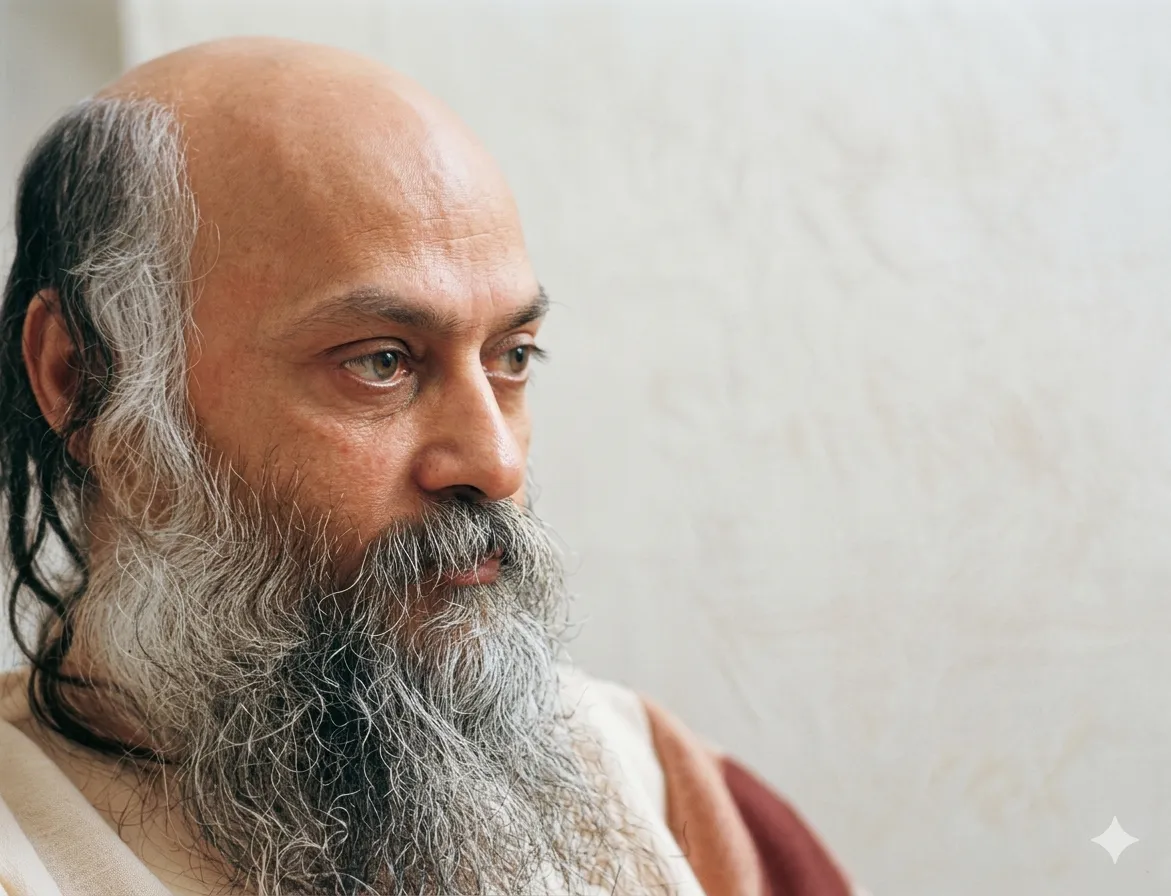
"Sahaj Samadhi Bhali," a profound discourse series by Osho, delves into the transformative nature of spiritual awakening, illustrating how pivotal moments of enlightenment occur as a culmination of continuous inner growth. Osho employs striking metaphors, such as the tale of the camel burdened by a final straw and water transitioning to steam at the precipice of boiling, to elucidate the delicate threshold between ordinary existence and extraordinary realization. The series explores how seemingly insignificant incidents can become revolutionary catalysts in the journey to supreme knowing. In his unique style, Osho emphasizes the importance of individual readiness and capacity, positing that enlightenment is not a linear accumulation of knowledge but a qualitative leap precipitated by a subtle, final push. This series invites listeners to recognize their personal spiritual thresholds, offering insights into the inner mechanism where minor shifts hold potential for profound transformation. By weaving together Zen anecdotes and universal spiritual principles, Osho invites seekers to embrace patience, awareness, and the unpredictable nature of spiritual epiphanies, framing these realizations as the grace that arises naturally—effortlessly—from within, when one is authentically attuned to the moments of divine timing.
-
Chapter 1
Samadhi comes naturally, not by effort; the ego must surrender. Remembering the Paramatma replaces striving—be effortless, you are already home.
-
Chapter 2
Acceptance, not effort: daily life is the Way—drop thought, be open like the sky; silence can bring instant awakening. Can the Way be studied?
-
Chapter 3
Freedom comes when fear of hell and greed for heaven dissolve; true religion is seeing there's nothing to gain or lose, and life becomes a fearless, joyous dance.
-
Chapter 4
No distance separates seeker and Buddha: realization is remembrance. A zero in the sky, a fan waved everywhere, and the goal arrives before the first step.
-
Chapter 5
Seek the seventh-day of desirelessness: action is means, non-doing the end; play awakens life and the miraculous can't be forced or reduced to rules.
-
Chapter 6
Be your own light: don't imitate masters or parrot teachings; wait silently, meet the master's gaze, and let an authentic 'yes' arise from within.
-
Chapter 7
Life is suffering veiled by hope; drop hope and wake in awareness—Buddha’s four truths plus a fifth: awaken to dissolve both pain and promise.
-
Chapter 8
Surrender, not struggle, frees you: like a river dissolving into the wind to cross the desert; lose identity, ride the current to find timeless essence.
-
Chapter 9
Life is a blank sheet of maya: meanings we add create joy, sorrow or imprisonment. Can you stop interpreting and rest in the fourth, empty state of being.
-
Chapter 10
Freedom is an inner capacity: attachment makes any guru or Buddha a prison; leave where attachment arises, cultivate silence and gratitude to meet the formless.
-
Chapter 11
Words and grammar cannot reach truth; only lived feeling and experience matter. Correct chant without heart is hollow — so how does one truly reach God?
-
Chapter 12
Eternal Self is only forgotten; awakening is sudden remembrance, like the fish-in-the-bottle koan: break continuity, not the bottle, and the fish is free.
-
Chapter 13
Doubt destroys love; only trust opens the heart's chest. Science's doubt serves but cannot enter sacred love - dismiss the servant of doubt to receive the key.
-
Chapter 14
Duality binds; seek the Self within—wealth and relationships serve the Self, not themselves. Will riches grant immortality? No; pursue inner truth.
-
Chapter 15
Silence unveils the divine: drop words, rituals and market-noise; enter inner temple where being replaces scripture—can you stop speaking to find yourself?
-
Chapter 16
Be true to yourself: authentic, nonjudgmental acceptance and frank disclosure dissolve inner falsity; then Truth—like in Satyakama's tale—comes seeking you.
-
Chapter 17
Complaint, resignation, and grateful cheer are reactions of ego; Rabia embodies the fourth state: no perception, no reaction—ego dissolved, God appears
-
Chapter 18
Enlightenment arrives when inner readiness reaches the limit—the last straw; drop comparison, see everything as the best, and any small trigger can transform.
-
Chapter 19
Religion as rebellion: true spirituality demands personal responsibility, not crowd obedience; the princess who defies her emperor shows freedom is self-made.
-
Chapter 20
Mind - the old woman - fears meeting the Buddha within; sustain a true tune or mantra so thought cannot flee, surrender occurs and Buddhahood unfolds.
-
Chapter 21
True realization is effortless: stop straining, sit as witness and let the mind’s mud settle—sahaj-yoga reveals God by recognition, not by doing.