
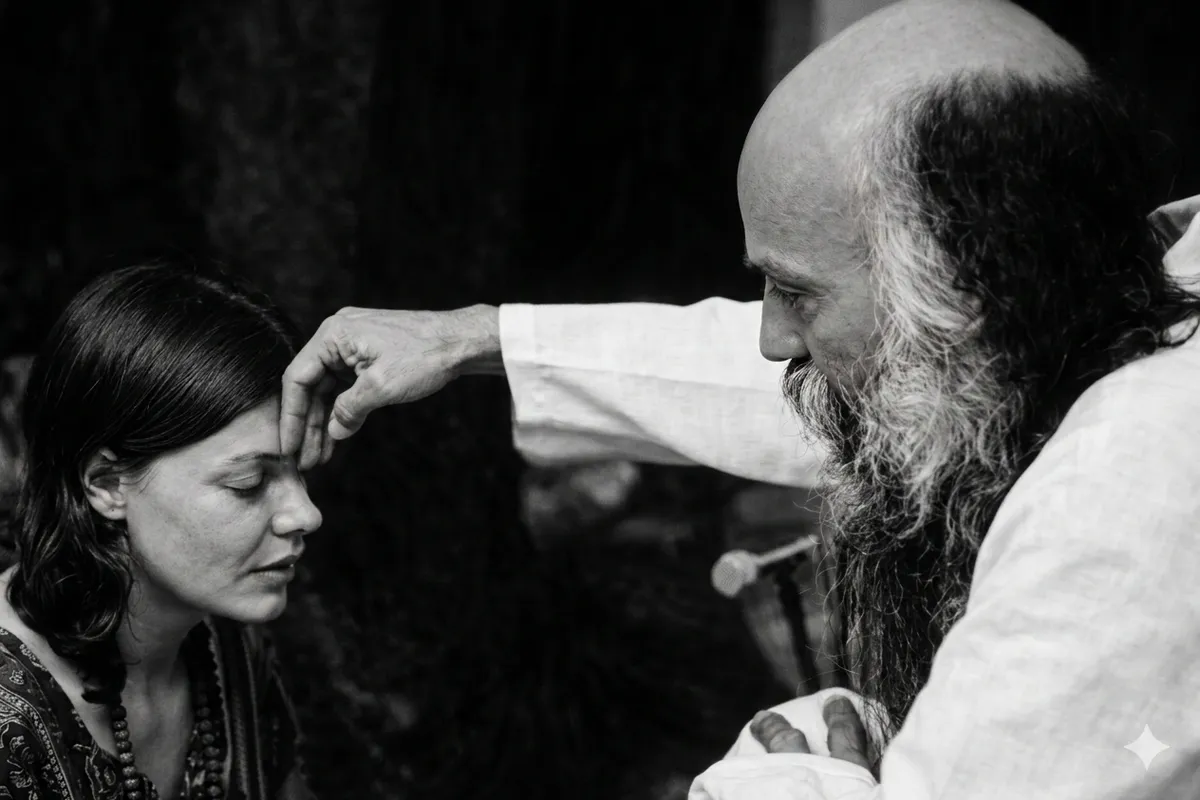
Osho's original Hindi beside Osho Live's English translation, matched passage by passage.
एक शब्द है हमारे पास: नीति। उसे ठीक से समझ लेना जरूरी है।
We have a word: neeti. It is essential to understand it rightly.
नीति है ऐसा आचरण, जो हमारे भीतर से नहीं उपजता, जिसे हम दूसरे को दिखाने के लिए करते हैं; जिसकी जड़ें हमारे भीतर अंतरात्मा में नहीं होतीं, जिसे हम ऊपर से ओढ़ते हैं; जिससे हम भिन्न होते हैं। न केवल भिन्न, बल्कि विपरीत होते हैं। जिससे हमारा कोई तालमेल नहीं होता, लेकिन सम्मान के लिए, समादर के लिए, आस-पास की भीड़ को राजी करने के लिए, समूह के लिए उसे हम अपने ऊपर ओढ़ते हैं। नीति ओढ़ी गई घटना है।
Neeti is a kind of conduct that does not sprout from within; it is done to show others; its roots are not in our inner being, it is a cloak we wear from above; it is something other than us. Not only other, but opposite. There is no resonance between it and us; yet for respectability, for applause, to please the surrounding crowd, for the group, we drape it over ourselves. Neeti is a donned event.
एक तो फूल हैं, वृक्षों में लगते हैं। उन फूलों का संबंध जड़ों से होता है, भीतर भूमि से होता है, ऊपर आकाश के सूरज से होता है, चांद-तारों से होता है। फिर ऐसे भी फूल हैं प्लास्टिक के कि तुम उन्हें वृक्षों पर लटका दो, शायद दूर से गुजरने वालों को धोखा भी दे दें, लेकिन वे फूल वृक्ष में नहीं लगे होते, ऊपर से चिपके होते हैं।
There are flowers that grow on trees. Those flowers are linked with the roots, with the soil within, with the sun in the sky above, with moon and stars. Then there are plastic flowers too—hang them on trees; they may deceive a passerby from afar, but they do not grow from the tree; they are stuck on from the outside.
नीति प्लास्टिक के फूलों जैसी है। उससे तुम्हारे और समाज के बीच सुविधापूर्ण संबंध निर्मित हो जाएंगे, लेकिन तुम्हारे और परमात्मा के बीच सब संबंध टूट जाएंगे। जिसने समाज को बहुत ज्यादा ध्यान दिया वह आत्मा से वंचित हो जाएगा।
Neeti is like plastic flowers. It can create convenient relationships between you and society, but all connections between you and Paramatma are severed. The one who gives too much attention to society will be deprived of the soul.
नीति अगर सड़ जाए तो राजनीति का जन्म होता है। नीति अपने आप में झूठ पाखंड है, लेकिन उसका भी सबसे सड़ा हुआ रूप, सबसे विकृत रूप राजनीति है। जैसे कि प्लास्टिक के फूल भी सड़ गए। राजनीति का अर्थ है, तुम्हें कुछ प्रयोजन ही नहीं है उससे, तुम जो कर रहे हो। तुम्हारे लक्ष्य कुछ और हैं। तुम करते कुछ और हो, तुम चाहते कुछ और हो। तुम्हारा सारा आचरण साधन की भांति है, साध्य नहीं। तुम मुस्कुराते हो, अगर तुम्हें वोट लेनी है। तुम उपेक्षा से भर जाते हो, अगर वोट मिल गई। तुम्हारी मुस्कुराहट भी झूठी है। तुम्हारी मुस्कुराहट भी सहज नहीं है, क्षण की घटना नहीं है, वास्तविक नहीं है। उसके पीछे भी लक्ष्य है, साधन है। तुम मुफ्त में मुस्कुराते भी नहीं। उसके पीछे भी लोभ है। तुम मुस्कुराते हो कुछ पाने को। तुम भला व्यवहार करते हो कुछ पाने को। तुम्हारा व्यवहार वेश्या की भांति है।
When neeti rots, politics is born. Neeti, in itself, is a lie, a hypocrisy—but its most putrid, most distorted form is politics. As if even plastic flowers have rotted. Politics means: you have no intrinsic purpose in what you do; your aims are elsewhere. You do one thing, you want something else. Your entire conduct is a means, not an end. You smile if you need votes. Once votes are secured, you turn cold. Even your smile is false. Your smile is not spontaneous, not of the moment, not real. Behind it too is a goal, a means. You do not even smile for free—there is craving behind it. You smile to get something. You behave nicely to gain something. Your behavior is like that of a prostitute.
राजनीतिज्ञ वेश्या का पूरा का पूरा प्रतिबिंब है। वेश्या प्रेम नहीं करती, फिर भी प्रेम दिखलाती है। नजर उसकी जेब पर लगी है। अगर जेब खाली हो, उसकी मुस्कुराहट खो जाएगी। वह तुम्हारे लिए नहीं हंसती थी, तुम्हारी जेब के लिए हंसती थी। तुम्हारी जेब भरी है, वह पांव में बिछ जाएगी। तुम्हारी जेब खाली है, तुम बाहर निकाल दिए जाओगे। वह तुम्हें पहचानेगी भी नहीं। तुमसे उसका कोई संबंध नहीं बनता। तुम्हारी तिजोड़ी से भला उसका संबंध हो, तुम्हारे हृदय से कोई संबंध नहीं होता। इसलिए तो वेश्या को हमने सबसे ज्यादा पतित माना है। वह अपने व्यक्तित्व को बेचती है, अपनी मुस्कुराहट को, अपने हृदय को, अपने प्रेम को।
The politician is the very mirror of the prostitute. The prostitute does not love, yet she exhibits love. Her eye is on your pocket. If the pocket is empty, her smile will vanish. She was not smiling for you—she was smiling for your pocket. If your pocket is full, she will spread herself at your feet. If your pocket is empty, you will be thrown out. She will not even recognize you. She forms no relationship with you. If she relates, it is with your safe—not with your heart. That is why we have considered the prostitute the most fallen. She sells her person, her smile, her heart, her love.
राजनीतिज्ञ वेश्या जैसा है। उससे भी बदतर है। उसका सारा जीवन ही व्यवसाय है। वह जो भी करता है, यही ध्यान में रख कर करता है कि इसका परिणाम क्या होगा? आखिरी अंततः पद की दौड़ में कितना लाभ इससे मुझे मिलेगा? मनुष्य उसे मनुष्यों जैसे नहीं दिखाई पड़ते--सीढ़ियां हैं, जिन पर चढ़ना है। और जिनको चढ़ कर भूल नहीं जाना, जिनको चढ़ कर मिटा भी देना है। क्योंकि जिस सीढ़ी से तुम चढ़े हो, उसी से तुम्हारे प्रतिद्वंद्वी भी चढ़ सकते हैं। सीढ़ी पर चढ़ कर उसे मिटा देना है, गिरा देना है, ताकि वह सीढ़ी बची न रह जाए। अन्यथा पीछे से तुम्हारे प्रतिद्वंद्वी भी उन्हीं सीढ़ियों से चढ़ कर तुम्हारे पास पहुंच जाएंगे।
The politician is like a prostitute—and even worse. His entire life is a business. Whatever he does, he does while keeping one thing in view: what will be the result? Ultimately, in the race for position, how much benefit will this bring me? People are not seen as people—they are steps of a ladder to be climbed. And once climbed, they must not be remembered; indeed, they must be erased. Because the very steps by which you climbed are the ones your rivals can also climb. Climb the steps, then demolish them, so they do not remain. Otherwise your rivals will climb those same steps and reach you from behind.
तो राजनीतिज्ञ चढ़ता है सीढ़ियों से और खोदता चलता है। वह जिन नावों में सवार होता है, उन्हीं को डुबाता चलता है। क्योंकि खतरा है। वे नावें खतरनाक हैं। नावों को किससे क्या प्रयोजन है! तुम्हें ले आईं राजधानी तक, दूसरों को ले आएंगी।
So the politician climbs the steps and digs them as he goes. He sinks the very boats he rides in. Because there is danger. Those boats are dangerous—they brought you to the capital; they will bring others too.
उसका सारा आचरण अहंकार की पूजा के लिए समर्पित है। वह सिंहासनों पर होना चाहता है, समादर चाहता है।
His entire conduct is devoted to the worship of the ego. He wants thrones; he wants honor.
लेकिन ध्यान रखना, नीति में भी वह बीज तो छिपा ही हुआ है।
But remember, even in neeti the seed is hidden.
तुम मनुष्यों को दो प्रकार में बांट सकते हो। एक, जो समाधि चाहते हैं, समाधान चाहते हैं। और दूसरे, जो सम्मान चाहते हैं, समादर चाहते हैं। जो समाधि चाहता है, उसे तो भीतर की यात्रा पर जाना होगा। जो सम्मान-समादर चाहता है, उसे दूसरों की आंखों के इशारों को समझना होगा। उसे दूसरों के इशारों पर नाचना होगा। क्योंकि दूसरे तभी तुम्हें आदर देंगे जब तुम उनकी धारणाओं के अनुकूल होओगे। वे तुम्हें तभी आदर देंगे जब तुम मरी हुई प्रतिमा की तरह होओगे--भला संगमरमर की सही! जब तुममें अपने जीवन की कोई झलक भी न होगी। जब तुमसे कोई भी खतरा न होगा तुम्हारे व्यक्तित्व के प्रकट होने का। जब तुम एक आदर्श मात्र होओगे, आत्मा न होगी तुम्हारे भीतर। तुम एक लाश की भांति होओगे--सजी-संवरी, आभूषणों से लदी, लेकिन तुम्हारी श्वास न चलती होगी। क्योंकि जब भी तुम्हारी श्वास चलेगी तभी खतरा है। जहां श्वास है वहां स्वतंत्रता है। जहां स्वतंत्रता है वहां तुम समाज के बाहर और समाज के विपरीत भी जा सकते हो।
You can divide humans into two kinds. One: those who want samadhi, resolution. And the other: those who want respect, honor. The one who wants samadhi must journey within. The one who wants respect and honor must learn the signals of others’ eyes. He will have to dance to others’ tunes. For others will honor you only if you align with their notions. They will honor you only if you are like a dead statue—even if of marble! If there is not even a glimpse of your own life in you. If there is no risk that your individuality will reveal itself. If you are merely an ideal and there is no soul within you. You will be like a corpse—well decorated, laden with ornaments, but without breath. For where breath moves, there is freedom. And where there is freedom, you can go outside society and even against society.
इसलिए समाज मरे-मराए आदर्शों में भरोसा करता है। वह तुमसे चाहता है कि तुम आदर्श पूरे कर दो, तुम्हारा भी सम्मान है। ध्यान रखना, समाज को तुम्हारे सम्मान से मतलब नहीं, उसके अपने आदर से है। अगर तुम उनके अनुकूल बैठ जाओ, अगर तुम उनके तराजू पर तुल जाओ, अगर तुम उनकी कसौटी पर ठीक पड़ जाओ, तो तुम्हारा सम्मान है। समाज को तुमसे कुछ लेना-देना नहीं है। समाज की अपनी धारणाएं हैं, जो उसकी आंतरिक सुरक्षा के लिए नियत की गई हैं।
Hence society trusts dead, outworn ideals. It wants you to fulfill its ideals—then you too will be honored. Remember, society is not concerned with honoring you; it is concerned with honoring itself. If you fit into its mold, if you weigh on its scales, if you match its criterion, then you will be honored. Society has nothing to do with you. Society has its own notions, laid down for its internal security.
तुम्हें भी समाज से कुछ मतलब नहीं है। तुम्हें अपना सम्मान चाहिए। समाज के साथ व्यक्ति के सारे संबंध झूठे होते हैं। दोनों अपना-अपना लाभ देख रहे हैं। व्यवसाय का संबंध है।
You too have nothing truly to do with society. You want your own honor. All relationships between the individual and society are false. Both are watching their own profit. It is a business relationship.
नीति का अर्थ है, व्यक्ति की सारी आकांक्षा सम्मान की है। तुम अपने बच्चों को भी समझाते हो, तुम्हारे माता-पिता ने भी तुम्हें समझाया था--कि अगर सम्मान चाहते हो, ईमानदार बनना।
Neeti means the whole ambition of the individual is for honor. You teach your children, and your parents taught you—if you want respect, be honest.
लेकिन सम्मान चाहने के लिए बनी गई ईमानदारी कितनी ईमानदारी हो सकती है! बात बीज से ही झूठ हो गई। अगर अपमान मिलता हो तब? तब ईमानदार होना या नहीं होना? तब जरा खतरा है।
But how honest can honesty be if it is cultivated for the sake of respect! The lie has crept in from the seed itself. And if dishonor is what comes? Then what—be honest or not? Then there is risk.
सम्मान चाहते हो तो ईमानदार होना। लेकिन चाह सम्मान की है। सम्मान यानी अहंकार की पूजा और प्रतिष्ठा चाहते हो। अहंकार से ईमानदारी का क्या संबंध हो सकता है?
If you want respect, be honest—but the desire is for respect. Respect is the worship of ego, the hankering for prestige. What connection can honesty have with ego?
समाज ने सिखाया है कि अगर पूजा चाहते हो तो सच्चे होना। अगर पूजा चाहते हो तो आचरणवान होना।
Society has taught: if you want worship, be truthful; if you want worship, be virtuous.
लेकिन पूजा की चाह ही तो सबसे बड़ा दुराचरण है। तो तुम दुराचरण की सेवा में आचरण को संलग्न कर रहे हो। तुमने झुठला दिया व्यक्ति को प्रारंभ से ही।
But the desire for worship is the greatest vice. Thus you attach conduct to the service of vice. You falsify the individual from the very start.
तुमने अहंकार के आधार पर ही सारी व्यवस्था खड़ी की है। और जब भी व्यक्ति पाता है, अपमान मिल रहा है, तब अहंकार को चोट लगती है। तब वह फिर सम्मान को पाने की चेष्टा शुरू कर देता है। जितना ज्यादा सम्मान मिलता जाता है, उतना ही अहंकार पूजित होता चला जाता है। और अहंकार जितना भरता है, उतने स्वयं से संबंध टूट जाते हैं। अहंकार तुम्हारी तुमसे ही दूरी का नाम है। तुम कितने अपने घर से दूर निकल चुके हो, उस फासले का नाम ही अहंकार है।
You have erected the entire structure on the foundation of ego. And whenever a person finds dishonor coming, the ego is hurt. Then he again strives to gain honor. The more honor he gains, the more the ego is worshiped. And the more the ego swells, the more relations with oneself are broken. Ego is the name of your distance from yourself—how far you have wandered from your own home, that distance is called ego.
एक दूसरे तरह का व्यक्ति है, जो समादर नहीं चाहता, समाधान चाहता है। जो चाहता है कि मेरे भीतर एक अपूर्व शांति हो। मेरे भीतर एक आनंद की वर्षा हो। जो चाहता है कि मैं जीवन की कृतकृत्यता को उपलब्ध हो जाऊं। कि मैं जान लूं जीवन क्या है। कि मेरा जीवन ऐसे ही न खो जाए। व्यर्थ के चांदी-सोने के ठीकरे इकट्ठे करने में मैं व्यतीत न हो जाऊं। मैं ऐसे ही समाप्त न हो जाऊं बिना कुछ जाने, बिना कुछ भीतर के रस को उपलब्ध हुए। भीतर की वीणा न बजे और कहीं जीवन का अवसर न चूक जाए। ऐसा व्यक्ति धार्मिक है।
There is another kind of person—one who does not want honor but resolution. One who wants an extraordinary peace within. A shower of bliss within. One who wants to become fulfilled in life. To come to know what life is. That life not be lost just like that. That he not be consumed in gathering shards of silver and gold. That he not be finished without knowing anything, without tasting any inner nectar. That the inner veena not sound—and somewhere the opportunity of life be missed. Such a person is religious.
नीति धर्म नहीं है; नीति धर्म का धोखा है। धोखा है और बड़ा कुशल धोखा है। क्योंकि जो व्यक्ति भीतरी समाधान चाहता है, वह भी सच्चा होता है; लेकिन उसकी सचाई का कारण सम्मान पाने की आकांक्षा नहीं होती, वह सम्मान पाने के लिए सच्चा नहीं होता। वह सच्चा होता है इसलिए सम्मान मिलता है, यह बात दूसरी। वह सच्चा ही रहेगा, चाहे अपमान मिले। वह सच्चा ही रहेगा, चाहे नरक में फेंक दिया जाए। क्योंकि उसने सच्चाई के स्वर्ग को अनुभव कर लिया। अब कोई और चीज उसकी सच्चाई को हटा नहीं सकती।
Neeti is not Dharma; neeti is a deception of Dharma. A deception—and a very clever one. For the person who seeks inner resolution is also truthful—but the reason for his truthfulness is not the desire for respect. He is not truthful to gain respect. He is truthful, and therefore respect may come—that’s another matter. He will remain truthful even if dishonor comes. He will remain truthful even if he is thrown into hell. Because he has experienced the heaven of truth. Now nothing else can remove his truth.
इस फर्क को फिर से मैं दोहरा दूं। भीतर का समाधान खोजने वाला आदमी भी नीति के गहनतम आदर्शों को पूरा करता है; लेकिन वे उसका लक्ष्य नहीं होते, वे छाया की तरह आते हैं। जैसे-जैसे भीतर की समाधि बढ़ती है और भीतर की अराजकता मिटती है और भीतर की समस्वरता पैदा होती है, भीतर का नाद जैसे-जैसे बजता है, वैसे-वैसे उस व्यक्ति के जीवन से अंधकार गिरने लगता है, उसका बाहर का व्यवहार भी बदलने लगता है। लेकिन बदलता है भीतर के कारण। बदलता है भीतर की क्रांति के कारण।
Let me repeat this difference. The man who seeks inner resolution also fulfills the deepest ideals of neeti—but they are not his aim; they come like a shadow. As inner samadhi deepens, as the inner chaos dissolves, as inner harmony arises, as the inner nada sounds—darkness begins to fall away from that person’s life; his outer behavior also begins to change. But it changes because of the inner. It changes because of an inner revolution.
अंतस पहले बदलता है, आचरण पीछे आता है, तब तो फूल जड़ों से जुड़े हैं। अगर आचरण तुमने बदल लिया और अंतस बदला ही नहीं, तो फूल कागजी हैं। वे जड़ों से नहीं जुड़े हैं, झूठे हैं। झूठे फूलों को सम्मान भला मिल जाए, लेकिन झूठे फूलों से तुम्हारी संतुष्टि न होगी। आखिर में तुम पाओगे, व्यर्थ ही गंवा दिया सब।
First the within changes; conduct follows. Then the flowers are connected to the roots. If you have changed the conduct but the within has not changed, then the flowers are paper. They are not linked to the roots—they are false. False flowers may earn you honor, but false flowers will not fulfill you. In the end you will find—all was wasted.
नीति अनिवार्य रूप से धर्म नहीं है। धर्म अनिवार्य रूप से नीति है। धार्मिक व्यक्ति नैतिक है ही। उसे नैतिक होने के लिए कुछ भी करना नहीं होता। धार्मिक होने से उसकी नीति ऐसे ही निकलती है जैसे फूलों से गंध निकलती है, दीये से प्रकाश निकलता है, सुबह पक्षियों के कंठ से गीत निकलते हैं। कुछ उन्हें गाना नहीं पड़ता। किसी को उनकी खुशामद नहीं करनी पड़ती कि आप गाओ। किसी को फर्माइश नहीं करनी पड़ती कि आप गाओ। कोई सुनने वाला हो न हो, कंठ से गीत फूटता है। वह सुबह की सहज घटना है। सूरज के उगते ही भीतर भी कुछ उगता है। सारे जगत के जागते ही भीतर भी कुछ जागता है। फूल खिलने लगते हैं, पक्षी गीत गाने लगते हैं। कोई भी न हो सुनने वाला। सुनने वाले से कोई प्रयोजन ही नहीं है।
Neeti is not necessarily Dharma. Dharma is necessarily neeti. The religious person is naturally moral. He has nothing to do to become moral. Morality flows from religiosity as fragrance flows from flowers, as light flows from a lamp, as song flows from the throats of birds at dawn. They don’t have to be made to sing. No one needs to flatter them—please sing. No one needs to request—please sing. Whether there is a listener or not, song bursts forth. It is a spontaneous event of the morning. With the sun’s rising, something rises within too. As the whole world awakens, something awakens within as well. Flowers begin to bloom, birds begin to sing. There may be no listener. There is no purpose with the listener at all.
नीति ऐसा गीत है जो तुमने दूसरों के लिए गाया। भला तुम्हारे कंठ में उठता हो, न उठता हो। भला तुम्हारे हृदय से आया हो, न आया हो। भला तुम्हारे प्राण गाना चाहते थे कि नहीं गाना चाहते थे। तुम गौण हो। तुम हो ही नहीं। तुमने अपने को बाद दे दी है। दूसरों के लिए गाया, सम्मान के लिए गाया, तालियों के लिए गाया, पुरस्कारों के लिए गाया।
Neeti is such a song that you sang for others—whether it arose in your throat or not; whether it came from your heart or not; whether your very life wanted to sing or not. You are secondary. You are not. You have resigned yourself. You sang for others; for respect; for applause; for awards.
धर्म ऐसा गीत है जो तुमने अपने लिए गाया। किसी ने सुन लिया, बात और। और कोई आनंदित हुआ, धन्यभाग! कोई सुनने न आया, कुछ भेद नहीं पड़ता। क्योंकि मजा गाने में है, किसी के सुनने में नहीं। आनंद तो था गीत के फूटने में, अभिव्यक्ति में। वह किसी ने तालियां बजाईं या निर्जन एकांत ने उसे सुना, कोई भेद नहीं पड़ता। तुम्हारा आनंद पूरा है। तुम्हारे आनंद से ही तुम्हारा गीत जन्मा है। गीत के कारण तुम्हें आनंद मिलने वाला नहीं है; आनंद से ही गीत बहा है।
Dharma is such a song that you sang for yourself. If someone hears it—that is another thing. And if someone is delighted—blessed! If no one comes to hear, it makes no difference. For the joy is in the singing, not in someone’s listening. The bliss is in the eruption of song, in its expression. Whether anyone claps or the naked solitude hears it—no difference. Your joy is complete. Your song was born of your joy. It is not that you will gain joy because of the song—song has flowed from joy.
तो एक तो दरबारी गवैया है, एक सुबह के पक्षी हैं। दरबारी गवैया गाता है दरबार के लिए।
So, one is the court singer; the other are the birds of dawn. The court singer sings for the court.
अकबर ने तानसेन से पूछा एक बार कि मैं सदा सोचता हूं--तुझसे श्रेष्ठ कोई गायक नहीं हो सकता।
Once Akbar asked Tansen, I have always thought—none can be a singer superior to you.
तानसेन ने कहा, रुकें। मेरी खुद की ऐसा धारणा नहीं है।
Tansen said, Wait. I do not hold such a belief myself.
अकबर ने कहा, तेरा मतलब?
Akbar said, What do you mean?
तानसेन ने कहा, शायद आप समझ पाएं, न समझ पाएं, लेकिन मेरे गुरु अभी जीवित हैं। और मैंने उस व्यक्ति को देखा है। उसके सामने मैं पैरों की धूल भी नहीं हूं।
Tansen said, Perhaps you may understand, perhaps not—my guru is still alive. And I have seen that man. In front of him, I am not even the dust of his feet.
अकबर को बड़ी तीव्र आकांक्षा जगी। उसने कहा, तो फिर गुरु को निमंत्रण दो। जो भी शर्तें होंगी, पूरी कर देंगे। विशेष आयोजन किया जाए।
Akbar’s longing flared. Then invite your guru. Whatever the conditions, we shall fulfill them. We shall make special arrangements.
तानसेन ने कहा, इसीलिए मैंने कभी गुरु का नाम आपके सामने नहीं लिया। क्योंकि निमंत्रण पर वे नहीं गाते हैं। गाते हैं, तब कोई सुन ले, बात और। फर्माइशी नहीं हैं, दरबारी नहीं हैं। वे आएंगे नहीं। उन्हें लाने का कोई उपाय नहीं है। हम वर्षों उनके चरणों में रहे, लेकिन हमारी आकांक्षा रही हो कि वे गाएं, कभी उन्होंने गाया नहीं। चोरी-चोरी हमें सुनना पड़ा है। इसीलिए मैंने कभी नाम नहीं लिया, क्योंकि आप समझ ही न पाएंगे।
Tansen said, That is precisely why I have never mentioned my guru to you—because he does not sing on invitation. He sings—and if someone hears, that is another matter. He is not by request; not a courtier. He will not come. There is no way to bring him. We stayed at his feet for years, but if ever we wished he would sing, he never sang. We had to listen on the sly. Hence I never took his name, because you would not understand.
अकबर को थोड़ी चोट भी लगी। कहा, कौन है यह आदमी? नाम तो बताओ! बुला लेंगे। तुम फिक्र छोड़ो।
Akbar felt a bit stung. Who is this man? At least tell me his name! We will summon him. Don’t worry about it.
क्योंकि अकबर जैसे लोग जानते ही नहीं कि धन के पार भी कोई चीज है, पद-आकांक्षा के पार भी कोई चीज है। अकबर जैसे व्यक्तियों को ऐसे व्यक्तियों से मिलना करीब-करीब असंभव है, जिन्हें लोभित न किया जा सके, जिन्हें प्रलोभन न दिया जा सके। अकबर की तो समझ यही होगी कि हरेक व्यक्ति खरीदा जा सकता है। थोड़ा कम-ज्यादा मूल्य होगा। कोई दस हजार मांगता है, कोई दस लाख मांगेगा, बस! फर्क मात्रा का होगा, गुण का नहीं हो सकता।
For men like Akbar do not even know that there are things beyond wealth, beyond the hunger for office. For people like Akbar it is almost impossible to meet such people who cannot be lured, who cannot be tempted. Akbar’s understanding is that every person can be bought—only the price differs. One will ask for ten thousand, another for ten lakhs—that’s all. The difference will be in quantity, not in quality.
उसने कहा, तू फिक्र छोड़, तानसेन। मुझे तू नाम बता।
He said, Don’t worry, Tansen. Tell me the name.
नाम पूछा तो तानसेन को बताना पड़ा। कहा, हरिदास। फकीर हैं।
When asked the name, Tansen had to tell it. Haridas. A fakir.
तानसेन की बात सुन कर अकबर हंसने लगा। कहा, फकीर हैं! बुला लेंगे, पकड़वा लेंगे। धन जो भी खर्च होगा, करवा देंगे। पूरी राजधानी सजाई जाएगी।
Hearing Tansen, Akbar laughed. A fakir! We will invite him, have him brought—whatever money is needed will be spent. The whole capital shall be adorned.
तानसेन की आंख से आंसू बहने लगे। उसने कहा, आप समझे ही नहीं बात। इसीलिए मैं चुप था और आपकी प्रशंसा भी सुन लेता था कि मुझसे बड़ा कोई गायक नहीं। मैं जानता हूं कि बड़ा अभी जीवित है। यह बात--मैंने अपने गुरु को देखा है--यह बात मैं कभी स्वीकार नहीं कर सकता कि मुझसे बड़ा कोई गायक नहीं है। लेकिन अगर आपका मुझ पर थोड़ा भी प्रेम है, तो भूल कर भी मेरे गुरु को परेशान न करें। अगर सुनना ही है, सच्ची आकांक्षा उठी है, तो फिर मैं इंतजाम करूंगा। चोरी-चोरी चलना होगा। वे यमुना के किनारे रहते हैं आगरा में। अक्सर वे तीन बजे रात मस्ती में नाचते हैं, गाते हैं। तो मैं पता लगा लूं। तो हम छुप जाएंगे झोपड़ी के बाहर और सुन लेंगे।
Tears flowed from Tansen’s eyes. He said, You have not understood at all. That is why I was silent and would even listen to your praise that none is greater than I. I know the greater still lives. Having seen my guru, I can never accept that none is greater than I. But if you have a little love for me, do not trouble my guru—ever. If you truly want to hear, if a genuine longing has arisen, I shall arrange it. We shall go stealthily. He lives on the banks of Yamuna in Agra. Often at three in the night, in ecstasy, he dances and sings. I will find out. We shall hide outside his hut and listen.
शायद ही किसी सम्राट ने किसी को इस तरह सुना हो। अकबर गया। वह आदमी बहुमूल्य था अकबर भी। उसको भी बात तो समझ में आई कि यह भी हो तो सकता ही है कि ऐसा कोई व्यक्ति हो जो पक्षियों की तरह गाता हो। देख लेना चाहिए। वह अगर तैमूरलंग और नेपोलियन और सिकंदर जैसा अगर होता तो उसकी समझ में न आता। वह बुरे लोगों की दुनिया में भला आदमी था। वह गया। रात दो बजे दोनों छिप गए झोपड़े के बाहर।
Perhaps no emperor has ever listened to anyone in this way. Akbar went. He too was precious—Akbar. It dawned on him that perhaps there could be such a person who sings like the birds. He ought to see. Had he been like Tamerlane or Napoleon or Alexander, he would not have understood. He was a good man in a world of bad men. He went. At two in the night, both hid outside the hut.
तीन बजे एक अपूर्व संगीत का जन्म हुआ। अकबर के आंसू थमते नहीं हैं। वह रोता ही रहा। बात ही कुछ हृदय के गहरे तक पहुंच गई। जैसे तीर चुभ गया। जैसे पहली दफा संगीत जाना। जैसे अब तक जो सुना था वे केवल झूठी छायाएं थीं। जैसे पहली दफा असली संगीत जाना। अब तक जो जाना था वे कार्बन-कापियां थीं। पहली दफा असली संगीत का अनुभव हुआ। अब तक जो जाना था वह दूर से सुनी गई ध्वनि थी। आज पहली दफा पास स्पर्श हुआ। सुनने वाला न रहा अकबर। खो गया। ताली बजाने की भी हिम्मत न आ सकी। क्योंकि उससे भी बाधा पड़ेगी। और ताली बेहूदी मालूम पड़ी। इतने बड़े संगीत के लिए ताली नहीं बजाई जा सकती। यह कोई राजनेता का व्याख्यान नहीं है कि ताली बजा दी। क्योंकि ताली बजाने वाला मूढ़ मालूम पड़ेगा। उससे पता चलेगा कि वह समझा ही नहीं; अन्यथा चुप होता, मौन होता।
At three, an incomparable music was born. Akbar’s tears would not stop. He simply wept. Something struck deep into the heart. As if an arrow had pierced. As if for the first time music was known. As if all that had been heard so far were only false shadows. As if for the first time real music was known. All that was known before were carbon copies. For the first time, the authentic music was experienced. Previously, it was a sound heard from afar. Today, for the first time, there was a near touch. Akbar was no longer a listener—he was lost. He did not even dare to clap. For that would be a disturbance. And clapping seemed obscene. For such great music, clapping cannot be offered. This is not some politician’s speech that you clap. To clap would mark you as a fool—for it would show that you did not understand; otherwise you would be quiet, silent.
चुपचाप, पैर की आवाज न हो जाए, वे भाग कर रथ में बैठ कर वापस लौट गए। रास्ते भर अकबर चुप रहा। तानसेन भी थोड़ा बेचैन हुआ कि वह कुछ बोला नहीं। एक शब्द नहीं कहा। कभी ऐसी घड़ी होती है कि शब्द बोलना नासमझी का सबूत होता है। कभी ऐसी घड़ी होती है, प्रशंसा छोटी मालूम पड़ती है। कभी यह कहना कि बहुत खूब, बहुत छोटी बुद्धि का सबूत होता है। कभी चुप रहना ही एकमात्र प्रशंसा होती है। जितनी बड़ी घटना हो उतनी ही शब्द में समाती नहीं।
Silently—lest even the sound of feet be heard—they ran, sat in the chariot and returned. On the way, Akbar was silent. Tansen too grew a little uneasy—that he did not speak. Not a word. Sometimes there comes such a moment that to speak a word is proof of lack of understanding. Sometimes praise seems small. To say, very good—sometimes proves a small mind. Sometimes only silence is the sole praise. The bigger the happening, the less it fits into words.
पर आंसू बहते रहे। सीढ़ियों पर महल की, अंदर महल के जाते वक्त उसने इतना ही कहा, तानसेन! तुम सही हो। मैं सोचता था तुमसे बड़ा कोई गवैया नहीं। अब मैं सोचता हूं कि तुम अपने गुरु जैसा क्यों नहीं गा सकते? तुम तो मीलों फासले पर हो, बहुत दूर हो। जल्दी करो, अन्यथा जीवन ऐसे ही बीत जाएगा। इतना ही मैं तुमसे पूछना चाहता हूं कि इतना फर्क क्यों है? और मैं जानता हूं कि तुम कुशल हो। और मैं जानता हूं कि तुम सब भांति योग्य हो। फिर इतना फासला क्यों?
But the tears kept flowing. On the palace steps, entering inside, he said only this: Tansen! You are right. I thought none could be a singer greater than you. Now I wonder—why can you not sing like your guru? You are miles away, very far. Hurry—otherwise life will pass just like this. This alone I ask—why is there such a difference? And I know you are skilled. I know you are capable in every way. Then why such a distance?
तानसेन ने कहा, फासला बहुत साफ है। मैं गाता हूं ताकि कुछ पा सकूं, वे गाते हैं क्योंकि उन्होंने कुछ पा लिया है। मेरे गाने में आकांक्षा है पाने की--पुरस्कार, धन, संपदा, यश, प्रतिष्ठा, सफलता। अन्यथा क्यों आपके दरबार में होता? मैं दरबारी हूं। वे पक्षी हैं खुले आकाश के। मैं पिंजड़े में बंद तोता हूं। उनका गीत खुले आकाश का गीत है। मेरे गीत में मेरे पिंजड़े की छाया पड़ेगी ही। मैं बंधन में हूं। अभी वासना नहीं मिटी। इसलिए जो गाता हूं वह कंठ से ही आता है, हृदय से नहीं आता। उन्होंने किसी के लिए गाया नहीं है, गाने के लिए गाया है। मस्ती में गाया है। किसी से कोई प्रयोजन नहीं है। भीतर से आया है। उनकी गीत की घटना सामाजिक नहीं है, नितांत वैयक्तिक है। उनके एकांत का आविर्भाव है। मेरी घटना सामाजिक है। मैं तैयार करता हूं, फिक्र करता हूं। जब मैं गा रहा हूं तब भी चिंता मन में यही बनी रहती है कि प्रशंसा मिलेगी, नहीं मिलेगी? प्रतिस्पर्धा है, ईर्ष्या है, जलन है, लोभ है, वासना है। इन सबके बीच कैसे उस महासंगीत का जन्म हो सकता है? वैसा संगीत तो केवल संतों के जीवन में ही होता है। आप ठीक कहते हैं। मीलों नहीं, कोसों की दूरी है। मुझसे ज्यादा भलीभांति कोई भी नहीं जानता कि दूरी कितनी बड़ी है। जब तक भीतर की वासना न गिर जाए वह दूरी मिट न सकेगी। दूरी मिटाने से न मिटेगी। दूरी तो मैं ही बदलूंगा तो ही मिटेगी। मैं ही मरूंगा तो ही मिटेगी। नये का आविर्भाव होगा तो मिटेगी।
Tansen said, The distance is very clear. I sing in order to gain; he sings because he has gained. In my singing there is the desire to get—prizes, wealth, fame, prestige, success. Otherwise, why would I be in your court? I am a courtier; he is a bird of the open sky. I am a parrot in a cage. His song is the song of the open sky. In my song, the shadow of my cage will fall. I am in bondage. Craving has not yet fallen. That is why what I sing comes only from the throat, not from the heart. He has never sung for anyone—he sings for the sake of singing. He sings in ecstasy. He has no purpose with anyone. It comes from within. The happening of his song is not social—it is utterly personal. It is the manifestation of his solitude. My happening is social. I prepare, I fret. Even while singing, the worry remains in the mind—will I be praised or not? There is competition, envy, jealousy, greed, lust—amidst all this, how can that great music be born? Such music happens only in the lives of saints. You are right—not miles, but leagues of distance. No one knows better than I how vast the distance is. Until inner craving falls, that distance will not end. It will not end by reducing the distance; it will end only when I change. Only when I die will it end. When the new is born, it will end.
धर्म भीतर से पैदा हुआ संगीत है। स्वभावतः नीति उसके साथ बहती चली आती है। लेकिन नीति के साथ धर्म बहता हुआ नहीं चला आता।
Dharma is music born from within. Naturally, neeti flows along with it. But Dharma does not flow along with neeti.
ऐसा समझो कि तुम सुंदर हो तो तुम्हारा आचरण सुंदर स्वभावतः हो जाता है। तुम ज्योतिर्मय हो तो तुम्हारे कृत्यों में भी ज्योति झलकती है, दीये जलते हैं।
Understand it this way: if you are beautiful, your conduct naturally becomes beautiful. If you are luminous, your acts too reflect that light—lamps are lit.
तुम ऊपर से सुंदर बनने की कोशिश कर रहे हो। तुमने खूब आभूषण पहन लिए हैं, खूब सुंदर वस्त्र पहन लिए हैं, खूब सजा-संवार लिया है। ज्यादा से ज्यादा तुम असौंदर्य को थोड़ा सा ढांक लोगे, सुंदर नहीं हो जाओगे। ढंकी कुरूपता सुंदर नहीं हो जाती। ढंकी कुरूपता और भी कुरूप हो जाती है। उघड़ा रूप शायद कभी सुंदर भी हो जाए। अगर तुम उघाड़ ही दो अपने को--कुरूप हो तो कुरूप सही; जैसे हो वैसे हो; परमात्मा ने ऐसा तुम्हें बनाया; जैसा रखता है वैसे रहोगे--तो शायद तुम्हारी इस सहजता से तुम्हारी कुरूपता भी बह जाए। सहज तुम्हारे स्वीकार से शायद सौंदर्य का आविर्भाव हो जाए।
You are trying to become beautiful from the outside. You have put on many ornaments, beautiful garments, you have adorned yourself. At most, you will cover your ugliness a little—you will not become beautiful. Covered ugliness does not become beauty; covered ugliness becomes even more ugly. The naked form might someday even become beautiful. If you uncover yourself—as you are, so you are; if there is ugliness, let it be ugliness; Paramatma has made you thus; as He keeps you, thus you will remain—perhaps by the very ease of your acceptance, your ugliness will flow away. Perhaps beauty will be born out of your simple acceptance.
लेकिन तुम ढांकते हो, छिपाते हो। उस छिपाने से घाव मिटते नहीं, बढ़ते हैं। घाव धीरे-धीरे नासूर हो जाते हैं, नासूर धीरे-धीरे कैंसर बन जाते हैं। पूरे प्राणों में महामारी फैल जाती है।
But you cover, you hide. Hiding does not erase wounds; they grow. Gradually the wound becomes a sore; gradually the sore becomes cancer. The epidemic spreads throughout your life-energy.
नीति चेष्टा है समादर की। नीति का विकृततम रूप राजनीति है। वह अत्यंत रुग्ण दशा है नीति की। तब व्यक्ति अपने को छोड़ ही दिया। अब कोई के लिए हंसता है, किसी के लिए रोता है। सारा व्यवहार बाहर हो गया।
Neeti is the striving for honor. The most distorted form of neeti is politics. It is a very diseased state of neeti. Then the person has entirely abandoned himself. Now he laughs for someone; he weeps for someone. His entire behavior is outside.
एक यहूदी फकीर हुआ, रबी लिएव। वह बीस वर्षों तक अपने गुरु के पास रहा। लोगों ने उससे पूछा कि इतना लंबा समय तू गुरु के पास क्या देखता रहा?
There was a Jewish fakir, Rabbi Liyev. He stayed twenty years with his master. People asked him, For so long, what did you watch at your master’s place?
तो लिएव ने कहा, मंदिर में उनका आचरण अदभुत था, लेकिन उसे मैं देखने न गया था। भीड़ में उनके सौंदर्य की क्या चर्चा करें! लेकिन उस पर मेरी आंख न थी। वे बोलते थे तो फूल झरते थे, लेकिन उसकी मुझे तलाश न थी। शास्त्रों की उनकी व्याख्याएं अनूठी हैं, अपूर्व हैं। पृथ्वी पर कभी-कभी ऐसे व्याख्याकार पैदा हुए। लेकिन नहीं, उनको भी मैं सुनने न गया था। मैं तो देखने गया था कि मेरा गुरु अपने एकांत में कैसा व्यवहार करता है। कैसे वह जब कोई भी देखने वाला नहीं होता तो अपने जूते के बंद खोलता है। और कैसे जब कोई भी देखने वाला नहीं होता तो अपने जूते के बंद बांधता है। मैं वह देखने गया था। निश्चित ही बीस वर्ष लग गए, लेकिन समय खोया नहीं। बहुत कुछ पाकर लौटा हूं। मैं गुरु को उसके एकांत में देखने गया था--शुद्धतम! जहां दूसरे की छाया भी नहीं पड़ती। जहां दूसरे के आधार पर आचरण करने का कोई प्रश्न भी नहीं उठता। मैं गुरु को उसकी नींद में सोता हुआ देखने गया था कि उसकी नींद में वह बड़बड़ाता तो नहीं। सपने तो नहीं सताते उसे। चौंक कर डर तो नहीं जाता कभी। मैं उसे ही देखने गया था। उसकी छायाएं-प्रतिबिंबों को नहीं, जो लोगों की आंख में बनते हैं। वे सुंदर थे रूप। कोई उनका मुकाबला नहीं। लेकिन वह मेरी खोज न थी, इसलिए मुझे देर लगी। अगर मंदिर में उसके रूप को देखना था, एक दिन में बात हो जाती। बाजार में उसके रूप को देखना था, दो दिन में बात हो जाती। उसके वचन सुनने थे, तीसरे दिन पूरा हो जाता। लेकिन मैं उसके शून्य को सुनने गया था, उसके अंतर्नाद को। जहां वह अकेला है; बिलकुल अकेला है। जहां किसी की भी कोई छाया नहीं पड़ती। जहां परमात्मा भी नहीं है।
Liyev said, In the temple his conduct was wondrous—but I had not gone to see that. What to say about his beauty amidst the crowd! My eye was not on that. When he spoke, flowers showered—but I was not in search of that either. His commentaries on the scriptures were unique, unparalleled. The earth has rarely seen such interpreters. But no, I had not gone to hear those either. I had gone to see how my master behaves in his solitude. How—when no one is watching—he unties the laces of his shoes. And how—when no one is watching—he ties the laces of his shoes. That I had gone to see. Certainly it took twenty years, but the time was not lost. I have returned with much. I had gone to see the master in his solitude—the purest! Where not even the shadow of another falls. Where the question of acting based on the other does not even arise. I had gone to see the master asleep—does he mutter in his sleep? Do dreams harass him? Does he ever wake startled in fear? That I had gone to see. Not his images and reflections formed in others’ eyes. Those forms were beautiful—beyond compare. But that was not my search, hence it took me long. Had it been to see his form in the temple, a day would have sufficed. To see his form in the marketplace—two days. To hear his words—by the third day it would be done. But I had gone to hear his void, his inner resonance. Where he is alone—absolutely alone. Where no one’s shadow falls. Where not even Paramatma is.
क्योंकि मंदिर में जब तुम परमात्मा के सामने खड़े हो, तब परमात्मा और तुम्हारी मौजूदगी, दो की मौजूदगी है। तुम ऐसा व्यवहार करोगे जो प्रार्थना के योग्य है। लेकिन जहां तुम बिलकुल अकेले हो अपने स्नानगृह में, जहां तुम दर्पण के सामने खुद ही खड़े हो, कोई भी देखने वाला नहीं, वहां तुम्हारा सच्चा रूप प्रकट होता है।
For when in the temple you stand before Paramatma, then there is the presence of two—Paramatma and you. You will behave as befits prayer. But where you are entirely alone—in your bath, where you stand before the mirror with yourself there alone—there your true form appears.
नीति नहीं है लक्ष्य; धर्म है लक्ष्य। धर्म का अर्थ है: व्यक्ति का अपने एकांत में अपने से ही व्यवहार। इस व्याख्या को याद रखो। एकांत के साथ तुम जो व्यवहार करते हो वहीं तुम्हारे धर्म का पता चलता है कि तुम धार्मिक हो या नहीं।
Neeti is not the goal; Dharma is the goal. Dharma means: a person’s behavior with himself in his own solitude. Remember this definition. How you behave in aloneness—that reveals your Dharma, whether you are religious or not.
निश्चित ही उसके पीछे नीति के सभी रथ अपने आप चले आते हैं; उन्हें लाना नहीं पड़ता। वे दौड़े चले आते हैं, वे अपने से ही भागे चले आते हैं। पर वे न भी आएं तो भी धार्मिक व्यक्ति को उनके कारण कोई चिंता नहीं होती। और अगर धर्म की गहनता बढ़ती जाए, तो जैसे नीति का विकृततम रूप राजनीति है, वैसे धर्म का प्रगाढ़तम, विकसिततम रूप निर्वाण है, मोक्ष है, मुक्ति है।
Surely, behind it all the chariots of neeti follow on their own; they need not be brought. They race along of themselves, they run by themselves. But even if they do not come, the religious person has no concern. And if the depth of Dharma keeps increasing—just as the most distorted form of neeti is politics—so the most profound, most developed flowering of Dharma is nirvana, moksha, mukti.
ये दो अलग यात्राएं हैं।
These are two separate journeys.
नीति को भूल कर धर्म मत समझना; अन्यथा तुम खोटे सिक्के पर राजी हो गए। उस सिक्के से इस संसार में बहुत कुछ मिलेगा, लेकिन उस सिक्के से नदी के उस पार न जा सकोगे। वह इसी पार चलता है। नदी में पार जाना तो दूर, नाव में भी न बैठ सकोगे। क्योंकि वह मांझी कहेगा, यह सिक्का उस तरफ चलता ही नहीं। यह इसी किनारे चलता है। तुम इसे यहीं चलाओ।
Do not mistake neeti for Dharma; otherwise you have settled for counterfeit coin. With that coin you may gain much in this world, but with that coin you will not cross to the other shore. It works only on this bank. You will not even be able to sit in the boat—for the boatman will say: That coin does not work across the river. It works on this shore only. Spend it here.
ये जो वचन आज हम दादू के समझने जा रहे हैं, वे इसी रहस्य के संबंध में हैं।
ऊपरि आलम सब करै, साधु जन घट मांहि।
The words of Dadu we are going to understand today are related to this very mystery.
On the surface everyone displays, said Dadu; only the sadhu works within his own vessel.
ऊपर से दिखावा सभी लोग करते हैं। ऊपर-ऊपर सभी लोग सजाते हैं। ऊपर-ऊपर सभी लोग सुंदर बनने की चेष्टा में संलग्न होते हैं।
On the surface everyone shows off. On the surface everyone decorates. On the surface everyone tries to become beautiful.
ऊपरि आलम सब करै...
सारा संसार यही कर रहा है--ऊपर-ऊपर। क्योंकि दूसरों को तो तुम्हारी परिधि ही दिखाई पड़ती है। तुम्हारा केंद्र तो सिवाय तुम्हारे कौन देख सकेगा? वहां तो तुम्हारा ही एकांत प्रवेश है। किसी और को भी वहां प्रवेश का उपाय नहीं है। तुम्हारे आत्यंतिक हृदय के केंद्र पर तो तुम्हीं जा सकोगे। लेकिन तुम्हारी देह तो सभी को दिखाई पड़ेगी।
On the surface—that is what the entire world is doing. For others can only see your circumference. Who but you can see your center? There only your own solitude has entry. No one else can enter there. To the center of your innermost heart—only you can go. But your body is visible to all.
तुमने ध्यान किया या नहीं, यह किसी को दिखाई नहीं पड़ेगा। तुमने स्नान किया या नहीं, यह तो सभी को दिखाई पड़ जाएगा। तुमने भीतर के सौंदर्य को निखारा या नहीं, इसको देखने वाली आंखें तुम कहां खोज सकोगे! लेकिन तुमने स्नान किया है, सुगंधित होकर घर से निकले हो, ताजे कपड़े पहने हैं, यह तो अंधे को भी समझ में आ जाएगा। धीरे-धीरे तुम यह भूल ही जाते हो कि एक तुम्हारा ऐसा रूप भी है जिसे तुम ही जानोगे। और एक तुम्हारा रूप है जो बाहर से दिखाई पड़ता है। अगर तुम बाहर के ही रूप को संवारने में लगे रहे, तो तुमने दूसरों की आंखों को भला तृप्ति दी हो, तुम अपनी जीवन की खोज से वंचित हो जाओगे। तुम दूसरों को ही समझाते रहे कि मैं सुंदर हूं। और तुम सुंदर न हो पाओगे। क्योंकि यह सवाल किसी को समझाने का नहीं है। तुम सुंदर हो तो तुम सुंदर हो, किसी को समझाने की बात नहीं है। कोई समझ ले, उसका सौभाग्य; न समझे, उसका दुर्भाग्य। समझ ले तो वह भी यात्रा पर निकल जाएगा। न समझे तो जहां पड़ा है वहीं पड़ा रहेगा और सड़ जाएगा। लेकिन तुम्हें दूसरे को समझाने की आकांक्षा नहीं है।
Whether you have meditated or not—no one can see. Whether you have bathed or not—everybody can see. Whether you have refined the inner beauty or not—where will you find eyes to see this! But that you have bathed, you step out fragrant, you wear fresh clothes—even the blind can understand. Slowly you forget that there is also a form of yours that you alone will know. And there is a form of yours that appears from the outside. If you remain occupied only in adorning the outer form—then even if you gratify the eyes of others, you will be deprived of the search for your own life. You will go on persuading others that you are beautiful—and you will not become beautiful. For this is not a matter of persuading anyone. If you are beautiful, you are beautiful—there is nothing to convince anyone about. If someone understands—fortunate for him; if he does not—his misfortune. If he understands, he too will set out on the journey. If he does not, he will remain stuck where he is and rot. But you have no longing to convince the other.
लेकिन साधारणतः हमारी अपने संबंध में कोई दृष्टि ही नहीं होती। हम अपने संबंध में भी दूसरों की दृष्टि को ही जुटाते हैं। अगर लोग तुम्हें अच्छा कहते हैं तो तुम अपने को अच्छा मानते हो। अगर लोग बुरा कहते हैं तो तुम अपने को बुरा मानते हो। जैसे कि तुम्हारी अपने से सीधी कोई पहचान ही नहीं है। जो लोग कहते हैं वही तुम अपने को मानते हो।
Ordinarily, however, we have no vision about ourselves. Even about ourselves we borrow others’ vision. If people call you good, you consider yourself good. If people call you bad, you consider yourself bad—as if you had no direct acquaintance with yourself. You consider yourself to be what others say.
यही तो तकलीफ है। इसीलिए तो तुम इतने भयभीत हो लोगों से कि कहीं लोगों का मन न बदल जाए। कहीं ऐसा न हो कि वे तुम्हें चुनाव में मत न दें। कहीं ऐसा न हो कि वे तुम्हारे संबंध में कुछ और सोचने लगें। तुम पूरे वक्त शंकित, चिंतित, व्यथित, उनकी आंख में तुम्हारी प्रतिमा सुंदर बनी रहे इसके लिए बेचैन हो।
This is the trouble. That is why you are so frightened of people—that their mind may not change; that they may not stop voting for you; that they may not start thinking something else about you. The whole time you are suspicious, anxious, pained—restless to keep your image beautiful in their eyes.
और दूसरों की आंखों में बनी तुम्हारी प्रतिमाएं पानी पर बने प्रतिबिंब से ज्यादा मूल्यवान नहीं हैं। आंख भी बस पानी है। उस पर बने प्रतिबिंब हैं। जरा में डगमगा जाते हैं। कुछ भरोसा है? आज किसी का मन ठीक था, उसने तुम्हें कहा, सुंदर हो। कल उसका मन ठीक नहीं है और उसने कहा कि तुमसे ज्यादा कुरूप कोई व्यक्ति नहीं। हट जाओ! तुम्हें देख कर भी मुझे घृणा पैदा होती है।
And the images of you formed in others’ eyes are worth no more than reflections formed on water. The eye too is but water. There are reflections upon it. They wobble in an instant. What trust can there be! Today someone’s mood was fine—he told you, You are beautiful. Tomorrow he is not fine and he says, None is more ugly than you. Get lost! Even to see you fills me with disgust.
तुम जानते हो, रोज यह घटता है। किसी दिन तुम किसी को कहते हो, मैं प्रेम करता हूं। तेरे बिना न जी सकूंगा। और एक दिन ऐसा आता है, तुम कहते हो कि मेरी इतनी घृणा है तुझसे कि तेरे साथ न जी सकूंगा। अब अलग ही जीने का उपाय है।
You know—this happens every day. One day you tell someone, I love you. I cannot live without you. And a day comes when you say, I have so much hatred for you that I cannot live with you. Now there must be a way to live apart.
लोगों के मन तो धुएं की तरह बदलते रहते हैं। आकाश में बादलों के बने हुए आकार जैसे हैं लोगों के मन। तुम पूरी तरह देख भी नहीं पाए कि बदलाहट शुरू हो गई। नदी की धाराओं की तरह हैं लोगों के मन। बह रहे हैं; कुछ भी थिर नहीं है। उसमें तुम अपना प्रतिबिंब झांक रहे हो। एक मछली उछल जाती है, प्रतिबिंब डांवाडोल हो जाता है। दूसरे के मन में एक विचार उछल जाता है, प्रतिबिंब डांवाडोल हो जाता है।
People’s minds change like smoke. Their minds are like shapes of clouds formed in the sky. Before you can fully see them, the change has begun. Like the currents of a river—the minds are flowing; nothing is stable. And you are peering at your reflection in them. A fish leaps—the reflection wavers. A thought leaps in the other’s mind—the reflection wavers.
झील शांत हो, चांद दिखाई पड़ता है। जरा सी लहर आ जाए हवा की, टुकड़े-टुकड़े हो जाते हैं चांद के। अगर चांद भी झील पर ही भरोसा करता हो, तो रोता-रोता मरेगा कि यह मेरी क्या गति हो गई! हजार टुकड़े हो गया! अभी तो सब ठीक था। यह झील ने मन क्यों बदल लिया?
If the lake is still, the moon appears. A slight breeze—ripples— and the moon is torn into pieces. If the moon too were to rely on the lake, he would cry himself to death—what has become of me! I have been shattered into a thousand pieces! All was fine just now. Why did the lake change its mind?
कोई झील चांद के लिए मन को नहीं बदल रही है। झील की अपनी मुसीबतें हैं। झील को चांद से क्या लेना-देना है? शायद झील को पता भी न हो कि चांद का प्रतिबिंब बन रहा है।
No lake is changing its mind for the moon. The lake has its own troubles. What has the lake to do with the moon! Perhaps the lake knows not that the moon’s reflection is being formed.
तुम जिन आंखों के लिए बड़ा भरोसा किए हो, उन आंखों को शायद तुम्हारी कोई खबर भी न हो; शायद चिंता भी न हो। लेकिन तुम्हारी चिंता यही है कि सभी आंखों में मेरा प्रतिबिंब अच्छा बना रहे। एक प्रतिमा हो आदर्श की। लोग सम्मान दें, आदर दें।
Those eyes in which you place such trust—they may have no news of you at all; perhaps no concern either. But your concern is that in those eyes my reflection be good; that there be an ideal image; that people grant respect, honor.
जीवन बहुत छोटा है। लोगों के मन बड़े प्रवाहमान हैं। इस भांति तो तुम खो जाओगे। झील में देखते-देखते तुम्हारा चांद ही नष्ट हो जाएगा। अपने को देखो। झील से क्या प्रयोजन है? भीतर की अखंडता को खोजो। फिर झीलें कुछ भी कहें। कम से कम तुम्हें तो व्यथित नहीं होना चाहिए। तुम तो जानते हो, मैं अखंड हूं। झील के कहने से क्या फर्क पड़ता है?
लेकिन जरा सी झील के मन में शंका आती है और तुम शंकित हो जाते हो। बात जाहिर है। तुम स्वयं से अपरिचित हो। आत्म-अज्ञानी व्यक्ति दूसरों की आंख में अपनी पहचान खोजता है कि मैं कौन हूं? वह अपना तादात्म्य खोज रहा है कि मैं अपने को क्या समझूं?
Life is very short. People’s minds are very flux-like. In this way you will be lost. Gazing at the lake, your moon will be destroyed. Look to yourself. What has the lake to do with it? Seek the inner integrity. Then let the lakes say what they will—at least you should not be distressed. You know—I am whole. What difference does it make what the lake says?
अमरीका की बहुत प्रसिद्ध अभिनेत्री हुई, ग्रेटा गार्बो। उसने अपने संस्मरणों में लिखा है कि मुझे पता ही न था कि मैं सुंदर हूं। वह एक छोटे से गांव में एक नाईबाड़े पर लोगों की दाढ़ी पर साबुन लगाने का काम करती थी। दो पैसा प्रति दाढ़ी उसे मिल जाता था। दिन भर वह अपना साबुन लगाती रहती थी। न कभी किसी ने उस पर ध्यान दिया था, न कभी उसने सोचा था कि मैं सुंदर हूं। गरीब लड़की थी। एक अमरीकी फिल्म डायरेक्टर गांव में आया हुआ था। कुछ शूटिंग के लिए जगह देखने आया होगा। वह भी अपनी दाढ़ी बनवाने गया। और जब ग्रेटा गार्बो ने उसकी दाढ़ी पर साबुन लगाया तो उसने ऐसे ही सहज कहा, जैसी कि अमरीकियों की आदत होती है--उसको कोई बहुत ज्यादा मूल्य मत देना कि अमरीकी क्या कहते हैं। वह औपचारिक था। उसने ऐसे ही दर्पण में देख कर कहा, हाऊ ब्यूटीफुल! कितनी सुंदर!
यह सिर्फ उपचार था। लेकिन ग्रेटा गार्बो का जीवन बदल गया। उसे पहली दफा अपने सौंदर्य का बोध आया।
झील में देख कर चांद को पता चला। मगर यह बड़ा खतरनाक सौदा है। क्योंकि और भी झीलें हैं। किसी और झील में देख कर शक हो जाएगा कि सुंदर नहीं हूं।
तुम कभी विचार करना कि तुम अपने संबंध में जो भी जानते हो वह सब दूसरों की आंखों में देखे गए प्रतिबिंबों की कतरन को जोड़ कर बनाया गया प्रतिरूप है, या तुम अपने संबंध में सीधा कुछ जानते हो? कौन क्या कहता है तुम्हारे संबंध में, उस पर तुम निर्भर हो। छोटे-छोटे बच्चों पर निर्भर होते हो। छोटा बच्चा है, मां उस पर निर्भर होती है कि वह कहे कि तुझसे अच्छी मां कोई भी नहीं। छोटा सा बच्चा! उससे भी राजनीति का खेल शुरू हो जाता है। और बच्चा अगर कह दे, तू कुछ भी नहीं है--किसी नाराजगी के क्षण में--तू हमारी मां भी नहीं है! तो मां का भी दिल टूट जाता है। आंसू आ जाते हैं कि अपना ही बेटा ऐसा कह रहा है। तो उस पर भी निर्भर हैं।
आदमियों को तो छोड़ दें, कुत्ता पाल रखा है। वह आप आते हैं दफ्तर से तो पूंछ हिलाता है, चित्त प्रसन्न होता है। कुत्ते की पूंछ में प्रतिबिंब देखते हैं अपना! कोई कुत्ता, आप पूंछ हिलाते रहो, फिक्र नहीं करता। मगर आप फिक्र करते हो। कुत्ते समझ गए राजनीति। समझ गए आदमी की मूढ़ता कि यह गरीब आदमी है, इसका कोई हिसाब नहीं। जरा पूंछ हिला दो, यह राजी हो जाता है। यह बड़ा प्रसन्न हो जाता है। इसे लगता है जैसे सम्राट हो गए।
कुत्ते पालने का यही तो सुख है। कुत्ता भरोसे-योग्य है। कभी भी आओ, डांटो-डपटो, नाराज होओ, भगा दो उसे, फिर वापस खड़ा है, फिर पूंछ हिला रहा है। वह तुम्हें फुसला ही लेगा। वह तुम्हें बता ही देगा कि तुम सिकंदर हो। तुम बड़े महान हो। कुत्ते राजनीति समझ गए; आदमी की मूढ़ता समझ गए।
जितना ही आत्म-अज्ञान होगा, उतना ही हम आत्मज्ञान की खोज करते हैं दूसरों के विचारों में--कौन मेरे संबंध में क्या कह रहा है। अगर लोग अच्छा कह रहे हैं, तो मैं अच्छा हूं इसीलिए अच्छा कह रहे हैं। अगर लोग बुरा कह रहे हैं, तब? तब स्वभावतः भीतर शक होता है, मैं बुरा होऊंगा। तो किस तरह लोगों को राजी करूं कि वे सदा मुझे अच्छा कहते रहें!
But the lake has the slightest doubt and you too begin to doubt. Obviously—you are unfamiliar with yourself. The self-ignorant person seeks self-knowledge in others’ opinions—what are they saying about me? If people say good, then I am good—therefore they say good. If people say bad—then naturally there is doubt within: I must be bad. How to please people so they always say good of me!
On the surface everyone displays; only the sadhu works within his vessel.
ऊपरि आलम सब करै, साधु जन घट मांहि।
सिर्फ साधु भीतर की यात्रा पर निकलता है। वह भीतर के घट मांहि--वहां खोजता है कि मैं कौन हूं। वह वहां मनन, चिंतन और ध्यान करता है कि मेरी प्रतिमा क्या है? मैं हूं कौन? वह अपने से पूछता है, किसी और से नहीं कि मैं कौन हूं। वह तुम्हारे घर के सामने भीख मांगता हुआ खड़ा नहीं होता कि थोड़ा मुझे आत्मज्ञान की भीख दे दो! कि थोड़ा मुझे बता दो कि मैं कौन हूं! जरा कह दो!
Only the sadhu sets out on the inner journey. Within the vessel—there he inquires: Who am I? There he reflects, contemplates, meditates—What is my image? Who am I? He asks himself, not another, Who am I? He does not stand begging in front of your house—Give me alms of self-knowledge! Tell me a little—Who am I? Just say!
कितने लोग मिमियाते हैं एक-दूसरे के सामने कि जरा कह दो कि तुमसे ज्यादा ईमानदार और कोई भी नहीं। हृदय के कमल खिल जाएंगे। कि जरा कह दो कि तुम्हारी जैसी कोकिल कंठ आवाज कहीं नहीं सुनी। प्राण-प्राण पुलकित हो जाएंगे। कि जरा कह दो कि तुम्हारी आंखों में झीलों की शांति है; कि तुम्हारी आंखों में हिमालय का सौंदर्य है। और श्वास-श्वास सुगंधित हो जाएगी।
How many people bleat before each other—Just say that none is more honest than you. The lotus of my heart will bloom. Just say that your nightingale throat has no equal. Every fiber will be thrilled. Just say that in your eyes is the tranquility of lakes; that in your eyes is the beauty of the Himalayas—and every breath will be fragrant.
हर आदमी एक-दूसरे के सामने भीख मांगता खड़ा है कि कह दो। और बदले में वह कहने को तैयार है कि नहीं, मैं तो कुछ भी नहीं। आपके सामने क्या हूं? पैर की धूल हूं! एक लेन-देन है। एक पारस्परिक समझौता है। हम एक-दूसरे को सहारा दे रहे हैं। हम एक-दूसरे की पीठ थपथपा रहे हैं। जिसकी तुम पीठ थपथपा रहे हो, वह तुम्हारी थपथपा रहा है। वह भी तभी तक थपथपाएगा जब तक तुम थपथपा रहे हो। ऐसे हम एक-दूसरे को धोखा देने में साझीदार हैं।
Everyone stands begging before one another—Say it! And in return, he is ready to say, No, I am nothing. Before you—what am I? The dust of your feet! It is a give-and-take. A mutual understanding. We are supporting each other. We pat each other’s backs. The one whose back you pat—he pats yours. He will pat only as long as you pat. Thus we are partners in deceiving each other.
इस धोखे का नाम माया है, प्रपंच है। इस धोखे का नाम संसार है।
This deceit is called maya, prapanch. This deceit is called the world.
संसार का अर्थ तुम यह मत समझना कि वृक्ष, आकाश के तारे, समुद्र, पहाड़। इनसे संसार का कोई लेना-देना नहीं। ये तो परमात्मा के हिस्से हैं। संसार तो उस धोखे का नाम है जो आदमी-आदमी ने अपने बीच निर्मित किया है। उसका परमात्मा से कोई संबंध नहीं है। परमात्मा ने सृष्टि तो बनाई है, संसार नहीं बनाया।
Do not think the world means trees, stars in the sky, oceans, mountains. The world has nothing to do with these. These belong to Paramatma. The world is the name of the deceit that man has created between man and man. It has nothing to do with Paramatma. Paramatma created creation—not the world.
इस भेद को तुम्हें शायद थोड़ी कठिनाई हो, क्योंकि तुम सदा दोनों को एक ही मानते रहे हो। संसार आदमी ने बनाया है। उसका स्रष्टा आदमी है। सृष्टि परमात्मा की है, लेकिन संसार आदमी का है। संसार उस प्रपंच का नाम है जो आदमी अपने बीच में खेल रहे हैं। उस खेल का नाम है जो आदमी-आदमी आपस में खेल रहे हैं।
You may find this distinction a little difficult, for you have always considered both the same. The world is made by man. Its creator is man. Creation is Paramatma’s—but the world is man’s. The world is the name of that prapanch— the game—that men are playing between themselves.
तुम जरा गौर करना अपने ही संबंध में, तो तुम पाओगे कि चौबीस घंटे जाने-अनजाने तुम यही कर रहे हो। एक खेल खेल रहे हो। रास्ते पर कोई आदमी है, तुम झुक कर नमस्कार करते हो। नमस्कार के लिए नहीं, तुम देखते हो कि वह नमस्कार करता है कि नहीं। अगर न करे नमस्कार, बड़ी पीड़ा हो जाती है।
Just look a little into your own life—you will find that knowingly or unknowingly, twenty-four hours a day, this is what you are doing. Playing a game. Someone on the road—you bow to him. Not really to bow; you watch whether he returns the bow or not. If he does not, there is pain.
सूफी फकीर हसन एक गांव से गुजर रहा था अपने शिष्यों के साथ। एक आदमी रास्ते में मिला, उसने झुक कर नमस्कार किया, जैसी कि हसन की आदत थी। जाने-माने को, अनजाने को, अपरिचित को, सभी को झुक कर नमस्कार करता था। क्योंकि सभी के भीतर वह तो छिपा ही है जो नमस्कार के योग्य है। ऊपर की पहचान का क्या फर्क पड़ता है? वे तो लेबल हैं। भीतर तो वही एक है। उसने झुक कर नमस्कार किया। लेकिन वह आदमी अकड़ा हुआ था। वह कोई छोटा-मोटा आदमी नहीं था, गांव का जमींदार था, धनपति था। ऐसे हर किसी को नमस्कार करने लगे! वह अपना चला गया बिना देखे। उसने ध्यान भी न दिया।
The Sufi fakir Hasan was passing through a village with his disciples. A man met him on the way—Hasan bowed, as was his habit. Known or unknown, familiar or unfamiliar—he bowed to all. For within each one is hidden the One worthy of bowing. What matters the outer label? Those are labels. Within is the same One. He bowed. But the man was stiff. He was no small man—he was the landlord, the wealthy man of the village. Are we to bow to anyone! He went his way without even noticing—he did not even pay attention.
हसन के शिष्यों को चोट लगी। एक शिष्य ने कहा कि यह तो जरा ज्यादती की बात हो गई। इस आदमी को रास्ते पर लगाना चाहिए। इसने अपने को समझा क्या है!
Hasan’s disciples felt hurt. One said, This is too much. This man must be taught a lesson. What does he think of himself!
हसन ने कहा, उसे देख कर तो मुझे दया आई; तुझे भी देख कर दया आती है। वह आदमी तो रुग्ण है।
Hasan said, Seeing him I felt pity; seeing you too I feel pity. That man is sick.
हसन ने कहा, पागलो! अगर कोई आदमी लंगड़ा कर चलता है तो तुम्हें दया आती है, क्योंकि उसका पैर टूटा हुआ है। इस आदमी की पूरी आत्मा टूटी हुई है और तुमको दया नहीं आती, क्रोध आता है? यह बिलकुल लंगड़ा है भीतर से। यह कितना दुख नहीं पा रहा होगा! अब और तुम्हें दुख देने की जरूरत है इसको? यह ऐसे ही बहुत दुख पा रहा होगा। जो नमस्कार तक करने में असमर्थ हो गया है, उसकी पीड़ा का कोई अंत है! यह तभी हो सकता है जब कोई भीतर के परमात्मा को बिलकुल भूल गया हो। क्योंकि जब भीतर का परमात्मा याद आता है तो दूसरे का परमात्मा तत्क्षण दिखाई पड़ता है। उस पर नाराज होने की जरूरत नहीं है, पागलो, उसके लिए प्रार्थना करना आज। और तुझ पर भी मुझे दया आती है। नमस्कार इसलिए थोड़े ही की जाती है कि कोई लौटाए! और जहां लौटाने का भाव हो वहां तो नमस्कार भी सौदा हो गया। नमस्कार तो हमने की, यह हमारा निवेदन है कि खूब सुंदर हो। कि परमात्मा किस ढंग में जा रहा है। हमने तो परमात्मा को नमस्कार की। परमात्मा किसी ढंग में हो, हम उसे पहचान ही लेंगे। रुग्ण हो, स्वस्थ हो, जागा हो, सोया हो, हम पहचान ही लेंगे। हमने तो अपनी पहचान जतलाने के लिए नमस्कार की कि पहचान गए। उसने नहीं लौटाई, यह उसकी बात है, यह उसकी पीड़ा है। तुम क्यों नाराज हो? निश्चित ही तेरे मन में आकांक्षा होगी: नमस्कार की जाए तो लौटाई जाए।
Hasan said, Fools! If someone limps, you feel pity—for his leg is broken. This man’s entire soul is broken—and you do not feel pity, you feel anger? He is utterly lame within. How much suffering must he not be bearing! Now why add to his suffering? He must already be suffering much. The one who has become incapable even of bowing— is there any end to his misery! This can only be if one has utterly forgotten the Paramatma within. For when the inner Paramatma is remembered, the other’s Paramatma is immediately seen. There is no need to be angry, fools—pray for him today. And I feel pity for you too. Bowing is not done to be returned! And where there is the feeling for it to be returned—then bowing has become a deal. We bowed—our submission is: How beautiful! How Paramatma walks in this form. We bowed to Paramatma. Whatever form Paramatma is in, we will recognize Him. Sick or healthy, awake or asleep—we shall recognize Him. We bowed to express our recognition. He did not return it— that is his matter, his pain. Why are you angry? Surely you have the expectation that a bow should be returned.
नमस्कार जैसा पवित्र कृत्य भी बाजार में बिक गया है। वह भी पारस्परिक व्यवसाय का हिस्सा हो गया है। हम उन्हीं को नमस्कार करते हैं जिनसे हम आश्वस्त हैं कि वे लौटाएंगे उत्तर। नहीं तो हम भी बच कर निकल जाते हैं। क्योंकि यह बात बड़ी बेचैनी की मालूम पड़ती है कि हम झुके और तुम न झुके!
Even an act as sacred as bowing has been sold in the marketplace. It has become a part of mutual business. We bow only to those from whom we are assured the bow will be returned. Otherwise we too slip past. For it seems a great unease that we bow and you do not!
On the surface everyone displays; only the sadhu works within his vessel.
ऊपरि आलम सब करै, साधु जन घट मांहि।
साधु भीतर की साधता है। वह अपनी खोज पर निकलता है, लेकिन दूसरों के माध्यम से नहीं। वह सीधा ही खोज पर जाता है। यह भी क्या पागलपन है कि मैं अपना कान पूरा सिर घुमा कर पकडूं! नाहक हाथ को कष्ट देना है। जो कान सीधा ही पकड़ा जा सकता है उसके लिए पूरे सिर का चक्कर हाथ को लगवाने की क्या जरूरत है? मैं अपने को जानूं तुम्हारे द्वारा, यह बात ही फिजूल है। मैं सीधा ही अपने को जान सकता हूं। मैं अपने भीतर विराजमान ही हूं। आंख बंद करनी है और अपने को देखना है। आंख बंद करनी है और अपने से पूछना है कि मैं कौन हूं। तुमसे क्यों पूछूं? और बड़ा मजा यह है कि तुम्हें खुद अपना पता नहीं, तुम्हें मेरा क्या पता होगा! तुम मुझे कैसे पहचानोगे? तुम अभी अपने को ही नहीं पहचान पाए। यह तो ऐसा हुआ, दो भिखमंगे एक-दूसरे के सामने हाथ फैलाए खड़े हों भीख की आशा में। और दोनों भिखमंगे हैं। दोनों मांग सकते हैं, दे नहीं सकते हैं।
The sadhu disciplines the within. He sets out on his search, but not through others. He goes straight. What madness is it that I catch my ear by circling the whole head! Why give the hand such unnecessary trouble? The ear can be caught directly—why make the hand take a round of the entire head? To know myself through you—that is futile. I can know myself directly. I reside within myself. Close the eyes and see yourself. Close the eyes and ask yourself—Who am I? Why should I ask you? And the great fun is—you do not know yourself; how will you know me! How will you recognize me? You have not yet recognized yourself. It is like this: two beggars stretching hands to each other—hoping for alms. Both are beggars. Both can ask, neither can give.
दो अज्ञानी जब एक-दूसरे को ज्ञान का भरोसा दिलाने लगते हैं तो संसार पैदा होता है। न मुझे पता है मैं कौन हूं, न तुम्हें पता है तुम कौन हो। मैं तुम्हें समझाता हूं कि तुम कौन हो, तुम मुझे समझाते हो कि मैं कौन हूं।
When two ignorant ones begin assuring each other about knowledge, the world is created. Neither do I know who I am, nor do you know who you are. I explain to you who you are; you explain to me who I am.
मैंने सुना है, एक शिकारी तीन दिन तक जंगल में भटका रहा। थक मरा, लहूलुहान हो गया सब शरीर, कांटे ही कांटे छिद गए। भूखा-प्यासा; रास्ता न मिले; बौखला गया। करीब-करीब विक्षिप्त हालत में हो गया। चौथे दिन सुबह सूरज के उगते ही उसने देखा कि अरे...! एक आदमी दिखाई पड़ा उसे एक वृक्ष के नीचे खड़ा हुआ। वह भागा खुशी से कि अंत हुआ इस झंझट का। जाकर उस आदमी को गले लगा लिया।
I have heard— a hunter wandered three days in a jungle. Exhausted, torn and bleeding all over, pricked by thorns, hungry and thirsty—no path, unhinged, almost deranged. On the fourth morning, as the sun rose, he saw—Ah! A man standing under a tree. He ran with joy—the end of this mess! He embraced the man.
लेकिन वह आदमी वैसा ही खड़ा रहा, जैसे ठूंठ हो। यह जरा बेचैन हुआ। उस आदमी ने कहा, ज्यादा खुश मत होओ, मैं सात दिन से भटका हुआ हूं। तुम प्रसन्न हो रहे हो कि रास्ता मिल गया? इसलिए नाच रहे हो, कूद रहे हो? हम खुद ही भटके हैं। ज्यादा से ज्यादा इतना ही होगा, हम दोनों साथ-साथ भटकेंगे अब। और कोई ज्यादा लाभ नहीं हो सकता।
But that man stood like a stump. The hunter grew uneasy. The man said, Don’t be too happy. I have been wandering seven days. You rejoice thinking the path is found? That is why you dance and jump? We ourselves are lost. At most this will happen—we shall now wander together. No greater benefit can be had.
लेकिन तुमने कभी खयाल किया, अकेले भटकने से साथ-साथ भटकना अच्छा लगता है। कम से कम कोई साथ तो है। कोई सहारा तो है। किसी से बात तो कर लेंगे। अपनी पीड़ा तो रो लेंगे, दुख तो रो लेंगे। इसीलिए तो लोग दुख रोते हैं। मिला नहीं कोई कि उन्होंने दुख रोना शुरू नहीं किया। वह दूसरा भी सुनता है कि तुम रुकोगे तो हम शुरू करेंगे।
But have you noticed—wandering together seems better than wandering alone. At least there is company. At least there is some support. One can at least talk. One can weep one’s sorrow, tell one’s grief. That is why people pour their grief. If someone is met, they do not wait to begin.
दुख ही दुख है। अज्ञान ही अज्ञान है। लेकिन भीड़-भाड़ हो जाती है तो भरोसा आ जाता है। इसीलिए तो आदमी के मन में भीड़ के साथ संबंधित होने की बड़ी आकांक्षा होती है।
Grief upon grief. Ignorance upon ignorance. But when a crowd forms, confidence arises. That is why there is a deep desire in the mind to belong to a crowd.
तुम थोड़ा सोचो, तुम हिंदू हो तो तुम बीस-तीस करोड़ लोगों की भीड़ के हिस्से हो। अकेले होते तो बहुत डर लगता। अकेले होते तो कांटा चुभता। लेकिन तुम हिंदू हो। तीस करोड़ लोग थोड़े ही भूल में हो सकते हैं! तुम अकेले शायद भूल में होते। बाकी तीस करोड़ भी यही सोच रहे हैं।
Think: if you are a Hindu, you are part of a crowd of thirty crores. Alone, you would be very frightened. Alone, a thorn would hurt. But you are a Hindu—thirty crores cannot be in illusion! Alone you might be. The other thirty crores are thinking the same.
तुम मुसलमान हो; अस्सी करोड़ आदमी थोड़े ही भूल में हो सकते हैं सारी दुनिया में। या तुम ईसाई हो; पूरे एक अरब आदमी ईसाई हैं। हां, तुम अकेले भूल में हो सकते हो, लेकिन एक अरब आदमी! और बाकी एक अरब भी यही सोच रहे हैं कि मैं भूल में भला होऊं, लेकिन शेष एक अरब आदमी थोड़े ही भूल में हो सकते हैं। कोई ऐसी नासमझी थोड़े ही दुनिया में होती है।
You are a Muslim—eighty crores in the world cannot be in error. Or you are a Christian—one billion Christians. Yes, you alone may be mistaken—but a billion! And the other billion too are thinking, I may be mistaken, but the rest cannot be. Such foolishness cannot be in the world.
इसलिए प्रत्येक व्यक्ति के मन में भीड़ से संबंधित होने की बड़ी गहरी आकांक्षा है। वह अपने अज्ञान को छिपाने के लिए रास्ता है। इसलिए लोग हजार उपाय खोजते हैं: हिंदू हैं, मुसलमान हैं, ईसाई हैं। उनसे तृप्ति नहीं होती तो रोटेरियन हो गए, लायंस क्लब के सदस्य हो गए। और भी कई तरह की मूढ़ताएं हैं। कुछ न कुछ हो गए। मगर उसमें सम्मिलित हो जाने से बड़ा अच्छा लगता है।
Hence there is a deep urge in each mind to be related to a crowd. It is a way to hide one’s ignorance. So people find a thousand devices—Hindu, Muslim, Christian. If not satisfied, they become Rotarians, members of the Lions Club. Many more kinds of foolishness. Something or other they become. But joining feels good.
मेरे एक परिचित ने बंबई में अभी एक नया क्लब खड़ा कर लिया: जायंट्स इंटरनेशनल। छोटे-छोटे आदमी! वे खुद भी छोटे आदमी हैं। जायंट्स इंटरनेशनल! अब उसमें लोग सम्मिलित हो रहे हैं। क्योंकि जब जायंट्स के साथ सम्मिलित हो गए तो तुम भी जायंट हो गए। और कोई छोटी-मोटी संस्था नहीं है, अंतर्राष्ट्रीय! अब उसकी शाखाएं खुल रही हैं। पूना में भी खुल गई है।
An acquaintance of mine in Bombay has started a new club: Giants International. Little men! They themselves are small men. Giants International! Now people are joining. Because if you join the giants, you become a giant too. Not some small organization—international! Its branches are opening— Pune too has one.
सभी जगह छोटे कद के आदमी मिल जाएंगे जिनको जायंट होने की इच्छा है। अकेले तो नहीं कह सकते कि हम जायंट हैं, लेकिन इंटरनेशनल, अंतर्राष्ट्रीय संघ के साथ हैं, जरूर हैं। अकेले नहीं हो सकते तो एक-दूसरे के कंधे पर खड़े हो जाएंगे। लंबी कतार बनाएंगे। स्वर्ग तक पहुंच जाएंगे। अकेले का हाथ न पहुंचता होगा, सब के हाथों के साथ तो पहुंच जाएगा।
Everywhere you will find short-statured men eager to be giants. Alone they cannot say they are giants—but with an international association they must be. If alone the hand does not reach, we will stand on each other’s shoulders; make a long column; reach heaven. Alone the hand may not reach, with everyone’s hands together it will.
ये आदमी की रुग्ण चित्त की दशाएं हैं। कहीं भी समूह खोजता है--बिलांगिंग। ऐसा कुछ हो जिससे पता चले कि मैं किसी के साथ हूं, अकेला नहीं हूं। नारे खोजता है। सड़कों पर भीड़ें निकलती हैं, प्रोसेशन निकलते हैं, जुलूस निकलते हैं सारी दुनिया में। कौन उनमें सम्मिलित होता है? किसलिए उनमें सम्मिलित होता है? कोई बहुत गहरा सुख होगा।
These are the states of man’s sick mind. He seeks a group everywhere—belonging. Something that proves I am with someone, not alone. He seeks slogans. Crowds take to the streets—processions, demonstrations throughout the world. Who joins them? And why? There must be some deep pleasure.
वह सुख यही है: भीड़ के साथ तुम अकेले नहीं रह जाते। और जब भीड़ जोर से नारा लगाती है, तो जोर की आवाज तुम्हारे भी भय और शंकाओं को गिरा देती है। और तुम्हें भी लगता है कि ठीक ही होंगे ये लोग। जब इतने जोर से कह रहे हैं तो गलत बात कोई कहीं इतने जोर से कहता है! तुम भी जोर से आवाज देते हो। अकेले तो तुम कभी जोर से आवाज न दे सके थे, डरते थे कि गलती न हो जाए। अब दस हजार आदमी साथ हैं।
That pleasure is this: with the crowd, you do not remain alone. And when the crowd shouts very loudly, the sheer volume pushes down your fears and doubts. You too begin to feel—these people must be right. When they say it so loudly—who says a wrong thing with such force! You too shout loudly. Alone you could never shout—you were afraid you might be wrong. Now ten thousand are with you.
तुमने कभी खयाल किया कि दस हजार लोग नारा लगाते जाते हों, तुम्हारे पैर में भी थिरकन होने लगती है, हृदय में जोश आ जाता है--
Have you noticed: ten thousand shout slogans, your legs begin to throb, your heart fills with fervor—
सरफरोशी की तमन्ना अब हमारे दिल में है।
"The wish for martyrdom now resides within our hearts.
देखना है जोर कितना बाजू-ए-कातिल में है।।
Let us see how strong is the slayer’s arm."
बड़ा जोश भरता है। सारे दुनिया की राजनीति और सारे दुनिया की मूढ़ताएं तुम्हारी भीड़ की तलाश के कारण चलती हैं। अन्यथा कौन पागल होगा!
Great fervor arises. All world politics and all worldly foolishness runs because of your need for crowds. Otherwise who would be mad!
मैंने--एक नगर में मैं बहुत वर्ष तक रहा, तो मैंने बहुत गौर से अध्ययन किया तो मैं बड़ा हैरान हुआ, करीब-करीब वे ही लोग हरेक के जुलूस में जाते हैं। पहले तो मैं सोचता था कि अलग-अलग लोग जाते होंगे। मेरे खुद एक परिचित, वे सभी राजनैतिक पार्टियों के सदस्य हैं। मैंने उनसे पूछा, तुम यह क्या करते हो?
I lived many years in one city and studied closely—I was astonished. Almost the same people join every procession. At first I thought different people would go. One of my acquaintances is a member of all political parties. I asked him, What are you doing?
उन्होंने कहा, अपने को इससे क्या मतलब! मजा आता है।
He said, What have I to do with that! It is fun.
जनसंघ में भी जाते हैं, कांग्रेस में भी जाते हैं, कम्युनिस्टों से भी उन्हें एतराज नहीं। सर्वधर्म समभावी हैं। सब में सम्मिलित हैं। और हर जुलूस में हाजिर हैं वे। तुम उनको सदा झंडे के पास पाओगे! और नारा कोई भी हो, वे लगाने को राजी हैं।
He goes to Jana Sangh, to Congress; he does not mind the Communists either. Ecumenical—equal to all. Present in every procession! You will always find him near the flag! Any slogan—he is ready to shout it.
नारे से मतलब नहीं है। वह जो लगाने का मजा है, वह जो बल मालूम पड़ता है कि दस हजार आदमी मेरे साथ नारा लगा रहे हैं, उसका मजा है। आदमी पागल है। तुम्हारी राजधानियां पागलों से भरी हैं। तुम्हारे नेता तुमसे ज्यादा रुग्ण हैं। तुम्हें तो कभी-कभी संदेह भी पकड़ता है, उन्हें संदेह भी नहीं पकड़ता। वे मान कर ही चलते हैं कि उनके द्वारा जगत का उद्धार होना है। तुम्हें तो थोड़ा संदेह भी पकड़ता है कि होगा जगत का उद्धार कि नहीं। क्योंकि अपना ही उद्धार तो हो नहीं पा रहा है। तो जिसको खयाल है कि जगत का उद्धार मेरे द्वारा होगा, वह बिलकुल ही पागल है। उसने बिलकुल होश ही खो दिया है। अब वह नशे में है।
It is not about the slogan. It is the fun of shouting—the sense of power that ten thousand shout with me. Man is mad. Your capitals are full of madmen. Your leaders are more ill than you. Sometimes doubt grips you—doubt does not grip them. They take it for granted that the world will be saved by them. You at least doubt—will the world be saved? For even your own salvation is not happening. The one who thinks the world will be saved by him is utterly mad; he has lost all sense—drunk.
भीड़ बड़ा नशा देती है। भीड़ से बड़ी कोई शराब नहीं। इसलिए भीड़ ने जितने बड़े पाप किए हैं, इक्के-दुक्के व्यक्तियों ने नहीं किए। मुसलमानों की भीड़ मंदिर को जला देती है, हिंदुओं के घरों में आग लगा देती है। हिंदुओं की भीड़ मुसलमानों को नष्ट कर देती है, मस्जिद को गिरा देती है।
The crowd is a great intoxication. There is no liquor greater than the crowd. That is why crowds have committed greater sins than individuals have. The Muslim crowd burns temples and sets Hindu homes aflame. The Hindu crowd destroys Muslims and pulls down mosques.
तुम एक-एक मुसलमान से पूछो, जिसने मंदिर को जलाया। वह भी कहेगा कि नहीं। उससे पूछो, अकेले तुम कर सकते थे, अगर भीड़ न होती? तो वह भी सोचता है। हजार प्रश्न उठते हैं कि इसको क्या फायदा है मंदिर को जलाने से? और मंदिर में भी तो आखिर परमात्मा ही है, अल्लाह ही है।
Ask a Muslim alone, who burned the temple—he too will say no. Ask him—could you do this alone, if there were no crowd? He will think— a thousand questions arise: What would I gain by burning a temple? And is there not Allah in the temple too—Paramatma only?
तुम हिंदू से पूछो अकेले में कि तुमने यह जो मुसलमानों की हत्या कर दी, आग लगा दी, यह तुम अकेले लगा सकते थे? तुम्हें खयाल न आता कि छोटा बच्चा इसमें जलेगा, औरत इसमें जलेगी, बीमार बूढ़ा घर में पड़ा है वह जलेगा? तुम्हें खयाल न आता? तुम इन सब बातों को भूल जाते, आग लगा देते? वह भी कहेगा कि नहीं, जरा मुश्किल होता। केरोसिन इतनी आसानी से नहीं फेंक पाता। वह तो भीड़ थी। मैं कुछ था ही नहीं।
Ask a Hindu alone—what you did to Muslims, the killings, the fires—could you do this alone? Would it not occur to you that a small child will burn, a woman will burn, an old sick man will burn? Would it not occur to you? He too will say—alone, it would be difficult. I would not be able to fling kerosene so easily. It was the crowd. I was nothing.
भीड़ में तुम्हारा दायित्व समाप्त हो जाता है। तब तुम्हारी कोई रिस्पांसिबिलिटी नहीं है। तुम भीड़ के एक हिस्से हो। ध्यान रखना, भीड़ से सावधान रहना, अन्यथा तुम्हारे जीवन में साधुत्व का दीया कभी भी न जल सकेगा।
In a crowd your responsibility ends. Then you have no responsibility. You are a part of the crowd. Remember—beware of crowds; otherwise the lamp of saintliness will never be lit in your life.
On the surface everyone displays; only the sadhu works within his vessel.
ऊपरि आलम सब करै, साधु जन घट मांहि।
चलो भीतर की तरफ, एकांत की तरफ, अकेले की तरफ। क्योंकि वहीं सत्य है और वहीं से द्वार परमात्मा का है। तुम्हारे ही घट में बसा है वह, जिसे तुम न मालूम घट-घट में खोज रहे हो।
Come toward the within, toward solitude, toward aloneness. For there is the truth—and there is the door of Paramatma. In your own vessel is seated the One you seek—unbeknownst—from vessel to vessel.
दादू ऐतां अंतरा, ताथैं बनती नाहिं।।
Dadu says: There is so much difference—and hence there can be no harmony.
यह वचन बड़ा अदभुत है!
This utterance is wondrous!
दादू ऐतां अंतरा, ताथैं बनती नाहिं।।
साधु में और असाधु में, सांसारिक में इतना ही अंतर है। इसलिए बनती नहीं दोनों में।
Dadu says: Between the sadhu and the worldly there is just this much difference—therefore they do not get along.
साधु की समाज से कभी नहीं बनती। और अगर तुम कहीं ऐसा साधु पाओ जिसकी समाज से बनती है, तो समझना कि वह साधु न होगा। साधु की समाज से बन कैसे सकती है! असंभव है। क्योंकि साधु की यात्रा ही उलटी है। वह भीड़ को छोड़ कर चलता है।
The sadhu never gets along with society. And if you find a sadhu who gets along with society—know he is not a sadhu. How can a sadhu get along with society! Impossible. Because the sadhu’s journey is the very opposite. He walks leaving the crowd.
कबीर ने कहा है: सिंहों के नहीं लेहड़े, साधु की नहीं जमात।
Kabir has said: lions have no herds; the sadhu has no sect.
सिंह कोई भीड़ और जुलूस और प्रोसेशन तो निकालते नहीं। साधु की क्या कोई जमात है! उसने तो जान लिया, अकेला आया हूं, अकेला जाना है, अकेला हूं। ये दो अकेलेपन के बीच में साथ झूठ है, प्रपंच है। आया अकेला, जाऊंगा अकेला, बीच में साथ कैसे हो जाएगा? अकेला होना मेरा स्वभाव है। जन्मा अकेला, मरूंगा अकेला, तो साथ होना धोखा है।
Lions do not take out crowds, parades, processions. What sect can a sadhu have! He has known—I came alone, I will go alone, I am alone. The companionship between these two alonenesses is false; it is prapanch. I came alone, I will go alone—in between how can companionship become true? Aloneness is my nature. Born alone, I will die alone—then companionship is a deceit.
इस साथ होने का नाम संसार है। वह संसार आदमी की ईजाद है। वह तुमने-हमने बनाया है। वह हम-तुम ने मिल कर बनाया है। वह एक सपना है--साथ होने का सपना! पति है, पत्नी है, बेटा है, मां है, भाई है, मित्र हैं, सहधर्मी हैं, गुरुभाई हैं--हजार रास्ते हैं आदमी के। साथ हूं, अकेला नहीं हूं। जन्मे तुम अकेले थे, मरते वक्त अकेले हो जाओगे, बीच की दो घड़ी को तुमने साथ का संसार बसाया।
The name of this companionship is the world. The world is man’s invention. You and I have made it. We have dreamt a dream—of companionship! There is a husband, a wife, a son, a mother, a brother, friends, fellow-disciples— a thousand ways of man: I have company; I am not alone. You were born alone; at death you will be alone—between, for two moments, you have created the world of companionship.
नहीं, साधु उसमें भरोसा नहीं करता। साधु कहता है, जैसा आया था, जैसा जाऊंगा, वैसा ही रहूंगा। अकेला हूं। अकेला होना मेरा स्वभाव है। अपने को साधूंगा। उस साधने से जो भी जीवन बन जाएगा, स्वीकार करूंगा। दूसरों की आंखों में न झांकूंगा। सम्मान और समादर मेरे लिए मूल्यवान नहीं है। क्योंकि मौत सब छीन लेगी।
No—the sadhu does not trust it. The sadhu says—As I came, as I will go, so I will remain: alone. Aloneness is my nature. I shall discipline myself. Whatever life is formed from that discipline, I shall accept. I will not peer into others’ eyes. Respect and honor have no value for me—for death will snatch all away.
तो समाज जिस चीज को मूल्य देता है, साधु मूल्य नहीं देता। साधु जिस चीज को मूल्य देता है, समाज की समझ के बाहर है।
So what society values, the sadhu does not value. And what the sadhu values is beyond society’s understanding.
दादू ऐतां अंतरा...
इतना अंतर है दोनों में। छोटा ही अंतर है ऐसे तो। एक अपनी तरफ चल पड़ा, दूसरा दूसरों की तरफ चल रहा है। चल दोनों रहे हैं, दिशा का जरा सा भेद है। जरा तुम भी करवट ले लो तो साधु की तरफ चल पड़ोगे।
Dadu says—There is so much difference. A small difference seemingly—both are walking. One turned toward himself, the other walks toward others. Walk both do—there is just a little difference in direction. Turn a little yourself—and you will walk toward the sadhu.
दादू ऐतां अंतरा, ताथैं बनती नाहिं।।
इसलिए साधु सदा विद्रोही है, बगावती है। साधु सरकारी नहीं हो सकता। और हो जाए तो सावधान हो जाना। जब साधु सरकारी होता है तो वह एजेंट होता है। तब उसका काम कुल इतना होता है कि वह राज्य की सेवा करे, लोगों को सांत्वना दे, लोगों को समझाए। लोगों को भड़का न दे। वह राज्य और लोगों के बीच मलहम-पट्टी बन जाए। वह सदा लोगों को समझाता रहे, ताकि क्रांति की कोई संभावना जगने न पाए। इसीलिए तो कार्ल मार्क्स ने धर्म को अफीम का नशा कहा। उसे सच्चे साधुओं का पता नहीं था। उसने सरकारी साधुओं को ही साधु होना समझ लिया। तो उसने धर्म को अफीम का नशा कहा कि यह लोगों को बेहोश करने की तरकीब है।
Dadu says—Therefore the sadhu is always rebellious, insurgent. A sadhu cannot be governmental. And if he becomes so—be alert. When the sadhu becomes governmental, he is an agent. Then his job is only to serve the state—to soothe people, to explain, to prevent people from being inflamed. He becomes a balm-bandage between state and people. He always explains to the people so that no possibility of revolution can arise. That is why Karl Marx called religion opium. He did not know true sadhus. He took governmental sadhus to be sadhus—and so he called religion a narcotic, a technique for making people unconscious.
तुम गरीब हो, तो सरकारी साधु तुमसे कहेगा, भाग्य के कारण गरीब हो। तुम कर ही क्या सकते हो? अगर बुरे कर्म किए तो आगे भी गरीब रहोगे। अब अच्छे कर्म कर लो ताकि आगे अमीर हो जाओ। अगर तुम दुखी हो, पीड़ित हो, तो साधु सांत्वना देगा। वह कहेगा कि धीरज रखो, भरोसा रखो, गड़बड़ मत करो। क्योंकि गड़बड़ से तो और गड़बड़ी हो जाएगी।
If you are poor, the governmental sadhu will say— it is due to fate. What can you do? If you do bad karma, you will remain poor further. Now do good karma so that in the next life you become rich. If you are unhappy, suffering, the sadhu will comfort you. Keep patience, keep faith, do not disturb things—for disturbance will create more disturbance.
ध्यान रखना, असली साधु संतोष की संभावना बनाएगा। झूठा साधु, सरकारी साधु सांत्वना देगा। सांत्वना और संतोष में जमीन-आसमान का भेद है। संतोष तो वैसी दशा का नाम है, जहां तुम इतने आह्लादित हो गए कि बाहर के दुख दुख न रहे। छोटी-मोटी पीड़ाएं गिर गईं। उनका कोई मूल्य न रहा। तुम्हारे पास कपड़े फटे-पुराने हैं या हीरे-जवाहरातों से जड़े हैं, बहुत फर्क न रहा। तुम भीतर ऐसे हीरे-जवाहरातों से जड़ गए कि अब बाहर तो सब कूड़ा-करकट हो गया। संतोष तो आनंद-अनुभव का फल है। सांत्वना, केवल अपने को समझाना है ताकि कुछ गड़बड़ न हो, तुम घिसते-पिसते समाज के साथ चलते रहो। जैसा है, ठीक है।
Remember—the real sadhu will create the possibility of contentment. The false sadhu, the governmental sadhu, will give consolation. Between contentment and consolation there is a difference like earth and sky. Contentment is the name of that state in which you have become so gladdened that outer sorrows are no longer sorrows; the small pains fall away; they have no value. Whether your clothes are old and torn or studded with jewels—there is not much difference. You have been studded within with such jewels that outside everything has become trash. Contentment is the fruit of the experience of bliss. Consolation is merely persuading yourself so that you do not disturb things—that you keep rubbing along with society as it is. As it is, is fine.
साधु और समाज की बन नहीं पाती। महावीर और समाज की नहीं बनी। बुद्ध और समाज की नहीं बनी। जीसस और समाज की नहीं बनी। लेकिन अब अच्छी तरह बन रही है। मरे हुए जीसस की ईसाइयों से ठीक से बन रही है। जिंदा जीसस की नहीं बनी थी। जिंदा महावीर की न बनी थी। मरे महावीर की जैनियों के साथ खूब मौज से छन रही है। कोई अड़चन नहीं है।
The sadhu and society do not get along. Mahavira and society did not get along. Buddha and society did not get along. Jesus and society did not get along. But now it gets along well— with the dead Jesus and Christians. With the living Jesus it did not. With the living Mahavira it did not. With the dead Mahavira it gets along splendidly. No problem at all.
क्योंकि जब साधु मुर्दा हो जाता है तब तुम्हें तो बदल ही नहीं सकता। तुम ही उसको बदल डालते हो। तुम उसकी ऐसी व्याख्या कर लेते हो जो तुम्हारे अनुकूल है। जब साधु जिंदा होता है तब तो तुम व्याख्या न कर सकोगे उसकी। तब तो वह जीवित है। वह तुम्हें बिगाड़ने न देगा। वह तुम्हें अपने मतलब न निकालने देगा। वह तुम्हें अपनी भ्रांति में डूबने न देगा। वह तुम्हें सोने न देगा, वह जगाता ही रहेगा। वह तुम्हें चौंकाता ही रहेगा। तुम कितने ही नाराज होओ। वह तुम्हें हिलाता रहेगा कि जागो, तुम फिर सो गए। लेकिन जब साधु मर गया, तुम मजे से सो जाते हो। नींद में तुम सपना देखते हो कि तुम जागे हुए हो। अब कोई डर न रहा। अब सब निश्चिंत है। साधु मरा हुआ है, तुम सोए हुए हो। साधु जिंदा है, तुम्हें सोने नहीं देता। जगा कर रहेगा।
Because when the sadhu is dead, he cannot change you. Instead, you change him. You interpret him in a way that suits you. While the sadhu is alive, you cannot interpret him—he is alive. He will not let you spoil things. He will not let you draw him to your meanings. He will not let you drown in your delusion. He will not let you sleep—he will keep awakening you. He will keep startling you. However angry you get, he will shake you—Wake up, you have fallen asleep again. But when the sadhu is dead, you sleep comfortably. In sleep you dream that you are awake. Now there is no fear. All is well. The sadhu is dead; you are asleep. The living sadhu does not let you sleep—he will keep awakening you.
इसीलिए मरे गुरुओं की पूजा हजारों साल तक चलती है। जिंदा गुरुओं को पत्थर। जिंदा गुरुओं को गालियां। जिंदा गुरु को अपमान, मरे हुए गुरु को सम्मान। यह तुम्हारा गणित है।
That is why the worship of dead masters continues for thousands of years. Living masters get stones. Living masters get abuse. Living masters get dishonor; dead masters get honor. This is your arithmetic.
अगर महावीर वापस लौट आएं तो जैनी सबसे पहले उनको इनकार करेंगे। किसी को अड़चन न होगी। शायद दूसरों में कुछ लोग मिल भी जाएं, जो कहें कि हो सकता है ठीक आदमी हो; लेकिन जैनी सबसे पहले इनकार करेंगे। क्योंकि उनकी तो नींद बिलकुल खराब कर देगा यह आदमी।
If Mahavira were to return now, the Jains would be the first to deny him. None else would be so troubled. Perhaps in others you might find a few who would say—he could be a right man. But the Jains would deny him first—for this man would totally ruin their sleep.
दोस्तोवस्की ने जीसस को अपनी एक कहानी में वापस लौटाया है। दोस्तोवस्की का एक उपन्यास है: ब्रदर्स कर्माझोव। बड़ा बहुमूल्य है। अठारह सौ साल बीत गए हैं। और जीसस ने सोचा कि अब तो आधी दुनिया ईसाई हो गई, अब मैं वापस जाऊं। अब मेरा स्वागत हो सकेगा। मैं जरा समय के पहले पहुंच गया था। लोग तैयार ही न थे। अब तो गांव-गांव मेरे चर्च हैं। घर-घर बाइबिल है। कंठ-कंठ में मेरा क्रास लटका है। लाखों मेरे पंडित-पुरोहित हैं। अरबों की संख्या हो गई है मेरे मानने वालों की। अब वक्त आया ठीक। मौसम अब है। अब मुझे जाना चाहिए।
Dostoevsky has brought Jesus back in one of his stories. He has a novel, The Brothers Karamazov—very precious. Eighteen centuries have passed, and Jesus thought—Now at least half the world is Christian; now I shall return. Now I will be welcomed. I had arrived a little early. People were not ready. Now there are churches in every village; a Bible in every home; a cross hanging at every throat; millions of my priests. My followers number in the billions. Now the time is right. The season now is. I should go.
तो वे उतरे बेथलहम के छोटे से गांव में, जहां उनका पहले जन्म हुआ था। उन्होंने रविवार का दिन चुना। क्योंकि बाकी दिन तो ईसाई ईसाई होते नहीं, रविवार के दिन ही होते हैं। छह दिन तो कोई ईसाई होता नहीं। बाजार में कौन ईसाई है, कौन हिंदू है, कौन मुसलमान है! सब चोर हैं, सब शोषक हैं। छठवें दिन काम-धंधा बंद करके, साफ-सुथरे कपड़े पहन कर लोग चर्च पहुंच जाते हैं, ईसाई हो जाते हैं, परमात्मा का गीत गाते हैं।
So he descended in the little village of Bethlehem, where he had been born. He chose a Sunday— because on the other days Christians are not Christians; only on Sundays. For six days no one is Christian. In the marketplace—who is Hindu, who is Muslim, who is Christian! All are thieves, all are exploiters. On the seventh day, closing their shops, wearing clean clothes, people go to church—they become Christians, sing hymns to God.
जीसस रविवार के दिन बेथलहम के बाजार में एक वृक्ष के नीचे आकर खड़े हो गए चर्च के सामने ही। सोचा था, अब तो लोग पहचान लेंगे। पहले तो जब मैं आया था, मुझे चिल्ला-चिल्ला कर कहना पड़ा कि मैं परमात्मा का संदेशवाहक हूं। फिर भी लोगों ने माना नहीं। अब तो लोग खुद ही पहचान लेंगे। अब तो किसी को बताना नहीं है। वे चुपचाप खड़े रहे।
Jesus stood under a tree in the marketplace before the church. He thought—now people will recognize me. Before—when I came—I had to shout that I am the messenger of God, and still people did not accept. Now people will recognize by themselves. Now I need not tell. He stood silently.
भीड़ इकट्ठी हो गई बाजार में। आवारा लड़के पत्थर फेंकने लगे, लोग हंसने लगे। किसी आदमी ने खिलखिला कर कहा कि रूप तो बिलकुल जीसस जैसा ही बनाया है। मगर जल्दी करो, भाग जाओ यहां से। अगर पुलिस को पता चल गया, मुसीबत में पड़ोगे। और फिर जल्दी ही पुरोहित आने वाला है। चर्च की प्रार्थना पूरी होने के करीब है। अगर पुरोहित को पता चल गया तो झंझट में पड़ोगे। हथकड़ी पड़ जाएंगी। क्योंकि ऐसा नाटक नहीं चलेगा।
A crowd gathered. Street urchins began throwing stones; people laughed. Someone giggled: You have made your face exactly like Jesus. But be quick—escape from here. If the police find out, you will be in trouble. And soon the priest will come—the church service is nearly over. If the priest finds out, you will be in a mess. You will be handcuffed. Such mockery will not be tolerated.
जीसस ने कहा, मैं नाटक नहीं कर रहा हूं। मैं जीसस हूं!
Jesus said, I am not mocking. I am Jesus!
लोगों ने कहा, वाह खूब रही! नाटक भी खूब कर रहे हो और दिमाग भी खराब मालूम होता है। भाग जाओ समय रहते!
People said, Wonderful! You mock and you are deranged too. Flee while there’s time!
जीसस थोड़े डरे भी, चिंतित भी हुए कि यह मामला क्या है! लेकिन सोचा कि शायद ये लोग ईसाई नहीं हैं। ईसाई तो चर्च गए हुए हैं।
Jesus grew a little afraid, and worried—what is this matter! Perhaps these people are not Christians. The Christians must be in church.
चर्च से भीड़ आई तो भीड़ ने तो फौरन जीसस को बहुत डांटा-डपटा। वहां पूजा करके आ रहे थे। वहां जीसस सूली पर लटके हैं मुर्दा! यहां जिंदा आदमी खड़ा है। बहुत डांटा-डपटा कि यह ठीक नहीं है। यह अपमान है हमारे भगवान का। उतरो नीचे वृक्ष के और ये कपड़े बदलो।
When the congregation came out, the crowd scolded Jesus even more. There, in church, Jesus hangs dead upon the cross! Here stands a living man. They scolded—This is not right. It is an insult to our Lord. Get down from the tree and change these clothes.
पर जीसस ने इधर-उधर देखा कि शायद पुरोहित तो पहचान लेगा। वर्षों अध्ययन किया है, आंखें फोड़ी हैं बाइबिल पर। मेरे ही गुणगान किए हैं। वह तो कम से कम पहचान लेगा। ये लोग तो श्रावक हैं। ये शायद न पहचान पाएं।
But Jesus looked around—surely the priest would recognize him. He had studied for years; had broken his eyes over the Bible; had sung Jesus’ praises. He at least would recognize. These people are laymen; they may not know.
तब पुरोहित आया। लोगों ने जल्दी रास्ता दे दिया, झुक-झुक कर नमस्कार किया। ईसा को बड़ी हैरानी हुई। कोई मुझे झुक कर नमस्कार नहीं कर रहा है। मेरे पुरोहित को, जिसके गले में मेरा क्रास लटका है, उसको लोग झुक-झुक कर नमस्कार किए।
Then the priest came. People gave him way, bowed repeatedly. Jesus was surprised—no one was bowing to him. They were bowing to his priest, with a cross hanging on his neck.
पुरोहित नीचे आया और उसने कहा कि नीचे उतर! यह शरारत यहां न चलेगी।
The priest came under the tree and said, Get down! This mischief will not be allowed here.
तब तो जीसस को बड़ा धक्का लगा कि यह तो मुझे पहचानता नहीं। मेरा ही नौकर, मेरा ही पुजारी! वे नीचे उतर गए। लोगों ने उन्हें घेर लिया और चर्च की तरफ ले गए। चर्च में अंदर जाकर जीसस को एक कोठरी में बंद कर दिया। आधी रात...जीसस सोचते रहे कि यह क्या फिर से फांसी लगेगी? यह तो सब मामला वैसा ही का वैसा है। कुछ भी बदला नहीं।
Now Jesus was shocked—he does not recognize me. My own servant—my own priest! He got down. People surrounded him and took him toward the church. Inside, they locked him in a room. Midnight—Jesus wondered—will I be crucified again? All has remained the same. Nothing has changed.
इस दुनिया में कभी कुछ बदलता नहीं। सब वैसा ही का वैसा है। महावीर आते हैं, बुद्ध आते हैं, जीसस आते हैं, चले जाते हैं। लोगों के अज्ञान पर लकीर भी नहीं खिंचती। वे फिर अपनी नींद में लीन हो जाते हैं। थोड़ी देर डगमगा गए थे, थोड़ी गड़बड़ की इन लोगों ने। वे कहते हैं, अब चलो सब शांति है। फिर से सो जाओ।
In this world nothing changes. All remains as it was. Mahavira comes, Buddha comes, Jesus comes; they go. Not even a line is drawn upon people’s ignorance. They again sink into sleep. For a while they wavered—made some disturbance. Then they say—Now let there be peace. Sleep again.
आधी रात जीसस जागे हैं, अंधेरे में बैठे हैं, सोचते हैं कि यह तो व्यर्थ हुआ। और तब तो मैं सोचता था कि यहूदी हैं जिन्होंने मुझे सूली दी। अब तो ये ईसाई हैं। अपने ही लोग अब मुझे मारेंगे? यह तो और भी बेहूदी बात हो गई। तब तो कुछ समझ में भी आता था कि विपरीत थे, दूसरे धर्मीय थे। अब तो अपने धर्म के लोग हैं।
At midnight Jesus is awake, sitting in the dark, thinking—this is futile. Earlier I thought it was the Jews who crucified me. Now these are Christians. My own people will kill me? This is more absurd. Then at least they were of another faith. Now they are of my own faith.
तब आधी रात द्वार खुला, पुरोहित भीतर आया दीया लेकर, दीया उसने रखा, गिर पड़ा जीसस के चरणों में। जीसस ने कहा, यह तुम क्या कर रहे हो? सुबह तो तुमने ऐसा दुर्व्यवहार किया!
Then at midnight the door opened; the priest came in with a lamp, placed it down, and fell at Jesus’ feet. Jesus said, What are you doing! In the morning you behaved so rudely!
उसने कहा, आपसे साफ बात कह दूं। मैं पहचान गया। आंखें ऐसे ही व्यर्थ खराब नहीं की हैं। जीवन भर तुम्हारे ही गीत गाने में बिताया, तुम्हें न पहचानूंगा? लेकिन बाजार में पहचानने की बात मत करो। भीड़-भाड़ में नहीं पहचान सकता हूं। और तुमसे हमारी इतनी ही प्रार्थना है कि आपकी कोई भी जरूरत नहीं है। काम सब ठीक चल रहा है। हम अच्छी तरह चला रहे हैं। तुम्हारे आने से फिर उपद्रव होगा। क्योंकि तुम सदा के उपद्रवी हो। बगावत तुम्हारे खून में है।
He said, Let me tell you plainly—I recognized you. I did not ruin my eyes in vain. I spent my life singing your hymns—will I not recognize you? But do not make me recognize you in the marketplace. In the crowd I cannot recognize you. And we beg you—there is no need for you. All is going well. We are running it nicely. Your coming will create upheaval again—for you are always an agitator. Revolt runs in your blood.
उस पुरोहित ने जरूर बड़ी महत्वपूर्ण बातें कहीं।
That priest spoke very important things.
तुम न आओ। नहीं तो तुम्हें फिर फांसी लगेगी। और हमें पीड़ा होगी तुम्हें फांसी देने में, लेकिन देनी पड़ेगी। क्योंकि या तो तुम बचोगे या चर्च बचेगा। दोनों साथ नहीं बच सकते। अगर तुम बचे तो चर्च नष्ट हो जाएगा। यह हमने जो अठारह सौ साल में इतना फैलाव किया है, यह जो इतना बड़ा हमने विस्तार किया है, सब मिट्टी में मिला दोगे तुम। तुम्हारी शिक्षाएं ठीक हैं प्रवचन देने के लिए; मानने के लिए बड़ी खतरनाक हैं। और हमने इतना धन, इतनी संपदा, इतने चर्च सब खड़े किए हैं। यह कोई तुम्हारी शिक्षा मान कर नहीं चल सकता था कि जो तुम्हारे एक गाल पर चांटा मारे उसके सामने तुम दूसरा गाल कर दो। अगर ऐसा हम करते तो यह सब लुट जाए। इसके लिए ताकत चाहिए। तुम्हारी शिक्षा बड़ी सुंदर है, लेकिन संसार के लिए नहीं है। वह साधुपुरुषों के लिए है। हमने तुम्हें पहचान लिया था सुबह भी, लेकिन मजबूरी है। हमें मजबूर मत करो। तुम्हारी कृपा होगी, तुम यहीं से विदा हो जाओ। यह बात आगे न बढ़े। अन्यथा अपने ही लोगों के हाथ तुम्हें सूली झेलने की तैयारी हो तो तुम्हारी मर्जी।
Do not come. Otherwise you will be crucified again. And we will feel pain in crucifying you, but we will do it. For either you will survive or the Church will. Both cannot survive together. If you survive, the Church will be destroyed. What we have spread in these eighteen hundred years—this great expansion—you will bring to dust. Your teachings are good for preaching; dangerous to practice. We have amassed so much money, so much property, so many churches—no one could have done this by following your teaching that if someone slaps one cheek, offer the other. Had we done that, all would be plundered. For this, strength is needed. Your teachings are very beautiful, but not for the world—for saints. We recognized you even in the morning—but we are compelled. Do not compel us. Your kindness will be that you depart from here. Do not let this matter grow. Otherwise, at the hands of your own people prepare to face the cross—if that is your wish.
यही होगा। यह कहानी बिलकुल सही है। महावीर आएं, जैनी पहली दफा उनको सबसे पहले पुलिसथाने में खबर करेंगे कि यह आदमी गड़बड़ है। यह हमारे महावीर की नकल कर रहा है। बिलकुल नग्न खड़ा है। और नग्न खड़ा होना तो बिलकुल अशोभन है। इसको बंद करो।
Exactly this will happen. The story is absolutely right. If Mahavira returns, the Jains will be the first to report to the police—This man is causing trouble. He is imitating our Mahavira. Standing naked— and standing naked is most indecorous. Lock him up.
अगर कृष्ण कहीं बांसुरी बजाने लगें खड़े होकर, तो तुम क्या करोगे? मोर-मुकुट लगाए हुए! बड़ी हंसी-मजाक हो जाएगी। पुलिस कहेगी, इस शक्ल-सूरत में रास्ते पर नहीं खड़े हो सकते। ट्रैफिक को बाधा पड़ती है। तुम्हें देख कर भीड़ इकट्ठी होती है। यह सड़क है, कोई नाटक-गृह नहीं। यह नौटंकी यहां मत करो। और अगर गोपियां नाचने लगें, तो पुलिस कहेगी, यह नाच गणपति में नहीं चलेगा। यह यहां नहीं हो सकता। यहां सज्जन लोग रहते हैं, सुसंस्कृत लोग रहते हैं।
If Krishna stands somewhere playing the flute, what will you do? Peacock-plume on his head—great laughter would arise. The police would say—You cannot stand on the street in such attire. You obstruct traffic. Seeing you, crowds gather. This is a road, not a theater. Do not act a farce here. And if the gopis begin to dance, the police will say—This dance will not do in Ganpati. Not here. Gentlefolk live here— cultured people.
जीवित गुरु के साथ तुमने सदा दुर्व्यवहार किया है। तुम्हारी मजबूरी है। जीवित गुरु का स्वभाव वैसा है।
You have always misbehaved with the living master. You are compelled. The very nature of the living master is such.
दादू ऐतां अंतरा...
Dadu says: There is so much difference…
क्योंकि तुम अलग जा रहे हो बाहर की तरफ, वह भीतर की तरफ जा रहा है। तुम पूरब जाते हो, वह पश्चिम जाता है। तुम्हारी पीठ एक-दूसरे की तरफ है। तुम्हारा मेल नहीं हो पाता। और तुम्हें उसके भीतर की तरफ जाने से बड़ी पीड़ा होती है कि अगर यह आदमी सही है तो हम गलत हैं। तो अपने को बचाने के लिए तुम उस आदमी को गलत सिद्ध करने की सब चेष्टाएं करते हो। वह तुम्हारी आत्मरक्षा का उपाय है।
Because you are going outward—he is going inward. You go east—he goes west. Your backs are to each other. You cannot meet. And his going inward pains you deeply—for if this man is right, then we are wrong. To protect yourself, you do all you can to prove him wrong. It is your self-defense.
...ताथैं बनती नाहिं।
इसलिए बनती नहीं है साधु में और समाज में। और जब बन जाए, तब या तो साधु मुर्दा होगा, मर चुका होगा या साधु ही न होगा।
…therefore there can be no harmony.
Hence the sadhu and society do not get along. And if they do—then either the sadhu is dead or he is no sadhu at all.
झूठा सांचा कर लिया, विष अमृत जाना।
Tried all that was false, says Dadu—took poison for nectar.
दादू कहते हैं, सब करके देख लिया। ऐसा नहीं है कि बिना कुछ किए भीतर की तरफ मुड़ गए। कौन मुड़ा है? बाहर का अनुभव करना ही पड़ेगा।
Dadu says, I tried everything. It is not that I turned within without trying. Who turns within? One must experience the outer.
झूठा सांचा कर लिया...
Tried all that was false…
सब झूठ-सांच, सब कर लिया।
Everything false and true—I tried it all.
...विष अमृत जाना।
…took poison for nectar.
विष को भी अमृत मान कर पी लिया। वह भी सब करके देख लिया है।
Even poison was taken as nectar—this too I tried.
दुख को सुख सबके कहै, ऐसा जगत दिवाना।।
The world calls suffering happiness—such is the world’s madness.
और पागलों की भीड़ ने हमसे भी कहा कि दुख ही सुख है। हमने भी उसको सुख माना।
दुख को सुख सबके कहै...
And the crowd of madmen told us too that suffering itself is happiness—and we too took it as happiness.
सबके कहने से हमने भी मान लिया कि ठीक है। क्योंकि और तो कोई जानना भी न था। दूसरों का ही मानना था। बच्चा पैदा होता है, उसे कुछ पता भी नहीं है। जिसको मां सुख कहती है, बाप सुख कहता है, उसी को सुख वह भी कहता है। न मां-बाप को पता है कि सुख क्या है। उनके मां-बाप ने जो कहा था उसी को वे दोहराए चले जाते हैं।
The world calls suffering happiness—
Because everyone said so, we too believed it. What else was there to know? We took others’ belief. A child is born—he knows nothing. What mother calls joy, what father calls joy, he calls joy too. The mother and father do not know what joy is. They repeat what their parents said.
यह बच्चा बड़ा होगा, स्कूल जाएगा, पढ़ेगा, गुरुओं से मिलेगा। वे जिसको सुख-दुख कहेंगे उन्हीं को यह भी मानेगा। वे सब कह रहे हैं--सफलता में सुख है। कोई भी नहीं कहता कि सुख में सफलता है। सारा समाज कहे चला जाता है--सफलता में सुख है। तो सफलता का दीवानापन पैदा होता है। दौड़ो, सफल होओ। सफल नहीं हुए तो दुखी हो जाओगे। और कोई देखता भी नहीं कि जो सफल हो गए हैं वे सुखी हैं? बड़े पदों पर पहुंच गए हैं, बड़े धन के ढेर लगा लिए हैं, वे सुखी हैं?
This child will grow; go to school; study; meet teachers. What they call joy and sorrow, he will accept as such. They all say—happiness is in success. None says—success is in happiness. The whole society keeps saying—happiness is in success. Thus madness for success is born. Run— succeed. If you do not succeed you will be miserable. And no one looks to see—those who have succeeded, are they happy? They reached high positions; amassed piles of wealth—are they happy?
इतनी फुरसत कहां है देखने की! क्योंकि इतनी देर भी तुम रुक कर देखो तो दूसरे निकल जाएंगे। दौड़ भारी है। संघर्ष कीमती है। प्रतिस्पर्धा प्रतिपल है। सोते-जागते भागना है। रुकना नहीं है। रुके तो तुम हारे। दूसरे थोड़े ही रुके रहेंगे! ऐसा तुम सोच-विचार करने लगो रुक कर तो उतने में तुम पिछड़ ही जाओगे। फिर दिल्ली तुम कभी न पहुंच पाओगे। भागो! यह सोचना वगैरह पीछे कर लेना। जब राष्ट्रपति होकर बैठ जाओ, तब सोच लेना कि सफलता में सुख है या नहीं।
Where is the time to see! If you pause even so long, others will overtake you. The race is heavy. Struggle is precious. Competition is every moment. You must run waking and sleeping. Do not stop. If you stop—you lose. Others will not stop! If you begin to think—then in that time you will fall behind. Then you will never reach Delhi. Run! All that thinking—do it later. When you sit as President, then think whether there is happiness in success or not.
लेकिन तब तक बहुत देर हो गई होती है। तब तक तुम्हारी वही हालत हो जाती है जैसी कहानी है--कि एक बंदर की पूंछ कट गई थी। तब तुम्हारी पूंछ कट गई। अब तुम किसी से यह कहो कि पूंछ कटने में सुख नहीं है, तो तुम मूढ़। अब तो तुमको यही समझाना पड़ता है कि पूंछ कटने में बड़ा आनंद आता है। ऐसा आनंद, जिसका कोई हिसाब ही नहीं। ताकि दूसरे भी कटाएं। अब तुम्हारी तो कट ही गई। अब इस बात को कहने से सार क्या है? कोई सार नहीं है। अब तो चुपचाप इसको झेल लेना ही उचित है। जिंदगी भी गई, और अब लोगों के मन में से यह भाव भी चला जाए कि तुम असफल हुए जिंदगी भर दौड़ कर।
But by then it is too late. By then your condition becomes like the story of the monkey whose tail was cut off. Your tail has been cut. Now if you say to someone that having the tail cut off is not happiness, you are a fool. Now you must explain that having the tail cut off brings great joy—such joy that cannot be measured. So that others too will cut theirs. Yours is already gone. What point to saying it now? None. Keep quiet and bear it. Life is gone; let not people know that you wasted it running.
सभी सफल लोगों की तकलीफ यही है कि उनकी पूंछ कट गई है। दुखी वे बहुत हैं। मैं उन्हें निकट से जानता हूं। उनके दुख का कोई अंत नहीं। तुमसे ज्यादा दुखी हैं। लेकिन इस बात की घोषणा नहीं की जा सकती। जब बाहर निकलते हैं तो चेहरे पर मुस्कुराहट लेकर, प्रसन्नता की गंध फैलाते हुए निकलते हैं, ताकि लोगों को दिखाई पड़े कि वे सफल हो गए और सुखी हो गए। और पुरानी भ्रांति को बल मिलता है।
The misery of all successful people is this—their tails have been cut. They are very unhappy. I know them closely. There is no end to their suffering. They are more miserable than you. But this cannot be announced. When they step outside, they wear a smile; they spread the fragrance of cheer—so that people see they have succeeded and become happy. And the old delusion is strengthened.
दादू कहते हैं: दुख को सुख सबके कहै...
Dadu says: The world calls suffering happiness…
दुख ही दुख था। सुख कुछ था नहीं, लेकिन सबने कहा इसलिए उसको भी माना। अब समझ में आया कि जगत भी कैसा दीवाना! कि लोग कैसे पागल!
All was suffering—there was no happiness. But because all said so, we too believed it. Now it has become clear—how insane is the world! How mad people are!
लेकिन किसी का कोई कसूर नहीं है। क्योंकि हर आदमी यहां आता है, जगत पहले से तैयार पाता है। तुम आए तब तीन अरब आदमी जमीन पर संसार बना कर खड़े ही थे। उनका जाल तैयार था। तुम उसी जाल में गिरते हो। तुम अकेले, तीन अरब लोगों का जाल--तुम लड़ भी क्या सकते हो! छोटा बच्चा लड़ेगा भी कैसे! वह उसी जाल में दीक्षित होता है, शिक्षित होता है। स्कूल, कालेज, विश्वविद्यालय उसी जाल के द्वारा चलाए जा रहे हैं। शास्त्र, शास्त्रों की व्याख्याएं, साहित्य उसी जाल के द्वारा रचे जा रहे हैं। स्वभावतः छोटा बच्चा कुछ भी न जानते हुए अपनी कोरी स्लेट पर वही लिख लेता है जो उपलब्ध है। बहुत मुश्किल से कभी-कभी इतने हिम्मतवर लोग होते हैं जो लौट कर देखते हैं और पहचानते हैं कि--
But no one is at fault. Because everyone comes here and finds the world already made. When you came, three billion had already erected the world upon the earth. Their net was ready—you fell into it. You are alone; their net—three billion—how to fight! A small child—how can he fight! He is initiated, educated into that net. Schools, colleges, universities are run by that net. Scriptures, their commentaries, literature are created by that net. Naturally, a little child, knowing nothing, writes upon his clean slate what is available. Only rarely are there courageous ones who look back and recognize—
झूठा सांचा कर लिया, विष अमृत जाना।
Tried all that was false, took poison for nectar.
दुख को सुख सबके कहै, ऐसा जगत दिवाना।।
The world calls suffering happiness— such is the world’s madness.
और तब इतनी हिम्मत रखते हैं कि अब इतने आगे बढ़ आए इस पागलपन में, इसे कैसे छोड़ें, डर लगता है। यही तो सहारा है। यह गया तो बिलकुल खाली हो गए। इतनी हिम्मत समझने की, फिर इतनी हिम्मत इसके बाहर हो जाने की।
And then they gather the courage—We have come this far in madness—how to drop it now? Fear arises, for this is the only support. If this goes, we are utterly empty. Courage to understand—and then courage to step out of it.
इसलिए धर्म दुस्साहस है। उससे बड़ा कोई साहस नहीं। चांद पर जाने में कोई बड़ा साहस नहीं। प्रशिक्षण की जरूरत है। हिमालय चढ़ जाने में कोई बड़ा साहस नहीं। लेकिन धार्मिक होना बड़े से बड़ा दुस्साहस है। क्योंकि उसका अर्थ है इस बात की स्वीकृति कि विष को अभी तक अमृत जाना था, दुख को सुख जाना था, झूठ को सच माना था। इस बात को मानने के साहस का अर्थ है कि मैं अब तक मूर्ख था, मूढ़ था, अज्ञानी था। यही तो पीड़ा है। तुम पचास साल के हो गए, साठ साल के हो गए, साठ साल की जिंदगी तुमने मूढ़ता में बिताई? तो तुम्हारा अहंकार कहां टिकेगा?
Therefore Dharma is audacity. There is no greater courage. Going to the moon is not great courage—it needs training. Climbing Everest is not great courage. But to be religious is the greatest audacity. For it means accepting: that which I took as nectar was poison; what I took as happiness was suffering; what I took as truth was falsehood. To accept this means: I have been foolish, stupid, ignorant. This is the pain. You are fifty, sixty years old—you spent sixty years in stupidity? Where will your ego stand then?
अहंकार कहता है, अब जो हो गया, हो गया। अब किसी को कहो मत। अब चुप ही रहो। ऐसे तो लुट ही गए। अब कहने से भी क्या सार है? अब और लोगों को पता चल जाए कि मूढ़ थे तुम, और लोग हंसेंगे। कुछ ऐसा नहीं कि वे समझ लेंगे कि तुम ज्ञानी हो गए। वे कहेंगे, अब तुम पक्के मूढ़ हो। साठ साल क्या बेकार गंवाते रहे? पहले क्यों न जागे अगर बड़े समझदार थे?
Ego says: What is done is done— now tell no one. Keep quiet. Already you are looted. What point is there in telling it now? Then others will know you were foolish; they will laugh. They will not understand you became wise—they will say, Now you are a confirmed fool. Sixty years—wasted? If you were so clever, why did you not awaken earlier?
तो जब आदमी को पता चलता है कि जीवन व्यर्थ गया, तब भी वह कहने की हिम्मत नहीं जुटा पाता। जो ऐसी हिम्मत जुटाता है उसी को मैं संन्यासी कहता हूं। संन्यास इसी बात की घोषणा है कि अब मैं कहता हूं घोषणापूर्वक कि अब तक जो मैंने सुख जाना था वह दुख था। अब तक मैंने जो अमृत जाना था वह विष था। अब तक जिसको मैंने बुद्धिमत्ता कहा था वह मूढ़ता थी। और जिन पर मैंने भरोसा किया था वे दीवाने थे, पागल थे। और मैं पागलों का एक हिस्सा था। अब मैं उससे उठता हूं, अलग होता हूं। इसका जो भी परिणाम हो।
So when a man sees life is wasted—even then he cannot gather the courage to say it. The one who gathers such courage—I call him a sannyasin. Sannyas is the declaration that now I declare—with proclamation—that what I took as happiness was suffering; what I took as nectar was poison; what I called intelligence was stupidity; those I trusted were insane, mad; and I was part of the mad crowd. Now I rise up, become separate—whatever the result.
सांचे का साहब धनी, समरथ सिरजनहार।
The lord of the true, the master, the all-capable Creator.
पाखंड की यह पिर्थवी, परपंच का संसार।।
अगर तुम इतना भी सत्य अहसास कर लो कि तुम अब तक भटकते रहे, तो मंजिल करीब आ गई। क्योंकि जिसको यह समझ में आ गया कि मैं अब तक भटकता रहा, उसे मंजिल की झलक मिल गई। अन्यथा समझ में आ ही नहीं सकता। जिसे यह दिखाई पड़ गया कि झूठ झूठ है, उसे सत्य की पहली प्रतीति हो गई। अन्यथा तुम तौलोगे कैसे कि झूठ झूठ है? जिसको समझ में आया कि यह विष है, अमृत नहीं, उसको अमृत की भनक पड़ गई। उसके कानों में खबर आ गई। उसके रोओं ने अनुभव कर लिया। उसके भीतर कोई जाग गया, जिसने कहा कि यह सब व्यर्थ है।
If you can feel even this much truth—that you have been wandering—then the goal has come near. For the one who sees— I have been wandering—has glimpsed the goal. Otherwise how will you know you were wandering? The one who sees that the false is false—has the first intuition of truth. Otherwise, by what measure do you call the false false? The one who knows this is poison, not nectar—he has heard the whisper of nectar. His pores have sensed it. Something has awakened within him that says—all this is futile.
व्यर्थ का बोध सार्थक की शुरुआत है। असत्य की प्रतीति सत्य की तरफ पहला कदम है। अज्ञानी होने का अहसास ज्ञान की क्रांति की शुरुआत है।
The sense of futility is the beginning of the meaningful. The perception of the untrue is the first step toward the true. The feeling of ignorance is the dawn of the revolution of knowledge.
सांचे का साहब धनी...
और जिसने सच की तरफ यात्रा शुरू कर दी, परमात्मा उसका मालिक है।
The lord of the true, the master, the all-capable Creator.
And the one who begins to journey toward truth—Paramatma is his master.
...समरथ सिरजनहार।
और जिसने सब बनाया, जिसका सब है, उसके ही तुम हो। वह समर्थ है। तुमने अब अपनी नाव उसी के हाथ में छोड़ दी। अब तुम कहते हो--जहां तू ले जाए। अब तक तो हमने ले जाने की कोशिश की, सिर्फ भटके। किनारे से पास तो न आए, उलटे दूर गए। अब तक हम अपनी नाव को खुद ही खे रहे थे। रामकृष्ण ने कहा है, नाव को खेने के दो ढंग हैं। एक तो है, खुद खेना पतवार से, अपनी ताकत से। और एक है, पाल को खुला छोड़ देना और उसकी हवाओं के सहारे।
…the all-capable Creator.
And the One who made all—whose all this is— you are His. He is capable. You have now left your boat in His hands. Now you say—Wherever You take me. Until now I tried to steer— I only wandered. I did not come near the shore—rather drifted away. Until now I rowed by my own oar. Ramakrishna has said—there are two ways to move the boat: row it yourself, with your oar, your strength—or leave the sail open and rely on His winds.
अब तक तुम अपनी ही पतवार से खे रहे हो। अपने पर बड़ा भरोसा है कि मैं ठीक हूं, मैं जानता हूं। सच क्या है, मुझे पता है। सुख क्या है, मुझे पता है। ऐसे तुम अपनी पतवार से नाव खे रहे हो। पहुंचे तुम कहीं नहीं। किनारे से दूर होते गए हो। जितने सफल हुए हो, उतने असफल हुए हो। और जितना तुमने सोचा कि सुख करीब आया, उतना तुमने दुख के महागर्त में अपने को पाया। तुम समझे कि पहाड़ चढ़े, जब आंख खुली तो पाया कि गड्ढे में पड़े हो। सपनों में पहाड़ चढ़े हो भला, यथार्थ में गड्ढों में गिरते गए हो। तुम्हारे जीवन की निष्पत्ति नरक के अतिरिक्त कुछ भी नहीं है।
Until now you have been rowing with your own oar. Great trust in yourself—I am right, I know. What is truth—I know. What is happiness—I know. Thus you row your own boat. You have arrived nowhere. You drifted away from the shore. The more successful you became, the more you failed. The more you thought happiness is near, the more you found yourself in a great pit of suffering. You thought you climbed a mountain—when the eyes opened you found you lay in a ditch. In dreams you climbed mountains; in reality you kept falling into pits. The outcome of your life is nothing but hell.
सांचे का साहब धनी, समरथ सिरजनहार।
The lord of the true, the master, the all-capable Creator.
पाखंड की यह पिर्थवी, परपंच का संसार।।
यह जो आदमियों ने बना रखा है संसार, यह तो सब झूठ का है। ये तो झूठे खेल इसमें चल रहे हैं। पारस्परिक असत्य के संबंध चल रहे हैं। जो नहीं है वैसा मान कर हम चल रहे हैं।
This world that men have made— it is all false. False games are being played. Mutual relations of untruth are going on. We move as if what is not were there.
एक स्त्री को तुम विवाह कर लाए, सात चक्कर लगा लिए अग्नि के। वह तुम्हारी हो गई सात चक्कर लगाने से? कल तक कोई भी न थी, आज सब कुछ हो गई सात चक्कर लगाने से! सत्तर लगाओ तो भी क्या होगा? चक्कर लगाने से किसी का अपना होने से क्या संबंध है? लेकिन एक भ्रांति पैदा हो गई कि मेरी है। सहारा मिला। उसको भी सहारा मिला कि तुम उसके हो। अब तुम एक-दूसरे पर भरोसा कर सकते हो। एक-दूसरे के कंधे पर हाथ का सहारा ले सकते हो। अब तुम सोच सकते हो कि कोई तुम्हारा है।
You bring a woman in marriage; you circle the fire seven times—has she become yours by those seven circles? Yesterday she was no one; today she has become everything—by seven circles! Even seventy—what will it change? What has circling to do with someone becoming yours! But a delusion is born—she is mine. A support is gained. She too gains a support—you are hers. Now you can rely on each other. Lean your hands upon each other’s shoulders. Now you can think—someone is yours.
यह परपंच है। कोई किसी का नहीं है। तुम अपने ही हो जाओ तो काफी है।
This is prapanch. No one is anyone’s. If you become your own—it is enough.
मैं यह नहीं कह रहा हूं कि तुम पत्नियों को छोड़ कर भाग जाओ। उनका कोई कसूर नहीं है। मैं यह कह रहा हूं, तुम जहां हो वहीं जागो। पत्नी को छोड़ने की कोई जरूरत नहीं है। सिर्फ मेरा भाव छूट जाए कि यह मेरी; कि मैं इसका। तो तुम दोनों परमात्मा के हो। अभी तुम पत्नी के हो, पत्नी तुम्हारी है। तुमने एक अलग दुनिया बना ली परमात्मा के जगत से। तुमने अपना एक घर-संसार बना लिया। तुम्हारे बच्चे हैं, तुम्हारी धन-दौलत, तुम्हारी तिजोड़ी, बैंक-बैलेंस। तुमने अलग ही तोड़ लिया अपने को। तुम अब समष्टि के हिस्से नहीं हो।
I am not saying abandon wives and run away. They are not at fault. I am saying—wake up where you are. There is no need to leave the wife. Only this feeling should drop—"mine"; "I am hers". Then both of you belong to Paramatma. Right now you belong to your wife and she belongs to you. You have made a separate world—apart from Paramatma’s creation. Your children, your wealth, your safe, bank-balance—you have separated yourself. You are no longer part of the whole.
भागने से कुछ भी न होगा, जागने से होगा। जागने का मतलब यह है कि तुम अचानक जाग कर देखते हो, यह भी कैसा सपना देख रहा हूं! कौन मेरा है! अकेला आया, अकेला जाऊंगा, अकेला हूं। पत्नी कितने ही पास हो, तो भी फासला अनंत है। कोई भागने का सवाल नहीं है। खुद जागो, उसे भी जगाओ कि हम दोनों परमात्मा के हैं। यह जो बीच में हमने एक अपनी दुनिया बना ली थी, एक निजी संसार बना लिया था, वह झूठ है, वह प्रपंच है।
Running away will do nothing—awakening will. Awakening means—you suddenly see—what a dream I am dreaming! Who is mine! I came alone; I shall go alone; I am alone. However near the wife, the distance is infinite. There is no question of running. Wake up yourself—and awaken her too—that we both belong to Paramatma. This private world we made between us—this little personal world— is false; it is prapanch.
This is the earth of hypocrisy, says Dadu; the world of prapanch.
पाखंड की यह पिर्थवी...
पाखंड को पृथ्वी कह रहे हैं दादू, पृथ्वी को पाखंड नहीं कह रहे हैं। इसको समझ लेना।
Dadu is calling the earth of hypocrisy—the earth of "mine"— not the earth itself hypocrisy. Understand this.
पाखंड की यह पिर्थवी...
This is the earth of hypocrisy…
वे इस पृथ्वी को पाखंड नहीं कह रहे हैं। पृथ्वी तो बड़ी सच्ची है, उसको तो पाखंड का कोई भी पता नहीं। लेकिन जिस पृथ्वी पर तुम रह रहे हो, वह पाखंड की है। तुमने एक जमीन का टुकड़ा घेर लिया, बागुड़ लगा दी, कहते हो, मेरी। यह जो ‘मेरी’ पृथ्वी है, यह पाखंड हो गई। सब उसका है। तुम्हारा क्या है? तुम यहां नहीं थे, तब भी पृथ्वी थी। तुम नहीं रहोगे, तब भी पृथ्वी रहेगी। आदमियत न थी, तब भी थी पूरी; आदमियत खो जाएगी किसी दिन, तब भी रहेगी। पक्षी ऐसे ही गीत गाएंगे, वृक्ष ऐसे ही हरे होंगे, हवाएं ऐसी ही चलेंगी। किसी को तुम्हारे न होने का पता भी न चलेगा। तुम थे कि तुम नहीं थे, कोई अंतर न आएगा। यह जगत की कथा ऐसी ही चलती रहेगी।
He is not calling the earth hypocrisy. The earth is utterly true— it knows no hypocrisy. But the earth upon which you live is an earth of hypocrisy. You have fenced a piece of land, put up boundaries—you say: mine. This "my earth"— that has become hypocrisy. All is His. What is yours? When you were not here, the earth was. When you will not be here, the earth will be. When humanity was not, it was complete; when humanity is gone some day, it will remain. Birds will sing as they do; trees will be green as they are; the winds will blow as they do. None will even know that you are not. Whether you were or not—no difference. The story of the world will go on just so.
नहीं, यह पृथ्वी तुम्हारी नहीं है। लेकिन तुमने एक और पृथ्वी बना ली है--भारत! यह पाखंड। पाकिस्तान! यह पाखंड। पृथ्वी उसकी है, खंड तुम कैसे करते हो? कहां तुम रेखा खींचते हो पाकिस्तान की? किस आधार पर खींचते हो? तुम्हारी रेखा तुम्हारे पागलपन की खबर देती है, लेकिन पृथ्वी के बंटने की कोई खबर नहीं देती। पृथ्वी को पता ही नहीं कहां पाकिस्तान शुरू होता है, कहां हिंदुस्तान शुरू होता है।
No, this earth is not yours. But you have made another earth—India! That is hypocrisy. Pakistan! That is hypocrisy. The earth is His— how are you making fragments? Where do you draw the line for Pakistan? On what basis do you draw it? Your line only reveals your madness—it does not reveal the earth’s partition. The earth knows not where Pakistan begins—where Hindustan begins.
मैंने सुना है, जब भारत और पाकिस्तान बंटा, तो एक पागलखाना था। राजनेता बंटवारे में लगे थे, उनको किसी को खयाल ही न रहा कि पागलखाना कहां जाए। वह बिलकुल सीमा पर था। आधा इस तरफ, आधा उस तरफ। पागलखाने की फिक्र भी किसको थी! कौन उत्सुक था उसको लेने के लिए! कोई भी ले ले। इसलिए किसी ने ज्यादा चिंता न की। सब बंटवारा हो गया तब पता चला उसका तय नहीं हुआ पागलखाने का। उसको कहां जाना, क्या करना। तो जैसा बड़े पागलखाने में हुआ था कि हिंदुओं से पूछ लो, मुसलमानों से पूछ लो; ऐसा ही लोगों ने कहा, उस छोटे पागलखाने में भी यही नियम का उपयोग करो, पागलों से पूछ लो--कहां जाना?
I have heard—when India and Pakistan were partitioned, there was an asylum. Politicians were busy partitioning; no one remembered the asylum—where would it go? It was right on the border—half here, half there. Who cared for an asylum! Who was eager to take it! Anyone could take it. So no one bothered. When all partitioning was done, it was noticed— the asylum’s fate was not decided. Where would it go; what to do? As in the big asylum they asked—ask the Hindus, ask the Muslims. People said, Use the same rule—ask the lunatics: Where do you want to go?
अब पागलों को यही पता होता कहां जाना तो पागल क्यों होते! पागलों से पूछा तो पागलों ने कहा, हमें तो कहीं नहीं जाना। हमें तो यहीं रहना है।
Now if lunatics knew where to go, why would they be lunatics! When asked, they said—We want to go nowhere. We want to stay right here.
उनको बहुत समझाया कि तुम समझो।
They were explained much—Please understand.
मगर पागल सीधे-सादे थे, जैसे कि पागल सीधे-सादे होते हैं। वे तुम्हारे राजनीतिज्ञों जैसे तिरछे नहीं थे। उनकी समझ में ही न आए। वे बड़े सोच-विचार में पड़े। उन्होंने बड़ा विचार किया, रात सोएं न, एक-दूसरे से समझाएं कि मामला क्या है! अधिकारी कहते हैं कि जाना कहीं भी नहीं है, रहोगे तुम यहीं; फिर भी कहां जाना है? पाकिस्तान में जाना है कि हिंदुस्तान में जाना है?
But the lunatics were simple—as lunatics are. They were not crooked like your politicians. They could not understand. They pondered— all night they did not sleep, explaining to each other—what is the matter! The officers said you will not go anywhere—you will remain right here; and yet they ask—Where to go? To Pakistan or Hindustan?
उनको बात बेबूझ हो गई। यह तो बड़ी पहेली हो गई। कहते हैं कि जाना कहीं भी नहीं है, रहोगे यहीं, और फिर भी पूछते हैं--कहां जाना है? जब जाना ही नहीं कहीं तो पूछना क्या! अगर पूछना ही है तो झूठा आश्वासन क्यों देते हैं कि यहीं रहोगे। इसमें जरूर कोई जालसाजी है।
To them the matter was senseless—a riddle. They say we will not go anywhere, we will stay here— and yet they ask where to go. If we are not going—what is there to ask! If they must ask, why do they give a false assurance—You will stay here. There must be some trick.
आखिर कोई निर्णय न हो सका तो अधिकारियों ने कहा, अब वही करो जो बड़े पागलखाने में किया--बीच से एक दीवाल खींच दो, ठीक बीच से। इस तरफ हिंदुस्तान हो जाएगा, उस तरफ पाकिस्तान हो जाएगा।
No decision could be made. The officers said—Do what was done in the big asylum—raise a wall right down the middle. This side will be Hindustan, that side Pakistan.
बीच में दीवाल खींच दी। जिन पागलों की कोठरियां उस तरफ पड़ गईं, वे पाकिस्तान में हो गए। जिन पागलों की कोठरियां इस तरफ पड़ गईं, वे हिंदुस्तान में हो गए।
A wall was raised down the middle. Those whose cells happened to be on that side—became Pakistanis; those on this side—Hindustanis.
मैंने सुना है कि अभी भी पागल भरोसा नहीं कर पाए कि हुआ क्या! क्योंकि वे हैं तो वहीं। वे कभी-कभी दीवाल पर चढ़ जाते हैं और एक-दूसरे से बात करते हैं कि मामला क्या है? हम हैं वहीं। तुम भी वहीं, हम भी वहीं। बीच में एक दीवाल खींच दी, तुम पाकिस्तानी हो गए, हम हिंदुस्तानी हो गए। तुम हमारे दुश्मन हो गए, हम तुम्हारे दुश्मन हो गए। अधिकारी आ जाते हैं तो दीवालों से उतर कर अपनी कोठरियों में छिप जाते हैं। क्योंकि अधिकारी यह बरदाश्त नहीं करते कि पाकिस्तान- हिंदुस्तान की सीधी कोई वार्ता हो; कि पाकिस्तानी-हिंदुस्तानी मिलें। नहीं; उन्होंने पुलिस के आदमी खड़े कर रखे हैं।
I have heard—even now the lunatics cannot trust what happened. For they are where they were. Sometimes they climb the wall and talk to each other—What happened? We are where we were. You are there—we are here. A wall drawn in between— you became Pakistani, we became Hindustani. You became our enemies; we became yours. When the officers come, we get down from the wall and hide in our cells. For the officers do not tolerate direct conversations between Pakistan and Hindustan; that Pakistanis and Hindustanis meet. No; they have posted policemen.
आदमी की बुद्धि बंटी है; जमीन तो बंटी नहीं है। जिस पृथ्वी को दादू कह रहे हैं पाखंड, वह तुम्हारी बुद्धि की बंटी हुई पृथ्वी है। वह तुम्हारे खयालों की पृथ्वी है। वास्तविक पृथ्वी, जिस पर तुम खड़े हो, वह तो अनबंटी परमात्मा की है।
Man’s mind is partitioned; the earth is not. The earth Dadu calls hypocrisy is the earth of your divided mind. It is the earth of your notions. The real earth, upon which you stand, is indivisible—Paramatma’s.
और...परपंच का संसार।
And…the world of prapanch.
संसार प्रपंच नहीं है, प्रपंच संसार है। वे तुमने जो खेल बना रखे हैं प्रपंच के--पति के, पत्नी के, भाई के, बहन के, दोस्त के, दुश्मन के। हजार तरह के खेल तुमने खेल रखे हैं। ग्राहक, दुकानदार, मालिक, नौकर--न मालूम कितने खेल हैं जो आदमी खेल रहा है। तुम कभी चौबीस घंटे निरीक्षण करो--तुम कितने खेल खेलते हो।
The world is not prapanch; prapanch is the world. The games you have created—of husband, wife, brother, sister, friend, enemy— a thousand games. Customer, shopkeeper, master, servant— countless games man plays. For twenty-four hours, observe— how many games you play.
तुम कमरे में बैठे अखबार पढ़ रहे हो, नौकर आता है, तुम ऐसे अखबार पढ़ते रहते हो जैसे कोई मनुष्य प्रविष्ट नहीं हुआ। क्योंकि यह कोई मनुष्य थोड़े ही है, नौकर है। इसका आना-जाना, ध्यान नहीं देना पड़ता। तुम अखबार से आंख भी नहीं उठाते। तुम ऐसा मान कर चलते हो जैसे कुत्ता-बिल्ली गई हो। कुत्ता-बिल्ली भी जाए तो आदमी थोड़ा चौंक कर देखता है। नौकर है!
You sit in your room reading a newspaper. The servant enters—you keep reading as if no human being has entered. For this is not a human—it is a servant. His coming and going—you need not notice. You do not even raise your eyes from the paper. You act as if a dog or a cat had gone past. Even when a dog or a cat goes by, one glances. A servant!
नौकर कोई आदमी थोड़े ही है। यह किसी का पति थोड़े ही है, किसी का बाप थोड़े ही है। इसके हृदय में थोड़े ही हृदय धड़कता है। इसकी श्वास में थोड़े ही श्वास चलती है। यह नौकर है! एक लेबल है। तुम लेबल के इस तरफ खड़े हो। उस तरफ के आदमी को तुम देखते भी नहीं।
A servant is no human. He is not someone’s husband, someone’s father. There is no heart beating in his chest. There is no breath in his breath. He is a servant! A label. You stand on this side of the label—you do not even see the human on the other.
क्योंकि देखने में खतरा है। अगर तुम देखो खेल के बाहर झांक कर, तो हो सकता है इसकी पत्नी बीमार हो, और जो तनख्वाह तुम दे रहे हो, यह मरने के लिए काफी हो, जीने के लिए काफी न हो। इसका बच्चा भूखा हो। अगर तुम आदमी देखो तो तुम झंझट में पड़ोगे। आदमी देखना ही नहीं है। बड़ा लेबल लगा दिया--कि नौकर। उस तरफ छिपा दिया आदमी को। अब हमारा नौकर से लेना-देना है। सौ रुपये महीना देना है वह ले लो। काम करना है वह काम कर दो। काम का तुम्हारा संबंध, पैसे हमें तुम्हें दे देने हैं, इससे ज्यादा कोई नाता नहीं। इससे ज्यादा न हम तुममें देखेंगे, न तुम हममें देखने की कोशिश करना।
For there is danger in seeing. If you look beyond the game, it may be his wife is ill; and the salary you pay is enough to die on—not enough to live. His child is hungry. If you see the man—you will be in a fix. Do not see the man. Put a big label—servant. Hide the man behind it. Now we have to do with the servant—hundred rupees a month—take it. Work to be done—do it. We have to do with work and with paying you—no other relationship. Beyond this we will not see in you, nor should you try to see in us.
फिर तुम्हारा मालिक आता है, जिसके तुम नौकर हो। उछल कर खड़े हो जाते हो। यह मालिक है। पूंछ हिलाने लगते हो। कुर्सी पर बिठाते हो, आगत-स्वागत करते हो। यह भी वैसा ही आदमी है। लेकिन लेबल इस पर दूसरा है। वह जो आदमी था, नौकर था। अब तुम नौकर हो। यह तुम्हारे साथ वैसा ही व्यवहार करेगा जैसा तुमने अपने नौकर के साथ व्यवहार किया था।
Then your master comes, of whom you are the servant. You spring to your feet—this is the master. You wag your tail. Seat him on a chair, welcome him. He is also just a man. But the label on him is different. That one was a man—the servant. Now you are the servant. He will behave with you as you behaved with your servant.
यह खेल है। यह नाटक चल रहा है। तुम्हारी पत्नी है, तुम्हारा बेटा है। अगर तुम्हारा बेटा बीमार है तो परेशान हो। पड़ोसी का बीमार है तो कोई अंतर नहीं पड़ता। यह सिर्फ खेल है। तुम्हें पक्का पता है कि तुम्हारा बेटा तुम्हारा बेटा है? हो सकता है पड़ोसी का हो। किसको क्या पता है? लेकिन लेबल बांध लिए तो हिसाब सीधा हो गया।
This is the game. This play goes on. Your wife, your son— if your son is ill, you are troubled; the neighbor’s child is ill— no difference. It is only a game. Are you certain your son is your son? Perhaps he belongs to the neighbor—who knows? But once labels are tied, accounts are straight.
फिर खेल की सीमा बना ली है। नियम हैं खेल के, उस हिसाब से चलते हैं। जैसे रास्ते पर चलने का नियम है, बाएं चलो। अमरीका में नियम है, दाएं चलो। वह भी काम देता है, यह भी काम देता है। दोनों खेल के नियम हैं। जरूरी हैं। क्योंकि इतना भीड़-भड़क्का है, अगर सभी लोग सीधे रास्ते पर चलने लगें, जहां जिनको जाना हो, तो चलने में मुश्किल होगी, अड़चन होगी। टहलने वालों को तो कोई अड़चन न होगी, जिनको कहीं पहुंचना है उनको बड़ी मुसीबत हो जाएगी। तो नियम बना लिए हैं, खेल बना लिए हैं।
Then the limits of the game are set. There are rules—according to which we move. As on the road—rule—keep left. In America—keep right. That works, this works—both are rules of the game—necessary. Because there is such a crowd—if all begin to walk straight in the middle— where they like—moving will be difficult; there will be obstruction. For strollers there is no issue; for those who must reach somewhere, great trouble. So rules are made; games are arranged.
प्रपंच का अर्थ है, जीवन की वास्तविकता के ऊपर आदमी ने जो अपने नियम थोप दिए हैं। और जिनके आस-पास वह जीता है और जिनके आर-पार कभी नहीं देखता।
Prapanch means—the rules man has imposed upon the reality of life, and around which he lives, and whose beyond he never looks.
रास्ते पर तुम जा रहे हो...गोगोल की एक छोटी कहानी है कि दो पुलिस के आदमी रास्ते से गुजर रहे हैं। एक आवारा कुत्ते को एक आदमी टांग पकड़े खड़ा है। भीड़ इकट्ठी हो गई है। भीड़ तो सदा ऐसी चीजें देखने को बिलकुल आतुर है। कुछ खास नहीं घट रहा है वहां, लेकिन बड़ा चमत्कार हो रहा है जैसे! वह एक आवारा कुत्ते को पकड़े है। वह आदमी भी आवारा। वह कुत्ते को मार डालने की कोशिश कर रहा है, क्योंकि कुत्ते ने उसे काट खाया है। दो पुलिसवाले भी भीड़ में आकर खड़े हो गए।
You are going on the road—Gogol has a short story— two policemen are walking. A man holds a stray dog by a leg. A crowd has gathered. The crowd is always eager to see such things— nothing much is happening, yet as if a great miracle! The man holds a stray dog. The man too is a stray. He is trying to kill the dog— for the dog bit him. The two policemen join the crowd.
पुलिसवाले तो जानते ही हैं कि कुत्ते उनके जानी दुश्मन हैं। कुत्तों का कुछ नाता है। वे कुछ यूनिफार्म के खिलाफ हैं। पुलिसवाला, पोस्टमैन, संन्यासी--वे बड़े खिलाफ हैं। यूनिफार्म जहां दिखी कि कुत्ता एकदम चौंकता है। वह बगावती है, यूनिफार्म का दुश्मन है। तो कुत्ते पुलिसवालों को रात चलने तो नहीं देते आसानी से।
Policemen know dogs are their mortal enemies. Dogs have something against uniform. Policeman, postman, sannyasin—the dog is against uniform. Wherever he sees a uniform, the dog is agitated—he is rebellious; the enemy of uniform. So dogs do not allow policemen to walk at night.
तो एक पुलिसवाले ने कहा, मार ही डाल इस कुत्ते को। शैतान है यह कुत्ता। रात हमको भी तकलीफ देता है। इसकी झंझट खतम करो।
One policeman said, Kill the dog. The dog is a devil. At night he troubles us too. End this nuisance.
दूसरे पुलिसवाले ने थोड़ी देर गौर से देखा और पहले के कान में कहा कि यह पुलिस कमिश्नर का कुत्ता है। यह कोई साधारण कुत्ता नहीं है, पागल। हम भी फंसेंगे।
The other looked closely and whispered— This is the police commissioner’s dog. Not an ordinary dog—fool. We will be trapped.
वह दूसरा, जो कह रहा था मार ही डाल, एकदम लपका और गर्दन पकड़ ली उस आदमी की और कहा, आवारे आदमी! किसके कुत्ते को मार रहा है? उस कुत्ते को उठा लिया कंधे में, पुचकारा। और उस आदमी को हथकड़ी डाल दी और कहा, इसको ले चलो।
The one who had said, Kill the dog— at once he leaped, seized the man by the neck—You wretch! Whose dog are you killing? He lifted the dog onto his shoulder, began to fondle it. He handcuffed the man—Take him to the station.
पर दूसरे आदमी ने, दूसरे पुलिसवाले ने फिर से कहा कि नहीं भाई, भूल हो गई। लगता पुलिस कमिश्नर जैसा है, लेकिन है नहीं। यह तो कोई आवारा कुत्ता है।
But the other policeman then said—No, brother, we made a mistake. It looks like the commissioner’s—but it’s not. It’s a stray.
फौरन उसने कुत्ते को नीचे पटका--कि गंदे कर दिए सब कपड़े! नहाना पड़ेगा! और उस आदमी को छोड़ा और कहा, पकड़ इस कुत्ते को। मार डाल इसको यहीं, इसी वक्त।
Immediately the dog was flung to the ground—Filthy! All my clothes are soiled! I will have to bathe! The man was released—Take the dog. Kill it here, right now.
लेकिन वह पुलिसवाले ने फिर कहा कि भाई, मुझे संदेह होता है। झंझट है लेना। हो न हो, कहीं पुलिस कमिश्नर का ही न हो।
But again the policeman said—Brother, I have doubts. It is risky. I think it might be the commissioner’s dog.
फिर बात बदल गई। यह प्रपंच है! फिर पकड़ ली गई गर्दन उस आदमी की और कहा कि आवारा! आवारा कुत्ता तू है असल में। चल थाने! तू किस कुत्ते को मार रहा है? वह कुत्ता कंधे पर उठा लिया गया। फिर पुलिसवाला उसको पुचकार रहा है।
The matter changed again—the man’s neck was seized— You stray! In truth, you are the stray. Come to the station! Which dog are you killing? The dog was lifted onto the shoulder, and the policeman was fondling it.
कुत्ते से किसी को मतलब नहीं है, उस आदमी से किसी को मतलब नहीं है। वह कुत्ता पुलिस कमिश्नर का है तो सब बदल जाता है।
No one has anything to do with the dog, nor with the man. If the dog is the commissioner’s—everything changes.
तुम भी खयाल करो; अपनी जिंदगी में तुम रोज ऐसी घटनाएं पाओगे। पुलिस कमिश्नर का कुत्ता--बात ही और है। मिनिस्टर साहब का साला--बात ही और है। अब इससे क्या लेना-देना है किसी का! कुत्ता हो कि साला हो, इससे क्या लेना-देना है! नहीं लेकिन, फौरन बदल जाती है बात। अभी यह आदमी बिलकुल आवारा दिख रहा था, लेकिन तत्क्षण पता चला कि मिनिस्टर साहब का साला है, तो तुम झुक गए। लेकिन तभी किसी ने कान में कहा कि यह भूतपूर्व मिनिस्टर का है। बात खतम हो गई। मरने दो, जाने दो। लेना-देना क्या है भूतपूर्व मिनिस्टर से!
Think— in your life daily you will find such incidents. The police commissioner’s dog—the matter is different. The minister’s brother-in-law— another matter. What has anyone to do with it—dog or brother-in-law! But the matter changes at once. Just now this man looked like a derelict, then suddenly it was known he is the minister’s brother-in-law— you bowed. But someone whispered—He is the ex-minister. The matter ended. Let him die, let him go—what have we to do with an ex-minister!
हिंदुस्तान में और नहीं तो कम से कम एक हजार भूत-प्रेत की तरह भूतपूर्व मिनिस्टर हैं। अब उनके कितने--एक हजार भूतपूर्व मिनिस्टरों के कितने साले! उनमें कई तो ऐसे हैं कि जब वे मिनिस्टर हुए तभी उन्होंने दावा किया था कि हम तुम्हारे साले हैं। और जब वे मिनिस्टर नहीं रहे, उन्होंने भी दावे छोड़ दिए। अब वे किसी दूसरे के साले हैं। ऐसे कुछ लोगों को मैं जानता हूं कि जो मिनिस्टर ताकत में होता है उसके वे रिश्तेदार होते हैं।
In India, if nothing else, there are at least a thousand ex-ministers— ghosts. How many brothers-in-law of those thousand! Among them some only claimed when a man was a minister—We are your in-laws. When he ceased to be, they dropped their claims— now they are in-laws of someone else. I know such people—who are related to whoever is in power.
यह स्वाभाविक है। यह प्रपंच है। यहां न आदमियों से किसी को मतलब है, न सत्य से किसी को मतलब है। यहां एक खेल है, एक सपना है। तुम्हारा लोभ, तुम्हारा लाभ, तुम्हारा अहंकार जिससे तृप्त हो।
This is natural—this is prapanch. Here no one is concerned with people or with truth. Here there is a game—a dream. Your greed, your profit, your ego—whichever is gratified.
Dadu: With hypocrisy you will not find the Beloved—
दादू पाखंड पीव न पाइए...
अगर इस तरह के पाखंड में जीए, धोखेधड़ी में जीए, तो उस प्यारे को न पा सकोगे।
If you live in such hypocrisy, in deceit—you will not find the Beloved.
Dadu: With hypocrisy you will not find the Beloved— if within there is no truth.
दादू पाखंड पीव न पाइए, जे अंतर सांच न होई।
अगर भीतर का सत्य न पाया हो, तो इस बाहर के प्रपंच से तुम उसे न पा सकोगे।
If the inner truth is not found, then through this outer prapanch you will not find Him.
ऊपर थैं क्यों ही रहौ, भीतर के मल धोई।।
However you are on the outside— wash the inner filth.
ऊपर से कैसे ही रहो, परमात्मा तुम्हारे भीतर के मलों के संबंध में पूछेगा। तुमने दिन में पांच बार स्नान किया था या नहीं, तिलक-चंदन-वंदन लगाया था या नहीं, चोटी धरी थी या नहीं, जनेऊ पहना था या नहीं...परमात्मा पागल नहीं है, वह तुम्हारी इन चीजों की शिनाख्त न करेगा--कि जनेऊ कहां है? चोटी कितनी लंबी है? गांठ लगी है कि नहीं? तिलक कौन सा लगाते हो?
However you are on the surface—Paramatma will ask about your inner stains. Whether you bathed five times a day or not; whether you applied tilak, chandan, wore a tuft, a janeu— Paramatma is not mad; He will not check such things— Where is your janeu? How long is your tuft? Is the knot tied? Which tilak do you apply?
परमात्मा तुम्हारे भीतर की पूछेगा--कि भीतर के मल धोए? भीतर जागे, मूर्च्छा मिटाई? अहंकार हटाया, होश साधा?
Paramatma will ask about your inner— Did you wash your stains? Did you awaken within, dissolve your stupor? Remove ego, cultivate awareness?
ऊपर थैं क्यों ही रहौ, भीतर के मल धोई।।
However you are on the outside— wash the inner filth.
तो बाहर से जैसे रहना हो, रहो। संसार में रहना हो, संसार में रहो, मैं कहता हूं। भीतर से संन्यासी रहो। दुकान पर बैठना हो, दुकान पर बैठो; भीतर से मंदिर मत छोड़ो। बाजार में
जीना हो, बाजार में जीओ; लेकिन भीतर के ध्यान का धागा हाथ में सधा रहे।
So outside—live as you must. Live in the world—I say. Inside, be a sannyasin. Sit in the shop—sit. But do not leave the temple within. Live in the marketplace—live. But keep the thread of inner meditation in your hand.
Those who reached have all said—
जे पहुंचे ते कहि गए...
जो भी पहुंचे उन्होंने यही कहा है।
Those who reached have said the same thing.
...तिनकी एकै बात।
उनकी एक ही बात है।
सबै सयाने एकमत, उनकी एकै जात।।
…their one, same message.
जो भी सयाने हुए, जो जागे, जिन्होंने जीवन को जाना, उनका एक ही मत है, उनकी एक ही जाति है। महावीर, बुद्ध, कृष्ण और क्राइस्ट की एक ही जाति है। तुम्हारी जाति हजार हैं। बुद्ध, महावीर, कृष्ण, क्राइस्ट, लाओत्से की बात एक है। तुम्हारे पंडितों की बातें अनेक हैं।
All the wise are of one mind; they have one caste.
Those who became wise, who awakened, who knew life—their view is one; their caste is one. Mahavira, Buddha, Krishna, Christ—one caste. You have thousands of castes. The enlightened speak one; your pundits speak multitudes.
Those who reached have said— their one, same message.
जे पहुंचे ते कहि गए, तिनकी एकै बात।
वह बात यही है: भीतर का मल धो डालो। भीतर समर्पण को उपलब्ध होओ। अहंकार को छोड़ो। भीतर सचाई को पाओ। दूसरों को दिखाने के लिए आचरण को बदलने की चिंता मत करो, अंतस को रूपांतरित करो। वह आचरण तो अपने आप बदल जाएगा। आचरण अंतस की छाया है, परिणाम है।
And that message is this: Wash the inner filth. Surrender within. Drop the ego. Find the inner truth. Do not worry about changing conduct to show others—transform the within. Conduct will change by itself. Conduct is the shadow, the consequence, of the inner.
सबै सयाने एकमत...
All the wise are of one mind…
एक ही उनका मत है। छोटी सी उनकी बात है।
One is their view. Their message is small.
…their caste is one.
...उनकी एकै जात।।
उनकी जाति एक है।
Their caste is one.
पृथ्वी में दो तरह के लोग हैं: सयाने, प्रौढ़, जागे हुए; और सोए हुए, अप्रौढ़, बचकाने। सयाने और बचकाने, ऐसी दो जातियां हैं दुनिया में।
On earth there are two kinds of people: the wise, mature, awake—and the sleeping, immature, childish. The wise and the childish—these are the two castes in the world.
बचकानों की हजारों जातियां हैं--पंथ, संप्रदाय, मत, शास्त्र। सयानों का एक ही मत है, एक ही जाति है। क्योंकि एक ही वक्तव्य है उनका--कि तुम मिटो तो परमात्मा हो जाए। तुम्हारा होना--प्रपंच, पाखंड। तुम्हारा मिटना--परमात्मा के आगमन के लिए द्वार। तुम खोओ ताकि परमात्मा मिल जाए। बूंद जब सागर में डूब जाती है तो सागर हो जाती है।
The childish have thousands of castes—sects, denominations, doctrines, scriptures. The wise have one doctrine, one caste—for their statement is one: Die, and Paramatma happens. Your being—prapanch, hypocrisy. Your disappearing—the door for Paramatma’s arrival. Lose yourself, so that Paramatma may be found. When the drop sinks into the ocean—it becomes the ocean.
आज इतना ही।
Enough for today.