
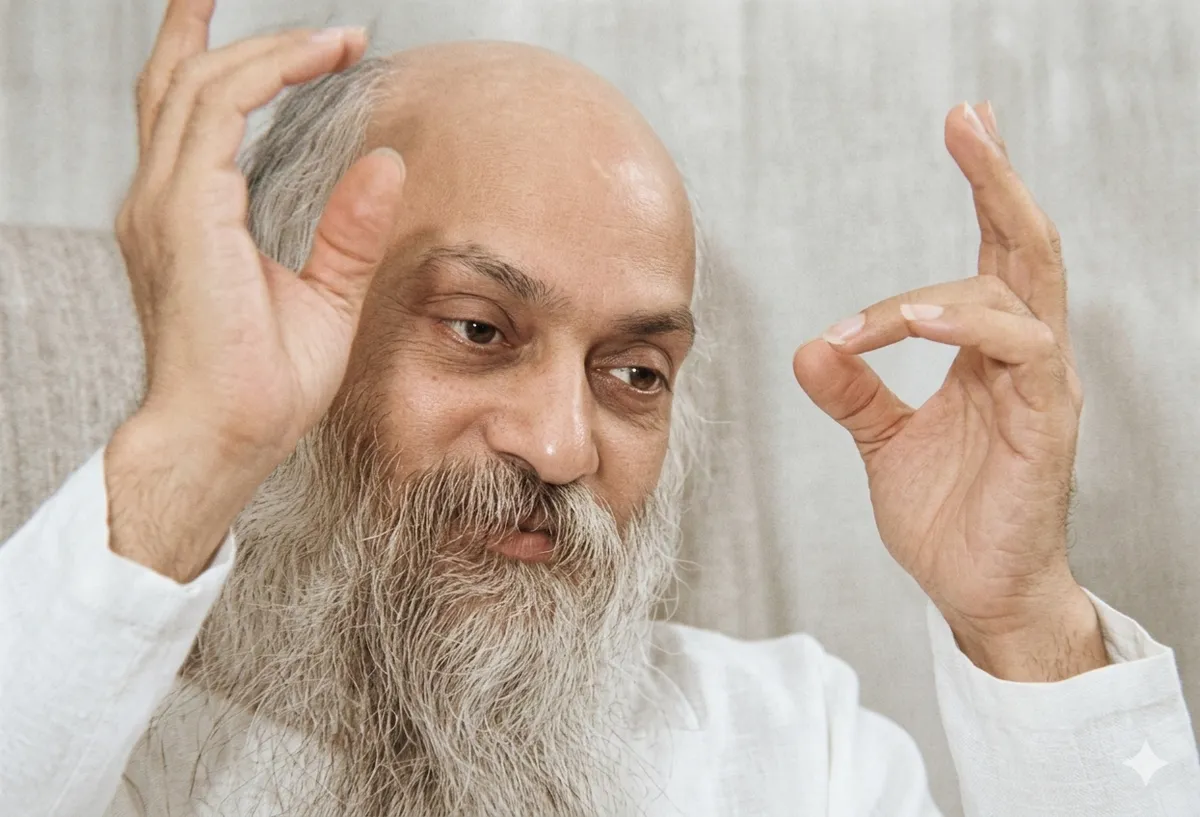
"Sabai Sayane Ek Mat" delves into the profound and subtle dimensions of spiritual understanding as presented by Osho. The series explores the essence of saintliness, challenging the superficial perceptions often held by society. It emphasizes the fluidity and spontaneity of a true saint's life, exemplified by stories such as that of Bokoju, who embraced natural unfolding rather than interference by intellect or preplanning. Osho highlights the concept of "tathata," or suchness, which represents acceptance and presence in the moment without the interference of personal agendas or societal expectations. Through anecdotes and discourses, Osho illustrates the difference between mechanical actions and genuine spontaneity—a recurring theme where the inner state of being aligns harmoniously with the outer actions. The series also examines the pitfalls of blind discipleship and the subtle nuances of spiritual recognition, encouraging seekers to transcend conditioned behaviors and embrace an authentic, inner flowering. Osho's treatment of these themes is both insightful and transformative, providing guidance that goes beyond the intellect and delves into the heart of spiritual liberation. "Sabai Sayane Ek Mat" is not just an exploration of saintliness but an invitation to experience life with openness and true awareness.
-
Chapter 1
True spiritual arrival is not by effort but by surrender: when helplessness dissolves the ego, divine grace descends—ask for bhakti, trust, patience.
-
Chapter 2
True prayer must be spontaneous and personal, not borrowed rites; genuine prayer itself transforms and is 'more than enough'—it births God within.
-
Chapter 3
Ego’s mirror hides God: the mirror parable urges 'die before you die'—dissolve the 'I' to behold the Beloved. Can you relinquish clinging to live in bliss?
-
Chapter 4
Wise teachings converge at the summit despite apparent disputes; followers quarrel from hate. True mastery is learning to die inwardly to free life.
-
Chapter 5
Transcend mind's dualities—leave both banks for Neti‑Neti; surrender doer to Paramatma, taste Advaita; where is God? He is in the seeker, not a distant object.
-
Chapter 6
Allow life to happen: drop the sense of doership, use the mind as a ladder to transcend it, and let desire fall so God-realization arises from emptiness.
-
Chapter 7
Love is the sole true knowledge and the path to God: surrender the ego, transmute lust into fragrance, die to the self and let love be your caste.
-
Chapter 8
Meditation and love are two paths to samadhi: choose the one that fits your nature; swadharma—know yourself—only then the goal unfolds easily.
-
Chapter 9
External neeti is hypocrisy and politics; true Dharma flowers from inner transformation—die to ego, wash inner filth, and Paramatma can be found.
-
Chapter 10
Behaviorist conditioning may shape conduct but destroys the soul; true human greatness is inner freedom and awareness—choose goodness from within.