
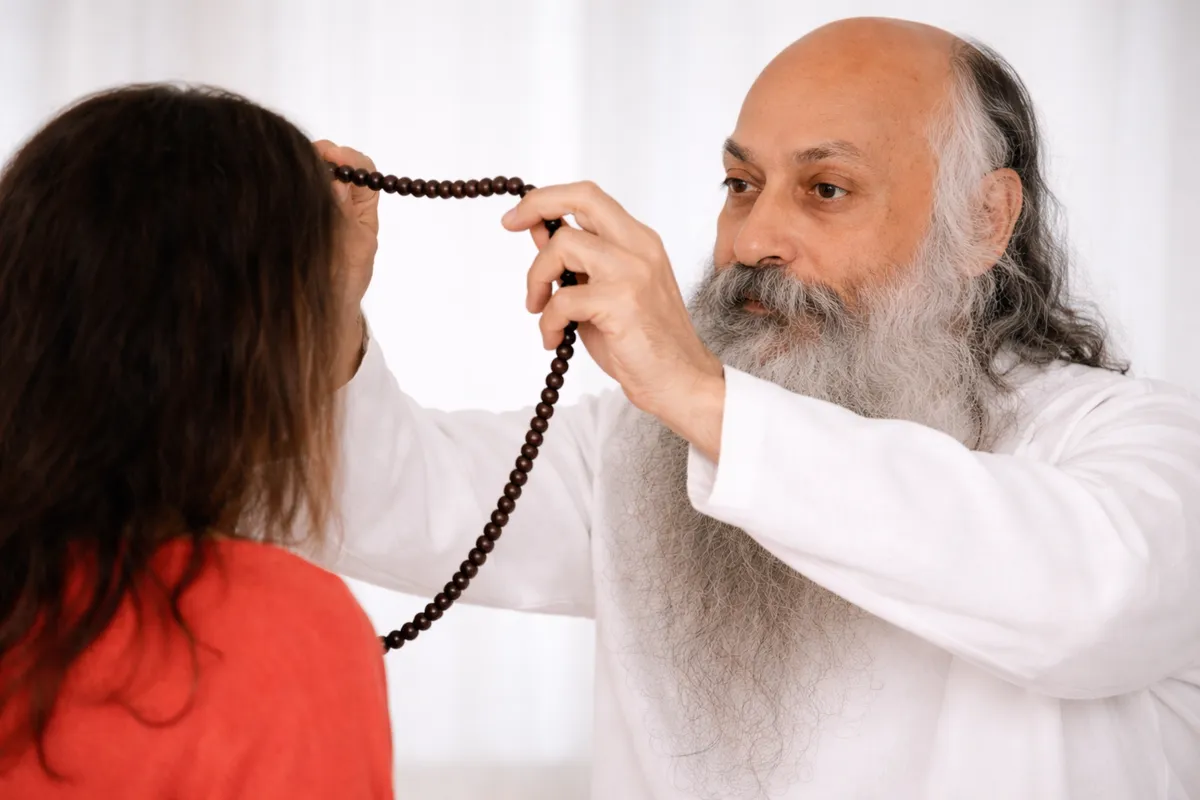
The thirst ends when you let go of your ‘me’ and open your inner eyes—then only the Divine remains, with no one left to feel thirsty.
From the Discourses
Passages where Osho speaks to this question — each links to the complete discourse.
Osho, will this thirst ever come to an end—the thirst that has driven me mad? That has pierced my very life like a thorn? That blazes each moment in my chest like a flame? Ah! To whom shall I confide the secret of my heart! In this crowded world I am utterly a stranger and completely alone. When will the veil be lifted from the doorway of that unknown mystery?
There is no veil on that door; the veil is on your eyes. The notion that there is a veil on that door is your mind’s delusion—and the mind’s trick. For then the matter slips out of your hands: “There is a veil on His door. When He lifts it, it will be lifted. Nothing can be done by me.” In this way you have protected yourself. I want to tell you: I do not want to leave you any place to escape, any device by which you can avoid. I tell you, the veil is on your eyes. The sun has risen, and you stand there with your eyes closed. Then you say, “O Lord, when will the veil be removed from the sun?” If there is no veil, how will it be lifted? And since there is no veil, it will not be lifted—you will sit waiting for…
अंतिम प्रश्न: ओशो, क्या इस प्यास का कभी अंत होगा, जिसने मुझे दीवाना बना दिया है? जिसने प्राणों को शूल की भांति छेद दिया है? प्रतिक्षण जो एक ज्वाला की भांति सीने में धधकती रहती है? आह! किसे मैं अपने हृदय की बात बताऊं! इस भीड़ भरी दुनिया में मैं एकदम अजनबी और नितांत अकेला हूं। कब उठेगा उस अज्ञात रहस्य के द्वार से वह पर्दा?
उस द्वार पर कोई पर्दा नहीं है, पर्दा तुम्हारी आंख पर है। उस द्वार पर पर्दा है, यह तुम्हारे मन की भ्रांति है और मन की तरकीब है। क्योंकि फिर तुम्हारे हाथ के बाहर बात हो गई--उसके द्वार पर पर्दा है। अब जब वह उठाएगा, तब उठेगा। तुम्हारे किए तो कुछ हो नहीं सकता। इस भांति तुमने अपने को बचा लिया। मैं तुमसे कहना चाहता हूं, मैं तुम्हें बचने की कोई जगह नहीं देना चाहता, तुम्हें बचने का कोई उपाय नहीं बचने देना चाहता। मैं तुमसे कहता हूं, तुम्हारी आंख पर पर्दा है। सूरज तो निकला है, तुम आंख बंद किए खड़े हो। अब तुम कहते हो कि हे प्रभु, कब सूरज पर से पर्दा उठेगा? …
Osho, what is this thirst! Even after being fulfilled from all sides, it still feels as if something is missing. There is nothing in this world that I have not attained. But Osho, what should I do with this thirst of the mind? Osho, please be compassionate and clarify this state—this is my prayer!
A poor man does not come to know he is poor. Only the rich come to know. A healthy person does not come to know he is healthy; illness is needed to know. When the opposite happens, awareness dawns. Thakur Rana, you say: “There is nothing in the world that I have not attained—then why this thirst?” Precisely for that reason this thirst is here. Now the Divine must be attained. Now the world holds no more meaning for you. What was to be known has been known, what was to be seen has been seen. Now the hour has come to close the eyes and look within. Now the moment has come to lift your head from the earth and turn it toward the sky. You have gathered enough pebbles and stones—now fill your bag with diamonds and jewels. When the nest of sighs, of night, turns into a…
दूसरा प्रश्न: ओशो, कैसी यह प्यास है! सब तरफ से तृप्त होने पर भी ऐसा लगा रहता है कि कुछ कमी है। इस संसार की कोई चीज ऐसी नहीं, जो मैंने नहीं पाई। पर ओशो, इस मानस-प्यास का क्या करूं? ओशो, इस स्थिति को स्पष्ट करने की अनुकंपा करें, यही प्रार्थना!
गरीब आदमी को तो पता ही नहीं चलता कि मैं गरीब हूं। अमीर को ही पता चलता है। स्वस्थ आदमी को तो पता ही नहीं चलता कि मैं स्वस्थ हूं। बीमारी चाहिए तो पता चलता है। विपरीत जब घटता है तो बोध होता है। ठाकुर राणा, तुम कहते: ‘संसार की ऐसी कोई चीज नहीं जो मैंने नहीं पाई, फिर यह प्यास क्यों है?’ इसीलिए यह प्यास है। अब परमात्मा को पाना होगा। अब संसार में तुम्हें अर्थ नहीं रहा। जानने योग्य जान लिया, देखने योग्य देख लिया। अब आंखें बंद करके भीतर देखने की घड़ी आ गई। अब जमीन से सिर आकाश की तरफ उठाने का क्षण आ गया। बहुत कंकड़-पत्थर बीन लिए, अब हीरे-जवाहरातों से झोली भरो।
Osho, when God stands directly before the devotee, why does the longing still not lessen?
He says: Seeing this, I fled. I was so afraid I even set the chain down gently, lest it ring by mistake. And I was so afraid I took my shoes—worn up the temple steps—into my hands, lest the footfall be heard inside; lest he open the door and say, Come; lest he embrace me—and then I would be annihilated. There would be no rescue then. And seeing him standing there, even running away would seem unseemly. The song’s final stanza says: From that day, having fled, I wander on all roads except the road to that temple. My search continues. I tell people I am seeking God, practicing yoga, meditating. And I know very well where he is. Leaving only that place, I search everywhere else. For me, the atheist is precisely that person who, in some birth, suffered a very profound pain—so terrible that he does not wish…
पहला प्रश्न: ओशो, भक्त के सामने साक्षात भगवान हैं, फिर भी विरह कम क्यों नहीं हो रहा है?
रवींद्रनाथ ने कहा है कि यह देखकर मैं भाग खड़ा हुआ। मैं इतना डर गया कि मैंने सांकल भी धीरे से छोड़ी कि कहीं अनजान में बज न जाए। और मैं इतना डर गया कि मैंने जूते, जिनको पहने हुए मैं मंदिर की सीढ़ियां चढ़ गया था, हाथ में ले लिए; कि कहीं पदचाप भीतर सुनाई न पड़ जाए; कहीं वह द्वार खोल ही न दे और कहे, आओ। कहीं वह आलिंगन कर ही ले, तो मिटे। फिर कोई बचाव न रहेगा। और फिर उसको सामने खड़ा देखकर भागना भी अशोभन मालूम होगा। गीत का आखिरी पद कहता है कि उस दिन से जो भागा हूं, तो बस उस मंदिर की राह को छोड़कर सब राहों पर घूमता हूं। फिर मेरी खोज जारी है। लोगों को कहता हूं, परमात्मा खोज रहा हूं, योग कर रहा हूं, ध्यान कर रहा हूं। और मुझे पक्का पता है कि वह कहां है। उस जगह को भर छोड़कर सब जगह खोजता हूं।
Question: Fifth question: Osho, People drink and they stagger; in your refuge they find so much. As for us, in your gathering we come thirsty, and thirsty we go! Then that thirst is not really thirst. Right now it is only an idea, not actual. Otherwise, who is stopping you from drinking? If you return thirsty from the very shore of the lake, then your thirst was not thirst. When thirst truly seizes someone, he will drink even from a foul puddle. What is needed is thirst. And when there is no thirst, even if the pristine Lake Manasarovar is before you, what will you do? Look for the thirst. Seek it. Otherwise the “thirst” will be false. Many people feel a false thirst. By hearing talk about thirst, real thirst does not arise; instead a greed takes hold within—“one should have thirst.
फिर प्यास, प्यास ही न होगी। फिर अभी प्यास खयाल है, वास्तविक नहीं। अन्यथा कौन रोकता है तुम्हें पीने से? अगर सरोवर के पास से तुम प्यासे ही लौट आओ, तो प्यास, प्यास ही न होगी। जब प्यास पकड़ती है किसी को तो गंदे डबरे से भी आदमी पी लेता है। प्यास होनी चाहिए। और जब प्यास नहीं होती है तो स्वच्छ मानसरोवर भी सामने हो तो भी क्या करोगे? प्यास की तलाश करो। खोजो। प्यास झूठी होगी। बहुत लोगों को झूठी प्यास लग आती है। प्यास की चर्चा सुन-सुन कर प्यास तो नहीं लगती; प्यास लगनी चाहिए, ऐसा लोभ भीतर समा जाता है।