
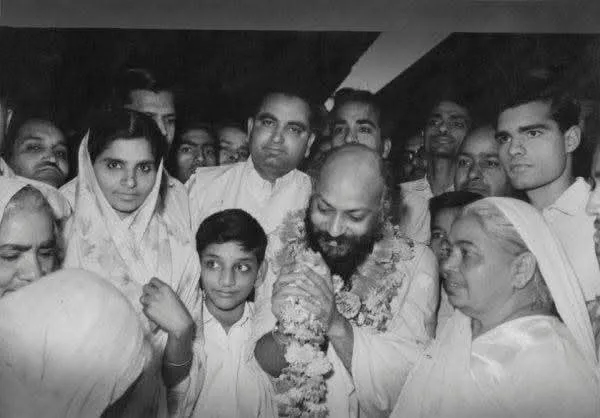
Jesus died while still fiery like the sun, so he seemed bold and rebellious; Buddha lived long enough to cool like the moon, so he seemed calm.
From the Discourses
Passages where Osho speaks to this question — each links to the complete discourse.
In comparing jesus to buddha, jesus seems very active and revolutionary. Why is this?
There is a reason. But first, some explanation is needed. Yoga divides man into two parts: the sun part and the moon part. The sun is symbolic of inner positivity and the moon is symbolic of inner negativity. Sun does not mean the outer sun nor does moon mean the outer moon. These words are used for the inner universe. There is even one breath that is known as the sun breath and another breath that is known as the moon breath. Every forty to sixty minutes, your breath changes from one nostril to the other. If you need more heat in the body, or if you suddenly grow angry, your sun breath starts functioning. Yoga says that if you use your moon breath when you are angry, then you cannot be angry at all, because the moon breath creates a deep coolness inside. The negative is cool, silent, still.…
Osho, one night you said that christianity has remained incomplete because for christians jesus died at the age of thirty-three when he was fiery, rebellious and active, with sun-like consciousness as his inner center. Does it mean that jesus could not achieve total spiritual growth, inner silence, inner peace and an inner full-moon stage of consciousness like buddha and mahavir? Please enlighten us on this point.
There is a story: Vivekananda achieved his first satori, his first glimpse of Samadhi, and Ramakrishna said, "Now I will keep this key with me; I am not going to give it to you. It will be given to you only three days before your death. Before you die, only three days before, this key will be given back to you. Now no more glimpses of Samadhi." Vivekananda began to weep and he said, "Why? I do not want anything. I do not want the whole kingdom of the world. Give me only my Samadhi. The one glimpse was so beautiful. I do not want anything more." Ramakrishna said, "The world needs you and something has to be done. And if you move into Samadhi, then you will not be able to do anything. So do not be in a hurry. Samadhi will wait for you. Move into the world;…
Osho, you say that religion blossoms only in the East, and that people from Western lands come to India out of a religious quest. Why then did those very countries not welcome you? Why did they treat you with such contempt?
They saw me as an enemy because I did not go after the West’s poor, orphans, or beggars—and there is no shortage of beggars there; in America alone there are thirty million beggars. Those who are busy turning other beggars in the world into Christians do nothing for their own beggars, because they are already Christians. The people I influenced were professors, writers, poets, painters, sculptors, scientists, architects—gifted people. And this was alarming: if the gifted people of the country are being influenced by me, it is a sign of great danger. Because these are the people who set the path for others. Seeing them, others walk those paths. Their footprints will lead others along the same ways. And I did not tell anyone to leave his religion. I did not tell anyone to accept a new religion. I only said: Try to understand—what is religion and what is irreligion.…
प्रश्न: ओशो, आप कहते हैं कि पूरब में ही धर्म फलित होता है। और पश्चिम की भूमि से लोग धर्म की जिज्ञासा के लिए भारत आते हैं। उन्हीं देशों ने आपका स्वागत क्यों नहीं किया? आपको इस तरह तिरस्कृत क्यों किया?
मुझे दुश्मन की तरह देखने का कारण यह था कि मैंने कोई पश्चिम के गरीब को या अनाथ को या भिखमंगे को...और वहां कोई भिखमंगों की कमी नहीं है, सिर्फ अमरीका में तीस मिलियन भिखारी हैं। जो दुनिया के दूसरे भिखारियों को ईसाई बनाने में लगे हैं, वे अपने भिखारियों के लिए कुछ भी नहीं कर रहे हैं, क्योंकि वे ईसाई हैं ही। मैंने जिन लोगों को प्रभावित किया, उनमें प्रोफेसर्स थे, लेखक थे, कवि थे, चित्रकार थे, मूर्तिकार थे, वैज्ञानिक थे, आर्किटेक्ट थे, प्रतिभा-संपन्न लोग थे। और यह बात घबड़ाहट की थी कि अगर देश के प्रतिभा-संपन्न लोग मुझसे प्रभावित हो रहे हैं, तो यह एक बड़े खतरे की सूचना है। क्योंकि यही लोग हैं जो रास्ता तय करते हैं दूसरे लोगों के लिए। इनको देख कर दूसरे लोग उन रास्तों पर चलते हैं। इनके पद-चिह्न दूसरों को भी इन्हीं रास्तों पर ले जाएंगे।
Osho, Mahavira’s dispassion, Christ’s holy indifference, Buddha’s disregard, and Krishna’s non-attachment—what are their subtle similarities and differences? Please shed light on this.
In this, some similarities appear. Krishna will arrive at a peace like Buddha’s, because he has nothing to attain—whatever is, is already attained. At times he will appear dispassionate like Mahavira, for his joy knows no bounds. He will appear to proclaim God as Jesus does—but not because there is a God sitting in this world or the next: rather, because all is God. Krishna’s non-attachment is total surrender—“the disappearance of ‘I.’” To know that the “I” is not. Once this is known, whatever is happening is happening. There is nothing to be done about it. There is no possibility of our doing anything. Krishna sees himself as a wave in the ocean. Since there is no choosing, there is no attachment. If we understand correctly, non-attachment is not a state of mind; it is the dropping of all states of mind, the dropping of all positions—and becoming one with…
ओशो, महावीर की वीतरागता, क्राइस्ट की होली इनडिफरेंस, बुद्ध की उपेक्षा, कृष्ण की अनासक्ति, इनमें क्या सूक्ष्म समानता व भिन्नता है? इस पर प्रकाश डालें।
इसमें कुछ समानताएं मिलेंगी। कृष्ण बुद्ध जैसी शांति को उपलब्ध हो जाएंगे, क्योंकि कुछ उन्हें पाना नहीं है। जो भी है, वह पाया हुआ है। वे महावीर जैसे वीतराग दिखाई पड़ेंगे किन्हीं क्षणों में, क्योंकि उनके आनंद का कोई पारावार नहीं है। वे जीसस जैसे परमात्मा की घोषणा करते दिखाई पड़ेंगे। इसलिए नहीं कि इस लोक और परलोक में परमात्मा कहीं बैठा है, बल्कि सब कुछ परमात्मा ही है। कृष्ण की अनासक्ति समग्र समर्पण है, ‘मैं’ का न हो जाना है। ‘मैं’ है ही नहीं, यह जानना है। इसके जान लेने के बाद जो हो रहा है, वह हो रहा है। इसमें कोई उपाय ही नहीं है। …
Osho, Buddha says that the religion of the saints never grows decrepit; then how is it that the religions of Krishna, Mahavira, Buddha himself, and Jesus have become so decayed? Kindly shed some light on this.
So Buddha thought: better to say, “Accept whatever falls into your bowl.” A kite will not drop it again; the question will not arise repeatedly; best not to leave a hole in the rule. Buddha said, “Accept it.” And from this small incident all Buddhists became meat-eaters! Man is very dishonest. People then devised a trick: “Buddha did not oppose meat-eating. Had he been opposed, he would have told that monk to discard the meat. Buddha accepted meat!” Thus Buddhists across the world became meat-eaters. That the disciples of the greatest practitioner of nonviolence would become meat-eaters seems inconceivable. But man finds his contrivances. Buddha said: “Let no one kill an animal for food.” He had no idea how clever man is. The line came to mean: if the animal dies by itself, you may eat it! Do not kill for food. So monks began to eat animals that had…
पहला प्रश्न: ओशो, भगवान बुद्ध कहते हैं कि संतों का धर्म कभी जराजीर्ण नहीं होता है; फिर कृष्ण, महावीर, स्वयं बुद्ध और जीसस के धर्म इतने जराजीर्ण कैसे हो चले? इस प्रसंग पर कुछ प्रकाश डालने की अनुकंपा करें।
तो बुद्ध ने सोचा: उचित यही है कि कह दिया जाए कि जो तुम्हारे पात्र में गिर गया, स्वीकार कर लो। अब चील दुबारा तो कोई गिराएगी नहीं; बार-बार यह सवाल उठेगा नहीं; इसलिए नियम में एक छिद्र छोड़ना ठीक नहीं है। तो बुद्ध ने कहा: स्वीकार कर लो। और इस छोटी सी घटना से सारे बौद्ध मांसाहारी हो गए! आदमी बड़ा बेईमान है! फिर तो लोगों ने तरकीबें निकाल लीं--कि बुद्ध ने मांसाहार का विरोध नहीं किया। मांसाहार के अगर विरोधी होते तो उन्होंने उस भिक्षु को कहा होता कि यह मांस छोड़ दो। बुद्ध ने तो मांसाहार स्वीकार कर लिया! तो सारी दुनिया के बौद्ध मांसाहारी हो गए हैं। दुनिया के सबसे बड़े अहिंसक के शिष्य मांसाहारी हो जाएंगे, यह अकल्पनीय मालूम पड़ता है। लेकिन तरकीब आदमी निकाल लेता है। बुद्ध ने कहा है कि कोई किसी पशु को भोजन के लिए न मारे। सोचा भी नहीं होगा कि आदमी कितना होशियार है। बुद्ध का वचन है कि कोई किसी पशु को भोजन के लिए न मारे। …