
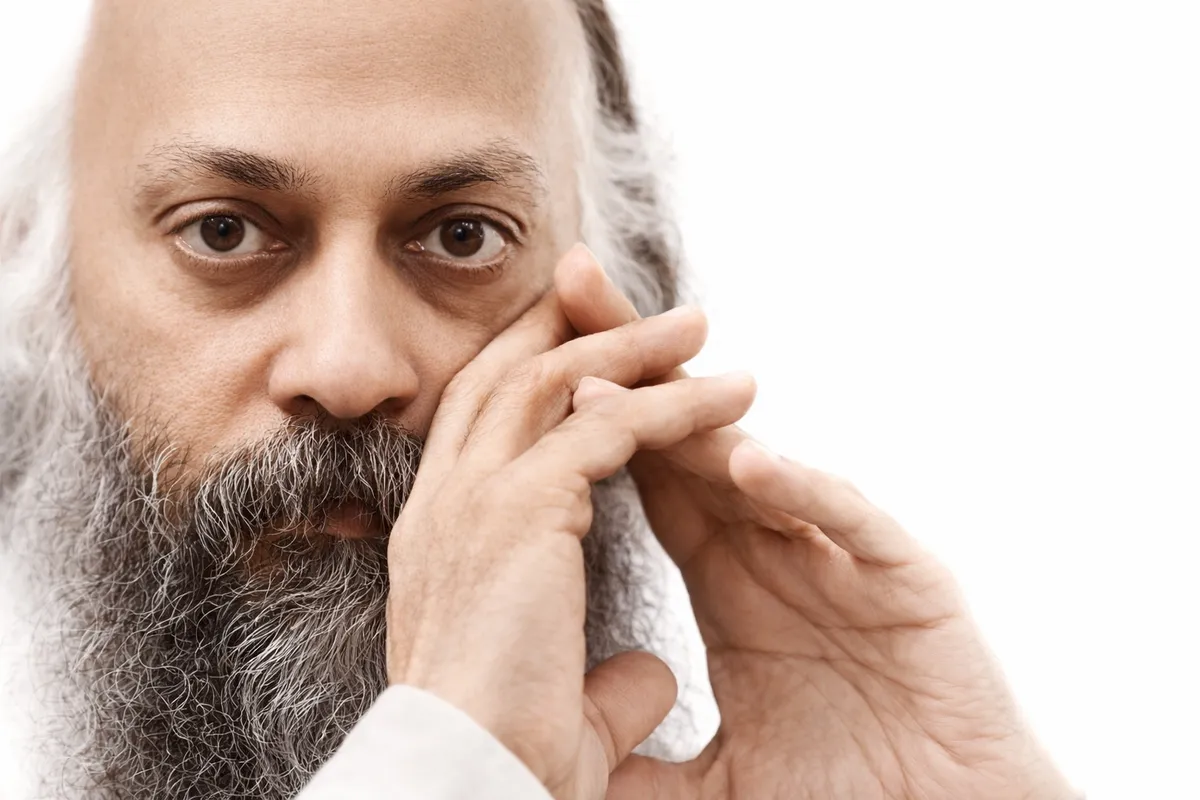
Because just talking cleverly about God without living it is like a parrot mimicking words; real truth is plain and must be experienced.
From the Discourses
Passages where Osho speaks to this question — each links to the complete discourse.
Question: Third question: Osho, why is Gorakhnath against pandits? ... This is the language of experience. A well-read parrot cannot speak like this. The well-read parrot begins to whimper; he forgets the name of Ram and starts praising the cat—“Mother, spare me! I made a mistake. From today I’ll worship and pray only to you—why was I lost in Ram-ram! Gorakh says: The one who merely mouths doctrine, call him a student; the one who reads the Vedas is but a grandson. The one who lives the way is our master; we are companions of the one who lives. The one who only repeats hearsay is a student; not a knower—at best a student: all right, he is studying. And even this—only if what he repeats has been heard from a living master—then he is a disciple; that is his status.
यह अनुभव की बात है। पढ़ा-लिखा तोता यह नहीं कह सकता। पढ़ा-लिखा तोता तो गिड़गिड़ाने लगता है; भूल जाता है राम-नाम, बिल्ली की स्तुति गाने लगता है--कि माई छोड़, कि हो गयी भूल, अब आज से तेरी ही पूजा-प्रार्थना करूंगा, कहां के राम-राम में पड़ा रहा! कथणी कथै सो सिष बोलिये, वेद पढ़ै सो नाती। रहणी रहै सो गुरु हमारा, हम रहता का साथी।। कहते हैं गोरख:कथनी कथै सो सिष बोलिये! जो सिर्फ सुनी-सुनाई बातें कह रहा है वह तो विद्यार्थी है; ज्ञानी नहीं है, ज्यादा से ज्यादा विद्यार्थी है; ठीक है, पढ़ रहा है, लिख रहा है। कथणी कथै सो सिष बोलिये, वेद पढ़ै सो नाती। और यह कथनी भी अगर उसने किसी गुरु से सुनी हो और बोल रहा हो, तो ही शिष्य है, तो विद्यार्थी का दर्जा है उसका। और अगर यह भी कुछ मरे गुरुओं की, किन्हीं पुरानी कब्रों को खोदकर वेदों में से निकाल लाया हो, तब तो शिष्य भी नहीं है; और भी गया-बीता है, तो और भी नीचे रखो उसको। वेद पढ़ै सो नाती। शिष्य तो बेटा है। शिष्य का मतलब कि जो सदगुरु के पास से सुनकर दोहरा रहा है। …
Why is gorakh nath against pundits?
Now this is a very strange business, first write the letter then you have to go to the next village to read it, because no one else can read it. One man was having a letter written. After having the whole letter written -- a letter to his beloved -- after having the long letter written down he said, "Nasruddin, now read it out once so my heart can be satisfied that I have said what I want to write." Nasruddin said, "This is a difficult matter." He said, "Why? What's the harm in reading it?" Nasruddin said, "The first thing is that it is not addressed to me so how can I read it?" The villager said, "It is a legal question. It looks correct. Yes you are right, if it is not addressed to you, so how can you read it?" Mulla said, "Do you understand? First the…
Osho, why are you so opposed to politics?
I am not against politics. Politics is only a symptom. I am against the inferiority complex in man; that inner sense of smallness. And politics is a symptom of that very disease. The more a person suffers from an inferiority complex, the more he hankers after position. The more he is filled with inferiority, the more he hankers after wealth. Understand this. An inferiority complex means: inside you feel, “I am nothing, a nobody, a two-bit fellow.” But this rankles. “I—and two-bit!” The mind cannot swallow it. “I will show the world that I am somebody. I’ll become a prime minister, a president. I’ll amass the world’s wealth and prove to the world that I am somebody.” Politics is the device to fill that inner sense of two-bit-ness, meaninglessness, emptiness. Politics means ambition—whether for money or for office, it makes no difference. Sometimes it is even the ambition for renunciation;…
चौथा प्रश्न: ओशो, आप राजनीति के इतने विरोध में क्यों हैं?
… और राजनीति उसी रोग का लक्षण है। जो व्यक्ति जितनी हीनता की ग्रंथि से पीड़ित होता है, उतने ही पद का आकांक्षी होता है। जो व्यक्ति जितनी हीनता की ग्रंथि से भरा होता है, उतना ही धन का आकांक्षी होता है। समझना। हीनता की ग्रंथि का अर्थ होता है: भीतर तो तुम्हें लगता है--मैं कुछ भी नहीं हूं, ना-कुछ, दो कौड़ी का। मगर यह बात अखरती है। यह खटकती है--मैं और दो कौड़ी का! यह बात मानने का मन नहीं होता। दिखा दूंगा दुनिया को कि मैं भी कुछ हूं। हो जाऊंगा प्रधानमंत्री, कि राष्ट्रपति। कि कमा लूंगा दुनिया की संपत्ति और दिखा दूंगा दुनिया को कि मैं कुछ हूं। तुम्हारे भीतर जो तुम्हें लगता है: दो-कौड़ीपन, अर्थहीनता, रिक्तता, उसको भरने का उपाय है राजनीति। …
Osho, what is the definition of God?
Words are very small. If you say God is light, then what of darkness? The scriptures have said that God is light. Suppose we accept this as a definition—then what about darkness? Where will darkness go? Darkness is too; in fact it is far more than light. Light sometimes is and sometimes is not; darkness is always, eternal. Where will you place darkness? If you say God is light, darkness is left out. If you say God is darkness, then light is left out. If you say God is both darkness and light, a contradiction arises: they cannot be together. Try to have both darkness and light in the same room. If you bring in light, darkness disappears; if you preserve darkness, you cannot have light. Then how can both be together? That becomes an impossibility. So you cannot say “both” either. Then the fourth device is to say: it…
पहला प्रश्न: ओशो, परमात्मा की परिभाषा क्या है?
शब्द तो बड़े छोटे-छोटे हैं। अगर कहो परमात्मा प्रकाश है, तो फिर अंधेरे का क्या होगा? ऐसा कहा है शास्त्रों में कि परमात्मा प्रकाश है। चलो मान लें इसे परिभाषा, फिर अंधेरे का क्या होगा? फिर अंधेरा कहां जायेगा? अंधेरा भी है, प्रकाश से कहीं ज्यादा है। प्रकाश तो कभी होता है कभी नहीं भी होता; अंधेरा सदा है, शाश्वत है। अंधेरे को कहां रखोगे? अगर कहा परमात्मा प्रकाश है, तो अंधेरा बाहर पड़ गया। अगर कहा परमात्मा अंधेरा है, तो प्रकाश बाहर पड़ गया। अगर कहो परमात्मा अंधेरा प्रकाश दोनों है, तो विरोधाभास होता है। दोनों एक साथ हो नहीं सकता। एक ही कमरे में अंधेरा और प्रकाश करके दिखाओ। प्रकाश करोगे, अंधेरा खो जायेगा; अंधेरा बचाओगे, प्रकाश न कर सकोगे। तो दोनों साथ कैसे होंगे? तब एक असंभव बात हो गई। तो यह भी नहीं कह सकते कि दोनों है।
Osho, you say the same thing in countless ways. But when I listen to you, it feels as if I am hearing it for the first time. And I feel so much joy that I don’t feel like going back home. What should I do—what can I do—so that I can just keep listening to you!
You will feel as if you have been made to rise out of season, before time—as if you were not yet to go and yet had to go. And if you go in that way, your home will become even more desolate than before. I do not want to make your home desolate; I want to make your home a temple. I want that when you go home, your home’s new form is revealed. I do not want to tear you away from home, from the world, from family life. That is the newness of my sannyas: I do not want to sever you from the world; I want to join you to the world in such a way that your connection with the world becomes a connection with the Divine. Let the world no longer be a barrier between you and the Divine; let it become a means. If…
पहला प्रश्न: ओशो, आप एक ही बात कहते हैं अनेक-अनेक ढंगों से। पर जब आपको सुनता हूं तो उस समय यही लगता है कि पहली बार सुन रहा हूं। और इतना आनंद मिलता है कि वापस घर लौटकर जाने का जी नहीं करता। क्या करूं, मैं क्या करूं कि आपको सुनता ही रहूं!
… ऐसा लगेगा जैसे अभी जाना न था और जाना पड़ा। और अगर ऐसे तुम गये, तो घर और भी उदास हो जाएगा। जितना पहले था, उससे भी ज्यादा। मैं तुम्हारे घर को उदास नहीं करना चाहता। मैं तुम्हारे घर को मंदिर बनाना चाहता हूं। मैं चाहता हूं कि तुम जब घर जाओ, तो तुम्हारे घर का अभिनवरूप प्रकट हो। मैं तुम्हें घर से, संसार से, गृहस्थी से तोड़ नहीं लेना चाहता। वही मेरे संन्यास का अभिनवपन है कि मैं तुम्हें संसार सेे तोड़ नहीं लेना चाहता। …