
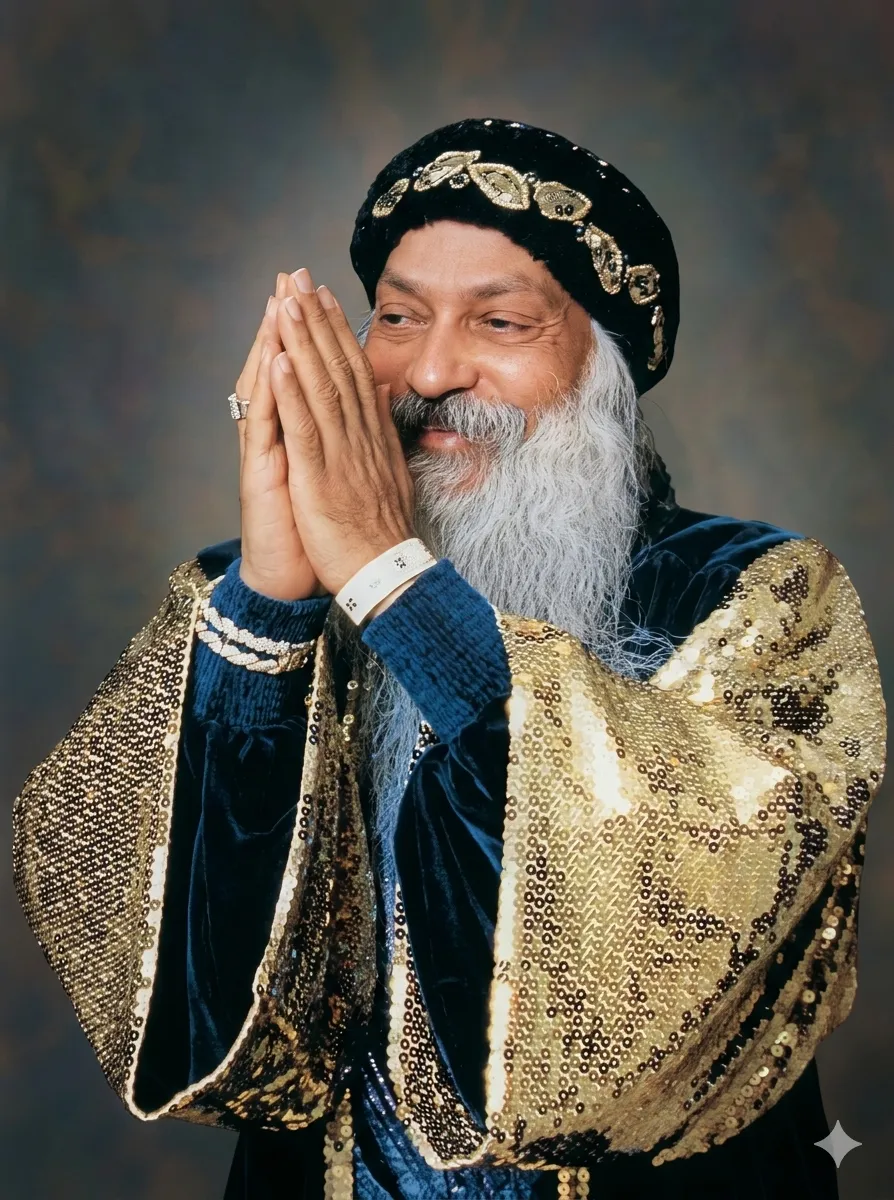
In very deep sleep, your mind gets so quiet it stops pushing up pictures, so nothing appears and you just rest.
From the Discourses
Passages where Osho speaks to this question — each links to the complete discourse.
Beloved Osho, when we sleep, the unconscious is experienced as dreams. During dreamless sleep, why does the unconscious stop expressing itself? It seems there must be a lot of repressed material that needs expression. Does dreaming, then, act like a safety valve, allowing just enough material to be expressed so that some steam is let off and the pressure cooker of the unconscious does not completely explode?
No, it is not like that. According to the Eastern psychology, there are four stages of mind; not just two, as it is according to the Western philosophy -- conscious mind, unconscious mind. In the context of the Western division between conscious and unconscious, your question is very relevant. But the truth is that mind has four states: the waking state, which is comparable to the conscious mind; the sleeping state with dreams, which is parallel to the unconscious mind; third, the dreamless sleep which the West has yet to find; and the fourth, the real waking state. The first is only the so-called waking state, and the fourth is real awakening. The second is sleep with dreams, but sleep with dreams is a disturbed state. In an eight-hour night, six hours you are dreaming and for only two hours are there no more dreams. Those two hours belong to…
The state in which the soul, with the help of the energies of the sun and other gods, and through the instrumentality of these fourteen: mind, intellect, mind stuff, ego, and the ten sense organs -- becomes sensitive to sound, touch and such other gross objects, is called the waking state. When the living being, on account of the unfulfilled desires of the waking state, becomes sensitive to sound, touch and such other gross objects -- even in the absence of the latter -- it is called the dreaming state of the self or soul.
This state of dreaming, the rishi says, means without the instrumentality of your senses. The senses are closed -- they are not aware of the world beyond you; now you are within your cells, within your body, but still you can create you own worlds. This creation of your own worlds in dreams becomes possible because your mind is a conditioning of everything you have known, you have felt; everything has been accumulated in it. It is an accumulation, not only of this life, but of all the lives one has lived; and not only of human lives, of animal lives also; and not only of animal lives, but of vegetable lives also. So in a dream you can become a tree; in a dream you can become a lion. Sometime you have been a tree: that memory is still there -- it can unfold. This unfolding of past memories,…
Osho, I don’t see dreams in sleep, yet it feels as if I haven’t slept for many days. At the slightest disturbance the body wakes up, as if I had been awake all along. But I don’t feel tired, and the hours of sleep seem to slip away. Please tell me what this state is?
Good, auspicious; do not be afraid. Dreams will slowly disappear. When the witness is awake, dreams cannot be. If there is dreaming, there cannot be witnessing. Good. The dream has fallen away; a sense of wakefulness remains through the night. Gradually it will deepen and grow denser; swiftness and intensity will come. The witness becomes keen—like the edge of a sword. But in the beginning there will be difficulty. We believe that eight hours of sleep are necessary—this is a notion—and then what is this that is happening? The whole night seems to pass as if awake. And if you remain “as if awake” for eight hours, the night feels very long, as if it will never end. If you sleep, you forget; you do not know when the night began or ended. You sleep and it is morning. But now it feels as if all night it remained morning;…
दूसरा प्रश्न: ओशो, नींद में सपने नहीं आते, पर लगता है कि कई दिनों से नहीं सोई हूं। जरा सी बाधा पर भी शरीर जाग पड़ता है, जैसे कि जागी ही होऊं। लेकिन थकान का अनुभव नहीं होता और नींद का समय सरकता मालूम होता है। कृपया बताएं कि यह कैसी स्थिति है?
शुभ है, मंगलदायी है; घबड़ाना मत। सपने धीरे-धीरे खो ही जाएंगे। क्योंकि जब साक्षी जागा रहेगा तो सपने नहीं हो सकते। सपना हो तो साक्षी नहीं हो सकता। ठीक है। सपना तो खो गया है, रात भर जागरण जैसा भी बना रहता है। धीरे-धीरे और प्रगाढ़ होगा; और सघन होगा; और त्वरा और तीव्रता आएगी। तलवार की धार की तरह साक्षीभाव बन जाता है--प्रखर। लेकिन शुरू में तो अड़चन होगी। क्योंकि हम सोचते हैं कि आठ घंटे की नींद जरूरी है--धारणा है; और यह क्या हो रहा है? रात भर जागे-जागे से रहे। और आठ घंटे जागे-जागे से बने रहो तो रात बड़ी लंबी मालूम पड़ती है। अंत ही होता नहीं आता मालूम पड़ता। …
Question: BELOVED OSHO, BEFORE SEEKING YOU'VE INDICATED YOU WANT ME TO INSTRUCT YOU BY LETTER IN THE DIRECT ESSENTIALS. THIS VERY THOUGHT OF SEEKING INSTRUCTION IN THE DIRECT ESSENTIALS HAS ALREADY STUCK YOUR HEAD INTO A BOWL OF GLUE. THOUGH I SHOULDN'T ADD ANOTHER LAYER OF FROST TO THE SNOW, NEVERTHELESS WHERE THERE'S A QUESTION IT SHOULDN'T GO UNANSWERED. I ASK YOU TO ABANDON AT ONCE ALL THE JOY YOU'VE EVER FELT IN READING THE WORDS OF THE SCRIPTURES YOURSELF OR WHEN BEING AROUSED AND INSTRUCTED BY OTHERS. BE TOTALLY WITHOUT KNOWLEDGE AND UNDERSTANDING, AS BEFORE, LIKE A THREE-YEAR-OLD CHILD. THOUGH THE INNATE CONSCIOUSNESS IS THERE, IT DOESN'T OPERATE. THEN CONTEMPLATE WHAT'S THERE BEFORE THE THOUGHT OF SEEKING THE DIRECT ESSENTIALS ARISES: OBSERVE AND OBSERVE.
There was a Greek thinker, Diogenes. The emperor of Greece met Diogenes and asked him, “Tell me, what is the highest truth of life? Tell me about the highest, the supreme-most truth. What is the greatest, the most exalted truth?” Diogenes said, “As for that supreme truth—there is now no way to attain or know it; leave it. Ask about truth number two.”
In the last twenty years it has begun to occur to Western science as well that we must investigate deep sleep. If only we properly understand human sleep, the understanding of personality and nature will become easier. Sleep too has qualities. Not everyone sleeps with the same depth. But they still have no notion of turiya. Jung did say that we had to bow to the East and accept that dreams are valuable, worth inquiry. Earlier, when the Upanishads were first translated in the West, people said: “What kind of scripture is this? To ask ‘What is a dream?’—is that a spiritual question? Ask, ‘What is God, what is liberation?’—that makes sense... but ‘What is a dream’—what are they asking? And these are the Hindus who say the world itself is a dream! They are asking what a dream is!” But Jung said we had to accept—bowing our heads—that dreams…
यूनानी विचारक हुआ है, डायोजनीज। यूनान के सम्राट ने डायोजनीज से मुलाकात ली है, और डायोजनीज से पूछा है--कहो मुझे, जीवन का सबसे श्रेष्ठ सत्य क्या है? टेल मी अबाउट दि हाईस्ट, दि सुप्रीम मोस्ट ट्रूथ? सबसे श्रेष्ठ, सबसे महान सत्य क्या है? डायोजनीज ने कहा: अब उस सर्वश्रेष्ठ सत्य को पाने का, जानने का कोई उपाय नहीं, उसे छोड़ो; और नंबर दो का सत्य पूछो।
इधर बीस वर्षों में उनको भी खयाल में आना शुरू हुआ कि हमें गहरी सुषुप्ति को भी खोजना ही पड़ेगा। काश, हम आदमी की नींद को ठीक से समझ लें तो आदमी के व्यक्तित्व को और स्वभाव को समझना आसान हो जाए। नींद के भी गुण हैं, क्वालिटीज हैं। और सब आदमी एक सी गहरी नींद में नहीं सोते। लेकिन अभी उन्हें तुरीय का कोई खयाल नहीं है। लेकिन जुंग ने कहा है कि हमें पूरब की सलाह माननी पड़ी कि स्वप्न मूल्यवान हैं, पूछने जैसे हैं। नहीं तो पहले पश्र्चिम में जब पहली दफा उपनिषदों का अनुवाद हुआ, तो लोगों ने कहा: ये उपनिषद भी क्या हैं? स्वप्न क्या है, यह कोई अध्यात्म की बात है पूछना! पूछो--ईश्र्वर क्या है, मोक्ष क्या है, समझ में आता है...स्वप्न क्या है! यह क्या पूछ रहे हो? …