
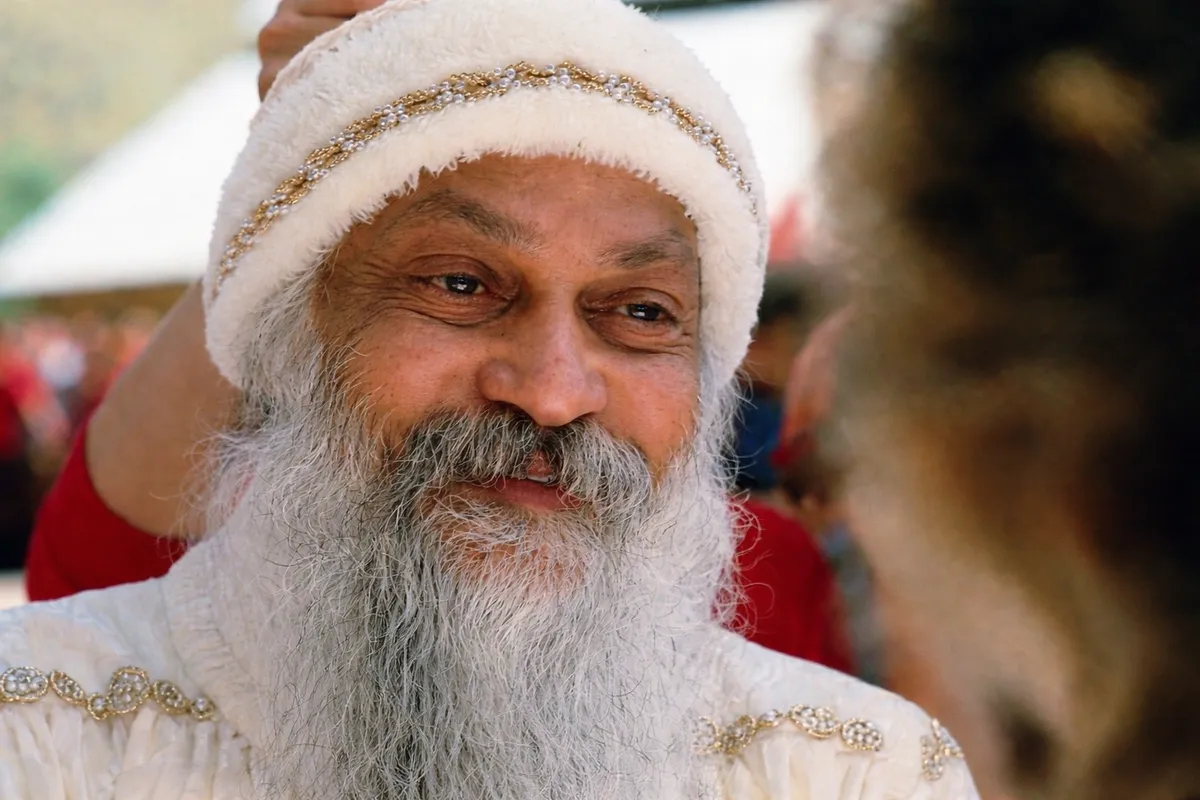
We’ve been raised like kids who aren’t allowed to think or feel for ourselves, so we keep looking for grown-ups to tell us what to do.
From the Discourses
Passages where Osho speaks to this question — each links to the complete discourse.
Why does humanity always need leaders? Why isn't it possible for so many human beings to just relax when they are together, and to be aware so that no leaders are necessary?
There have been people of great intelligence, like Albert Einstein -- but he was not a man of memory. He would go into his bathroom and tell his wife, "I am just coming in ten minutes" -- and six hours would pass and the man was still in his bathtub! One of my friends, Dr. Rammanohar Melia was visiting. Albert Einstein's wife was a little embarrassed; she said, "Forgive me. I have to interrupt him, this is too much. He said ten minutes and now six hours... and you have been waiting for six hours." She knocked on the door, and Einstein said, "Has ten minutes passed? Why have you disturbed me? I was playing with soap bubbles in my bathtub." Playing with soap bubbles in his bathtub he had discovered many great theories about stars, because that was the most relaxed moment. And when you are most relaxed, intelligence…
Do you feel, Osho, that all leaders—whether political or religious—are caught in the same dilemma?
If someone were to ask Buddha, “Is there God?” Buddha would say, “There may be.” And if someone were to ask, “Is there no God?” he would say, “There may not be.” How can such a person assume leadership? Buddha is so perfectly in the middle. It is like this: in a room a glass is kept half-filled with water. One man comes out and says the glass is half empty; another says it is half full. These two can argue; two parties can form. A third man, utterly in the middle, having seen the whole, returns and says, “The glass is both half empty and half full.” He will say, “You are right, and you are right—and you are wrong, and you are wrong. It both is and is not half. It is half empty and also not; half full and also not.” Such a man makes such a…
डु यू फील ओशो, इट इ़ज ऑल लीडर्स, मे बी पॉलिटिकल ऑर रिलिजियस। ऑर दे आलसो मुविंग इन दि सेम डायलेमा?
… और कोई पूछे, ईश्वर नहीं है? तो बुद्ध कहेंगे, नहीं भी हो सकता है। अब ऐसा आदमी नेतृत्व कैसे ग्रहण करे? अब बुद्ध इतने मध्यस्थ हैं। वह वैसी ही हालत है, जैसे कि एक कमरे में एक गिलास आधा पानी से भरा हुआ रखा हो और एक आदमी बाहर आकर कहे कि गिलास आधा खाली है, और एक आदमी बाहर आकर कहे कि गिलास आधा भरा है। तो इन दोनों में विवाद हो सकता है। ये दो पार्टियां बन सकती हैं। एक तीसरा आदमी है जो बिलकुल मध्यस्थ है, जो पूरी बात देख कर लौटा है कि गिलास आधा खाली भी है और आधा भरा भी है। …
Beloved master, if you are not our leader, why do we get clear messages from the master to do this or that?
I am not your leader. And I hate the very word from my guts, because I can see the implications of it. To be a leader means to be a criminal! Of course, the crime is so subtle that you don't see somebody being murdered. But the whole humanity is being crushed, murdered under the weight of it. You have been told for centuries just to follow: it is not your business to think, to contemplate, to meditate, to decide for your own life. Somebody else has to decide it. Somebody else has to give you ideals, values. Your function is only to be faithful. Faith is poison, and to be faithful means you have committed suicide. But the leader needs faithful people, committed people, surrendered people. These are good words for making people enslaved. But the guide is a friend, he is not your leader. He has found something…
The world has lived in unreason, and to this unreasoning world one can say, 'You suffer because you do not think. Come, we will give you belief.' Belief means: a thought handed down by another. That which is given for another, given by another, never awakens a person's own soul; it lulls it to sleep. We awaken only through what we ourselves ponder. We arise only through the churnings that happen within us. But belief has closed the possibility of inner churning. We are taught: have shraddha, believe; do not think; accept what the other says. If a Tirthankar says it, accept it; if a prophet says it, accept it; if a mahatma says it, accept it; if someone says he is the son of God, accept it — but you do not think. You are not a Tirthankar, you are not God, you are not the son of God.
दुनिया अविचार में रही है, और उस अविचारपूर्ण दुनिया को यह बताया जा सकता है कि तुम अविचार के कारण कष्ट भोग रहे हो। आओ हम तुम्हें विचार देते हैं। विश्वास का अर्थ है: दूसरे के द्वारा दिया गया विचार। और जो विचार दूसरे के लिए दिया जाता है, दूसरे के द्वारा दिया जाता है वह कभी किसी व्यक्ति की निज आत्मा को जाग्रत करने वाला नहीं होता, सुलाने वाला होता है। हम तो उससे ही जागते हैं, जो हम सोचते हैं। हम तो उससे ही उठते हैं जो हमारे भीतर मंथन होता है। लेकिन विश्वास ने मनुष्यों के भीतर मंथन की संभावना बंद कर दी है। और सिखाया जा रहा है कि श्रद्धा करो, विश्वास करो, सोचो मत, दूसरा जो कहता है उसे मान लो। कोई तीर्थंकर कहता है उसे मान लो, कोई पैगंबर कहता है उसे मान लो, कोई महात्मा कहता है उसे मान लो, कोई ईश्वर का पुत्र कहता है उसे मान लो, लेकिन तुम मत सोचना। न तुम तीर्थंकर हो, न तुम भगवान हो, न तुम ईश्वर के पुत्र हो। …
[NOTE: This is a typed tape transcript and has not been edited or published, as of August 1992. It is for reference use only. The interviewer's remarks have been omitted where not relevant to Osho's words] INTERVIEW WITH PRESS. QUESTION: AFTER YOU LEFT INDIA AND WENT ABROAD, AND WENT THROUGH ALL YOUR EXPERIENCES, HAS YOUR FAITH IN HUMANITY GONE DOWN? ANSWER: I love humanity more than ever. It has grown. But my conception about the politicians has certainly gone down the drain. They are the enemies of humanity. The humanity has to be freed from the chains of politicians and their presence. Going around the world from one nation to another, I have seen that every nation has been turned into a concentration camp by the politicians. But as far as humanity is concerned, my compassion and my love for it has grown deeper.