
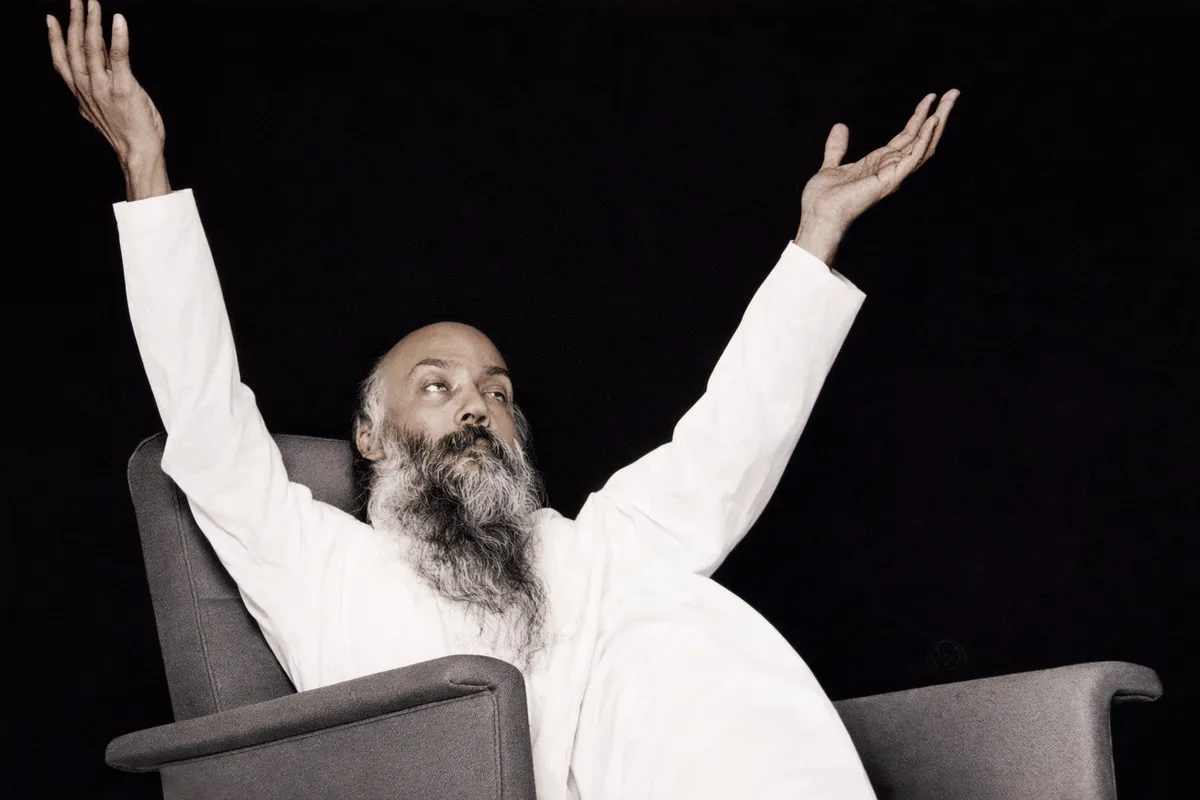
Highs and lows are like ocean waves—you can’t stop them, but if you stop fighting and say yes to both, they don’t hurt you.
From the Discourses
Passages where Osho speaks to this question — each links to the complete discourse.
Beloved Osho, a number of times I have felt in the past that I had reached a state of effortlessness. It lasted for some time, for days or even weeks, but then I fell back from it. Why does this falling back happen? Can anything be done to prevent it?
Whenever it happens again don't get miserable about it -- let it happen and accept it. This is difficult. Whenever happiness happens you accept it, whenever you feel blissful you never ask any questions about it. You never ask, "Why has it happened?" You accept it. But whenever misery comes, whenever unhappiness comes, whenever you are in pain and anguish, immediately you ask, "Why has it happened?" Behave equally to both, have the same attitude to both. There are two possibilities: one, do the same with unhappiness as you have done with your happiness, or do the same with your happiness as you are doing with your unhappiness. Either accept both or reject both, and then you will have a transformation. If you can accept both, when misery comes accept it as part of life, suddenly the nature of the misery is transformed. Through acceptance the quality has changed --…
Osho, at times I feel I am on the very peak of life. It seems that everything—the whole mystery of life—has been found. But then, in certain moments, I also experience a very dense sadness and helplessness. I cannot grasp what my real problem is.
As long as there are peaks, there will be valleys. As long as there is the longing for the peak, you will have to endure the melancholy of the valleys as well. One who has asked for pleasure has, along with it, asked for pain. And when pleasure comes, pain enters with it like a shadow. We change the names of our pleasures, but we do not become free of pleasure; and the one who is not free of pleasure will not be free of pain. Ashtavakra’s entire teaching is just this: be free of duality. Only the one who is free of duality arrives. The peak you think you have reached is the illusion of arrival—because there is no peak to arrive at. Arrival is a vast plain—neither height nor depth. Arrival is like a scale that has balanced: both pans exactly equal and the needle at rest. Or…
पहला प्रश्न: ओशो, मैं कभी जीवन के शिखर पर अनुभव करता हूं। ऐसा लगता है कि सब कुछ, जीवन का सब रहस्य पाया हुआ ही है। लेकिन फिर किन्हीं क्षणों में बहुत घनी उदासी और असहायता भी अनुभव करता हूं--मेरी वास्तविक समस्या क्या है, यह मेरी पकड़ में नहीं आता है।
… और सुख जब आया तो उसकी छाया की तरह दुख भी भीतर आ गया। हम सुख के नाम तो बदल लेते हैं, लेकिन सुख से हमारी मुक्ति नहीं हो पाती। और जो सुख से मुक्त नहीं, वह दुख से मुक्त नहीं होगा। अष्टावक्र की पूरी उपदेशना एक ही बात की है: द्वंद्व से मुक्त हो जाओ। जो निर्द्वंद्व हुआ, वही पहुंचा। जिस शिखर को तुम सोचते हो पहुंच गये, वह पहुंचने की भ्रांति है। क्योंकि पहुंचने का कोई शिखर नहीं होता। पहुंचना तो बड़ी समभूमि है। न ऊंचाई है वहां, न नीचाई है वहां। …
The peaks are getting pretty wonderful, but the valleys are deeper and darker than ever. Finding balance seems impossible. What to do?
Don't be worried about balance. Balance will seek you; I will see that balance seeks you. You simply do this much: while on the peak, dance; while in the valley, rest. Accept the valley; accept the peak. Both are parts of the one whole and you cannot deny one part. They are two aspects of the same coin. Remember, one who enjoys more is bound to suffer more because he becomes very sensitive. But suffering is not bad. If you understand it rightly, suffering is a cleansing. If you understand it rightly, sadness has a depth to it which no happiness can ever have. A person who is simply happy is always superficial. A person who has not known sorrow and has not known sadness, has not known the depths. He has not touched the bottom of his being; he has remained just on the periphery. One has to move…
Beloved Osho, can there be moments of effortlessness while a seeker is engaged in the first three stages? Is effort completely lacking in the second four stages? Does there come a point at which both effort and effortlessness must cease?
So don't go on suppressing, because a quantity can be tolerated but there comes a moment when the quantity reaches the climax, the evaporating point -- one hundred degrees. Then you start boiling and evaporating. Many persons who were just like you a day before are in madhouses now. You can be there any day. If you don't allow catharsis you are all prone to go mad, because civilization is such, the situation is such, that everybody accumulates madness. You have to throw it every day to remain clean and pure, to retain the clarity of mind and vision. But if you know the law that if you start a thing you can stop it, then you can start anything and you can stop. Be the master in the starting, you will be the master in the end also. But if a thing starts by itself then you cannot stop…
Osho, the inner lamp of equanimity and bliss, even after remaining steady for a long time, sometimes begins to flicker. Is this a phase in my growth, or the result of some slackness on my part? Please, from your experience, illumine my path so that this well-being, this joy of rightness, may remain forever unshaken.
If you understand this rightly, you have the whole principle of karma and conditioning. What you did yesterday will affect your today. Yesterday is gone; there is no way to change it now. Be gracious enough to change today—because today will become the tomorrow that harasses you. What you did in your past birth you are reaping now. And now you are busy thinking about the next birth, and this birth is slipping out of your hands. This empty, wasted life will again set you wandering on a road full of darkness. You ask how the lamp of equanimity can burn forever. Simply taste it for a moment. When equanimity is thick, hum, dance, drown in it. When equanimity is thick, drink—don’t delay. Don’t bring in even so much thought as, “Will it stop?” There is a Zen story: At a temple gate two monks are arguing about what is…
दूसरा प्रश्न: ओशो, भीतर समता का, आनंद का दीया अधिक समय स्थिर रहने पर भी कभी टिमटिमाने लगता है। क्या यह मेरे निर्माण की भूमिका है, अथवा मेरी किसी शिथिलता का परिणाम? यह ठीकपन या सम्यकत्व का आनंद सदा अकंपित रहे, इसके लिए अपने अनुभव से मेरा मार्ग प्रकाशित करने की कृपा करें।
इसको ही अगर तुम ठीक से समझो, तो कर्म का, संस्कार का पूरा सिद्धांत है। तुमने जो कल किया था, वह तुम्हारे आज को प्रभावित करेगा। अब कल तो गया, अब कल को तो बदलने का कोई उपाय नहीं, इतनी कृपा करो कि आज को बदल लो, क्योंकि आज फिर कल सतायेगा। जो तुमने पिछले जन्म में किया था, वह तुम अभी भोग रहे हो। और अभी तुम अगले जन्म का विचार कर रहे हो, और यह जन्म भी हाथ से जा रहा है। यह खाली-खाली गया हुआ जन्म, फिर अंधेरे से भरे हुए रास्ते पर तुम्हें भटका देगा। पूछते हो कि समता का दीया सदा कैसे जलता रहे? बस, क्षण भर तुम उसे भोगो। जब समता घनी हो, गुनगुनाओ, नाचो, डूबो उसमें। जब समता घनी हो, पीओ, फिर देर न करो। इतना भी बीच में विचार मत लाओ कि यह रुकेगी?