
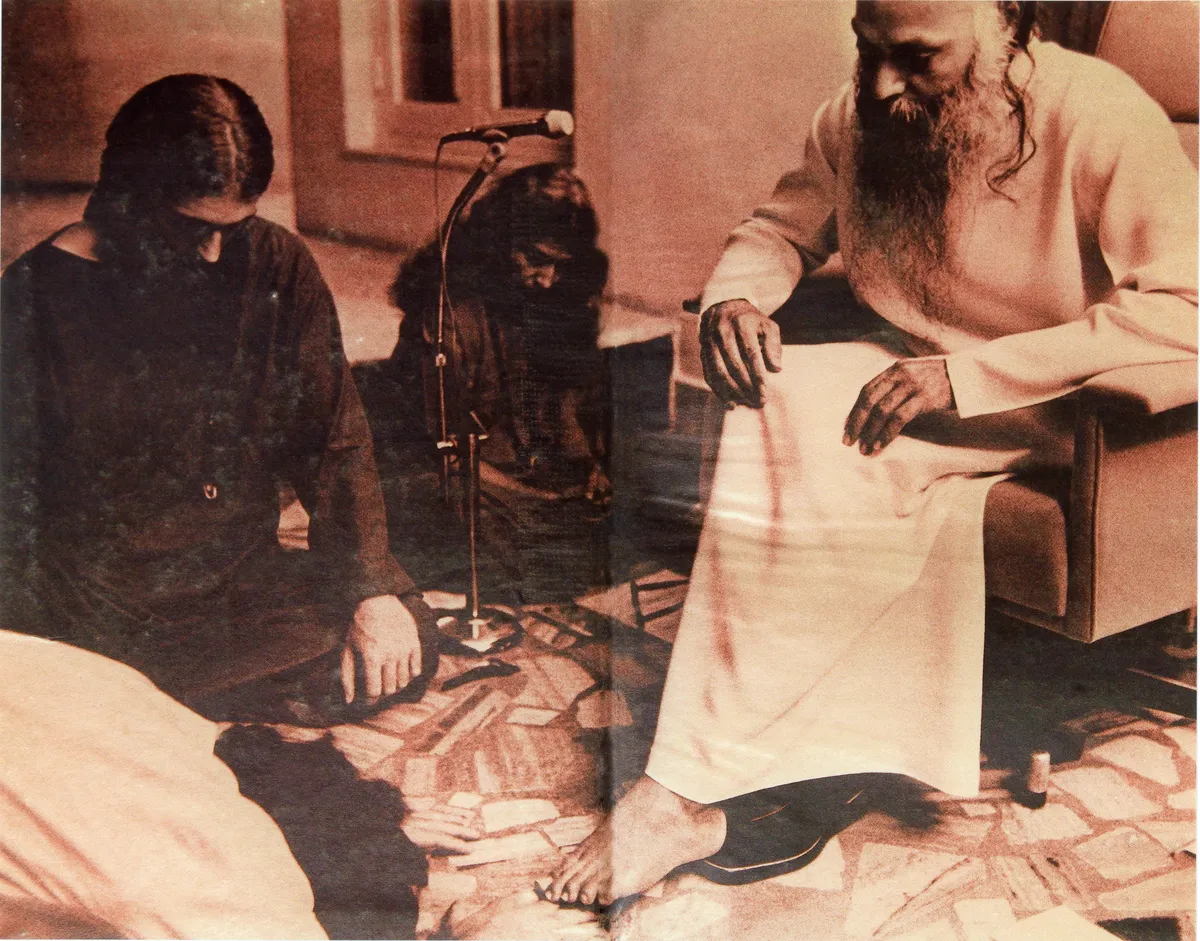
If a teacher speaks, a group will form anyway, so it’s wiser for the teacher to shape it gently to help people and prevent bigger problems later.
From the Discourses
Passages where Osho speaks to this question — each links to the complete discourse.
Osho, if organization and sectarianism bring about the decline of religion and Tao, please explain why people like Buddha or Mahavira lay the foundations of organizations. And you too, being fully aware of this, why are you laying the foundation of an organization like Neo-Sannyas International?
As I said, birth comes with death; whenever truth is born, organization is born. This cannot be avoided. The moment truth is told to another, organization begins. Either the one to whom truth has happened keeps silent, drinks it alone, and tells no one. Buddha thought so. When he became enlightened he remained silent for seven days. He thought, There is no point in saying it. Those who can arrive will arrive without words; those who cannot, telling will not help—it will only create confusion. Better to remain quiet. But there is a sweet story: the gods, Brahma himself, came and pleaded at his feet, “Do not do this! Who knows after how many thousands of years someone attains buddhahood; what he has known should be spoken, communicated, shared.” Buddha said, “Those who can attain will attain without me, and those who cannot—why should I waste my time and energy…
छठवां प्रश्न: ओशो, यदि संगठन और संप्रदाय से धर्म व ताओ का पतन होता है तो कृपया समझाएं कि बुद्ध या महावीर जैसे लोग संगठन की नींव क्यों कर डालते हैं? आप भी इस बात के प्रति सचेत होते हुए नव संन्यास अंतर्राष्ट्रीय जैसे संगठन की नींव क्यों डाल रहे हैं?
जैसा मैंने कहा, जन्म के साथ मृत्यु जुड़ी है, और जब भी सत्य पैदा होगा तो संगठन पैदा होगा। इससे बचा नहीं जा सकता। क्योंकि जैसे ही सत्य दूसरे से कहा जाएगा, संगठन शुरू हो गया। या तो बुद्ध को जो हुआ है, वे चुप रह जाएं पीकर, किसी को न कहें। वह उन्होंने सोचा था। जब उन्हें ज्ञान हुआ तो सात दिन तक वे चुप रहे; सोचा कि कोई सार नहीं है कहने में। जो पहुंच सकते हैं वे बिना कहे भी पहुंच जाएंगे; और जिनको पहुंचना नहीं है, कहने से कोई फायदा नहीं है, कहने में भी वे गड़बड़ पैदा करेंगे। उचित है कि चुप ही रहूं। लेकिन मीठी कथा है कि देवताओं ने, खुद ब्रह्मा ने आकर उनके चरणों में निवेदन किया कि आप ऐसा मत करें! क्योंकि न मालूम कितने-कितने हजार वर्षों के बाद कोई बुद्धत्व को उपलब्ध होता है; उसने जो जाना है वह लोगों को कहे, संवादित करे, साझीदार बनाए। बुद्ध ने कहा, लेकिन जो पा सकते हैं उसे वे पा ही लेंगे मेरे बिना, और जो नहीं पा सकते उनको कहने में मेरा समय क्यों लगाऊं! …
Question: OSHO, ISN'T ORGANIZATION A NECESSITY FOR A RELIGION TO SURVIVE? ... Then three hundred disciples together compiled what Buddha had said. The compilation was done in a closed place because there was so much conflict and they did not want people to know that the chief disciples were in conflict and fighting: "This was not said by Buddha.... So in a closed place somehow they came to some agreement, through negotiations, following the middle path: "If two persons are saying two things then come to the middle and keep that. But that was a hodgepodge. Buddha would not be able to recognize that those were his words -- those were three hundred people's agreement. Now, three hundred people in disagreement, coming to an agreement -- you can imagine what the outcome will be. Yes, to the world they could then show that they had a scripture...
Osho, a question has arisen about institutions and the sangha. Souls like Mahavira attained themselves by seeking themselves, not by following anyone else. This seems entirely true; and yet, by creating the fourfold sangha of monks, nuns, laymen, and laywomen, did Mahavira not in fact create an organization? Did this formation of a sangha not become, in a direct sense, imitation? What might Mahavira have meant by having people follow after him? And isn’t a body of sannyasins and an organization forming around you exactly like Mahavira’s? Please clarify briefly.
Everything deteriorates in human hands. There is only one remedy: if only we could say to those who loved Moses, Please, do not worship the flute—learn to play it. If those around Moses learned to play—even if they could not play as Moses did—if they at least learned to play, one thing would be certain: no one would plate the flute with gold or stud it with jewels. Because then they could say: the worship of the flute is not of the flute, but of the music that arises from it. And that music arises only when the flute is hollow. Fill it with gold and no music will arise. Do not worship Mahavira and Buddha; rather, what happened in their lives—the heights that manifested, the summits they touched—if we too set out, even for smaller hills, perhaps there will be no distortion. But we get busy worshiping. Worship itself…
ओशो, संस्था और संघ के संदर्भ में एक प्रश्न आया है। महावीर जैसी आत्माएं दूसरे किसी का अनुगमन न करके स्वयं को खोजते-खोजते ही स्वयं को उपलब्ध हुईं। यह बात बिलकुल सही मालूम पड़ती है, फिर भी महावीर ने साधु-साध्वी, श्रावक-श्राविका के चतुर्विध संघ की रचना करके क्या एक संगठन की रचना नहीं की? क्या यह संघ-रचना सीधे रूप में अनुकरण नहीं बन गई? महावीर का उनके पीछे क्या मतलब रहा होगा? क्या आपके पास भी ठीक महावीर जैसे ही संन्यासी और संगठन का निर्माण नहीं हो रहा है? कृपया संक्षेप में स्पष्ट करें।
आदमी के हाथ में सब पड़ कर बिगड़ जाता है। लेकिन इसका कोई उपाय नहीं है। इसका सिर्फ एक ही उपाय है कि काश, मूसा के आस-पास प्रेम करने वाले लोगों को हम कहें कि तुम कृपा कर बांसुरी की पूजा मत करो, बांसुरी बजाना सीखो। अगर मूसा के आस-पास के लोग बांसुरी बजाना सीखें--हो सकता है मूसा जैसी न बजा पाएं, लेकिन बांसुरी बजाना भी सीख लें--तो एक बात तो कम से कम पक्की है कि बांसुरी पर सोना नहीं चढ़ेगा, हीरे-जवाहरात नहीं जड़े जाएंगे। क्योंकि तब वे इतना कह सकेंगे कि बांसुरी की पूजा बांसुरी की नहीं है, उससे पैदा होने वाले संगीत की पूजा है। और वह संगीत तभी पैदा होता है जब बांसुरी पोली हो। उसमें सोना भर दिया, तो फिर संगीत पैदा नहीं होता है।
Osho -- buddha, mahavira, mohammed and christ were enlightened man. They tried to teach their disciples the methods to become enlightened. They wanted to form an endless chain of enlightened people, and, instead of becoming enlightened, almost all of them tried to be cunning enough to cheat the common people by making large scale business firms behind these great men. Will you explain the reason for this? Will this ashram become the head office of such a new business?
Lies persist for thousands of years; lies have their own ways of remaining, because they adjust to time, they are part of time. But truth is something strange in the world of time. It is timelessness. It is a miracle that once in a while it expresses itself in the dimension of time -- it is a miracle. The Buddha, the Christ -- these are miracles... something that should not be, something that is going against the law of necessity; something that follows the law of power, of grace, and comes from the beyond. That ray comes and goes. Millions of people want to pretend to be religious. These are the people who go to the churches and to the mosques and to the temples and the GURUDWARAS. These are the people who want religion cheap. They want only a formal kind of religion -- a Sunday religion. They don't…
Osho, you talk of totality. You can’t have a diffused movement at the same time. This diffused movement—how would you try to bind it into a single sutra?
Think about it a little. In fact, what does organization mean? Organization means that people of one idea, people who imagine bringing about a certain kind of society, gather together. They gather and try to place a pattern of ideology upon society. My understanding is that it is dangerous to impose a very fixed pattern on society. Because society moves ahead every day; a fixed pattern is always left behind. It is like putting pajamas on a child. The child keeps growing day by day; the pajamas keep getting smaller day by day. Every day there is a need for the pajamas to be bigger. But those who organized the pajamas say, “This is the pajama we decided on; he must go on wearing this same pajama.” The child grows; the pajama becomes tight. All organizations—the more organized they are—the more fixed and dead they become. What is needed is…
ओशो, यू टाक ऑफ टोटेलिटी। यू कांट हैव डिफ्यूज्ड मूवमेंट एट दि सेम टाइम। यह जो डिफ्यूज्ड मूवमेंट है इसको एक सूत्र में बांधने की कोशिश कैसे करेंगे आप?
इसे थोड़ा सोचें। असल में, आर्गनाइजेशन का मतलब क्या होता है? आर्गनाइजेशन का मतलब यह होता है कि एक विचार के लोग, एक समाज की रचना लाने की कल्पना करने वाले लोग इकट्ठे हो जाएं। ये इकट्ठे होकर एक आइडियालॉजी के पैटर्न को समाज के ऊपर बिठाने की कोशिश करें। मेरा मानना यह है कि समाज के ऊपर कोई बहुत फिक्स्ड पैटर्न बिठालना खतरनाक है। क्योंकि समाज रोज आगे बढ़ जाता है; फिक्स्ड पैटर्न हमेशा पीछे पड़ जाता है। वह ऐसे ही जैसे एक बच्चे को हमने पाजामा पहना दिया। अब बच्चा तो रोज आगे बढ़ता चला जाता है, पाजामा रोज छोटा पड़ता चला जाता है। रोज जरूरत होती है कि पाजामा बड़ा हो। लेकिन वे जो पाजामे के आर्गनाइज करने वाले लोग थे, वे कहते हैं कि यही पाजामा हमने तय किया था, इसी पाजामे को पहनाए रखना है। बच्चा बड़ा होता है, पाजामा छोटा पड़ जाता है। सब आर्गनाइजेशन, जितने ज्यादा आर्गनाइज्ड होंगे, उतने ही ज्यादा फिक्स्ड और डेड हो जाते हैं। एक फ्लूडिटी चाहिए। और फ्लूडिटी का मतलब यह है कि--इसलिए मैं कहता हूं मूवमेंट, आर्गनाइजेशन नहीं। …