
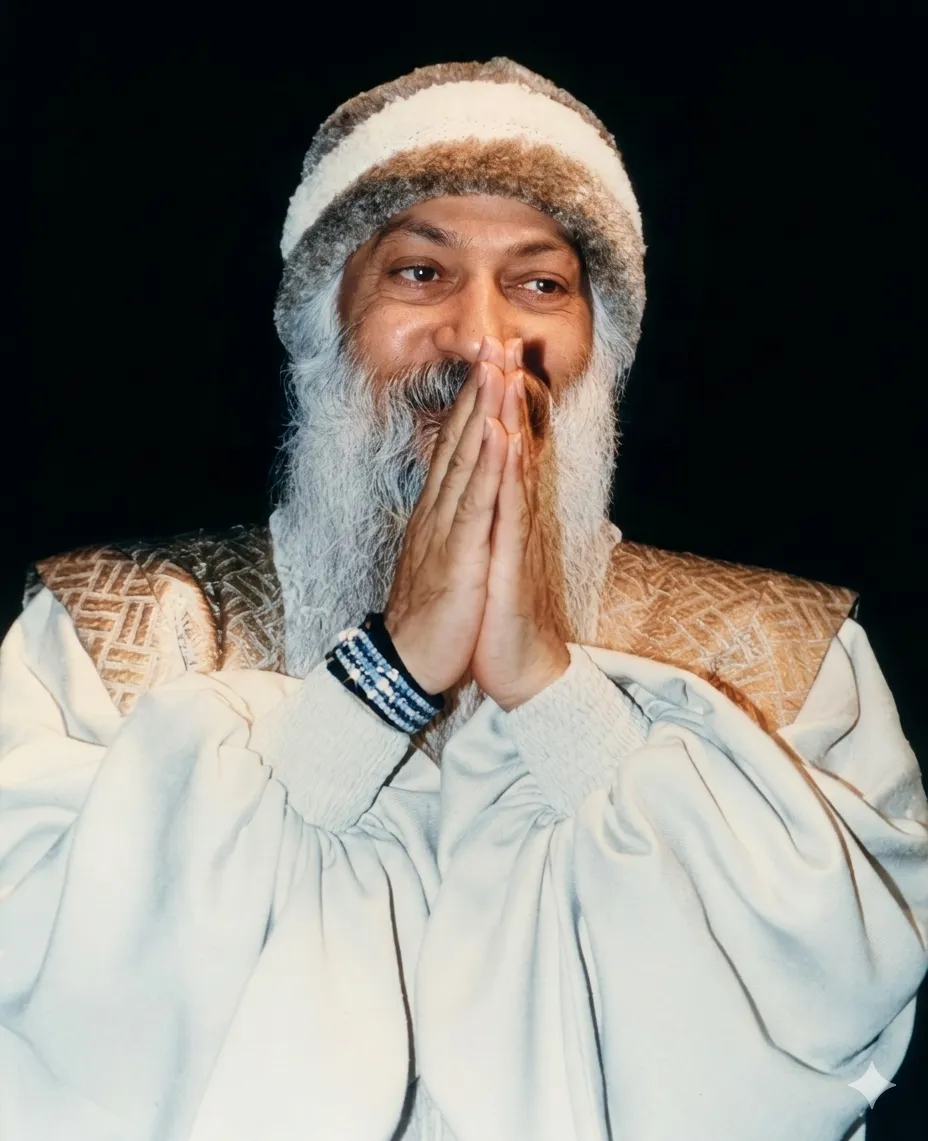
People mock what threatens their comfortable illusions; if you truly know yourself, their insults can’t hurt you.
From the Discourses
Passages where Osho speaks to this question — each links to the complete discourse.
Osho, why are people constantly pouring scorn on you? Why?
Jesus was only criticized in the small vicinity where he lived. Buddha was critized only in the small province where he moved, Bihar. The name comes from his movement -- the name Bihar means "where Buddha moved." So just in that small province he was criticized. I may be the first man who is being criticized all over the world; irrespective of race, country, religion -- all are agreed about one thing: "This man is dangerous!" This is really something to make one happy! You should rejoice -- something great is going to happen out of it. If the criticism of Buddha in only a small province created so much energy, if the ciriticism of Jesus in a small area around Jerusalem created such an impact on history, then there is great promise. The criticism of me around the world is going to affect the whole of humanity, the whole…
Osho, your philosophy of life is so simple, natural and true—yet why does the crowd still hurl abuses at you?
Dhirendra! Because a crowd is a crowd. Crowds are of sheep, not of lions. Crowds are of the blind, not of those who can see. Those with eyes have the strength to walk alone. The crowd walks by clutching at one another. The crowd belongs to cowards, not to the brave. Lions don’t flock; there is no herd of lions. Why do sheep move in a flock? Because in a crowd there is a sense of safety: “We are so many; danger will be less. There is company; nothing will go wrong.” The crowd is blind. I call its gait the gait of sheep. The crowd’s opinions have no value. If a crowd could understand, it wouldn’t be a crowd—individuality would be born. In anyone within whom even a little wisdom arises, he becomes a person; he ceases to be a fragment of the crowd. Even while in a crowd…
तीसरा प्रश्न: ओशो, आपका जीवन-दर्शन इतना सरल, सहज और सत्य है, फिर भी भीड़ आपको गालियां क्यों दिए जाती है?
धीरेंद्र! भीड़ भीड़ है, इसलिए। भीड़ तो भेड़ों की होती है, सिंहों की नहीं होती। भीड़ तो अंधों की होती है, आंख वालों की नहीं होती। आंख वाले तो अकेले चलने में समर्थ होते हैं। भीड़ एक-दूसरे को पकड़ कर चलती है। भीड़ कायरों की होती है, वीरों की नहीं होती। सिंहों के नहीं लेहड़े। सिंहों की कोई भीड़ नहीं होती। क्यों? भेड़ें क्यों भीड़ में चलती हैं? क्योंकि भीड़ में एक सुरक्षा है। इतनी हैं, इसलिए कोई खतरा कम रहेगा। इतना संग-साथ है, इसलिए खतरा नहीं होगा। भीड़ तो अंधी होती है। भीड़ की चाल को मैं भेड़-चाल कहता हूं। भीड़ की बातों का कोई मूल्य नहीं है। अगर भीड़ समझ ही सकती होती तो भीड़ न होती, व्यक्तित्व का जन्म हो जाता। जिस आदमी के भीतर भी थोड़ी प्रज्ञा पैदा होती है वह व्यक्ति बन जाता है, भीड़ का हिस्सा नहीं रह जाता। भीड़ में भी हो तो भी अकेला होता है। बाजार में भी हो तो भी अकेला होता है। उसके पास एक निजता होती है। हिंदू नहीं होता वह। क्योंकि हिंदू तो एक भीड़ का नाम है। मुसलमान नहीं होता वह। …
Osho, you often say that this world is an echo point, from where we receive back exactly what we give it: love meets love and hatred meets hatred. If that is so, why were Buddha and Mahavira tortured; why were Jesus and Mansoor killed? And why are you receiving false allegations, slander, and abuse here? And can this world ever find people who offer more guileless love and blessing than you?
These feeling-moments come within you. To block them you must heap every possible abuse on Jesus. You will have to prove to yourself—convince yourself with all kinds of arguments—that this man is wrong; do not go near him, not even by mistake. So remember: man maligns to protect himself. Before giving Socrates the hemlock, the very court that ordered it also felt within… Do you think those who stood to crucify Jesus had no doubt in their hearts? No question arose—What are we doing? Is this right? How is it justified? The same happened with Socrates. The judge felt a great stirring, because this man is certainly unusual, different, unparalleled. But no error appears in him. Nothing could be proved against him in court except one thing: all of Athens is against him. Nothing else was established. But if everyone is against him—the jury against him, the magistrate against him,…
पहला प्रश्न: ओशो, आप अक्सर कहते हैं कि यह जगत एक प्रतिध्वनि बिंदु है, जहां से हमारे पास वही सब लौट आता है, जो हम उसे देते हैं। प्रेम को प्रेम मिलता है और घृणा को घृणा। यदि ऐसा ही है, तो क्यों बुद्ध और महावीर को यातनाएं दी गईं; क्यों ईसा और मंसूर की हत्या की गई? और क्यों यहां आपको झूठे लांछन, निंदा और गालियां मिल रही हैं? और क्या आप जैसों से बढ़ कर भी निश्छल प्रेम और आशीष देने वाले लोग इस जगत को मिल सकते हैं?
तुम्हारे भीतर ये भाव-क्षण आते हैं, इन भाव-क्षणों को रोकने के लिए तुम्हें सब तरह की गालियां जीसस को देनी पड़ेंगी। तुम्हें अपने तईं एक बात प्रमाणित कर लेनी होगी; अपने को सब तरह से तर्कों से समझा लेना होगा कि यह आदमी गलत है; भूल कर भी इसके पास मत जाना। तो यह खयाल रखो कि आदमी अपनी रक्षा में निंदा करता है। सुकरात को जहर देने के पहले जिस अदालत ने जहर की आज्ञा दी, उस अदालत ने यह भी कहा... क्योंकि उन सबको लगता तो था भीतर से...। जीसस को सूली देते वक्त तुम सोचते हो, जो लोग खड़े थे सूली देने, उनके मन में कोई शंका-शुबहा, कोई संदेह न उठा होगा? प्रश्न न जगा होगा कि हम क्या कर रहे हैं? यह ठीक है? यह उचित है? इसमें कहां तक औचित्य है? सुकरात के साथ भी वही हुआ। जो आदमी न्यायाधीश था, उसके मन में बड़ा भाव उठने लगा। क्योंकि यह आदमी अनूठा तो जरूर है, भिन्न जरूर है, अद्वितीय जरूर है। लेकिन इसकी भ्रांति-भूल कहीं मालूम नहीं होती। अदालत में कुछ भी प्रमाणित नहीं हो सका है इसके खिलाफ। …
We are in a strange state: if someone hurls abuses that do not apply to us, we may ignore them; but if someone tells the truth about us, it becomes very hard to ignore. Truth hurts more than untruth. So if someone says “thief” and you are deeply disturbed, your disturbance is giving news—you are a thief. If you were not, such disturbance could not arise; you might even laugh, “Some mistake has been made.” Only when the finger touches the wound do you become agitated. When it does not, you are not. I have heard: Abraham Lincoln criticized an opposing leader—harshly. That leader wrote to Lincoln: “Stop speaking untruth about me—otherwise it will not be proper.” Lincoln replied, “Think again. If you want me to stop speaking untruth about you, I will have to start speaking truth about you. Choose between the two.
लेकिन हम बड़ी अजीब हालत में हैं। अगर हमें कोई ऐसी गालियां दे रहा हो जो हम पर लागू नहीं होतीं, तब तो हम उन्हें मद्देनजर भी कर सकते हैं, लेकिन अगर कोई हमारे संबंध में सत्य ही कह रहा है, तो फिर मद्देनजर करना बहुत मुश्किल हो जाता है। तो फिर उसे छोड़ना बहुत मुश्किल हो जाता है। सत्य जितनी चोट करता है, उतना असत्य नहीं करता। इसलिए जब आपसे कोई कहे, ‘चोर’, और आप बहुत बेचैन हो जाएं तो उसका मतलब है, बेचैनी खबर दे रही है कि आप चोर हैं। अगर आप चोर न होते तो इतनी बेचैनी नहीं हो सकती थी; आप हंस भी सकते थे। आप कहते, कहीं कुछ भूल हो गई होगी। जब कोई बिलकुल छू देता है घाव को, तभी आप बेचैन होते हैं। जब कोई घाव को नहीं छूता तो बेचैन नहीं होते। मैंने सुना है कि अब्राहिम लिंकन ने अपने एक विरोधी नेता के संबंध में आलोचना की। आलोचना कठोर थी। उस विरोधी नेता ने पत्र लिखा लिंकन को, और कहा कि आप मेरे संबंध में असत्य बोलना बंद कर दें, अन्यथा उचित न होगा। लिंकन ने जवाब दिया कि तुम फिर से सोच लो। …
Osho, when will people understand you? You offer songs, and people hurl insults in return!
You ask: “When will people understand you? You offer songs, and people hurl insults in return!” Anant, this is what they have always done. If they didn’t return abuse, I would be startled: what’s happened? What’s the matter? Did they not hear my songs? Did my songs not touch them, please them? Am I speaking to the deaf? Why didn’t the abuses come? They should! Mulla Nasruddin and his wife went to the station, leaving on a pilgrimage. There was a weighing machine there—stand on it, put in a ten-paisa coin, a ticket comes out. Mulla quickly stood on it, the ticket came out. Before he could pick it up, the wife snatched it. It read: “You are a great hero. Fear never troubles you. In life you may break, but you do not bend. You have great inner strength. God has bestowed you with the wealth of resolve.” The…
तीसरा प्रश्न: ओशो, आपको लोग कब समझेंगे? आप गीत देते हैं और लोग गालियां लौटाते हैं!
तुम पूछते हो: ‘आपको लोग कब समझेंगे? आप गीत देते हैं और लोग गालियां लौटाते हैं!’ अनंत, यही उन्होंने सदा किया है। वे अगर गालियां न लौटाएं तो मैं चौंकूंगा कि क्या हो गया? मामला क्या है? क्या मेरे गीत उन्होंने सुने नहीं? क्या उनको मेरे गीत जंचे नहीं, रुचे नहीं, भाए नहीं? क्या मैं बहरों से बोल रहा हूं? क्योंकि गालियां क्यों नहीं आईं? गालियां आनी ही चाहिए! मुल्ला नसरुद्दीन और उसकी पत्नी, दोनों स्टेशन गए थे। तीर्थयात्रा पर जा रहे थे। स्टेशन पर वजन नापने वाली मशीन लगी थी, जिस पर खड़े हो जाओ, दस पैसे का सिक्का डालो, टिकट निकल आए। मुल्ला जल्दी से खड़ा हुआ, टिकट निकली। इसके पहले कि वह उठाए, पत्नी ने झपट कर टिकट उठाई। टिकट में लिखा हुआ था कि आप महान वीर पुरुष हैं। जीवन में आपको कभी भय नहीं सताता। जीवन में आप टूट जाएं मगर झुकते नहीं। आप में महान आत्मबल है। संकल्प की संपदा परमात्मा ने आपको दी है। पत्नी ने कहा: हुं! और दूसरी तरफ टिकट उलटी और उस तरफ आया था: एक सौ अस्सी पौंड वजन। …