
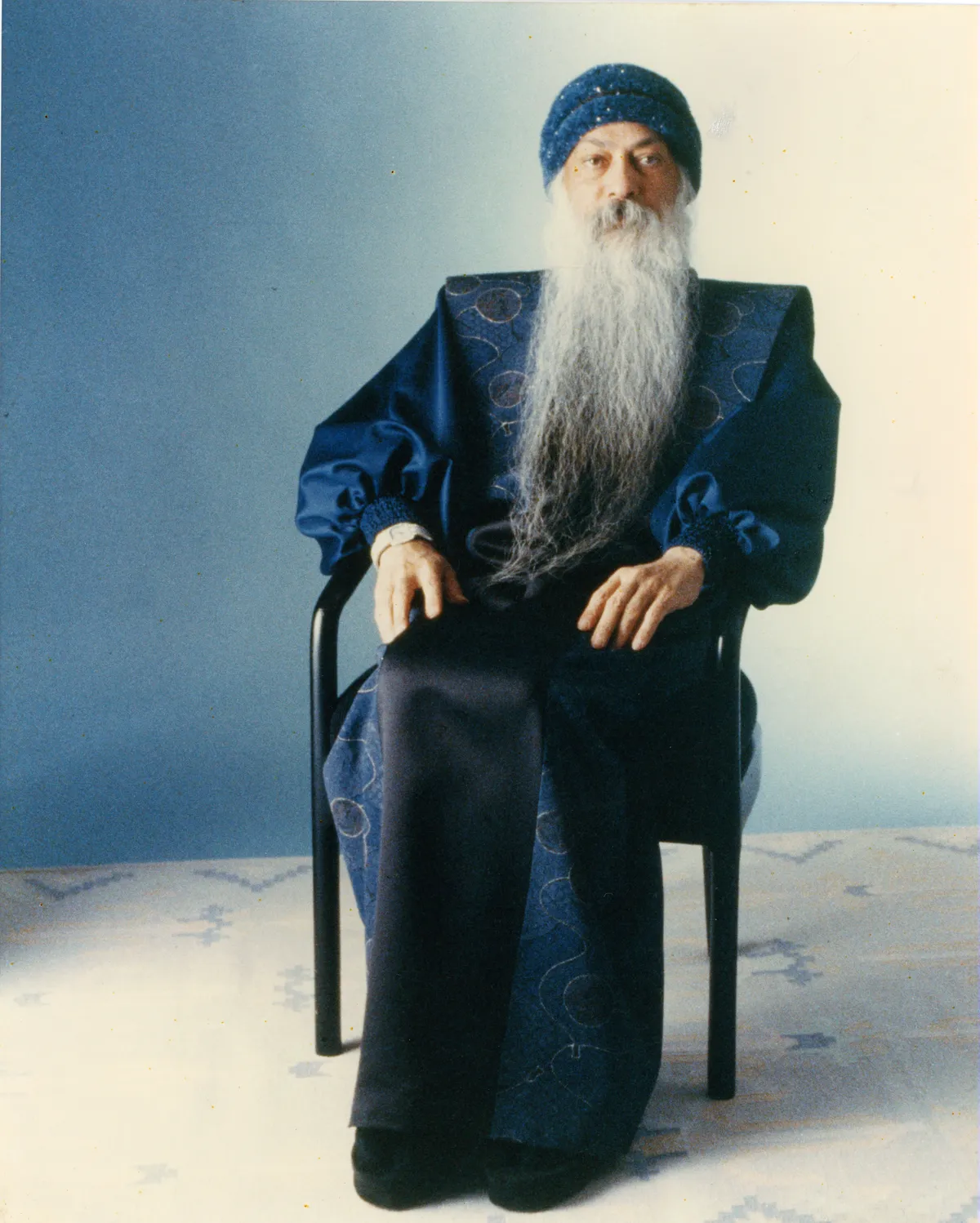
You’re scared because you were taught to let others choose; calm down, look inside, and make your own choice—even if it isn’t perfect.
From the Discourses
Passages where Osho speaks to this question — each links to the complete discourse.
After nearly three months, I am still thinking about taking sannyas and don't understand why I have such resistance to it while it seems so easy for so many others. Can you say something about this?
WE WILL HAVE TO GO DEEP INTO THIS PROBLEM. You have become incapable of willing; you have forgotten how to will on your own. And this happens to almost everybody in this world. From your very childhood, parents start deciding for you -- they don't allow you to decide. They don't allow you to will on your own: they will for you, they think for you, they decide for you. And I can understand. The child is helpless -- it is bound to be so, the parents have to decide for him. Otherwise the child will not survive. It is the obligation of the parents to think, will and decide for the child. But there is another obligation also, which all the parents down the ages have remained oblivious of -- and the other is far more important. When the child has become capable of deciding, willing, thinking, they should…
Osho, I have been listening to you for years. I have been with you a long time. From time to time I have heard many different statements from you, even mutually contradictory ones, yet no question has ever arisen in my mind about them. And in spite of them you have always remained one and indivisible in my vision and in my heart. Kindly shed some light on this.
You can be with me in two ways: through thought and intellect, or through the heart and feeling. If you are with me through the intellect and thought, there will be great difficulty. Day after day you will find contradictory statements. Every day you will have to sort them out, and still you will not succeed. The intellect never really resolves anything. Even where things are simple, the intellect tangles them up. And my words are very tangled. Even where everything is clear, the intellect creates problems. And I speak of paths filled with mist. Even if there were only one path, the intellect would find contradictions; here there are countless paths—contradictions upon contradictions. There is hardly a statement I have not refuted a thousand times. So if you are with me through the intellect, only two things are possible: either you will go mad and drop the intellect, or…
Osho, how do I take sannyas? I keep thinking and then I stop. What is this hesitation?
One night a thief broke into Mulla Nasruddin’s house. While the thief gathered things, Mulla quickly spread his blanket on the floor. When the thief, ready to tie up the loot, looked for a sheet to wrap it in, he found a blanket laid out. He was a bit scared—when he had entered, there had been no blanket on the floor. He’d seen a man sleeping under it; now that man lay on the bed without the blanket, and the blanket was on the floor! But it wasn’t the time to ponder. He tied his bundle and set off. Mulla got up and followed. Hearing footsteps, the thief turned and saw the same man who had been on the bed—first under the blanket, then without it. The thief got nervous and said, “Why are you following me?” Mulla said, “Why not follow? I was the only one left back there!…
Osho, I am eager to take sannyas, yet I have been hesitating for a year. I also have this doubt in my mind: what will happen by taking sannyas?
You are still living. Breath still moves. The heart still beats. The blood still runs. However many days may have been wasted, much is still left. The as-yet-unarrived is still there; the future remains. Live this future in a new way, Krishnaraj! Will you keep beating the same old track? Just as you think, “What will happen by taking sannyas?” now think this: what will happen by not taking sannyas? Until now you have not been a sannyasin. What has happened so far? One thing is certain: at least sannyas will be a new experiment. Whether anything happens or not, a new path will be cut. Who knows—what didn’t happen on the old path may happen on the new! Walk with at least that much curiosity. Who knows! The old path is familiar; will you keep circling on it? And not think even once that after so many rounds nothing…
Question: Second question: Osho, why am I afraid of sannyas? Harish! Fear of sannyas is natural. You are dyed in the colors of the world—well dyed. With birth itself you are initiated into the world. If you are forty or fifty now, that is forty or fifty years of the world’s hypnosis. We start hypnotizing little children in the language of the world. We tell them, “If you study and write, you’ll become a nawab. If you play and frolic, you’ll be spoiled.” To make them nawabs you’re busy ruining their heads. You don’t see the state of the nawabs—that all the nawabs have become kebabs—yet you keep trying to make the kids nawabs! “Study and become a nawab,” and, “If you play you’ll be ruined.” The poor child gives up play and begins to study and write. Study becomes ambition. “Come first! Bring the gold medal!