
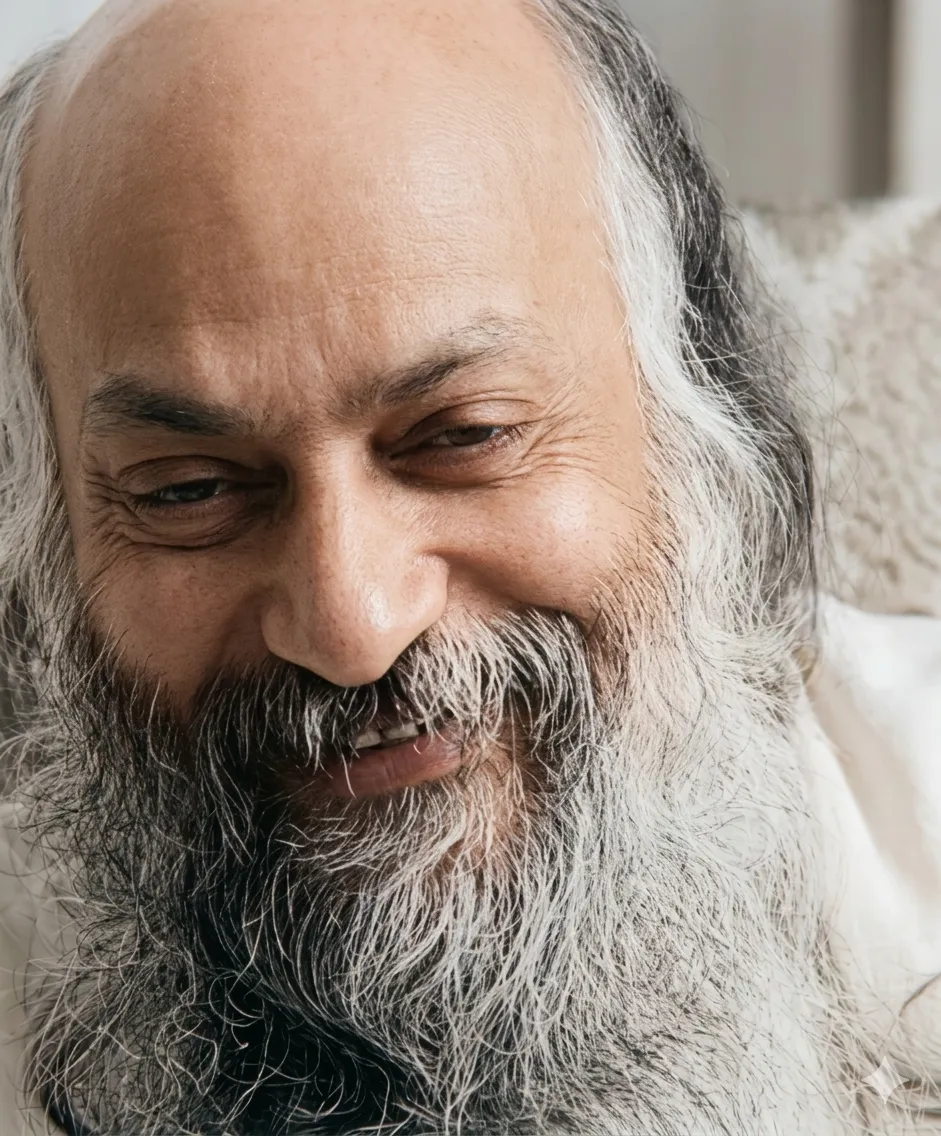
Buddha blends big learning like Arvind with deep awakening like Raman, while Krishnamurti is mostly like Raman, so Buddha makes a fuller comparison.
From the Discourses
Passages where Osho speaks to this question — each links to the complete discourse.
Osho, you take Ramana so far as to Buddha. Please explain by placing him near Krishnamurti.
There is no such thing as near or far. Krishnamurti is exactly the kind of person Ramana is. As to why I weighed Ramana against Buddha and Aurobindo, there is a reason. Krishnamurti is a man of the same experience as Ramana, but he does not have the kind of erudition Aurobindo has. Yes, he is more outspoken than Ramana, more given to argument. But there is a great difference between Krishnamurti’s arguments and Aurobindo’s. Aurobindo is a logician; Krishnamurti is not. And if he uses logic, it is only to erase logic. If there is a sustained use of reasoning, it is solely to enter the trans-rational. But he is not very knowledgeable. That’s why I used a distant example. I brought in Buddha so that both sides become clear to you: Buddha’s experience is like Ramana’s, and his knowledge is like Aurobindo’s. Krishnamurti’s experience is like Ramana’s; his…
ओशो, आप रमण को बुद्ध तक इतनी दूर ले जाते हैं। उन्हें कृष्णमूर्ति के निकट रख कर समझाएं जरा।
दूर और पास नहीं है कुछ। कृष्णमूर्ति ठीक रमण जैसे व्यक्ति हैं। रमण से और बुद्ध, अरविंद इनको मैंने क्यों तौला, उसका कुछ कारण है। कृष्णमूर्ति ठीक रमण जैसे अनुभव के व्यक्ति हैं, लेकिन अरविंद जैसी जानकारी कृष्णमूर्ति की भी नहीं है। हां, रमण से ज्यादा मुखर हैं। रमण से ज्यादा तर्कयुक्त हैं। लेकिन कृष्णमूर्ति के तर्क और अरविंद के तर्क में बड़ा फर्क है। अरविंद एक तार्किक हैं, कृष्णमूर्ति तार्किक नहीं हैं। और अगर तर्क का उपयोग कर रहे हैं, तो पूरे वक्त तर्क को मिटाने के लिए ही कर रहे हैं। अगर तर्क की पूरी की पूरी चेष्टा है, तो वह अतर्क्य में प्रवेश के लिए ही है। लेकिन जानकार बहुत नहीं हैं। इसलिए मैंने दूर का उदाहरण लिया। बुद्ध से मैंने इसलिए कहा, ताकि आपको दोनों बात खयाल में आ जाएं। …
Osho, Krishna is supremely enlightened and beyond the three gunas, yet he deceives, lies, and wages war. Buddha, Mahavira, Lao Tzu, etc., do nothing of the sort. Kindly shed light on Krishna’s personality described above, in the context of the qualities of sattva, rajas, and tamas.
First, it is essential to understand that no comparison is possible between two enlightened ones. All comparisons are false. Every great being is unique; there is no second like him. In truth, even an ordinary person is unique. There is no other like you. The great one within you appears when you bring your own nature, your own destiny, to its fullness. You too are incomparable. There is no other person on earth exactly like you—neither today, nor ever before, nor ever after. Search the whole earth and you won’t find two identical leaves on a tree; not even two identical pebbles. And when your polish deepens and the supreme flowering of your life manifests, then you become like the summit of a Mount Everest. Even now you are unmatched; then you will be utterly unmatched. Now, perhaps, some accord with others is still possible; then there will be none.…
पहला प्रश्न: ओशो, कृष्ण परम ज्ञानी और त्रिगुणातीत हैं, फिर भी धोखा देते हैं, झूठ बोलते हैं, युद्ध करते हैं। बुद्ध, महावीर, लाओत्से आदि ऐसा कुछ भी नहीं करते। सत्व, रजस, तमस गुणों के संदर्भ में कृष्ण के उपरोक्त व्यक्तित्व पर प्रकाश डालने की कृपा करें।
… आप जैसा भी कोई दूसरा नहीं। आपके भीतर ही महापुरुष तब प्रकट होता है, जब आप अपने स्वभाव को, अपनी नियति को उसकी पूर्णता में ले आते हैं। आप भी बेजोड़ हैं। आप जैसा दूसरा कोई व्यक्ति पृथ्वी पर नहीं है। न आज है, न कल था, और न कल होगा। एक वृक्ष का पत्ता भी पूरी पृथ्वी पर खोजने जाएं, तो दूसरा वैसा ही पत्ता नहीं खोज पाएंगे। एक पत्थर का टुकड़ा भी, एक कंकड़ भी अपने ही जैसा है। और जब आपका निखार होगा, और आपके जीवन की परम सिद्धि प्रकट होगी, तब तो आप एक गौरीशंकर के शिखर बन जाएंगे। अभी भी आप बेजोड़ हैं। तब तो आप बिलकुल ही बेजोड़ होंगे। …
Osho, the way you speak of Shri J. Krishnamurti with love and praise, he does not speak of you in the same way. Sometimes it feels as if he is about to say something different, but then he avoids it. As a result, your disciples go with great love to listen to Krishnamurti, but his followers do not come to you with an open heart. Please explain.
What Krishnamurti says is entirely right—one hundred percent right. But Krishnamurti’s way is very narrow. It is completely right, yet it is like a footpath. My way is a great royal road. On my path, Buddha, Krishna, Christ, Moses, Zarathustra, Bodhidharma, Lao Tzu—all are included. So I include Krishnamurti as well; no difficulty arises for me—my house is spacious. Krishnamurti lives in a small room. The room is perfectly fine; nothing is wrong with it. In my large house Krishnamurti’s room fits easily, but my large house cannot be contained in Krishnamurti’s room. Krishnamurti is Hinayanist; I am Mahayanist. Krishnamurti’s boat is a small dinghy—you know, in small villages at most one person sits and rows out to catch a fish. My vessel is big, a great ship—Mahayana. Come aboard from every direction, all kinds of people: those who follow every scripture, every doctrine—there is room for all. That’s why.…
दूसरा प्रश्न: ओशो, जिस तरह आप श्री जे. कृष्णमूर्ति के संबंध में प्रेम और स्तुति के साथ बोलते हैं, वैसा वे आपके बारे में नहीं बोलते हैं। कभी-कभी तो लगता है कि वे कुछ अन्यथा कहने जा रहे हैं, लेकिन फिर टाल जाते हैं। फलस्वरूप आपके शिष्य तो बड़े प्रेम से कृष्णमूर्ति को सुनने जाते हैं, लेकिन उनके मानने वाले आपके पास खुले दिल से नहीं आते। कृपाकर समझाएं।
कृष्णमूर्ति जो कहते हैं, सर्वांशतः सही है। सौ प्रतिशत सही है। लेकिन कृष्णमूर्ति का रास्ता बहुत संकीर्ण है। पूरा सही है, पगडंडी जैसा है। मेरा रास्ता बड़ा राजपथ है। मेरे पथ पर बुद्ध, कृष्ण, क्राइस्ट, मोजिज, जरथुस्त्र, बोधिधर्म, लाओत्सू, सब समा जाते हैं। तो कृष्णमूर्ति को भी मैं उसमें समा लेता हूं, कुछ अड़चन नहीं आती; मेरा घर बड़ा है। कृष्णमूर्ति रहते हैं छोटी कोठरी में। कोठरी बिलकुल भली है, कुछ गड़बड़ नहीं है। मेरे बड़े घर में कृष्णमूर्ति की कोठरी तो समा जाती है, लेकिन मेरा बड़ा घर कृष्णमूर्ति की कोठरी में नहीं समा सकता। कृष्णमूर्ति हीनयानी हैं, मैं महायानी हूं। कृष्णमूर्ति की डोंगी है छोटी सी--डोंगी जानते हो न, छोटे गांवों में ज्यादा से ज्यादा एकाध आदमी बैठकर चला लेता है, मछली मार आया--मेरा पोत बड़ा है, बड़ा जहाज है, महायान। उसमें आओ सब दिशाओं से लोग, सब तरह के लोग, सब शास्त्रों को मानने वाले, सब सिद्धांतों को मानने वाले, सबके लिए जगह है। इसलिए।
Osho, why does there seem to be so much conflict between the world and God?
It is as if someone were sleeping deeply in this garden. The cuckoo comes and sings, birds are chattering, the sun rises, breezes dance through the trees; but someone is fast asleep. The breezes touch him, the birds’ songs echo at his ears, the sun’s rays play on his face, but he knows nothing. Then someone comes and shakes him awake. His eyes open—the glory of the sun is revealed, the song of the passing breeze is heard, suddenly the cuckoo’s call, the fragrance of flowers. Do you think something new has happened? Everything was already there, just as it is. Only this man has become new—nothing else has changed. The same garden, the same sun, the same flowers, the same birds—everything the same; only a small difference: he was asleep; he is awake. The meaning of “world” is: you are asleep in God. The meaning of “God” is: you…
पहला प्रश्न: ओशो, संसार और परमात्मा में इतना विरोध क्यों लगता है?
फिर कोई आए और उसे झकझोर कर जगा दे। आंख खुले सूरज की महिमा प्रकट हो, पास से गुजरती हवा का गीत सुनाई पड़े, अचानक कोयल की आवाज आए, फूलों की सुगंध आए, क्या तुम सोचते हो कुछ नया हो गया? सब था, सब वैसा का वैसा है, सिर्फ यह आदमी नया हो गया और कुछ नया नहीं हुआ है। वही बगीचा, वही सूरज, वही फूल, वही पक्षी, सब वही है, सिर्फ इस आदमी में थोड़ा फर्क पड़ा है, यह सोया था, यह जाग गया।
Osho, Mahavira’s dispassion, Christ’s holy indifference, Buddha’s disregard, and Krishna’s non-attachment—what are their subtle similarities and differences? Please shed light on this.
In this, some similarities appear. Krishna will arrive at a peace like Buddha’s, because he has nothing to attain—whatever is, is already attained. At times he will appear dispassionate like Mahavira, for his joy knows no bounds. He will appear to proclaim God as Jesus does—but not because there is a God sitting in this world or the next: rather, because all is God. Krishna’s non-attachment is total surrender—“the disappearance of ‘I.’” To know that the “I” is not. Once this is known, whatever is happening is happening. There is nothing to be done about it. There is no possibility of our doing anything. Krishna sees himself as a wave in the ocean. Since there is no choosing, there is no attachment. If we understand correctly, non-attachment is not a state of mind; it is the dropping of all states of mind, the dropping of all positions—and becoming one with…
ओशो, महावीर की वीतरागता, क्राइस्ट की होली इनडिफरेंस, बुद्ध की उपेक्षा, कृष्ण की अनासक्ति, इनमें क्या सूक्ष्म समानता व भिन्नता है? इस पर प्रकाश डालें।
इसमें कुछ समानताएं मिलेंगी। कृष्ण बुद्ध जैसी शांति को उपलब्ध हो जाएंगे, क्योंकि कुछ उन्हें पाना नहीं है। जो भी है, वह पाया हुआ है। वे महावीर जैसे वीतराग दिखाई पड़ेंगे किन्हीं क्षणों में, क्योंकि उनके आनंद का कोई पारावार नहीं है। वे जीसस जैसे परमात्मा की घोषणा करते दिखाई पड़ेंगे। इसलिए नहीं कि इस लोक और परलोक में परमात्मा कहीं बैठा है, बल्कि सब कुछ परमात्मा ही है। कृष्ण की अनासक्ति समग्र समर्पण है, ‘मैं’ का न हो जाना है। ‘मैं’ है ही नहीं, यह जानना है। इसके जान लेने के बाद जो हो रहा है, वह हो रहा है। इसमें कोई उपाय ही नहीं है। इसमें हम कुछ कर सकते हैं, ऐसा है ही नहीं। इसमें हमारे द्वारा कुछ हो सकता है, इसकी कोई संभावना ही नहीं है। कृष्ण अपने को एक लहर की तरह सागर में देखते हैं। कोई चुनाव नहीं करना है, इसलिए कोई आसक्ति नहीं है। …